
News
FA Cup Victory Proves Memorable and Coaching Ronaldo Presents No Difficulty
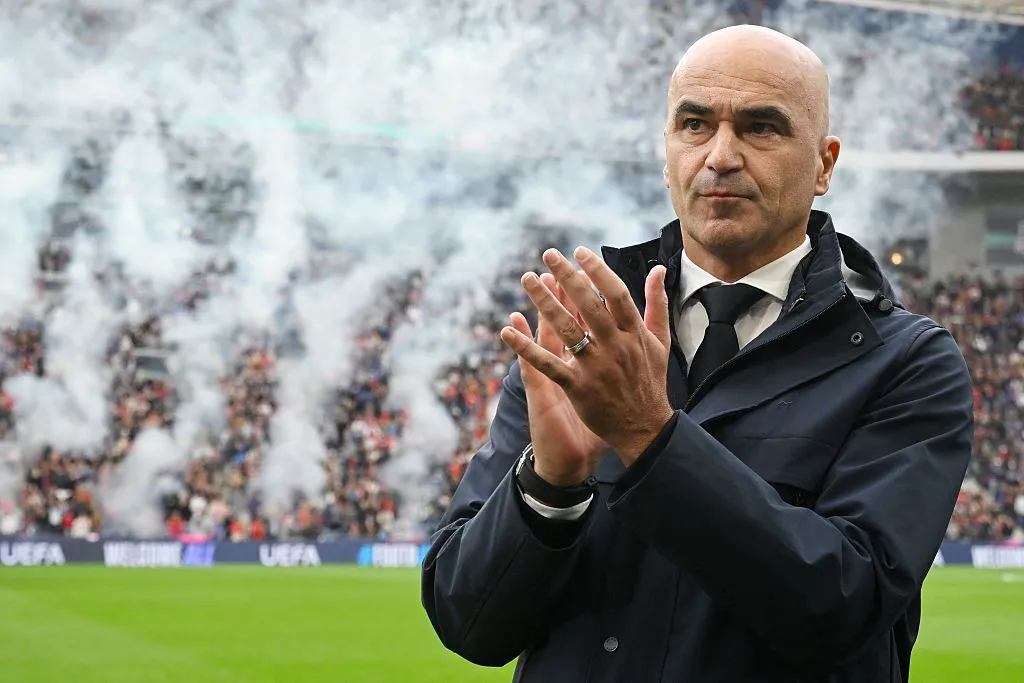
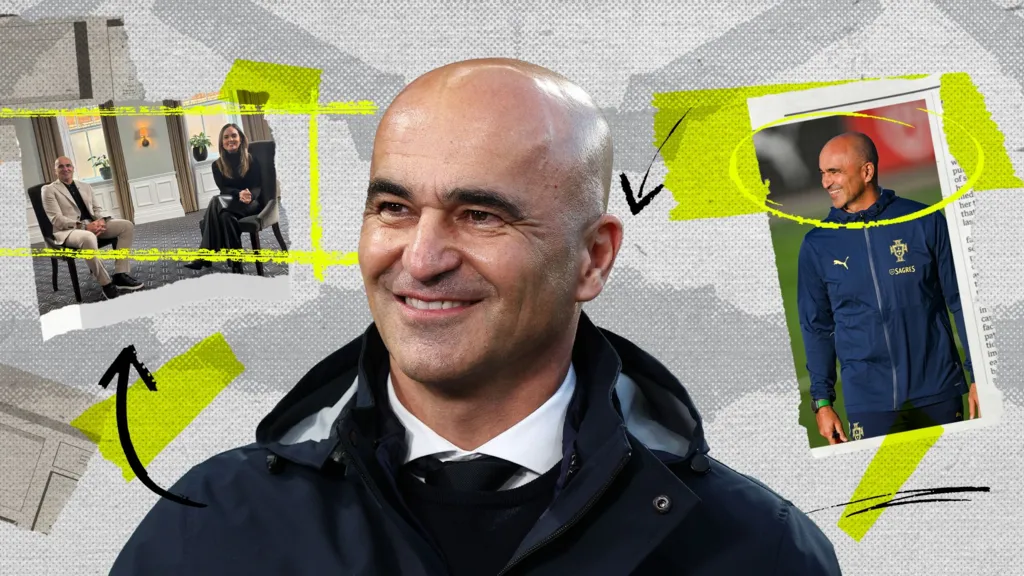
Roberto Martinez, the manager of Portugal’s national team, engages in a conversation with Kelly Somers, discussing his experiences and career in the sport of football.
A new series, The Football Interview, has been launched, featuring in-depth conversations between host Kelly Somers and prominent figures from the sports and entertainment worlds, exploring the nation's passion for football.
The series delves into the minds of its guests, discussing their motivations, career highlights, and personal reflections, providing a unique glimpse into the lives of football's most notable personalities.
New episodes of The Football Interview will be available on weekends via BBC iPlayer, BBC Sounds, and the BBC Sport website, with this week's episode airing on BBC One at 00:15 GMT on Sunday, 15 February, and following Sportscene in Scotland.
———————————————————
When Roberto Martinez joined Wigan in 1995, it is unlikely that he envisioned himself leading the team to FA Cup victory nearly two decades later.
However, that is precisely what transpired, as Martinez masterminded Wigan's 1-0 win over Manchester City in the 2013 FA Cup final.
That same season, Wigan was relegated from the Premier League, and Martinez soon left to manage Everton, a position he held for three years before being sacked.
Since then, Martinez has gone on to manage at the international level, first with Belgium and currently with Portugal, a role he has held since January 2023.
Under Martinez's guidance, Portugal secured its second Nations League title by defeating Spain, and he has been reflecting on his experiences in the sport.
Tragedy struck the Portuguese team less than a month after their Nations League victory, as forward Diogo Jota and his brother Andre Silva were killed in a car accident in northern Spain, prompting Martinez to express his desire to honor Jota's memory.
In an extended conversation with Kelly Somers, Martinez discussed various topics, including his FA Cup win, his time managing Belgium's 'golden generation,' and his personal decision to abstain from alcohol.
This video can not be played
Martinez shares his thoughts on club versus country and his experience managing Belgium's 'golden generation'
Kelly Somers: Let's begin with your introduction to football. What drew you to the sport?
Roberto Martinez: For me, football was a way of life, having grown up in a family that was deeply passionate about the game. My father was a coach, and I would often attend team talks and be present in the dressing room, which became a comfortable environment for me.
Kelly: Was the local team where you first played organized football?
Roberto: Yes, I started playing for a local team at the under-nines level. In Spain, we played futsal in school on Fridays and football on Saturdays.
Kelly: At what point did you realize you had the potential to make a career out of football?
Roberto: At 16, I knew I had to take my football to a more professional level. I moved to Zaragoza, where I studied and played football, and my parents would visit me on weekends to watch me play.
Kelly: Looking back on your career, which club do you feel was the most successful or enjoyable for you?
Roberto: Each club presented unique challenges and experiences. When I arrived in the UK in 1995, the Bosman ruling had just been introduced, and I was one of the first three Spaniards to play in the country.
Kelly: You were part of the infamous 'Three Amigos,' weren't you?
Roberto: Yes, we were. I've always been open to new experiences and challenges. When the opportunity arose to move to the UK without speaking English, my response was, 'Why not?'
Kelly: You didn't speak any English when you first arrived?
Roberto: No, I didn't. On my first day at Wigan, the press officer asked me to speak to the local media, but I had to decline due to my language barrier.
Martinez holds the FA Cup trophy alongside matchwinner Ben Watson after Wigan's historic win over Manchester City in 2013
Kelly: Let's discuss the 2013 FA Cup final, which remains one of the greatest upsets in the competition's history. How do you reflect on that achievement?
Roberto: I feel immense pride, as it was a testament to the fact that dreams can come true in the FA Cup. We were the underdogs, but we performed well and deserved the win.
Kelly: When did you realize you wanted to become a manager?
Roberto: I've always been drawn to management, largely due to my father's influence. I found it fascinating and believed it was the best way to make a meaningful impact on the game.
Kelly: Did you envision yourself as a manager before you became a player?
Roberto: Yes, I think so. My experiences as a player, particularly when I moved to the UK, taught me valuable lessons about the importance of addressing individual needs within a team.
Kelly: Who, aside from your father, has had the most significant influence on your managerial style?
Roberto: I've been inspired by Johan Cruyff's approach to the game, particularly his time at Barcelona. He revolutionized the sport, and his influence can still be seen today.
Kelly: Have you had the opportunity to learn from any notable managers or mentors?
Roberto: I've learned by observing and analyzing games, trying to understand the thought processes behind different managerial decisions. I've also followed various World Cups and international tournaments.
Kelly: It sounds like your wife has been on some interesting 'holidays' with you, following these tournaments.
Roberto: Yes, she was initially unaware that our vacations coincided with major football events.
Kelly: I'm sure she caught on eventually.
Roberto: Indeed, she did. And I still owe her a proper honeymoon, as our actual honeymoon was during the World Cup in South Africa.
Kelly: Having experienced management from both club and international levels, what key differences have you observed between the two?
Roberto: In the Premier League, the focus is on the next match, preparing players to make a difference and secure a win. In contrast, international football involves identifying and nurturing talent, creating a competitive team within a limited timeframe – typically three days. This approach differs significantly from the more methodical and tactically synchronized environment of club football. Representing one's country adds an emotional layer, as it affects not only the players but also their families and communities. My fascination with the World Cup, which began with the 1978 tournament in Argentina, ultimately led me to transition into international football.
Martinez is set to lead Portugal in the 2026 World Cup.
Kelly: Reflecting on your time with Belgium, you had an exceptional group of players, often referred to as the 'golden generation'. What challenges did you face, and what did you take away from that experience?
Roberto: The primary challenge was managing the expectation that came with being labeled a 'golden generation'. However, the players were accustomed to high-pressure environments, having played for top clubs. I focused on fostering a collective mindset, encouraging the team to work together to become the best version of themselves. With players like Eden Hazard, Kevin de Bruyne, and Romelu Lukaku, we aimed to make history for Belgian football.
Our journey to the 2018 World Cup was remarkable, with six wins in seven games. Although we lost to France in the semi-finals, we secured the bronze medal, cementing our status as the 'golden generation'. This achievement marked a turning point, as the team maintained its number one ranking for four consecutive years. It was an exciting period, as we worked towards a common goal, making Belgian football history.
Kelly: I'd like to ask you to recall a game from your career, either as a player or manager, that you wish you could relive.
Roberto: If I could relive a game, it would be the 2018 World Cup semi-final against France, which we lost 1-0. Despite having nearly 60% possession, the outcome was decided by a single action. I often think about what could have been done differently, and this experience has been valuable in my growth as a manager.
Kelly: Do you still think about that game, or have you been able to move on?
Roberto: Occasionally, I reflect on it, considering what could have been done differently. This exercise helps me learn from the experience, as the margins between success and failure are often small. Having been in such high-stakes games, I believe I can apply those lessons to future matches.
Kelly: You now have a talented group of players with Portugal, having already won the Nations League. The pressure to perform will be high, but it's also an exciting opportunity.
Roberto: The pressure is enjoyable, given Portugal's rich football tradition and the calibre of players like Luis Figo, Joao Pinto, and Rui Costa. Although the team has won numerous titles, the World Cup remains an elusive goal. With a committed group of players, including our 41-year-old captain, Cristiano Ronaldo, and the youngest player, who was born in the year Ronaldo made his national team debut, we're looking forward to the challenge. Our first objective was to qualify, which we've accomplished, and now we're focused on the tournament ahead.
Kelly: What's it like managing Cristiano Ronaldo?
Roberto: Managing Ronaldo is straightforward due to his high standards, work ethic, and dedication to the game. He sets an excellent example for the team, and his current form is impressive, with 25 goals in his last 30 international appearances. As a national team coach, I value his contributions, not just his past achievements, but what he brings to the team now.
Kelly: Many people are wondering how long Cristiano Ronaldo can continue playing at this level. Having worked with him closely, what's your assessment?
Roberto: Based on the data, Ronaldo's physical stats indicate that he can continue playing for a long time. Ultimately, the decision to retire will be his, and I believe he'll make that choice when he feels he's no longer contributing to the team. He's self-critical and will likely decide to stop playing when he no longer meets his own expectations.
Ronaldo is poised to participate in his sixth World Cup.
Kelly: You're married to a Scottish woman and have two daughters. Is that correct?
Kelly: Did you meet your wife during your time in Scotland?
Roberto: Yes, I met her in Motherwell, which was a wonderful experience.
Kelly: That must create an interesting cultural dynamic at home, especially when Portugal plays against Scotland.
Roberto: Indeed, it can be challenging for my in-laws to support Portugal when they play against Scotland. However, it's all part of the fun, and I feel fortunate to have such a unique blend of cultures in my life. My priority is being a good father and husband, and everything else is secondary.
Kelly: Is there something about yourself that might surprise people?
Roberto: I've never consumed alcohol, having made a promise to my father at the age of 16.
Roberto: This commitment was made when I had the opportunity to join Zaragoza, and my father expressed concerns about the potential pitfalls of being young and away from home. I assured him that I would focus on my studies, avoid drinking and smoking, and now, at 52, I'm proud to have kept that promise.
Kelly: If you were to win the World Cup next summer, would you consider making another commitment or celebrating in a special way?
Roberto: Perhaps I would make another commitment, but for now, I'm focused on the task at hand.
(No changes, as this paragraph appears to be a notification or advertisement)

News
Ireland’s World Cup aspirations remain intact thanks to Tucker’s 94
Ireland secured a 96-run victory over Oman at the T20 World Cup, driven by an unbeaten 94 from acting captain Lorcan Tucker.
Lorcan Tucker achieved a personal best in T20i matches, scoring 94 not out to equal his highest total.
The Men's T20 World Cup, Group B, match took place in Colombo.
Ireland's innings ended with 235-5 after 20 overs, with Tucker scoring 94* (51) and Ahmed taking 3-33.
Oman's innings concluded with 139 all out after 18 overs, with Kaleem scoring 50 (29) and Little taking 3-16.
Ireland secured a 96-run victory over Oman.
Stand-in captain Lorcan Tucker led Ireland to a decisive 96-run win over Oman in the T20 World Cup, scoring an unbeaten 94.
Following losses to Sri Lanka and Australia, Ireland needed a win and an improved net run-rate to remain in contention for progression.
When Tucker arrived at the crease with Ireland at 25-2, the team's prospects looked uncertain, but he went on to equal his highest T20 score, guiding Ireland to 235-5 by the end of their innings.
Although Aamir Kaleem scored a half-century for Oman, the team's wickets fell rapidly, with Josh Little claiming three wickets for 16 runs for Ireland.
Ireland's next match is against Zimbabwe on Tuesday, and they will need a win, along with favorable results in other matches, to advance to the Super 8s.
A notable performance from Muzarabani helped Zimbabwe achieve a surprise win over Australia.
With Paul Stirling injured, Lorcan Tucker took over as captain, while Tim Tector replaced him as the opening batsman.
Ireland's struggle to establish a strong top-order partnership continued, as Shakeel Ahmed made an impact with his bowling.
The 38-year-old Ahmed, who celebrated his wickets in a style reminiscent of Cristiano Ronaldo, dismissed Tim Tector (5), Ross Adair (14), and Harry Tector (14) during the powerplay, leaving Ireland at 47-3 after six overs.
After Curtis Campher's brief stint at the crease, Gareth Delany joined forces with Tucker to provide much-needed momentum to Ireland's innings.
The partnership between Delany and Tucker yielded 101 runs from 56 balls, transforming Ireland's position and paving the way for their highest T20 international total.
Delany's 56 runs from 30 balls, including seven boundaries, played a crucial role in the partnership, while Tucker's performance stole the show.
Tucker's inventive knock, featuring 10 fours and four sixes, was nearly cut short when Vinayak Shukla appeared to have him stumped, but the third umpire ruled in his favor, allowing him to continue.
Tucker made the most of the reprieve, producing the best knock of the tournament so far, surpassing Tim Seifert's 89 against UAE for New Zealand.
As the innings drew to a close, Tucker found himself at the non-striker's end, denied the opportunity to score a century as George Dockrell faced the final three deliveries, scoring 35 from nine balls.
Josh Little claimed three wickets and was unfortunate not to have taken another, due to a dropped catch.
The 93 runs scored by Ireland in the final five overs of their innings seemed to have sealed the result, but Ireland's focus was also on improving their net run-rate.
Oman started strongly, reaching 63-2 after the powerplay and bringing up their 100 in the 11th over, but wickets continued to fall, making the target increasingly out of reach.
Aamir Kaleem led the charge for Oman, becoming the oldest player in T20 World Cup history to score a half-century, breaking the record set by Muhammad Nadeem just a few days earlier.
Josh Little's performance was a significant positive for Ireland's bowling attack.
Little, who had gone without a wicket in his previous four T20 internationals, finished with impressive figures of 3-16.
News
Villa’s Continued Reliance on Veteran Players Raises Questions About Sustainability
The experienced core of Aston Villa has propelled the team to unprecedented success, raising questions about the sustainability of this upward trajectory.
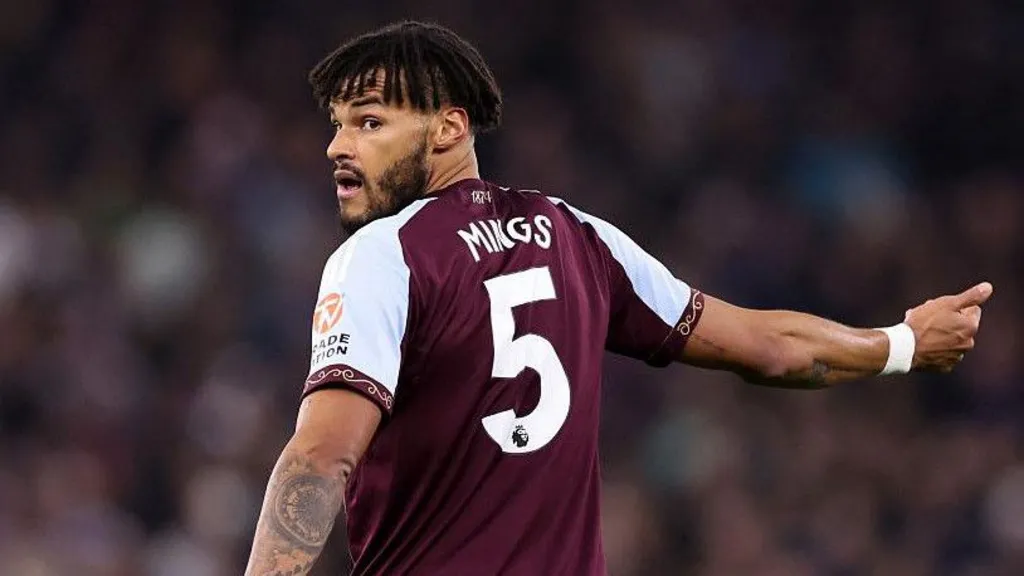
In January 2019, Dean Smith brought in defender Tyrone Mings on a loan deal, marking the start of a significant period of recruitment for the club.
Aston Villa's experienced players have been instrumental in the team's recent success, but questions remain about the long-term sustainability of this approach.
A notable aspect of Villa's recent lineups is the presence of players signed during Dean Smith's tenure, with seven players from his era featuring in the draw against Bournemouth and seven starters in the win over Brighton having made their debuts under his management.
The club can almost field an entire team of players signed by Smith, who departed over four years ago, highlighting his lasting impact on the squad.
Despite not having won a trophy in three decades, Aston Villa hosts Newcastle in the FA Cup on Saturday, seeking to end this drought.
Under Unai Emery's guidance, Villa has been performing above expectations, but the team faces challenges in bridging the financial gap with its Champions League rivals.
The club's reliance on the same core players year after year raises concerns about how to refresh the squad, particularly given the constraints of profit and sustainability regulations.
Unai Emery re-acquired Douglas Luiz and Ross Barkley, who initially joined the club during Dean Smith's tenure.
Following Douglas Luiz's return to the club in January, Villa is just one player short of being able to field a team composed entirely of players signed by Smith, with the exception of a left-back.
The addition of Lucas Digne, who joined under Steven Gerrard, would complete a team without any initial input from Unai Emery, although the Spaniard has since re-signed Luiz and Barkley.
Dean Smith's influence on the club persists, despite his departure in November 2021 after a three-year tenure.
One of Smith's earliest signings was Tyrone Mings, who arrived on loan from Bournemouth in January 2019 and has since become the longest-serving player from that era, recently reaching 200 appearances for the club.
The summer following Villa's promotion to the Premier League saw the arrival of Ezri Konsa and Luiz, among others, including Matty Cash, Emi Martinez, and Ollie Watkins, all of whom were signed under Smith's management.
The core of the squad consists of players like Mings, Konsa, Watkins, and John McGinn, who were signed from lower leagues, often with an element of risk involved.
Notable signings from this period include McGinn, who joined from Hibernian for £3.5m, and Konsa, who arrived from Brentford for £12m, while Matty Cash was signed from Nottingham Forest for £16m.
Although Unai Emery has elevated the team's performance, the club faces significant challenges in replacing key players like Konsa, given the current market rates and the relatively low fees paid for these players initially.
Succession planning is a major concern for the club, particularly with limited financial resources available.
The average age of Villa's starting lineup is 28 years and 84 days, the second-oldest in the Premier League, prompting internal recognition of the need to address this issue.
In an effort to start this process, Villa recently signed 19-year-old Brazilian winger Alysson from Gremio for £10m and 17-year-old Brian Madjo from Metz for a similar fee.
While the club would have preferred to sign these players at a later stage, they opted to secure them for a lower fee, reducing the risk involved.
Neither Alysson nor Madjo is expected to make an immediate impact, although Alysson made his debut recently, with the January window seen as an opportunity to strike a balance between addressing the age issue and solving first-team problems.
The arrival of striker Tammy Abraham and the return of Luiz on loan from Juventus were necessitated by the season-ending injury to Boubacar Kamara.
With Villa committed to spending £18.25m on Abraham, the club had no remaining balance to cover Kamara's position, making Luiz's return a practical solution.
Luiz's loan deal was attractive due to his availability, familiarity with Emery's demands, and relatively low cost, given that his loan at Nottingham Forest had been cancelled.
BBC Radio WM: Tune in to Friday's Football Phone-In for more discussion.
This video is currently unavailable for playback.
A late own goal secured Aston Villa's win over Brighton in their recent match.
Villa operates in a transfer market similar to that of Newcastle, Tottenham, Wolves, and Nottingham Forest, rather than competing with the top-tier clubs.
According to Deloitte's 2024-25 football finance report, Villa generated £450m in revenue, ranking 14th, but trails Tottenham by over £200m.
The ongoing upgrade of Villa Park, which will increase the stadium's capacity to around 50,000, is expected to take 18 months to complete, but even then, matchday revenue will remain lower than that of many Premier League rivals.
Unai Emery's achievements with the club are notable, considering the limited financial resources at his disposal.
Qualifying for the Champions League would provide a significant boost, but it does not entirely resolve the club's financial challenges.
When top-tier signings become available, Villa is unlikely to be a major contender due to its financial constraints.
The recent signing of midfielder Conor Gallagher by Tottenham highlights the financial pecking order, with Spurs able to pay the £35m fee demanded by Atletico Madrid.
Emery's side had been in talks to sign Gallagher, but once Tottenham entered the fray, the competition became insurmountable, and the player opted to join the London club.
Although Tottenham did not directly poach Gallagher from Villa, the transfer serves as a reminder of the financial gulf between the two clubs.
The Midlands side must be prudent with its finances, acknowledging that it cannot absorb the cost of a failed signing, unlike clubs like Manchester City or Tottenham.
The example of Evann Guessand, who failed to score in the league after a £26m move from Nice, underscores the risks involved in big-money transfers, and Villa's need to manage its resources carefully.
Villa's struggles to comply with Premier League financial regulations are well-documented, having sold Jacob Ramsey to Newcastle for £40m to balance the books, and the club is expected to need to make further sales to remain compliant.
The pressure to generate revenue through player sales will continue to be a challenge for Villa, as it seeks to navigate the complexities of the transfer market and maintain a competitive squad.
Despite Emery's impressive performance with the available resources, Villa's progress is hindered by financial constraints, emphasizing the need for a long-term financial solution to support the manager's efforts.
News
Mandelson’s Vetting System Examined by Ros Atkins
Concerns have been raised regarding Peter Mandelson’s association with Jeffrey Epstein, a convicted sex offender, prompting inquiries into his appointment as ambassador, a story being examined by Analysis Editor Ros Atkins.
The controversy surrounding Peter Mandelson's links to convicted sex offender Jeffrey Epstein has raised concerns about the selection process for the UK's US ambassador, prompting inquiries into how Mandelson secured the role.
The appointment of ambassadors is a government decision, although candidates undergo a thorough vetting process before being considered for the role.
Following recent allegations about Peter Mandelson, the prime minister has suggested that the current system needs to be revised, particularly in the wake of his dismissal as US ambassador in September 2025.
Recently released US documents appear to show that Mandelson, while serving as business secretary under Prime Minister Gordon Brown in 2009, sent emails to Epstein containing sensitive market information.
An investigation into alleged misconduct in public office has been launched by the Metropolitan Police, with Mandelson maintaining that he has not engaged in any criminal activity and was not motivated by personal financial gain.
Mandelson has previously acknowledged his regret over maintaining a relationship with Epstein after the latter's conviction in 2008 and has apologized to Epstein's victims.
For further analysis of the situation, the BBC's Analysis Editor Ros Atkins provides additional insight.
This report was produced by Katerina Karelli, with graphic support from Jacqueline Galvin.
-
 News1 day ago
Australian Politics Faces Questions Over Gender Equality Amid Sussan Ley’s Appointment
-
 News1 day ago
Farage Says Reform to Replace Traditional Tory Party
-
 News1 day ago
Husband’s alleged £600k theft for sex and antiques blamed on drug side effects
-
 News1 day ago
Wrexham Pair Seek Win Against Former Team Ipswich
-
 Business1 day ago
BBC Reporter Exposed to Cyber Attack Due to Vulnerabilities in AI Coding Tool
-
 News1 day ago
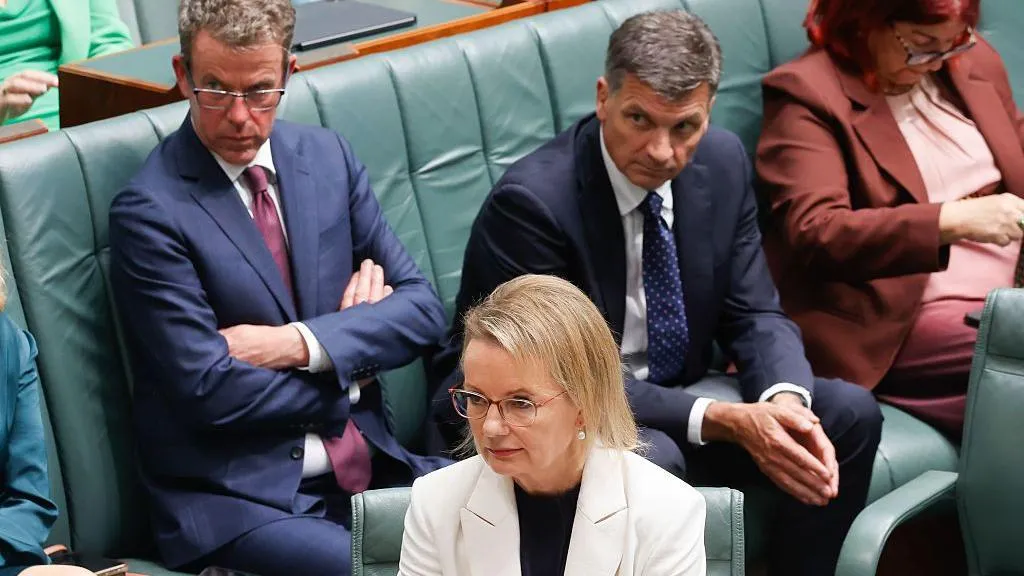
Liberal Party Removes Australia’s First Female Leader
-
 News1 day ago
UK Braces for Cold Snap with Snow and Ice Alerts Expected
-
 News3 days ago
Sunbed ads spreading harmful misinformation to young people
News
FA Cup Victory Proves Memorable and Coaching Ronaldo Presents No Difficulty
Roberto Martinez, the manager of Portugal’s national team, engages in a conversation with Kelly Somers, discussing his experiences and career in the sport of football.
A new series, The Football Interview, has been launched, featuring in-depth conversations between host Kelly Somers and prominent figures from the sports and entertainment worlds, exploring the nation's passion for football.
The series delves into the minds of its guests, discussing their motivations, career highlights, and personal reflections, providing a unique glimpse into the lives of football's most notable personalities.
New episodes of The Football Interview will be available on weekends via BBC iPlayer, BBC Sounds, and the BBC Sport website, with this week's episode airing on BBC One at 00:15 GMT on Sunday, 15 February, and following Sportscene in Scotland.
———————————————————
When Roberto Martinez joined Wigan in 1995, it is unlikely that he envisioned himself leading the team to FA Cup victory nearly two decades later.
However, that is precisely what transpired, as Martinez masterminded Wigan's 1-0 win over Manchester City in the 2013 FA Cup final.
That same season, Wigan was relegated from the Premier League, and Martinez soon left to manage Everton, a position he held for three years before being sacked.
Since then, Martinez has gone on to manage at the international level, first with Belgium and currently with Portugal, a role he has held since January 2023.
Under Martinez's guidance, Portugal secured its second Nations League title by defeating Spain, and he has been reflecting on his experiences in the sport.
Tragedy struck the Portuguese team less than a month after their Nations League victory, as forward Diogo Jota and his brother Andre Silva were killed in a car accident in northern Spain, prompting Martinez to express his desire to honor Jota's memory.
In an extended conversation with Kelly Somers, Martinez discussed various topics, including his FA Cup win, his time managing Belgium's 'golden generation,' and his personal decision to abstain from alcohol.
This video can not be played
Martinez shares his thoughts on club versus country and his experience managing Belgium's 'golden generation'
Kelly Somers: Let's begin with your introduction to football. What drew you to the sport?
Roberto Martinez: For me, football was a way of life, having grown up in a family that was deeply passionate about the game. My father was a coach, and I would often attend team talks and be present in the dressing room, which became a comfortable environment for me.
Kelly: Was the local team where you first played organized football?
Roberto: Yes, I started playing for a local team at the under-nines level. In Spain, we played futsal in school on Fridays and football on Saturdays.
Kelly: At what point did you realize you had the potential to make a career out of football?
Roberto: At 16, I knew I had to take my football to a more professional level. I moved to Zaragoza, where I studied and played football, and my parents would visit me on weekends to watch me play.
Kelly: Looking back on your career, which club do you feel was the most successful or enjoyable for you?
Roberto: Each club presented unique challenges and experiences. When I arrived in the UK in 1995, the Bosman ruling had just been introduced, and I was one of the first three Spaniards to play in the country.
Kelly: You were part of the infamous 'Three Amigos,' weren't you?
Roberto: Yes, we were. I've always been open to new experiences and challenges. When the opportunity arose to move to the UK without speaking English, my response was, 'Why not?'
Kelly: You didn't speak any English when you first arrived?
Roberto: No, I didn't. On my first day at Wigan, the press officer asked me to speak to the local media, but I had to decline due to my language barrier.
Martinez holds the FA Cup trophy alongside matchwinner Ben Watson after Wigan's historic win over Manchester City in 2013
Kelly: Let's discuss the 2013 FA Cup final, which remains one of the greatest upsets in the competition's history. How do you reflect on that achievement?
Roberto: I feel immense pride, as it was a testament to the fact that dreams can come true in the FA Cup. We were the underdogs, but we performed well and deserved the win.
Kelly: When did you realize you wanted to become a manager?
Roberto: I've always been drawn to management, largely due to my father's influence. I found it fascinating and believed it was the best way to make a meaningful impact on the game.
Kelly: Did you envision yourself as a manager before you became a player?
Roberto: Yes, I think so. My experiences as a player, particularly when I moved to the UK, taught me valuable lessons about the importance of addressing individual needs within a team.
Kelly: Who, aside from your father, has had the most significant influence on your managerial style?
Roberto: I've been inspired by Johan Cruyff's approach to the game, particularly his time at Barcelona. He revolutionized the sport, and his influence can still be seen today.
Kelly: Have you had the opportunity to learn from any notable managers or mentors?
Roberto: I've learned by observing and analyzing games, trying to understand the thought processes behind different managerial decisions. I've also followed various World Cups and international tournaments.
Kelly: It sounds like your wife has been on some interesting 'holidays' with you, following these tournaments.
Roberto: Yes, she was initially unaware that our vacations coincided with major football events.
Kelly: I'm sure she caught on eventually.
Roberto: Indeed, she did. And I still owe her a proper honeymoon, as our actual honeymoon was during the World Cup in South Africa.
Kelly: Having experienced management from both club and international levels, what key differences have you observed between the two?
Roberto: In the Premier League, the focus is on the next match, preparing players to make a difference and secure a win. In contrast, international football involves identifying and nurturing talent, creating a competitive team within a limited timeframe – typically three days. This approach differs significantly from the more methodical and tactically synchronized environment of club football. Representing one's country adds an emotional layer, as it affects not only the players but also their families and communities. My fascination with the World Cup, which began with the 1978 tournament in Argentina, ultimately led me to transition into international football.
Martinez is set to lead Portugal in the 2026 World Cup.
Kelly: Reflecting on your time with Belgium, you had an exceptional group of players, often referred to as the 'golden generation'. What challenges did you face, and what did you take away from that experience?
Roberto: The primary challenge was managing the expectation that came with being labeled a 'golden generation'. However, the players were accustomed to high-pressure environments, having played for top clubs. I focused on fostering a collective mindset, encouraging the team to work together to become the best version of themselves. With players like Eden Hazard, Kevin de Bruyne, and Romelu Lukaku, we aimed to make history for Belgian football.
Our journey to the 2018 World Cup was remarkable, with six wins in seven games. Although we lost to France in the semi-finals, we secured the bronze medal, cementing our status as the 'golden generation'. This achievement marked a turning point, as the team maintained its number one ranking for four consecutive years. It was an exciting period, as we worked towards a common goal, making Belgian football history.
Kelly: I'd like to ask you to recall a game from your career, either as a player or manager, that you wish you could relive.
Roberto: If I could relive a game, it would be the 2018 World Cup semi-final against France, which we lost 1-0. Despite having nearly 60% possession, the outcome was decided by a single action. I often think about what could have been done differently, and this experience has been valuable in my growth as a manager.
Kelly: Do you still think about that game, or have you been able to move on?
Roberto: Occasionally, I reflect on it, considering what could have been done differently. This exercise helps me learn from the experience, as the margins between success and failure are often small. Having been in such high-stakes games, I believe I can apply those lessons to future matches.
Kelly: You now have a talented group of players with Portugal, having already won the Nations League. The pressure to perform will be high, but it's also an exciting opportunity.
Roberto: The pressure is enjoyable, given Portugal's rich football tradition and the calibre of players like Luis Figo, Joao Pinto, and Rui Costa. Although the team has won numerous titles, the World Cup remains an elusive goal. With a committed group of players, including our 41-year-old captain, Cristiano Ronaldo, and the youngest player, who was born in the year Ronaldo made his national team debut, we're looking forward to the challenge. Our first objective was to qualify, which we've accomplished, and now we're focused on the tournament ahead.
Kelly: What's it like managing Cristiano Ronaldo?
Roberto: Managing Ronaldo is straightforward due to his high standards, work ethic, and dedication to the game. He sets an excellent example for the team, and his current form is impressive, with 25 goals in his last 30 international appearances. As a national team coach, I value his contributions, not just his past achievements, but what he brings to the team now.
Kelly: Many people are wondering how long Cristiano Ronaldo can continue playing at this level. Having worked with him closely, what's your assessment?
Roberto: Based on the data, Ronaldo's physical stats indicate that he can continue playing for a long time. Ultimately, the decision to retire will be his, and I believe he'll make that choice when he feels he's no longer contributing to the team. He's self-critical and will likely decide to stop playing when he no longer meets his own expectations.
Ronaldo is poised to participate in his sixth World Cup.
Kelly: You're married to a Scottish woman and have two daughters. Is that correct?
Kelly: Did you meet your wife during your time in Scotland?
Roberto: Yes, I met her in Motherwell, which was a wonderful experience.
Kelly: That must create an interesting cultural dynamic at home, especially when Portugal plays against Scotland.
Roberto: Indeed, it can be challenging for my in-laws to support Portugal when they play against Scotland. However, it's all part of the fun, and I feel fortunate to have such a unique blend of cultures in my life. My priority is being a good father and husband, and everything else is secondary.
Kelly: Is there something about yourself that might surprise people?
Roberto: I've never consumed alcohol, having made a promise to my father at the age of 16.
Roberto: This commitment was made when I had the opportunity to join Zaragoza, and my father expressed concerns about the potential pitfalls of being young and away from home. I assured him that I would focus on my studies, avoid drinking and smoking, and now, at 52, I'm proud to have kept that promise.
Kelly: If you were to win the World Cup next summer, would you consider making another commitment or celebrating in a special way?
Roberto: Perhaps I would make another commitment, but for now, I'm focused on the task at hand.
(No changes, as this paragraph appears to be a notification or advertisement)
News
Ireland’s World Cup aspirations remain intact thanks to Tucker’s 94
Ireland secured a 96-run victory over Oman at the T20 World Cup, driven by an unbeaten 94 from acting captain Lorcan Tucker.
Lorcan Tucker achieved a personal best in T20i matches, scoring 94 not out to equal his highest total.
The Men's T20 World Cup, Group B, match took place in Colombo.
Ireland's innings ended with 235-5 after 20 overs, with Tucker scoring 94* (51) and Ahmed taking 3-33.
Oman's innings concluded with 139 all out after 18 overs, with Kaleem scoring 50 (29) and Little taking 3-16.
Ireland secured a 96-run victory over Oman.
Stand-in captain Lorcan Tucker led Ireland to a decisive 96-run win over Oman in the T20 World Cup, scoring an unbeaten 94.
Following losses to Sri Lanka and Australia, Ireland needed a win and an improved net run-rate to remain in contention for progression.
When Tucker arrived at the crease with Ireland at 25-2, the team's prospects looked uncertain, but he went on to equal his highest T20 score, guiding Ireland to 235-5 by the end of their innings.
Although Aamir Kaleem scored a half-century for Oman, the team's wickets fell rapidly, with Josh Little claiming three wickets for 16 runs for Ireland.
Ireland's next match is against Zimbabwe on Tuesday, and they will need a win, along with favorable results in other matches, to advance to the Super 8s.
A notable performance from Muzarabani helped Zimbabwe achieve a surprise win over Australia.
With Paul Stirling injured, Lorcan Tucker took over as captain, while Tim Tector replaced him as the opening batsman.
Ireland's struggle to establish a strong top-order partnership continued, as Shakeel Ahmed made an impact with his bowling.
The 38-year-old Ahmed, who celebrated his wickets in a style reminiscent of Cristiano Ronaldo, dismissed Tim Tector (5), Ross Adair (14), and Harry Tector (14) during the powerplay, leaving Ireland at 47-3 after six overs.
After Curtis Campher's brief stint at the crease, Gareth Delany joined forces with Tucker to provide much-needed momentum to Ireland's innings.
The partnership between Delany and Tucker yielded 101 runs from 56 balls, transforming Ireland's position and paving the way for their highest T20 international total.
Delany's 56 runs from 30 balls, including seven boundaries, played a crucial role in the partnership, while Tucker's performance stole the show.
Tucker's inventive knock, featuring 10 fours and four sixes, was nearly cut short when Vinayak Shukla appeared to have him stumped, but the third umpire ruled in his favor, allowing him to continue.
Tucker made the most of the reprieve, producing the best knock of the tournament so far, surpassing Tim Seifert's 89 against UAE for New Zealand.
As the innings drew to a close, Tucker found himself at the non-striker's end, denied the opportunity to score a century as George Dockrell faced the final three deliveries, scoring 35 from nine balls.
Josh Little claimed three wickets and was unfortunate not to have taken another, due to a dropped catch.
The 93 runs scored by Ireland in the final five overs of their innings seemed to have sealed the result, but Ireland's focus was also on improving their net run-rate.
Oman started strongly, reaching 63-2 after the powerplay and bringing up their 100 in the 11th over, but wickets continued to fall, making the target increasingly out of reach.
Aamir Kaleem led the charge for Oman, becoming the oldest player in T20 World Cup history to score a half-century, breaking the record set by Muhammad Nadeem just a few days earlier.
Josh Little's performance was a significant positive for Ireland's bowling attack.
Little, who had gone without a wicket in his previous four T20 internationals, finished with impressive figures of 3-16.
News
Villa’s Continued Reliance on Veteran Players Raises Questions About Sustainability
The experienced core of Aston Villa has propelled the team to unprecedented success, raising questions about the sustainability of this upward trajectory.
In January 2019, Dean Smith brought in defender Tyrone Mings on a loan deal, marking the start of a significant period of recruitment for the club.
Aston Villa's experienced players have been instrumental in the team's recent success, but questions remain about the long-term sustainability of this approach.
A notable aspect of Villa's recent lineups is the presence of players signed during Dean Smith's tenure, with seven players from his era featuring in the draw against Bournemouth and seven starters in the win over Brighton having made their debuts under his management.
The club can almost field an entire team of players signed by Smith, who departed over four years ago, highlighting his lasting impact on the squad.
Despite not having won a trophy in three decades, Aston Villa hosts Newcastle in the FA Cup on Saturday, seeking to end this drought.
Under Unai Emery's guidance, Villa has been performing above expectations, but the team faces challenges in bridging the financial gap with its Champions League rivals.
The club's reliance on the same core players year after year raises concerns about how to refresh the squad, particularly given the constraints of profit and sustainability regulations.
Unai Emery re-acquired Douglas Luiz and Ross Barkley, who initially joined the club during Dean Smith's tenure.
Following Douglas Luiz's return to the club in January, Villa is just one player short of being able to field a team composed entirely of players signed by Smith, with the exception of a left-back.
The addition of Lucas Digne, who joined under Steven Gerrard, would complete a team without any initial input from Unai Emery, although the Spaniard has since re-signed Luiz and Barkley.
Dean Smith's influence on the club persists, despite his departure in November 2021 after a three-year tenure.
One of Smith's earliest signings was Tyrone Mings, who arrived on loan from Bournemouth in January 2019 and has since become the longest-serving player from that era, recently reaching 200 appearances for the club.
The summer following Villa's promotion to the Premier League saw the arrival of Ezri Konsa and Luiz, among others, including Matty Cash, Emi Martinez, and Ollie Watkins, all of whom were signed under Smith's management.
The core of the squad consists of players like Mings, Konsa, Watkins, and John McGinn, who were signed from lower leagues, often with an element of risk involved.
Notable signings from this period include McGinn, who joined from Hibernian for £3.5m, and Konsa, who arrived from Brentford for £12m, while Matty Cash was signed from Nottingham Forest for £16m.
Although Unai Emery has elevated the team's performance, the club faces significant challenges in replacing key players like Konsa, given the current market rates and the relatively low fees paid for these players initially.
Succession planning is a major concern for the club, particularly with limited financial resources available.
The average age of Villa's starting lineup is 28 years and 84 days, the second-oldest in the Premier League, prompting internal recognition of the need to address this issue.
In an effort to start this process, Villa recently signed 19-year-old Brazilian winger Alysson from Gremio for £10m and 17-year-old Brian Madjo from Metz for a similar fee.
While the club would have preferred to sign these players at a later stage, they opted to secure them for a lower fee, reducing the risk involved.
Neither Alysson nor Madjo is expected to make an immediate impact, although Alysson made his debut recently, with the January window seen as an opportunity to strike a balance between addressing the age issue and solving first-team problems.
The arrival of striker Tammy Abraham and the return of Luiz on loan from Juventus were necessitated by the season-ending injury to Boubacar Kamara.
With Villa committed to spending £18.25m on Abraham, the club had no remaining balance to cover Kamara's position, making Luiz's return a practical solution.
Luiz's loan deal was attractive due to his availability, familiarity with Emery's demands, and relatively low cost, given that his loan at Nottingham Forest had been cancelled.
BBC Radio WM: Tune in to Friday's Football Phone-In for more discussion.
This video is currently unavailable for playback.
A late own goal secured Aston Villa's win over Brighton in their recent match.
Villa operates in a transfer market similar to that of Newcastle, Tottenham, Wolves, and Nottingham Forest, rather than competing with the top-tier clubs.
According to Deloitte's 2024-25 football finance report, Villa generated £450m in revenue, ranking 14th, but trails Tottenham by over £200m.
The ongoing upgrade of Villa Park, which will increase the stadium's capacity to around 50,000, is expected to take 18 months to complete, but even then, matchday revenue will remain lower than that of many Premier League rivals.
Unai Emery's achievements with the club are notable, considering the limited financial resources at his disposal.
Qualifying for the Champions League would provide a significant boost, but it does not entirely resolve the club's financial challenges.
When top-tier signings become available, Villa is unlikely to be a major contender due to its financial constraints.
The recent signing of midfielder Conor Gallagher by Tottenham highlights the financial pecking order, with Spurs able to pay the £35m fee demanded by Atletico Madrid.
Emery's side had been in talks to sign Gallagher, but once Tottenham entered the fray, the competition became insurmountable, and the player opted to join the London club.
Although Tottenham did not directly poach Gallagher from Villa, the transfer serves as a reminder of the financial gulf between the two clubs.
The Midlands side must be prudent with its finances, acknowledging that it cannot absorb the cost of a failed signing, unlike clubs like Manchester City or Tottenham.
The example of Evann Guessand, who failed to score in the league after a £26m move from Nice, underscores the risks involved in big-money transfers, and Villa's need to manage its resources carefully.
Villa's struggles to comply with Premier League financial regulations are well-documented, having sold Jacob Ramsey to Newcastle for £40m to balance the books, and the club is expected to need to make further sales to remain compliant.
The pressure to generate revenue through player sales will continue to be a challenge for Villa, as it seeks to navigate the complexities of the transfer market and maintain a competitive squad.
Despite Emery's impressive performance with the available resources, Villa's progress is hindered by financial constraints, emphasizing the need for a long-term financial solution to support the manager's efforts.
News
Mandelson’s Vetting System Examined by Ros Atkins
Concerns have been raised regarding Peter Mandelson’s association with Jeffrey Epstein, a convicted sex offender, prompting inquiries into his appointment as ambassador, a story being examined by Analysis Editor Ros Atkins.
The controversy surrounding Peter Mandelson's links to convicted sex offender Jeffrey Epstein has raised concerns about the selection process for the UK's US ambassador, prompting inquiries into how Mandelson secured the role.
The appointment of ambassadors is a government decision, although candidates undergo a thorough vetting process before being considered for the role.
Following recent allegations about Peter Mandelson, the prime minister has suggested that the current system needs to be revised, particularly in the wake of his dismissal as US ambassador in September 2025.
Recently released US documents appear to show that Mandelson, while serving as business secretary under Prime Minister Gordon Brown in 2009, sent emails to Epstein containing sensitive market information.
An investigation into alleged misconduct in public office has been launched by the Metropolitan Police, with Mandelson maintaining that he has not engaged in any criminal activity and was not motivated by personal financial gain.
Mandelson has previously acknowledged his regret over maintaining a relationship with Epstein after the latter's conviction in 2008 and has apologized to Epstein's victims.
For further analysis of the situation, the BBC's Analysis Editor Ros Atkins provides additional insight.
This report was produced by Katerina Karelli, with graphic support from Jacqueline Galvin.
-
News1 day ago
Australian Politics Faces Questions Over Gender Equality Amid Sussan Ley’s Appointment
-
News1 day ago
Farage Says Reform to Replace Traditional Tory Party
-
News1 day ago
Husband’s alleged £600k theft for sex and antiques blamed on drug side effects
-
News1 day ago
Wrexham Pair Seek Win Against Former Team Ipswich
-
Business1 day ago
BBC Reporter Exposed to Cyber Attack Due to Vulnerabilities in AI Coding Tool
-
News1 day ago
Liberal Party Removes Australia’s First Female Leader
-
News1 day ago
UK Braces for Cold Snap with Snow and Ice Alerts Expected
-
News3 days ago
Sunbed ads spreading harmful misinformation to young people
Leave a Reply