
News
England Faces Murrayfield Test as New Era Begins
England enter the match with significant momentum, while Scotland are looking to rebound from a difficult experience, yet the rich history of rugby’s oldest Test fixture between the two nations is unavoidable.
Finn Russell is one of only two players from Scotland's matchday 23 that defeated England at Murrayfield in 2018 who will be involved in the upcoming match.
A single pass changed the course of the game, leaving England's defence reeling and redefining the trajectory of the match.
Prior to 2018, Scotland had not beaten England at home in 10 years and had failed to score a try against them at Murrayfield in 14 years.
The historical record between the two teams was even more dismal for Scotland, with only three wins in their previous 29 meetings.
The oldest international rugby fixture was beginning to show signs of fatigue, with the rivalry losing some of its luster.
However, 31 minutes into the 2018 Calcutta Cup match, Russell unleashed a long, looping pass that caught England's defence off guard, allowing Huw Jones to break through and create a scoring opportunity.
The resulting try, scored by Sean Maitland, marked a turning point in the match and sparked a new era of competitiveness between the two teams.
Scotland went on to win the match 25-13, and since then, England have struggled to regain the upper hand, winning only two of their last eight meetings.
The two teams will meet again on Saturday, 14th February at 16:40 GMT.
The match will take place at Scottish Gas Murrayfield.
Live commentary will be available on BBC Radio 5 Live, BBC Radio Scotland, BBC Sounds, and the BBC Sport website and app.
What was once a relatively easy win for England has become a challenging benchmark that they have struggled to reach in recent years.
As soon as the Six Nations schedule was released, England's trip to Murrayfield was identified as a crucial match that could make or break their title aspirations.
Despite their past struggles, England are currently on a 12-match winning streak and are focused on the future, rather than dwelling on past defeats.
They have developed a strong squad with significant depth, which has allowed them to overcome injuries and other setbacks.
England's centre position, once a concern, is now a strength, with Ollie Lawrence available but not selected for the matchday 23.
Joe Heyes has established himself as a high-quality tight-head prop, allowing England to absorb the loss of Will Stuart to injury.
Flanker Tom Curry, a key player for England, will start on the bench.
England have a number of options available, and their momentum is building, but they still have some doubts to address, particularly in regards to their ability to win away from home.
Captain Maro Itoje returns to the England starting XV to face Scotland.
George Ford has been working to maintain his fitness and stay competitive at fly-half, even at the age of 32.
The rivalry between Scotland and England is not just about the current teams, but also about developing the next generation of players.
England's winning streak has been built on some close victories, including a win over France in last year's Six Nations that was aided by French errors.
Their one-point win over Scotland in the same tournament could have gone either way, with Finn Russell missing a late conversion attempt.
England's autumn campaign included wins over Italy and Wales, as well as a two-Test series victory over Argentina, but the Pumas were not at full strength.
England's win over New Zealand was a highlight of their autumn campaign, but the All Blacks were not at their best, having recently changed coaches.
England's current run has been built largely on home wins, and they now face a challenge in breaking their away losing streak against Scotland.
If they fail to win, their upcoming away matches against France and South Africa will become even more daunting.
England's team includes some relatively inexperienced players, such as Henry Arundell and Tommy Freeman, who will face a tough test against Scotland.
Guy Porter, with only eight caps, will be targeted by Scotland's experienced flanker Jamie Ritchie.
Luke Cowan-Dickie's line-out throwing has been inconsistent, and England's replacements did not have the desired impact against Wales last week.
These are minor concerns, but England will still need to address them if they are to overcome Scotland.
In contrast, Scotland are dealing with more significant issues, including a recent defeat to Italy that has raised questions about the team's future.
However, Scotland still have some experienced players, including Finn Russell and Huw Jones, who were part of the team that beat England in 2018.
These players will be looking to draw on their past successes to inspire their team to victory.
Russell and Jones are the only two players from the 2018 matchday 23 who will be involved in the upcoming match, and England will need to find a way to break their link to the past.
England must find a way to overcome the historical significance of the match and the experience of Scotland's key players.
This video is not available to play.
Former England player Chris Ashton's team selections have been met with surprise by some, including Scotland's John Barclay.
The Sport's Strangest Crimes podcast explores the "Bloodgate" scandal and other unusual stories from the world of sport.
The most recent episode of the Rugby Union Weekly podcast is now available to stream.
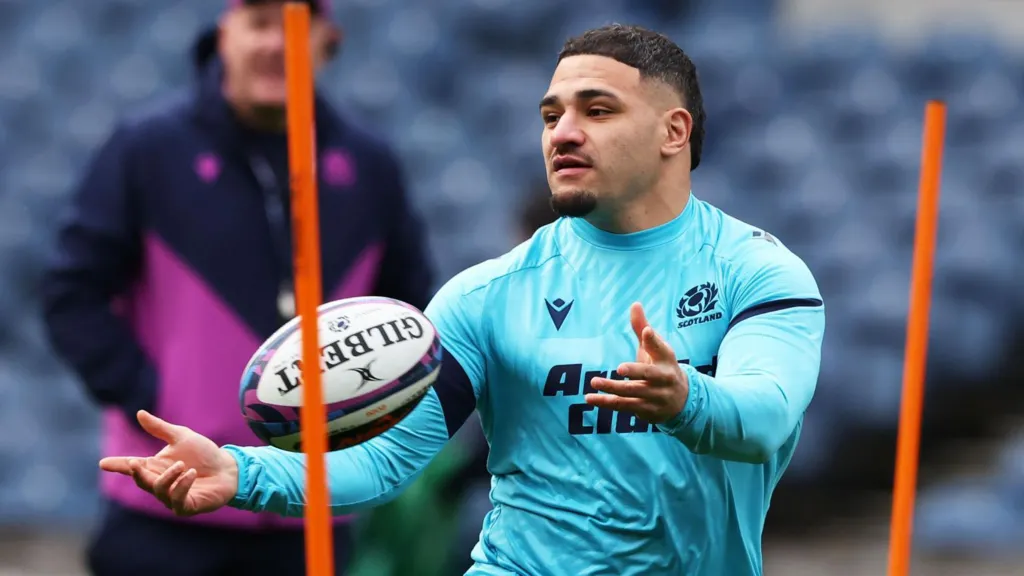

News
Ireland’s World Cup aspirations remain intact thanks to Tucker’s 94
Ireland secured a 96-run victory over Oman at the T20 World Cup, driven by an unbeaten 94 from acting captain Lorcan Tucker.
Lorcan Tucker achieved a personal best in T20i matches, scoring 94 not out to equal his highest total.
The Men's T20 World Cup, Group B, match took place in Colombo.
Ireland's innings ended with 235-5 after 20 overs, with Tucker scoring 94* (51) and Ahmed taking 3-33.
Oman's innings concluded with 139 all out after 18 overs, with Kaleem scoring 50 (29) and Little taking 3-16.
Ireland secured a 96-run victory over Oman.
Stand-in captain Lorcan Tucker led Ireland to a decisive 96-run win over Oman in the T20 World Cup, scoring an unbeaten 94.
Following losses to Sri Lanka and Australia, Ireland needed a win and an improved net run-rate to remain in contention for progression.
When Tucker arrived at the crease with Ireland at 25-2, the team's prospects looked uncertain, but he went on to equal his highest T20 score, guiding Ireland to 235-5 by the end of their innings.
Although Aamir Kaleem scored a half-century for Oman, the team's wickets fell rapidly, with Josh Little claiming three wickets for 16 runs for Ireland.
Ireland's next match is against Zimbabwe on Tuesday, and they will need a win, along with favorable results in other matches, to advance to the Super 8s.
A notable performance from Muzarabani helped Zimbabwe achieve a surprise win over Australia.
With Paul Stirling injured, Lorcan Tucker took over as captain, while Tim Tector replaced him as the opening batsman.
Ireland's struggle to establish a strong top-order partnership continued, as Shakeel Ahmed made an impact with his bowling.
The 38-year-old Ahmed, who celebrated his wickets in a style reminiscent of Cristiano Ronaldo, dismissed Tim Tector (5), Ross Adair (14), and Harry Tector (14) during the powerplay, leaving Ireland at 47-3 after six overs.
After Curtis Campher's brief stint at the crease, Gareth Delany joined forces with Tucker to provide much-needed momentum to Ireland's innings.
The partnership between Delany and Tucker yielded 101 runs from 56 balls, transforming Ireland's position and paving the way for their highest T20 international total.
Delany's 56 runs from 30 balls, including seven boundaries, played a crucial role in the partnership, while Tucker's performance stole the show.
Tucker's inventive knock, featuring 10 fours and four sixes, was nearly cut short when Vinayak Shukla appeared to have him stumped, but the third umpire ruled in his favor, allowing him to continue.
Tucker made the most of the reprieve, producing the best knock of the tournament so far, surpassing Tim Seifert's 89 against UAE for New Zealand.
As the innings drew to a close, Tucker found himself at the non-striker's end, denied the opportunity to score a century as George Dockrell faced the final three deliveries, scoring 35 from nine balls.
Josh Little claimed three wickets and was unfortunate not to have taken another, due to a dropped catch.
The 93 runs scored by Ireland in the final five overs of their innings seemed to have sealed the result, but Ireland's focus was also on improving their net run-rate.
Oman started strongly, reaching 63-2 after the powerplay and bringing up their 100 in the 11th over, but wickets continued to fall, making the target increasingly out of reach.
Aamir Kaleem led the charge for Oman, becoming the oldest player in T20 World Cup history to score a half-century, breaking the record set by Muhammad Nadeem just a few days earlier.
Josh Little's performance was a significant positive for Ireland's bowling attack.
Little, who had gone without a wicket in his previous four T20 internationals, finished with impressive figures of 3-16.
News
Villa’s Continued Reliance on Veteran Players Raises Questions About Sustainability
The experienced core of Aston Villa has propelled the team to unprecedented success, raising questions about the sustainability of this upward trajectory.
In January 2019, Dean Smith brought in defender Tyrone Mings on a loan deal, marking the start of a significant period of recruitment for the club.
Aston Villa's experienced players have been instrumental in the team's recent success, but questions remain about the long-term sustainability of this approach.
A notable aspect of Villa's recent lineups is the presence of players signed during Dean Smith's tenure, with seven players from his era featuring in the draw against Bournemouth and seven starters in the win over Brighton having made their debuts under his management.
The club can almost field an entire team of players signed by Smith, who departed over four years ago, highlighting his lasting impact on the squad.
Despite not having won a trophy in three decades, Aston Villa hosts Newcastle in the FA Cup on Saturday, seeking to end this drought.
Under Unai Emery's guidance, Villa has been performing above expectations, but the team faces challenges in bridging the financial gap with its Champions League rivals.
The club's reliance on the same core players year after year raises concerns about how to refresh the squad, particularly given the constraints of profit and sustainability regulations.
Unai Emery re-acquired Douglas Luiz and Ross Barkley, who initially joined the club during Dean Smith's tenure.
Following Douglas Luiz's return to the club in January, Villa is just one player short of being able to field a team composed entirely of players signed by Smith, with the exception of a left-back.
The addition of Lucas Digne, who joined under Steven Gerrard, would complete a team without any initial input from Unai Emery, although the Spaniard has since re-signed Luiz and Barkley.
Dean Smith's influence on the club persists, despite his departure in November 2021 after a three-year tenure.
One of Smith's earliest signings was Tyrone Mings, who arrived on loan from Bournemouth in January 2019 and has since become the longest-serving player from that era, recently reaching 200 appearances for the club.
The summer following Villa's promotion to the Premier League saw the arrival of Ezri Konsa and Luiz, among others, including Matty Cash, Emi Martinez, and Ollie Watkins, all of whom were signed under Smith's management.
The core of the squad consists of players like Mings, Konsa, Watkins, and John McGinn, who were signed from lower leagues, often with an element of risk involved.
Notable signings from this period include McGinn, who joined from Hibernian for £3.5m, and Konsa, who arrived from Brentford for £12m, while Matty Cash was signed from Nottingham Forest for £16m.
Although Unai Emery has elevated the team's performance, the club faces significant challenges in replacing key players like Konsa, given the current market rates and the relatively low fees paid for these players initially.
Succession planning is a major concern for the club, particularly with limited financial resources available.
The average age of Villa's starting lineup is 28 years and 84 days, the second-oldest in the Premier League, prompting internal recognition of the need to address this issue.
In an effort to start this process, Villa recently signed 19-year-old Brazilian winger Alysson from Gremio for £10m and 17-year-old Brian Madjo from Metz for a similar fee.
While the club would have preferred to sign these players at a later stage, they opted to secure them for a lower fee, reducing the risk involved.
Neither Alysson nor Madjo is expected to make an immediate impact, although Alysson made his debut recently, with the January window seen as an opportunity to strike a balance between addressing the age issue and solving first-team problems.
The arrival of striker Tammy Abraham and the return of Luiz on loan from Juventus were necessitated by the season-ending injury to Boubacar Kamara.
With Villa committed to spending £18.25m on Abraham, the club had no remaining balance to cover Kamara's position, making Luiz's return a practical solution.
Luiz's loan deal was attractive due to his availability, familiarity with Emery's demands, and relatively low cost, given that his loan at Nottingham Forest had been cancelled.
BBC Radio WM: Tune in to Friday's Football Phone-In for more discussion.
This video is currently unavailable for playback.
A late own goal secured Aston Villa's win over Brighton in their recent match.
Villa operates in a transfer market similar to that of Newcastle, Tottenham, Wolves, and Nottingham Forest, rather than competing with the top-tier clubs.
According to Deloitte's 2024-25 football finance report, Villa generated £450m in revenue, ranking 14th, but trails Tottenham by over £200m.
The ongoing upgrade of Villa Park, which will increase the stadium's capacity to around 50,000, is expected to take 18 months to complete, but even then, matchday revenue will remain lower than that of many Premier League rivals.
Unai Emery's achievements with the club are notable, considering the limited financial resources at his disposal.
Qualifying for the Champions League would provide a significant boost, but it does not entirely resolve the club's financial challenges.
When top-tier signings become available, Villa is unlikely to be a major contender due to its financial constraints.
The recent signing of midfielder Conor Gallagher by Tottenham highlights the financial pecking order, with Spurs able to pay the £35m fee demanded by Atletico Madrid.
Emery's side had been in talks to sign Gallagher, but once Tottenham entered the fray, the competition became insurmountable, and the player opted to join the London club.
Although Tottenham did not directly poach Gallagher from Villa, the transfer serves as a reminder of the financial gulf between the two clubs.
The Midlands side must be prudent with its finances, acknowledging that it cannot absorb the cost of a failed signing, unlike clubs like Manchester City or Tottenham.
The example of Evann Guessand, who failed to score in the league after a £26m move from Nice, underscores the risks involved in big-money transfers, and Villa's need to manage its resources carefully.
Villa's struggles to comply with Premier League financial regulations are well-documented, having sold Jacob Ramsey to Newcastle for £40m to balance the books, and the club is expected to need to make further sales to remain compliant.
The pressure to generate revenue through player sales will continue to be a challenge for Villa, as it seeks to navigate the complexities of the transfer market and maintain a competitive squad.
Despite Emery's impressive performance with the available resources, Villa's progress is hindered by financial constraints, emphasizing the need for a long-term financial solution to support the manager's efforts.
News
Mandelson’s Vetting System Examined by Ros Atkins
Concerns have been raised regarding Peter Mandelson’s association with Jeffrey Epstein, a convicted sex offender, prompting inquiries into his appointment as ambassador, a story being examined by Analysis Editor Ros Atkins.
The controversy surrounding Peter Mandelson's links to convicted sex offender Jeffrey Epstein has raised concerns about the selection process for the UK's US ambassador, prompting inquiries into how Mandelson secured the role.
The appointment of ambassadors is a government decision, although candidates undergo a thorough vetting process before being considered for the role.
Following recent allegations about Peter Mandelson, the prime minister has suggested that the current system needs to be revised, particularly in the wake of his dismissal as US ambassador in September 2025.
Recently released US documents appear to show that Mandelson, while serving as business secretary under Prime Minister Gordon Brown in 2009, sent emails to Epstein containing sensitive market information.
An investigation into alleged misconduct in public office has been launched by the Metropolitan Police, with Mandelson maintaining that he has not engaged in any criminal activity and was not motivated by personal financial gain.
Mandelson has previously acknowledged his regret over maintaining a relationship with Epstein after the latter's conviction in 2008 and has apologized to Epstein's victims.
For further analysis of the situation, the BBC's Analysis Editor Ros Atkins provides additional insight.
This report was produced by Katerina Karelli, with graphic support from Jacqueline Galvin.
-
 News1 day ago
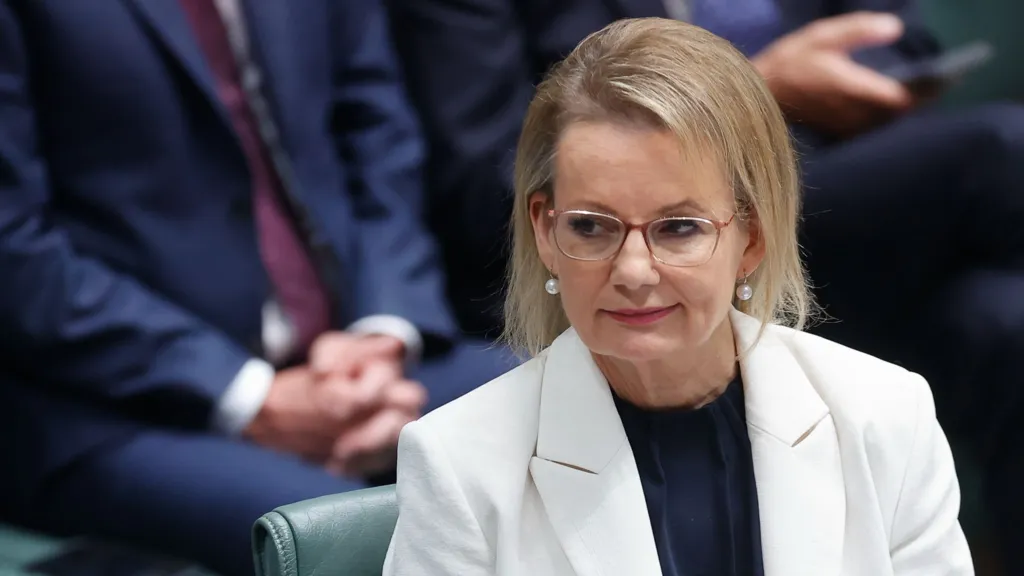
Australian Politics Faces Questions Over Gender Equality Amid Sussan Ley’s Appointment
-
 News1 day ago
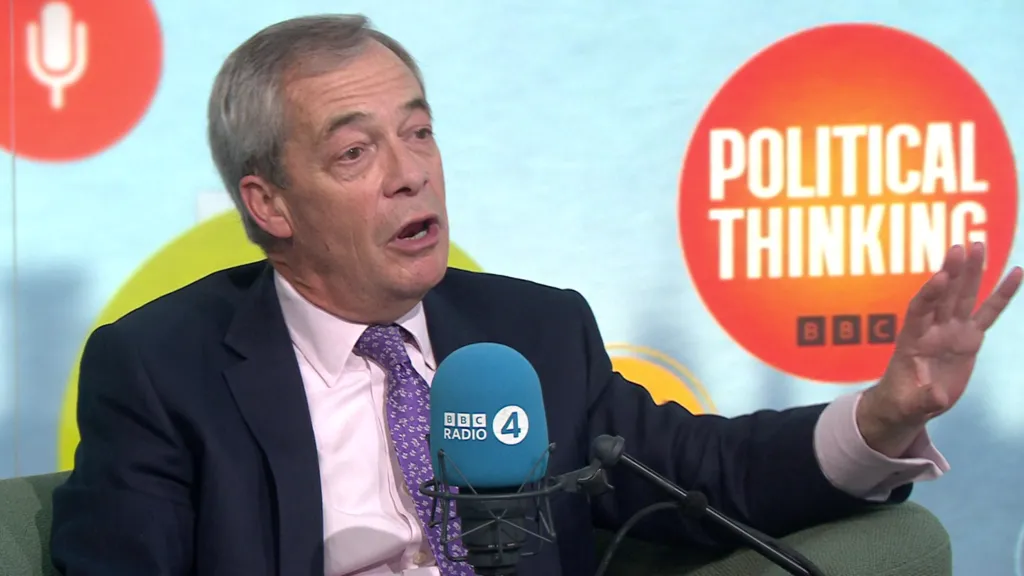
Farage Says Reform to Replace Traditional Tory Party
-
 News1 day ago
Husband’s alleged £600k theft for sex and antiques blamed on drug side effects
-
 News1 day ago
Wrexham Pair Seek Win Against Former Team Ipswich
-
 Business1 day ago
BBC Reporter Exposed to Cyber Attack Due to Vulnerabilities in AI Coding Tool
-
 News1 day ago
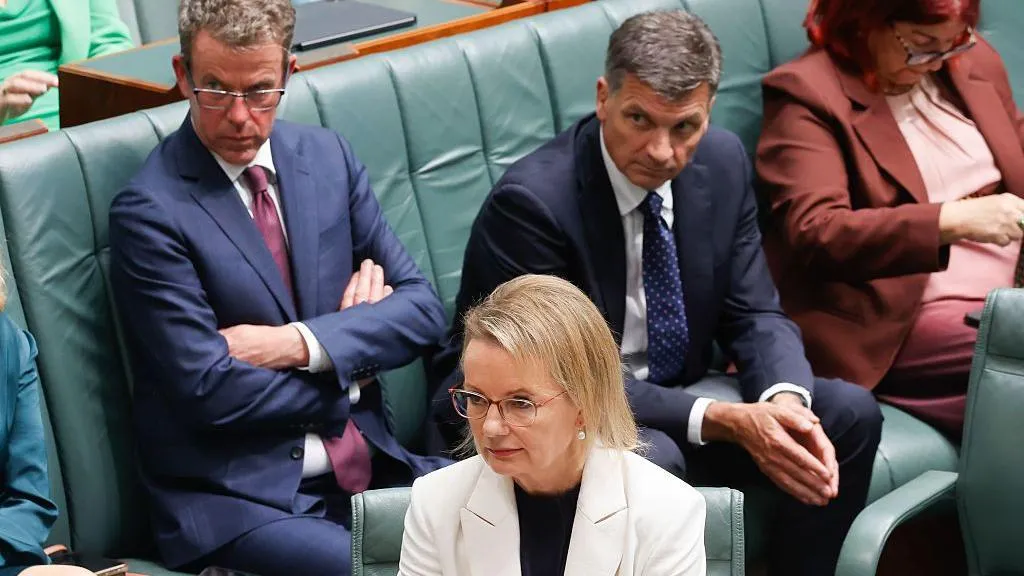
Liberal Party Removes Australia’s First Female Leader
-
 News1 day ago
UK Braces for Cold Snap with Snow and Ice Alerts Expected
-
 News3 days ago
Sunbed ads spreading harmful misinformation to young people