
News
Team GB’s Skeleton Success: What’s Behind Their Dominance
Despite lacking an ice track, Great Britain has emerged as the most successful nation in the history of Olympic skeleton, a surprising dominance that has earned the country a reputation as a powerhouse in the sport.
This video is currently unavailable for playback.
Team GB has secured its first medal at the Winter Olympics, with Matt Weston taking the top spot in the men's skeleton event, prompting praise for his outstanding performance.
Despite the absence of an ice track, Great Britain has consistently excelled in Olympic skeleton competitions, boasting an impressive record.
With his historic gold medal win on Friday, Matt Weston has joined a long list of British skeleton athletes who have achieved podium finishes at the Winter Olympics.
Following in the footsteps of Amy Williams and Lizzy Yarnold, who won gold twice, Weston is the first British man to claim the top spot, bringing the total number of medals in the sport to 10, with potential for further additions at the Milan-Cortina Olympics.
Matt Weston, a two-time world champion, believes that Britain's success in skeleton despite lacking an ice track is likely to be frustrating for other nations, while Lizzy Yarnold views it as a unique strength.
Yarnold explained to BBC Sport that British athletes' ability to adapt and make the most of limited practice time is a key factor in their success, stating, "When we arrive at a track, we have six practice runs, and we make every single one count."
She emphasized the importance of focus and commitment, saying, "Everyone is tuned in to the specific performance advantage we're aiming for, and that's what sets us apart."
Yarnold noted that the British team's ability to turn potential drawbacks into strengths is a crucial aspect of their success, saying, "Sometimes, you can take a negative and turn it into a superpower."
The unassuming wooden hut on the University of Bath campus may not appear to be a hub of athletic excellence, but it has played a significant role in producing Olympic champions.
This humble facility is home to the UK's only push track and serves as the base for the skeleton and bobsleigh teams, where athletes hone their starts and build their strength during the summer months.
The team spends their summers on the 140m track, perfecting their techniques and preparing their bodies for the demands of the winter season.
In comparison to other areas of the sport, the technology used by the British team is relatively straightforward.
The story of British skeleton's success began in the 1990s, when PhD student Kristan Bromley was tasked with designing a sled for the British military, who participated in the sport as a recreational activity.
After the military declined to test his creation, Bromley took it upon himself to try it out, eventually becoming a four-time Olympian and designing the sleds that would help many British athletes achieve Olympic success.
Over the years, renowned companies such as McLaren and British Aerospace have contributed to the development of the sleds, while the introduction of specialized skin suits at the 2018 Games raised eyebrows.
In preparation for the 2026 Games, the team utilized a wind tunnel to enhance their performance.
Lizzy Yarnold emphasized the importance of research and innovation in skeleton, stating, "It's a combination of the human and the machine coming together that makes all the difference."
Yarnold often faces questions about the relative importance of the athlete versus the equipment, but she believes it is the interplay between the two that ultimately determines success.
On occasion, this balance has been disrupted, as seen when Team GB was barred from using new helmets that the Court of Arbitration for Sport deemed had been designed specifically to enhance aerodynamic performance.
Although this ruling did not ultimately impact the team's performance at these Games, it had disastrous consequences four years ago in Beijing, where the equipment was blamed for a lack of speed, resulting in a medal-less outing for the British skeleton team.
Prior to this, Team GB had secured a skeleton medal at every Winter Olympics since the sport's reinstatement in 2002, but this streak came to an end with Matt Weston's 15th-place finish being the highest among the four British competitors.
In the aftermath, the skeleton program faced a reduction in UK Sport funding, from £6.5m for the 2022 cycle to an initial £4.8m for 2026, although this was later increased to £5.8m.
Historically, skeleton has been one of Great Britain's most heavily funded winter sports, alongside skiing, snowboarding, and curling.
The question remains, however, how the sport attracts athletes in the first place, given that few British children grow up with aspirations of becoming a skeleton champion.
Matt Weston's introduction to skeleton came through the Discover Your Gold talent identification scheme, which also brought Lizzy Yarnold and Laura Deas into the sport.
Such schemes, which identify raw talent in potential athletes and direct them towards suitable sports, have been instrumental in bringing top athletes into the skeleton program.
Yarnold, a former heptathlete who initially considered pursuing modern pentathlon, credits these schemes with attracting capable athletes and pairing them with exceptional coaching and funding.
She noted that the British team's approach to talent identification allows them to capture athletes who are already physically gifted and eager to try a new sport, saying, "We're not a winter sport nation, so we don't have young athletes trying out these sports like they do in other countries."
Instead, the team focuses on providing opportunities for athletes to explore new possibilities and seize them, which Yarnold describes as "the moment of possibility, hope, and opportunity."
The British team's history of success has also made it an attractive proposition for top coaches from around the world.
In 2022, the team appointed Latvian Martins Dukurs, widely regarded as the greatest slider in the sport, as their new coach.
A six-time world champion with over 60 World Cup victories, Dukurs retired after the Beijing Games and joined the British team, bringing his vast experience and expertise to the role.
Matt Weston described Dukurs' appointment as "the icing on the cake," saying, "Martins is the best ever at what he's done, and his experience is invaluable."
Dukurs' father, Dainis, manages the track in Sigulda, providing his son with unparalleled access to ice time and allowing him to test equipment and refine his techniques at will.
However, joining a team without an ice track presented a new challenge for Dukurs, who told BBC Radio 5 Live, "I was used to having unlimited access to the ice, but the British team has to work harder to compensate for the lack of track time."
Dukurs expressed admiration for the British team's ability to achieve success despite this disadvantage, saying, "What they've achieved without a track is amazing, and it's a testament to their hard work and dedication."
The image of Martins Dukurs and Matt Weston embracing after the latter's Olympic gold medal win has become an iconic moment in British skeleton history.
Martins Dukurs and Matt Weston embrace after his Olympic gold was confirmed
So what do the British athletes put it down to? The answer is each other, their team camaraderie.
According to Marcus Wyatt, who secured a ninth-place finish in Cortina, the opportunities to practice on an ice track are limited, with athletes typically getting around 120-150 runs per year, which translates to less than two hours of actual competition time.
By exchanging experiences and insights with fellow athletes, individuals can significantly expand their knowledge base, effectively multiplying their understanding of the sport.
Over the past couple of years, Wyatt and his colleague Matt have developed a collaborative approach, regularly sharing ideas and expertise to enhance their performance.
On the eve of a competition, Wyatt might seek Matt's advice on navigating a challenging corner, and by implementing his suggestions, he may gain a competitive edge, potentially even outperforming Matt in the race.
This reciprocal support system allows them to help each other overcome difficulties, with the understanding that the favor will be returned in the future, fostering a sense of mutual benefit.
This teamwork-oriented mindset enables them to collectively strive for excellence, driving each other to achieve their best results.
Weston attributes their success to this cooperative dynamic, suggesting that it sets them apart from other competitors.
While their competitive spirit drives them to outdo each other on the track, they prioritize collaboration and mutual support during training sessions.
This dual approach, balancing competition with cooperation, is seen as a key factor in their distinction from other athletes.
A day-by-day guide to the Winter Olympics is available for those looking to stay up-to-date on the events.
The full schedule of events, including medal competitions and their corresponding times, can be accessed for planning purposes.
The Winter Olympics 2026 medal table will be updated regularly to reflect the current standings.



News
Sweden Overcomes Crash to Claim Silver Medal
Sweden secured a remarkable silver medal in the women’s cross-country ski final, with Frida Karlsson orchestrating a stunning recovery effort after teammate Ebba Andersson suffered a crash that resulted in the loss of one of her skis.
In a stunning turn of events, Sweden secured a silver medal in the women's cross-country ski final, thanks in large part to Frida Karlsson's impressive recovery efforts after teammate Ebba Andersson suffered a crash and lost a ski.
For more Olympic coverage, view our Winter Olympics video section.
Please note that this content is only accessible to users in the United Kingdom.
News
Wasserman plans to divest talent agency amid Epstein controversy
Scrutiny has fallen on the notable agent and head of the LA Olympics due to their previous associations with Jeffrey Epstein and Ghislaine Maxwell.
American agent Casey Wasserman is expected to divest his talent company following the release of documents in the US that link him to Jeffrey Epstein and Ghislaine Maxwell.

This week, several high-profile clients, including singer Chappell Roan, parted ways with Wasserman's firm after it was revealed that he had traveled on Epstein's private plane and exchanged emails with Maxwell in 2003.
According to US media reports, Wasserman informed his employees that he had become a "distraction" and announced his intention to sell the prominent LA-based agency.
The 51-year-old agent, who has also faced calls to step down as chair of the 2028 Los Angeles Olympics, had previously stated that he had no "personal or business relationship" with Epstein.
In a memo published on Friday, as reported by the Wall Street Journal, Wasserman expressed regret, stating, "I'm deeply sorry that my past personal mistakes have caused you so much discomfort."
He further acknowledged that his actions had impacted his colleagues and clients, saying, "It's not fair to you, and it's not fair to the clients and partners we represent so vigorously and care so deeply about."
Wasserman has expressed deep regret over his past interactions with Maxwell, who is currently serving a 20-year prison sentence for her role in facilitating the sexual abuse of teenage girls by Epstein.
He clarified that his email exchanges with Maxwell took place over two decades ago, prior to the discovery of her involvement in Epstein's crimes.
Although Wasserman's name appears in the documents related to Epstein, he has not been accused of any wrongdoing by Epstein's victims, and his inclusion in the files does not imply any criminal activity.
Earlier this week, the organizers of the 2028 Los Angeles Olympics, LA28, announced that Wasserman would retain his position as chairman after a review of his past interactions with Maxwell.
The investigation found that Wasserman's relationship with Maxwell was limited to the previously documented email exchanges, and that he had fully cooperated with the inquiry.
In a statement, the LA28 board explained that Wasserman and his then-wife had flown on Epstein's plane to Africa in 2003 as part of a humanitarian mission organized by the Clinton Foundation.
The board noted that this trip took place before Wasserman or the public were aware of Epstein and Maxwell's crimes.
According to the statement, Wasserman's only interaction with Epstein was the aforementioned flight, after which he exchanged emails with Maxwell.
In recent days, several notable figures have severed ties with Wasserman's agency.
On Tuesday, singer Chappell Roan took to Instagram to announce that she would no longer be working with Wasserman.
Roan stated, "No artist, agent, or employee should ever be expected to defend or overlook actions that conflict so deeply with our own moral values."
While Roan's statement did not explicitly mention the documents related to Epstein, it conveyed her decision to part ways with Wasserman's agency.
Former US football player Abby Wambach also announced her departure from the agency, citing her values and intuition, saying, "I know what I know, and I am following my gut and values. I will not participate in any business arrangement under his leadership."
News
England Secures Key Win Over Scotland Led by Banton
England secured a vital five-wicket victory over Scotland in Group C of the T20 World Cup, thanks in part to Tom Banton’s unbeaten 63.
England secured a vital five-wicket victory over Scotland in Group C of the T20 World Cup, with Tom Banton contributing an unbeaten 63 to the winning effort.
England's narrow win has put significant pressure on Scotland, leaving them on the verge of elimination, as detailed in the full match report.
Access to this content is restricted to users within the United Kingdom.
-
 News1 day ago
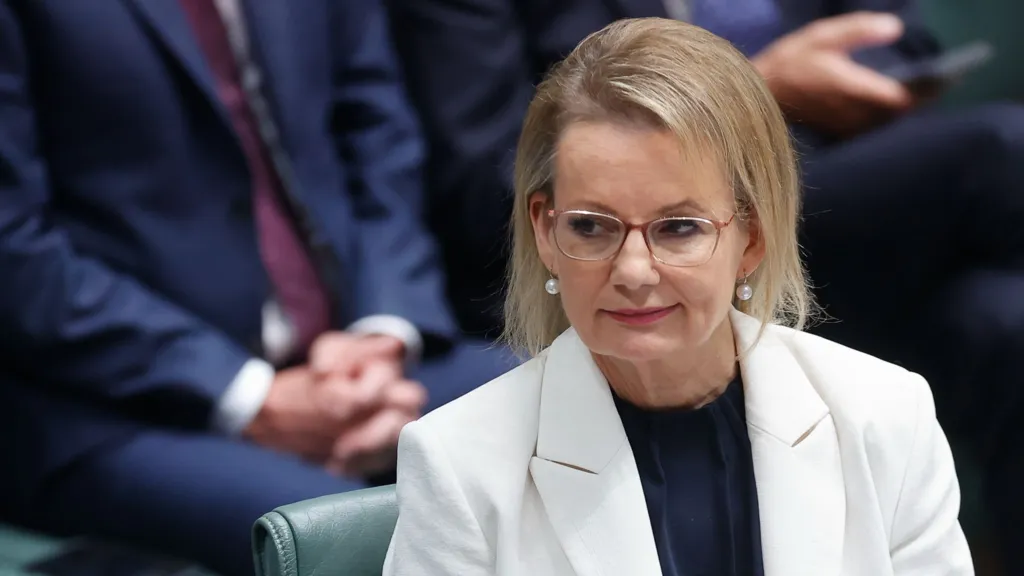
Australian Politics Faces Questions Over Gender Equality Amid Sussan Ley’s Appointment
-
 News1 day ago
Farage Says Reform to Replace Traditional Tory Party
-
 News1 day ago
Husband’s alleged £600k theft for sex and antiques blamed on drug side effects
-
 News1 day ago
Wrexham Pair Seek Win Against Former Team Ipswich
-
 Business2 days ago
BBC Reporter Exposed to Cyber Attack Due to Vulnerabilities in AI Coding Tool
-
 News2 days ago
Liberal Party Removes Australia’s First Female Leader
-
 News1 day ago
UK Braces for Cold Snap with Snow and Ice Alerts Expected
-
 News3 days ago
Sunbed ads spreading harmful misinformation to young people