
News
Newcastle defeats Villa in disputed cup match fueled by Tonali’s performance
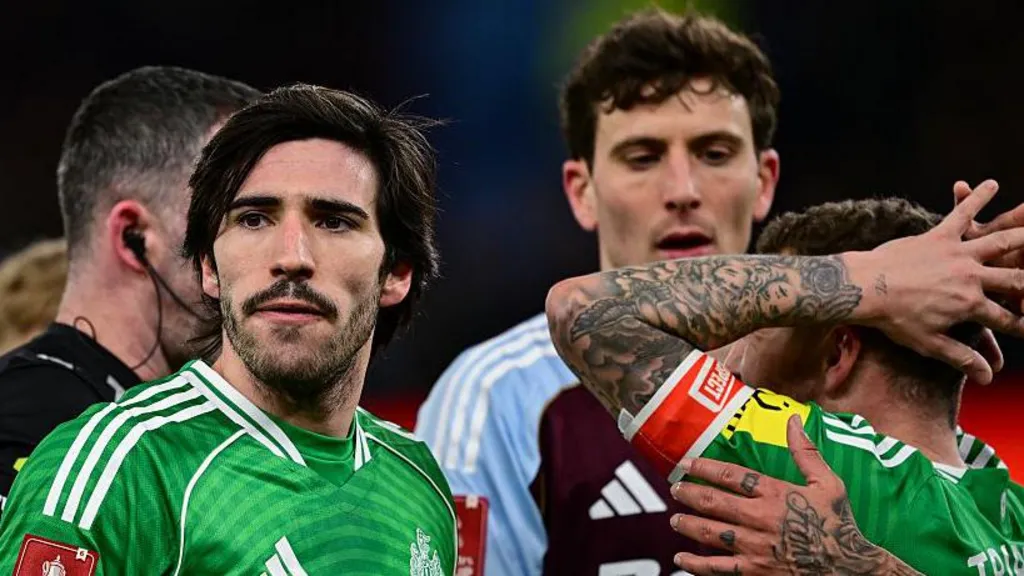
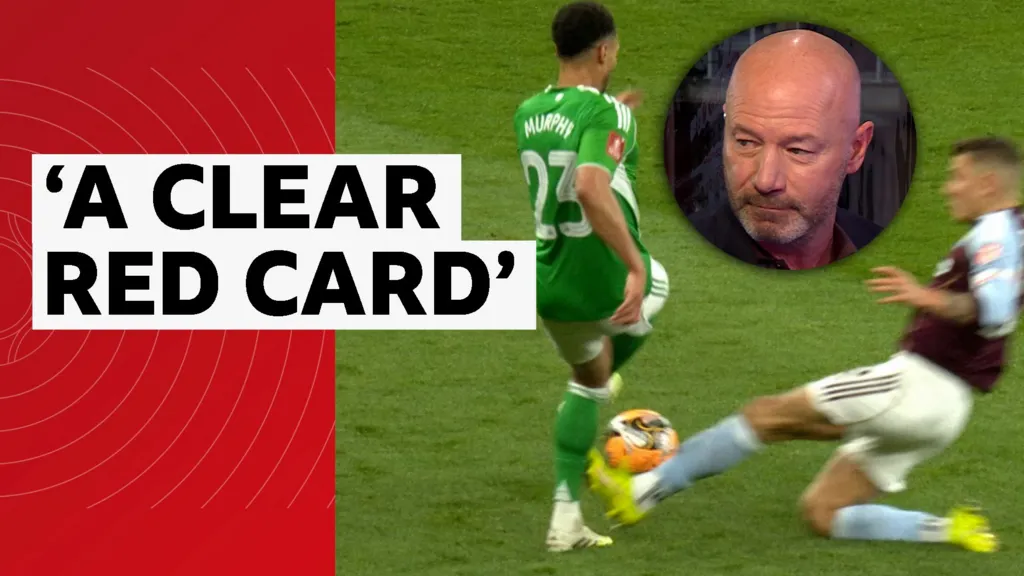
Newcastle United prevailed over Aston Villa in the FA Cup, with Sandro Tonali netting two goals, despite several disputed referee calls, and the opposing team being reduced to 10 men.
Newcastle United emerged victorious over Aston Villa in the FA Cup, with Sandro Tonali netting two goals, despite the match being marred by several disputed refereeing calls that led to Aston Villa being reduced to 10 men.
A recap of the game can be found in the MATCH REPORT: Aston Villa 1-3 Newcastle United.
Access to this content is restricted to users based in the United Kingdom.


News
Man Trades Pizza Deliveries for Shot at Winter Olympics
Joel Fearon, a 2014 medallist for Team GB, has come out of retirement and is now set to participate in his third Winter Olympics, this time competing on behalf of Jamaica.
Joel Fearon, a Winter Olympics medallist, has had a diverse athletic career, representing Great Britain, Switzerland, and Jamaica in both bobsleigh and athletics.
A commentator's remark, "The fastest man in the UK this year and he's not even going to the Olympics," highlighted Joel Fearon's impressive yet frustrating performance, as he ran under 10 seconds for 100 meters, just after the qualifying deadline for the Rio 2016 Olympics.
Fearon's achievement of breaking the 10-second barrier in the 100 meters was a significant milestone, one that is highly revered in the sporting world, and it left a lasting impression on onlookers.
Unfortunately, his remarkable performance came too late, as the qualification period for the Rio 2016 Olympics had already closed, denying him the opportunity to represent Team GB.
A decade later, at 37 years old, Fearon is participating in his third Winter Olympics, this time as a member of Jamaica's bobsleigh team, which he joined after coming out of retirement in the previous year.
Fearon recalls the day he achieved the sub-10 second run as a life-changing moment that had a profound impact on his athletic career.
In an interview with BBC Local Radio, Fearon reflected on his surprise at achieving such a feat, stating, "I don't know if I ever believed that I could do something like that."
He described the experience as "surreal" due to his relatively low profile compared to other British sprinters, yet he found himself running sub-10 seconds and ranking as the number one in the country.
Fearon's thoughts at the time were that anything could happen, and this mindset has stayed with him throughout his athletic journey.
His time of 9.96 seconds, which won him the England Athletics Championships in Bedford, is still one of the fastest recorded by a British athlete on UK soil, with only four others having achieved faster times.
Balancing his athletic pursuits with everyday life was a challenge for Fearon, who had to juggle work and bobsleigh training to make ends meet.
Fearon shared his experiences of taking on various jobs, including working as a pizza delivery man, to support himself while pursuing his athletic ambitions.
He recounted how he would participate in Diamond League events during the day and then deliver pizzas in the evening, highlighting the sacrifices he made to pursue his passion for sports.
Fearon has competed against other notable athletes, such as Adam Gemili and Harry Aikines-Aryeetey, in events like the 2013 London Diamond League, before joining the British relay squad at the World Athletics Championships that year.
Although athletics was his initial passion, Fearon's bobsleigh career has been unique and marked by several notable achievements.
Over the course of 15 years, he has represented three countries: Great Britain, Switzerland, and Jamaica, demonstrating his adaptability and dedication to the sport.
Fearon's bronze medal from the Sochi 2014 Olympics was awarded retrospectively, five years after the event, due to doping bans imposed on other competitors.
His coach initially suggested he try bobsleigh as a means to support his family, and Fearon decided to take on the challenge despite the difficulties it presented.
Fearon explained that he was facing financial difficulties at the time and saw bobsleigh as an opportunity, stating, "I was pretty broke and some trials came up."
He described the transition to bobsleigh as tough, requiring a lot of physical effort, technical knowledge, and time spent in harsh conditions, but persevered through the challenging times.
Fearon acknowledged that had he not pushed through those difficult periods, he would have missed out on the opportunities and experiences that followed.
Another athlete, a Welsh bobsledder, has also qualified to represent Jamaica at the Olympics.
The British skeleton team has shown resilience in bouncing back from challenges, including those faced in 2022.
Some Winter Olympics athletes have had their broken medals repaired.
The upcoming event in Milan-Cortina, scheduled for February 6-22, is set to be an exciting competition.
Initially, Fearon finished fifth in the four-man bobsleigh event at the Sochi Olympics, but in hindsight, he does not regret the outcome, as it drove him to continue striving for excellence.
He reflected that knowing he had the potential to medal, but not receiving one at the time, motivated him to keep pushing himself, saying, "We knew we were good enough. Knowing that we didn't [medal] actually just kept me striving."
Instead of dwelling on the missed opportunity, Fearon immediately focused on his next challenge, attending a relay camp without taking time to celebrate or reflect on his achievement.
Fearon believes that if he had received the medal at the time, it might have diminished his drive to achieve more, including his sub-10 second run, stating, "If I would have got that medal, I probably wouldn't have run sub-10. I wouldn't have had the same drive."
At the time he received the retrospective medal, Fearon was on loan to the Swiss bobsleigh team, with whom he won another bronze medal at the Europe Cup.
The Swiss team had essentially "bought" him to support one of their junior drivers, Timo Rohner, with Fearon serving as an experienced athlete on the team.
Fearon noted that it was satisfying to see Rohner, now an Olympian, competing alongside him, acknowledging the role he played in Rohner's development as an athlete.
In 2019, Fearon, along with Bruce Tasker, Stuart Benson, and John Jackson, was retrospectively awarded a Winter Olympic bronze medal.
Like many athletes, Fearon has faced significant injuries throughout his career, including one that required wires to hold his lower leg bones together after a severe injury sustained while running for the British relay team.
The injury forced him into a period of semi-retirement from athletics, as he struggled to regain his form and dealt with the physical and emotional aftermath.
Fearon described the injury as taking "a good two-year chunk out of my athletic career," highlighting the significant impact it had on his life and athletic pursuits.
The injury was eventually overcome, but Fearon's family faced a new and devastating challenge when his sister, Natasha Morais, was murdered in 2023.
The traumatic event left Fearon feeling scared, struggling with insomnia, and ultimately led to his retirement from all sports.
The loss of his sister had a profound impact on Fearon, making it difficult for him to find the words to express his emotions and leading to a period of withdrawal from athletic competition.
As a result of the cumulative effect of his injuries, personal struggles, and family tragedy, Fearon decided to step back from his athletic career, prioritizing his well-being and taking time to heal and reflect.
The experience has been a challenging one for everyone involved, and its impact is still being felt in various ways, he explained.
Overcoming anxiety was a significant hurdle, as he initially doubted his ability to participate in sports again due to the struggles he faced.
His concerns extended to his family, as he became increasingly apprehensive about leaving them alone.
Fearon's decision to come out of retirement and represent Jamaica has brought a new sense of purpose and has had a positive impact on his grieving family.
However, he did not anticipate that he would be competing in another Winter Olympics, pushing a sled.
According to Fearon, his role encompasses both athletic and coaching responsibilities, allowing him to handle various tasks within the bobsleigh team, including organizational duties, and he even met rapper Snoop Dogg during his training in Italy.
As it turned out, he ended up participating in the sled, and his results have been impressive, with six wins in six races, making him a lucky charm of sorts.
Fearon jokingly remarked that he expects to be involved in pushing the sled several more times before his career is over.
Fearon's connection to Jamaica stems from his father, who is Jamaican, as well as his maternal grandparents, who also hail from the Caribbean island.
His father's reaction to his achievements was particularly noteworthy, as he had never seen him so enthusiastic about sports before.
Despite being relatively new to the team, Fearon has formed strong bonds with his teammates, whom he now considers like brothers, and he finds himself more excited about their performances than his own.
Fearon has taken on a mentorship role, and witnessing the team's progress and growth has been a thrilling experience for him, leaving him to wonder about their future potential.
Mica Moore, a former GB sprinter, led Jamaica's bobsleigh team during the opening ceremony in Milan-Cortina.
The transition from sprinting to bobsleigh is a path that several athletes have taken, and Fearon is the latest example.
Mica Moore, another sprinter-turned-bobsledder, has also made the switch from Great Britain to Jamaica and is now part of their squad in Milan-Cortina.
In recent years, athletes such as Montell Douglas, Adele Nicoll, and Ashleigh Nelson have successfully transitioned between summer and winter sports, with Douglas becoming GB's first female Olympian to compete in both summer and winter games four years ago.
The skills required for sprinting, including explosive power and speed, are highly transferable to bobsleigh, particularly in the initial acceleration phase where effective sled pushing is crucial.
One of the most exciting aspects of Fearon's bobsleigh career is the connection to the 1993 film Cool Runnings, which tells the story of the Jamaican bobsleigh team.
Fearon has a special fondness for the film, having watched it when he was 10 years old, long before he knew he would be involved in the sport.
At the time, he had no idea that he would one day be part of the Jamaican bobsleigh team, let alone become a character in a story that has captivated audiences worldwide.
Fearon's journey has been remarkable, transforming from an Olympic medallist to a symbol of Jamaican bobsleigh, and he is now closely associated with a beloved Disney movie.
As a member of the most famous bobsleigh team in the world, Fearon recognizes the importance of living up to their reputation and making their country proud.
This video is currently unavailable for playback.
From his humble beginnings as a pizza delivery man to his current status as an Olympic hopeful, Fearon's story is one of perseverance and determination.
News
Former President Obama responds to racist video tweeted by Trump comparing him to an ape
A former US president expressed concern over the decline of “shame” and “decorum” in public office, without directly referencing Trump.
In a recent podcast interview, former President Barack Obama touched on the decline of civility in public discourse, implying that a sense of shame and decorum has been lost among some public officials, in an apparent reference to a racist video shared by President Donald Trump's social media account.
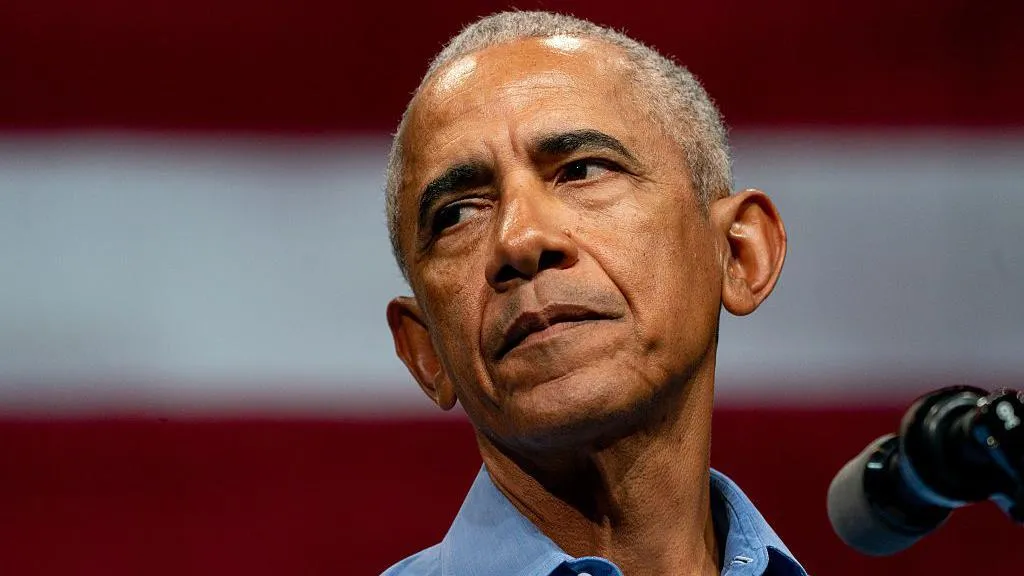
The video in question featured a clip portraying Obama and his wife Michelle as apes, sparking widespread condemnation from both Democratic and Republican lawmakers.
Initially, the White House defended the video, dismissing criticism as "fake outrage," but later attributed the post to a staff member and removed it.
Obama's comments came during a conversation with liberal podcaster Brian Tyler Cohen, who asked the former president about the state of political discourse, citing Trump's video as one example of recent controversies.
The offending clip, set to the song "The Lion Sleeps Tonight," was appended to a video posted on Trump's Truth Social account, which contained unsubstantiated claims about voter fraud in the 2020 election.
The post prompted outrage from politicians across the aisle, including senior members of Trump's own Republican Party.
Republican Senator Tim Scott, the sole black Republican senator, denounced the video as "the most racist thing I've seen out of this White House."
The clip appears to have originated from an X post by conservative meme creator Xerias in October and recalls racist caricatures that have historically compared black people to monkeys.
When questioned by reporters, Trump claimed he had not seen the part of the video depicting the Obamas.
Trump also stated that he did not believe he had made a mistake and had no intention of apologizing.
The 47-minute podcast episode, released on Saturday, began with Cohen asking Obama to share his thoughts on the current state of US discourse, which Obama described as having "devolved to a level of cruelty that we haven't seen before."
Cohen referenced White House claims that victims of Immigration and Customs Enforcement (ICE) are "domestic terrorists" and noted that Trump had recently shared an image of Obama's face superimposed on an ape's body.
Obama responded by emphasizing that most Americans find such behavior "deeply troubling."
He acknowledged that such actions can be attention-grabbing and serve as a distraction.
However, Obama noted that during his travels across the US, he has met many people who still value "decency, courtesy, kindness."
He contrasted this with the "clown show" that often plays out on social media and television.
Obama expressed concern that some individuals who once adhered to certain standards of decorum and respect for public office now seem to operate without shame.
This shift, he implied, marks a significant loss of dignity and civility in public life.
Notably, Obama did not mention Trump by name during his response.
The wide-ranging interview also covered topics such as Obama's support for peaceful protesters opposing immigration operations, his thoughts on electoral redistricting, and his upcoming presidential library in Chicago, scheduled to open next year.
News
Forensic Evidence Exposes Man’s False Claim of Girlfriend’s Death in Car Accident
Jenna Watkins was abandoned by her boyfriend on a secluded mountain road, with him alleging that her death occurred as a result of a vehicular accident.
A nighttime search for a missing brother led two men down a remote mountain road, where they had been informed his car had been involved in an accident.
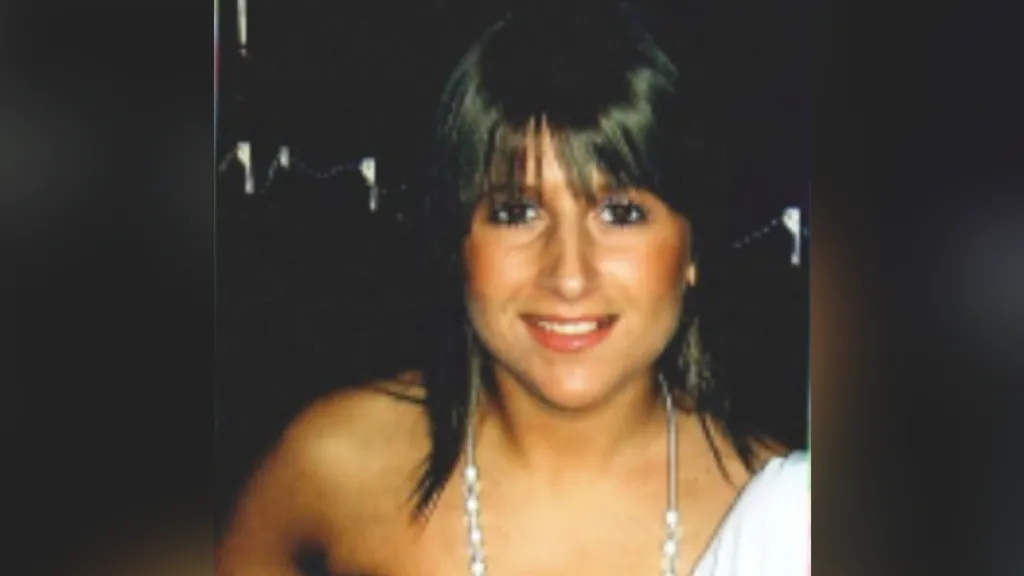
Upon locating the vehicle, they discovered the body of a young woman, 21-year-old Jenna Watkins, lying nearby, while their brother was nowhere to be found.
Initially, it appeared that Jenna had been ejected from the car and fatally injured in the crash on the Bwlch mountain road in south Wales, a tragic accident that, although unfortunate, was not uncommon.
However, a subsequent examination of Jenna's body revealed a different story, one that is detailed in a new documentary about the case.
Just prior to the fatal incident on 21 April 2007, Jenna's mother, Pauline, received a disturbing and final phone call from her daughter.
Pauline recalled that around 10 pm, Jenna called her, screaming and crying, and she could hear the car in the background, with the driver, Jason Shaddick, yelling at Jenna.
Pauline attempted to calm Jenna down, advising her to put on her seatbelt, as she feared for her daughter's safety due to the sound of the car and Shaddick's aggressive behavior.
The phone call abruptly ended, leaving Pauline in a state of distress.
Jason Shaddick, Jenna's partner, was the individual being searched for by his brothers.
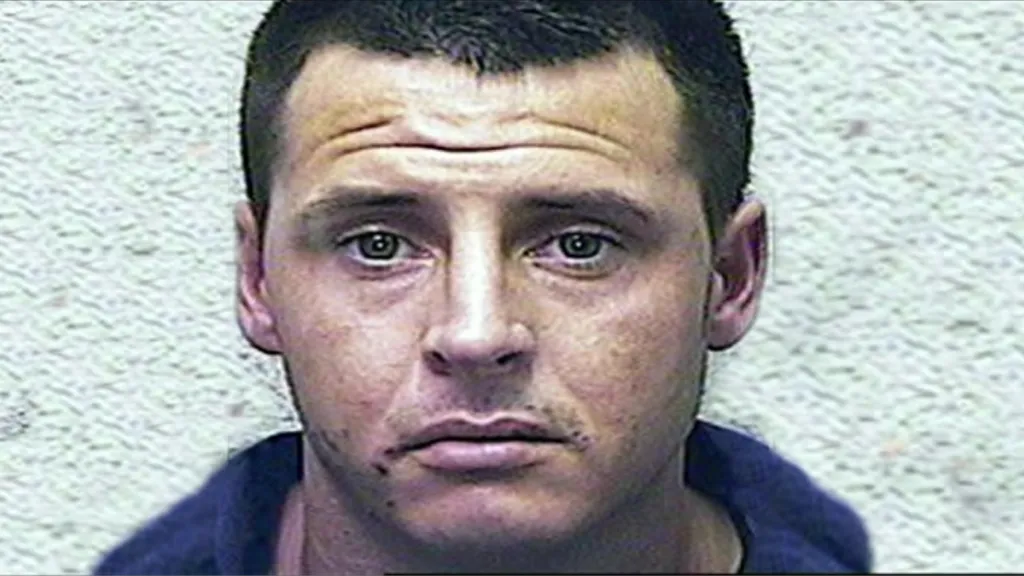
The couple resided together in Neath, where they were known to the community.
Dr Richard Shepherd, a former Home Office forensic pathologist, shared his expertise with the BBC One Wales series, The Truth About My Murder, stating that the initial evidence suggested a tragic road traffic accident.
Typically, front seat passengers who wear seatbelts suffer from chest, rib, and breastbone injuries due to the immense pressure of the impact.
However, Dr Shepherd noted that Jenna did not exhibit these injuries, leading him to suggest that she may have been thrown from the car at the time of the crash.
Further examination revealed severe bruising on Jenna's body, particularly on her legs and head, but Dr Shepherd observed that there were no typical abrasions associated with someone hitting the road.
The initial theory of a car accident began to raise questions, as the evidence did not seem to add up.
Daylight investigations at the scene also sparked concerns, as Jenna was found face down with her jewelry and possessions scattered around her, which seemed inconsistent with the initial accident theory.
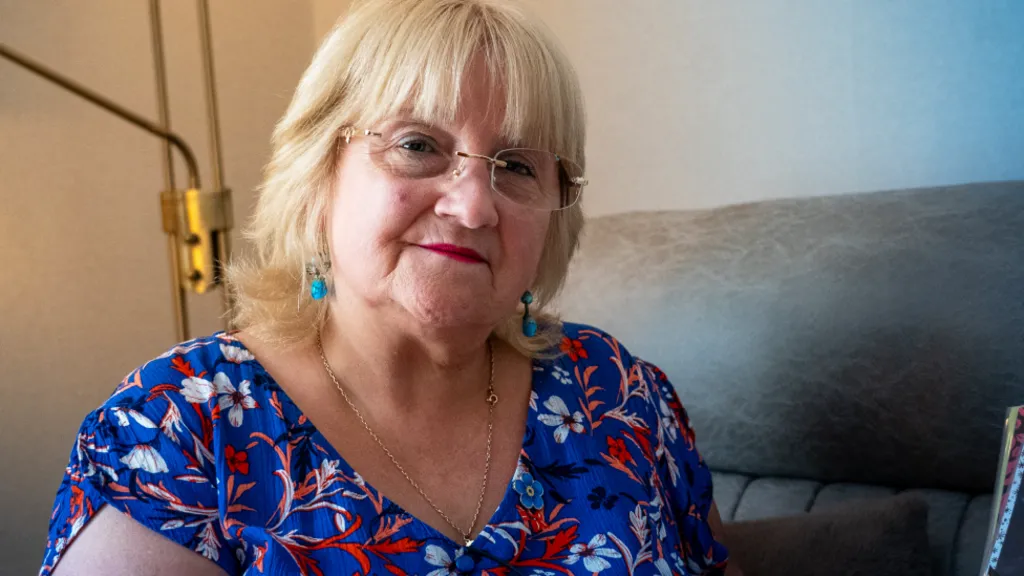
Insp Emma White, the family liaison officer, stated that the scene did not appear to be consistent with someone being thrown from a vehicle, based on the condition of the windows and other factors.
As the investigation continued, Pauline received a visit from the police that would change her life forever.
Pauline recalled that she tried to avoid hearing the devastating news, refusing to sit down and attempting to talk over the officer, as she sensed what he was about to say.
Jason Shaddick was initially missing, but after an appeal, he appeared at Neath police station, where he declined to answer any questions.
With limited information available, the pathology team's work became crucial in uncovering the truth.
Fatal neck injuries are common in individuals ejected from moving vehicles, but the examination of Jenna's neck revealed a different story, with her larynx crushed, suggesting extreme pressure had been applied.
Dr Shepherd stated that this, combined with the distribution of bruising and lack of bone fractures, led him to suspect that Jenna's death may have been caused by strangulation.
When presented with this information, Shaddick responded in writing, providing his version of events.
According to Insp White, Shaddick claimed that he had crashed the car because Jenna was assaulting him, and he was acting in self-defense.
Shaddick alleged that he had put his arm around Jenna to calm her down, and it was only when she went limp that he realized he had accidentally killed her.
As Shaddick continued to refuse to answer questions, the police turned to others to gather more information about Jenna and the couple's relationship.
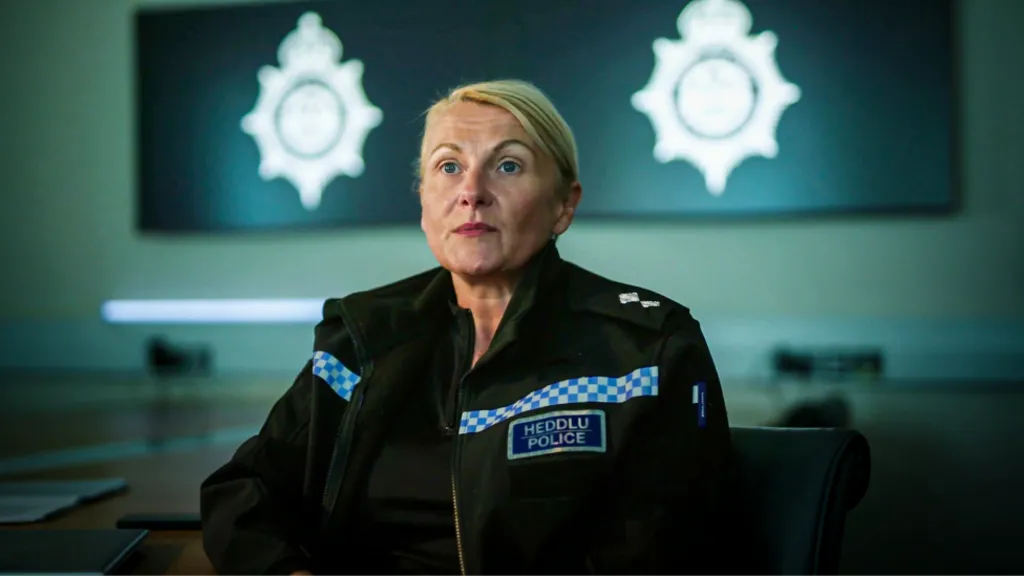
Pauline shared that Jenna had a close call with meningitis as a toddler, which made her more determined to take extra care of her youngest child.
Jenna often brought gifts and treats for her mother, wanting to make her happy.
Shaddick, 28, and Jenna were known in the area as a fun-loving couple who enjoyed socializing, with Shaddick working in a car parts factory and Jenna working in a call center, both in Swansea.
The couple was affectionately referred to as "the Hollywood couple" due to their stylish clothing.
However, their relationship had a darker side, with reports of intense arguments and violent outbursts.
Insp White stated that the couple would often have loud, heated arguments, with Jenna sometimes having to defend herself physically.
Pauline had previously found one of Jenna's broken necklaces outside her house, which raised concerns about Shaddick's behavior.
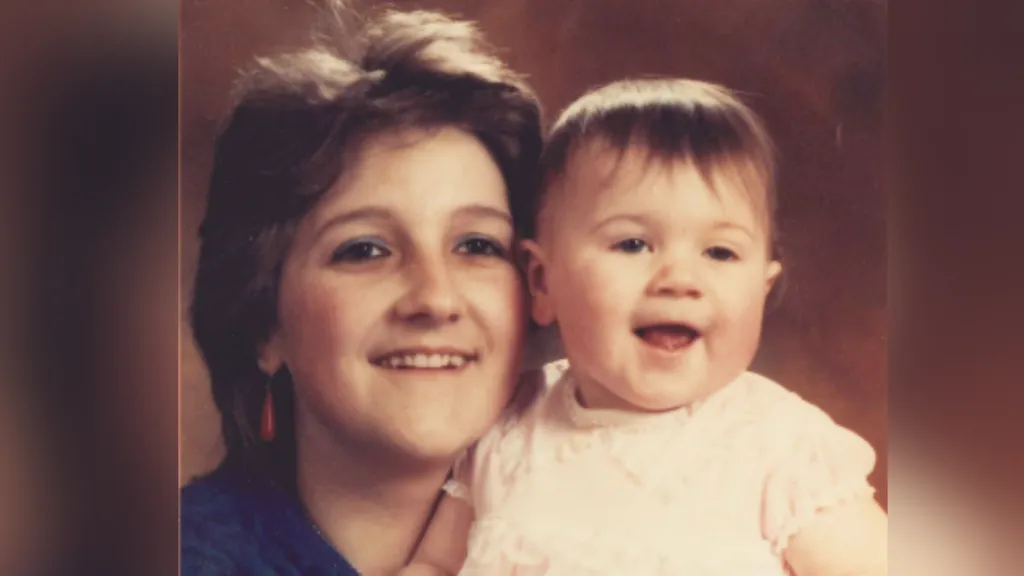
Insp White noted that this incident, combined with Shaddick's history of controlling behavior, raised red flags, particularly given the similarities to the crime scene.
Pauline described Shaddick's behavior as controlling and possessive, with Jenna often changing her clothes to avoid his disapproval.
Pauline characterized Shaddick as "horrible" and "nasty," with a history of violent behavior.
Insp White discovered that Shaddick had previous convictions for assaulting a former girlfriend, which further supported the suspicions of a troubled relationship.
Pauline had previously expressed concerns to Jenna about her safety, warning her that Shaddick might hurt her or worse.
Pauline recalled questioning Jenna about bruises on her body, urging her to leave Shaddick and come home, as she feared for her daughter's safety.
The post-mortem examination conducted by Dr. Shepherd revealed evidence of old bruising on Jenna's body, suggesting she had suffered heavy blows, likely from a clenched fist.
Injuries found on Jenna's cheeks and chin contradicted Shaddick's claim of being a victim of her aggression, indicating that his account was false.
According to Dr. Shepherd, bite marks were discovered, which appeared to have been inflicted with significant force.
The nature of Jenna's wounds suggested that she was the victim of an attack, rather than the aggressor.
On the evening prior to her death, Jenna and Shaddick attended a party in Port Talbot, where they argued, and Jenna departed before Shaddick followed her in his car.
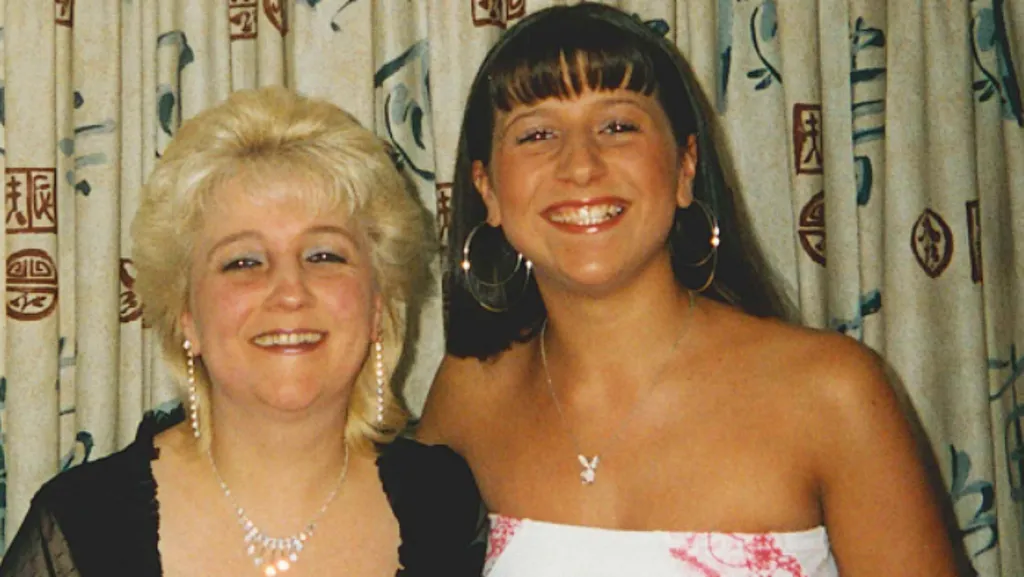
Shaddick alleged that the argument continued in the car due to Jenna's supposed cocaine use, which he disapproved of, and claimed he bit her in self-defense after she grabbed his testicles.
Toxicology results showed that Jenna had no cocaine in her system and had consumed very little alcohol.
In contrast, the tests revealed that Shaddick had used cocaine and had high levels of alcohol in his system at the time.
Dr. Shepherd noted that Jenna's body exhibited signs of a desperate attempt to defend herself, but ultimately, she was overpowered, bitten, and strangled in a headlock that ended her life rapidly.
Shaddick was subsequently charged with murder and stood trial.
On November 28, 2007, he was found guilty of Jenna's murder and received a life sentence with a minimum term of 13 years, before being released in February 2021.
For Pauline, the sentence imposed on Shaddick was insufficient.
"Thirteen years is far too lenient," she said. "The thought of him resuming his life is unbearable, and it fills me with anger every time I visit Jenna's grave."
Pauline has preserved Jenna's childhood bedroom in its original state since her death.
"This room holds great sentimental value for me, and I feel closest to Jenna here," she said. "I also keep her photos with me at all times, so I can see her and feel her presence."
For Pauline, the passage of 18 years has not diminished her grief, and like many other bereaved mothers, she has found it impossible to move on.
-
 News2 days ago
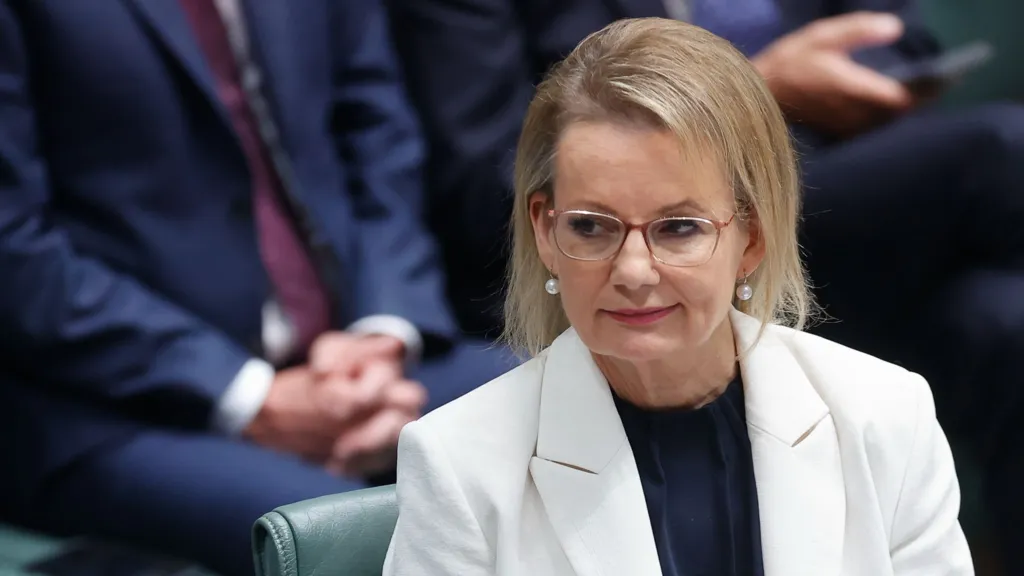
Australian Politics Faces Questions Over Gender Equality Amid Sussan Ley’s Appointment
-
 News2 days ago
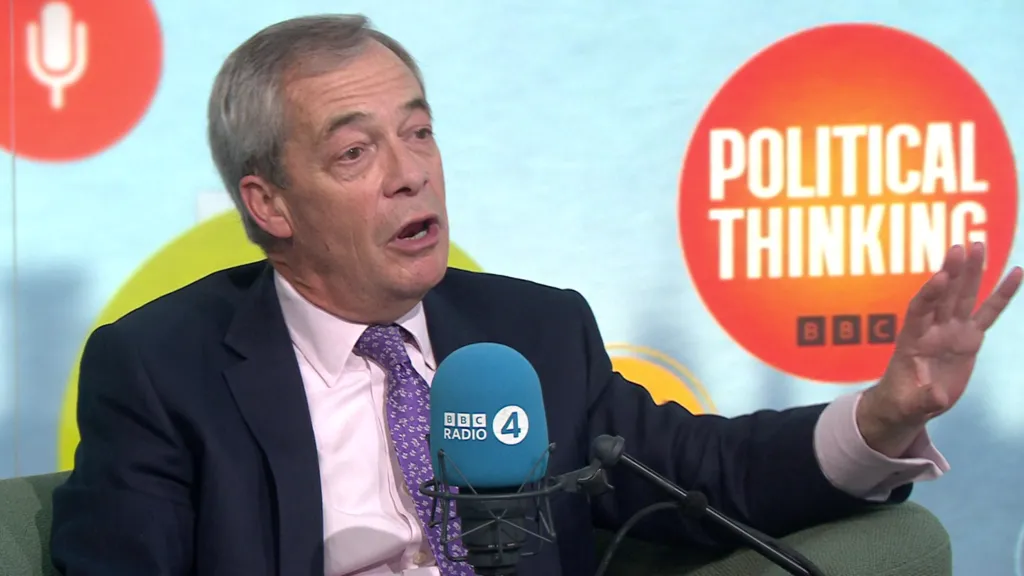
Farage Says Reform to Replace Traditional Tory Party
-
 News2 days ago
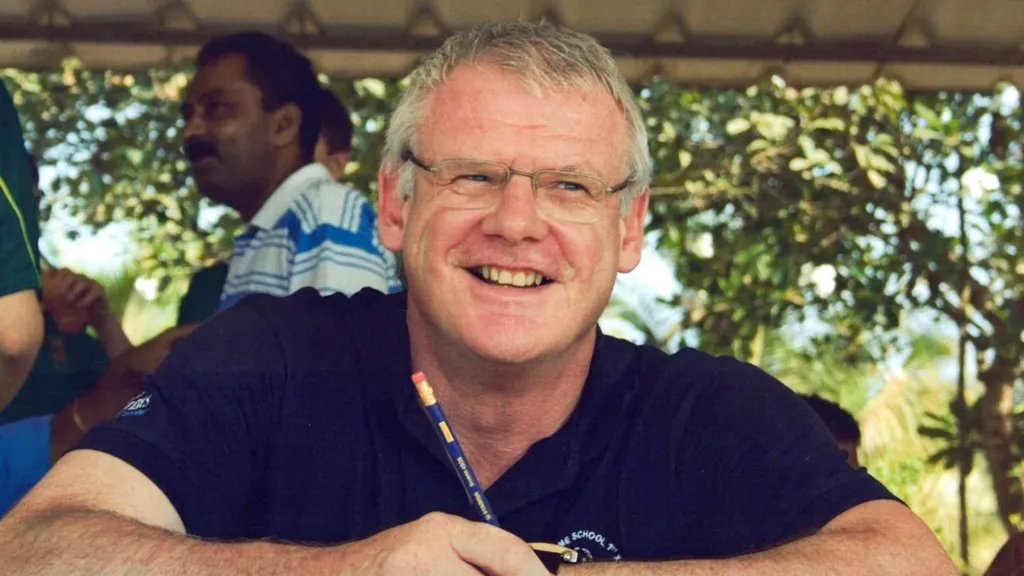
Husband’s alleged £600k theft for sex and antiques blamed on drug side effects
-
 Business2 days ago
BBC Reporter Exposed to Cyber Attack Due to Vulnerabilities in AI Coding Tool
-
 News2 days ago
Wrexham Pair Seek Win Against Former Team Ipswich
-
 News2 days ago
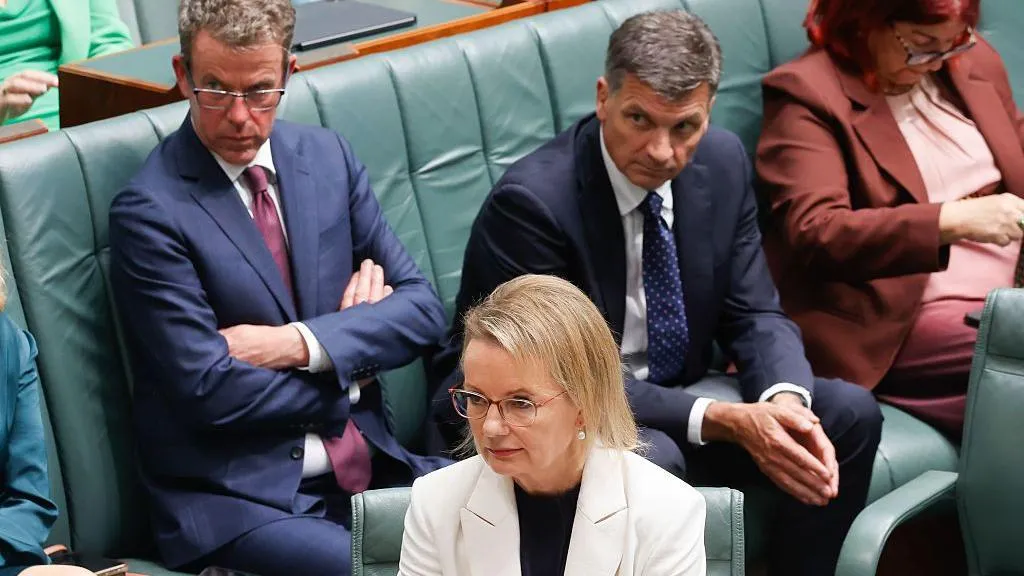
Liberal Party Removes Australia’s First Female Leader
-
 News2 days ago
UK Braces for Cold Snap with Snow and Ice Alerts Expected
-
 Health2 days ago
NHS Waiting List Hits Three-Year Low