
Africa
Ghanaian highlife music legend Ebo Taylor dies at 90
A musician who served as a guitarist, composer, and band leader successfully combined elements of Ghanaian music with funk, resulting in compositions that have been widely sampled globally.
The family of Ebo Taylor, a renowned Ghanaian musician, has confirmed his passing at the age of 90. As a guitarist, composer, and band leader, Taylor played a significant role in shaping the highlife genre, leaving a lasting impact on African music.
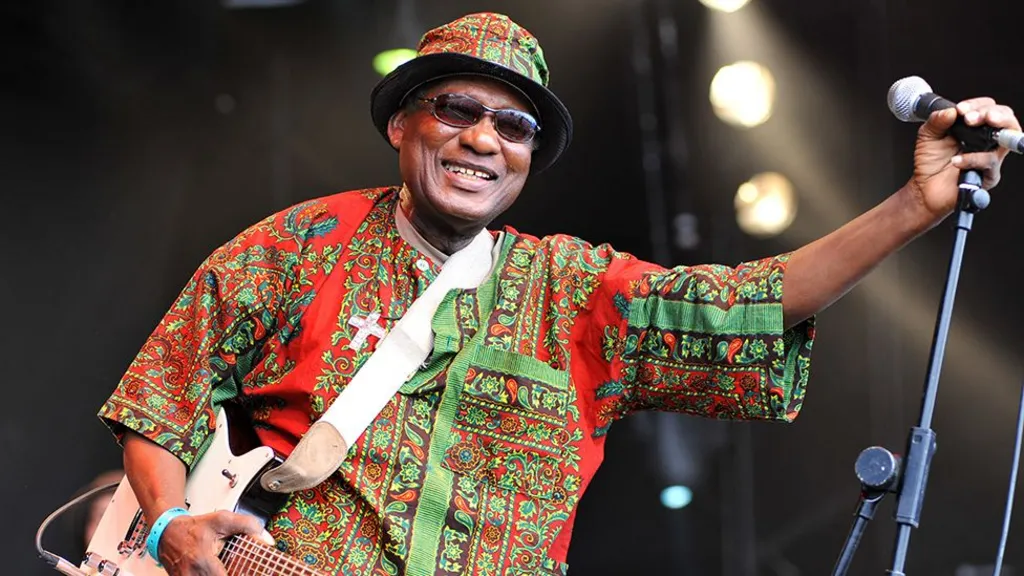
Taylor was born in 1936 in Cape Coast, Ghana, as Deroy Taylor. He gained widespread recognition in the late 1950s and early 1960s, a period when highlife music became a dominant force in Ghana.
Throughout his extensive career spanning over six decades, Taylor successfully blended traditional Ghanaian rhythms with various international styles, including jazz, funk, soul, and Afrobeat, thereby influencing a broad range of musicians globally.
According to Felix Kwakye Ofosu, a spokesperson for the presidency, the government and people of Ghana are mourning the loss of a musical legend, with Ofosu describing Taylor as a "colossus" of Ghanaian music.
During the early stages of his career, Taylor performed with several prominent bands of the time, such as the Stargazers and the Broadway Dance Band. His unique guitar-playing style and meticulous approach to arrangements earned him a notable reputation as a skilled musician.
Over the last quarter century of his life, E.T. Mensah's music experienced a resurgence in popularity worldwide, thanks in part to songs like Love & Death, which explored themes of relationships and mortality, attracting a new generation of listeners.
The early 1960s marked a pivotal time in Taylor's musical growth, as he embarked on a journey to London to further his musical education.
During his time in London, Taylor had the opportunity to collaborate with fellow African musicians, among them the renowned Nigerian artist Fela Kuti.
This creative exchange is now recognized as a key factor in the evolution of Afrobeat, a genre that Fela Kuti would later popularize globally, with highlife music serving as a crucial element in its development.
Upon his return to Ghana, Taylor established himself as a highly sought-after figure in the music industry, leading bands, arranging, and producing music for prominent Ghanaian artists, including Pat Thomas and CK Mann.
In a 2014 interview with the BBC, he discussed the evolution of highlife music, citing the impact of James Brown and funk. He noted that Fela incorporated funk into Yoruba music, while he himself made similar contributions to the genre in Ghana.
As the 20th century drew to a close and the 21st century began, Taylor's focus shifted towards educating the next generation at the University of Ghana and collaborating on various projects, according to an article in the New York Times.
Taylor's later years saw a resurgence in his music career, with albums like Love & Death, Appia Kwa Bridge, and Yen Ara garnering attention and solidifying his position as a key figure in Ghanaian music.
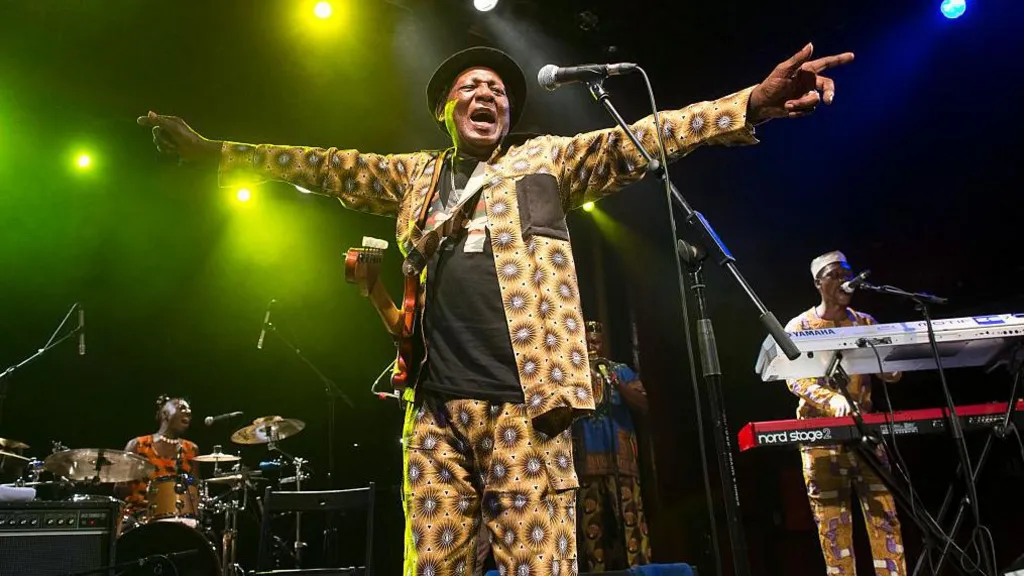
The reach of Taylor's influence exceeded the boundaries of highlife, demonstrating his broader impact on the music world.
In recent years, Taylor's music has experienced a resurgence in popularity globally, with his recordings being sampled by artists in hip-hop and R&B, introducing his work to new audiences worldwide.
Ebo Taylor's discography, which includes tracks like Heaven, Odofo Nyi Akyiri Biara, and Love & Death, has been tapped by various artists such as Usher, the Black Eyed Peas, Kelly Rowland, Jidenna, Vic Mensa, and Rapsody, thereby expanding his global audience.
When reflecting on his belated rise to prominence at the age of 70, he noted, "I think I've had my day, though it came much later."
Panji Anoff, a prominent Ghanaian music producer, paid tribute to Taylor by recalling how he was affectionately known as "Uncle Ebo" by everyone, yet he interacted with people of all ages as equals.
According to Anoff, in an interview with the BBC, Taylor had a unique ability to connect with people across different age groups, saying, "He would spend time with us, share meals, and socialize as if we were all on the same level, despite being nearly 50 years older than some of us. Whenever someone needed help with a melody, Uncle Ebo would pick up his guitar and guide them through it."
Singer and rapper Black Sherif mourned the loss of the legendary musician, stating, "We've lost a legend who made significant contributions to the music world, creating a lasting impact. I find comfort in having witnessed Uncle Ebo Taylor's greatness firsthand. Rest In Power!"
According to Shatta Wale, Taylor's legacy has had a profound effect on the music industry, with his unique sound, vision, and cultural significance paving the way for numerous artists across Africa and globally.
In a tribute to Taylor, presidential spokesperson Ofosu described him as one of Ghana's most iconic musicians, noting that he played a crucial role in promoting Ghanaian music worldwide during a time when other genres dominated the scene, in an interview with the BBC's Newsday programme.
Taylor is widely regarded as a pioneering figure in Ghana and throughout the African diaspora, credited with merging traditional and modern musical styles.
Taylor's innovative approach, which balanced creativity with cultural heritage, has resulted in a lasting impact on African popular music, influencing contemporary genres such as afrobeats and remaining a vital part of the continent's musical narrative.
For additional news and updates from Africa, visit BBCAfrica.com.

Africa
Understanding the crisis in South Sudan: a simple guide
A deepening political divide is raising concerns of potential renewed conflict following allegations of treason leveled against the vice-president.
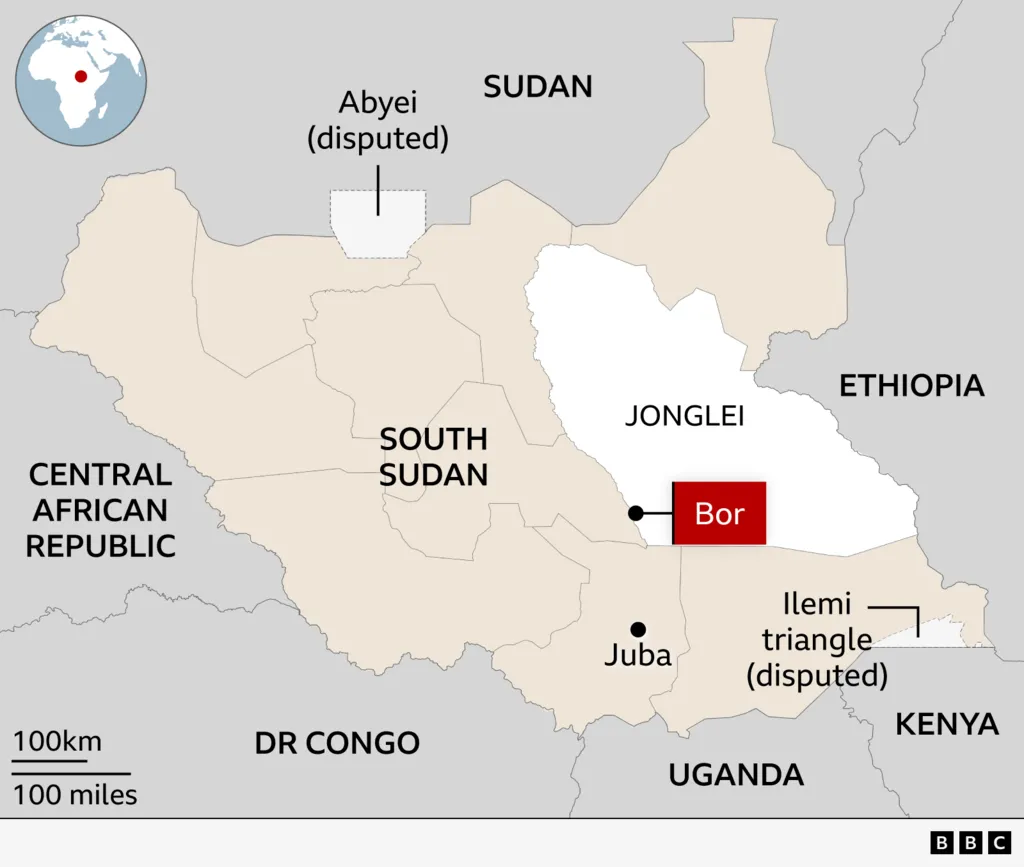
Concerns are mounting that South Sudan, the world's newest nation, is on the brink of descending into all-out civil war as clashes persist in Jonglei state, located northeast of the capital city, Juba.
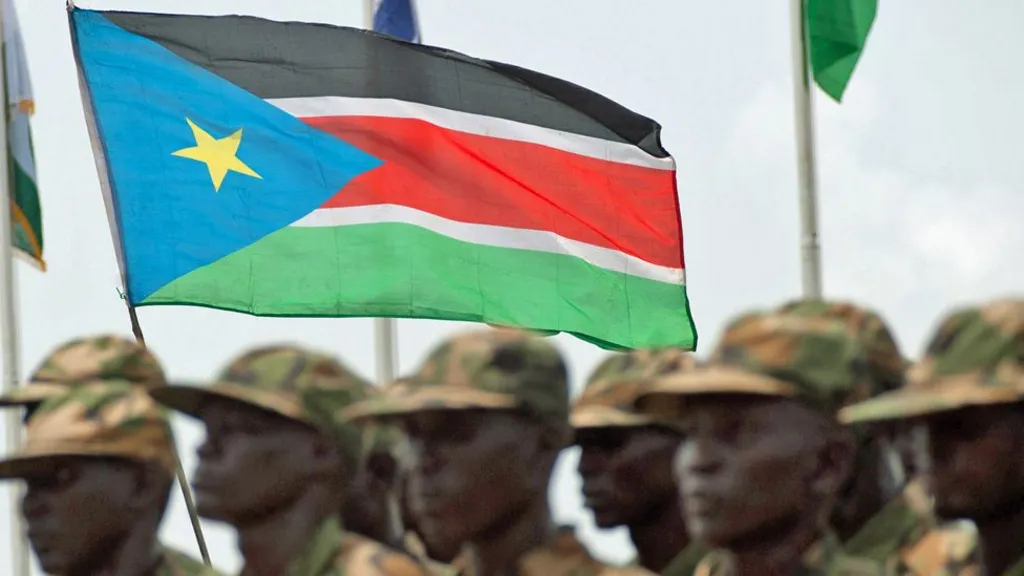
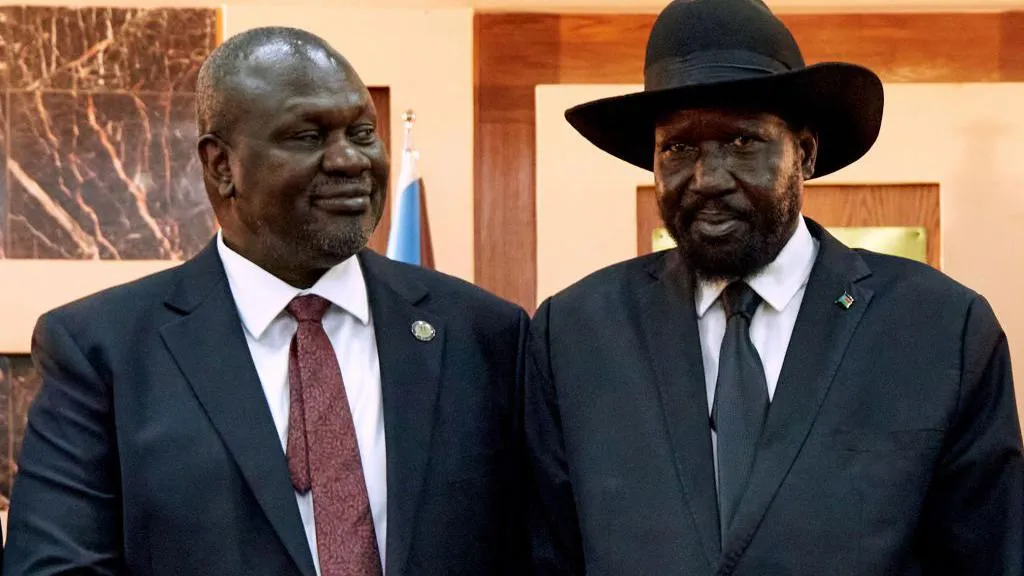
The government is attempting to reclaim territory from forces loyal to First Vice-President Riek Machar, who has been suspended from his position amid allegations of plotting to overthrow President Salva Kiir.
Machar is currently standing trial in Juba, facing charges of murder, treason, and crimes against humanity, all of which he denies.
The Sudan People's Liberation Movement/Army In Opposition (SPLM/A-IO), Machar's party, has rejected the charges as a politically motivated attack aimed at dismantling the 2018 peace agreement that brought an end to a five-year civil war.
The SPLM/A-IO and its allied groups claim to have captured territory, including military bases, in Jonglei and other states since the end of last year.
In response, South Sudan's army launched a counteroffensive last month.
In a statement that has raised concerns, Deputy Army Chief Gen Johnson Oluny urged troops to show no restraint, including against civilians, when deployed to Jonglei, although the government later clarified that this was not an official order.
The government has reaffirmed its commitment to protecting civilians, contradicting Gen Oluny's statement.
The recent violence in Jonglei has displaced at least 280,000 people, forcing them to flee their homes.
Aid agencies, including Oxfam, have reported that their facilities, such as clinics, have been looted, and staff have been assaulted.
South Sudan gained independence from Sudan in 2011, following decades of fighting led by the Sudan People's Liberation Movement (SPLM), and has been one of the world's poorest countries.
Two years after independence, a civil war broke out when Kiir removed Machar as vice-president, accusing him of plotting a coup.
The conflict, largely driven by ethnic divisions between supporters of Kiir and Machar, resulted in an estimated 400,000 deaths and the displacement of 2.5 million people, which is more than a fifth of the population.
As part of the peace agreement, Machar was reinstated as vice-president in a unity government, which was intended to pave the way for elections.
Although the current conflict in Jonglei is primarily driven by national political rivalries, the state has a history of inter-communal violence, particularly between sub-clans of the Dinka and Nuer ethnic groups.
Cycles of violence linked to cattle raiding, land access, and revenge attacks continue to shape and complicate the current conflict.
The SPLM/A-IO draws significant support from Nuer communities, while the government and its allied forces are dominated by Dinka leadership, leading to national political confrontations that often reignite local grievances and increase the risk of communal violence.
The current crisis began in March last year when the White Army militia, allied to Machar during the civil war, clashed with the army in Upper Nile state and seized a military base in Nasir.
On 7 March, a UN helicopter attempting to evacuate troops came under fire, resulting in several fatalities, including a high-ranking army general.
Nearly three weeks later, Machar and several of his associates were placed under house arrest, accused of attempting to incite a rebellion.
At the time, Oyet Nathaniel Pierino, deputy leader of the SPLM/A-IO, stated that the prospect for peace and stability in South Sudan had been severely jeopardized.
Instead of easing tensions, the government intensified its actions against Machar, charging him with treason, among other crimes, in September.
Days later, the SPLM/A-IO escalated its rhetoric, denouncing Kiir's government as a dictatorship and calling for regime change.
Although Machar's inclusion in the unity government was a key aspect of the peace agreement, other provisions have not been implemented.
A major concern for many South Sudanese is the security arrangement, which has not been fully realized.
The peace agreement outlined a plan to integrate former rebel forces and government soldiers into a unified national army of 83,000 troops, with the remainder to be disarmed and demobilized.
However, this has not occurred, and numerous militias aligned with different political groups remain active.
The agreement also called for the establishment of a court, with the help of the African Union, to try those responsible for the violence, but this has not been created, partly due to the reluctance of those in power to face trial.
Elections scheduled for 2022 have not taken place, and a new constitution has not been drafted.
Kenyan mediators are attempting to revive the peace process.
The Tumaini Initiative, which translates to "hope" in Swahili, aims to hold talks in Kenya to lay the groundwork for credible elections.
Kiir and Machar, both in their 70s, were part of the SPLM that fought for independence, but long-standing tensions exist between them.
These tensions have been fueled by ethnic divisions, with Kiir being Dinka and Machar being Nuer, as well as competing political ambitions.
When Kiir dismissed Machar as vice-president in 2013, triggering the civil war, Machar denounced him as a dictator.
The repeated postponements of elections have created further problems between the two leaders.
The delays, which have occurred four times, have prevented Machar from realizing his presidential ambitions, while perceptions grow that Kiir intends to remain in power indefinitely.
Born in 1953, the 72-year-old Machar was the 27th son of the chief of Ayod and Leer and was raised in the Presbyterian Church.
Machar studied mechanical engineering at the University of Khartoum as an undergraduate and later earned a PhD in philosophy and strategic planning from the UK's Bradford University in 1984.
During the struggle for secession from Sudan, Machar switched sides on several occasions, seeking to strengthen his position and that of his Nuer ethnic group.
He became vice-president of South Sudan at independence in 2011, but was later sacked in 2013 and reinstated as part of a deal in 2016, only to flee as fighting resumed.
In 1951, a child was born to a family of modest means, with his father working as a cattle herder, and he was the eighth of nine siblings; today, at 74, he remains a devoted Roman Catholic.
At the age of 17, he enlisted with the Anyanya rebel group, which was fighting for southern independence during the First Sudanese Civil War that began in 1967; 16 years later, he co-founded the Sudan People's Liberation Army/Movement, one of five key individuals to do so, amidst the Second Sudanese Civil War.
As a former rebel commander with expertise in military intelligence, he emerged as a voice of moderation within the SPLM, assuming leadership of the group in 2005 following the death of John Garang in a helicopter accident.
Upon South Sudan's independence, he took office as president, a position he has held for 14 years, as the country has not yet conducted elections.
Nicholas Haysom, the UN mission head in South Sudan, cautioned last year that the nation was on the verge of plunging back into full-scale civil war, which would have devastating consequences for a country still reeling from its previous conflict.
According to Daniel Akech, an analyst with the Crisis Group think-tank, a resurgence of fighting could lead to "proxy warfare in the region", prompting concerns about the potential consequences.
Akech outlined two primary consequences of renewed conflict: the escalation of ethnic tensions as opposing sides seek to rally support, and the likelihood that neighbouring countries would become embroiled in the conflict.
The leaders of the Igad regional grouping, which includes Uganda, are tasked with upholding the 2018 agreement as its guarantors.
As part of a long-standing accord to support the army, some Ugandan troops have been deployed to South Sudan, according to the government.
For additional news and updates from the African continent, visit BBCAfrica.com.

Africa
Ghana designates Wednesday as ‘Fugu Day’ to promote traditional attire
A popular article of clothing has garnered significant online attention in recent days, sparked by a lighthearted exchange between individuals from Ghana and Zambia.
In a move to promote national pride, Ghana has declared Wednesdays as a day to don the country's traditional attire, known as the fugu, following a recent online exchange with Zambia.
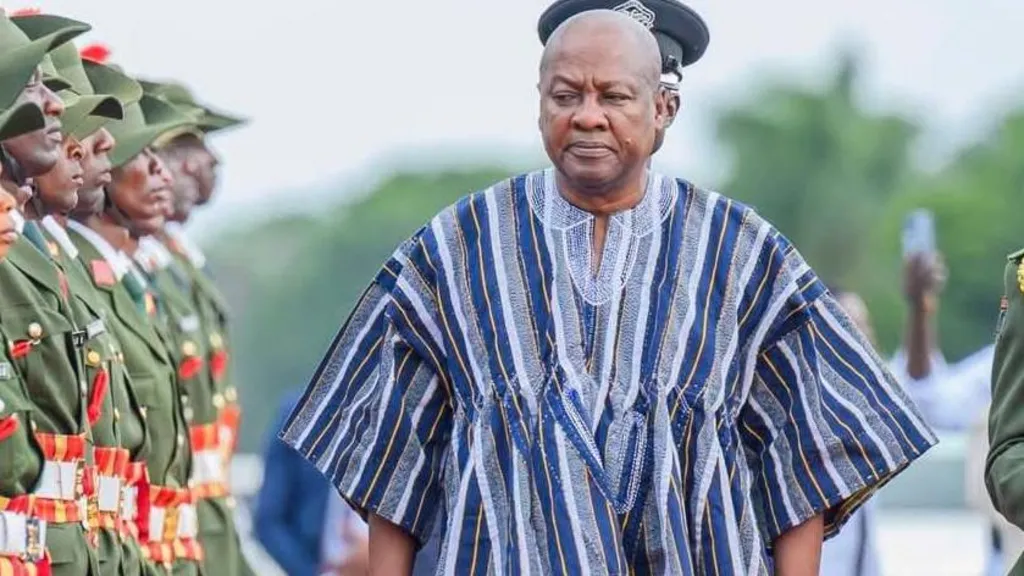
The fugu gained international attention when President John Dramani Mahama wore it during an official visit to Zambia, sparking a debate after some Zambians referred to it as a "blouse", which led to a strong reaction from Ghanaians on social media.
According to Ghana's Minister for Tourism, Abla Dzifa Gomashie, wearing the traditional outfit weekly will help showcase the country's cultural identity on a global scale, as announced on Tuesday.
Minister Gomashie encouraged the public to wear the fugu in its various forms, designs, and styles, accompanied by its unique and beautiful accessories, to promote the country's rich cultural heritage.
The fugu, also referred to as batakari, is a traditional garment originating from northern Ghana, characterized by its hand-woven cotton fabric strips stitched together to form a distinctive, poncho-style top.
Minister Gomashie noted that the weekly promotion of the fugu will have significant social and economic benefits, particularly for local artisans, designers, and traders involved in its production.
The minister stated that the government hopes the collective adoption of the fugu will foster national unity, boost the creative economy, and serve as a symbol of Ghana's cultural identity and confidence.
The fugu has been a trending topic on social media for several days, following the online debate between Ghanaians and Zambians.
The debate led to Ghanaians, including members of parliament, sharing photos of themselves wearing the fugu on social media, while Zambians responded by showcasing their traditional siziba outfits.
The online discussion caught the attention of Zambian President Hakainde Hichilema, who announced plans to import fugus from Ghana.
President Mahama also proposed exporting the smock to Zambia in bulk, highlighting its potential economic benefits.
President Mahama emphasized the historical and cultural significance of the fugu, noting that Ghana's founding father, Kwame Nkrumah, wore it on Independence Day in 1957, and that he himself had recently worn it to the UN.
For more news and updates from the African continent, visit BBCAfrica.com.

Africa
Woman fights back after losing sons to jihadist attack
Yameogo Aminata reports that she lost four of her sons to violence and her daughter remains unaccounted for.
Certain details in this account may be disturbing for some readers.
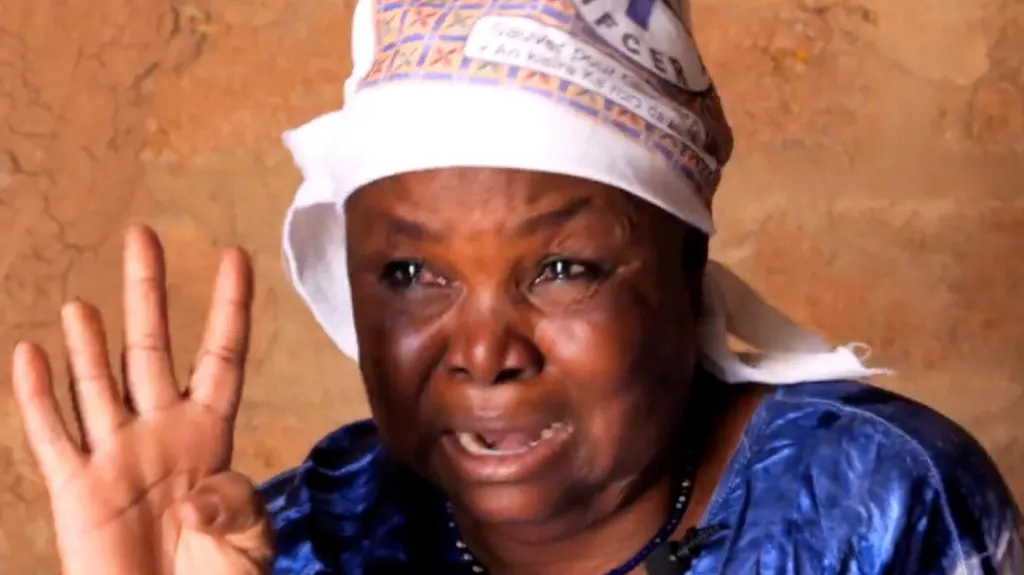
Yameogo Aminata, a 57-year-old refugee, sits in a dimly lit room at a camp in Ivory Coast, struggling to come to terms with the traumatic loss of her four sons, who were killed by jihadists in their home country of Burkina Faso.
In 2022, Aminata was away from her home when armed insurgents, who have been wreaking havoc in central Burkina Faso for nearly 15 years, launched a devastating attack on her village.
The jihadists seized control of the village, taking cattle and land, and killing numerous residents, including Aminata's sons, who were between 25 and 32 years old.
Recounting the horrific event to the BBC, Aminata's body trembled with emotion as she described how the insurgents slit the throats of her children.
Aminata recalled arriving at the scene to find her fourth son being killed.
She attempted to fight back with a knife but was overpowered, beaten, and left with severe injuries to her head, shoulder, and throat.
During the chaos, Aminata became separated from her daughter, who remains missing to this day.
In 2023, Aminata fled to the Nioronigué camp in Ivory Coast, where she still keeps the blood-stained clothes from that fateful day as a poignant reminder of her loss.
Aminata expressed her desperation to the BBC, stating that she feels lost and without any sense of direction or purpose.
The insurgency in Burkina Faso has resulted in the deaths of at least 10,000 people, with the conflict also affecting neighboring Mali and Niger.
The United Nations has identified the region as a hub of global jihadist violence.
Military juntas have taken power in all three countries, pledging to combat the insurgency.
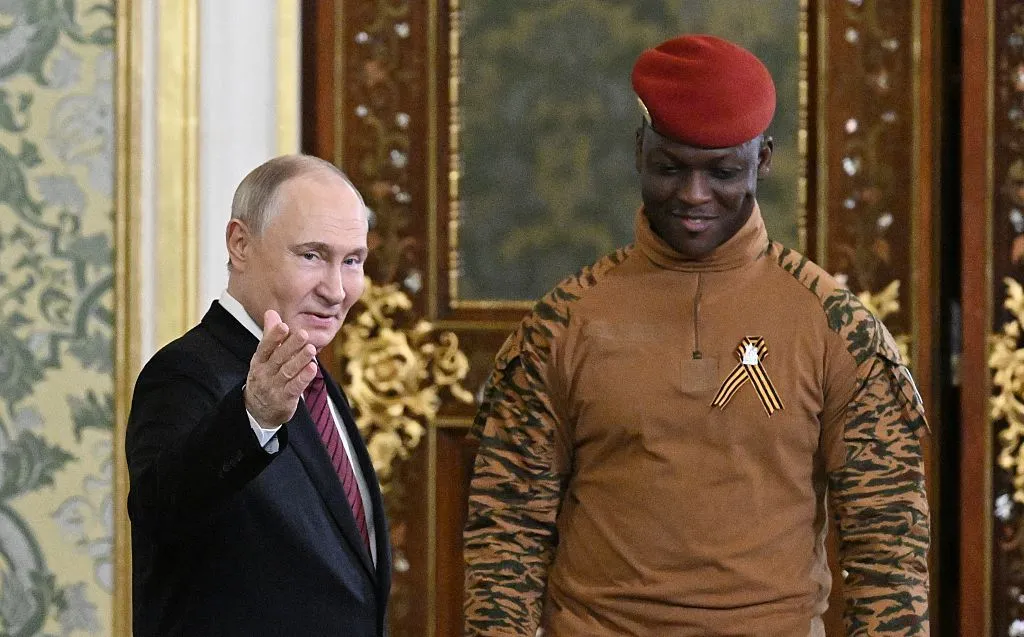
These juntas have shifted their allegiances away from traditional Western partners and are now seeking military aid from Russia.
Despite the deployment of Russian forces in Burkina Faso under the Africa Corps banner, the insurgency persists, with the al-Qaeda-affiliated group Jama'at Nusrat al-Islam wal-Muslimin (JNIM) being a prominent militant organization.
Hassane Tall, a 60-year-old farmer, fled northern Burkina Faso in 2023 with his three wives and 19 children after surviving multiple attacks.
Tall recounted to the BBC how they escaped clashes between jihadist groups and security forces, fearing for their lives.
Now residing in the Nioronigué camp, Tall expressed his deep sadness at leaving his ancestral land but sees no alternative for his family's safety.
The 12-hectare Nioronigué camp, which is home to Aminata and Tall, is located near the Burkina Faso border and was established in 2023 by the UN and Ivorian authorities.
Initially designed to accommodate around 6,000 people, the camp, along with the nearby Timala camp, currently shelters approximately 13,000 refugees, exceeding its intended capacity.
According to UN data, more than three million people have been displaced due to various conflicts in the Sahel region.
Over 80,000 people from Burkina Faso are currently living in camps in Ivory Coast.
Aminata expressed her gratitude to the Ivorian government and its people for providing her with shelter.
She recounted how she was forced to leave her home after being chased away by jihadists who sought to claim the country.
Similar stories of trauma and loss are echoed throughout the camp.
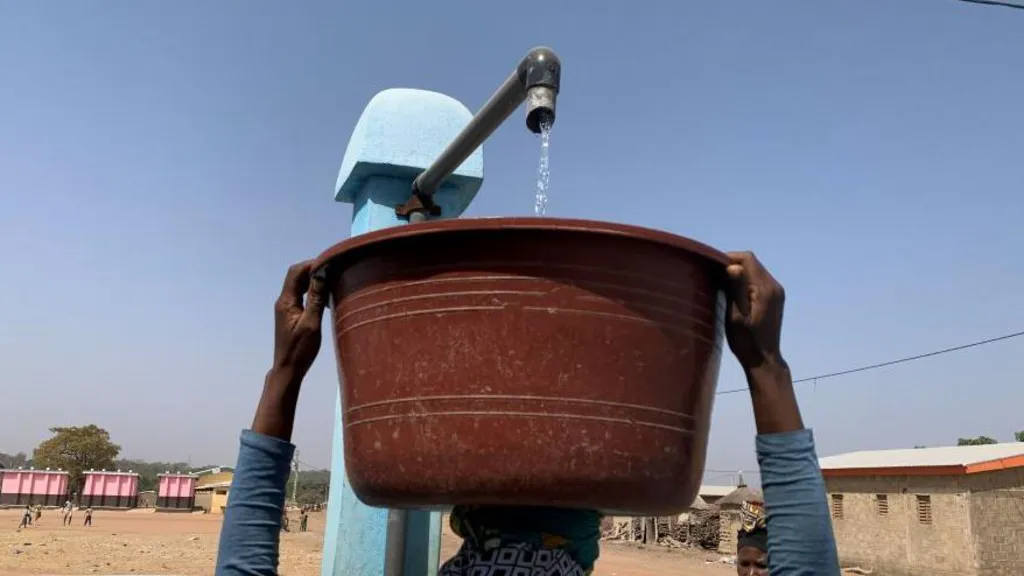
Among the refugees are individuals from Mali, including a 27-year-old finance graduate who, along with his brothers, undertook a perilous journey from Gao in northern Mali to the capital, Bamako, and then to northern Ivory Coast in search of safety.
The graduate stated that they were compelled to leave after their 24-year-old cousin, a fisherman, was killed by suspected jihadists.
He described the frequent attacks in the area, saying that such incidents occur daily.
The graduate told the BBC that they lived in constant fear, unsure if they would survive from one day to the next.
Despite being one of the fastest-growing economies in the region, Ivory Coast struggles with high unemployment and poverty, leaving locals in border areas concerned about the influx of refugees.
However, government representative Djamatigui Touré assured the BBC that refugees would be welcomed and not turned away.
Touré emphasized the shared history and culture between the refugees and the local population, referring to them as "brothers."
The UN Development Programme's resident representative, Blerta Cela, warned that the resources are being severely strained due to the large number of refugees.
Cela noted that the majority of refugees are not living in camps but are instead being hosted by Ivorian families.
For Aminata, rebuilding her life in a new country is weighed down by the memories of her past.
She acknowledged that she is still unable to come to terms with the traumatic events she experienced.
Aminata's only hope is for peace to be restored in Burkina Faso.
Additional reporting was provided by Noel Ebrin Brou.
For additional news coverage from Africa, visit the BBCAfrica.com website.

-
 News11 hours ago
Australian Politics Faces Questions Over Gender Equality Amid Sussan Ley’s Appointment
-
 News8 hours ago
Farage Says Reform to Replace Traditional Tory Party
-
 News8 hours ago
Wrexham Pair Seek Win Against Former Team Ipswich
-
 News13 hours ago
Liberal Party Removes Australia’s First Female Leader
-
 News11 hours ago
UK Braces for Cold Snap with Snow and Ice Alerts Expected
-
 News8 hours ago
Husband’s alleged £600k theft for sex and antiques blamed on drug side effects
-
 News2 days ago
Sunbed ads spreading harmful misinformation to young people
-
 Business14 hours ago
BBC Reporter Exposed to Cyber Attack Due to Vulnerabilities in AI Coding Tool