
News
Six key lessons learned after having my car stolen
There is a growing trend of keyless thefts, with vehicle crime becoming more sophisticated and technologically advanced, often involving coordinated efforts.
As I stand at my garden gate, car key in hand, I'm met with an unexpected sight: my car is nowhere to be found.
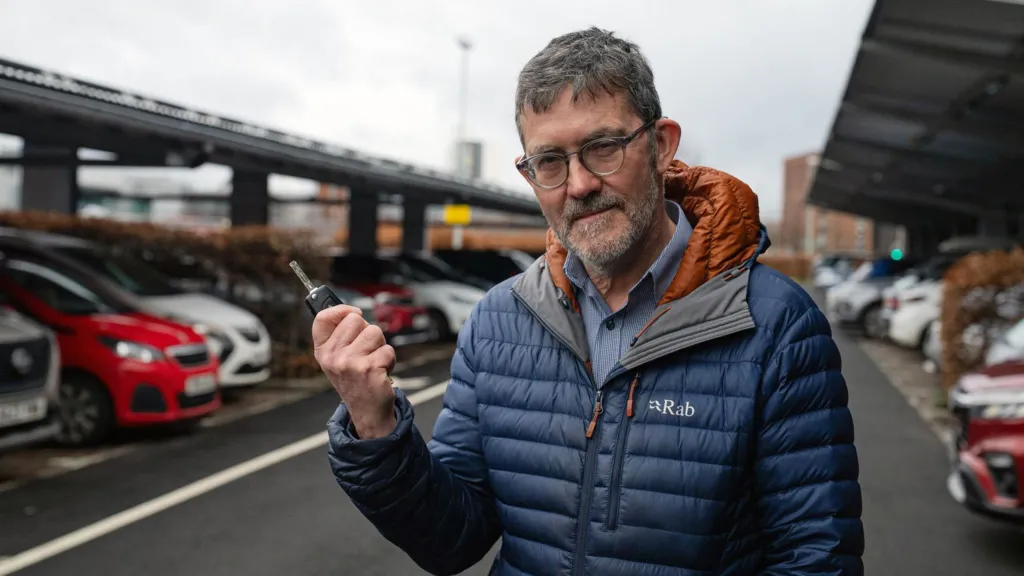
Initially, I consider various innocent explanations for its disappearance, such as a busy road or a misplaced parking spot, but it soon becomes clear that my car has been stolen.
A visit from two police officers reveals that my car was detected by a number plate recognition camera in Glasgow, approximately 20 miles away, shortly after midnight, but the trail ends there.
In the aftermath, I join the ranks of around 130,000 UK drivers who fall victim to car theft each year, navigating the process of filing a police report, submitting an insurance claim, and purchasing a replacement vehicle.
As I delve deeper into the world of car crime, I uncover some surprising facts about its evolving nature.
Since the 1990s, most vehicles have been equipped with coded keys containing electronic microchips paired with engine immobilisers, designed to prevent theft without the key.
However, this security measure did not deter the thieves who stole my car, leaving me wondering how they managed to bypass the system.
The police officers who visited my home informed me about a technique known as a "relay attack", which enables thieves to steal cars without the owner's keys.
The process involves one thief using a device to capture the radio signal emitted by the key fob, which is then relayed to an accomplice standing near the car.
The accomplice uses another device to receive the signal, allowing them to unlock and start the car if it has a keyless ignition system, making it possible to drive away in a matter of seconds.
The thief near the property typically stands close to where the car owner is likely to keep their keys, such as the kitchen or hallway, to capture the signal.
If the car has a keyless ignition system, the thieves can simply press the start button and drive away, often in under a minute.
Another method used by thieves is a "CAN bus attack", where a device is connected to the car's wiring network, sending fake messages to the electronic control system and bypassing the immobiliser.
In November, law enforcement officials in France and Italy arrested five individuals suspected of manufacturing devices used for car theft, which were being sold worldwide disguised as portable Bluetooth speakers.
These devices, often traded on the Dark Web or through encrypted messaging, can be expensive, but for professional car crime gangs, they represent a worthwhile long-term investment.
After sharing my experience with colleagues, one of them suggested keeping car keys in the fridge or microwave to prevent signal cloning, as the metal surroundings block the signal.
This simple technique is based on the principle that surrounding the key with metal prevents the signal from being cloned.
For several weeks, I stored the keys to my replacement car in the fridge until I purchased a more reliable and hygienic solution, a Faraday pouch.
A Faraday pouch is a small, metal-mesh-lined bag or box that blocks electromagnetic signals, preventing key cloning, and can be purchased for a relatively low cost.
My interest in car theft led to an invitation to Police Scotland's national training centre, where Sgt Ally Mackay demonstrated the effectiveness of signal-blocking containers and offered advice on their use.
Sgt Mackay recommended investing in a Faraday pouch but replacing it every couple of years, as its effectiveness diminishes over time.
My stolen car was not a luxury vehicle, but a 12-year-old Ford Fiesta with 100,000 miles on the clock, leaving me wondering why it was targeted.
Initially, I suspected that the thieves might have been joyriders who would drive recklessly and eventually abandon the car, but it's possible that it was stolen for other reasons.
A friend who works in the motor trade suggested that my car might have been stolen for its engine, which could be sold for a significant profit.
During my visit to the Police Scotland training college, I met Vince Wise, a former Met officer who specialises in car theft, and he agreed that my car was likely stolen for its parts.
Vince Wise explained that the increasing value of vehicles and the demand for parts have made car theft a lucrative business, with stolen cars often being broken up for second-hand components.
"In the past, it was easy to steal a car and sell it, but now, due to the rising value of vehicles and the demand for parts, it's become a more complex and profitable crime," he said.
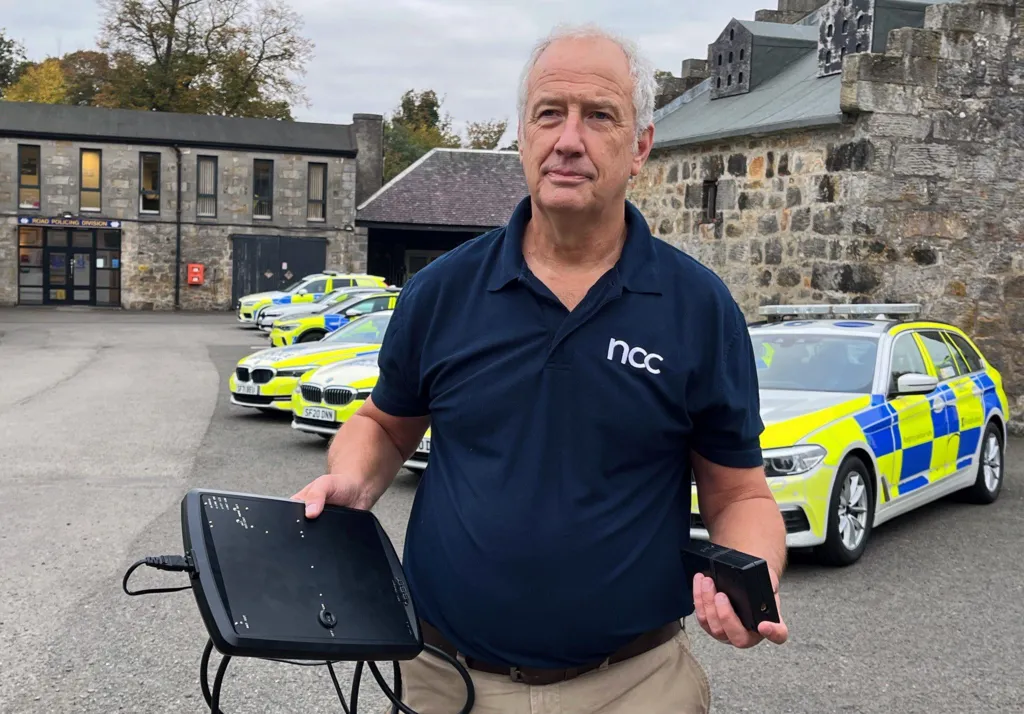
Low-value cars like mine often end up in "chop shops", where they are dismantled for spare parts that can be sold at a fraction of the cost of manufacturer's originals.
According to data from Police Scotland, Ford Fiestas are the most commonly stolen cars in Scotland, with 534 reported thefts over an 18-month period.
The Vauxhall Corsa ranked second, with 167 reported thefts, likely due to the popularity and abundance of these models, which creates a high demand for second-hand spares.
The popularity of these models contributes to their appeal to thieves, as there is a large market for spare parts.
The high cost of manufacturer's parts has inadvertently created an incentive for car theft, as well as encouraging insurers to write off damaged vehicles, which can then be sold for parts.
This has created a cycle where write-offs are bought, repaired with stolen parts, and then sold on, often without the buyer's knowledge of the car's history.
Vince Wise noted that some individuals specialise in selling vehicles in the sub-£5,000 bracket, where buyers may be less likely to scrutinise the car's pedigree.
While stolen low-value cars like mine tend to remain local, high-value vehicles are often exported abroad, where they can be sold for a significant profit.
The development of the shipping container industry has simplified the process of exporting stolen vehicles, making it easier for thieves to transport them to other countries.
Vince Wise shared his experience of intercepting stolen vehicles at UK container ports, destined for countries such as Tanzania, Kenya, and South Africa.
The reason for this is that cars in the UK are right-hand drive, which is also the configuration used in many former British colonies in Africa, making them a convenient market for stolen vehicles.
The fact that these countries have a similar driving configuration to the UK makes it easier for thieves to sell stolen vehicles there, often without arousing suspicion.
This has created a significant market for stolen vehicles, with many being exported to Africa, where they can be sold for a substantial profit, often without being detected.
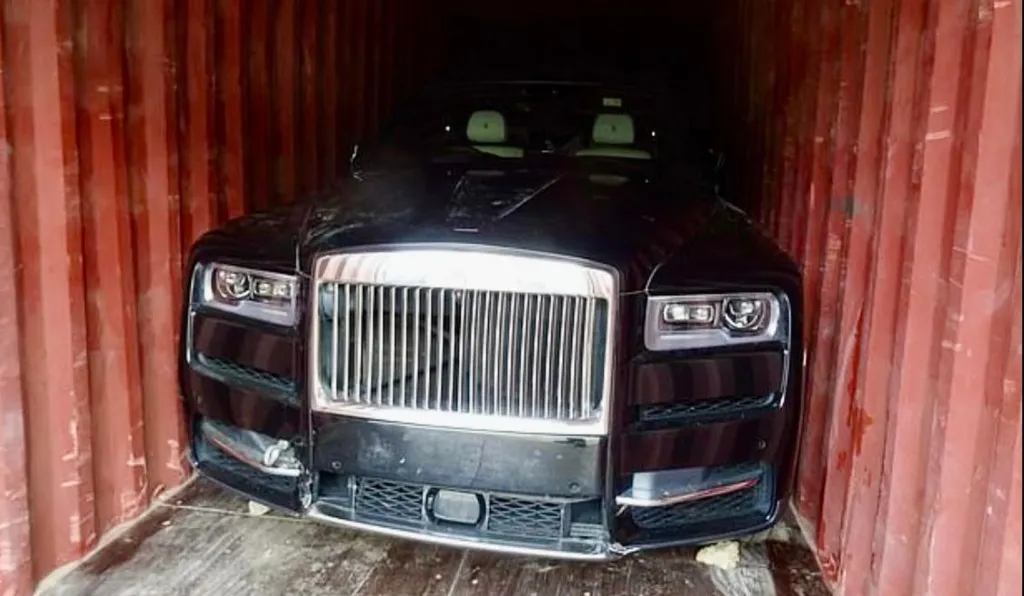
Investigations have revealed that eastern Europe, Russia, and the Middle East are among the most common destinations for exported vehicles, where criminals are less concerned about the car's drive type.
I consulted with experts on car crime to gather their advice on preventing vehicle theft. They emphasized that installing a tracker significantly increases the likelihood of recovering a stolen car.
UK law enforcement agencies only endorse tracking devices that have earned "secured by design" accreditation, although some individuals have reported success with using discreet, low-cost "airtag" type trackers to gather crucial information about a vehicle's whereabouts.
However, my experts focused on more straightforward, low-tech solutions. Sgt Ally McKay's top recommendation was careful consideration of where to park one's vehicle.
Sgt McKay advised parking in a visible, well-lit area, such as a driveway, and choosing a location with CCTV coverage or natural surveillance from neighbors, as these factors can serve as a deterrent to potential thieves.
He also emphasized the importance of understanding how one's car key works and, if necessary, using a Faraday pouch to protect it, noting that some smart fobs now offer the option to disable the signal at night.
Another crucial step, according to experts, is manually verifying that one's car is locked, as thieves may employ tactics like signal blockers to deceive owners into thinking their vehicle is secure.
Additionally, traditional physical security devices, such as steering wheel locks or wheel clamps, can increase the difficulty for criminals, even if they are not foolproof.
The visible presence of additional security measures can make potential thieves think twice, as it indicates that the owner has taken extra precautions.
The Royal United Services Institute (Rusi), a security think tank, conducted a comprehensive review of UK car crime trends last year.
The study found that car crime has become increasingly sophisticated, professionalized, and globalized, with ties to organized crime, resulting in a costly "arms race" between criminals and manufacturers.
In England and Wales, the number of vehicle thefts has increased by approximately 75% over the past decade, exceeding 120,000 per year, and reversing the decline seen in the 1990s when new security technologies became widespread.
In contrast, Northern Ireland has experienced a steady decline in vehicle thefts, while Scotland has maintained a relatively stable annual figure of around 5,000.
According to Rusi's researcher, the variation in theft rates across regions may be due to a time lag, as new methods of theft can take up to 10 years to spread throughout the UK.
It has been several months since my car was stolen, and there have been no further developments since the last reported sighting in Glasgow.
Although my insurers have paid out and a replacement car has been purchased, law enforcement officials stress that car theft is not a victimless crime, as it ultimately leads to higher insurance premiums, affecting all drivers.
Business
DP World CEO departs amid fallout over Epstein connections
Sultan Ahmed bin Sulayem’s departure follows the revelation of hundreds of emails allegedly exchanged between him and Epstein, as revealed in recently disclosed documents.
DP World's global ports operator has undergone a change in leadership, with the previous head stepping down amidst scrutiny surrounding their association with convicted sex offender Jeffrey Epstein.
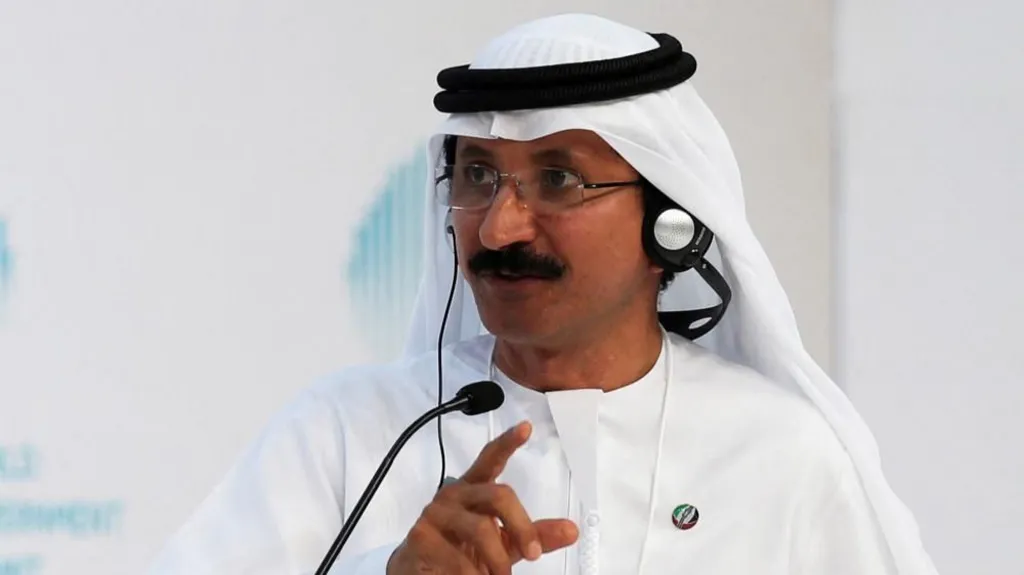
Sultan Ahmed bin Sulayem's departure as chairman and chief executive follows the release of newly uncovered files, which indicate he exchanged numerous emails with Epstein over the course of a decade.
The mention of an individual in these files does not imply any wrongdoing, and the BBC has reached out to Sulayem for a statement regarding the matter.
On Friday, DP World announced the appointments of Essa Kazim as chairman and Yuvraj Narayan as chief executive, without making any reference to Sulayem, whose photograph appears to have been removed from the company's website.
DP World, a Dubai-owned logistics company with a significant presence in global trade infrastructure, operating port terminals across six continents, has faced increasing pressure from its business partners in recent days.
Earlier in the week, the UK development finance agency and La Caisse, Canada's second-largest pension fund, announced that they would be suspending new investments in the firm.
Additionally, the Prince of Wales' Earthshot project, which received funding from DP World, was reported to the UK Charity Commission following Sulayem's appearance in the recently released files.
The documents suggest a close and extensive relationship between Sulayem, a prominent Gulf business figure, and Epstein, spanning multiple areas of interaction.
US lawmakers Ro Khanna and Thomas Massie have accused Sulayem of being one of several influential individuals associated with Epstein, citing him as one of "six powerful men" linked to the disgraced financier.
The lawmakers, who co-sponsored the legislation that led to the release of the Epstein files last year, claim that certain information was improperly redacted from the documents.
On 9 February, Thomas Massie highlighted a redacted document that appeared to contain an email from Epstein in 2009, referencing a "torture video"; the recipient responded that they would be traveling between China and the US, although the context of the exchange is unclear.
US officials have confirmed that Sulayem was the recipient of the email in question, which was sent by Epstein.
News
Ireland Seeks Redemption in Match Without Spectators
Ireland’s Captain Caelan Doris has emphasized that the team must have all players contributing in order to move past their loss to France and secure a win against Italy.
Ireland captain Caelan Doris is urging his team to deliver a strong performance against Italy, following their disappointing loss to France last week.
Historically, Ireland have dominated Italy in their home Six Nations matches, winning their last five encounters by at least 30 points, including a 2024 match where they held Italy scoreless, but a similar outcome is not expected this time around.
Italy's confidence is high after their 18-15 victory over Scotland in Rome, where they excelled in the set-piece and defended well in the closing stages.
Gonzalo Quesada's team put in an impressive display despite the challenging weather conditions, and their win has given them momentum ahead of their trip to Dublin.
In contrast, Ireland's camp has been introspective after their 16-year-low Six Nations loss to France, with head coach Andy Farrell expressing his disappointment and the need for improvement.
Farrell was critical of his team's performance, particularly in the first half, and has made several changes to the lineup for the Italy match, including the exclusion of Josh van der Flier, Jacob Stockdale, Tommy O'Brien, and Cian Prendergast.
The Irish coach has also spoken about the need for his team to "simplify things" and understand their identity, following a clear-the-air meeting with the squad.
Farrell has emphasized the importance of players not overthinking their roles and instead focusing on their strengths, as they prepare to face Italy.
The Irish coach's message to his players is to trust their instincts and not overcomplicate their game plan against Italy.
Ireland's review of their loss to France was a candid and honest assessment, with players and coaches alike acknowledging the need for improvement.
Ireland has made six changes to their team for the Italy match, with newcomers Cormac Izuchukwu and Rob Baloucoune, as well as uncapped lock Edwin Edogbo, set to feature.
Captain Caelan Doris believes that the new players must take ownership of their roles and contribute to the team's overall performance.
Doris expressed his enthusiasm for the team's lineup, despite the changes, and emphasized the importance of cohesion and trust among the players.
The Irish captain's message to the new players is to have faith in their abilities and enjoy the experience, while also focusing on the team's core strengths.
Doris stressed that every player must be fully committed and take responsibility for their actions on the field, in order to achieve a positive outcome.
He added that creating a sense of unity and purpose through their actions can have a profound impact on the team's performance.
Doris reiterated that every player must be fully invested and take ownership of their role, in order to achieve success against Italy.
Edwin Edogbo, the towering Munster lock, is set to make his Test debut for Ireland on Saturday.
Ireland's loss to France was marked by a lack of intent, and head coach Andy Farrell has responded by making changes to the team, including the inclusion of wingers James Lowe and Rob Baloucoune.
The hope is that these changes will help Ireland to rediscover their sense of purpose and direction against Italy.
Lowe, a experienced player, was dropped for the France match, but returns to the lineup, while Baloucoune makes his first appearance for Ireland since November 2022.
The inclusion of Cormac Izuchukwu in the back row is expected to add dynamism and ball-carrying ability to Ireland's attack.
There is also excitement about the potential of Edwin Edogbo, who has impressed for Munster despite struggling with injuries earlier in his career.
Caelan Doris will switch back to open-side flanker, a position he has played before against Italy, and where he has scored tries in the past.
Regardless of his position, Doris is focused on helping Ireland to move past their loss to France and deliver a strong performance against Italy.
The Irish captain reflected on the team's discussions throughout the week, which have centered on accountability, simplicity, and a renewed focus on their core values.
Doris emphasized the importance of the team holding each other accountable and taking ownership of their actions, in order to drive improvement.
The Irish captain acknowledged that the loss to France has served as a reference point, but expressed confidence that the team can learn from the experience and move forward.
Doris believes that Ireland has the potential to improve, but must focus on executing their game plan effectively and trusting their strengths.
The match between Ireland and Italy is scheduled to take place on Saturday, 14 February, at 14:10 GMT.
The Aviva Stadium in Dublin will host the encounter.
Fans can listen to live commentary of the match on BBC Sounds, BBC Radio 5 Sports Extra 2, BBC Radio Ulster, and the BBC Sport website and app, as well as follow live text commentary.
Italy has a chance to cause a major upset in the Six Nations, and will be looking to build on their win over Scotland last week.
The Italians pushed Ireland close last year, losing 22-17, and will be hoping to go one better this time around.
Despite the absence of Juan Ignacio Brex, Italy has a number of threats, including Tommaso Menoncello, one of the most exciting young talents in European rugby.
The Italian forwards have shown their ability to compete with top teams, having dominated Scotland and caused problems for South Africa's pack in November.
Caelan Doris acknowledged that Italy is no longer just a passionate team, but a side with a well-rounded attack and strong defense.
The Irish captain noted that Italy's attack is now a significant threat, and that their ability to play with width and depth makes them a challenging opponent.
Doris also highlighted the improvement in Italy's scrum, as well as the quality of their back three and the physicality of their forwards.
The Ireland team to face Italy is: Osborne; Baloucoune, Ringrose, McCloskey, Lowe; S Prendergast, Casey; Loughman, Sheehan, Clarkson, McCarthy, Ryan, Izuchukwu, Doris (capt), Conan.
Ireland's substitutes for the match include Kelleher, O'Toole, Furlong, Edogbo, Beirne, Timoney, Gibson-Park, and Crowley.
The Italian team features Pani, Lynagh, Marin, Menoncello, and Ioane in the backline, with P Garbisi and Fusco in the half-back positions, and a forward pack consisting of Fischetti, Nicotera, Ferrari, N Cannone, Zambonin, Lamaro as captain, Zuliani, and L Cannone.
Italy's replacement players are Di Bartolomeo, Spagnolo, Hasa, Ruzza, Favretto, Odiase, A Garbisi, and Odogwu.
On Saturday, Hollie Davidson of Scotland will make history by becoming the first female referee to officiate a men's Six Nations match, with the fixture being Ireland's home game against Italy.
Business
Consider Alternatives to Your Current Bank Account
According to Martin Lewis, the current moment may be an opportune time to consider switching bank accounts.
The complete episode is available for streaming on the BBC Sounds platform.
-
 News13 hours ago
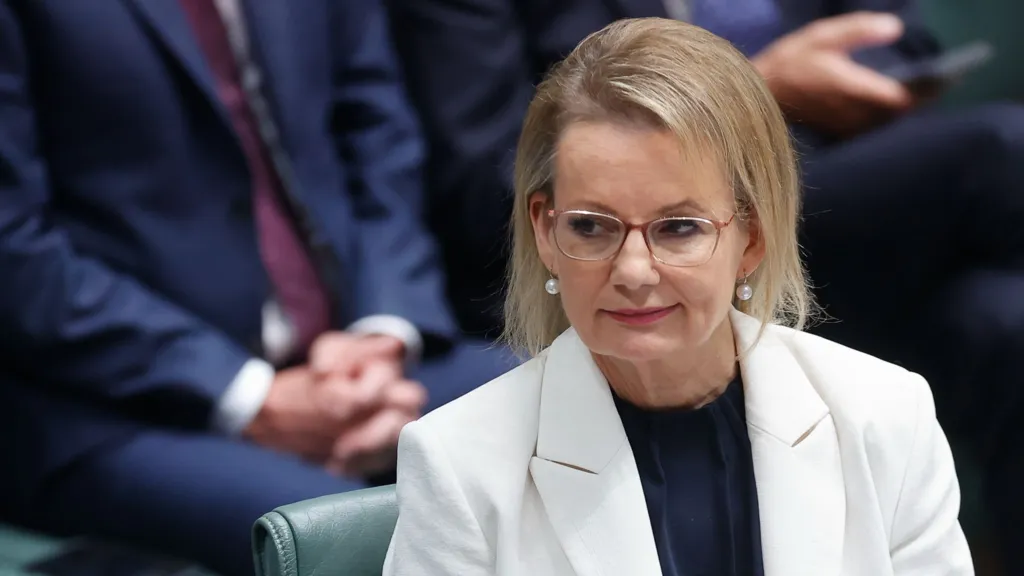
Australian Politics Faces Questions Over Gender Equality Amid Sussan Ley’s Appointment
-
 News11 hours ago
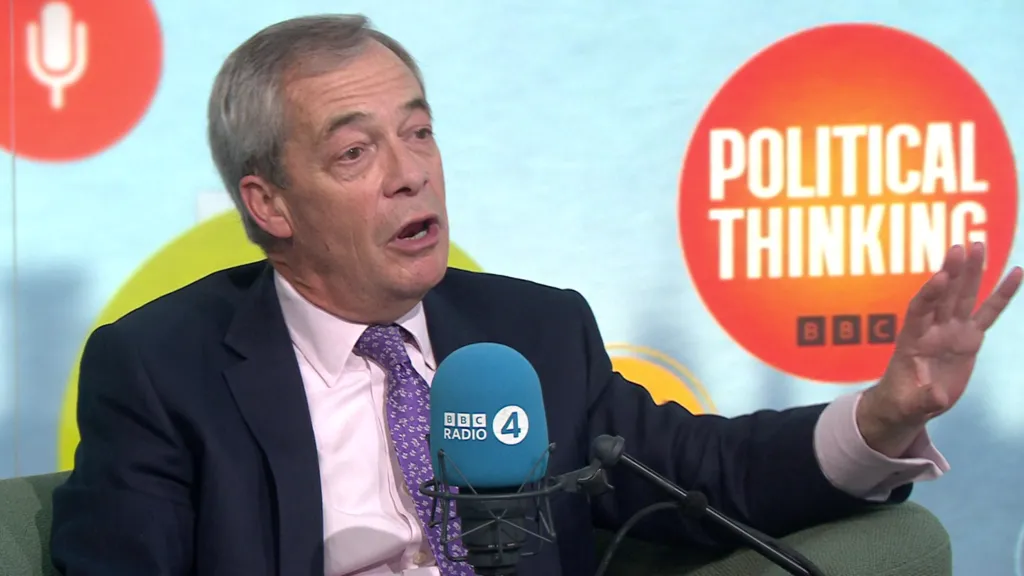
Farage Says Reform to Replace Traditional Tory Party
-
 News11 hours ago
Wrexham Pair Seek Win Against Former Team Ipswich
-
 News16 hours ago
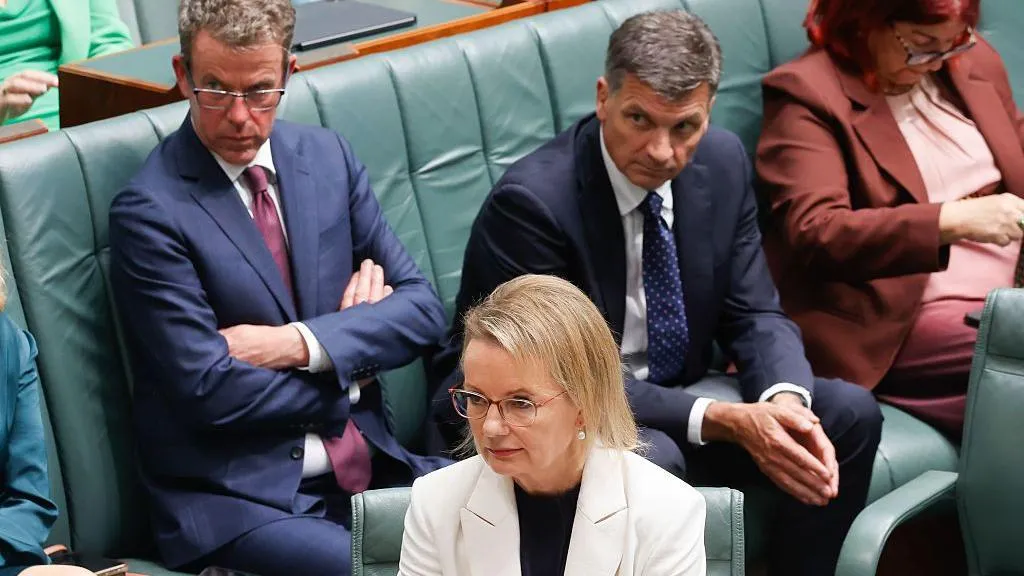
Liberal Party Removes Australia’s First Female Leader
-
 News14 hours ago
UK Braces for Cold Snap with Snow and Ice Alerts Expected
-
 News11 hours ago
Husband’s alleged £600k theft for sex and antiques blamed on drug side effects
-
 News2 days ago
Sunbed ads spreading harmful misinformation to young people
-
 Business16 hours ago
BBC Reporter Exposed to Cyber Attack Due to Vulnerabilities in AI Coding Tool