
News
Abandoned village sparks curiosity with post-apocalyptic landscape
The abandonment of the project remains unexplained, as both the local council and the developer have declined to provide a reason.
A deserted hamlet in rural Wales presents a haunting landscape, evoking the desolate atmosphere of a post-apocalyptic film set, yet devoid of any signs of life or activity.
The stillness is punctuated only by the sound of weeds pushing through the abandoned houses, while a nearby lake lies eerily quiet, devoid of any wildlife.
Jay Curtis stumbled upon the mysterious village while filming with a drone in Llandarcy, Neath Port Talbot, describing it as a "strange village" situated within the grounds of a former refinery site.
Originally intended to become a thriving community of 10,000 residents, the site had even drawn the attention of Prince Charles, who visited in the past to assess progress, but it was abruptly abandoned over a decade ago.
The reasons behind the cessation of work on the site remain unclear, with both the site owner and local authorities declining to comment, leaving Jay Curtis to gather theories and speculation from online sources.
Curtis initially thought the scene resembled a movie set, noting the complete abandonment of the area, which sparked his curiosity.
Given Wales' thriving film industry, he considered the possibility that it might be a purpose-built set, but as he flew his drone closer, he realized it was, in fact, a genuine hamlet with fully-equipped houses.
The discovery revealed a series of houses, complete with garages, electricity, and lighting, which had been left to deteriorate, sparking Curtis' interest in uncovering the story behind the abandonment.
As a documentarian of abandoned and forgotten locations across the UK, the 38-year-old from Swansea aims to preserve the history of such sites before they disappear.
While researching the area surrounding the old oil refinery, Curtis came across a collection of houses that appeared to have been designed with an expensive, quaint cottage-style aesthetic, but had since fallen into disrepair.
The scene was further characterized by grass growing through the cracked cement, adding to the overall sense of neglect and abandonment.
As Curtis delved deeper, his curiosity turned to questions, and he realized that the area had once been well-known locally, but had since faded from memory.

He recalled the excitement surrounding Prince Charles' visit in 2013, which had marked a significant milestone in the redevelopment of the former BP oil refinery site into a thriving community.
The project, known as Coed Darcy village, aimed to transform one of Europe's largest brownfield sites into a new community, comprising 10,000 residents and 4,000 homes.
Despite the initial progress and the royal visit, the project ultimately stalled, with only 294 homes completed and the roads left unconnected.
The site's history is marked by unfulfilled potential, with the majority of the planned development remaining unrealized.
After sharing his findings online, Curtis received a flood of messages from people offering theories about the site's abandonment, ranging from environmental concerns to funding issues.

Theories proposed by the public include concerns over oil contamination, unsuitable ground conditions, and a lack of investment or interest in the project.
Curtis found it fascinating to see how social media helped fill in the gaps, with former refinery workers and builders sharing their own accounts of the site's history.
However, a clear explanation for the site's abandonment remains elusive, leaving many questions unanswered.
The lack of a definitive answer is what puzzles most people, according to Curtis.
Some individuals have even reported observing cars entering and exiting the site at night, suggesting that it may still be in use for some purpose, further adding to the enigma.
STM Brighton Group, a subsidiary of Revantage, has been conducting remediation work on the brownfield site since its acquisition in 2008.

In November 2021, the company submitted a planning application for the construction of 1,800 new homes, as well as a cluster of retail units and land for a primary school.
However, since the submission of the planning application, there has been no progress in determining the suitable planning use for the former oil refinery site.
Revantage and Neath Port Talbot council have both declined to comment on the matter, leaving the future of the site uncertain.
News
Water Leak Affects 19th Century Artwork at Louvre Museum
The world’s most visited museum has been marred by a series of incidents, prompting growing scrutiny of its management.
The Louvre museum in Paris has experienced a significant setback due to a water leak that damaged a 19th-century ceiling painting, marking the latest in a series of challenges for the institution.
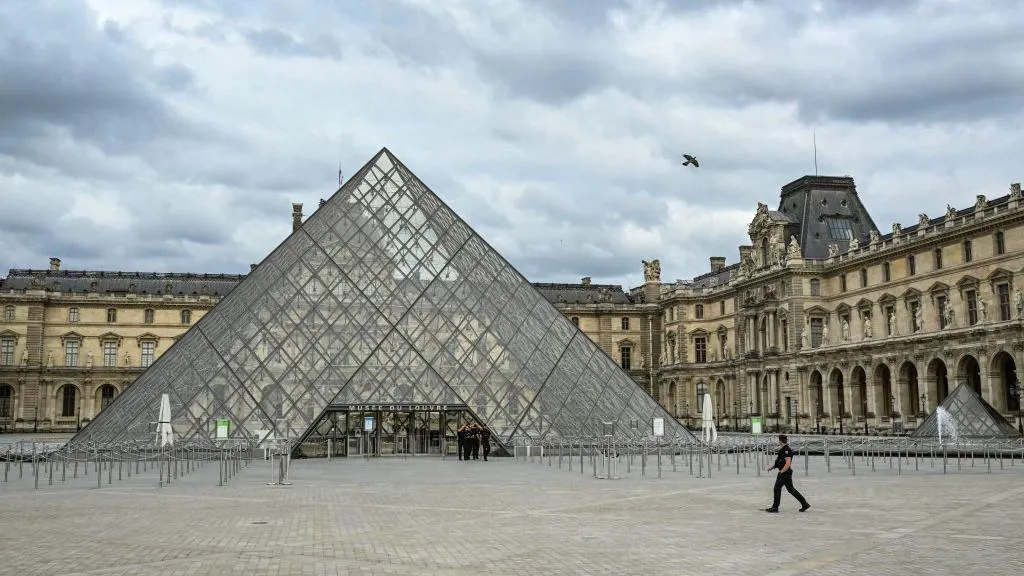
According to the museum, the water damage was discovered in room 707, also known as the "Duchâtel" room, on Thursday evening, with the room housing various artworks from the 15th and 16th centuries.
The leak, which originated from a heating pipe, was reportedly stopped shortly after midnight, and the only artwork damaged was Charles Meynier's The Apotheosis of Poussin, Le Sueur and Le Brun, a ceiling painting.
This incident occurred just a day after French authorities detained nine individuals, including two museum staff members, in connection with an alleged ticket fraud scheme.
In recent months, the museum's management has faced increased scrutiny following a string of high-profile incidents, including the theft of French crown jewels and damage to hundreds of books due to a leak.
The Louvre reported that Thursday's leak occurred near the entrance to the paintings department in the Denon wing of the museum.
Firefighters responded promptly to the incident, and the leak was brought under control within 40 minutes of its discovery.
On Friday morning, a painting restorer assessed the damage to Meynier's ceiling painting and found that it had sustained two tears in the same area, as well as lifting of the paint layer on the ceiling and its arches.
The damaged ceiling painting, which dates back to 1822 and is signed by Meynier, depicts renowned French painters Nicolas Poussin, Eustache Le Sueur, and Charles Le Brun surrounded by angelic figures in the clouds.
As a precautionary measure, rooms 706, 707, and 708 in the Denon wing were closed on Friday morning but are expected to reopen later in the day.
The chief architect of historic monuments visited the site to evaluate the condition of the ceiling and determined that there were no structural issues.
A union representative informed Reuters that scaffolding had been erected in the affected area to facilitate repairs.
The extent of the damage to the painting and the building, as well as the associated costs, have not been disclosed.
This latest incident is part of a series of challenges faced by the Louvre, which is the most visited museum globally, in recent times.
In December, a leak in the Egyptian department damaged between 300 and 400 items, mostly books, with the museum's deputy administrator, Francis Steinbock, acknowledging that the issue had been known for years.
The previous month, the museum had to partially close one of its galleries featuring Greek vases and offices due to structural weaknesses.
This incident followed a high-profile burglary on October 19, in which four individuals stole historic jewelry valued at €88 million, exposing significant security gaps at the museum.
The thieves used a stolen vehicle-mounted mechanical lift to gain access to the Galerie d'Apollon via a balcony overlooking the River Seine.
Several individuals have been arrested in connection with the theft, which is still being investigated by the French authorities.
The majority of the stolen items remain unrecovered, and the museum has since relocated some of its most valuable jewels to the Bank of France for safekeeping.
A report published by France's public audit body in October criticized the museum's excessive spending on artwork, stating that it had come at the expense of building maintenance and renovation.
News
UAE Beats Canada in T20 World Cup Thanks to Sharma
The United Arab Emirates boosted their chances of reaching the T20 World Cup Super 8s after Aryansh Sharma’s unbeaten 74 helped secure a narrow five-wicket victory over Canada.
The United Arab Emirates has taken a significant step towards qualifying for the T20 World Cup Super 8s, thanks in large part to Aryansh Sharma's impressive unbeaten 74, which helped secure a narrow five-wicket victory over Canada.
A recent match saw the UAE emerge victorious against Canada, enhancing their chances of advancing to the Super 8s in the T20 World Cup.
Access to this content is restricted to users based in the United Kingdom.
News
Russell Describes Red Bull’s Advantage as Highly Intimidating
Mercedes driver George Russell notes that Red Bull’s lead at the forefront of the Formula 1 pack has been particularly noteworthy, revealing a significant gap that has caught the attention of many in the sport.
As George Russell enters his fifth season with Mercedes, the team is gearing up for a new challenge in the 2026 Formula 1 season.
According to Mercedes driver George Russell, Red Bull's current advantage at the front of the pack is a significant concern, with the team's performance in the first pre-season test at Bahrain being particularly noteworthy.
Russell described the display of speed by Red Bull in Bahrain as a "wake-up call" for their competitors, highlighting the team's impressive pace in the first of two pre-season tests.
The British driver noted that Red Bull's lead is substantial, with a gap of around half a second to a full second per lap, which is a considerable margin in the context of Formula 1.
Russell expressed his surprise at the scale of Red Bull's advantage, stating that it is unsettling to see such a significant difference in performance, especially given Red Bull's history of producing competitive cars, even when their engine was not the strongest.
The 2026 season marks the most significant rule change in Formula 1 history, with new specifications for engines, chassis, tires, and fuel, which promises to shake up the competitive landscape.
As a result of these changes, energy management has become a critical aspect of the sport, with engines now producing approximately half of their total power output from the electrical component, and limited battery capacity.
Rivals have analyzed GPS data from Red Bull's power unit during the Bahrain test, revealing that the team can sustain electrical energy deployment for longer periods than any of their competitors.
This achievement is all the more impressive considering that Red Bull has established its own engine company from scratch to comply with the new regulations and has partnered with Ford.
Last season, Max Verstappen narrowly missed out on the drivers' title, finishing just two points behind Lando Norris.
Russell stated that his team had observed Red Bull's strength from the outset of the 'shakedown' test in Spain last month, and their performance has been consistently impressive.
He noted that on the first day of testing in Barcelona, Red Bull immediately demonstrated a significant advantage over their competitors, including Mercedes, Ferrari, and others.
Russell acknowledged that Red Bull's performance in Bahrain has further solidified their position as the team to beat, at least for the time being.
Looking ahead to the first race of the season in Melbourne, Russell predicts that Red Bull will likely maintain their advantage, given their strong showing in both Barcelona and Bahrain.
However, Red Bull technical director Pierre Wache has downplayed Mercedes' claims, suggesting that his team is not the benchmark, and instead, Ferrari, Mercedes, and McLaren are currently ahead.
Wache argued that Red Bull's analysis indicates they are behind the top three teams, contrary to the assertions made by Mercedes team principal Toto Wolff.
Ferrari driver Charles Leclerc believes that Mercedes is concealing their true potential and that Red Bull and Mercedes have posted the fastest times, followed closely by his own team.
The new cars have sparked a debate among drivers, with some enjoying the updated handling and ride, while others have expressed reservations about the changes.
On the second day of testing, Lando Norris and Max Verstappen disagreed on whether the new cars are enjoyable to drive, reflecting the mixed opinions among drivers.
Russell described the 2026 cars as "much nicer to drive" in terms of handling and ride compared to the previous season's cars, but noted that the engines are highly complex.
He cautioned against drawing conclusions too early, as the true challenges of the new engines and energy management systems will only become apparent at more demanding tracks like Melbourne or Jeddah.
Russell elaborated on a point made by Verstappen regarding the unusual driving styles required by the new engines, which demand careful management of energy recovery.
Drivers are having to adapt to unconventional techniques, such as using lower gears in corners to keep the engine revving and maximize energy recovery.
Russell provided an example from the Bahrain test, where he had to use first gear in a corner that would normally be taken in third gear, in order to maintain high engine revs and keep the turbo spinning.
He acknowledged that this approach can be counterintuitive and frustrating at times.
Russell used an analogy to illustrate the point, comparing it to driving a road car and being told to use first gear in a roundabout, which would be unconventional and unnecessary at normal speeds.
He emphasized that the car is not designed to handle such low gears in certain corners, but drivers are having to work around these limitations to optimize energy recovery.
Russell explained that the car's design is not suited for such low gears, but the need to maintain high engine revs and turbo boost necessitates this approach.
As a result, drivers are having to adapt their techniques to prioritize energy management over traditional notions of fast cornering.
Russell noted that the critical nature of energy levels in determining lap times means that driving around a corner in the fastest possible way may not always result in the best overall lap time.
In the past, drivers could focus on finding the quickest line through a corner, but now they need to consider the broader implications of their actions on energy levels and overall lap time.
Russell stated that drivers must now wait for a full lap to understand the impact of their decisions on energy levels, rather than being able to instantly assess the effectiveness of a particular line or technique.
Meanwhile, Aston Martin is reported to be around four seconds off the pace of the top teams, highlighting the significant gap they need to bridge to be competitive.
The 2026 Formula 1 cars have been on display in Bahrain, showcasing the new designs and technologies.
The sport has introduced new terminology, including "active aero" and "overtake mode," which reflect the changes brought about by the new regulations.
Russell has expressed his desire to compete directly with Verstappen, setting the stage for an exciting season of racing.
The 2026 season promises to be an exciting one, with the biggest rule change in Formula 1 history, a new generation of drivers, and a fresh wave of technological innovation.
-
 News12 hours ago
Australian Politics Faces Questions Over Gender Equality Amid Sussan Ley’s Appointment
-
 News9 hours ago
Farage Says Reform to Replace Traditional Tory Party
-
 News9 hours ago
Wrexham Pair Seek Win Against Former Team Ipswich
-
 News15 hours ago
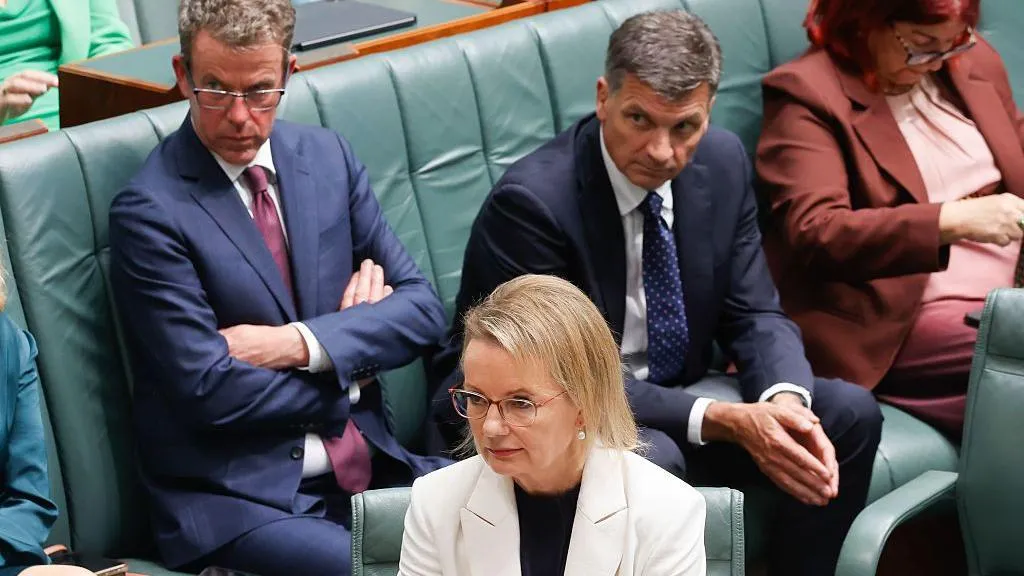
Liberal Party Removes Australia’s First Female Leader
-
 News13 hours ago
UK Braces for Cold Snap with Snow and Ice Alerts Expected
-
 News9 hours ago
Husband’s alleged £600k theft for sex and antiques blamed on drug side effects
-
 News2 days ago
Sunbed ads spreading harmful misinformation to young people
-
 Business15 hours ago
BBC Reporter Exposed to Cyber Attack Due to Vulnerabilities in AI Coding Tool