
Business
Audio Evidence Helps Prove Captain’s Guilt in North Sea Tanker Crash
According to the lead investigator of the tanker collision, indications of severe negligence emerged early on, with Vladimir Motin’s actions under scrutiny.
According to Detective Chief Superintendent Craig Nicholson, the 30-minute period of inaction by the captain of a cargo ship prior to a North Sea tanker collision, as well as his subsequent silence, led investigators to conclude that he was responsible for the incident.
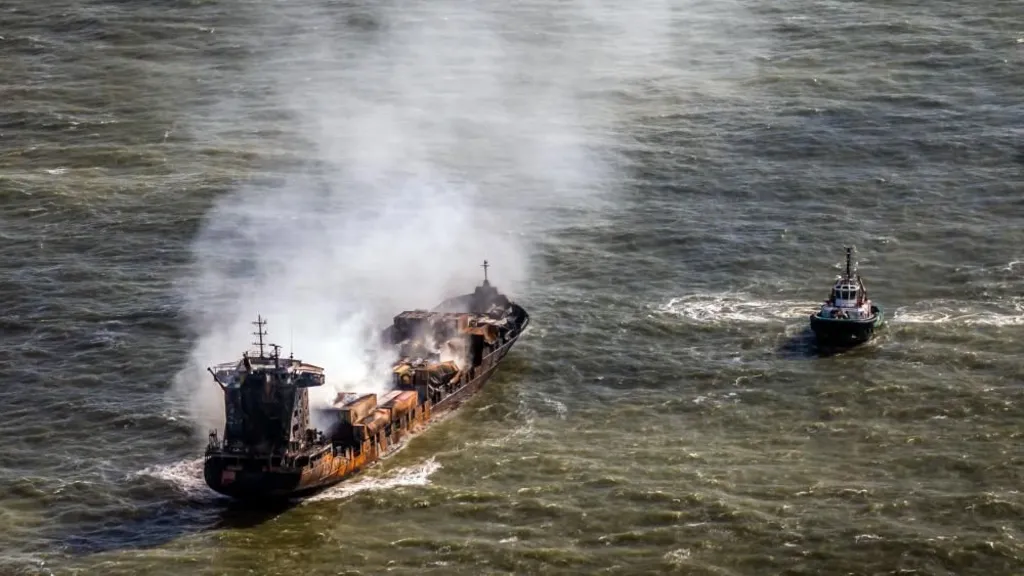
During the trial, jurors were presented with footage from both the Stena Immaculate, which was anchored 14 nautical miles off the Humber estuary, and the Solong, the cargo ship captained by Vladimir Motin that collided with it, revealing two distinct reactions to the collision.
The impact of the collision resulted in a massive fireball and blazes on both vessels, with Nicholson noting that the audio from the Solong's bridge, which showed 63 seconds of silence after the collision, was particularly noteworthy.
Vladimir Motin was sentenced to six years in prison for gross negligence manslaughter on Thursday.
Nicholson described the audio from the Solong's bridge, where Motin was present, as characterized by silence punctuated by background noises, potentially due to muffling or wind, in the lead-up to and immediately after the collision.
In contrast, the audio from the Stena Immaculate's bridge presented a different picture.
Video footage depicted a fireball erupting after the Stena Immaculate's hull was breached by the Solong, causing its cargo of jet fuel to ignite, while the accompanying audio reflected the chaotic scene unfolding on the vessel.
According to Nicholson, the audio from the Stena Immaculate's bridge captured the immediate aftermath of the collision, with a crew member swearing and the crew promptly responding to the emergency.
The crew's actions, as recorded in the audio, included sounding alarms, discussing the collision, and activating fire pumps, all of which were typical procedures in such a situation.
Nicholson stated that the captain of the Stena Immaculate was primarily concerned with ensuring the safety of his crew, directing them to the muster station and taking steps to protect them.
Meanwhile, audio from the Solong's bridge during the same period revealed only footsteps and a voice on the radio.
Nicholson found the contrast between the two vessels' responses to be striking.
As part of its investigation into the March 10, 2025, collision, Humberside Police interviewed Motin multiple times in an attempt to account for the lack of action on the Solong's bridge.
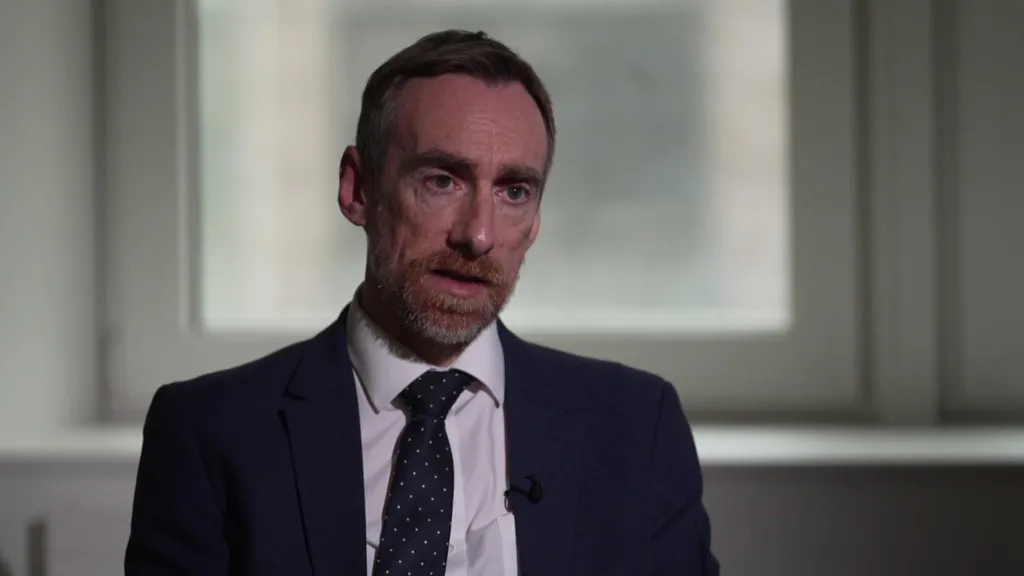
Nicholson noted that Motin's account of the events had evolved over time, with his initial statement being vague and lacking in detail.
In subsequent interviews, Motin was still unable to explain the silence and lack of response to the unfolding disaster, despite being given ample opportunity to do so.
According to Nicholson, Motin was unable or unwilling to provide a clear explanation for his actions.
Motin also failed to explain why he did not utilize available safety tools, such as radar and electronic systems, and why a crew notification system was deactivated, all of which could have helped prevent the collision.
As the case progressed through the justice system, Motin's account of events changed, with Nicholson suggesting that a new narrative was constructed to fit the evidence, although it remained unconvincing.
Nicholson expressed his belief that Motin had never provided a truthful account of the events.
The detective noted that Motin's account had changed throughout the investigation and trial.
During the trial, Motin's defense lawyer, James Leonard KC, argued that his client's actions, although faulty, did not constitute gross negligence manslaughter.

Leonard argued that human error did not necessarily equate to gross negligence.
The defense claimed that Motin had attempted to alter the Solong's course to avoid the Stena Immaculate but was hindered by faulty automatic controls that would not disengage.
According to Leonard, Motin was convinced he had manual control of the vessel when it was one nautical mile away from the Stena Immaculate, but had mistakenly pressed the wrong button.
The defense suggested that even an emergency stop at that point would not have prevented the collision and could have potentially endangered more lives by impacting the Stena Immaculate's accommodation area.
Nicholson and the prosecution disputed the defense's claims of mechanical failure, describing the auto-pilot story as implausible, and pointed out that Motin had not reported any issues with the vessel's steering to the ship's engineers.
Nicholson stated that Motin could have taken corrective action, such as slowing the vessel or seeking assistance, but failed to do so.
The detective noted that Motin had ample opportunity to take evasive action, given that the Stena Immaculate was stationary and visible on radar.
Nicholson pointed out that the Stena Immaculate, a large vessel approximately 170 meters in length, had been anchored for over eight hours and was clearly visible on radar.
Motin had acknowledged seeing the Stena Immaculate on his radar at a distance of nine miles, and later at three miles, but failed to alter his course or speed.
Nicholson emphasized that Motin should have at least sounded an alarm to alert his crew and the Stena Immaculate to the impending collision.
The detective believed that such action could have prevented the death of Mark Pernia, a crew member who was last seen on the bow of the Solong.
Pernia, a 38-year-old Philippine national, was presumed dead due to the intensity of the fire, which hindered the search efforts in the immediate aftermath of the collision.
The court heard that Pernia's body was never recovered, and he remains missing, presumed dead.
Nicholson expressed his hope that the conviction would bring closure to Pernia's family, including his wife and two young daughters.
The detective emphasized that the presumed death of Mark Pernia was a crucial element in securing a conviction in the case.
Nicholson stated that the investigation had been driven by the need to account for Pernia's death, with the entire inquiry centered on the circumstances surrounding his disappearance.
Business
Artist Alleges AirAsia Used His Work Without Permission
A street artist from Penang has reported that one of his artworks has been replicated and featured on the design of an airplane.
A lawsuit has been filed by a Malaysian-based artist against AirAsia and its parent company, Capital A Berhad, alleging unauthorized use of the artist's designs on one of the airline's planes.
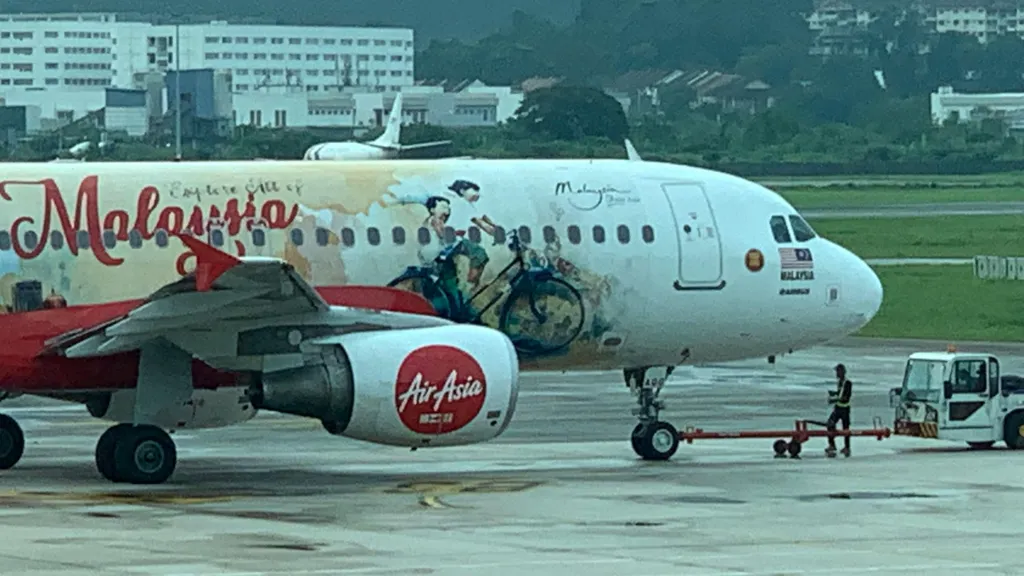
According to the lawsuit, Ernest Zacharevic, a Lithuanian-born artist residing in Penang, claims that his 2012 street mural, Kids on Bicycle, was reproduced and displayed on an AirAsia aircraft in late 2024 without his permission.
Zacharevic states that the use of his design was unauthorized, and no licensing agreement or consent was obtained, adding that the livery was removed after he publicly expressed concerns about the matter.
The BBC has reached out to AirAsia for a statement regarding the allegations.
In an interview with the BBC on Thursday, Zacharevic recalled that he first became aware of the alleged copyright infringement in October 2024, when he discovered that an AirAsia plane was featuring a livery resembling his artwork.
With over a decade of experience in Malaysia, Zacharevic is known for his roadside murals in Penang, which have become a staple of the local art scene.
One of Zacharevic's notable works is the 2012 street mural Kids on Bicycle, created for a local festival, which features two children on a bicycle integrated into the mural, located in George Town's heritage district.
The mural has become a popular tourist attraction, with many visitors taking photos in front of the iconic artwork.
Zacharevic alleges that his work was reproduced on an AirAsia plane without his knowledge or consent, and he personally witnessed the plane in operation at an airport.
Recalling the incident, Zacharevic expressed his discomfort with the situation, which occurred in 2024.
He took to social media to address the issue, posting a photo of the plane and tagging the airline, suggesting that they needed to discuss the use of his artwork.

Since then, Zacharevic has engaged in discussions with the company, but they have been unable to come to a mutually agreeable resolution.
This is not the first instance of Zacharevic's work being used in connection with AirAsia, as he claims the airline has also used his artwork on a delivery bag for its food services arm.
Court documents reveal that Zacharevic had previously discussed a potential collaboration with AirAsia in 2017, where he would create art for the airline's jets and a mural in one of their offices.
According to the documents, Zacharevic had informed the airline of his work and business rates during these discussions.
The lawsuit asserts that despite being aware of Zacharevic's work and rates, the airline proceeded to reproduce and publicly display one of his notable works, thereby infringing on his copyright and moral rights.
As the largest low-cost carrier in Asia, AirAsia operates over 200 jets to more than 100 destinations, and has recently announced plans to resume flights from Kuala Lumpur to London via Bahrain.
Zacharevic has stated that he will leave it to the court to determine any potential compensation he may be entitled to.
The artist emphasized that he does not consider the use of his artwork to be a mere reference to cultural or geographical associations, but rather a distinct artistic creation.
Zacharevic stressed that his artwork is the result of years of professional training, skill, and labor, and should be recognized as such.
Business
US Businesses and Consumers Bear Brunt of Trump Tariff Costs, According to NY Fed
In 2022, the United States saw a significant increase in collective import tariff rates, with rates rising by more than 300 percent for a range of imported goods.
The modification of tariff agreements by President Donald Trump with several countries had a consistent outcome: increased costs for US-based companies and consumers.

According to a study released on Thursday by the Federal Reserve Bank of New York, the average tariff rate on imported goods increased significantly, rising from 2.6% at the beginning of the year to 13% in 2025.
The New York Fed's research revealed that US companies absorbed approximately 90% of the costs associated with the higher tariffs imposed by Trump on goods from countries such as Mexico, China, Canada, and the European Union.
The Federal Reserve Bank of New York stated that "the majority of the economic burden of the high tariffs imposed in 2025 continues to be borne by US firms and consumers."
When tariff rates changed and increased in the previous year, exporting countries did not adjust their prices to mitigate potential declines in US demand.
Instead of lowering prices, exporters maintained their existing prices and transferred the tariff costs to US importers, who subsequently increased the prices of these goods for consumers.
The response of exporters in 2025 was similar to their reaction in 2018, when Trump introduced certain tariffs during his first term, resulting in higher consumer prices with minimal other economic effects, as noted by the New York Fed at the time.
The New York Fed's findings on Thursday are consistent with the results of other recent analyses.
The Kiel Institute for the World Economy, a German research organization, reported last month that its research indicated "nearly complete pass-through of tariffs to US import prices."
By analyzing 25 million transactions, Kiel researchers discovered that the prices of goods from countries like Brazil and India did not decrease.
The Kiel report noted that "trade volumes declined" instead, indicating that exporters preferred to reduce the quantity of goods shipped to the US rather than lower their prices.
The National Bureau of Economic Research also found that the pass-through of tariffs to US import prices was "nearly 100%", meaning that the US bears the cost of the price increase, not the exporting countries.
Similarly, the Tax Foundation, a Washington DC-based think tank, found that the increased tariffs on goods in 2025 resulted in higher costs for American households.
The Tax Foundation considered tariffs as a new tax on consumers and estimated that the 2025 increases resulted in an average cost of $1,000 (£734.30) per household, with a projected cost of $1,300 in 2026.
The Tax Foundation reported that the "effective" tariff rate, which accounts for decreased consumer purchases due to higher prices, is now 9.9%, representing the highest average rate since 1946.
The Tax Foundation concluded that the economic benefits of tax cuts included in Trump's "Big Beautiful Bill" will be entirely offset by the impacts of the tariffs on households.
Business
BBC Reporter Exposed to Cyber Attack Due to Vulnerabilities in AI Coding Tool
The demand for vibe-coding tools, which enable individuals without coding experience to develop applications using artificial intelligence, is experiencing rapid growth.
A significant and unresolved cyber-security vulnerability has been identified in a popular AI coding platform, according to information provided to the BBC.

The platform, known as Orchids, utilizes a "vibe-coding" approach, enabling individuals without technical expertise to create apps and games by inputting text prompts into a chatbot.
In recent months, such platforms have gained widespread popularity, often being touted as an early example of how AI can rapidly and affordably perform various professional tasks.
However, experts warn that the ease with which Orchids can be compromised highlights the risks associated with granting AI bots extensive access to computers in exchange for autonomous task execution.
Despite repeated requests for comment, the company has not responded to the BBC's inquiries.
Orchids claims to have a user base of one million and boasts partnerships with top companies, including Google, Uber, and Amazon.
According to ratings from App Bench and other analysts, Orchids is considered the top program for certain aspects of vibe coding.
Cyber-security researcher Etizaz Mohsin demonstrated the platform's security flaws to the BBC.
To test the platform's security, a spare laptop was used to download the Orchids desktop app and initiate a vibe-coding project.
A request was made to the Orchids AI assistant to generate code for a computer game based on the BBC News website.
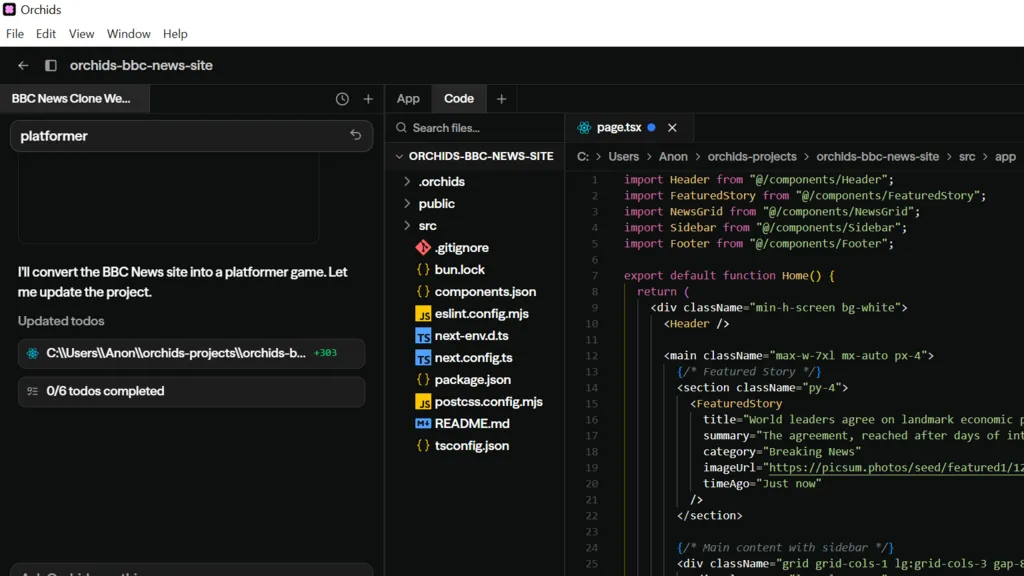
The AI assistant automatically compiled code on the screen, which, without prior experience, was unintelligible.
By exploiting a specific cyber-security weakness, Mohsin was able to access the project and view and edit the code.
Mohsin then added a line of code to the project, which went unnoticed.
This action apparently allowed him to gain access to the computer, as evidenced by the subsequent appearance of a "Joe is hacked" notepad file on the desktop and a changed wallpaper featuring an AI hacker image.
The potential implications of this hack on the platform's numerous projects are significant.
A malicious hacker could have easily installed a virus on the machine without any action required from the victim.
Sensitive personal or financial data could have been compromised.
An attacker could have accessed internet history or even used the computer's cameras and microphones for surveillance.
Most cyber-attacks involve tricking victims into downloading malicious software or divulging login credentials.
This particular attack was carried out without any involvement from the victim, known as a zero-click attack.
Mohsin stated that the vibe-coding revolution has introduced a new class of security vulnerabilities that did not previously exist, highlighting the risks associated with relying on AI to handle tasks.
The concept of AI handling tasks autonomously comes with significant risks, according to Mohsin.
Mohsin, a 32-year-old from Pakistan currently residing in the UK, has a history of discovering dangerous software flaws, including work on the Pegasus spyware.
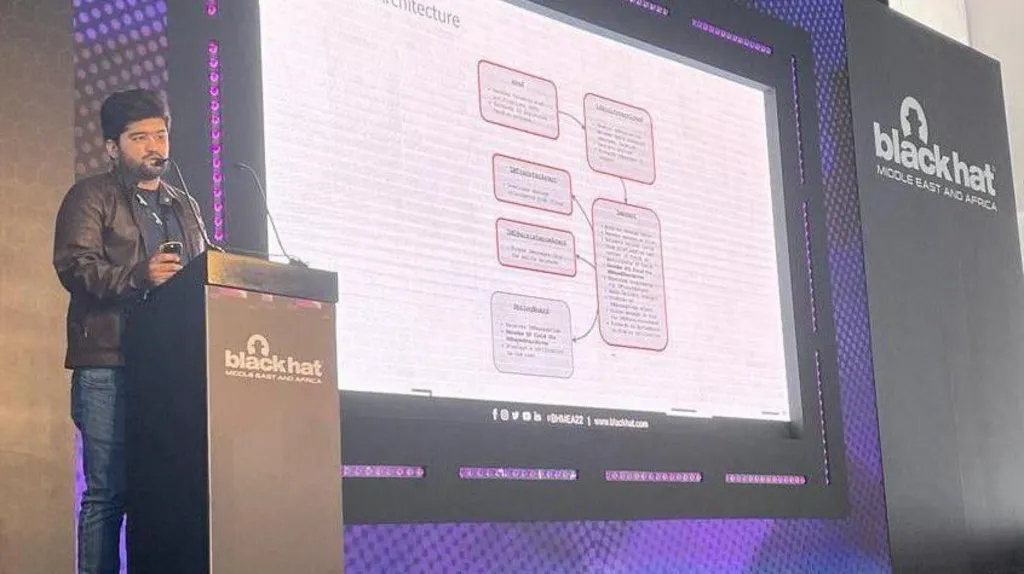
Mohsin discovered the flaw in December 2025 while experimenting with vibe-coding and has since attempted to contact Orchids through various channels, sending around a dozen messages.
The Orchids team responded to Mohsin this week, stating that they may have missed his warnings due to being overwhelmed with incoming messages.
According to the company's LinkedIn page, Orchids is a San Francisco-based company founded in 2025 with fewer than 10 employees.
Mohsin has only identified flaws in Orchids and not in other vibe-coding platforms, such as Claude Code, Cursor, Windsurf, and Lovable.
Nonetheless, experts caution that this discovery should serve as a warning.
Professor Kevin Curran of Ulster University's cybersecurity department notes that the main security implications of vibe-coding are the potential for code to fail under attack due to a lack of discipline, documentation, and review.
Agentic AI tools, which perform complex tasks with minimal human input, are increasingly gaining attention.
A recent example is the Clawbot agent, also known as Moltbot or Open Claw, which can execute tasks on a user's device with little human intervention.
The free AI agent has been downloaded by hundreds of thousands of people, granting it deep access to computers and potentially introducing numerous security risks.
Karolis Arbaciauskas, head of product at NordPass, advises caution when using such tools.
Arbaciauskas warns that while it may be intriguing to see what an AI agent can do without security measures, this level of access is also highly insecure.
He recommends running these tools on separate, dedicated machines and using disposable accounts for experimentation.
To stay informed about the latest tech stories and trends, sign up for the Tech Decoded newsletter, available outside the UK as well.
(Removed to maintain the same number of paragraphs)

-
 News9 hours ago
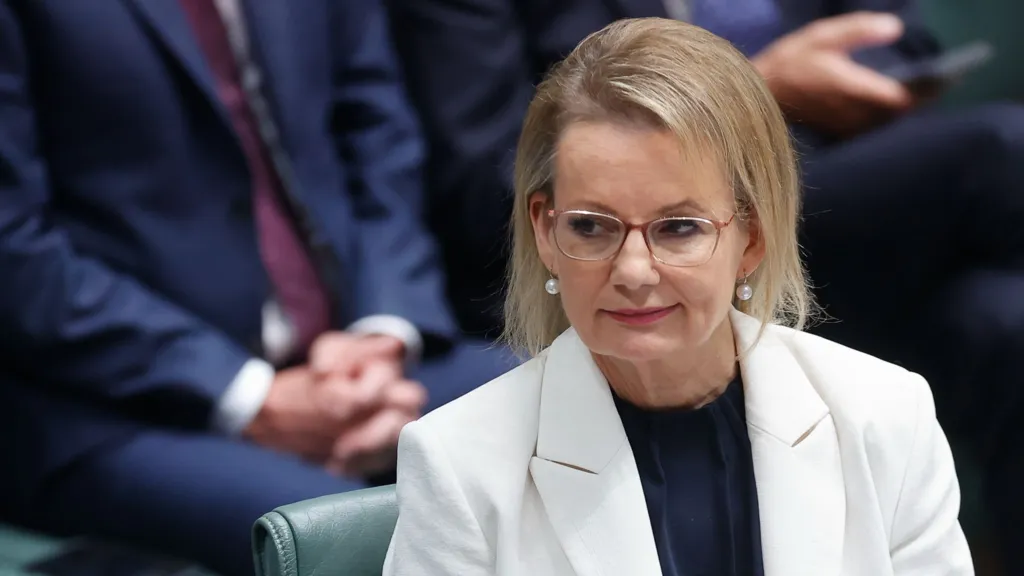
Australian Politics Faces Questions Over Gender Equality Amid Sussan Ley’s Appointment
-
 News7 hours ago
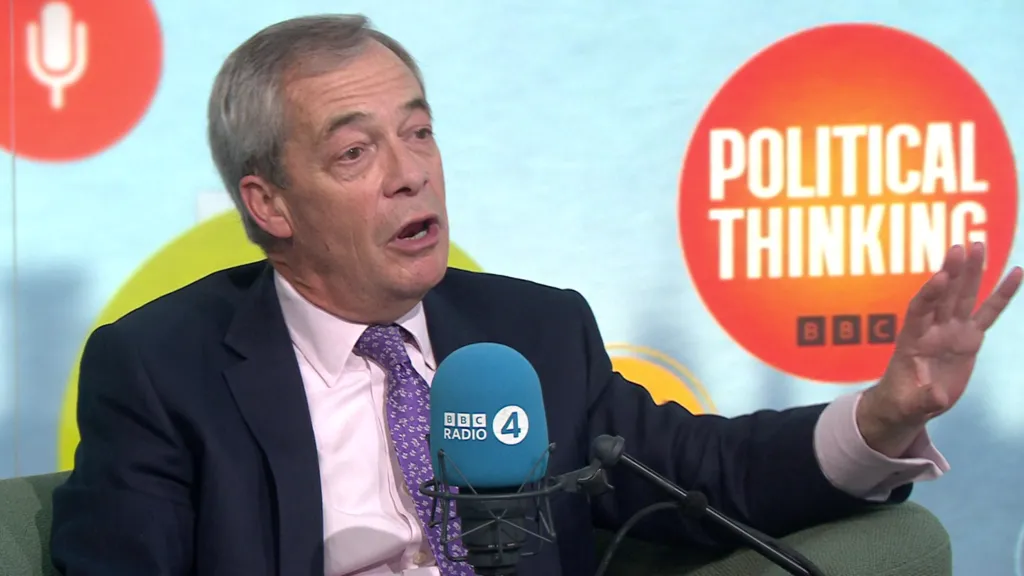
Farage Says Reform to Replace Traditional Tory Party
-
 News7 hours ago
Wrexham Pair Seek Win Against Former Team Ipswich
-
 News12 hours ago
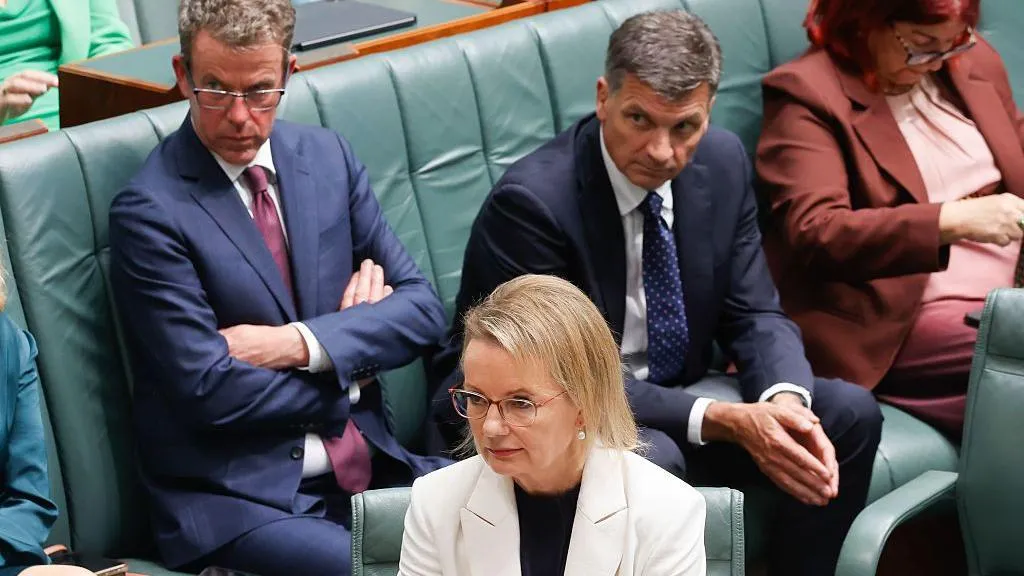
Liberal Party Removes Australia’s First Female Leader
-
 News10 hours ago
UK Braces for Cold Snap with Snow and Ice Alerts Expected
-
 News7 hours ago
Husband’s alleged £600k theft for sex and antiques blamed on drug side effects
-
 News2 days ago
Sunbed ads spreading harmful misinformation to young people
-
 Business12 hours ago
BBC Reporter Exposed to Cyber Attack Due to Vulnerabilities in AI Coding Tool