
Health
Debate surrounding recommended daily doses of sleep, exercise, and hydration
A recent study has raised questions about the widely accepted daily step goal, prompting an examination of other commonly cited health targets.
A recent study has sparked a sense of relief among many, as it suggests that the long-held goal of taking 10,000 steps a day may not be the key to optimal health after all.

The news that a daily target of 7,000 steps may be sufficient has given many people pause, causing them to reevaluate their fitness goals and step-counting habits.
This raises questions about other widely accepted health targets: can we fall short of these benchmarks and still maintain a long, healthy, and happy life?
To explore this further, we examined several commonly cited health guidelines, consulting with experts to understand their origins, the science behind them, and whether there is any flexibility in achieving these goals.
We investigated the importance of sleep, exercise, and hydration, asking how much of each is truly necessary for optimal health and wellbeing.
It is essential to note that the following discussion is not intended as medical advice, but rather an examination of various health ideals and their underlying assumptions.
According to the NHS, adults should aim to drink between six and eight glasses of water (1.5-2 liters) daily, but it may be possible to relax this goal without compromising our health.

Professor Neil Turner, a kidney specialist at the University of Edinburgh, points out that humans have survived for thousands of years without precise measurements of fluid intake.
He argues that our bodies have an innate ability to regulate fluid levels, saying, "Mice don't need reminders to drink; why do we?"
Professor Turner believes that our bodies are designed to function optimally, with natural cues like hunger, thirst, and fatigue guiding our behavior.
This perspective suggests that our approach to health may be overly complicated.
According to Professor Turner, this principle applies to most people, although individuals with specific medical conditions, such as kidney disorders, may require more precise fluid management.
He explains that dark urine is not necessarily a cause for concern, as it indicates that the kidneys are conserving water; our bodies will signal thirst when we need to drink more.
However, Dr. Linia Patel, a performance nutritionist, disagrees, arguing that having a daily water intake target of 1.5-2 liters is beneficial, particularly for women, who may experience dehydration-related symptoms like fatigue and brain fog.
Dr. Patel believes that consistent hydration can help alleviate these issues, which are common in her practice.
She emphasizes the importance of addressing dehydration, as it is a relatively simple problem to resolve with consistent effort.
Moving on to sleep, the NHS recommends 7-9 hours per night for adults, with limited flexibility in this guideline.

Professor Ama Johal, a sleep disorders specialist at Queen Mary University of London, stresses the vital importance of sleep, citing research that shows its benefits for overall health and longevity.
He highlights the significant body of evidence demonstrating that adequate sleep reduces the risk of obesity, diabetes, depression, and mortality.
Professor Johal references a study involving 10,000 British civil servants, which found that those sleeping fewer than five hours per night had a higher risk of premature death.
However, he cautions against reducing the recommended minimum sleep duration, even by just one hour.
When asked if six hours of sleep per night could be sufficient, Professor Johal advises against it, citing the potential risks of sleep deprivation.
He explains that our bodies react differently to naps and overnight sleep, making it challenging to compensate for lost sleep with daytime napping.
While napping may not replace overnight sleep, research suggests that short daytime snoozes can have cognitive benefits and even offset poor sleep quality.
Professor Johal recommends aiming for a few nights of good sleep per week and being more mindful of sleep's importance, rather than trying to make up for lost sleep with naps.
For those struggling with sleep, Professor Johal suggests setting realistic goals and prioritizing sleep quality.
Emily and Lucy, two friends from Manchester, have found that their love of walking has improved their mental health and connected them with like-minded women through their group, Soft Girls who Hike.
Although they struggle with anxiety-related sleep issues, they are working towards the goal of seven hours of sleep per night.

In contrast, they have successfully incorporated regular exercise into their routine, taking long walks on weekends and achieving their daily step goals.
The Chief Medical Officer recommends at least 150 minutes of exercise and two strength training sessions per week; however, this may be challenging for many people to achieve.
Dr. Sinead Roberts, a sports nutritionist, takes a pragmatic approach, acknowledging that while strength training and physical activity are crucial for overall health, it is essential to adapt these guidelines to individual circumstances.
She believes that rigid adherence to rules can be counterproductive, instead advocating for a flexible and nuanced approach to health and wellness.
Dr. Roberts uses the analogy of a highway, where engaging in multiple healthy behaviors creates a wider "road" that allows for occasional deviations without significant consequences.
She emphasizes that these health benchmarks are interconnected, and while it is not necessary to achieve all of them, prioritizing overall wellness and making consistent efforts can have a positive impact.
By focusing on progress rather than perfection, individuals can create a more sustainable and balanced approach to health and wellness.
Dr. Roberts' approach encourages individuals to find a balance that works for them, rather than striving for an unattainable ideal.
She notes that even small amounts of exercise and healthy habits can have a significant impact, citing the example of friends who have improved their health through moderate activity.
Dr. Roberts advises doing what is manageable and gradually increasing healthy habits over time.
Her highway analogy suggests that by incorporating multiple healthy behaviors, individuals can create a "wider road" that allows for flexibility and reduces the risk of significant setbacks.
Ultimately, Dr. Roberts encourages a balanced and adaptable approach to health, recognizing that it is not necessary to achieve all benchmarks to live a long, healthy, and happy life.
Emily and Lucy's approach to health benchmarks is one of gradual progress, where they make small, consistent efforts to achieve their goals.
As they note, even a brief period of meditation, such as five minutes, is considered beneficial, and they do not feel pressured to meet the recommended daily target.
The NHS's Every Mind Matters campaign advises individuals to practice mindfulness for at least 10 minutes daily.

Mindfulness involves being present in the moment, acknowledging one's thoughts and surroundings without judgment, and allowing thoughts to pass without attachment.
Research has shown that engaging in mindfulness and similar activities can have a positive impact on both mental well-being and brain structure.
According to psychologist Natasha Tiwari, founder of The Veda Group, a 10-minute mindfulness session can be beneficial in allowing the mind to settle and the brain to reap the benefits of the practice.
However, for many individuals with busy schedules, finding 10 minutes for mindfulness can be challenging, potentially leading to increased stress levels due to the pressure of meeting this target.
Natasha Tiwari argues that the focus should be on cultivating mindfulness awareness in daily life, rather than the duration of the practice.
She suggests that even short moments of mindfulness can be beneficial, highlighting the value of brief pauses in daily activities.
The majority of experts consulted agree that while benchmarks can be useful, it is essential to prioritize a holistic approach to health, incorporating healthy habits into daily life, rather than fixating on specific numbers or targets.
Having spent several hours writing, it is time to take a break, as another health guideline recommends limiting daily sitting time to under eight hours.
Additional reporting by George Sandeman
Health
Nottingham hospitals declare critical incident amid pressures
Hospital employees are sounding the alarm due to a significant influx of senior citizens being treated on wards and a surge in respiratory-related cases in Accident and Emergency departments.
Nottingham University Hospitals NHS Trust has declared a critical incident due to the substantial strain on its services, prompting concerns about the trust's ability to provide adequate care.

Officials at the trust, which operates the Queen's Medical Centre and City Hospital, have reported a surge in patients visiting the Accident and Emergency department, with a notable increase in cases involving respiratory issues.
In addition to the high volume of patients, the trust is facing challenges in discharging individuals who are ready to leave the hospital, resulting in a significant backlog.
In response to the critical incident, the trust is urging people to only visit the Accident and Emergency department if absolutely necessary and is requesting that families and carers arrange for their loved ones to be taken home as soon as possible after being contacted.
According to a spokesperson for the trust, the past week has seen an unprecedented demand for services, particularly in the Accident and Emergency department, leading to prolonged waiting times for patients.
This critical incident follows a similar incident in January, which was triggered by a combination of rising demand, winter infections, and staff absenteeism, resulting in unacceptable delays.
Currently, over half of the trust's adult beds are occupied by patients aged 80 and above, whose complex health issues can have a greater impact on their well-being compared to younger patients.
The trust is emphasizing the importance of discharging patients as soon as they are well enough to leave, and is asking families and carers to prioritize making arrangements to take their loved ones home when contacted.
The trust aims to discharge over 200 patients today and is encouraging the public to use healthcare services responsibly to help alleviate the pressure on the hospital.
Patients with scheduled appointments have been advised to attend as planned unless they receive alternative instructions.
Health
Study Explores if Brain Stimulation Can Reduce Selfish Behavior
Researchers have found a way to temporarily and marginally decrease self-centered behavior in individuals by activating two specific regions of the brain.
Researchers have made a groundbreaking discovery, finding that temporary reductions in selfish behavior can be achieved by stimulating specific areas of the brain.
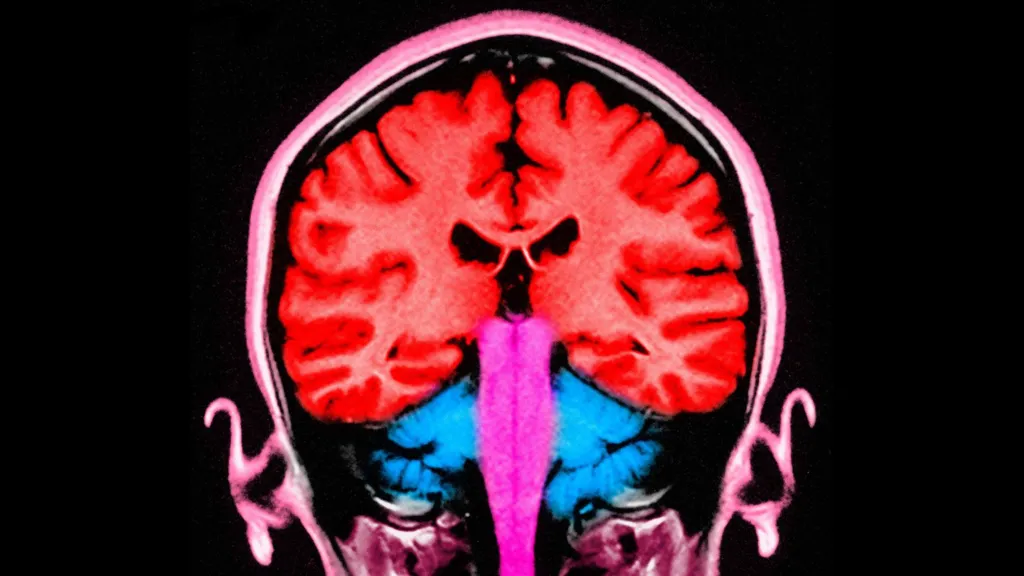
A recent study conducted at the University of Zurich involved 44 participants who were tasked with dividing a sum of money between themselves and an anonymous partner, allowing scientists to observe their decision-making processes.
The experiment utilized electrical current to stimulate the frontal and parietal regions of the brain, located at the front and rear of the skull, respectively. When these areas were stimulated simultaneously, participants exhibited a greater willingness to share their funds.
According to Prof Christian Ruff, a lead author of the study, the observed effects were consistent, albeit modest in scale.
Statistical analysis revealed a notable increase in participants' willingness to allocate funds to others, indicating a shift in their behavior.
The findings not only provide insight into the neural mechanisms underlying fundamental human behavior but may also have implications for the treatment of certain brain disorders characterized by impaired social behavior.
Prof Ruff noted that some individuals struggle with profound social difficulties due to an inability to consider others' perspectives, leading to consistently selfish behavior, and suggested that this discovery could potentially be used to address such issues.
However, the effects of the brain stimulation were found to be short-lived, suggesting that repeated application may be necessary to achieve lasting changes.
Prof Ruff likened the potential effects of repeated stimulation to the benefits of regular exercise, stating that consistent application over a prolonged period could lead to significant changes in behavior, much like the physical adaptations that occur with regular gym attendance.
This latest discovery builds upon a previous study in which researchers monitored brain activity while participants engaged in a similar money-sharing game, providing a foundation for the current findings.

The earlier study identified two brain regions that appeared to be synchronized, with neural activity occurring at the same frequency, when participants made more generous decisions.
These brain areas are known to play a crucial role in decision-making and empathy, enabling individuals to distinguish between their own feelings and those of others.
When participants made selfless decisions, the regions responsible for empathy and decision-making were found to be communicating with each other.
The researchers sought to investigate whether electrical stimulation could be used to influence this communication and promote more selfless decision-making.
One participant who underwent the brain stimulation test described the experience as a gentle, soothing sensation, comparable to a warm shower or light rain on the scalp.
The participant reported making decisions while receiving the stimulation without feeling any external influence on their choices.
The discovery of a consistent neural pattern associated with selfless decision-making across multiple individuals suggests that altruism may be an innate, evolutionarily conserved trait that enables humans to care for one another.
Prof Ruff emphasized the clinical significance of this finding, highlighting the potential to modify and influence this neural mechanism.
Dr Jie Hu, a co-author of the study, noted that the research provides evidence of a causal relationship between brain activity and decision-making, demonstrating that targeted stimulation can alter an individual's sharing behavior.
By manipulating communication within a specific brain network using non-invasive stimulation, the researchers observed a shift in participants' decisions, influencing the balance between self-interest and altruism.
Addressing concerns about the potential implications of this research, Prof Ruff assured that the experiment was conducted with strict adherence to medical regulations and ethical guidelines, ensuring the well-being and informed consent of all participants.
The neuroscientist drew a distinction between the controlled, medically regulated nature of the experiment and the often-subliminal influences of social media and advertising, which can affect behavior without explicit consent.
Prof Ruff suggested that, in contrast to the experiment, the impacts of social media and advertising on brain function and behavior are often unforeseen and uncontrolled, highlighting the importance of careful consideration and regulation in such contexts.
Health
NHS Workers to Receive 3.3% Pay Increase
Labor unions have expressed displeasure, yet the government maintains that its actions showcase a dedication to its workforce.
The government has confirmed that NHS staff in England will receive a 3.3% pay increase in the upcoming financial year.

This pay award applies to approximately 1.4 million health workers, including nurses, midwives, physiotherapists, and porters, but excludes doctors, dentists, and senior management.
Although the Department of Health and Social Care initially proposed a lower figure, it has accepted the recommendation of the independent pay review body to demonstrate its commitment to NHS staff, resulting in a higher pay rise than initially suggested.
However, several health unions have expressed disappointment with the announced pay award.
Prof Nicola Ranger, general secretary of the Royal College of Nursing (RCN), noted that the 3.3% increase falls short of the current consumer price index (CPI) inflation rate of 3.4%, which measures the rise in prices over the past year.
Prof Ranger stated, "A pay award that is lower than the current inflation rate is unacceptable, and unless inflation decreases, the government will be imposing a real pay cut on NHS workers."
She criticized the government's approach, saying, "This strategy of making last-minute decisions is not an appropriate way to treat individuals who are essential to a system in crisis."
Prof Ranger indicated that she would wait to see the pay awards for the rest of the public sector and doctors before deciding on a course of action.
The RCN had previously reacted strongly to the 5.4% pay increase received by resident doctors last year, compared to the 3.6% increase received by nurses, which they described as "grotesque".
Prof Ranger emphasized, "Nursing staff will not accept being treated with disrespect, as has happened in the past when they were given lower pay awards than other groups."
Helga Pile, head of health at Unison, the largest health union, commented, "NHS staff who are already under financial pressure will be outraged by another pay award that fails to keep up with inflation."
"Once again, they are expected to deliver more while their pay effectively decreases, as it falls behind the rising cost of living," she added.
In response, the government argued that the pay award is actually above the forecasted inflation rate for the coming year, which is around 2%.
A spokesperson for the Department of Health and Social Care stated, "This government greatly values the outstanding work of NHS staff and is committed to supporting them."
The pay increase is expected to be implemented by the start of April.
However, the government did not provide a timeline for the announcement on doctors' pay, as the pay review body responsible for making recommendations on their pay has yet to submit its report to ministers.
The government is currently engaged in negotiations with the British Medical Association regarding the pay of resident doctors, previously known as junior doctors.
Members of the BMA recently voted in favor of strike action, granting them a six-month mandate for walkouts, and there have been 14 strikes so far in the ongoing dispute.
-
 News13 hours ago
Australian Politics Faces Questions Over Gender Equality Amid Sussan Ley’s Appointment
-
 News11 hours ago
Farage Says Reform to Replace Traditional Tory Party
-
 News11 hours ago
Wrexham Pair Seek Win Against Former Team Ipswich
-
 News16 hours ago
Liberal Party Removes Australia’s First Female Leader
-
 News14 hours ago
UK Braces for Cold Snap with Snow and Ice Alerts Expected
-
 News11 hours ago
Husband’s alleged £600k theft for sex and antiques blamed on drug side effects
-
 News2 days ago
Sunbed ads spreading harmful misinformation to young people
-
 Business16 hours ago
BBC Reporter Exposed to Cyber Attack Due to Vulnerabilities in AI Coding Tool