
News
Advances in Smoke Detector Technology
Recent advancements in fire alarm technology include the development of artificial intelligence designed to detect fires.
On a typical morning last September, Liz McConnell, a mother of four, was preparing to start her workday at her home in Dover. However, her routine was disrupted when a fire alarm sounded, prompting her to investigate the source of the noise.

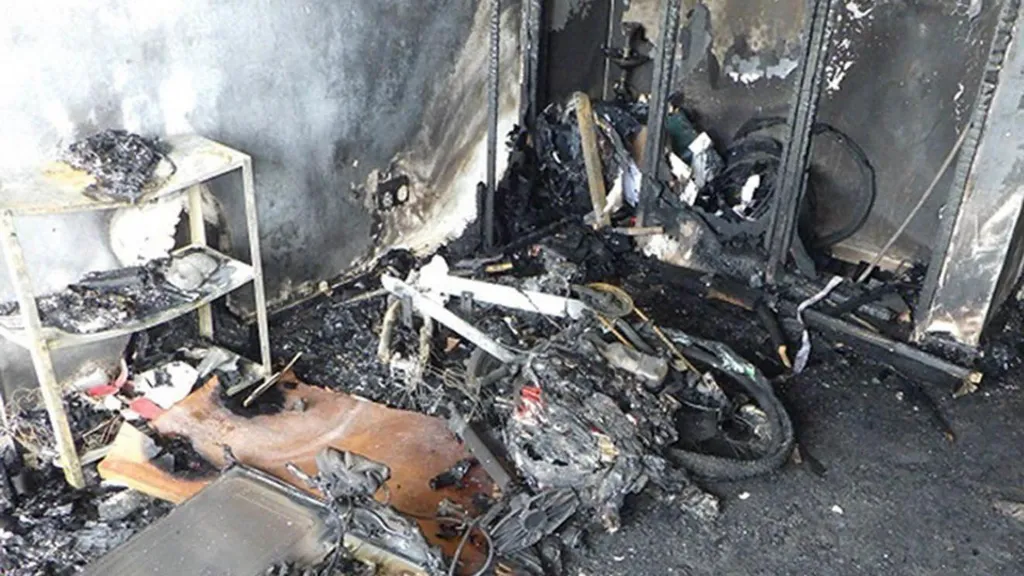
McConnell's search led her to the tumble dryer, which was emitting smoke and heat. Upon closer inspection, she discovered that a part of the machine was on fire, highlighting the potential dangers of household appliances.
McConnell promptly contacted the fire brigade, which advised her to evacuate the premises immediately. The Kent Fire & Rescue Service responded to the incident, battling the blaze for several hours and ultimately leaving the McConnell family home partially destroyed.
McConnell acknowledges the crucial role that smoke alarms played in alerting her to the fire, stating that they are "essential" for ensuring safety in the home.
Despite their importance, smoke alarms have undergone relatively little technological change in recent years, raising questions about their ability to keep pace with modern life and the evolving nature of fire hazards.
For instance, detecting fires caused by e-bike batteries can be particularly challenging due to their potential to ignite suddenly. Researchers are exploring new methods for sensing smoke and fire, with the goal of developing more effective and efficient detection systems.
According to Suzanna Amberski, head of customer and building safety at Kent Fire & Rescue Service, the presence of a working smoke alarm can significantly reduce the risk of fatalities in the event of a fire. Her organization has found that approximately 6,500 smoke alarms in Kent properties had expired between 2022 and 2024.
A survey conducted by Direct Line in December found that nearly four million UK adults may be living in homes without any smoke alarms, while an estimated 16% of households in the US lack functioning smoke alarms.
There are two primary types of smoke alarm technology, explains Raman Chagger, principal consultant at the Building Research Establishment. Ionisation-based systems utilize a small amount of radioactive material to charge particles in the air, which flow between two plates and trigger the alarm when interrupted by smoke.

Optical-based smoke alarms, on the other hand, employ light to detect smoke particles. These systems are more effective at identifying large smoke particles produced by slow-burning fires, which scatter light and trigger a photoelectric sensor.
Heat sensors, commonly installed in kitchens to minimize false alarms caused by cooking, typically sound when temperatures exceed 50C.
The standards for evaluating smoke alarms were developed in the 1980s, but despite changes in building materials since then, smoke alarms remain a reliable means of detecting fires, according to Chagger.
Chagger has personal experience with the importance of smoke alarms, having had a fire alarm sound in his own home due to a tumble dryer fire. He stresses the importance of installing smoke alarms in the same room as potential fire hazards, such as tumble dryers.
The increasing popularity of e-bikes poses a new challenge for smoke alarm technology, as lithium-ion batteries can produce toxic and flammable gases when they fail. Stephen Welch, senior lecturer at the University of Edinburgh's Fire Research Centre, notes that these gases can accumulate and ignite, resulting in explosions.
Experiments conducted by Chagger have demonstrated the rapid development of lithium-ion battery fires, which can progress from a minor issue to a major explosion in a short period.
Some smoke alarms, such as aspirating devices, are designed to be highly sensitive and can detect small quantities of smoke in a room. These systems are often used in commercial settings, including server rooms and data centers.
Niki Johnson, fire systems technical adviser for the UK Fire Association, notes that aspirating systems are commonly used in stately homes and other high-value properties, but can be expensive to install, with costs ranging from £3,000 to £4,000 for a single corridor.
The rise of smart technology has led to the development of wi-fi connected smoke alarms that can send notifications to users' phones in the event of a fire, providing an additional layer of safety and convenience.

Nick Rutter, co-founder and chief executive of FireAngel, explains that his company's connected alarms use a proprietary radio system to link devices and send push notifications to users' phones via their home internet router.
Rutter emphasizes the importance of reducing nuisance alarms, which can lead to people disabling or removing their smoke alarms, thereby increasing the risk of fire-related injuries or fatalities.
FireAngel has calibrated its alarms to minimize false positives and reduce the likelihood of nuisance alarms, which can be a significant problem in many households.
Kidde, another smoke alarm manufacturer, offers a subscription-based service that provides access to a fire monitoring system linked to the Ring doorbell app. For a monthly fee of $5, users can receive alerts and have trained agents request emergency assistance in the event of a fire.
Isis Wu, president of global residential fire & safety at Kidde, notes that the system can send alerts to users and ask them to confirm whether they need assistance before contacting the fire department.
Kidde's smart alarm also features a low-battery alert that is designed to minimize disruptions, such as alerting users during the night when they are likely to be asleep.
Future smoke alarm technology may incorporate artificial intelligence and machine learning to detect fires in video feeds. Researchers at New York University have developed a system that can identify fire and smoke in footage from any camera, including CCTV, doorbell cameras, and phone cameras.
The system uses machine learning to analyze the size, shape, and growth of fires, allowing it to distinguish between actual fires and images of fires on screens.
The researchers have also attached the detection system to drones, which can be used to help firefighters locate and respond to fires in high-rise buildings or other complex environments.
The team is currently working to commercialize the technology, with the goal of making it widely available for use in a variety of applications.





News
Tudor to take interim charge of Tottenham
Igor Tudor has reached an agreement to take the reins as Tottenham’s interim head coach for the remainder of the season.
Tottenham has reached an agreement with Igor Tudor to take the helm as interim head coach for the remainder of the current season.
For the latest updates, in-depth analysis, and perspectives from fans, look to Tottenham's recent news and discussion.
Do you have any questions about Tottenham – what information are you seeking?
News
UAE Defeats Canada to Enhance Super 8s Qualification Chances
The United Arab Emirates boosted their slim chances of advancing to the T20 World Cup Super 8s, securing a narrow five-wicket victory over Canada, thanks in part to Aryansh Sharma’s unbeaten 74.
In a crucial match for the United Arab Emirates, Aryansh Sharma achieved his fifth T20 international half-century, contributing to the team's victory over Canada.
The Men's T20 World Cup, being held in Group D in Delhi, saw an intense competition between the two teams.
Canada's innings resulted in a total of 150-7 after 20 overs, with Harsh Thaker scoring 50 runs off 41 balls, while Junaid Siddique took 5 wickets for 35 runs.
The UAE team responded with a total of 154 runs in 19.4 overs, led by Aryansh Sharma's unbeaten 74 runs off 53 balls and Sohaib Khan's 51 runs off 29 balls, despite Bin Zafar taking 3 wickets for 14 runs.
The United Arab Emirates secured a five-wicket win over Canada, boosting their chances in the tournament.
Aryansh Sharma played a pivotal role in the UAE's win, scoring an unbeaten 74 runs to help his team overcome Canada's total.
With four overs remaining, Canada seemed poised to defend their total, but Sohaib Khan's aggressive batting reignited the UAE's chase, as he scored 17 runs off Dillon Heyliger's bowling.
In the final over, the UAE required eight runs to win, and Aryansh Sharma eased the pressure by hitting a six off Jaskaran Singh's first ball.
Sohaib Khan was dismissed after scoring a rapid 51 runs off 29 balls, including four sixes, leaving the scores level.
Muhammad Arfan then sealed the victory with two balls to spare, hitting a four off Jaskaran Singh, as Aryansh Sharma top-scored with 74 runs off 53 balls.
The UAE now stands third in Group D with two points, but they face an uphill task in their upcoming matches against full members South Africa and Afghanistan to advance to the next phase.
Although the UAE has never beaten a full member in any World Cup format, their performance in this match has given them some confidence.
Earlier in the match, Junaid Siddique achieved the best bowling figures by a UAE player in a T20 World Cup, taking 5 wickets for 35 runs at the Arun Jaitley Stadium in Delhi.
Harsh Thaker's 41-ball half-century, which included three sixes and two fours, provided a solid foundation for Canada's total.
Thaker and Navneet Dhaliwal shared a 58-run partnership to help Canada recover from a difficult start, before Dhaliwal was run out for 34 runs.
After Thaker fell victim to Junaid Siddique's slower ball, Canada struggled to find boundaries against the UAE's tight bowling.
Shreyas Movva made a useful contribution of 21 runs off 21 balls, but Junaid Siddique took two wickets in the final over to claim his maiden five-wicket haul in T20 internationals.
In a separate match, Zimbabwe's Brilliant Muzarabani played a key role in his team's stunning win over Australia.
For more updates, notifications, and social media coverage, visit the BBC Sport website.
In another development, Paul Stirling has been ruled out of the remainder of the T20 World Cup due to injury.
News
Guardiola Advocates for Cultural Embrace to Foster a Better Society
Pep Guardiola, the manager of Manchester City, has stated that accepting diverse cultures will lead to a more harmonious society, in reaction to comments made by Sir Jim Ratcliffe regarding immigration.
As a player, Pep Guardiola earned 47 international caps for Spain, showcasing his skills on the global stage.
Manchester City's manager, Pep Guardiola, believes that embracing diverse cultures is essential for creating a more harmonious society.
Guardiola was questioned about his thoughts on comments made by Manchester United co-owner Sir Jim Ratcliffe, who stated that the UK had been "colonised by immigrants", sparking a debate.
Following criticism, Ratcliffe apologised for any offence caused, while still advocating for open discussion on the issue.
Ahead of Manchester City's FA Cup fourth-round match against Salford, Guardiola shared his perspective, saying that people seek better lives and opportunities, which can be found in their birthplace or elsewhere.
According to Guardiola, one's birthplace is not a determining factor in their potential or aspirations.
Many individuals are forced to leave their homelands due to problems in their native countries, rather than a desire to abandon their roots.
Guardiola emphasized that by genuinely embracing other cultures, society as a whole can improve, a notion he has no doubts about.
An examination of the facts behind Jim Ratcliffe's statements on immigration and benefits is also underway.
Sir Jim Ratcliffe, a billionaire, has made headlines, but who is he and how did he accumulate his wealth?
Born in Santpedor, Catalonia, Spain, Guardiola has had a diverse career, playing in Spain, Italy, Qatar, and Mexico, before transitioning to management.
As a manager, the 55-year-old has had stints in Spain, Germany, and England, taking the helm at Manchester City in 2016.
Guardiola views the issue of immigration as a global problem, stating that it is a concern that affects many countries.
He believes that immigrants are often unfairly blamed for problems in their adopted countries, highlighting the fact that one's birthplace is often a matter of circumstance.
Guardiola reiterated that people from all backgrounds strive for a better life, seeking opportunities that may be available in their birth country or elsewhere.
He stressed that factors such as skin colour or birthplace should not be barriers to achieving one's goals.
For the latest news, analysis, and fan perspectives on Manchester City, please refer to our dedicated section.
Do you have any questions about Manchester City that you would like answered?
-
 News11 hours ago
Australian Politics Faces Questions Over Gender Equality Amid Sussan Ley’s Appointment
-
 News8 hours ago
Farage Says Reform to Replace Traditional Tory Party
-
 News8 hours ago
Wrexham Pair Seek Win Against Former Team Ipswich
-
 News13 hours ago
Liberal Party Removes Australia’s First Female Leader
-
 News11 hours ago
UK Braces for Cold Snap with Snow and Ice Alerts Expected
-
 News8 hours ago
Husband’s alleged £600k theft for sex and antiques blamed on drug side effects
-
 News2 days ago
Sunbed ads spreading harmful misinformation to young people
-
 Business14 hours ago
BBC Reporter Exposed to Cyber Attack Due to Vulnerabilities in AI Coding Tool