
News
The Trend Towards Smaller Data Centers
The construction of large-scale data centres to support artificial intelligence computing is underway, yet certain experts argue that their necessity is questionable.
Perplexity CEO Aravind Srinivas has suggested that smartphones could eventually render data centres obsolete, citing the potential for powerful, personalised AI tools to run on device hardware during a recent podcast appearance.
In a conversation with host Prakhar Gupta, Srinivas argued that the future of AI lies in localised processing, where devices can handle complex tasks without relying on remote data centres and cloud computing.
This shift would mark a departure from the current paradigm, where AI systems rely on transmitting data to and from large data centres, leveraging their processing power to function.
Apple has already begun exploring this approach with its Apple Intelligence system, which utilises specialised chips in the company's latest products to enable faster and more secure AI processing.
Microsoft has also incorporated on-device AI processing in its Copilot+ laptops, demonstrating the growing trend towards localised AI capabilities.
However, this technology is currently limited to high-end devices, as standard equipment often lacks the processing power required to support demanding AI applications.
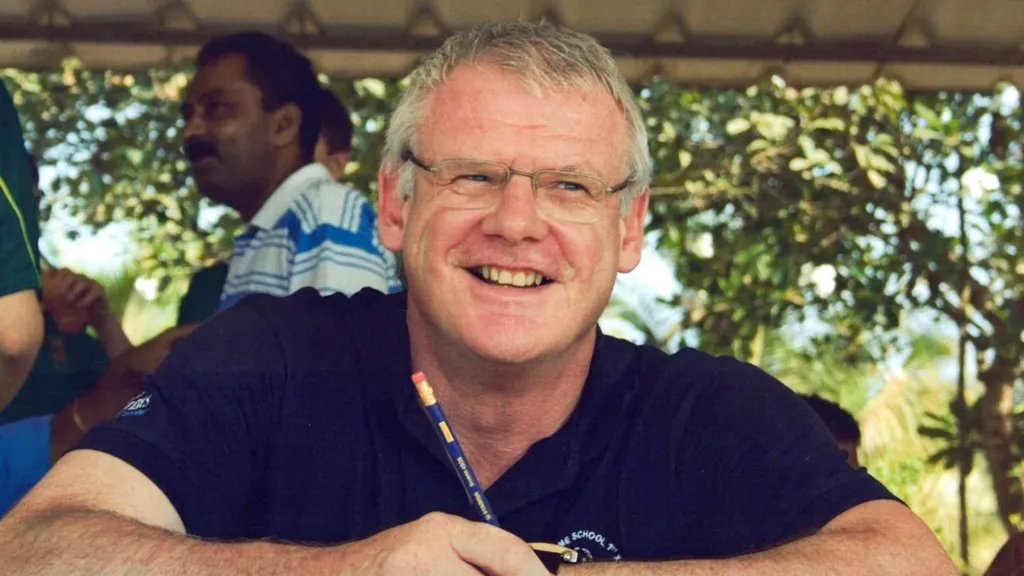
According to Jonathan Evans, director of Total Data Centre Solutions, the prospect of powerful AI running on local devices is a long-term possibility, contingent on advancements in efficient and capable processing technology.
Despite the potential for disruption, the data centre industry continues to experience high demand, prompting questions about the sector's future development.
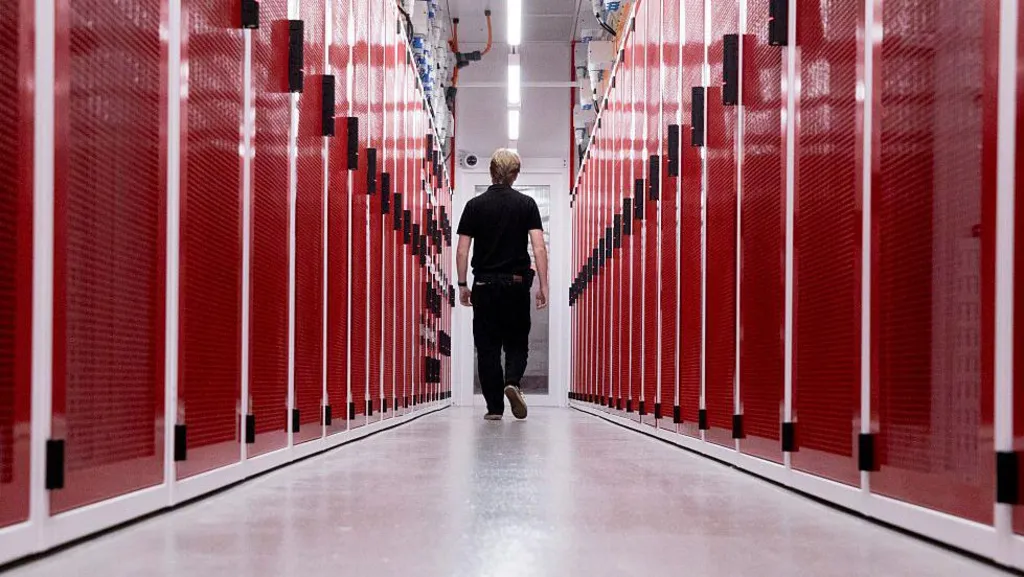
Traditionally, data centres have been large facilities housing extensive computer systems that support a wide range of digital services, including video streaming, online banking, and AI processing.
Virtually any online service relies on data centres, with major companies owning or leasing space in these facilities to support their operations.
A notable exception to the typical data centre model is a small, washing machine-sized facility in Devon, UK, which has been used to provide heat to a public swimming pool while performing computational tasks.
This innovative approach has sparked interest in alternative data centre designs, challenging the conventional wisdom that these facilities must be large and resource-intensive.
In November 2025, a British couple demonstrated another creative application of small-scale data centres, using one to heat their home from a garden shed.
Similarly, a university professor has been using a GPU under his desk to both drive AI applications and warm his office, illustrating the potential for localised, low-impact data processing.
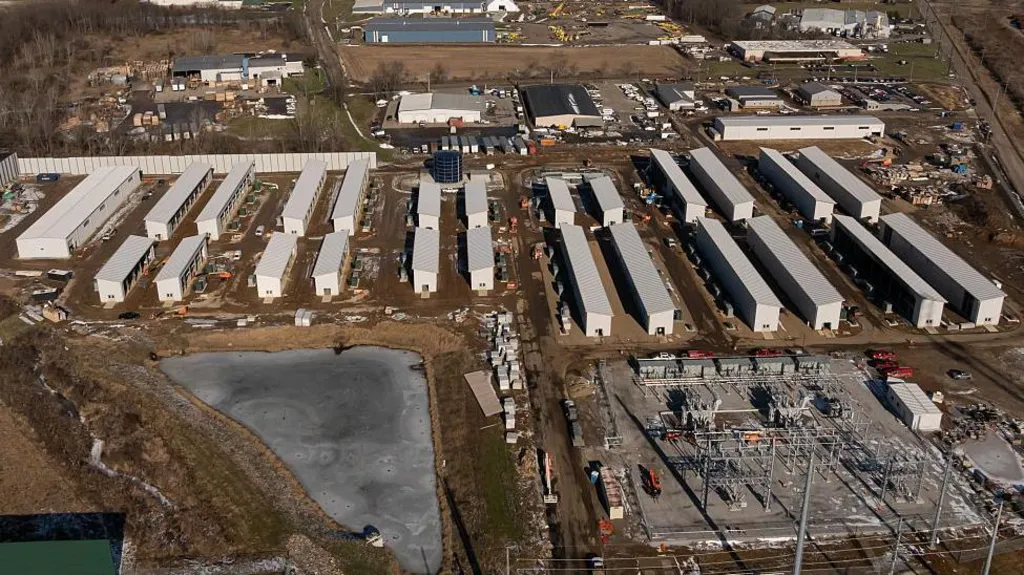
Meanwhile, tech companies continue to invest heavily in large-scale data centre construction, with around 100 new facilities planned in the UK alone, despite concerns about their environmental impact and energy consumption.
Nvidia CEO Jensen Huang has referred to data centres as "AI factories," emphasizing their critical role in supporting the development of AI technology.
The AI sector has long adhered to the notion that increased computing power is essential for advancing AI capabilities, although this assumption is being reevaluated.
A growing number of voices in the tech sector are questioning the need for massive, remote data centres, suggesting that alternative approaches could be more effective and sustainable.
Evans proposes that smaller, edge data centres located near population centres could reduce latency and improve response times, offering a more efficient and adaptable solution.
Mark Bjornsgaard, founder of DeepGreen, agrees that smaller data centres are the future, envisioning a network of local facilities that can provide heat as a by-product of their operations.
Bjornsgaard suggests that every public building could potentially house a small data centre, creating a distributed and resilient infrastructure for AI and other applications.
He likens London to a single, undeveloped data centre, highlighting the potential for urban areas to become hubs for localised computing and AI processing.
Amanda Brock, head of OpenUK, shares this perspective, predicting that the traditional data centre model will eventually become obsolete as more efficient and sustainable alternatives emerge.

Brock advocates for repurposing derelict buildings and vacant shops into small data centres, promoting a more community-focused approach to AI and computing infrastructure.
Some companies are exploring even more innovative approaches, such as developing data centres in space to support future AI and computing needs.
Avi Shabtai, CEO of Ramon Space, sees space-based data centres as an opportunity to reimagine data structures and create more efficient, scalable, and flexible computing systems.
On a more terrestrial level, Brock and Srinivas agree that the future of processing will likely involve a shift towards handheld devices, set-top boxes, or local routers, reducing the need for large, centralised data centres.
This transition may be facilitated by the development of smaller, more targeted AI tools that require less computing power and can be more easily integrated into local devices.
The current emphasis on Large Language Models, which are powerful but often prone to errors, may give way to more bespoke AI solutions that are trained on specific datasets and designed for particular tasks.
The limitations of Large Language Models are partly due to their broad scope and tendency to make mistakes, highlighting the need for more focused and accurate AI applications.
As AI ethics campaigner Ed Newton Rex has noted, an AI tool designed for a specific purpose, such as cancer detection, does not require the same breadth of capabilities as a general-purpose AI model.
Businesses are increasingly opting for customised AI solutions, which are often more expensive but provide greater accuracy and control over data usage.
These tailored AI tools tend to perform better and require less computing power, making them more suitable for local deployment and storage.
Dr Sasha Luccioni, AI and climate lead at Hugging Face, has observed a shift towards smaller, more bespoke AI models that can run on local devices and are tailored to specific business needs.
This paradigm shift is driven by the need for more efficient, accurate, and sustainable AI solutions that can be integrated into local infrastructure.
However, the proliferation of small data centres raises concerns about national security, prompting questions about the potential risks and benefits of decentralised computing infrastructure.
According to Prof Alan Woodward, a computer security expert, smaller data centres may actually reduce the risk of large-scale security breaches, as they present less attractive targets for attackers.
Woodward notes that large data centres can be single points of failure, citing recent examples of major outages at Amazon Web Services facilities.
Luccioni adds that reducing reliance on large data centres can also have environmental benefits, as these facilities consume significant resources and contribute to energy consumption and e-waste.





News
Tudor to take interim charge of Tottenham
Igor Tudor has reached an agreement to take the reins as Tottenham’s interim head coach for the remainder of the season.
Tottenham has reached an agreement with Igor Tudor to take the helm as interim head coach for the remainder of the current season.
For the latest updates, in-depth analysis, and perspectives from fans, look to Tottenham's recent news and discussion.
Do you have any questions about Tottenham – what information are you seeking?
News
UAE Defeats Canada to Enhance Super 8s Qualification Chances
The United Arab Emirates boosted their slim chances of advancing to the T20 World Cup Super 8s, securing a narrow five-wicket victory over Canada, thanks in part to Aryansh Sharma’s unbeaten 74.
In a crucial match for the United Arab Emirates, Aryansh Sharma achieved his fifth T20 international half-century, contributing to the team's victory over Canada.
The Men's T20 World Cup, being held in Group D in Delhi, saw an intense competition between the two teams.
Canada's innings resulted in a total of 150-7 after 20 overs, with Harsh Thaker scoring 50 runs off 41 balls, while Junaid Siddique took 5 wickets for 35 runs.
The UAE team responded with a total of 154 runs in 19.4 overs, led by Aryansh Sharma's unbeaten 74 runs off 53 balls and Sohaib Khan's 51 runs off 29 balls, despite Bin Zafar taking 3 wickets for 14 runs.
The United Arab Emirates secured a five-wicket win over Canada, boosting their chances in the tournament.
Aryansh Sharma played a pivotal role in the UAE's win, scoring an unbeaten 74 runs to help his team overcome Canada's total.
With four overs remaining, Canada seemed poised to defend their total, but Sohaib Khan's aggressive batting reignited the UAE's chase, as he scored 17 runs off Dillon Heyliger's bowling.
In the final over, the UAE required eight runs to win, and Aryansh Sharma eased the pressure by hitting a six off Jaskaran Singh's first ball.
Sohaib Khan was dismissed after scoring a rapid 51 runs off 29 balls, including four sixes, leaving the scores level.
Muhammad Arfan then sealed the victory with two balls to spare, hitting a four off Jaskaran Singh, as Aryansh Sharma top-scored with 74 runs off 53 balls.
The UAE now stands third in Group D with two points, but they face an uphill task in their upcoming matches against full members South Africa and Afghanistan to advance to the next phase.
Although the UAE has never beaten a full member in any World Cup format, their performance in this match has given them some confidence.
Earlier in the match, Junaid Siddique achieved the best bowling figures by a UAE player in a T20 World Cup, taking 5 wickets for 35 runs at the Arun Jaitley Stadium in Delhi.
Harsh Thaker's 41-ball half-century, which included three sixes and two fours, provided a solid foundation for Canada's total.
Thaker and Navneet Dhaliwal shared a 58-run partnership to help Canada recover from a difficult start, before Dhaliwal was run out for 34 runs.
After Thaker fell victim to Junaid Siddique's slower ball, Canada struggled to find boundaries against the UAE's tight bowling.
Shreyas Movva made a useful contribution of 21 runs off 21 balls, but Junaid Siddique took two wickets in the final over to claim his maiden five-wicket haul in T20 internationals.
In a separate match, Zimbabwe's Brilliant Muzarabani played a key role in his team's stunning win over Australia.
For more updates, notifications, and social media coverage, visit the BBC Sport website.
In another development, Paul Stirling has been ruled out of the remainder of the T20 World Cup due to injury.
News
Guardiola Advocates for Cultural Embrace to Foster a Better Society
Pep Guardiola, the manager of Manchester City, has stated that accepting diverse cultures will lead to a more harmonious society, in reaction to comments made by Sir Jim Ratcliffe regarding immigration.
As a player, Pep Guardiola earned 47 international caps for Spain, showcasing his skills on the global stage.
Manchester City's manager, Pep Guardiola, believes that embracing diverse cultures is essential for creating a more harmonious society.
Guardiola was questioned about his thoughts on comments made by Manchester United co-owner Sir Jim Ratcliffe, who stated that the UK had been "colonised by immigrants", sparking a debate.
Following criticism, Ratcliffe apologised for any offence caused, while still advocating for open discussion on the issue.
Ahead of Manchester City's FA Cup fourth-round match against Salford, Guardiola shared his perspective, saying that people seek better lives and opportunities, which can be found in their birthplace or elsewhere.
According to Guardiola, one's birthplace is not a determining factor in their potential or aspirations.
Many individuals are forced to leave their homelands due to problems in their native countries, rather than a desire to abandon their roots.
Guardiola emphasized that by genuinely embracing other cultures, society as a whole can improve, a notion he has no doubts about.
An examination of the facts behind Jim Ratcliffe's statements on immigration and benefits is also underway.
Sir Jim Ratcliffe, a billionaire, has made headlines, but who is he and how did he accumulate his wealth?
Born in Santpedor, Catalonia, Spain, Guardiola has had a diverse career, playing in Spain, Italy, Qatar, and Mexico, before transitioning to management.
As a manager, the 55-year-old has had stints in Spain, Germany, and England, taking the helm at Manchester City in 2016.
Guardiola views the issue of immigration as a global problem, stating that it is a concern that affects many countries.
He believes that immigrants are often unfairly blamed for problems in their adopted countries, highlighting the fact that one's birthplace is often a matter of circumstance.
Guardiola reiterated that people from all backgrounds strive for a better life, seeking opportunities that may be available in their birth country or elsewhere.
He stressed that factors such as skin colour or birthplace should not be barriers to achieving one's goals.
For the latest news, analysis, and fan perspectives on Manchester City, please refer to our dedicated section.
Do you have any questions about Manchester City that you would like answered?
-
 News11 hours ago
Australian Politics Faces Questions Over Gender Equality Amid Sussan Ley’s Appointment
-
 News8 hours ago
Farage Says Reform to Replace Traditional Tory Party
-
 News8 hours ago
Wrexham Pair Seek Win Against Former Team Ipswich
-
 News13 hours ago
Liberal Party Removes Australia’s First Female Leader
-
 News11 hours ago
UK Braces for Cold Snap with Snow and Ice Alerts Expected
-
 News8 hours ago
Husband’s alleged £600k theft for sex and antiques blamed on drug side effects
-
 News2 days ago
Sunbed ads spreading harmful misinformation to young people
-
 Business14 hours ago
BBC Reporter Exposed to Cyber Attack Due to Vulnerabilities in AI Coding Tool