
News
The Rise of Shared Leadership in Business
An increasing number of executives are opting to share their senior leadership roles, allowing for greater work-life balance and more frequent time off.
Pippa Begg spent nearly 16 years at the helm of Board Intelligence, serving as co-chief executive alongside Jennifer Sundberg from the company's inception.
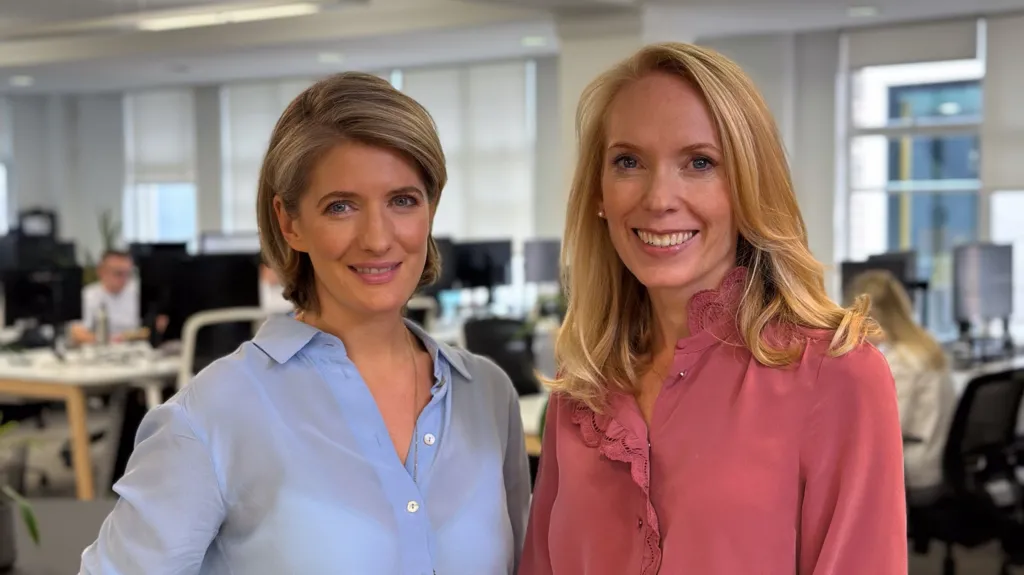
Under their joint leadership, the business expanded to provide analysis and services to company boards, growing to a staff of 200 and securing high-profile clients such as Nationwide, Rolls-Royce, and Reckitt.
Begg attributes the success of their partnership to their complementary skills, stating that having two leaders makes for more informed decision-making and helps prevent hubris.
Begg and Sundberg are part of a growing trend, with an increasing number of companies adopting a co-CEO leadership structure.
Data from MyLogIQ shows that the number of companies with co-CEOs in the Russell 3000 group of US public companies more than doubled from 11 in 2015 to 24 in 2024.
Several major companies, including Oracle, Comcast, and Spotify, appointed co-CEOs in 2024, while Netflix has had a co-CEO structure in place since 2020.
A recent report found that chief executives at the UK's largest firms earn an average of 122 times the salary of a full-time UK worker.
However, the demands of leadership can take a toll, with many executives facing significant stress and pressure.
A survey by ICEO found that 56% of top executives reported feeling burnt out in 2024, highlighting the need for sustainable leadership models.
The co-CEO model offers a potential solution, as it allows two leaders to share responsibilities, accountability, and the associated burdens.
According to leadership coach Audrey Hametner, having a co-CEO partner can provide an opportunity for leaders to take time off, recharge, and focus on their personal well-being.
Hametner notes that co-CEOs can also play to their individual strengths, creating a more effective and efficient leadership dynamic.
She cites an example of a company where one co-CEO focused on marketing and product development, while the other handled finance, regulatory affairs, and legal matters.
Hametner observes that co-CEOs can bring different skill sets and approaches to the table, with one leader providing a high-level vision and the other focusing on details and data analysis.
By sharing the workload, co-CEOs may also be able to spend more time with their families, addressing a common challenge faced by many executives, with 60% reporting that they spend too little time with their loved ones.
Begg, who has three children, took three maternity leaves of around six months each over a five-year period, returning to work on a four-day week schedule after each leave.
Her co-CEO, Sundberg, also took two maternity leaves during the same period, demonstrating the flexibility and support that their partnership provided.
Begg notes that her experience is unusual, as many female CEOs face significant challenges in balancing work and family responsibilities.
Research by That Works For Me found that 71% of women in leadership positions take less than six months' maternity leave, often due to concerns about their job security.
The same study revealed a 32% drop in women at managerial level after having children, highlighting the need for more supportive and flexible work arrangements.
Begg credits her co-CEO partnership with enabling her to balance her work and family responsibilities, avoiding the common pitfalls faced by many female leaders.
She reflects that without the co-CEO structure, she would have faced significant challenges in managing her work and family life, potentially jeopardizing her career or the business.
Begg believes that their experience demonstrates the potential of the co-CEO model to support female leaders and promote greater diversity in the workplace.
A similar arrangement has worked for Dhruv Amin and Marcus Lowe, co-founders and co-CEOs of the startup Anything, which focuses on "vibe coding" technology.

Amin was able to take two paternity leaves of three weeks each in 2024 and 2025, thanks to the flexibility provided by their co-CEO partnership.
He notes that the arrangement allows them to support each other, taking turns to focus on the business and their personal lives.
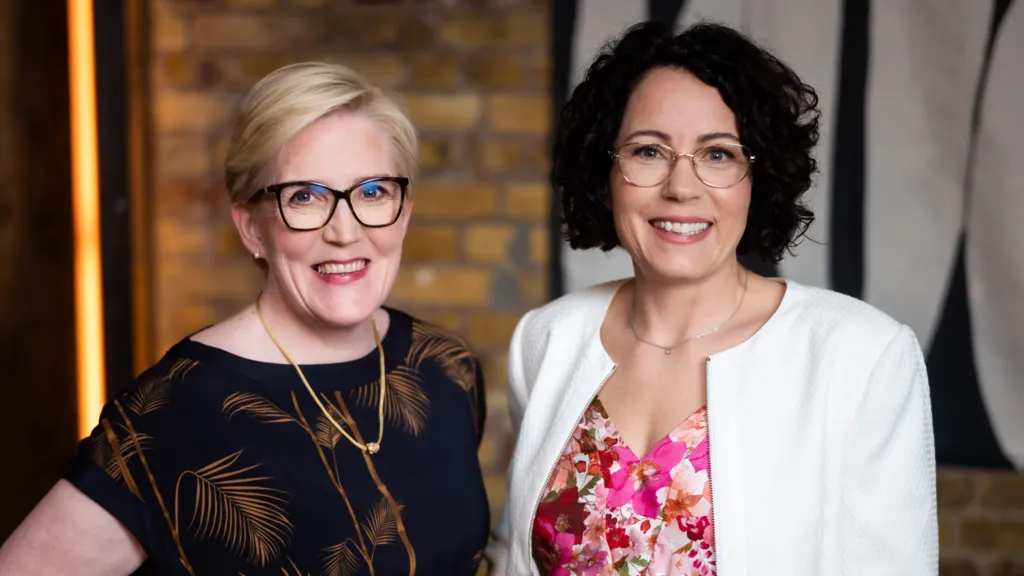
In Finland, Denise Johansson, co-CEO and co-founder of payment processing platform Enfuce, was able to take time off after her father's sudden passing in 2024.
Her co-CEO, Monika Liikamaa, stepped in to manage the day-to-day operations, providing Johansson with the space and support she needed to cope with her grief and new responsibilities.
Johansson and Liikamaa, who have six children between them, have been able to balance their work and family life, thanks to their co-CEO partnership.
They prioritize their family commitments, coordinating their schedules to ensure that they can attend key events and be available for their children.
Johansson notes that their arrangement allows them to put their family first, while also maintaining a stable and effective leadership dynamic.
However, the co-CEO model is not without its challenges, and some companies have struggled to make it work in the long term.
Tierney Remick, vice chairman and co-leader of the global board and CEO practice at Korn Ferry, has observed that co-CEOs tend to be most effective in independent companies with simple structures.
She notes that co-CEOs who have a pre-existing working relationship tend to be more successful, as they can build on their established trust and communication.
Remick warns that co-CEO arrangements can be challenging to establish and maintain, particularly in complex organizations with multiple stakeholders.
She notes that leaders must navigate the challenges of establishing a partnership, driving the business, and evolving the strategy, all while avoiding confusion and misalignment within the organization.
Remick also observes that co-CEO pairings can be used as a form of succession planning, allowing companies to test and develop potential future leaders.
She notes that the current market is driving a need for innovative succession planning strategies, as companies seek to accelerate the growth of high-potential leaders.
According to Remick, this trend is being driven by the need for companies to adapt to changing market conditions and ambiguity, while also developing the next generation of leaders.
Begg's co-CEO partnership came to an end in 2024, when Board Intelligence acquired private equity backing, leading to Sundberg's decision to step down from her executive role, although she remains on the company's advisory board.
As the sole CEO, Begg has found that her new role leaves her with limited time for family, prompting her husband to make a career adjustment and take on more domestic responsibilities.
Following their youngest child's enrollment in school last September, Begg's husband established a consultancy, which he operates during school hours, allowing him to balance work and family obligations.
Begg notes that her husband now bears the primary responsibility for managing their home and family life, and his scheduling constraints often surprise others, as he typically only meets between 10am and 3pm, a limitation that can raise eyebrows when he communicates it to others.


News
Tudor to take interim charge of Tottenham
Igor Tudor has reached an agreement to take the reins as Tottenham’s interim head coach for the remainder of the season.
Tottenham has reached an agreement with Igor Tudor to take the helm as interim head coach for the remainder of the current season.
For the latest updates, in-depth analysis, and perspectives from fans, look to Tottenham's recent news and discussion.
Do you have any questions about Tottenham – what information are you seeking?
News
UAE Defeats Canada to Enhance Super 8s Qualification Chances
The United Arab Emirates boosted their slim chances of advancing to the T20 World Cup Super 8s, securing a narrow five-wicket victory over Canada, thanks in part to Aryansh Sharma’s unbeaten 74.
In a crucial match for the United Arab Emirates, Aryansh Sharma achieved his fifth T20 international half-century, contributing to the team's victory over Canada.
The Men's T20 World Cup, being held in Group D in Delhi, saw an intense competition between the two teams.
Canada's innings resulted in a total of 150-7 after 20 overs, with Harsh Thaker scoring 50 runs off 41 balls, while Junaid Siddique took 5 wickets for 35 runs.
The UAE team responded with a total of 154 runs in 19.4 overs, led by Aryansh Sharma's unbeaten 74 runs off 53 balls and Sohaib Khan's 51 runs off 29 balls, despite Bin Zafar taking 3 wickets for 14 runs.
The United Arab Emirates secured a five-wicket win over Canada, boosting their chances in the tournament.
Aryansh Sharma played a pivotal role in the UAE's win, scoring an unbeaten 74 runs to help his team overcome Canada's total.
With four overs remaining, Canada seemed poised to defend their total, but Sohaib Khan's aggressive batting reignited the UAE's chase, as he scored 17 runs off Dillon Heyliger's bowling.
In the final over, the UAE required eight runs to win, and Aryansh Sharma eased the pressure by hitting a six off Jaskaran Singh's first ball.
Sohaib Khan was dismissed after scoring a rapid 51 runs off 29 balls, including four sixes, leaving the scores level.
Muhammad Arfan then sealed the victory with two balls to spare, hitting a four off Jaskaran Singh, as Aryansh Sharma top-scored with 74 runs off 53 balls.
The UAE now stands third in Group D with two points, but they face an uphill task in their upcoming matches against full members South Africa and Afghanistan to advance to the next phase.
Although the UAE has never beaten a full member in any World Cup format, their performance in this match has given them some confidence.
Earlier in the match, Junaid Siddique achieved the best bowling figures by a UAE player in a T20 World Cup, taking 5 wickets for 35 runs at the Arun Jaitley Stadium in Delhi.
Harsh Thaker's 41-ball half-century, which included three sixes and two fours, provided a solid foundation for Canada's total.
Thaker and Navneet Dhaliwal shared a 58-run partnership to help Canada recover from a difficult start, before Dhaliwal was run out for 34 runs.
After Thaker fell victim to Junaid Siddique's slower ball, Canada struggled to find boundaries against the UAE's tight bowling.
Shreyas Movva made a useful contribution of 21 runs off 21 balls, but Junaid Siddique took two wickets in the final over to claim his maiden five-wicket haul in T20 internationals.
In a separate match, Zimbabwe's Brilliant Muzarabani played a key role in his team's stunning win over Australia.
For more updates, notifications, and social media coverage, visit the BBC Sport website.
In another development, Paul Stirling has been ruled out of the remainder of the T20 World Cup due to injury.
News
Guardiola Advocates for Cultural Embrace to Foster a Better Society
Pep Guardiola, the manager of Manchester City, has stated that accepting diverse cultures will lead to a more harmonious society, in reaction to comments made by Sir Jim Ratcliffe regarding immigration.
As a player, Pep Guardiola earned 47 international caps for Spain, showcasing his skills on the global stage.
Manchester City's manager, Pep Guardiola, believes that embracing diverse cultures is essential for creating a more harmonious society.
Guardiola was questioned about his thoughts on comments made by Manchester United co-owner Sir Jim Ratcliffe, who stated that the UK had been "colonised by immigrants", sparking a debate.
Following criticism, Ratcliffe apologised for any offence caused, while still advocating for open discussion on the issue.
Ahead of Manchester City's FA Cup fourth-round match against Salford, Guardiola shared his perspective, saying that people seek better lives and opportunities, which can be found in their birthplace or elsewhere.
According to Guardiola, one's birthplace is not a determining factor in their potential or aspirations.
Many individuals are forced to leave their homelands due to problems in their native countries, rather than a desire to abandon their roots.
Guardiola emphasized that by genuinely embracing other cultures, society as a whole can improve, a notion he has no doubts about.
An examination of the facts behind Jim Ratcliffe's statements on immigration and benefits is also underway.
Sir Jim Ratcliffe, a billionaire, has made headlines, but who is he and how did he accumulate his wealth?
Born in Santpedor, Catalonia, Spain, Guardiola has had a diverse career, playing in Spain, Italy, Qatar, and Mexico, before transitioning to management.
As a manager, the 55-year-old has had stints in Spain, Germany, and England, taking the helm at Manchester City in 2016.
Guardiola views the issue of immigration as a global problem, stating that it is a concern that affects many countries.
He believes that immigrants are often unfairly blamed for problems in their adopted countries, highlighting the fact that one's birthplace is often a matter of circumstance.
Guardiola reiterated that people from all backgrounds strive for a better life, seeking opportunities that may be available in their birth country or elsewhere.
He stressed that factors such as skin colour or birthplace should not be barriers to achieving one's goals.
For the latest news, analysis, and fan perspectives on Manchester City, please refer to our dedicated section.
Do you have any questions about Manchester City that you would like answered?
-
 News11 hours ago
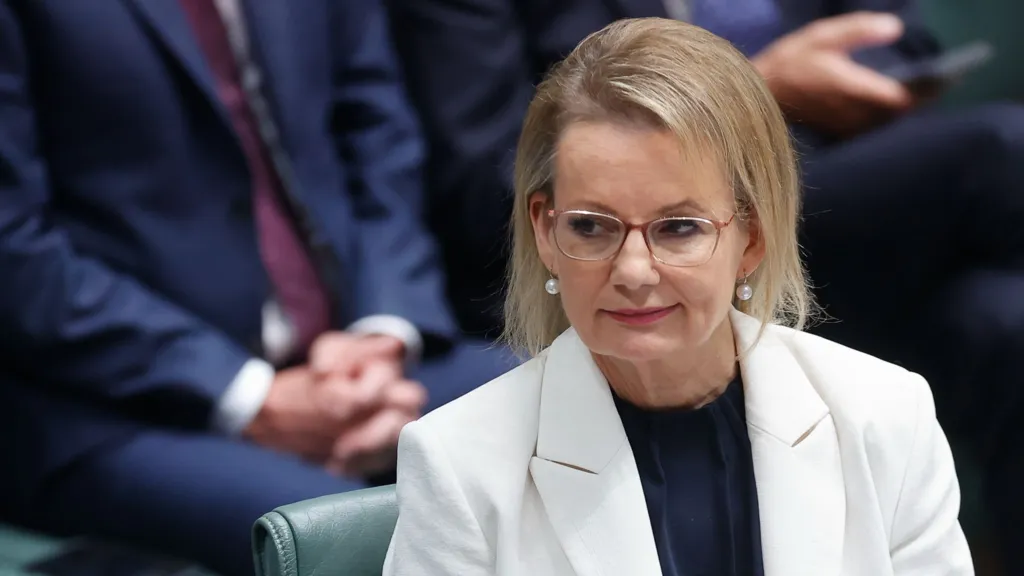
Australian Politics Faces Questions Over Gender Equality Amid Sussan Ley’s Appointment
-
 News8 hours ago
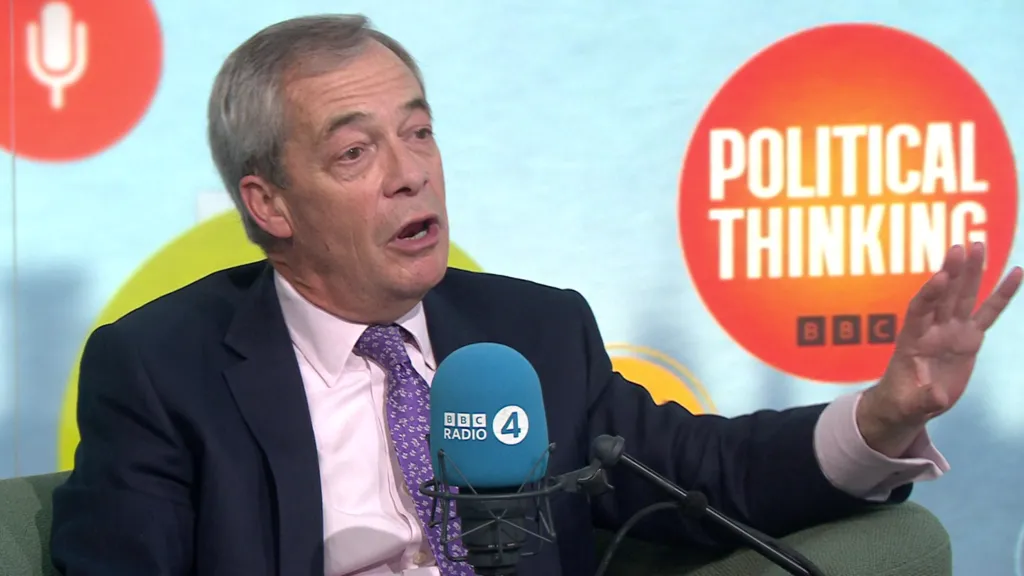
Farage Says Reform to Replace Traditional Tory Party
-
 News8 hours ago
Wrexham Pair Seek Win Against Former Team Ipswich
-
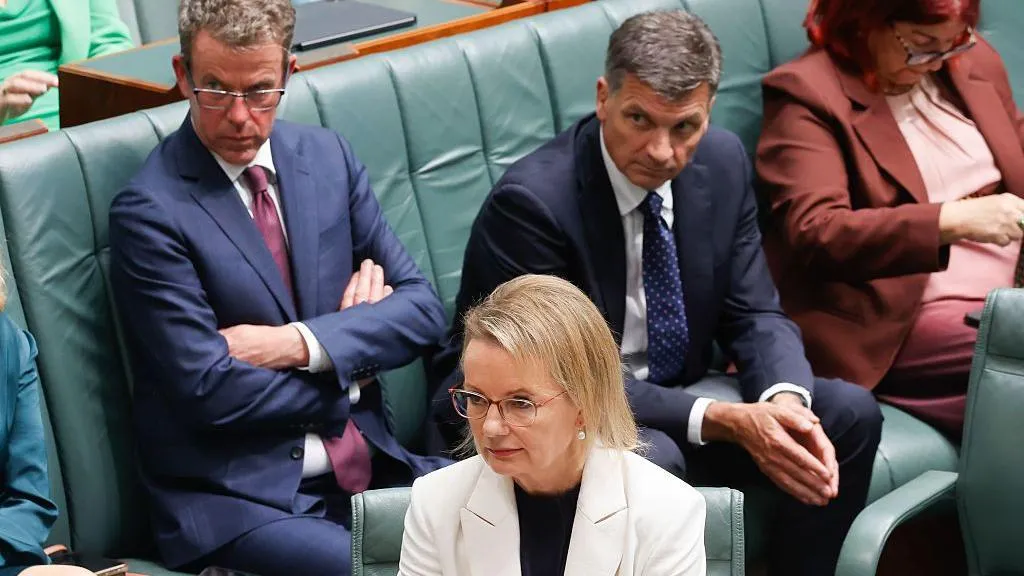 News13 hours ago
Liberal Party Removes Australia’s First Female Leader
-
 News11 hours ago
UK Braces for Cold Snap with Snow and Ice Alerts Expected
-
 News8 hours ago
Husband’s alleged £600k theft for sex and antiques blamed on drug side effects
-
 News2 days ago
Sunbed ads spreading harmful misinformation to young people
-
 Business14 hours ago
BBC Reporter Exposed to Cyber Attack Due to Vulnerabilities in AI Coding Tool