
News
Innovative Cooling Systems for Data Centers
The cooling of large, newly constructed data centres in an environmentally friendly manner poses a significant challenge.
Data centre computer chips operate around the clock at high speeds, generating significant heat in the process. To maintain their performance, these chips require sophisticated cooling systems, which can be quite elaborate.
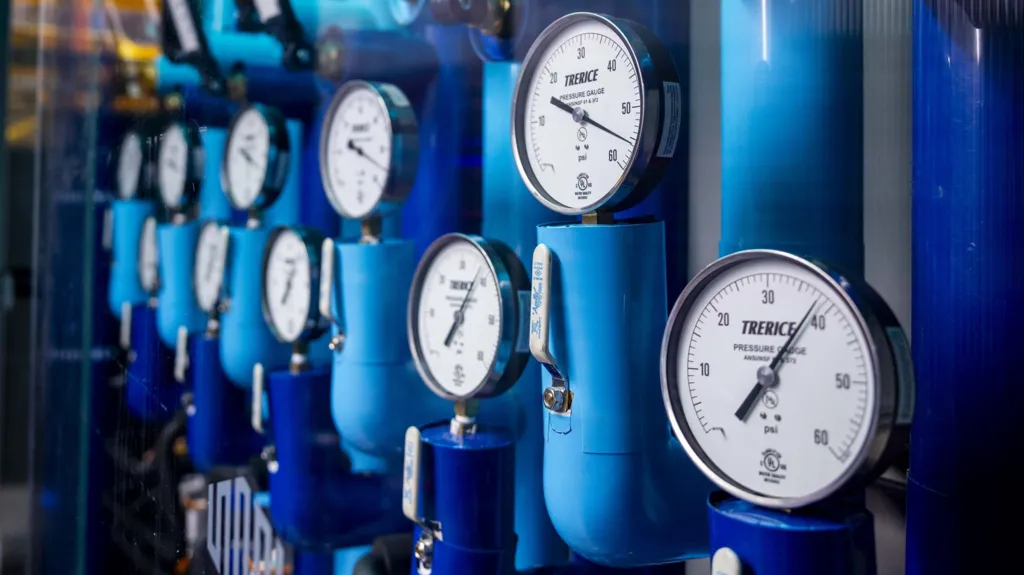
According to Jonathan Ballon, CEO of liquid cooling firm Iceotope, the company's technology involves circulating fluid that cools components by showering or trickling down onto them, with some components even being sprayed for more effective heat management.
In certain cases, data centre components are submerged in baths of circulating fluid, which helps to dissipate the heat they produce, enabling them to function at extremely high speeds, a process known as overclocking.
Mr Ballon notes that some of Iceotope's customers continually overclock their systems without risking damage, citing a US hotel chain that plans to utilise the heat generated by its servers to warm guest rooms, laundry facilities, and swimming pools.
The importance of cooling systems in data centres cannot be overstated, as their failure can bring operations to a grinding halt.
A notable example of this occurred in November when a cooling system failure at a US data centre caused financial trading technology to go offline at CME Group, the world's largest exchange operator, prompting the company to implement additional cooling capacity to prevent similar incidents.
The demand for data centres is currently booming, driven in part by the growth of artificial intelligence technologies, but the significant energy and water consumption of these facilities has made them increasingly contentious.
Over 200 environmental groups in the US have recently called for a moratorium on new data centre construction, while some data centre companies are exploring ways to reduce their environmental impact.
The increasing power of data centre computer chips has made traditional cooling methods, such as air cooling, insufficient for some operations, creating a need for more advanced cooling technologies.
Mr Ballon acknowledges the controversy surrounding data centre construction, noting that communities are pushing back against these projects, and highlights Iceotope's approach as a more efficient and environmentally friendly alternative, requiring significantly less power and water.
Iceotope's liquid cooling technology has the potential to reduce cooling-related energy demands by up to 80%, and can be used to cool multiple components in a data centre, not just processing chips.
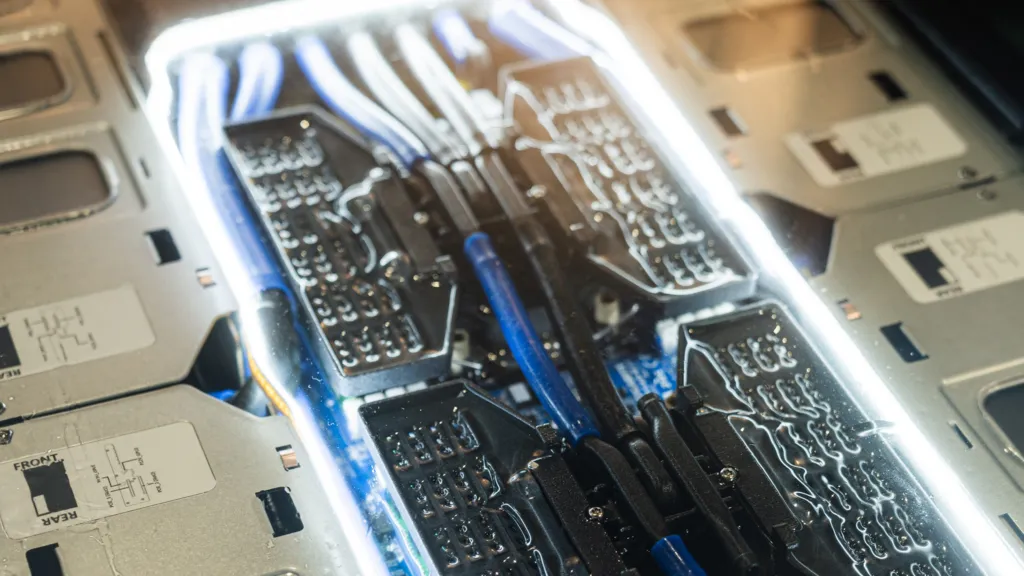
The company's system uses water to cool down the oil-based fluid that interacts with computer components, but the water is contained within a closed loop, eliminating the need for continuous drawing from local supplies.
When asked about the origin of the oil-based fluids used in Iceotope's cooling system, Mr Ballon reveals that some are derived from fossil fuel products, but assures that none contain PFAS, also known as forever chemicals, which are harmful to human health.
In contrast, some liquid-based data centre cooling technologies utilise refrigerants that contain PFAS, which not only pose health risks but also contribute to climate change due to their potent greenhouse gas emissions.
Yulin Wang, a former senior technology analyst at IDTechEx, explains that two-phase cooling systems use refrigerants that change from liquid to gas as they absorb heat, providing an effective cooling mechanism.
However, Mr Wang notes that these systems can pose safety risks, as vapours can escape from the tank, and the use of PFAS-containing refrigerants is a particular concern.
Some companies offering two-phase cooling are transitioning to PFAS-free refrigerants, a shift that is expected to continue as the industry moves towards more sustainable and environmentally friendly solutions.
Over the years, companies have experimented with various approaches to cooling, driven by the need to find the most effective means of keeping data centre components at optimal temperatures.

One notable example is Microsoft's subsea data centre project, which involved submerging a container filled with servers in the sea off Orkney to utilise the cold seawater for cooling.
Although Microsoft has since shut down the project, the company's general manager of global infrastructure, Alistair Speirs, notes that the experience provided valuable insights into operational procedures, highlighting the benefits of more autonomous data centre operations.
The subsea data centre achieved a power usage effectiveness rating of 1.07, indicating high efficiency, and required no water for cooling, but ultimately proved economically unviable.
Microsoft continues to explore liquid-based cooling ideas, including microfluidics, which involves creating tiny channels of liquid within silicon chips to facilitate heat dissipation.
The company's research into microfluidics is part of a broader effort to develop innovative cooling solutions for data centre components.
Researchers are also investigating other novel approaches to cooling, driven by the need for more efficient and sustainable data centre operations.
In July, a team of researchers led by Renkun Chen at the University of California San Diego published a paper outlining a pore-filled membrane-based cooling technology that could enable passive cooling of chips without the need for active fluid pumping or air blowing.
Prof Chen explains that this technology harnesses heat to create a pumping effect, similar to the process by which trees draw water up through their roots, and hopes to commercialise the innovation.
The demand for innovative cooling solutions is growing, driven in part by the increasing adoption of artificial intelligence technologies, according to Sasha Luccioni, AI and climate lead at Hugging Face.
The energy-intensive nature of AI, particularly generative AI and large language models, requires more advanced cooling systems to maintain optimal performance.
Dr Luccioni notes that reasoning models, which provide detailed explanations for their outputs, are especially demanding, requiring significantly more energy than standard chatbots.
As a result, the development of more efficient cooling technologies is crucial to support the growing demand for AI and machine learning applications.
Dr Luccioni calls for greater transparency from AI companies regarding the energy consumption of their products, highlighting the need for more sustainable and environmentally friendly solutions.
Mr Ballon, however, believes that large language models have already reached their limit in terms of productivity, and that the focus should shift to developing more efficient and effective AI technologies.
Business
DP World CEO departs amid fallout over Epstein connections
Sultan Ahmed bin Sulayem’s departure follows the revelation of hundreds of emails allegedly exchanged between him and Epstein, as revealed in recently disclosed documents.
DP World's global ports operator has undergone a change in leadership, with the previous head stepping down amidst scrutiny surrounding their association with convicted sex offender Jeffrey Epstein.
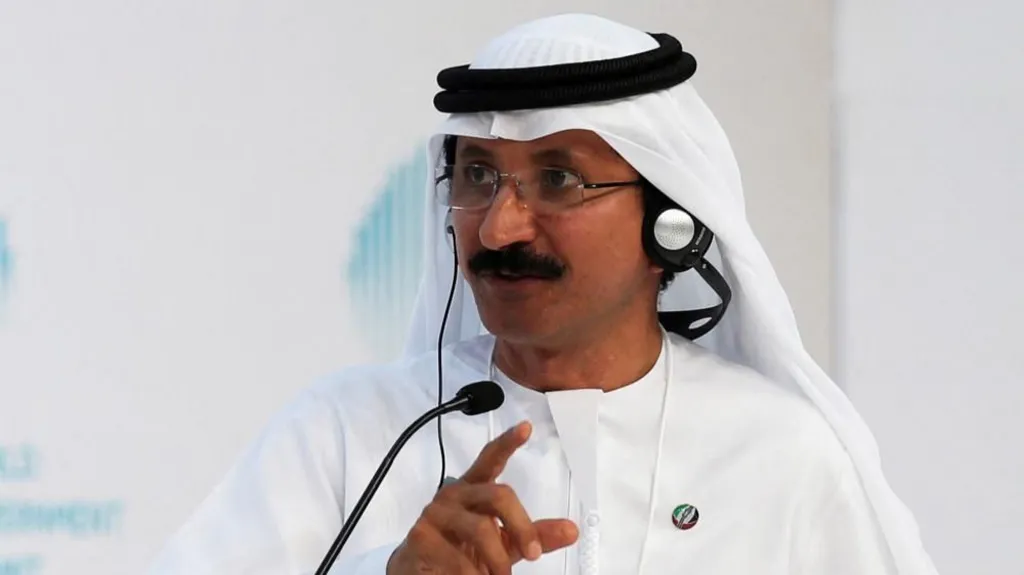
Sultan Ahmed bin Sulayem's departure as chairman and chief executive follows the release of newly uncovered files, which indicate he exchanged numerous emails with Epstein over the course of a decade.
The mention of an individual in these files does not imply any wrongdoing, and the BBC has reached out to Sulayem for a statement regarding the matter.
On Friday, DP World announced the appointments of Essa Kazim as chairman and Yuvraj Narayan as chief executive, without making any reference to Sulayem, whose photograph appears to have been removed from the company's website.
DP World, a Dubai-owned logistics company with a significant presence in global trade infrastructure, operating port terminals across six continents, has faced increasing pressure from its business partners in recent days.
Earlier in the week, the UK development finance agency and La Caisse, Canada's second-largest pension fund, announced that they would be suspending new investments in the firm.
Additionally, the Prince of Wales' Earthshot project, which received funding from DP World, was reported to the UK Charity Commission following Sulayem's appearance in the recently released files.
The documents suggest a close and extensive relationship between Sulayem, a prominent Gulf business figure, and Epstein, spanning multiple areas of interaction.
US lawmakers Ro Khanna and Thomas Massie have accused Sulayem of being one of several influential individuals associated with Epstein, citing him as one of "six powerful men" linked to the disgraced financier.
The lawmakers, who co-sponsored the legislation that led to the release of the Epstein files last year, claim that certain information was improperly redacted from the documents.
On 9 February, Thomas Massie highlighted a redacted document that appeared to contain an email from Epstein in 2009, referencing a "torture video"; the recipient responded that they would be traveling between China and the US, although the context of the exchange is unclear.
US officials have confirmed that Sulayem was the recipient of the email in question, which was sent by Epstein.
News
Ireland Seeks Redemption in Match Without Spectators
Ireland’s Captain Caelan Doris has emphasized that the team must have all players contributing in order to move past their loss to France and secure a win against Italy.
Ireland captain Caelan Doris is urging his team to deliver a strong performance against Italy, following their disappointing loss to France last week.
Historically, Ireland have dominated Italy in their home Six Nations matches, winning their last five encounters by at least 30 points, including a 2024 match where they held Italy scoreless, but a similar outcome is not expected this time around.
Italy's confidence is high after their 18-15 victory over Scotland in Rome, where they excelled in the set-piece and defended well in the closing stages.
Gonzalo Quesada's team put in an impressive display despite the challenging weather conditions, and their win has given them momentum ahead of their trip to Dublin.
In contrast, Ireland's camp has been introspective after their 16-year-low Six Nations loss to France, with head coach Andy Farrell expressing his disappointment and the need for improvement.
Farrell was critical of his team's performance, particularly in the first half, and has made several changes to the lineup for the Italy match, including the exclusion of Josh van der Flier, Jacob Stockdale, Tommy O'Brien, and Cian Prendergast.
The Irish coach has also spoken about the need for his team to "simplify things" and understand their identity, following a clear-the-air meeting with the squad.
Farrell has emphasized the importance of players not overthinking their roles and instead focusing on their strengths, as they prepare to face Italy.
The Irish coach's message to his players is to trust their instincts and not overcomplicate their game plan against Italy.
Ireland's review of their loss to France was a candid and honest assessment, with players and coaches alike acknowledging the need for improvement.
Ireland has made six changes to their team for the Italy match, with newcomers Cormac Izuchukwu and Rob Baloucoune, as well as uncapped lock Edwin Edogbo, set to feature.
Captain Caelan Doris believes that the new players must take ownership of their roles and contribute to the team's overall performance.
Doris expressed his enthusiasm for the team's lineup, despite the changes, and emphasized the importance of cohesion and trust among the players.
The Irish captain's message to the new players is to have faith in their abilities and enjoy the experience, while also focusing on the team's core strengths.
Doris stressed that every player must be fully committed and take responsibility for their actions on the field, in order to achieve a positive outcome.
He added that creating a sense of unity and purpose through their actions can have a profound impact on the team's performance.
Doris reiterated that every player must be fully invested and take ownership of their role, in order to achieve success against Italy.
Edwin Edogbo, the towering Munster lock, is set to make his Test debut for Ireland on Saturday.
Ireland's loss to France was marked by a lack of intent, and head coach Andy Farrell has responded by making changes to the team, including the inclusion of wingers James Lowe and Rob Baloucoune.
The hope is that these changes will help Ireland to rediscover their sense of purpose and direction against Italy.
Lowe, a experienced player, was dropped for the France match, but returns to the lineup, while Baloucoune makes his first appearance for Ireland since November 2022.
The inclusion of Cormac Izuchukwu in the back row is expected to add dynamism and ball-carrying ability to Ireland's attack.
There is also excitement about the potential of Edwin Edogbo, who has impressed for Munster despite struggling with injuries earlier in his career.
Caelan Doris will switch back to open-side flanker, a position he has played before against Italy, and where he has scored tries in the past.
Regardless of his position, Doris is focused on helping Ireland to move past their loss to France and deliver a strong performance against Italy.
The Irish captain reflected on the team's discussions throughout the week, which have centered on accountability, simplicity, and a renewed focus on their core values.
Doris emphasized the importance of the team holding each other accountable and taking ownership of their actions, in order to drive improvement.
The Irish captain acknowledged that the loss to France has served as a reference point, but expressed confidence that the team can learn from the experience and move forward.
Doris believes that Ireland has the potential to improve, but must focus on executing their game plan effectively and trusting their strengths.
The match between Ireland and Italy is scheduled to take place on Saturday, 14 February, at 14:10 GMT.
The Aviva Stadium in Dublin will host the encounter.
Fans can listen to live commentary of the match on BBC Sounds, BBC Radio 5 Sports Extra 2, BBC Radio Ulster, and the BBC Sport website and app, as well as follow live text commentary.
Italy has a chance to cause a major upset in the Six Nations, and will be looking to build on their win over Scotland last week.
The Italians pushed Ireland close last year, losing 22-17, and will be hoping to go one better this time around.
Despite the absence of Juan Ignacio Brex, Italy has a number of threats, including Tommaso Menoncello, one of the most exciting young talents in European rugby.
The Italian forwards have shown their ability to compete with top teams, having dominated Scotland and caused problems for South Africa's pack in November.
Caelan Doris acknowledged that Italy is no longer just a passionate team, but a side with a well-rounded attack and strong defense.
The Irish captain noted that Italy's attack is now a significant threat, and that their ability to play with width and depth makes them a challenging opponent.
Doris also highlighted the improvement in Italy's scrum, as well as the quality of their back three and the physicality of their forwards.
The Ireland team to face Italy is: Osborne; Baloucoune, Ringrose, McCloskey, Lowe; S Prendergast, Casey; Loughman, Sheehan, Clarkson, McCarthy, Ryan, Izuchukwu, Doris (capt), Conan.
Ireland's substitutes for the match include Kelleher, O'Toole, Furlong, Edogbo, Beirne, Timoney, Gibson-Park, and Crowley.
The Italian team features Pani, Lynagh, Marin, Menoncello, and Ioane in the backline, with P Garbisi and Fusco in the half-back positions, and a forward pack consisting of Fischetti, Nicotera, Ferrari, N Cannone, Zambonin, Lamaro as captain, Zuliani, and L Cannone.
Italy's replacement players are Di Bartolomeo, Spagnolo, Hasa, Ruzza, Favretto, Odiase, A Garbisi, and Odogwu.
On Saturday, Hollie Davidson of Scotland will make history by becoming the first female referee to officiate a men's Six Nations match, with the fixture being Ireland's home game against Italy.
Business
Consider Alternatives to Your Current Bank Account
According to Martin Lewis, the current moment may be an opportune time to consider switching bank accounts.
The complete episode is available for streaming on the BBC Sounds platform.
-
 News13 hours ago
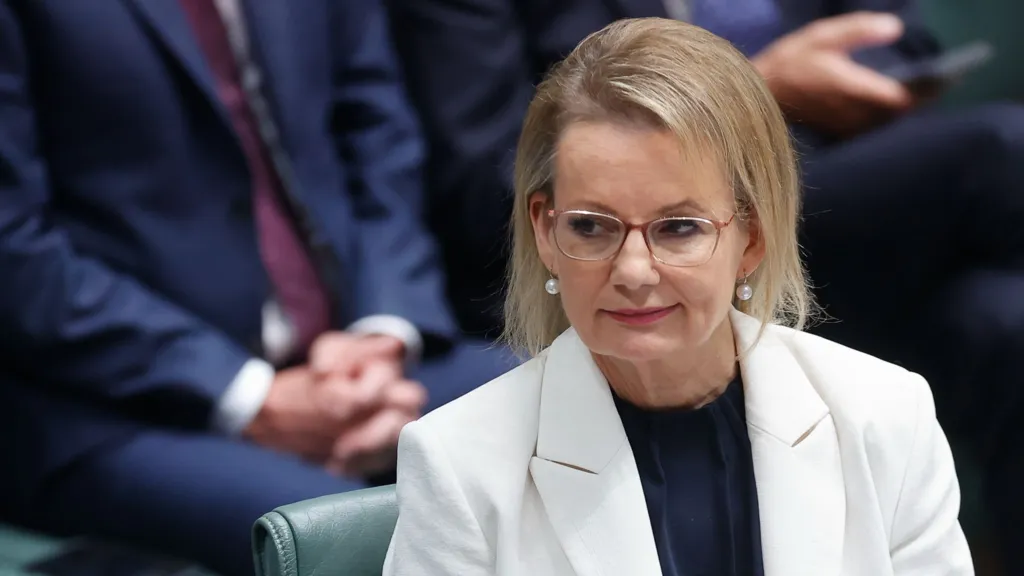
Australian Politics Faces Questions Over Gender Equality Amid Sussan Ley’s Appointment
-
 News10 hours ago
Farage Says Reform to Replace Traditional Tory Party
-
 News10 hours ago
Wrexham Pair Seek Win Against Former Team Ipswich
-
 News16 hours ago
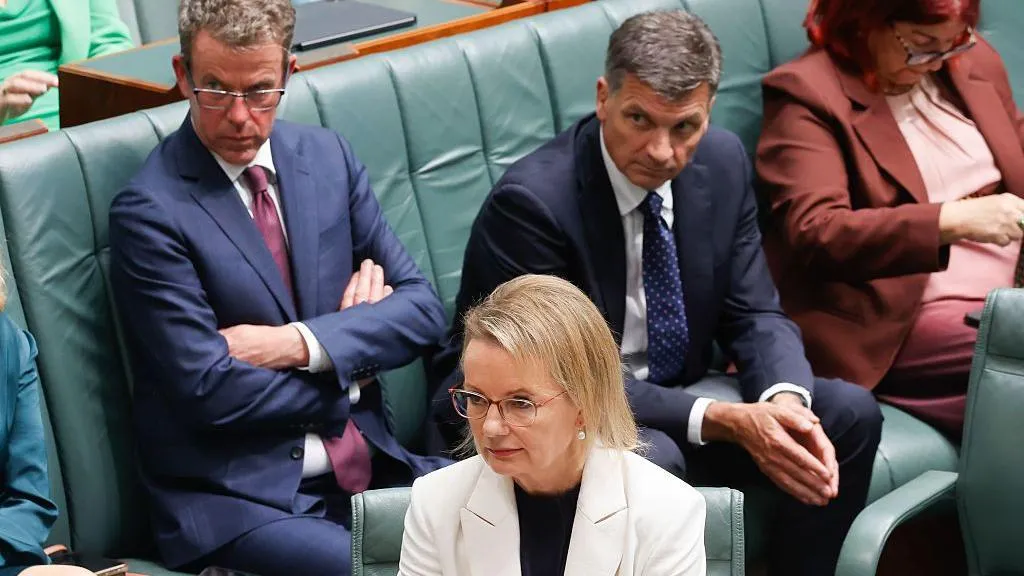
Liberal Party Removes Australia’s First Female Leader
-
 News14 hours ago
UK Braces for Cold Snap with Snow and Ice Alerts Expected
-
 News10 hours ago
Husband’s alleged £600k theft for sex and antiques blamed on drug side effects
-
 News2 days ago
Sunbed ads spreading harmful misinformation to young people
-
 Business16 hours ago
BBC Reporter Exposed to Cyber Attack Due to Vulnerabilities in AI Coding Tool