
News
Artifacts Discovered on HS2 Route Stored in Secure Facility
The BBC has been given exclusive access to archaeological discoveries unearthed during the development of the HS2 rail project.
The BBC has been given exclusive access to a vast array of treasures discovered by archaeologists during the construction of the HS2 train line, a project that has been marred by controversy.
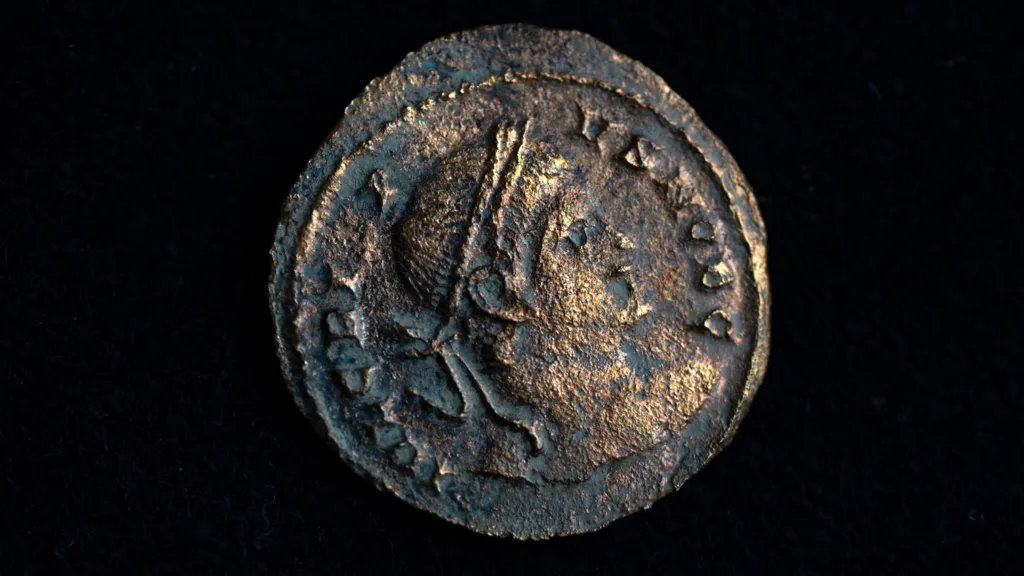
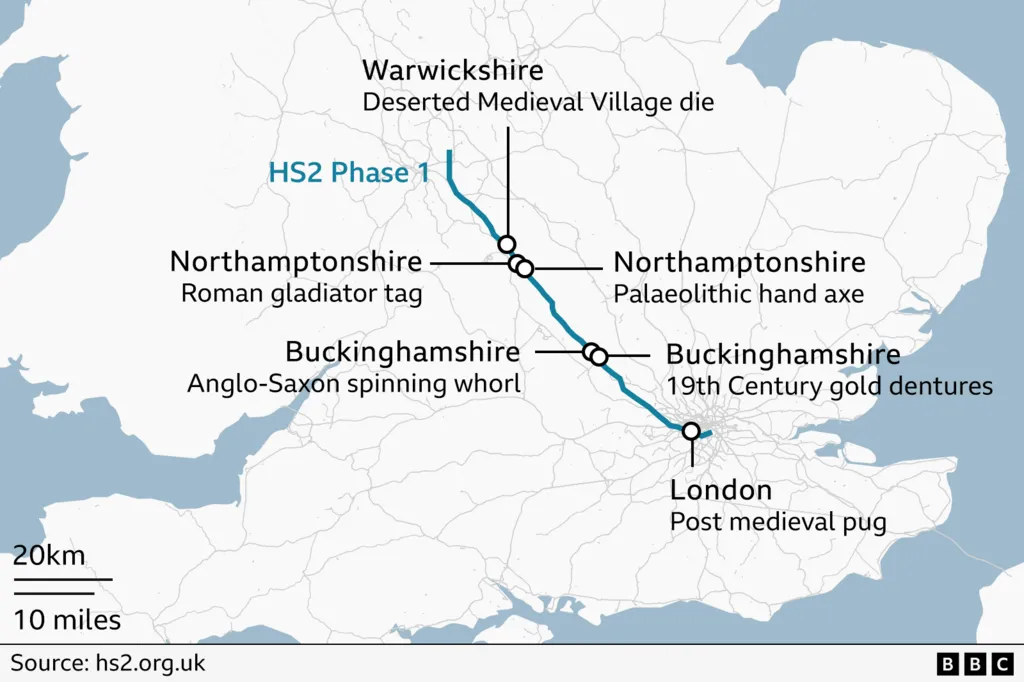
A staggering 450,000 objects have been unearthed, including a potential Roman gladiator's tag, a hand axe estimated to be over 40,000 years old, and a set of 19th-century gold dentures, all of which are currently stored in a secure warehouse.
According to the Centre for British Archaeology, the sheer volume and diversity of these finds are unparalleled, offering a unique opportunity to shed new light on Britain's rich history.
As part of the planning process for major construction projects in the UK, archaeologists are required to assess the land to identify and protect heritage sites, a crucial step in preserving the country's cultural legacy.
Since 2018, approximately 1,000 archaeologists have been involved in excavations along the proposed HS2 route, which spans from London to Birmingham, uncovering a wealth of historical artifacts in the process.
Although the HS2 project has been delayed, with a projected completion date beyond 2033, archaeologists have largely finished their fieldwork, having made significant discoveries that will contribute to our understanding of the past.
The artifacts are being stored in a secret location in Yorkshire, where they are carefully organized on pallets and in boxes, awaiting further research and analysis, with approximately 7,300 boxes currently in storage.
The long-term fate of these objects, including whether they will be put on display or remain in storage, and issues of ownership, have yet to be determined.
Historic England has praised the team for unearthing "new and exciting sites that span over 10,000 years of our past," highlighting the significance of these discoveries.
The construction of HS2 has had a profound impact on the landscape, cutting through fields and communities, and sparking intense debate about its value and legitimacy.
Critics, including Greg Smith, MP for Mid Buckinghamshire, argue that the project's exorbitant costs, delays, and environmental damage make it a questionable investment, with some even suggesting that it is not worth pursuing.
Smith has stated that the project's enormous cost to taxpayers, coupled with its destructive impact, makes it a misguided endeavor, saying "it should not have cost the taxpayer tens of billions of pounds to build a railway that no-one wants and brings so much destruction."
In response, HS2 has acknowledged the project's shortcomings, with Chief Executive Mark Wild committing to addressing the issues of cost increases and delays that have plagued the project.
The HS2 team has emphasized its commitment to careful excavation and respect for the historical sites and artifacts uncovered during the project, highlighting the importance of preserving the country's cultural heritage.
Historian Graham Evans, chair of the Northamptonshire Battlefields Society, has noted that while opinions about HS2 may vary, the archaeological work being done is invaluable, saying "if they built the railway and they didn't do the archaeology, that would be more tragic."
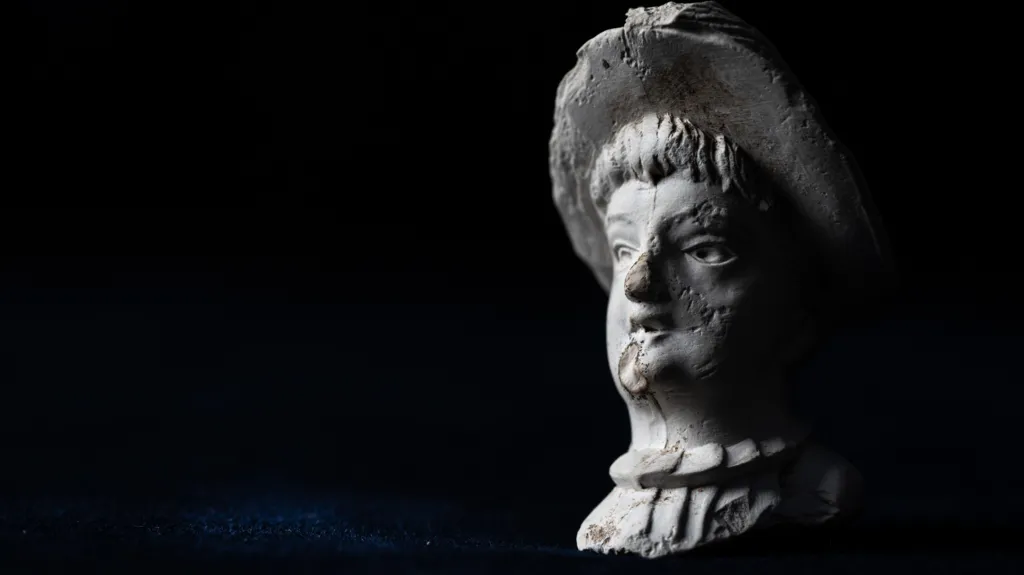
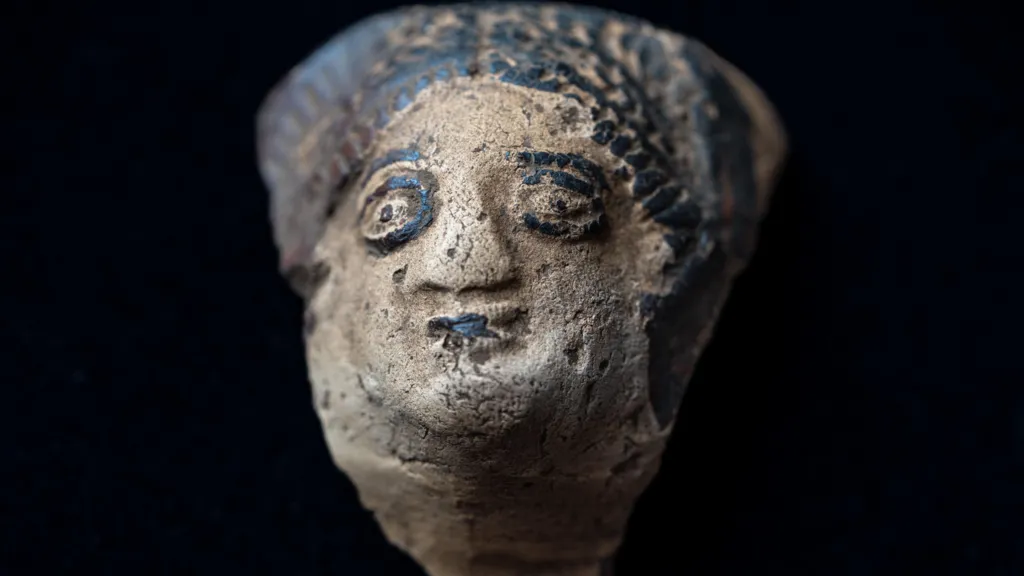
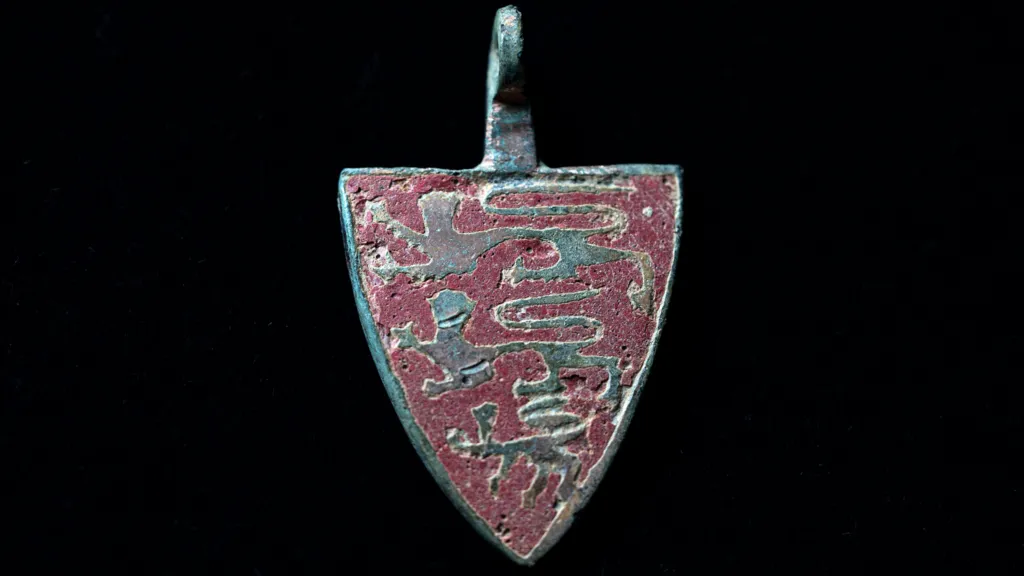
The storage facility holds an impressive array of artifacts, including Roman statue heads and a gold 'three lions' pendant from the 13th-14th Century, each one offering a unique glimpse into the past.
A poignant reminder of the human stories behind these artifacts is the presence of a bubble-wrapped coffin from 1799, found on the ground in one area, alongside a smaller coffin wrapped in masking tape, serving as a sobering reminder of the lives once lived.
Some of the discovered objects have already been showcased to the public, providing a fascinating insight into the country's history and cultural heritage.
Six previously unseen artifacts have been selected for display, with their locations marked on the HS2 route map, allowing visitors to explore the history behind each object.
Experts believe that one of the hand axes discovered is over 40,000 years old, crafted by Neanderthals or an earlier human species, offering a fascinating glimpse into the lives of our ancient ancestors.
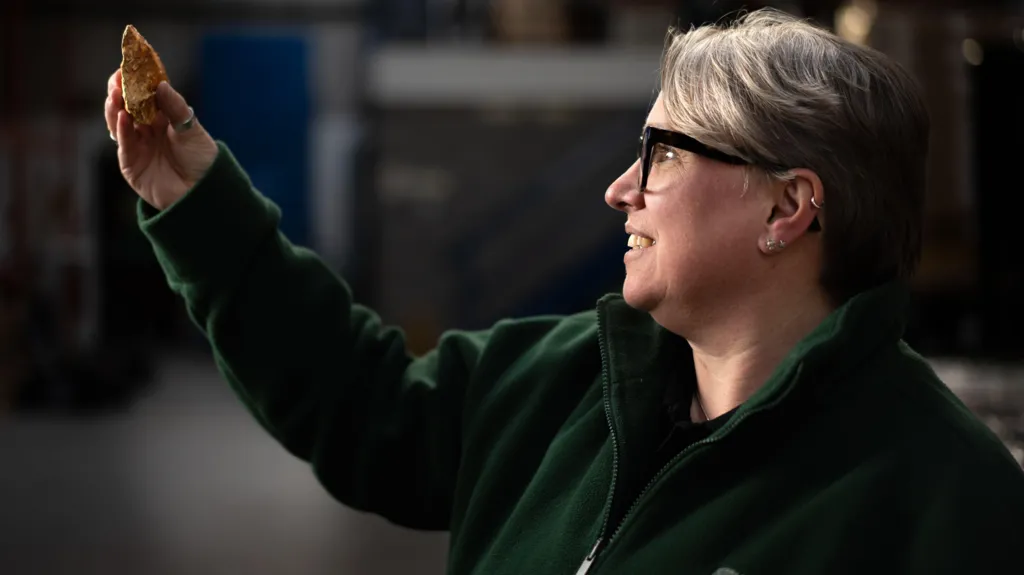
Found in the Edgcote area of Northamptonshire, this hand axe features a sharp edge, likely used for butchering animals, and is a remarkable example of the ingenuity and craftsmanship of early humans.
Hand axes were typically held in the palm, rather than attached to a wooden handle, and this particular example is a testament to the resourcefulness of our ancient ancestors.
Dr Sara Machin, the finds lead for the Access + consortium, has noted that holding the hand axe is a tactile experience, saying "even now it fits snugly in my hand," highlighting the enduring connection between past and present.
A small, intricately carved bone fragment bears an inscription, which, if complete, would read "DOMINE VICTOR VINCAS FELIX" or "Lord Victor, may you win and be lucky," offering a glimpse into the lives of the people who created it.
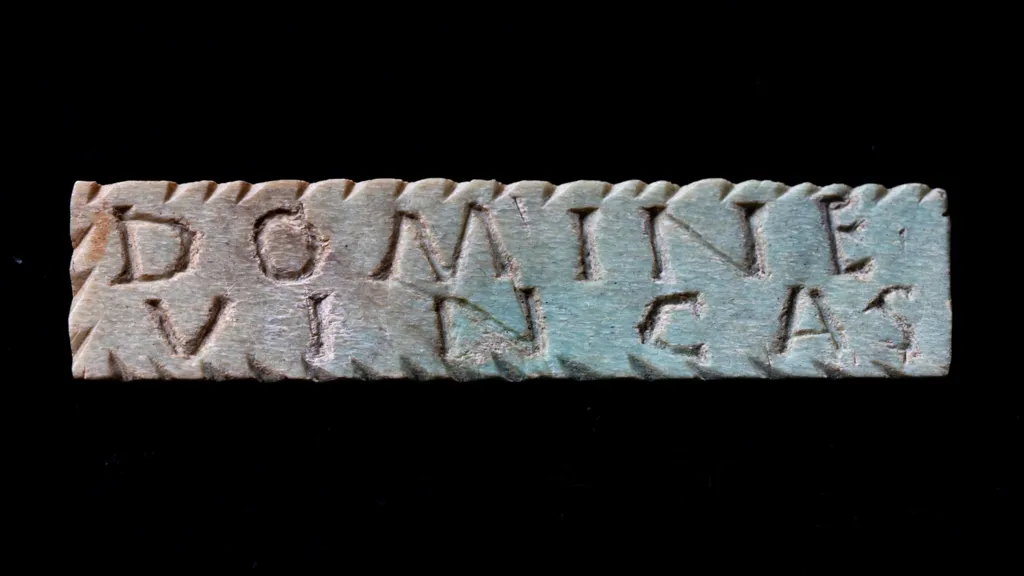
Discovered in Northamptonshire, this bone fragment may have belonged to a Roman gladiator or a spectator, although the lack of evidence of an arena or circus in the area has sparked debate about its origins.
The bone fragment was recovered from a large pottery vessel containing cremated human remains, with an X marked on the lid, adding to the mystery surrounding this artifact.
Dr John Pearce, Reader in Archaeology at King's College University, has suggested that while a link to a gladiator is possible, further forensic analysis of the burial may reveal a different story, highlighting the complexities of interpreting historical artifacts.
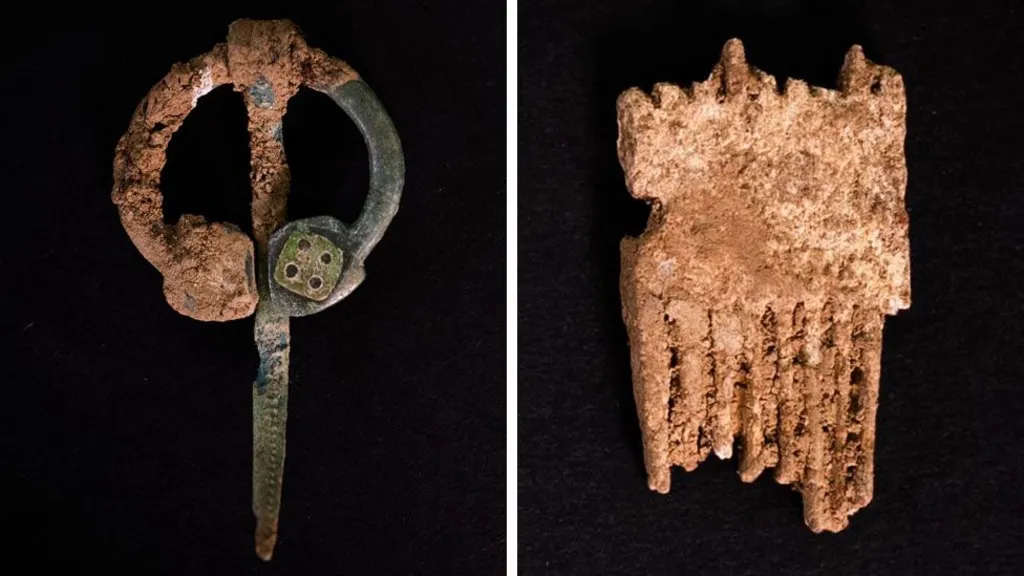
A decorated Anglo-Saxon spindle whorl, used for spinning yarn, was unearthed from farmland near Bishopstone, Buckinghamshire, and is a significant find, offering insights into textile production during this period.
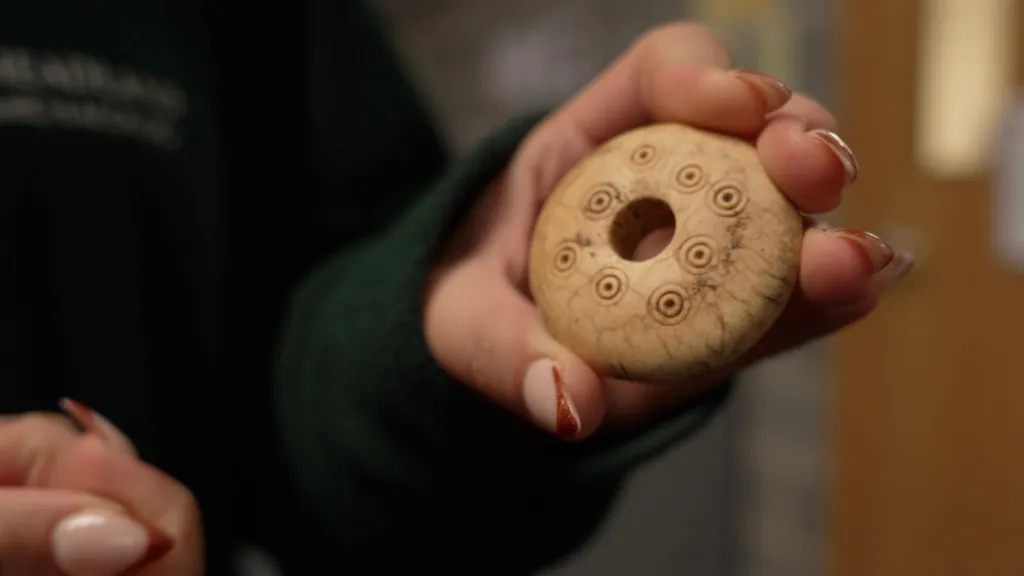
According to Willow Major, a post-excavation assistant, the spindle whorl is a fascinating example of the craftsmanship and technological advancements of the Anglo-Saxon period, with its polished surface suggesting extensive use.
The ring and dot motif on the spindle whorl is reminiscent of earlier Iron Age designs, highlighting the continuity and evolution of artistic traditions over time.
A small, polished die was discovered in a deserted medieval village in Lower Radbourne, Warwickshire, and is notable for its unique numbering format, which differs from modern dice.
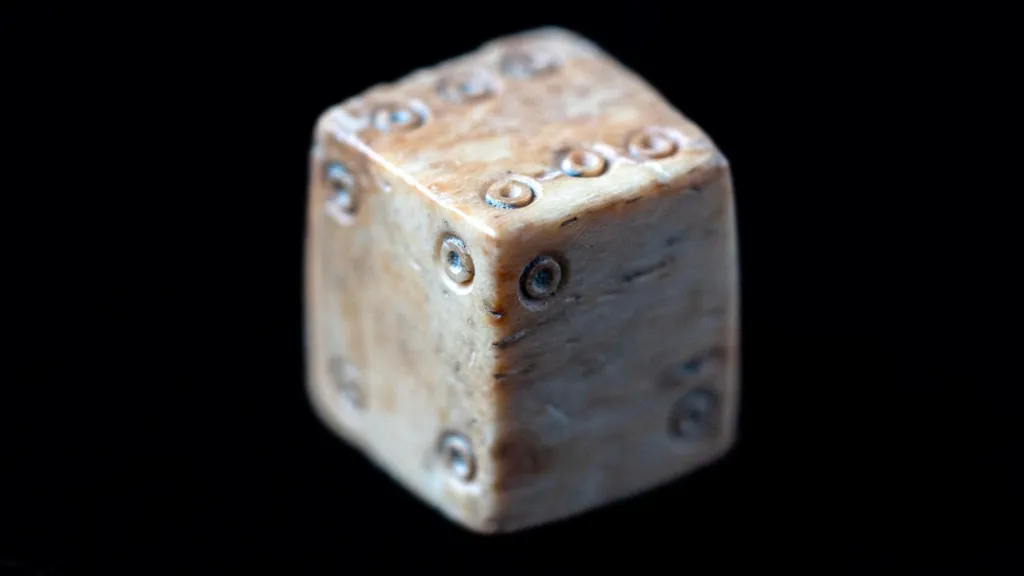
The die's imperfections, including one side being longer than the others, distinguish it from mass-produced dice, highlighting the craftsmanship and individuality of this artifact.
A complete figurine of a seated pug dog, crafted from plain white-glazed porcelain with black details, was found in a grave at St James' Gardens in Euston, and is believed to have been made at the Derby porcelain factory between 1770 and 1800.
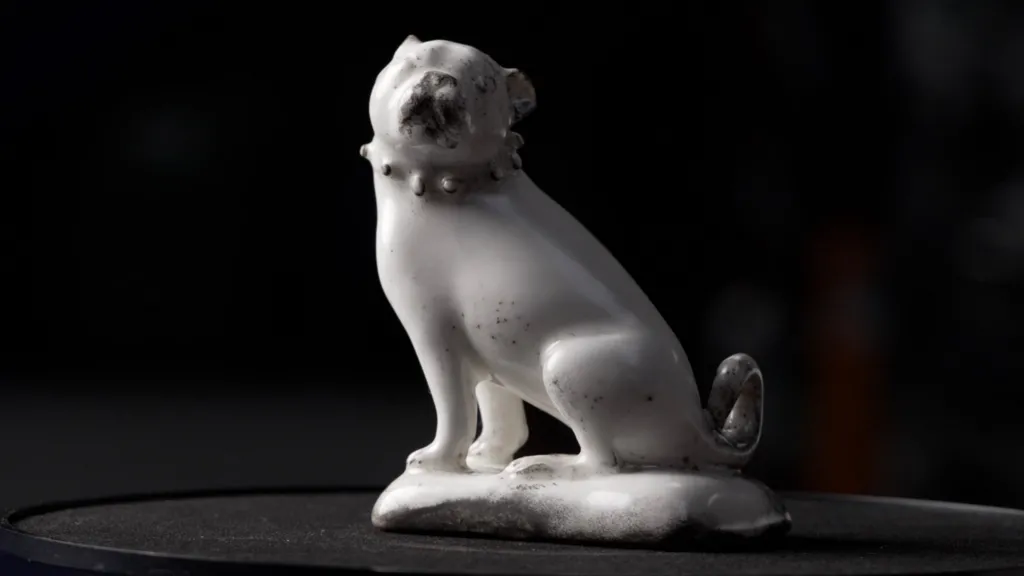
This charming figurine offers a glimpse into the lives and interests of people in the past, highlighting the importance of everyday objects in understanding historical contexts.
A set of lower gold dentures, discovered at St Mary's Old Church in Stoke Mandeville, is a surprising find, with six teeth and a numbered stamp on the inside, sparking curiosity about the person who once wore them.
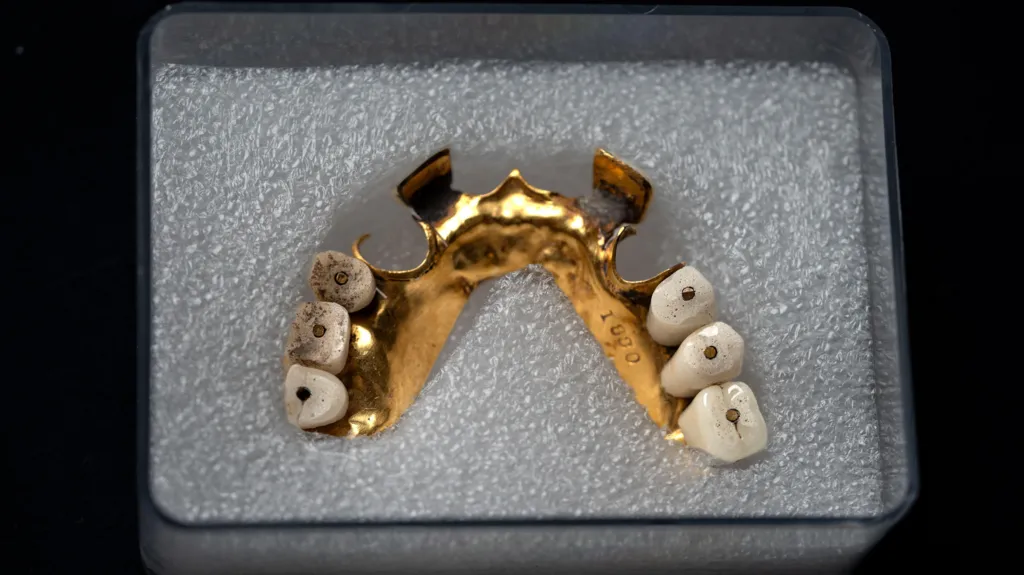
The dentures are a poignant reminder of the personal stories behind each artifact, with Dr Sara Machin noting that "these are objects, but they all relate to people," highlighting the human connection that underlies each discovery.
Machin has emphasized that the significance of these artifacts lies in their ability to tell us about the people who lived in these areas, spanning thousands of years, and the stories they can tell us about their lives.
Neil Redfern, from the Council for British Archaeology, has noted that the scale of the HS2 project is what makes it so extraordinary, with the sheer volume of artifacts and sites discovered offering a unique opportunity for research and analysis.
The length of the scheme and the diverse landscapes it passes through have resulted in a remarkable collection of sites and materials, with Redfern believing that the research potential of these findings is remarkable, and will help people understand wider landscape change now and in the past.
The discoveries made during the HS2 project have the potential to significantly contribute to our understanding of Britain's history and cultural heritage, highlighting the importance of preserving and protecting our collective past.
Archaeologists have initiated the next stage of their investigation, which involves conducting thorough assessments, cleaning, and conserving the discovered items to uncover more about their stories.
Plans are underway to showcase the artefacts, including those from the Wendover Saxon cemetery, where 122 graves were excavated, in an upcoming exhibition at the Discover Bucks Museum, marking their first public display.
The long-term fate of certain items remains uncertain at this point.
According to HS2, under English property law, the ownership of archaeological and historical objects unearthed during the project will be either vested in the government or the landowners.
The HS2 spokesperson noted that in some cases, landowners may choose to retain ownership of the objects, in which case they will be returned to the landowners' custody.
Charlotte Self, the project's archive manager, is reaching out to landowners to consider donating the items, allowing communities along the route to access and appreciate them.
Self expressed her desire to see most of the items placed in local museums near their discovery sites, making them available for public viewing.
Subscribe to our daily newsletter to stay informed with the latest headlines; registration is available here.

Business
DP World CEO departs amid fallout over Epstein connections
Sultan Ahmed bin Sulayem’s departure follows the revelation of hundreds of emails allegedly exchanged between him and Epstein, as revealed in recently disclosed documents.
DP World's global ports operator has undergone a change in leadership, with the previous head stepping down amidst scrutiny surrounding their association with convicted sex offender Jeffrey Epstein.
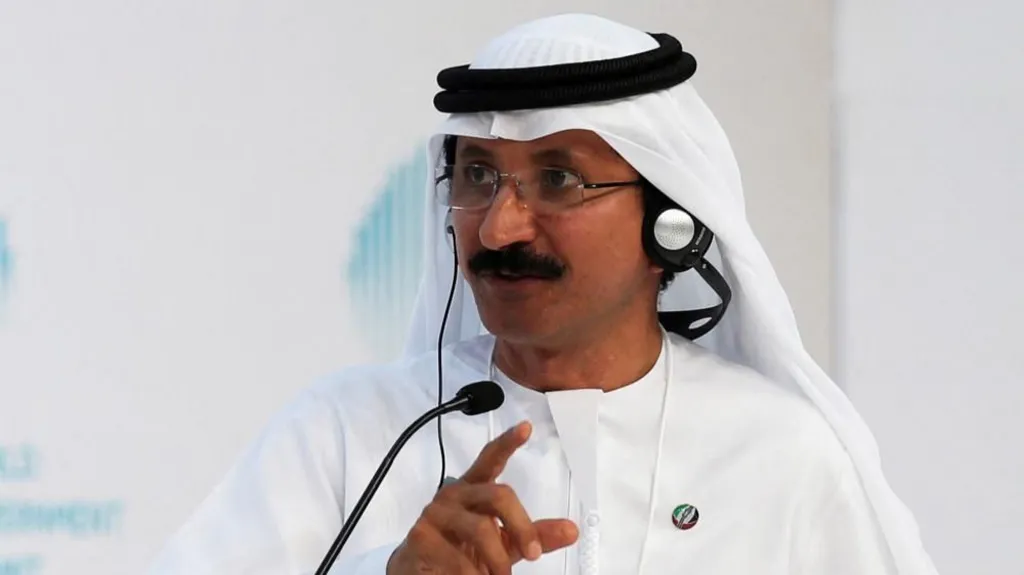
Sultan Ahmed bin Sulayem's departure as chairman and chief executive follows the release of newly uncovered files, which indicate he exchanged numerous emails with Epstein over the course of a decade.
The mention of an individual in these files does not imply any wrongdoing, and the BBC has reached out to Sulayem for a statement regarding the matter.
On Friday, DP World announced the appointments of Essa Kazim as chairman and Yuvraj Narayan as chief executive, without making any reference to Sulayem, whose photograph appears to have been removed from the company's website.
DP World, a Dubai-owned logistics company with a significant presence in global trade infrastructure, operating port terminals across six continents, has faced increasing pressure from its business partners in recent days.
Earlier in the week, the UK development finance agency and La Caisse, Canada's second-largest pension fund, announced that they would be suspending new investments in the firm.
Additionally, the Prince of Wales' Earthshot project, which received funding from DP World, was reported to the UK Charity Commission following Sulayem's appearance in the recently released files.
The documents suggest a close and extensive relationship between Sulayem, a prominent Gulf business figure, and Epstein, spanning multiple areas of interaction.
US lawmakers Ro Khanna and Thomas Massie have accused Sulayem of being one of several influential individuals associated with Epstein, citing him as one of "six powerful men" linked to the disgraced financier.
The lawmakers, who co-sponsored the legislation that led to the release of the Epstein files last year, claim that certain information was improperly redacted from the documents.
On 9 February, Thomas Massie highlighted a redacted document that appeared to contain an email from Epstein in 2009, referencing a "torture video"; the recipient responded that they would be traveling between China and the US, although the context of the exchange is unclear.
US officials have confirmed that Sulayem was the recipient of the email in question, which was sent by Epstein.
News
Ireland Seeks Redemption in Match Without Spectators
Ireland’s Captain Caelan Doris has emphasized that the team must have all players contributing in order to move past their loss to France and secure a win against Italy.
Ireland captain Caelan Doris is urging his team to deliver a strong performance against Italy, following their disappointing loss to France last week.
Historically, Ireland have dominated Italy in their home Six Nations matches, winning their last five encounters by at least 30 points, including a 2024 match where they held Italy scoreless, but a similar outcome is not expected this time around.
Italy's confidence is high after their 18-15 victory over Scotland in Rome, where they excelled in the set-piece and defended well in the closing stages.
Gonzalo Quesada's team put in an impressive display despite the challenging weather conditions, and their win has given them momentum ahead of their trip to Dublin.
In contrast, Ireland's camp has been introspective after their 16-year-low Six Nations loss to France, with head coach Andy Farrell expressing his disappointment and the need for improvement.
Farrell was critical of his team's performance, particularly in the first half, and has made several changes to the lineup for the Italy match, including the exclusion of Josh van der Flier, Jacob Stockdale, Tommy O'Brien, and Cian Prendergast.
The Irish coach has also spoken about the need for his team to "simplify things" and understand their identity, following a clear-the-air meeting with the squad.
Farrell has emphasized the importance of players not overthinking their roles and instead focusing on their strengths, as they prepare to face Italy.
The Irish coach's message to his players is to trust their instincts and not overcomplicate their game plan against Italy.
Ireland's review of their loss to France was a candid and honest assessment, with players and coaches alike acknowledging the need for improvement.
Ireland has made six changes to their team for the Italy match, with newcomers Cormac Izuchukwu and Rob Baloucoune, as well as uncapped lock Edwin Edogbo, set to feature.
Captain Caelan Doris believes that the new players must take ownership of their roles and contribute to the team's overall performance.
Doris expressed his enthusiasm for the team's lineup, despite the changes, and emphasized the importance of cohesion and trust among the players.
The Irish captain's message to the new players is to have faith in their abilities and enjoy the experience, while also focusing on the team's core strengths.
Doris stressed that every player must be fully committed and take responsibility for their actions on the field, in order to achieve a positive outcome.
He added that creating a sense of unity and purpose through their actions can have a profound impact on the team's performance.
Doris reiterated that every player must be fully invested and take ownership of their role, in order to achieve success against Italy.
Edwin Edogbo, the towering Munster lock, is set to make his Test debut for Ireland on Saturday.
Ireland's loss to France was marked by a lack of intent, and head coach Andy Farrell has responded by making changes to the team, including the inclusion of wingers James Lowe and Rob Baloucoune.
The hope is that these changes will help Ireland to rediscover their sense of purpose and direction against Italy.
Lowe, a experienced player, was dropped for the France match, but returns to the lineup, while Baloucoune makes his first appearance for Ireland since November 2022.
The inclusion of Cormac Izuchukwu in the back row is expected to add dynamism and ball-carrying ability to Ireland's attack.
There is also excitement about the potential of Edwin Edogbo, who has impressed for Munster despite struggling with injuries earlier in his career.
Caelan Doris will switch back to open-side flanker, a position he has played before against Italy, and where he has scored tries in the past.
Regardless of his position, Doris is focused on helping Ireland to move past their loss to France and deliver a strong performance against Italy.
The Irish captain reflected on the team's discussions throughout the week, which have centered on accountability, simplicity, and a renewed focus on their core values.
Doris emphasized the importance of the team holding each other accountable and taking ownership of their actions, in order to drive improvement.
The Irish captain acknowledged that the loss to France has served as a reference point, but expressed confidence that the team can learn from the experience and move forward.
Doris believes that Ireland has the potential to improve, but must focus on executing their game plan effectively and trusting their strengths.
The match between Ireland and Italy is scheduled to take place on Saturday, 14 February, at 14:10 GMT.
The Aviva Stadium in Dublin will host the encounter.
Fans can listen to live commentary of the match on BBC Sounds, BBC Radio 5 Sports Extra 2, BBC Radio Ulster, and the BBC Sport website and app, as well as follow live text commentary.
Italy has a chance to cause a major upset in the Six Nations, and will be looking to build on their win over Scotland last week.
The Italians pushed Ireland close last year, losing 22-17, and will be hoping to go one better this time around.
Despite the absence of Juan Ignacio Brex, Italy has a number of threats, including Tommaso Menoncello, one of the most exciting young talents in European rugby.
The Italian forwards have shown their ability to compete with top teams, having dominated Scotland and caused problems for South Africa's pack in November.
Caelan Doris acknowledged that Italy is no longer just a passionate team, but a side with a well-rounded attack and strong defense.
The Irish captain noted that Italy's attack is now a significant threat, and that their ability to play with width and depth makes them a challenging opponent.
Doris also highlighted the improvement in Italy's scrum, as well as the quality of their back three and the physicality of their forwards.
The Ireland team to face Italy is: Osborne; Baloucoune, Ringrose, McCloskey, Lowe; S Prendergast, Casey; Loughman, Sheehan, Clarkson, McCarthy, Ryan, Izuchukwu, Doris (capt), Conan.
Ireland's substitutes for the match include Kelleher, O'Toole, Furlong, Edogbo, Beirne, Timoney, Gibson-Park, and Crowley.
The Italian team features Pani, Lynagh, Marin, Menoncello, and Ioane in the backline, with P Garbisi and Fusco in the half-back positions, and a forward pack consisting of Fischetti, Nicotera, Ferrari, N Cannone, Zambonin, Lamaro as captain, Zuliani, and L Cannone.
Italy's replacement players are Di Bartolomeo, Spagnolo, Hasa, Ruzza, Favretto, Odiase, A Garbisi, and Odogwu.
On Saturday, Hollie Davidson of Scotland will make history by becoming the first female referee to officiate a men's Six Nations match, with the fixture being Ireland's home game against Italy.
Business
Consider Alternatives to Your Current Bank Account
According to Martin Lewis, the current moment may be an opportune time to consider switching bank accounts.
The complete episode is available for streaming on the BBC Sounds platform.
-
 News13 hours ago
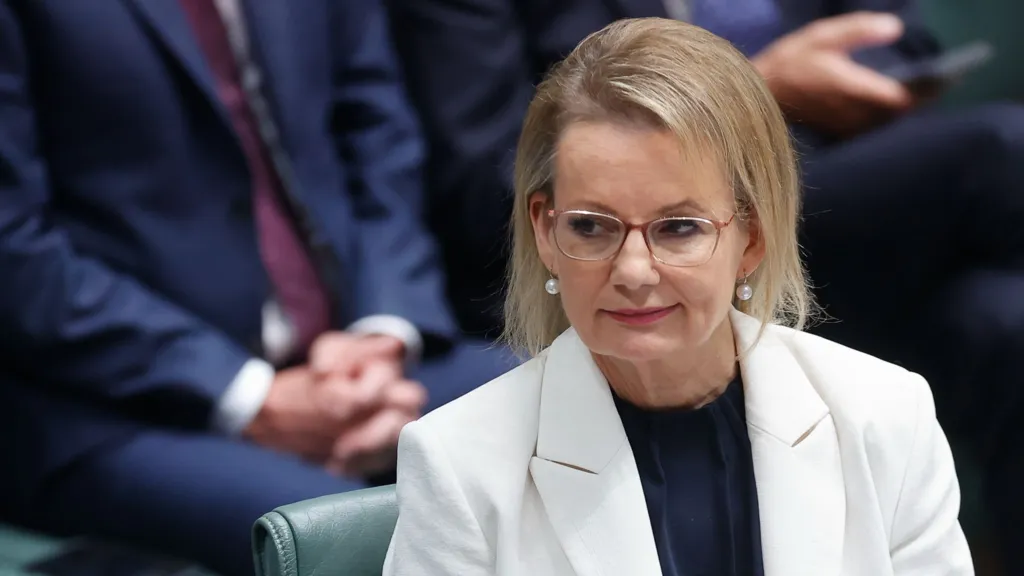
Australian Politics Faces Questions Over Gender Equality Amid Sussan Ley’s Appointment
-
 News11 hours ago
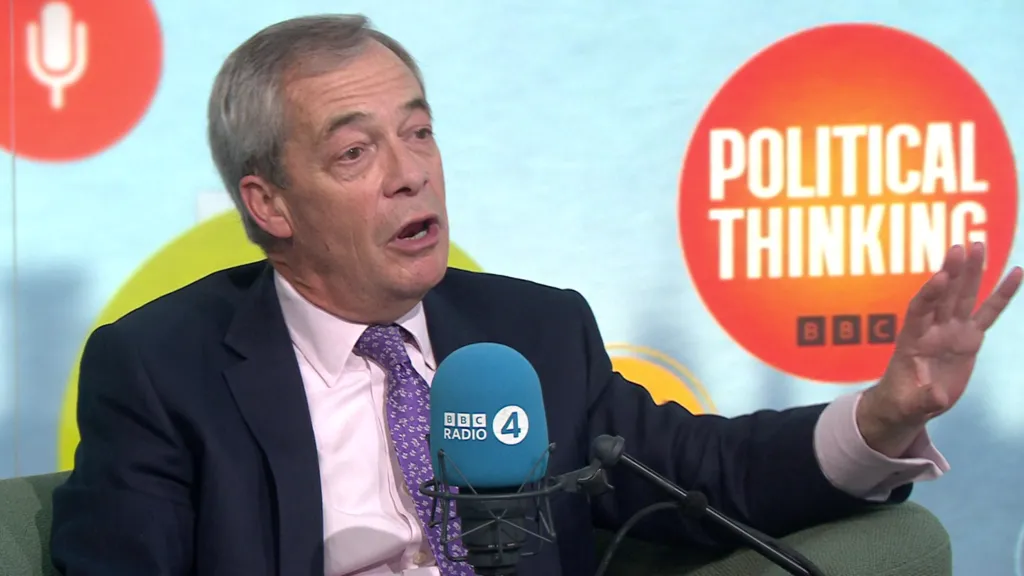
Farage Says Reform to Replace Traditional Tory Party
-
 News11 hours ago
Wrexham Pair Seek Win Against Former Team Ipswich
-
 News16 hours ago
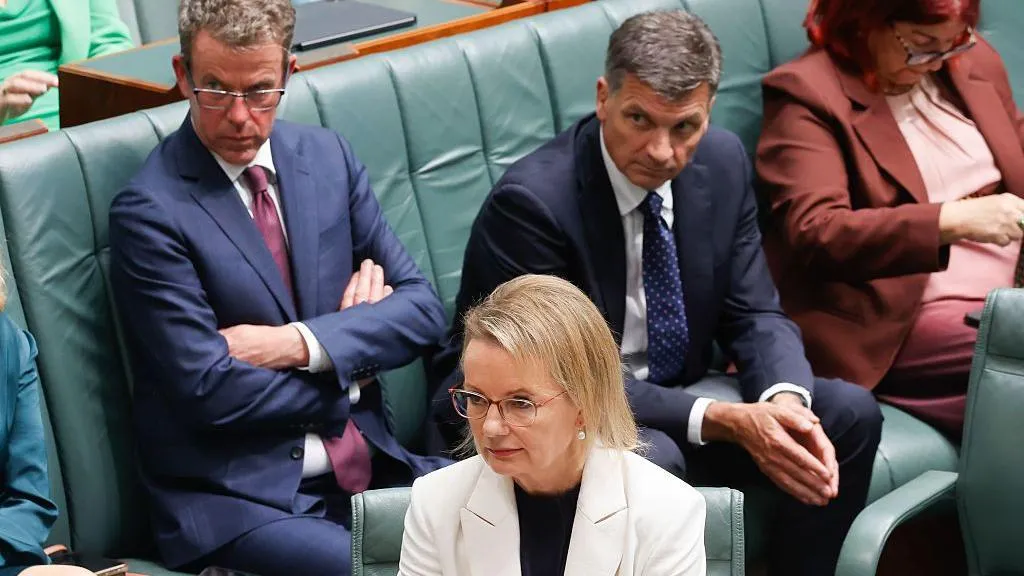
Liberal Party Removes Australia’s First Female Leader
-
 News14 hours ago
UK Braces for Cold Snap with Snow and Ice Alerts Expected
-
 News11 hours ago
Husband’s alleged £600k theft for sex and antiques blamed on drug side effects
-
 News2 days ago
Sunbed ads spreading harmful misinformation to young people
-
 Business16 hours ago
BBC Reporter Exposed to Cyber Attack Due to Vulnerabilities in AI Coding Tool