
Middle East
Israel expands Yellow Line into Gaza, satellite images reveal
Israel positioned and subsequently relocated control markers in three areas, with certain markers being situated further within Gaza than indicated by existing maps.
In several locations, Israel has relocated the blocks that demarcate its post-ceasefire boundary deeper into the Gaza Strip, causing uncertainty among Palestinian residents.
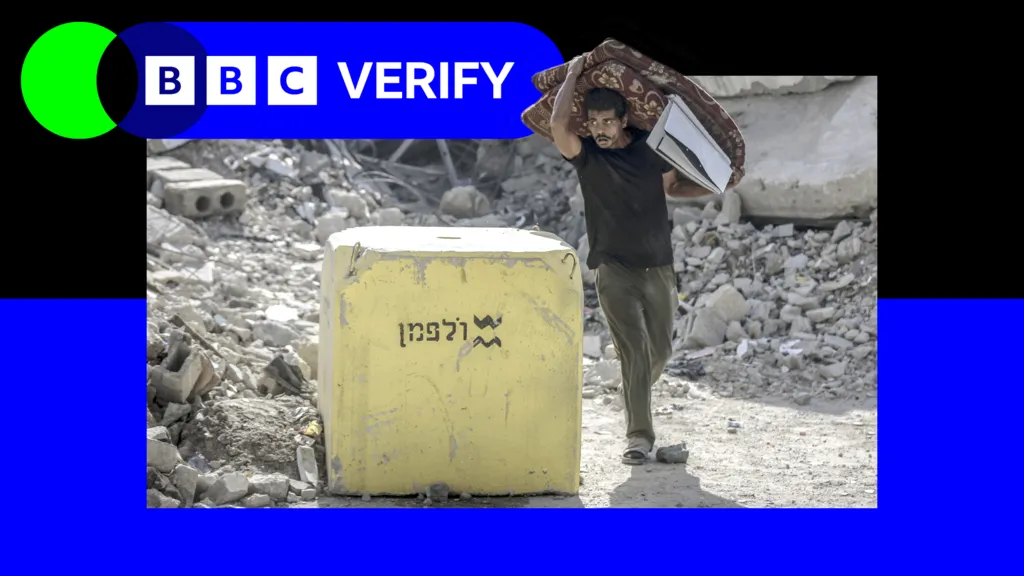
An analysis of satellite imagery by BBC Verify reveals that Israel initially positioned blocks in at least three areas, only to later reposition them further into Gaza.
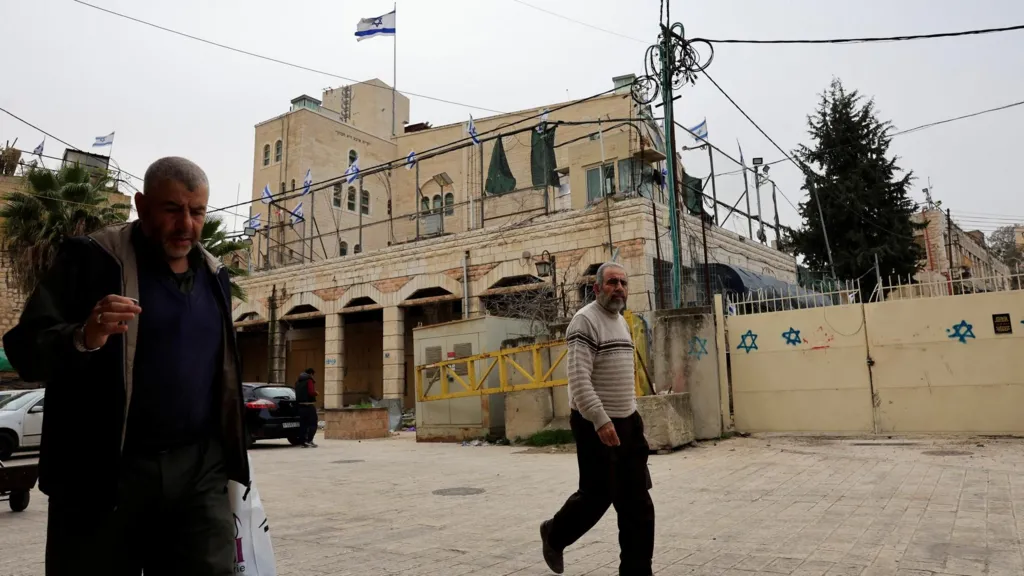
As part of the US-facilitated agreement with Hamas, Israel committed to pulling its troops back beyond a boundary indicated in yellow on military maps, which is physically marked by yellow-painted concrete blocks.
In a statement made in October, Defence Minister Israel Katz cautioned that individuals crossing the designated Yellow Line would face armed response.
Following these remarks, the area surrounding the line has witnessed a number of fatal incidents.
The Israel Defense Forces (IDF) relocated a total of 16 positions in the areas of Beit Lahia, Jabalia, and al-Tuffah, initially placing blocks and then repositioning them further within the Gaza Strip.
Satellite imagery reveals that between November 27 and December 25, IDF personnel shifted at least seven pre-existing blocks in Gaza City's al-Tuffah neighborhood.
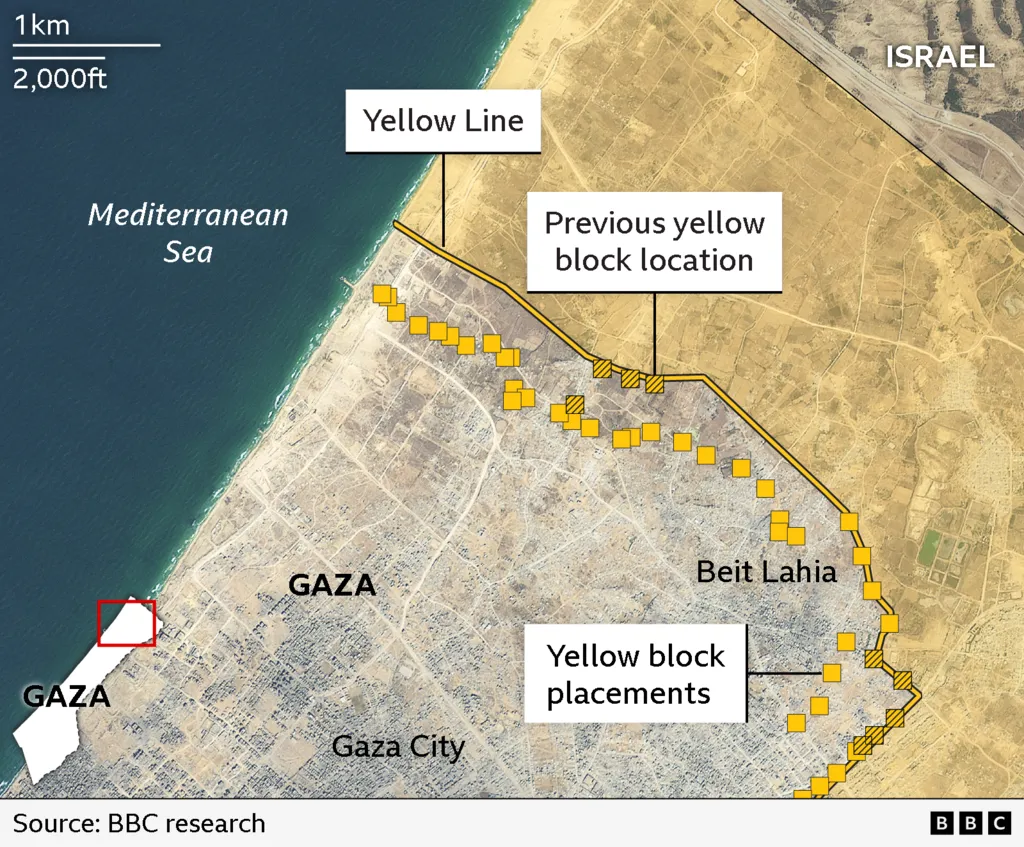
On average, the markers were repositioned approximately 295 meters (or 968 feet) further into the Gaza Strip.
In addition to the relocated blocks, a total of 205 other markers were mapped by BBC Verify, with over half of these markers placed at a significant distance from the line indicated on maps, deeper within the Strip.
An IDF spokesperson denied all allegations regarding the alteration or crossing of the Yellow Line by IDF troops, stating that such claims are unfounded.
According to a statement, the Israeli Defense Forces (IDF) are working to visually demarcate the Yellow Line, taking into account the current conditions and ongoing operational assessments.
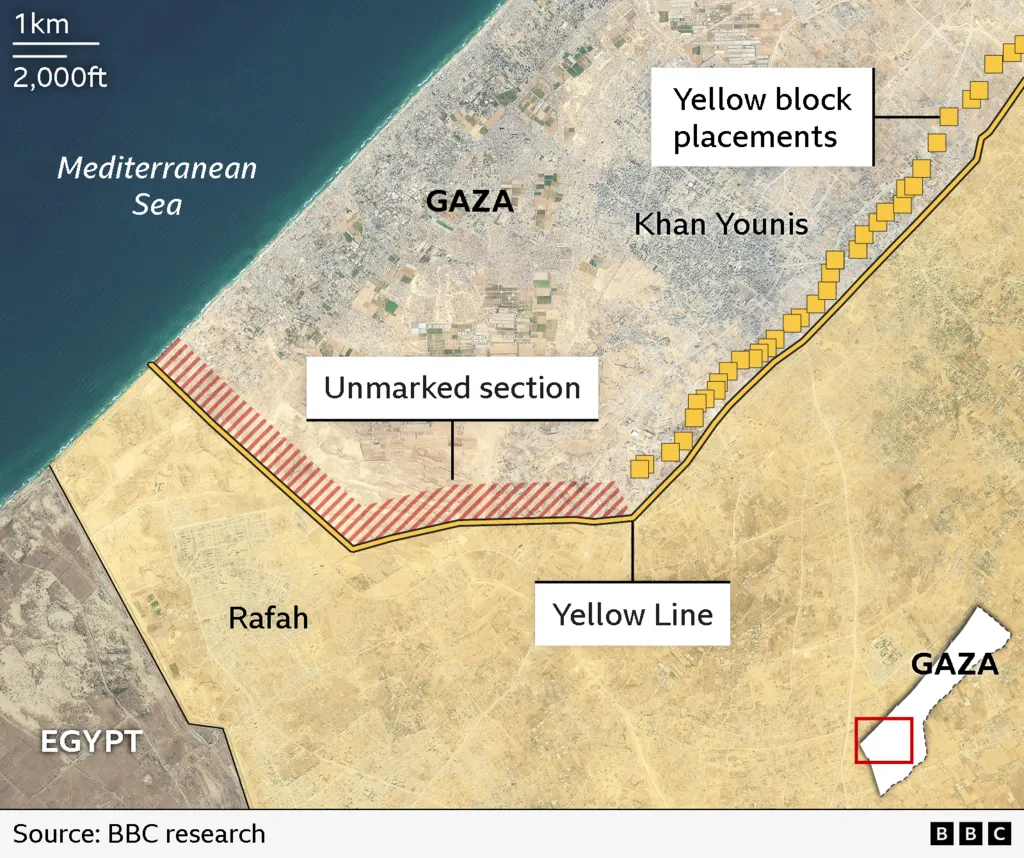
A review of satellite images up to January 11 reveals that certain segments of the Yellow Line, referred to by Israel's military chief as a "new border line," remain unmarked on the ground, over three months after the ceasefire commenced.
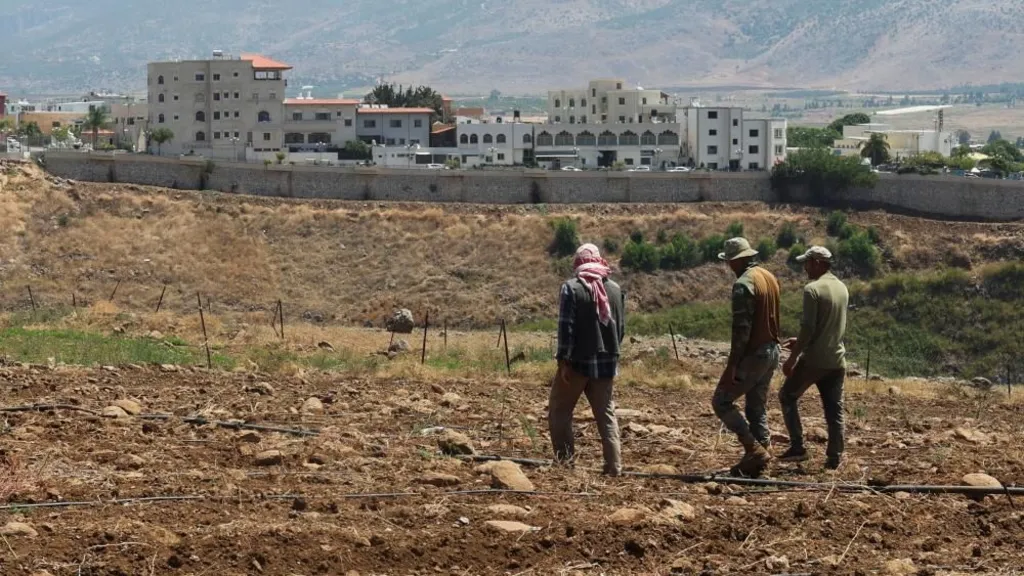
Recent satellite images analyzed by BBC Verify indicate that approximately 10km (six miles) of the territory lack block markings, causing difficulties for some Gaza residents in determining the boundary of the area the IDF designates as a "dangerous combat zone."
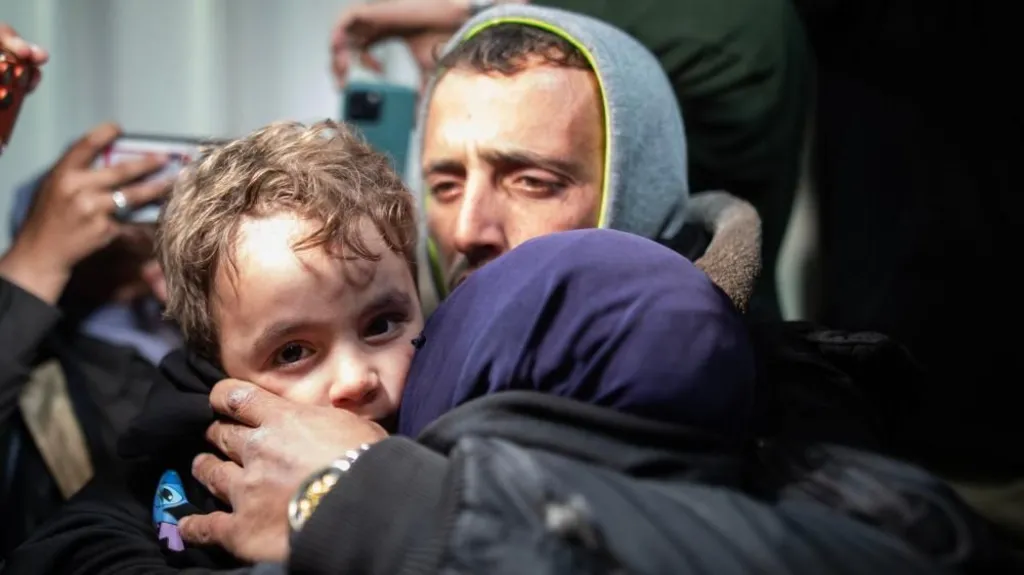
In a recent incident, a 23-year-old man from the Khan Younis area, whose identity is being withheld for safety reasons, reported that Israeli troops suddenly relocated blocks beyond the designated line, effectively trapping him.
The man described his situation, stating, "We are currently residing within the Yellow Line, but behind the yellow blocks, uncertain about our future. The nighttime atmosphere is extremely frightening, with the constant sounds of exploding shells, advancing soldiers, gunfire, and drones overhead, as well as direct shooting incidents."
According to Prof Andreas Krieg, a specialist in Middle East security at King's College London, the relocation of the blocks serves as a means of manipulating territorial boundaries.
Prof Krieg explained that by maintaining a discrepancy between the official border on maps and the actual placement of the physical blocks, Israel retains the flexibility to control the movement and settlement of Gazans without formally altering the border.
Efraim Inbar, president of the Jerusalem Institute for Strategy and Security, offered an alternative perspective, suggesting that the mapped border may not take into account natural obstacles that could affect the placement of the markers, and that IDF engineers may position the blocks based on convenience rather than strict adherence to the mapped line.
An analysis of IDF statements and Telegram posts revealed that since the warning issued by Katz in October, Israeli troops have opened fire on individuals crossing the Yellow Line at least 69 times.
On December 19, the IDF launched a strike on a school in the al-Tuffah neighbourhood of Gaza City, which was providing shelter to displaced persons approximately 330 metres inside the Palestinian side of the border, as indicated by IDF maps, and just a short distance from a recently relocated yellow block.
A deadly explosion occurred near a school building where a wedding was underway, resulting in the deaths of five individuals, including children, according to Gaza's Civil Defence agency, which is run by Hamas.
The Israeli Defence Forces (IDF) issued a statement regarding the incident, stating that they had targeted "suspicious individuals" in the area west of the Yellow Line, and while the incident is still under review, they expressed regret for any harm caused to civilians.
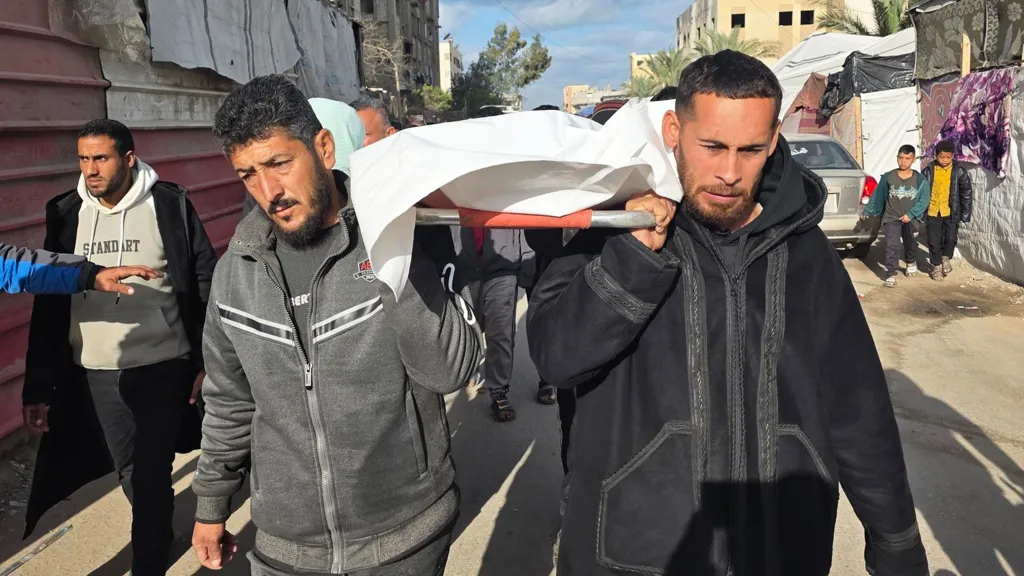
A separate incident in the Jabalia camp in northern Gaza claimed the life of 17-year-old Zaher Nasser Shamiya. According to his father, IDF troops opened fire on the teenager before fatally striking him with a tank on December 10.
The father of Zaher Nasser Shamiya described the incident, stating that the tank inflicted severe injuries on his son, entering an area west of the Yellow Line and running him over. The IDF has been approached by BBC Verify for comment on this incident.
In a previous incident in November, two young brothers, aged eight and 10 or 11, were reportedly killed by Israeli forces while collecting firewood for their disabled father, according to their uncle, who shared details of the circumstances surrounding their deaths.
The Israeli Defense Forces (IDF) released a statement regarding the fatalities, stating that two individuals who crossed the Yellow Line and exhibited suspicious behavior were neutralized after approaching IDF personnel. However, the statement did not provide information on the criteria used to identify them as suspects.
According to an IDF spokesperson, Hamas militants have fired on Israeli troops six times from beyond the Yellow Line in the past week, as reported to BBC Verify.
Despite Israel's commitment to withdraw its forces behind the Yellow Line as part of the October ceasefire agreement, evidence gathered by BBC Verify, including videos and satellite images, has consistently shown IDF vehicles operating in areas beyond the designated boundary.
Verified footage has captured IDF armoured personnel carriers and bulldozers approximately 400 meters past the mapped Yellow Line at the Bani Suhaila roundabout in Khan Younis. Additionally, a satellite image taken on December 25 appears to show an IDF tank, excavator, and other vehicles positioned around 260 meters beyond the Yellow Line in Beit Lahia.
In certain instances, the repositioning of blocks by the IDF was followed by the demolition of nearby structures, as observed in the verified clips.
Satellite imagery of eastern Gaza City reveals widespread destruction, with hundreds of buildings reduced to rubble up to and beyond the initial boundary markers, which were subsequently relocated, resulting in further devastation.
In the Jabalia area, Israeli forces demolished several school buildings situated approximately 150 meters within the designated boundary, sparking concerns about the impact on local infrastructure.
The debris from IDF demolitions has, in some cases, obscured the visibility of boundary markers for Palestinians in the affected areas, creating uncertainty about the extent of the destruction.
According to an IDF spokesperson, the military is working to dismantle Hamas' underground tunnel network, which allegedly spans both sides of the Yellow Line, noting that the destruction of these tunnels may lead to the collapse of buildings on either side of the boundary.
The US announced that the second phase of the ceasefire agreement is set to commence, which will involve Israel's withdrawal from additional areas of the Gaza Strip, although a timeline for this withdrawal has not been specified, pending the "demilitarisation" of Hamas as outlined in the October ceasefire agreement.
Construction of temporary Israeli fortifications, including roadblocks and defensive barriers, has commenced in certain areas of the Strip shortly after markers were put in place, often beyond the designated Yellow Line.
According to Krieg, speaking to BBC Verify, the relocation of these blocks could ultimately enable Israel to establish a "sterilised belt" in parts of Gaza.
Krieg explained that, in effect, the actual positioning of the concrete blocks on any given day takes precedence over the official ceasefire map in determining the status of the land.
This report was supplemented by additional research from Maha El Gaml.

Middle East
BBC reports from Tehran as Iran commemorates Islamic revolution anniversary
BBC correspondent Lyse Doucet has arrived in Iran, marking her first visit to the country since authorities suppressed widespread demonstrations against the government.
Iran's government has staged a display of strength to commemorate the 47th anniversary of the Islamic revolution, following a period of intense repression of anti-government demonstrations.
The BBC has gained access to Tehran for the first time since the authorities' crackdown on protests, which resulted in the deaths of at least 6,490 people, according to estimates by human rights activists.
Lyse Doucet, the BBC's chief international correspondent, observes that the capital's streets, adorned with festive decorations and filled with crowds of supporters, reflect the government's desired image of a unified nation, with Iranians demonstrating their allegiance to the Islamic Republic and its founding revolution.
Middle East
BBC reports from Tehran for the first time since the protest crackdown
In Iran, the aftermath of the government’s crackdown on protests remains a sensitive issue, with the effects of the unusually strong measures still being felt, according to Lyse Doucet, reporting from the country.
For the first time since a nationwide crackdown on anti-government demonstrations, a BBC team has entered Iran to report on the current situation.
As Iran commemorates the 47th anniversary of the Islamic Revolution, the streets of Tehran are adorned with festive decorations, yet the memory of the recent protests and the subsequent use of force by security personnel remains a sensitive issue.
According to human rights activists, the confirmed number of protester fatalities stands at a minimum of 6,400, although they caution that the actual death toll may ultimately be significantly higher.
Asia
Indonesia plans to deploy up to 8,000 troops to Gaza
As part of the second phase of the ceasefire agreement facilitated by the US in the previous year, this nation would become the first to take such action.
Indonesia is making preparations to deploy a contingent of up to 8,000 soldiers to Gaza, marking the first such commitment under the second phase of a ceasefire agreement facilitated by the United States towards the end of last year.
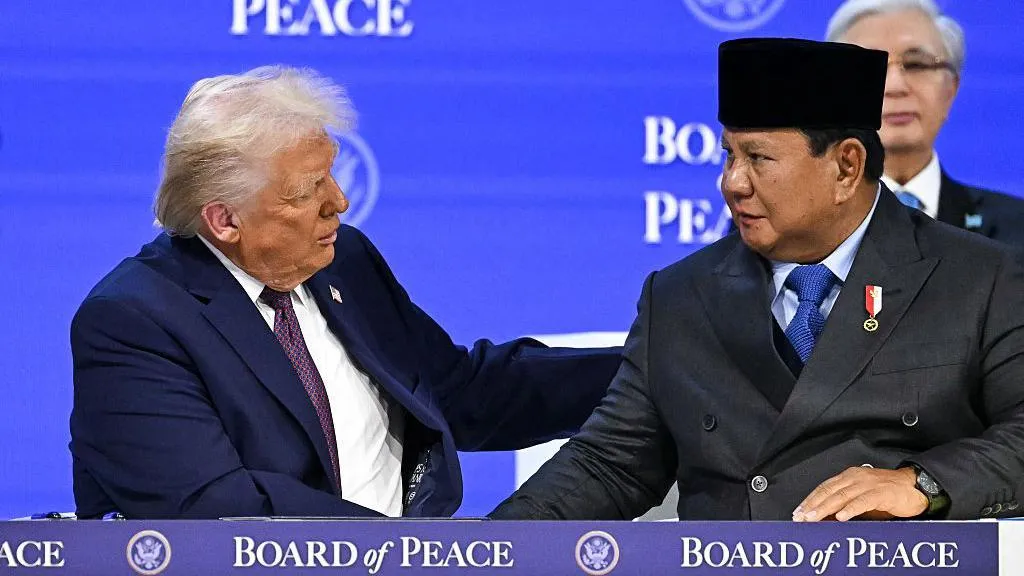
According to General Maruli Simanjuntak, the army's chief of staff, training for these troops is already underway, with a focus on providing medical and engineering support in Gaza.
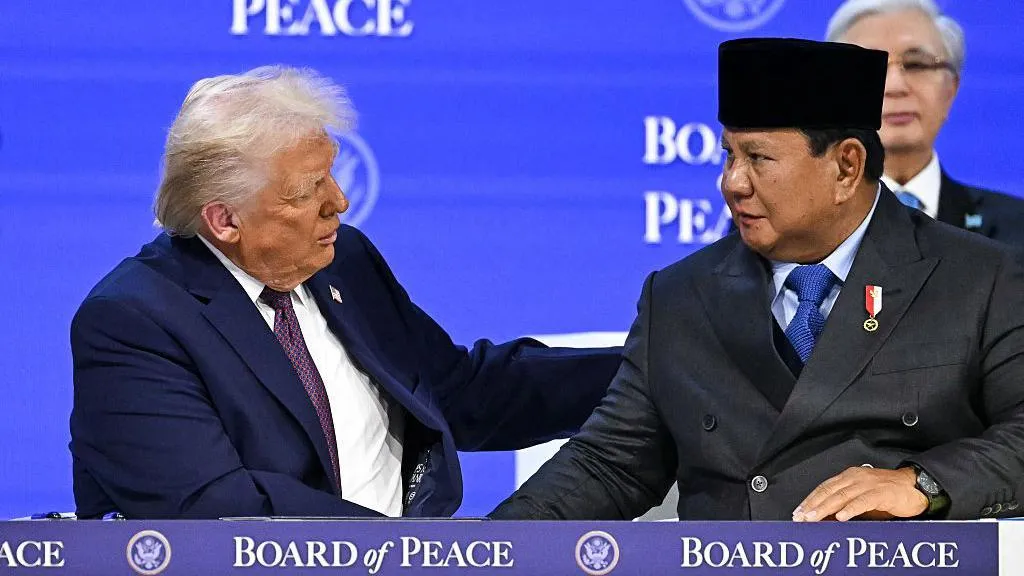
Indonesia has recently joined the Board of Peace initiated by President Donald Trump, an announcement that was made last month.
The United Nations Security Council has given Indonesia a mandate to establish an International Stabilization Force, tasked with securing border areas in Gaza and overseeing the demilitarization of the territory, including the disarmament of Hamas.
The Board of Peace, scheduled to convene for the first time in Washington on February 19, will also play a role in overseeing the establishment of a new technocratic government in Gaza and guiding post-conflict reconstruction efforts.
While the specifics of the Indonesian troop deployment, including timing and role, have yet to be finalized, it appears that President Prabowo Subianto is moving forward with the plan.
President Subianto's decision to participate in Trump's Board of Peace has drawn criticism from certain Islamic groups within Indonesia, where there is significant public discontent regarding the US role in Israel's military actions in Gaza.
President Subianto has countered that, as the world's most populous Muslim nation, Indonesia has a responsibility to contribute to stabilizing Gaza, with the ultimate goal of achieving a two-state solution to the Israeli-Palestinian conflict.
A report by Israel's public broadcaster Kan indicates that a location in southern Gaza, situated between Rafah and Khan Younis, has been designated for the Indonesian army to construct barracks that will accommodate several thousand troops.
Other Muslim countries, including Turkey and Pakistan, are considering troop deployments as well, but have emphasized that their roles would be limited to peacekeeping and would not involve participation in the planned disarmament of Hamas.
However, given Hamas's refusal to disarm as long as Israel maintains its presence in parts of Gaza, a lasting peace that an international force could support has yet to be achieved.
-
 News11 hours ago
Australian Politics Faces Questions Over Gender Equality Amid Sussan Ley’s Appointment
-
 News8 hours ago
Farage Says Reform to Replace Traditional Tory Party
-
 News8 hours ago
Wrexham Pair Seek Win Against Former Team Ipswich
-
 News13 hours ago
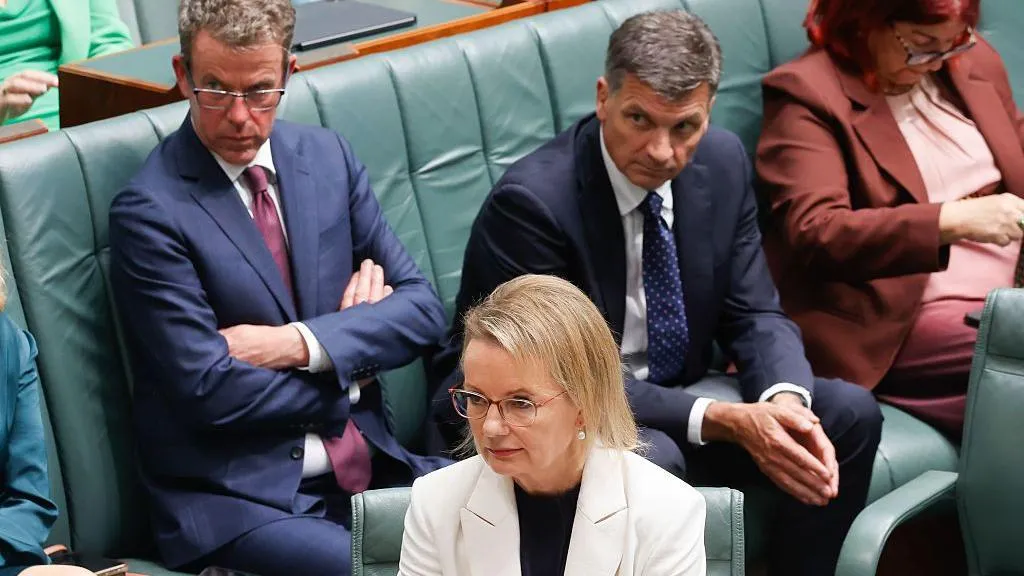
Liberal Party Removes Australia’s First Female Leader
-
 News11 hours ago
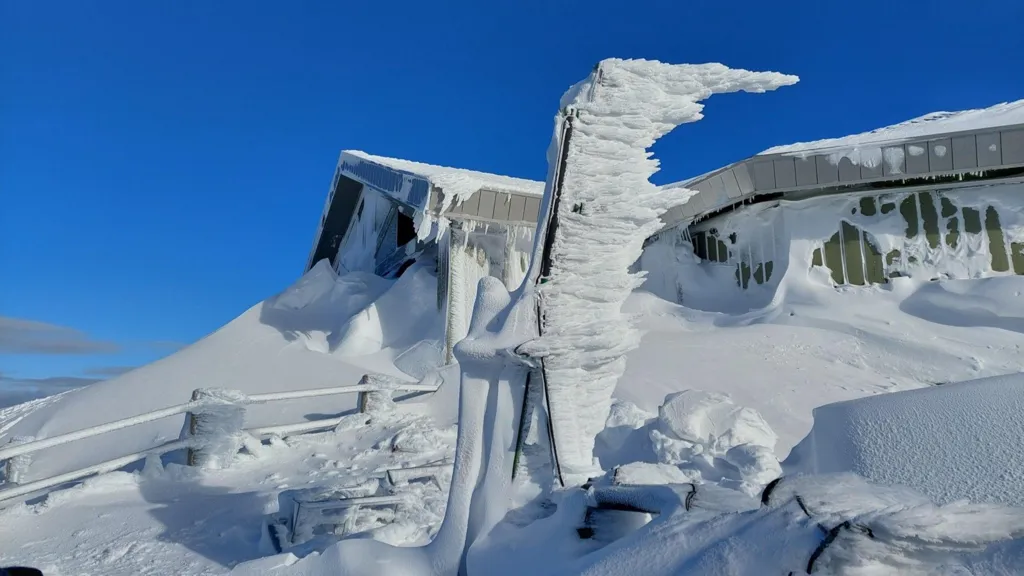
UK Braces for Cold Snap with Snow and Ice Alerts Expected
-
 News8 hours ago
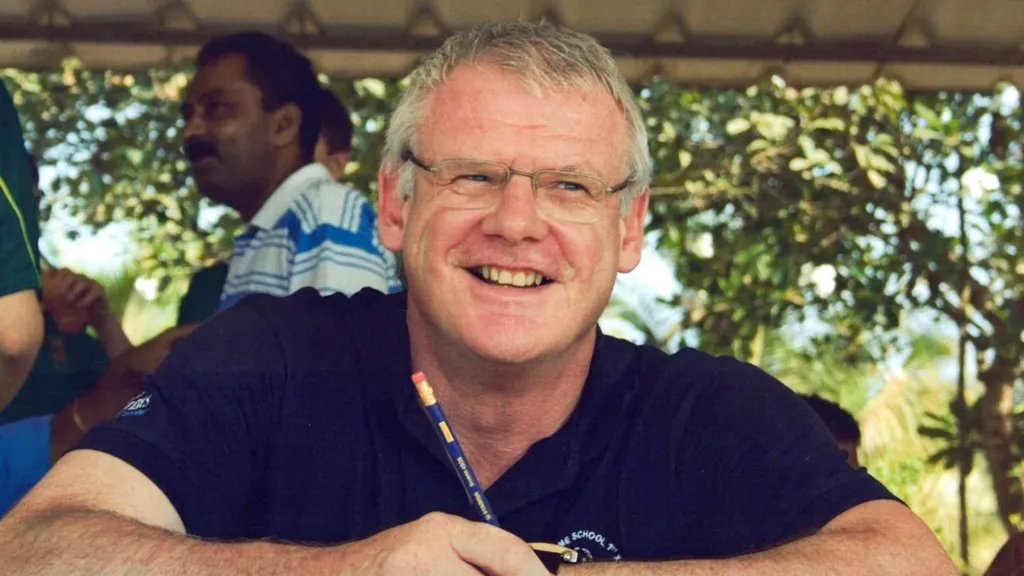
Husband’s alleged £600k theft for sex and antiques blamed on drug side effects
-
 News2 days ago
Sunbed ads spreading harmful misinformation to young people
-
 Business14 hours ago
BBC Reporter Exposed to Cyber Attack Due to Vulnerabilities in AI Coding Tool