
Latin America
Olympic competitors focus on improvement
Axel Brown, hailing from Harrogate, has been named to the bobsleigh team representing Trinidad and Tobago at the forthcoming Winter Olympics.
The Trinidad and Tobago bobsleigh team will have a North Yorkshire native at the helm for the upcoming Winter Olympics, scheduled to take place next month.
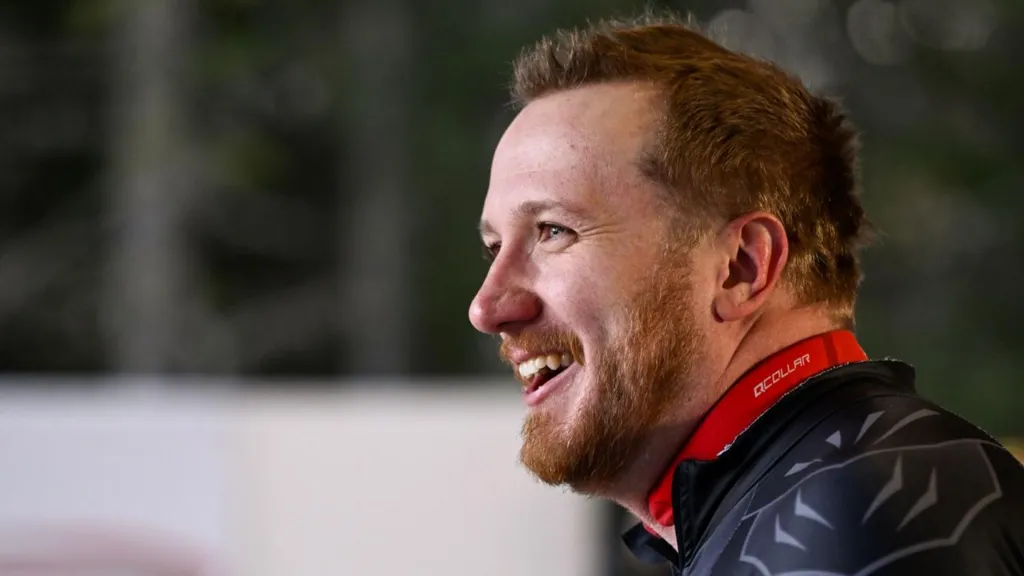
In 2021, Axel Brown, a resident of Harrogate, opted to compete for his mother's country of origin, a decision he claims has yielded positive results ever since.
As the team's pilot, Brown will navigate the sled at speeds of nearly 100mph (160km/h), drawing on his prior experience representing Trinidad and Tobago at the Beijing 2022 Olympics.
At 33 years old, Brown is set to participate in his second and final Olympic appearance at Milan-Cortina, acknowledging that a certain level of apprehension is necessary to navigate the high-adrenaline sport.
Brown notes that his career path has been unconventional, stating, "Growing up in Harrogate, becoming an Olympic bobsledder wasn't exactly a likely prospect."
After being released by his American football team in the US, a new opportunity arose for him to explore a different athletic pursuit.
The timing coincided with the Sochi 2014 Winter Olympics, which he watched on television, sparking his interest in bobsledding as the athletes competed in the event.
This chance encounter led him to consider a career in bobsledding, a decision that has now spanned 12 years and evolved into a full-time profession.
Brown initially competed for Great Britain's bobsled team for a period of seven years before deciding to join the team representing Trinidad and Tobago.
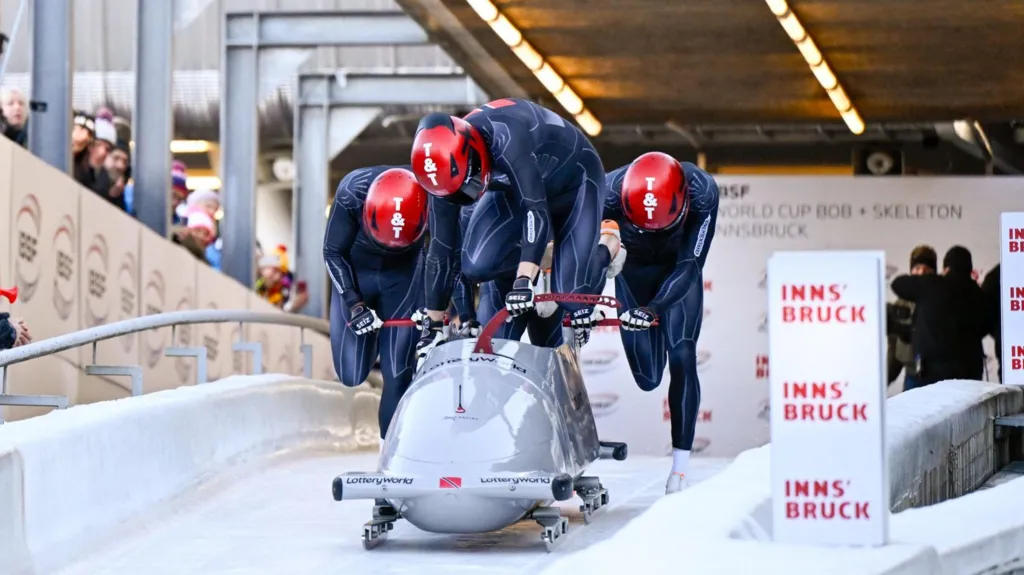
Although it may appear to be a passive role, Brown emphasizes the importance of his position, stating that he is responsible for steering the sled and ensuring a safe and successful run down the track.
Ensuring a smooth and efficient ride is crucial, as the risk of crashing is ever-present in this high-stakes sport.
According to Brown, bobsleigh races can reach speeds of approximately 70mph (113km/h), even on the slower tracks.
The experience of bobsleigh can be daunting, with the sport posing a significant threat to its participants.
Despite gaining experience, it is essential to maintain a level of caution, as the sport's dynamics can change in an instant.
Brown has consistently stated that if he were to lose his fear of bobsleigh, it would be a sign that he has become too complacent, and it would be time to step away from the sport.
In the 2022 two-man event, Brown secured a 28th-place finish out of 30 teams, edging out Jamaica and Brazil in the process.
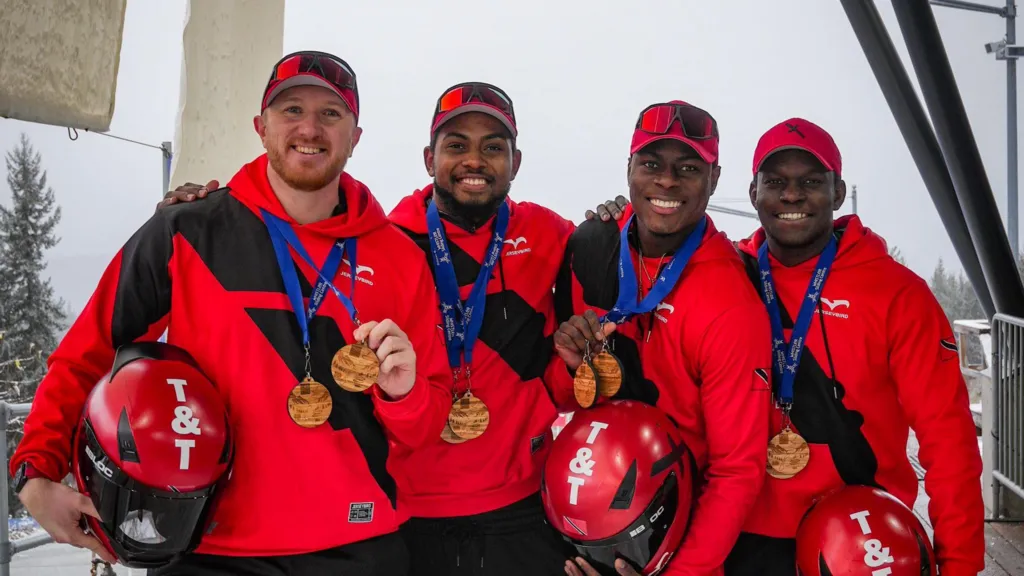
According to Brown, the highlight of his experience was earning a spot at the most recent Winter Olympics, a feat he describes as more challenging than his previous attempt four years prior.
Brown notes that the qualification process had become more stringent, now requiring teams to qualify in both the two-man and four-man bobsleigh events, with a reduction in available nation spots.
To qualify, teams had to rank among the top 17 nations globally, a threshold that Brown's team found particularly daunting, pushing them to their limits.
Brown's approach to the competition is straightforward, as he puts it, "Operation Don't Come Last" is in effect, with the goal of surpassing at least one other team.
As the Olympian prepares for what he believes will be his final competition, he aims to fully immerse himself in the experience and appreciate every moment.
The upcoming event holds special significance, as his family will be in attendance, making up for their absence at the previous Olympics in Beijing due to Covid restrictions, allowing him to conclude his career on a high note.
In contrast to his high-adrenaline profession, Brown's personal life is more subdued, revealing a preference for a more relaxed pace.
He humorously notes that his choice of vehicle reflects this, opting for a safe and practical car, suggesting that not every aspect of his life needs to be high-octane.
Following his retirement from athletics, Brown intends to undertake a new project, renovating a barn into a home for himself and his partner, marking the beginning of a new chapter in his life.


Latin America
Venezuelan opposition politician under house arrest following kidnapping, according to son
Venezuelan security forces rearrested Juan Pablo Guanipa on Sunday, a short time following his release along with other jailed politicians.
Following his capture by security forces on Sunday, Venezuelan opposition politician Juan Pablo Guanipa has been returned to his home, where he is currently under house arrest, according to his son.
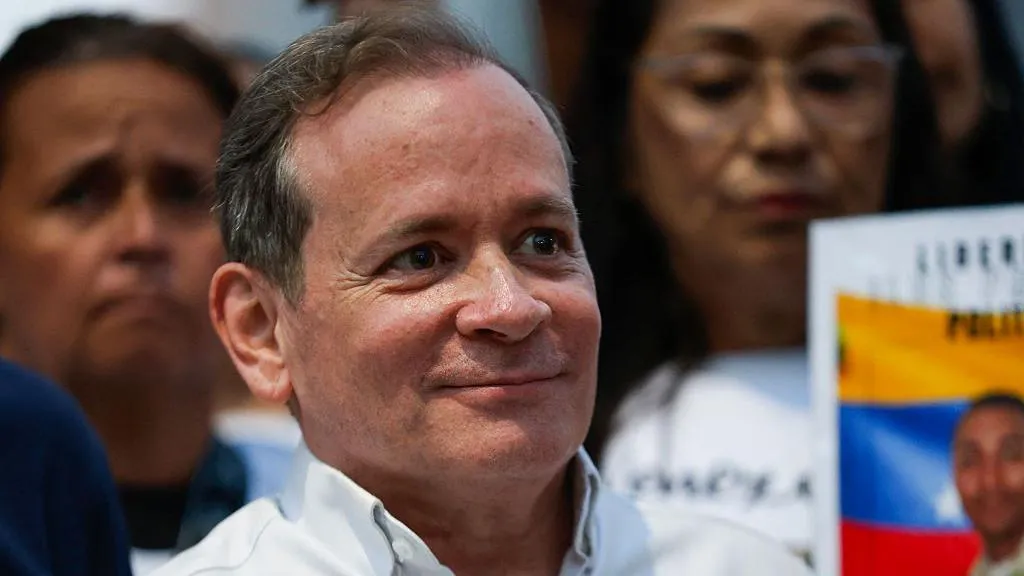
Ramón Guanipa expressed relief that his family has been reunited, but emphasized that his father's continued detention is unwarranted.
Opposition leader María Corina Machado reported that Guanipa was taken into custody by heavily armed individuals in Caracas on Sunday, just hours after his initial release from prison, along with other political prisoners.
In a subsequent statement, Interior and Justice Minister Diosdado Cabello confirmed that an individual had been rearrested for allegedly violating the terms of their release.
Cabello stated on Monday that some politicians apparently believed they could act with impunity.
Guanipa, a former vice-president of the National Assembly, had spent eight months in prison before being freed, along with several other political prisoners, after the US took action against Venezuelan President Nicolás Maduro in January.
In a BBC interview on Tuesday, Ramón Guanipa recounted that his father, the leader of the Justice First party, was initially released from prison on Sunday at approximately 11:00 local time.
After his release, Guanipa spent time with families awaiting the release of other political prisoners.
According to Ramón, his father made public statements, mobilized supporters, and participated in an interview before being detained by unidentified security forces.
Ramón stated that he was informed his father would be returned home and placed under house arrest, but no further details were provided regarding the timing of his transport.
Later on Tuesday, Ramón posted an update on his father's X account, confirming that Juan Pablo Guanipa was back at their home in Maracaibo and expressing relief that their family would soon be reunited.
However, Ramón emphasized that his father remains unjustly detained, as house arrest is still a form of imprisonment, and called for his full freedom, as well as that of all political prisoners.
Ramón expressed gratitude to the US government, including President Donald Trump and Secretary of State Marco Rubio, for their support of freedom in Venezuela and their efforts on behalf of political prisoners.
The Justice First party had previously stated that the 61-year-old Guanipa was kidnapped by government forces while traveling between locations.
The party reported that those accompanying Guanipa were warned that weapons were pointed at them before he was taken away in a car.
The Justice First party held Delcy Rodríguez, Jorge Rodríguez, and Diosdado Cabello accountable for any harm that might come to Guanipa, referencing the interim president, National Assembly speaker, and interior minister, respectively.
The party also urged the international community to demand Guanipa's immediate release and an end to the Venezuelan government's persecution of opposition members.
After Guanipa's recapture on Sunday, Ramón and opposition figure Edmundo González requested proof of his safety.
According to the Venezuelan human rights group Foro Penal, Guanipa was among at least 30 individuals released from prison on Sunday.
Guanipa was elected governor of the Zulia region in 2017 but was barred from taking office after refusing to swear an oath before Maduro's National Constituent Assembly.
He then went into hiding after being accused of terrorism and treason for challenging the 2024 election results.
Guanipa was eventually tracked down and detained by security forces in May 2025.
Opposition groups and human rights organizations have long maintained that the Maduro government uses detention of political prisoners to suppress dissent and silence critics.
Many political prisoners were detained after the 2024 presidential election, which Maduro claimed to have won despite opposition from his opponents and many countries.
The Venezuelan government has consistently denied holding political prisoners, instead asserting that those detained were arrested for criminal activities.
Latin America
Venezuelan opposition leader kidnapped shortly after release
María Corina Machado, a Nobel Peace Prize recipient, has stated that Juan Pablo Guanipa, a prominent political figure, was forcibly detained in the city of Caracas.
According to María Corina Machado, a prominent figure in Venezuela's opposition, her colleague Juan Pablo Guanipa was abducted shortly after his release from custody, in a disturbing turn of events.
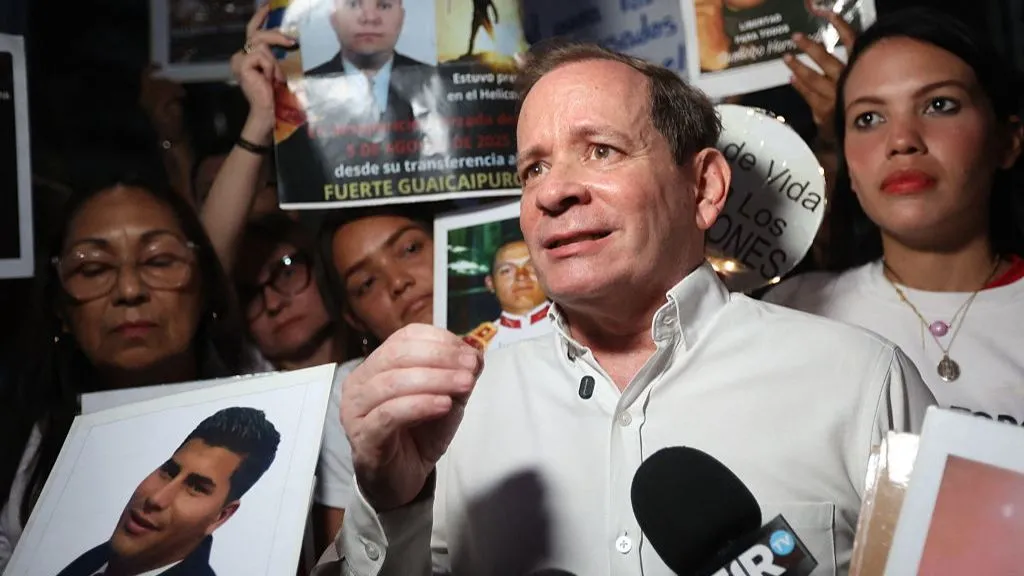
On Sunday, it was reported that Guanipa, who leads the Justice First party, was taken in the Los Chorros area of Caracas, the Venezuelan capital, sparking concern among his supporters.
In a social media post made early on Monday, Machado described the circumstances of Guanipa's disappearance, stating that a group of heavily armed individuals, dressed in plain clothes and traveling in four vehicles, forcibly took him away.
Guanipa, a former vice-president of the National Assembly, had been imprisoned for eight months before his release, which was part of a broader wave of releases that followed the US action against Venezuelan President Nicolás Maduro in January.
The Justice First party, a centre-right political organization, issued a statement alleging that Guanipa's kidnapping was carried out by the "repressive forces" of the government, while he was en route between two locations.
According to individuals who were with him, Guanipa was forced into a vehicle after guns were allegedly trained on the group.
In a social media statement, Justice First assigned responsibility for Juan Pablo Guanipa's safety to several high-ranking Venezuelan officials, including Delcy Rodríguez, Jorge Rodríguez, and Diosdado Cabello, who hold key positions in the government.
The party has urged the global community to call for Guanipa's immediate liberation and an end to the Venezuelan government's alleged harassment of opposition members.
Edmundo González, a prominent opposition figure, has requested confirmation of Guanipa's status, stating that the lack of information regarding his whereabouts is equivalent to a forced disappearance.
In a social media post made just hours prior, Ramón Guanipa, Juan Pablo's son, had expressed optimism about his father's expected release, anticipating a family reunion.
Following his detention, a video was uploaded online in which he called for immediate evidence confirming his father's safety and well-being.
In the video, Ramón Guanipa explicitly stated that he holds the current regime accountable for his father's fate, condemning the ongoing repression and urging an end to it.
According to Foro Penal, an organization that supports political prisoners in Venezuela, Guanipa was one of at least 30 individuals released on Sunday.
As the leader of the Justice First party, Guanipa won the governorship of the Zulia region in the 2017 election; however, he was prevented from assuming office after refusing to take an oath before the National Constituent Assembly established by Maduro.
After questioning the outcome of the 2024 election, Guanipa faced accusations of terrorism and treason, prompting him to go into hiding for his own protection.
In May 2025, Venezuelan security forces located and took him into custody.
According to opposition groups and human rights organizations, the Maduro government has a history of detaining political prisoners as a means of suppressing opposition and quieting critics.
Latin America
Giant jellyfish spotted off Argentina’s coast
Scientists conducting research in the deep waters of the South Atlantic have made a notable discovery, encountering a rare species of jellyfish known as the phantom jellyfish.
In the deep waters off Argentina, researchers have made a notable discovery, encountering a rare species of jellyfish that is not often seen.
The giant phantom jellyfish, known scientifically as Stygiomedusa gigantea, was captured on film at a depth of 250 metres in the South Atlantic Ocean.
A team of scientists from the Schmidt Ocean Institute has obtained footage of the creature, which can reach a diameter of up to 1 metre (3.3 feet) and has arms that extend up to 10 metres (33 feet) in length.
Characterised by their long, pink, ribbon-like appendages, the four arms of the giant phantom jellyfish are used for capturing prey, including fish and plankton, rather than for stinging, as the institute's findings indicate.
In addition to the jellyfish, the research team's expedition also yielded discoveries of 28 potentially new species, among them corals, sea urchins, and sea anemones.
-
 News12 hours ago
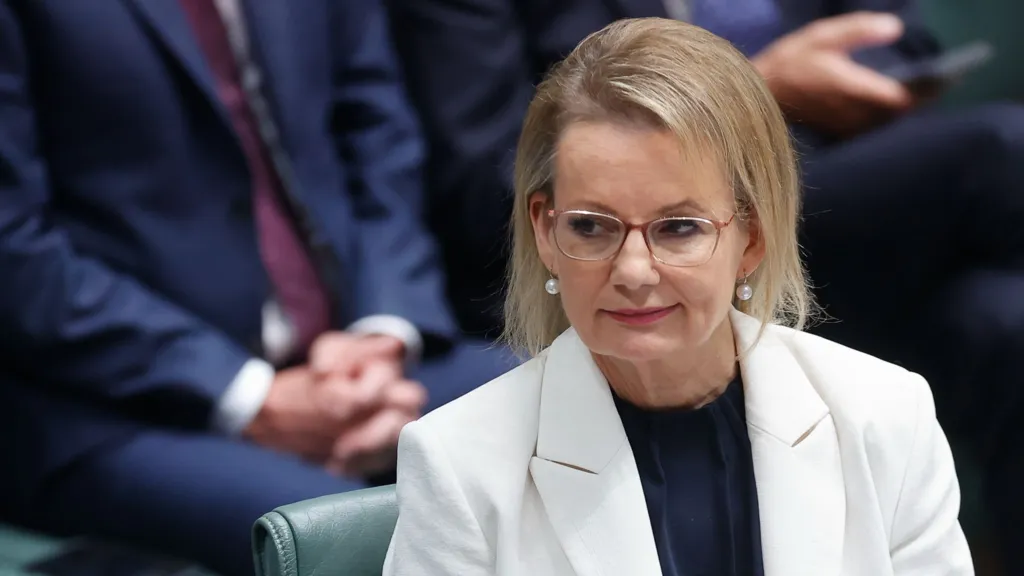
Australian Politics Faces Questions Over Gender Equality Amid Sussan Ley’s Appointment
-
 News9 hours ago
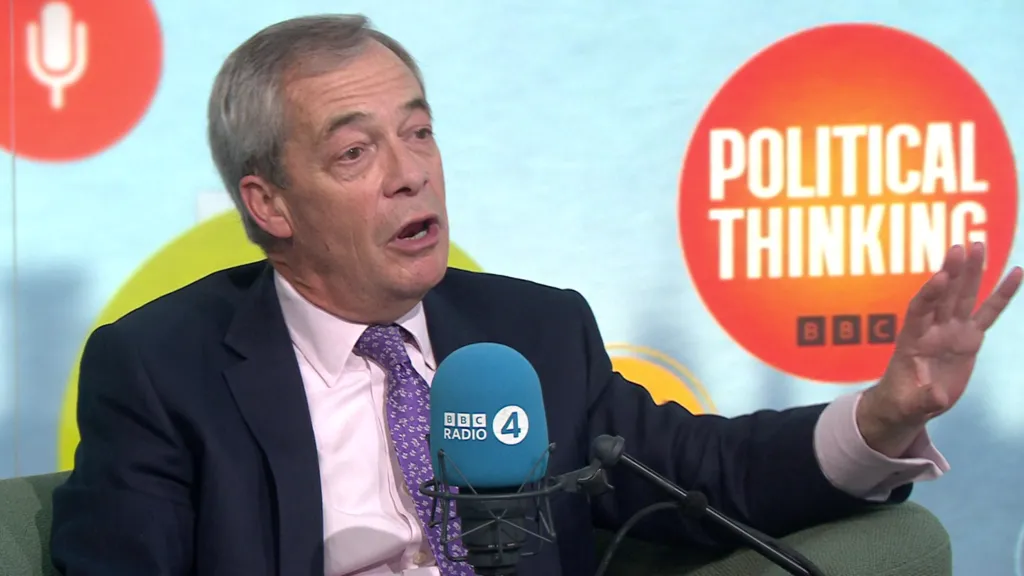
Farage Says Reform to Replace Traditional Tory Party
-
 News9 hours ago
Wrexham Pair Seek Win Against Former Team Ipswich
-
 News15 hours ago
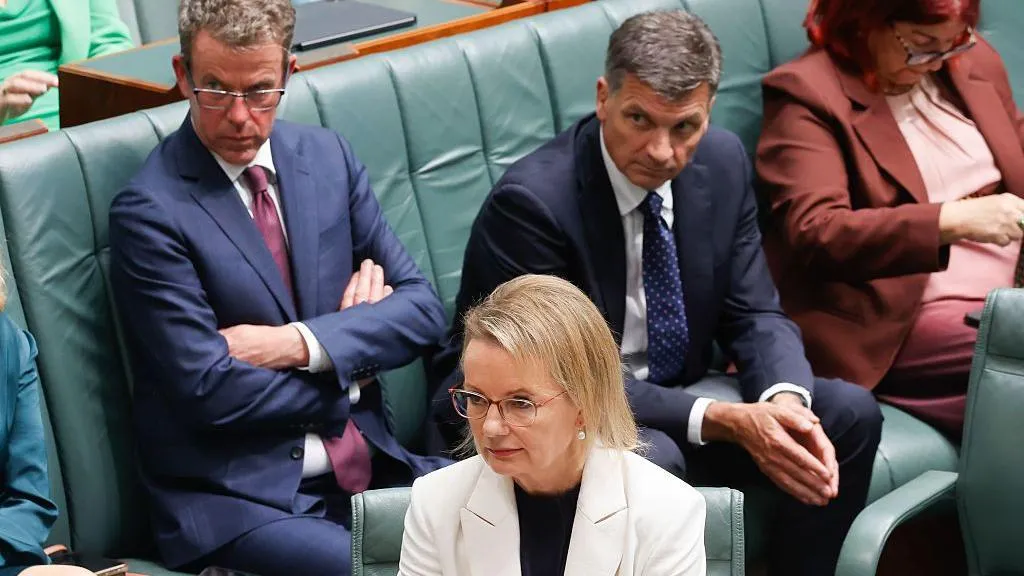
Liberal Party Removes Australia’s First Female Leader
-
 News13 hours ago
UK Braces for Cold Snap with Snow and Ice Alerts Expected
-
 News9 hours ago
Husband’s alleged £600k theft for sex and antiques blamed on drug side effects
-
 News2 days ago
Sunbed ads spreading harmful misinformation to young people
-
 Business15 hours ago
BBC Reporter Exposed to Cyber Attack Due to Vulnerabilities in AI Coding Tool