
Europe
War widow relocates husband’s grave to Kyiv amid Russian concerns
Natalia has been compelled to reinter her husband due to the advances made by Russia in the conflict.
A solemn ceremony unfolds at a Kyiv cemetery, marked by the sound of a trumpet salute, followed by a rifle volley.
A Ukrainian flag is draped over a coffin, as soldiers stand at attention in the snow-covered cemetery, their silence a stark contrast to the emotions of a grieving woman.
For Natalia, this is a painful repeat of a farewell, as she lays her husband to rest for a second time.
Vitaly lost his life in the conflict in eastern Donbas three years ago, and was initially buried in Slovyansk, the couple's hometown; however, the region has since come under increasing threat from Russian forces.
In response, Natalia made the difficult decision to exhume her husband's remains and relocate them to Kyiv, a journey of hundreds of miles, in an effort to ensure his final resting place remains safe.
Following a reburial ceremony with full military honours, Natalia reflected on the circumstances surrounding the initial burial in Slovyansk, noting that at the time, territory was being reclaimed and there were hopes that the conflict would soon be resolved.
However, as the frontline continued to shift and draw nearer, Natalia's concerns grew that Vitaly's resting place might eventually fall under occupation, prompting her to take action.
Vitaly, a skilled ceramics artist, had enlisted to defend his nation in the wake of Russia's large-scale invasion in 2022, answering the call to serve in the war's early stages.
According to Natalia, her husband's decision to take up arms was driven by a sense of patriotism, despite his initial reluctance, as she tearfully recalled the circumstances of his death, which occurred while she was pregnant with their daughter, a child he would never have the chance to meet.
The choice to relocate Vitaly's remains from his birthplace and the area where he fought proved to be a deeply distressing one for those involved.
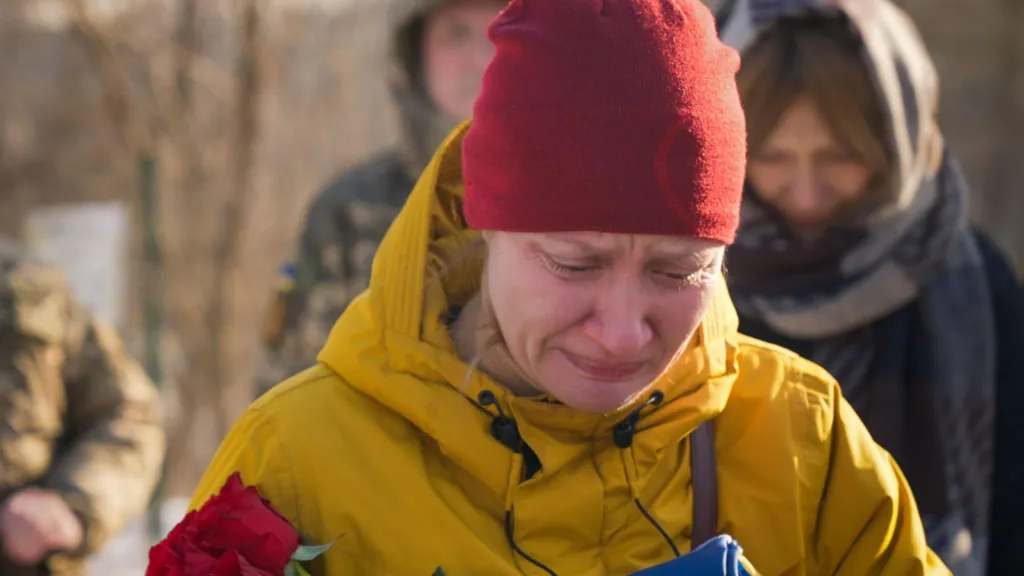
According to Natalia, the decision was emotionally challenging, but she is convinced it was the correct one, as abandoning him would have been even more difficult.
As the US attempts to facilitate a peace agreement between Moscow and Kyiv, Ukrainians are currently confronting extremely difficult decisions, while Russia continues its invasion.
The Russian invasion includes large-scale aerial assaults on Ukraine's energy infrastructure, which contravenes international laws of warfare.
Kyiv is currently under the most pressure to make concessions.
As the US-led negotiations progress, they will eventually focus on the highly sensitive issue of the eastern Donbas region's status, an area that has resulted in significant loss of life.
Approximately one-fifth of the area remains under Ukrainian control, with Slovyansk being a key location. However, its proximity to the current frontline has made it a focal point for Russian forces, which have been attempting to advance for several months.
The Ukrainian government has proposed a ceasefire, refusing to relinquish any additional territory. In contrast, Russia is seeking to gain control over the remainder of the region, a stance that reportedly has the support of the United States.
This development marks a significant departure from Vladimir Putin's initial objective of conquering the entirety of Ukraine, which he had claimed was necessary to "denazify" and "demilitarise" the country. Nevertheless, securing control over the region would enable Putin to claim a limited victory for Russia.
Natalia paints a vivid picture of life in Slovyansk, describing the constant presence of drones targeting minibuses and glide bombs striking the city centre, leaving deep craters. This is the harsh reality she faces, having recently lost her husband in the city.
The frequency of attacks in Slovyansk has increased dramatically, according to Natalia. Whereas the city was previously hit on a weekly basis, it is now being targeted every few days, resulting in a heightened sense of uncertainty and danger.
In the region surrounding Kharkiv, located north of Natalia's hometown, indications are emerging that the conflict zone is expanding.
In a precautionary measure, laborers are installing a network of stakes in the icy terrain to support a canopy of nets above the road, designed to shield against Russian unmanned aerial vehicles.
A short distance away, a covert facility is dedicated to the development of Ukraine's unmanned aerial vehicles, where technicians and engineers work to enhance the country's defensive capabilities.
The Typhoon unit's operations are based in a subterranean workshop, accessible by a crudely constructed wooden stairway, where soldiers oversee the repair of damaged drones and focus on innovative solutions to counter the enemy's superior manpower and resources.
As the team works, upbeat French pop music fills the air, yet the mood among the soldiers remains subdued and varied.
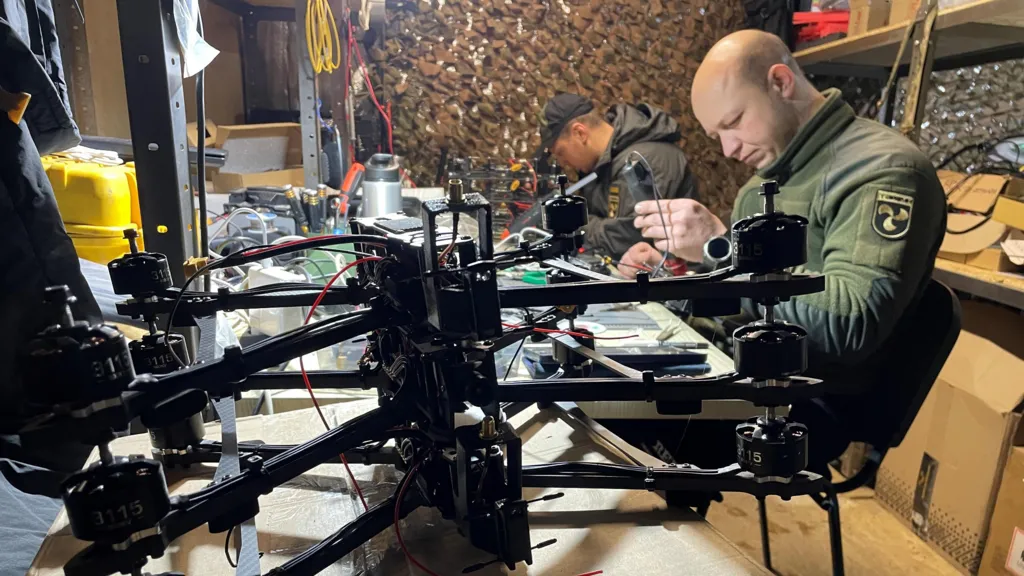
When asked about trading territory for peace, 29-year-old Roman declines to engage in the discussion, citing the need for unity in the face of the Russian threat. He emphasizes that internal conflicts would be counterproductive at this time.
Roman's two-year stint in the infantry, which included fighting in the Donbas, was marked by significant personal loss, with many of his comrades falling in combat.
The challenge of recruiting new soldiers has become increasingly difficult, a trend underscored by the defence minister's recent revelation that approximately 200,000 troops have gone absent without leave.
Roman's perspective on the situation is shared by many Ukrainians, who believe that ceding the Donbas to Putin would not provide a lasting sense of security for the country.
In Roman's view, any perceived concession would only embolden the Russians, leading them to pursue further territorial gains.
In a quiet room, a soldier sits with a laptop, offering a candid assessment of the current state of the war, revealing a shift in the definition of "victory".
Maksym articulates his perspective, stating that success can be measured by the preservation of Ukraine's statehood, emphasizing that even a small territory, as long as it maintains its constitutional framework and institutions, remains a sovereign Ukraine.
The soldier believes that continued resistance is essential, regardless of circumstances.
Despite being outmatched by Russia's significantly larger size, the soldier remains resolute, asserting that surrender is not an option.
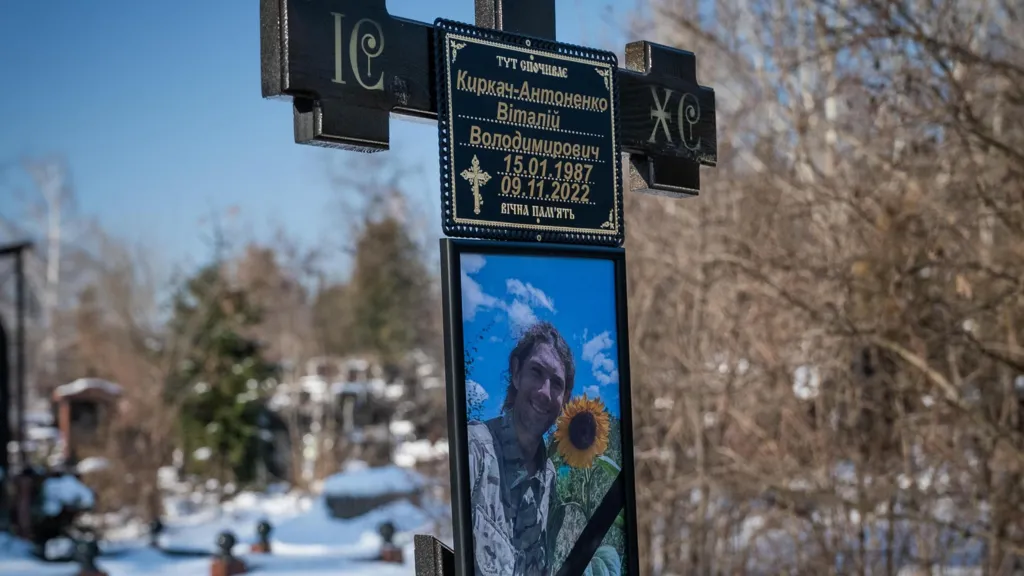
In Kyiv, a somber scene unfolds as Natalia, supported by a friend, mourns the loss of her husband, whose coffin is being buried, marked by a wooden cross, in a freshly dug grave.
A photo captures Vitaly's warm smile as he stands next to a bright yellow sunflower.
Natalia has found comfort in having her husband's final resting place nearby, where she and their daughter, Vitalina, can pay their respects without fear.
According to Natalia, her daughter enjoys watching videos and looking at pictures of Vitaly, and has developed a strong affection for him despite never having met.
Natalia is also looking forward to sharing some personal news with her husband's memory – she is expecting a child, conceived using the sperm the couple had preserved at a clinic just days before Vitaly's death.
It has become a common practice among soldiers to take similar steps before deploying to the front lines.
A stark reality is that none of Vitaliy's fellow soldiers attended his reburial, as many have also lost their lives.
The toll of four years of intense conflict has been substantial for Ukraine.
Handing over territory already under Russian control is a possibility that many have begun to consider.
However, for Natalia, the prospect of Russia expanding its territorial control to include her hometown, where she shared a life with Vitaliy, is unbearable.
Natalia is convinced that her husband would have advocated for continued military action, rather than surrendering at this point.
Natalia predicts that Russia may temporarily halt its actions for approximately 12 months before making further advancements, potentially reaching Kharkiv.
A sense of skepticism persists, with some individuals doubting that Russia will bring its activities to a halt.
This report was supplemented by the work of Mariana Matveichuk, Anastasiia Levchenko, and Paul Pradier, who contributed additional information.
To receive our premier newsletter, which provides a comprehensive overview of the day's key headlines, subscribers can register at this link.

Europe
De Zerbi and Marseille part ways by mutual agreement
Marseille has parted ways with Roberto De Zerbi, whose tenure included guiding the team to a second-place finish in Ligue 1 the previous season, after the club’s Champions League elimination and a 5-0 loss to Paris St-Germain.
Prior to his tenure at Marseille, Roberto de Zerbi held managerial positions at Shakhtar Donetsk and Brighton.
Marseille has announced that Roberto de Zerbi is no longer the club's manager, with the two parties agreeing to part ways.
The decision to end de Zerbi's tenure comes on the heels of a significant loss to Paris St-Germain, with a score of 5-0, as well as the team's elimination from the Champions League after a 3-0 loss to Club Brugge.
De Zerbi assumed the role of manager at Marseille in the summer of 2024, following his departure from Brighton, where he had been in charge for nearly two years.
During his time at Marseille, de Zerbi led the team to a second-place finish in Ligue 1 the previous season, and at the time of his departure, the club was ranked fourth in the league, trailing leaders Paris St-Germain by 12 points.
A statement released by Marseille confirmed that the club and de Zerbi had mutually agreed to end their collaboration, marking the end of his tenure as coach of the first team.
According to the club, the decision to replace de Zerbi was made after consultations between key stakeholders, including the owner, president, director of football, and coach, with the goal of addressing the team's performance challenges in the remaining part of the season.
Marseille described the decision as a collective and difficult one, made with careful consideration and a focus on the best interests of the club, in order to respond to the team's current sporting challenges.
For more on this story and other football news, tune in to the latest episode of the Football Daily podcast.
Europe
Macron urges Europe to assert its global influence
The President of France has cautioned that Europe is confronting a critical moment, citing increasing threats from China, Russia, and the United States.
Emmanuel Macron, the President of France, is calling on Europe to establish itself as a major force globally, emphasizing the need for the continent to project its influence.
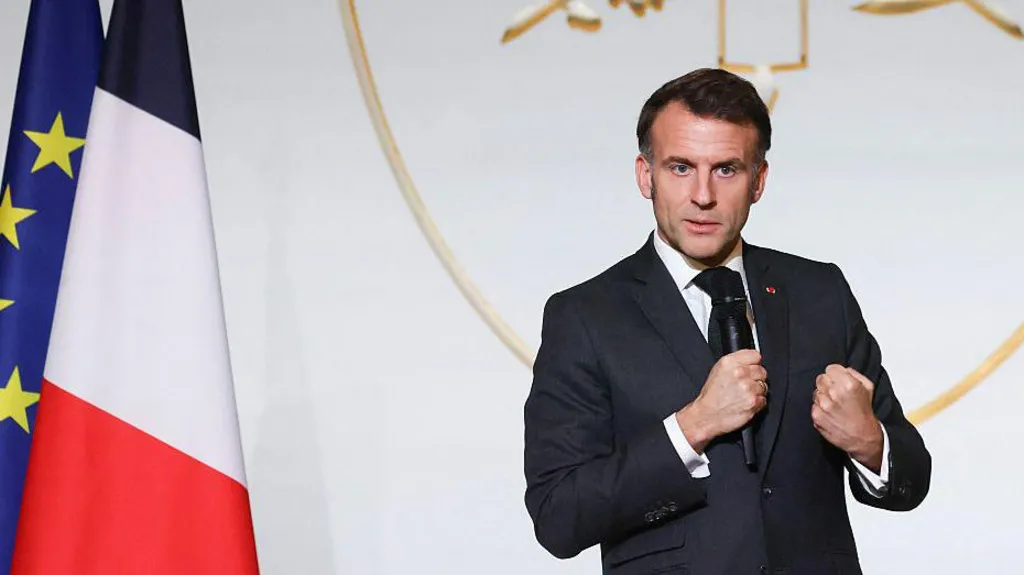
Citing increasing challenges from China, Russia, and the United States, Macron cautioned European newspapers that the region is at a critical juncture, necessitating a prompt response.
Macron posed a fundamental question, asking whether Europe is prepared to assert its authority in key areas such as economics, finance, defense, security, and democratic governance.
In remarks made prior to an upcoming EU summit in Brussels, Macron referenced a historical concept, suggesting that the time has come for Europe to take a more prominent role on the global stage.
The French President reiterated his proposal for EU member states to share the risk of loans, which could generate hundreds of billions of euros for crucial industrial investments across the continent.
A proposal has been made to introduce a joint debt capacity, specifically eurobonds, to cover future expenses. The idea is to support large-scale European initiatives that can fund top-tier projects.
Previous suggestions of this nature have been met with skepticism, particularly from Germany and other countries, which have expressed concerns that France is attempting to shift its financial burdens onto the European community, citing its own lack of reform efforts as the reason.
Macron acknowledged that France's economic model has historically been unbalanced, differing from the more responsible approaches taken by certain northern European economies.
He noted that France has not undergone the same level of reforms as countries like Portugal, Spain, Italy, and Greece, which implemented significant changes in the 2010s and are now seeing positive results.
According to Macron, there is a growing demand in global financial markets for a mutualized European debt instrument, which the EU is currently not equipped to provide.
Global markets are growing wary of the US dollar and seeking alternative options, indicating a shift in economic dynamics.
Investors worldwide are drawn to countries with a strong rule of law and democratic foundations. Currently, the international landscape is characterized by China's authoritarian regime and the US's perceived deviation from its own democratic principles.
Macron emphasized that the 27-member European Union requires an annual investment of €1.2 trillion to bolster key sectors, including security, defense, renewable energy, and artificial intelligence.
The EU leader urged the bloc to safeguard its strategic industries, pointing out that both China and the US have taken similar measures. He noted that Europe currently has the most open market globally.
Macron clarified that his stance is not about embracing protectionism, but rather about promoting consistency in trade policies, ensuring that European producers are not unfairly disadvantaged by regulations that do not apply to non-EU competitors.
European leaders are currently confronting a significant dilemma, according to recent statements, as the global landscape becomes increasingly unstable.
The pace of climate change is quickening, while the United States, once considered a permanent guarantor of European security, is now less reliable. Russia's supply of affordable energy, which was previously thought to be a long-term arrangement, ceased three years ago. Meanwhile, China has emerged as an increasingly intense rival.
The European community now finds itself self-reliant, but its collective strength lies in its unity, with a population of 450 million people, a substantial entity. For one European leader, the pursuit of greater influence is seen as the natural culmination of the European project.
Historically, European nations have come together to prevent conflict and establish a unified market, yet they have traditionally avoided aspirations of collective power.
Regarding the recent tensions with the US over Greenland, which ended with President Donald Trump appearing to retract his threats to annex the Danish territory, a European leader cautioned against complacency, suggesting that Europeans should remain vigilant.
Following a crisis, a common reaction is to breathe a sigh of relief and assume the situation has been resolved. However, this sense of security can be short-lived, as threats and intimidation may still be present, only to be followed by a sudden shift in Washington's stance.
According to the French leader, it is essential not to be misled by this apparent calm, emphasizing that the situation is far from over.
Europe
Ukrainian skeleton racer’s helmet, honoring war victims, banned
Vladyslav Heraskevych, a Ukrainian skeleton athlete, has stated that the International Olympic Committee (IOC) has prohibited him from wearing a helmet that displays images of war victims from his home country, a ruling that he says is deeply distressing.
Vladyslav Heraskevych has a history of utilizing his public presence to speak out against the conflict in Ukraine.
According to Ukrainian skeleton athlete Vladyslav Heraskevych, the International Olympic Committee has prohibited him from wearing a helmet that displays images of war victims from his native country, a decision he finds deeply distressing.
Heraskevych, 26, donned the helmet during a Winter Olympics practice session in Cortina, having previously stated his intention to leverage the Games as an opportunity to raise awareness about the ongoing conflict.
The International Olympic Committee has not yet publicly acknowledged whether it has indeed banned the helmet in question.
In an Instagram post, Heraskevych, who served as a flagbearer for Ukraine during the opening ceremony on Friday, stated that the IOC has barred him from wearing the helmet at official training sessions and competitions.
The IOC's decision has sparked disappointment, as it prevents athletes from being recognized on the Olympic stage, a platform they will never have the opportunity to participate on again, leaving a sense of betrayal among those who have been part of the Olympic movement.
The IOC has previously permitted such tributes in both recent and past events, but in this instance, it has chosen to establish unique guidelines specifically for Ukraine, deviating from its earlier precedents.
In an interview with Reuters, Heraskevych revealed that the images on his helmet included several athletes, such as teenage weightlifter Alina Peregudova, boxer Pavlo Ishchenko, and ice hockey player Oleksiy Loginov, some of whom he considered friends.
According to Heraskevych, Toshio Tsurunaga, the IOC's representative responsible for facilitating communication between athletes, national Olympic committees, and the IOC, visited the athletes' village to inform him of the decision.
Heraskevych stated that the reason provided was due to rule 50, as explained to him by the IOC representative.
According to the Olympic Charter's Rule 50.2, demonstrations or propaganda of a political, religious, or racial nature are not allowed at Olympic sites, venues, or other designated areas.
On Monday, it was reported that the International Olympic Committee (IOC) had reached out to Ukraine's Olympic Committee regarding a specific helmet.
As of now, the IOC has stated that it has not received a formal request for the helmet to be used during competition, which is set to begin on February 12.
In a statement posted on the social media platform X, Ukrainian President Volodymyr Zelensky expressed his gratitude to Heraskevych for bringing attention to the sacrifices made during their struggle.
The president's post further emphasized that the reality of the situation cannot be dismissed as an inappropriate or political display at a sports event, but rather serves as a global reminder of the current state of Russia.
At the 2022 Beijing Olympics, Ukraine's inaugural skeleton competitor, Heraskevych, displayed a sign reading 'No War in Ukraine', just days prior to Russia's invasion of the country in 2022.
The Olympic Charter's Rule 50.2 explicitly prohibits any form of demonstration or propaganda of a political, religious, or racial nature within Olympic venues and areas.
Heraskevych had previously stated his intention to abide by the Olympic rules banning political demonstrations, while still seeking to bring attention to the conflict in Ukraine during the Games.
In the aftermath of Russia's large-scale invasion of Ukraine in 2022, athletes from Russia and Belarus faced widespread bans from international competitions, although they have been gradually reintegrated into sports.
The International Olympic Committee (IOC) has given clearance to 13 Russian athletes to compete as Individual Neutral Athletes (AINs) at the Milan-Cortina event.
A request for comment has been made to the IOC by BBC Sport.
A daily breakdown of the Winter Olympics is available for reference.
A comprehensive schedule outlining the timing of all medal events can be found.
The current medal standings for the Winter Olympics 2026 are being tracked.
-
 News12 hours ago
Australian Politics Faces Questions Over Gender Equality Amid Sussan Ley’s Appointment
-
 News9 hours ago
Farage Says Reform to Replace Traditional Tory Party
-
 News9 hours ago
Wrexham Pair Seek Win Against Former Team Ipswich
-
 News15 hours ago
Liberal Party Removes Australia’s First Female Leader
-
 News13 hours ago
UK Braces for Cold Snap with Snow and Ice Alerts Expected
-
 News9 hours ago
Husband’s alleged £600k theft for sex and antiques blamed on drug side effects
-
 News2 days ago
Sunbed ads spreading harmful misinformation to young people
-
 Business15 hours ago
BBC Reporter Exposed to Cyber Attack Due to Vulnerabilities in AI Coding Tool