
News
Football Fan Dissatisfaction on the Rise
The tradition of booing in football has long been a part of the sport, with its origins dating back to its inception. However, a notable trend has emerged, with some spectators now directing their disapproval towards their own team.
Tottenham parted ways with manager Thomas Frank on Wednesday, a move that was widely anticipated given the team's recent struggles.
Booing has long been a staple of the football experience, with fans expressing their dissatisfaction with a particular play, player, or team performance.
The question remains, however, whether fans are more likely to boo their own team and manager nowadays, and if so, what factors are driving this behavior.
This season has seen several high-profile instances of fan discontent in the Premier League, with Thomas Frank's tenure at Tottenham being a notable example.
The final straw for Frank came in the form of a 2-1 loss to Newcastle on Tuesday, which was met with boos from the home crowd.
Frank had acknowledged the frustration of the fans in one of his final interviews, stating that he understood their discontent given the team's poor run of form.
"I understand the frustration, and I also understand that it's easy to point at me," Frank said, recognizing the scrutiny that comes with being a manager.
Frank is not the only manager to have faced criticism from fans this season, with Arne Slot and his players also experiencing booing from a small section of Liverpool supporters.
The phenomenon of booing is not limited to the Premier League, as evidenced by the treatment of Brian Sorensen by Everton fans in the Women's Super League, which ultimately contributed to his dismissal.
Former England player Wayne Rooney has spoken about the prevalence of booing throughout his career, recalling that it was a common occurrence.
"It's always been there," Rooney said. "Fans have their opinions, and sometimes they're with you, and sometimes they're against you."
Rooney attributes the increased attention on booing to the rise of social media and the presence of more TV cameras at matches.
While Rooney acknowledges that booing can be a problem when it crosses the line into abuse, he generally views it as an acceptable part of the game.
Joe Hart, another former England player, shares Rooney's perspective on booing, seeing it as an inevitable aspect of the sport.
"You get booed by the away fans, that's just part of the game," Hart said. "If I was being booed, I was probably doing something wrong."
Both Rooney and Hart believe that booing has always been a part of football, but they differ on whether it had a significant impact on their performances.
Hart claims that booing did not affect him, saying, "I've got no scars from it, put it that way. I was focused on my game, and whether I was getting applause or boos, it didn't make a difference."
Former midfielder Danny Murphy also recalls experiencing difficult moments during his career, including being booed by Fulham fans during a relegation battle.
Murphy views booing as a challenge, saying, "You have to take it as a chance to overcome it, to try and do better. If you're playing Premier League football, that's your job."
Murphy believes that players must learn to cope with booing, recognizing that it is an inherent part of the game.
"You can't have it one way and not the other," Murphy said. "If you're going to enjoy the praise of the fans when things are going well, you have to be able to handle the criticism when they're not."
This video is currently unavailable for playback.
The origins of booing can be traced back to thousands of years of human evolution, with experts suggesting that it is a deeply ingrained behavior.
Stephen Smith, chair of the British Psychological Society's Division of Sport and Exercise Psychology, offers insights into the psychological factors driving booing.
According to Smith, human decision-making is often driven by emotions rather than logic, with 85-90% of decisions being irrational and emotionally driven.
Smith describes the sound of booing as "guttural" and "vibrating through the bones," suggesting that it is a primal expression of discontent.
The emotional aspect of booing is contagious, with Smith explaining that it only takes a few individuals to start the behavior, and then others will follow suit.
Smith believes that booing is a natural way for fans to express their displeasure, with the emotional part of the brain driving the behavior.
Smith also suggests that the psychological contract between clubs and fans has changed, with clubs now viewing fans as customers rather than loyal supporters.
This shift has led to a breakdown in the relationship between clubs and fans, with fans feeling that their loyalty is not being reciprocated.
As a result, fans are more likely to express their discontent through booing, which Smith views as a manifestation of the broken psychological contract.
The changed dynamic between clubs and fans has contributed to an increase in booing, with fans feeling more entitled to voice their dissatisfaction.
The question of whether booing one's own team and manager is ever justified is a complex one, with fans offering varying perspectives on the issue.
Spurs supporter Ali Speechly says she would never boo her own team, but can understand why others might do so, citing the correlation between ticket prices and fan expectations.
Speechly believes that when fans feel they are not getting value for their money, they are more likely to express their frustration through booing.
Fellow Spurs fan Darren Harvey takes a different view, saying he would boo if the team was consistently underperforming.
Harvey acknowledges that booing can be a way to fit in with the crowd, but also recognizes that it can be a spontaneous reaction to a disappointing performance.
A Manchester United fan, however, takes a more traditional view, arguing that fans should support their team through thick and thin, rather than booing them.
This fan views booing as a sign of disloyalty, suggesting that fans who engage in this behavior are "spoilt" and lack patience.
Ultimately, the debate surrounding booing highlights the complex and often conflicting emotions that fans experience when supporting their team.
An anonymous supporter suggests that substance abuse may be a contributing factor to certain behaviors.
A fan notes that the inability to purchase alcohol at matches leads some spectators to overindulge beforehand, potentially creating a more volatile atmosphere.
A witness to the Euros final between England and Italy recalls observing fans openly using cocaine, highlighting the presence of alcohol and drugs as a factor in diminished inhibitions among spectators.
The mainstream media, including the BBC, plays a significant role in drawing attention to instances of booing when they occur.
In the case of Frank, the fact that a substantial number of Tottenham fans have engaged in booing this season is considered newsworthy and thus receives media coverage.
Social media also has a significant impact, with influencers possessing large followings able to shape public discourse.
According to Speechly, social media may encourage booing by amplifying negative sentiments: "Those who spread negativity tend to garner the most attention online."
"Certain individuals can create a frenzy, which is then followed by numerous fans who have consumed this narrative online, arriving at the stadium already fueled by anger and hostility."
Determining whether fans are more likely to boo their own team and manager nowadays is a complex issue, and one that may be impossible to prove conclusively.
In comparison to previous generations, it is likely that booing is more widely discussed today due to the increased presence of media outlets, making it challenging for fans to avoid this commentary.
For a final perspective, we turn to someone who has personally experienced being booed.
Murphy remarks, "Ideally, booing wouldn't make sense, as it can negatively impact player performance and ultimately the team's result, but this isn't always a rational scenario."
"While we don't live in a world where everyone acts logically, the passion of football fans is a key aspect of what makes the game so compelling."
To stay up-to-date on your Premier League team, receive news, analysis, and fan insights directly.

Entertainment And Arts
Spielberg Contributes $25,000 to Van Der Beek’s $2 Million Crowdfunding Campaign
The relatives of the deceased actor, known for his role in Dawson’s Creek, have expressed gratitude to those who contributed to the $2m fund.
A donation of $25,000 (£21,000) has been made by film director Steven Spielberg and his wife, Kate Capshaw, to a GoFundMe campaign that has raised over $2m (£1.6m) for the family of late actor James Van Der Beek.
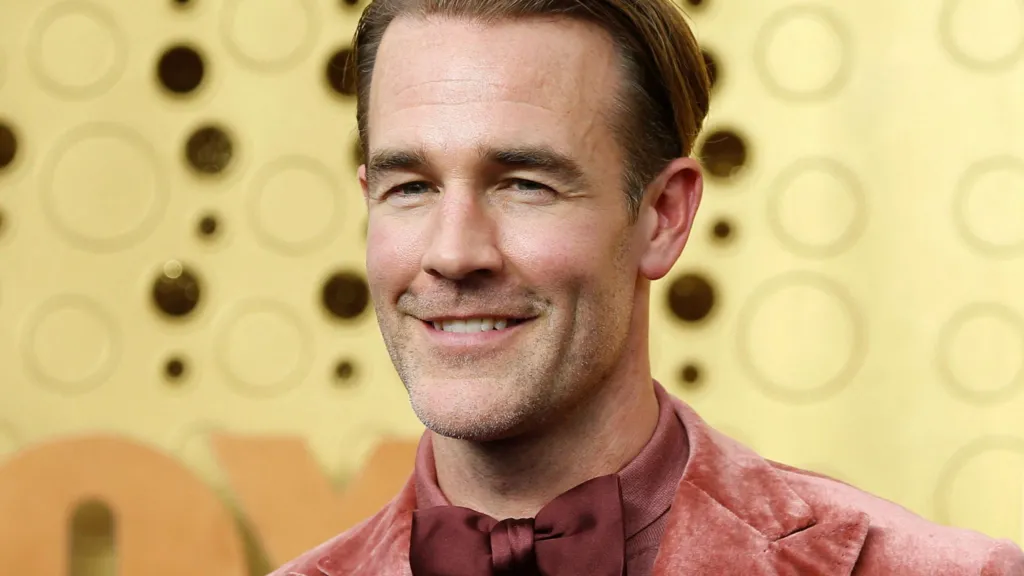
Van Der Beek, who passed away at the age of 48, is survived by his wife Kimberly and their six children, and the crowdfunding effort to support his family has now exceeded its initial target of $2m.
Other notable donors include Oscar-winning actress Zoe Saldana, who contributed $2,500 (£2,108), and director Jon M Chu, who gave $10,000 (£8,432) to the cause.
A statement from the organizers of the fundraiser, Friends of the Van Der Beek family, expressed gratitude to all contributors, stating that their support is deeply appreciated.
The statement highlighted the significance of the donations, saying that the kindness shown by contributors is beyond words.
It also noted that the outpouring of support has been a source of comfort during a difficult time, serving as a reminder of the power of love, community, and the enduring legacy of James Van Der Beek.
Van Der Beek was perhaps best known for his starring role in the popular US teen drama series Dawson's Creek, which aired from 1998 to 2003, although he remained associated with the show until 2023.
Although Van Der Beek and Spielberg never collaborated on a project, the late actor's character in Dawson's Creek was a fan of Spielberg's work, with posters of films like ET and Schindler's List featured in his bedroom.
At a Dawson's Creek cast reunion event last year, Spielberg paid tribute to Van Der Beek by sending a video message.
In the message, Spielberg said, "Dawson, you made it," and jokingly added that he hoped to one day have a room like Dawson's, filled with memorabilia from his films.
Van Der Beek passed away on Wednesday after a battle with bowel cancer.

He had been dealing with the diagnosis since August 2023 and publicly disclosed his condition in November 2024.
The GoFundMe campaign was launched to help the family with medical expenses, which had depleted their funds.
The statement from the organizers concluded by saying that the family is currently taking time to grieve and be together, and thanked everyone for their compassionate and generous support in honoring James Van Der Beek's life.
News
Zimbabwe Shocks Australia with Muzarabani’s Exceptional Performance
Zimbabwe secured a stunning 23-run victory over Australia in the T20 World Cup, with Blessing Muzarabani playing a key role by taking 4-17.
In the current T20 world rankings, Zimbabwe occupies the 12th position.
The Men's T20 World Cup is underway in Group B at Colombo.
Zimbabwe's innings concluded at 169-2 after 20 overs, with Bennett scoring an unbeaten 64 off 56 deliveries, while Green claimed 1-6.
Australia's reply ended at 146 after 19.3 overs, as Renshaw top-scored with 65 off 44 balls, and Muzarabani took 4-17.
The match resulted in a 23-run victory for Zimbabwe.
A standout performance from Blessing Muzarabani, who took 4-17, helped Zimbabwe secure a thrilling 23-run win over Australia in the T20 World Cup.
After being set a target of 170, Australia found themselves in trouble at 29-4, but a 77-run partnership between Matthew Renshaw and Glenn Maxwell for the fifth wicket gave them hope.
With 34 runs needed from the last two overs, Renshaw's dismissal for 65, caught off Muzarabani with eight balls remaining, essentially sealed the game's outcome.
The result has left Group B finely balanced after two matches each, with Australia trailing Zimbabwe and Sri Lanka by two points, ahead of their meeting with Sri Lanka on Monday.
Initially, Zimbabwe's approach to batting first at the R. Premadasa Stadium appeared overly cautious.
Brian Bennett's innings of 64 not out from 56 balls, including seven fours, was played at a strike rate of 114.28, as he anchored the Zimbabwean batting.
In contrast, Tadiwanashe Marumani and Ryan Burl adopted a more aggressive approach, scoring 35 off 21 and 30 balls, respectively.
A late surge from Zimbabwe skipper Sikandar Raza, who scored 25 off 13 balls, including the team's only six on the final ball, provided a boost to their total.
Australia's target seemed achievable, given their total of 182-6 in their previous win against Ireland.
However, the Australian batting line-up was severely dented by the loss of key wickets, including Josh Inglis, Travis Head, Cameron Green, and Tim David, courtesy of Muzarabani and Brad Evans.
A partnership between Renshaw and Maxwell offered some respite, but when Maxwell fell for 31, dragged on to Burl, the pressure mounted on Australia.
Muzarabani's return to bowl the penultimate over proved decisive, as he removed Renshaw, and Zimbabwe subsequently wrapped up the win.
There are calls for the ICC to review the rules regarding 12th men.
For more information, including notifications and social media updates, visit BBC Sport.
A blogger who participates in the FPL is also competing in the T20 World Cup.
News
FA Cup Finalists Outside the Big Six Since 2008
As the FA Cup resumes this weekend, assess your understanding of past finalists that have competed from beyond the Premier League’s top six clubs.
This weekend, the FA Cup resumes with 32 teams remaining in contention for the historic trophy, which has been awarded for 155 years and will be presented to the winner in May.
Historically, the Premier League's top six clubs – Arsenal, Chelsea, Liverpool, Manchester City, Manchester United, and Tottenham – have dominated the FA Cup, claiming 32 titles out of the last 37.
However, in recent years, teams outside of this elite group have experienced some notable victories in the competition.
Since 2008, 10 teams from outside the traditional 'big six' have advanced to the FA Cup final – can you identify all of them?
For more quizzes, visit our Football Quizzes and Sports Quizzes sections, where you can also subscribe to receive the latest quizzes directly on your device.
We have a quiz question tailored to each Premier League team – test your knowledge and see how you score.
Can you recall every team that has won the Women's Champions League?
Which players have made the most appearances in the Premier League – can you name them all?
Explore our Sports Quizzes page for a wide range of challenging and engaging quizzes.
-
 News7 hours ago
Australian Politics Faces Questions Over Gender Equality Amid Sussan Ley’s Appointment
-
 News4 hours ago
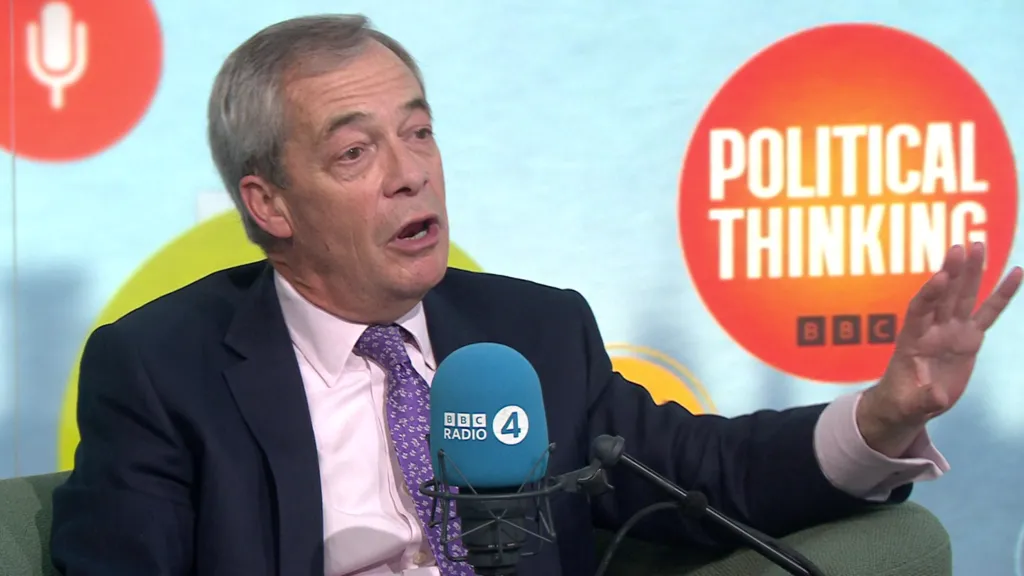
Farage Says Reform to Replace Traditional Tory Party
-
 News4 hours ago
Wrexham Pair Seek Win Against Former Team Ipswich
-
 News9 hours ago
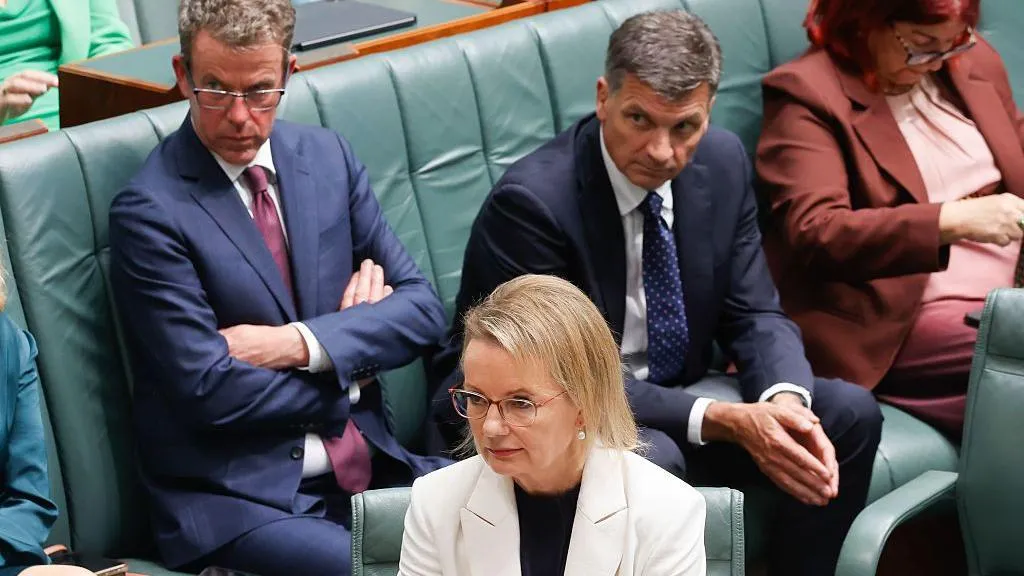
Liberal Party Removes Australia’s First Female Leader
-
 News7 hours ago
UK Braces for Cold Snap with Snow and Ice Alerts Expected
-
 News4 hours ago
Husband’s alleged £600k theft for sex and antiques blamed on drug side effects
-
 Business10 hours ago
BBC Reporter Exposed to Cyber Attack Due to Vulnerabilities in AI Coding Tool
-
 News7 hours ago
Canadian Town Unites in Mourning After Mass Shooting Leaves Community Reeling