
Business
Google Employees Call for Company to Sever Ties with ICE
A group of over 900 Google employees expressed their disapproval by signing a letter that objected to the company’s connections to US federal immigration policies.
Staff at Google are putting pressure on the company's leadership to reexamine its relationship with the US federal government, particularly in regards to immigration enforcement, which has resulted in violent and fatal incidents in recent months.
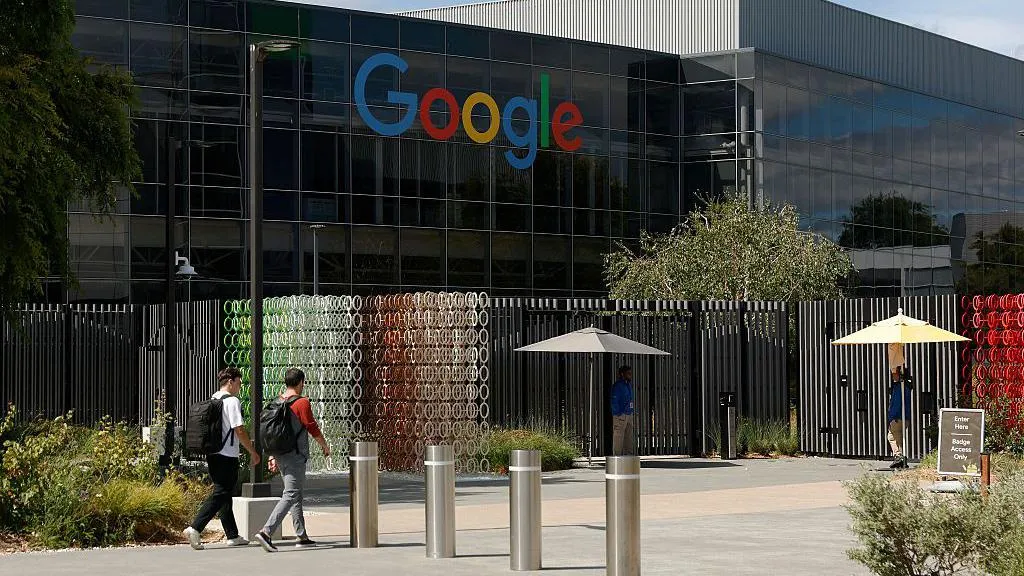
An open letter, signed by nearly 900 Google employees and published on Friday, is calling for greater transparency regarding the use of the company's technology within the US government.
Google has existing contracts with federal agencies to provide cloud services and is also involved in projects related to immigration enforcement.
A seven-year Google employee expressed dismay over the company's continued involvement with immigration enforcement agencies, describing the situation as "baffling".
This letter follows another one published two weeks ago, in which hundreds of employees from companies such as Amazon, Microsoft, and Meta urged all tech companies to cease their support for the federal government's immigration crackdown.
Over the past year, the Trump administration has intensified its efforts to forcibly remove immigrants, deploying armed agents from ICE and CBP to several cities.
These operations have led to the high-profile killings of two US citizens who were observing the actions of federal agents.
A Google employee, who identified himself as Alex and has been with the company for seven years, is leading the demands for greater transparency from management.
Alex stated that he initially took pride in working for Google due to its perceived moral compass, but no longer feels that way.
In 2018, Google ended its involvement in Project Maven, a Pentagon contract aimed at developing more efficient drone technology for the US military, following pressure from thousands of employees.
Alex described his current work experience as "disturbing" due to Google's involvement with federal agencies, including DHS, ICE, and CBP, as well as the removal of certain apps from the Google app store.
In October, Google removed several apps that allowed users to report ICE agent sightings, a move also taken by Apple.
Another Google employee, who wished to be identified only as "S" and has been with the company for three years, stated that she would not have joined Google had she known about its work with federal agencies at the time.
"S" expressed that Google's work with federal agencies contradicts her initial understanding of the company's values, saying she would not have applied to work for a company involved in military contracting.
Both Alex and "S" are speaking out against Google's involvement with federal agencies, citing their objections to contributing to militarized actions against individuals.
The employees criticized Google's leadership, including CEO Sundar Pichai, for failing to address the extent of the company's work with the federal government, prompting the open letter.
The employees are demanding that Google withdraw its technology from DHS, ICE, and CBP, provide protection for its workers from immigration enforcement activities, and hold a company-wide meeting to address their concerns.
In addition to its cloud services, Google has partnered with Lockheed Martin, a major military contractor, to deploy AI models in various products and services.
Google also has a partnership with Palantir, a company that provides technology and operating systems used by DHS, ICE, CBP, and all six branches of the US military.
The employment status of Alex, "S", and other signatories of the open letter has been verified through their registered work accounts.
A Google spokesperson declined to provide a comment on the matter.

Business
Artist Alleges AirAsia Used His Work Without Permission
A street artist from Penang has reported that one of his artworks has been replicated and featured on the design of an airplane.
A lawsuit has been filed by a Malaysian-based artist against AirAsia and its parent company, Capital A Berhad, alleging unauthorized use of the artist's designs on one of the airline's planes.
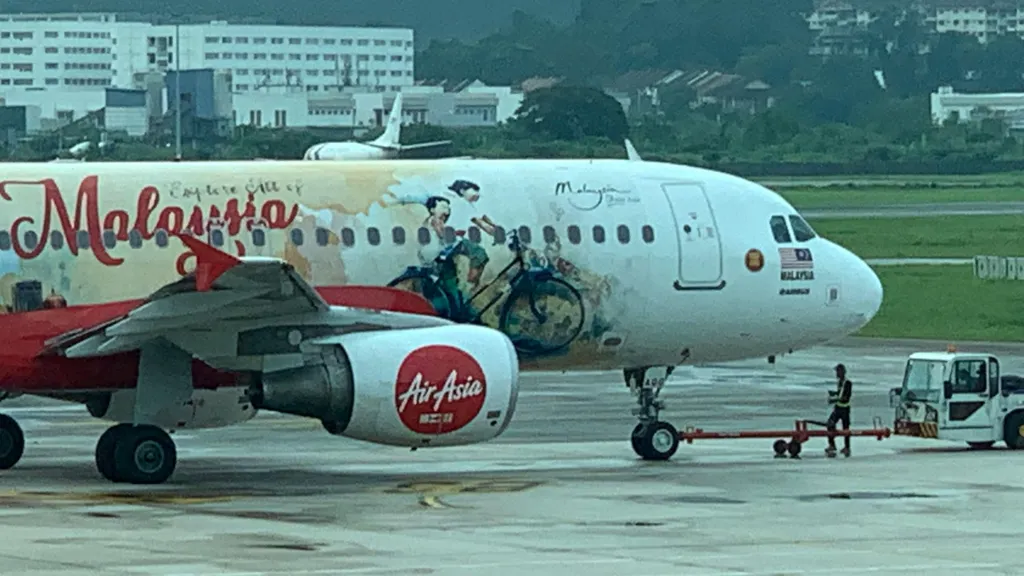
According to the lawsuit, Ernest Zacharevic, a Lithuanian-born artist residing in Penang, claims that his 2012 street mural, Kids on Bicycle, was reproduced and displayed on an AirAsia aircraft in late 2024 without his permission.
Zacharevic states that the use of his design was unauthorized, and no licensing agreement or consent was obtained, adding that the livery was removed after he publicly expressed concerns about the matter.
The BBC has reached out to AirAsia for a statement regarding the allegations.
In an interview with the BBC on Thursday, Zacharevic recalled that he first became aware of the alleged copyright infringement in October 2024, when he discovered that an AirAsia plane was featuring a livery resembling his artwork.
With over a decade of experience in Malaysia, Zacharevic is known for his roadside murals in Penang, which have become a staple of the local art scene.
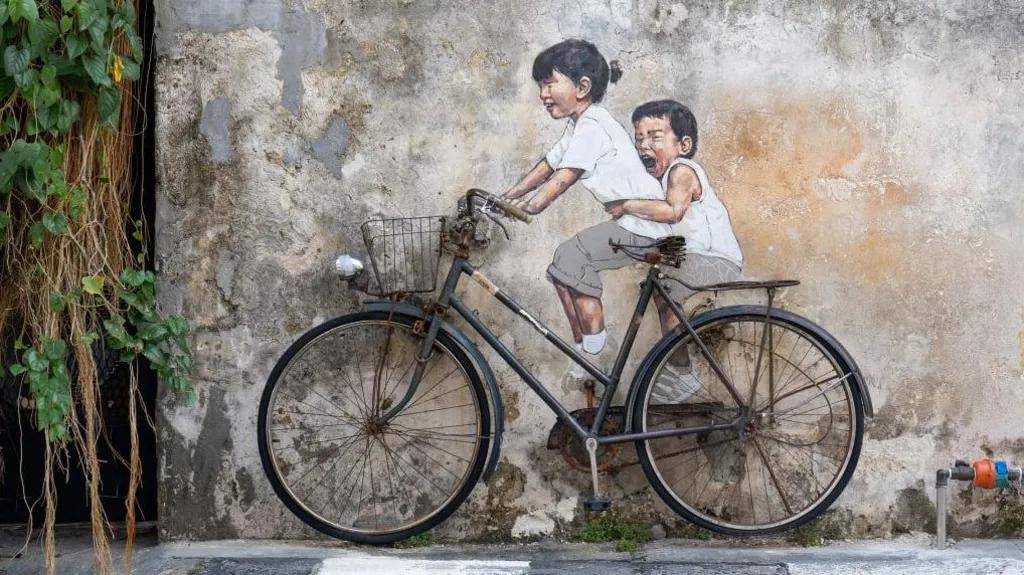
One of Zacharevic's notable works is the 2012 street mural Kids on Bicycle, created for a local festival, which features two children on a bicycle integrated into the mural, located in George Town's heritage district.
The mural has become a popular tourist attraction, with many visitors taking photos in front of the iconic artwork.
Zacharevic alleges that his work was reproduced on an AirAsia plane without his knowledge or consent, and he personally witnessed the plane in operation at an airport.
Recalling the incident, Zacharevic expressed his discomfort with the situation, which occurred in 2024.
He took to social media to address the issue, posting a photo of the plane and tagging the airline, suggesting that they needed to discuss the use of his artwork.
Since then, Zacharevic has engaged in discussions with the company, but they have been unable to come to a mutually agreeable resolution.
This is not the first instance of Zacharevic's work being used in connection with AirAsia, as he claims the airline has also used his artwork on a delivery bag for its food services arm.
Court documents reveal that Zacharevic had previously discussed a potential collaboration with AirAsia in 2017, where he would create art for the airline's jets and a mural in one of their offices.
According to the documents, Zacharevic had informed the airline of his work and business rates during these discussions.
The lawsuit asserts that despite being aware of Zacharevic's work and rates, the airline proceeded to reproduce and publicly display one of his notable works, thereby infringing on his copyright and moral rights.
As the largest low-cost carrier in Asia, AirAsia operates over 200 jets to more than 100 destinations, and has recently announced plans to resume flights from Kuala Lumpur to London via Bahrain.
Zacharevic has stated that he will leave it to the court to determine any potential compensation he may be entitled to.
The artist emphasized that he does not consider the use of his artwork to be a mere reference to cultural or geographical associations, but rather a distinct artistic creation.
Zacharevic stressed that his artwork is the result of years of professional training, skill, and labor, and should be recognized as such.
Business
US Businesses and Consumers Bear Brunt of Trump Tariff Costs, According to NY Fed
In 2022, the United States saw a significant increase in collective import tariff rates, with rates rising by more than 300 percent for a range of imported goods.
The modification of tariff agreements by President Donald Trump with several countries had a consistent outcome: increased costs for US-based companies and consumers.
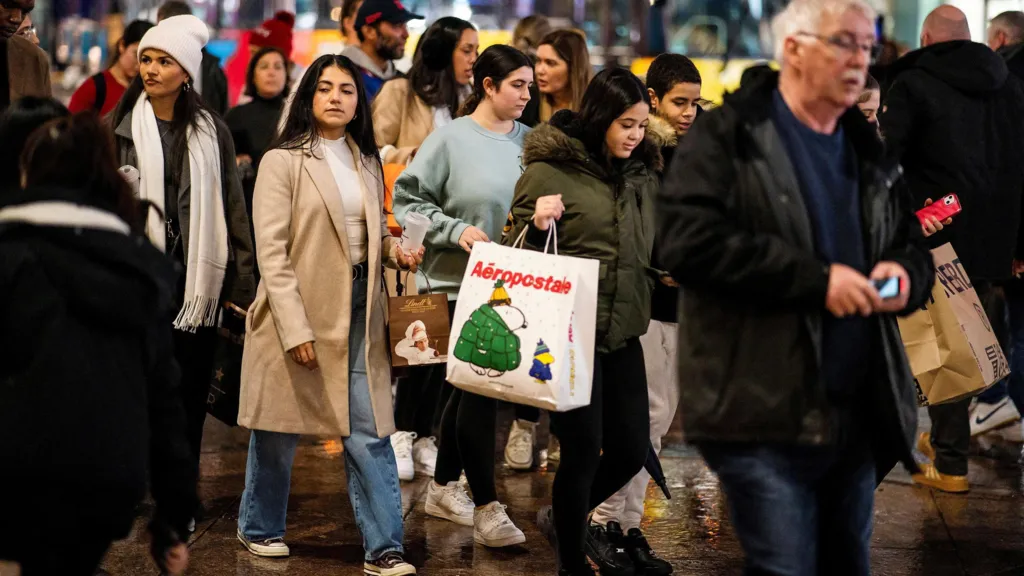
According to a study released on Thursday by the Federal Reserve Bank of New York, the average tariff rate on imported goods increased significantly, rising from 2.6% at the beginning of the year to 13% in 2025.
The New York Fed's research revealed that US companies absorbed approximately 90% of the costs associated with the higher tariffs imposed by Trump on goods from countries such as Mexico, China, Canada, and the European Union.
The Federal Reserve Bank of New York stated that "the majority of the economic burden of the high tariffs imposed in 2025 continues to be borne by US firms and consumers."
When tariff rates changed and increased in the previous year, exporting countries did not adjust their prices to mitigate potential declines in US demand.
Instead of lowering prices, exporters maintained their existing prices and transferred the tariff costs to US importers, who subsequently increased the prices of these goods for consumers.
The response of exporters in 2025 was similar to their reaction in 2018, when Trump introduced certain tariffs during his first term, resulting in higher consumer prices with minimal other economic effects, as noted by the New York Fed at the time.
The New York Fed's findings on Thursday are consistent with the results of other recent analyses.
The Kiel Institute for the World Economy, a German research organization, reported last month that its research indicated "nearly complete pass-through of tariffs to US import prices."
By analyzing 25 million transactions, Kiel researchers discovered that the prices of goods from countries like Brazil and India did not decrease.
The Kiel report noted that "trade volumes declined" instead, indicating that exporters preferred to reduce the quantity of goods shipped to the US rather than lower their prices.
The National Bureau of Economic Research also found that the pass-through of tariffs to US import prices was "nearly 100%", meaning that the US bears the cost of the price increase, not the exporting countries.
Similarly, the Tax Foundation, a Washington DC-based think tank, found that the increased tariffs on goods in 2025 resulted in higher costs for American households.
The Tax Foundation considered tariffs as a new tax on consumers and estimated that the 2025 increases resulted in an average cost of $1,000 (£734.30) per household, with a projected cost of $1,300 in 2026.
The Tax Foundation reported that the "effective" tariff rate, which accounts for decreased consumer purchases due to higher prices, is now 9.9%, representing the highest average rate since 1946.
The Tax Foundation concluded that the economic benefits of tax cuts included in Trump's "Big Beautiful Bill" will be entirely offset by the impacts of the tariffs on households.
Business
BBC Reporter Exposed to Cyber Attack Due to Vulnerabilities in AI Coding Tool
The demand for vibe-coding tools, which enable individuals without coding experience to develop applications using artificial intelligence, is experiencing rapid growth.
A significant and unresolved cyber-security vulnerability has been identified in a popular AI coding platform, according to information provided to the BBC.
The platform, known as Orchids, utilizes a "vibe-coding" approach, enabling individuals without technical expertise to create apps and games by inputting text prompts into a chatbot.
In recent months, such platforms have gained widespread popularity, often being touted as an early example of how AI can rapidly and affordably perform various professional tasks.
However, experts warn that the ease with which Orchids can be compromised highlights the risks associated with granting AI bots extensive access to computers in exchange for autonomous task execution.
Despite repeated requests for comment, the company has not responded to the BBC's inquiries.
Orchids claims to have a user base of one million and boasts partnerships with top companies, including Google, Uber, and Amazon.
According to ratings from App Bench and other analysts, Orchids is considered the top program for certain aspects of vibe coding.
Cyber-security researcher Etizaz Mohsin demonstrated the platform's security flaws to the BBC.
To test the platform's security, a spare laptop was used to download the Orchids desktop app and initiate a vibe-coding project.
A request was made to the Orchids AI assistant to generate code for a computer game based on the BBC News website.
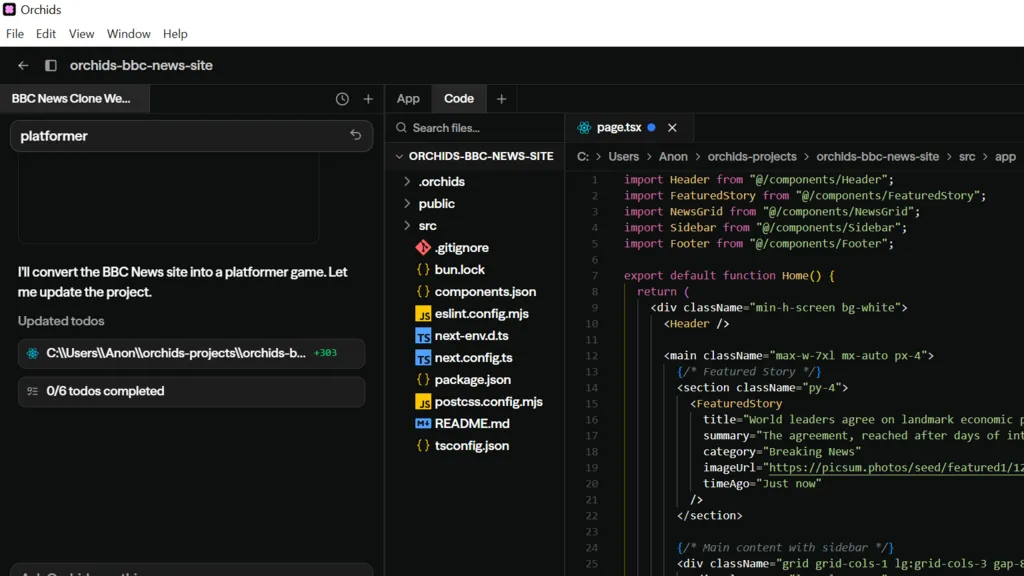
The AI assistant automatically compiled code on the screen, which, without prior experience, was unintelligible.
By exploiting a specific cyber-security weakness, Mohsin was able to access the project and view and edit the code.
Mohsin then added a line of code to the project, which went unnoticed.
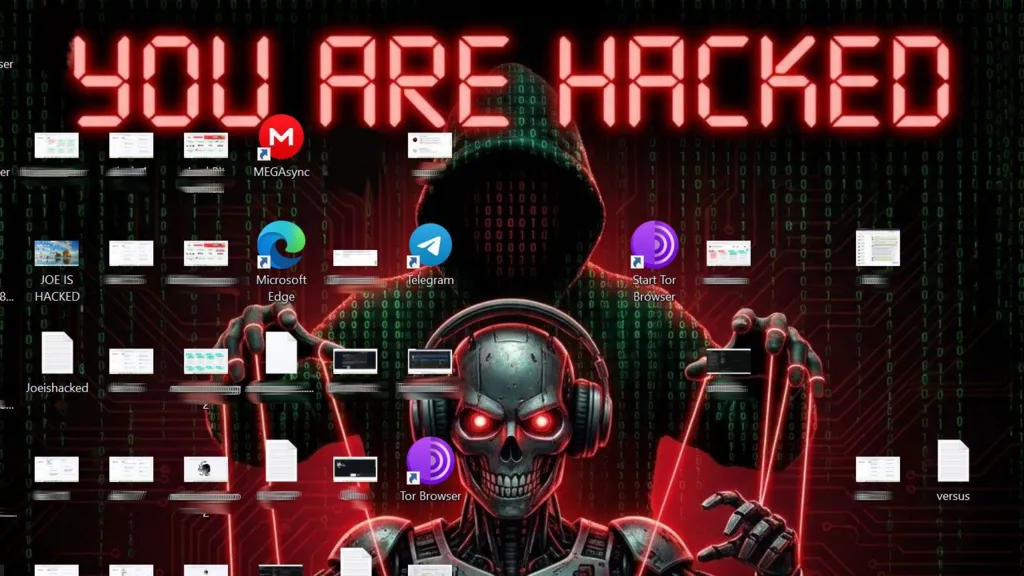
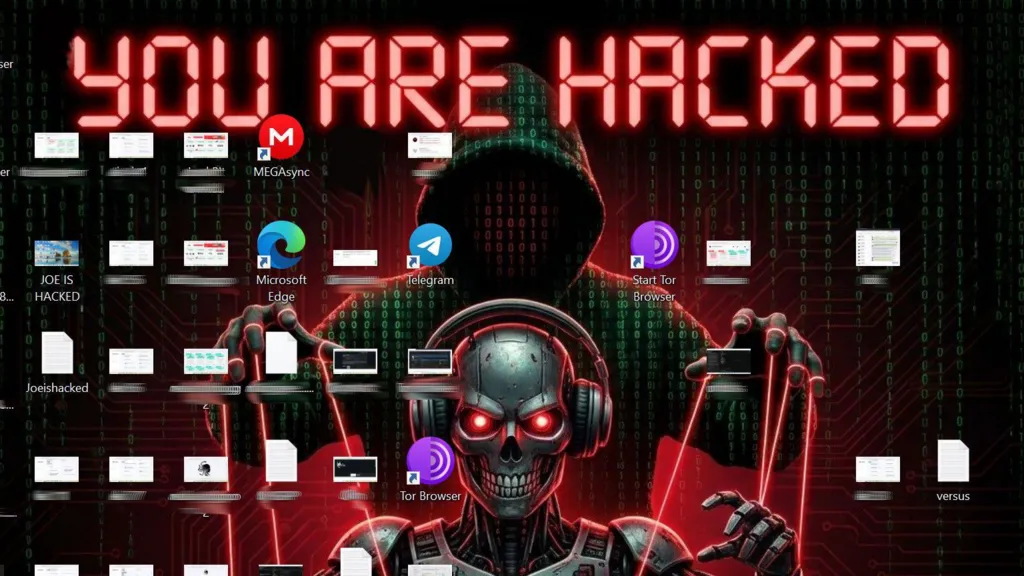
This action apparently allowed him to gain access to the computer, as evidenced by the subsequent appearance of a "Joe is hacked" notepad file on the desktop and a changed wallpaper featuring an AI hacker image.
The potential implications of this hack on the platform's numerous projects are significant.
A malicious hacker could have easily installed a virus on the machine without any action required from the victim.
Sensitive personal or financial data could have been compromised.
An attacker could have accessed internet history or even used the computer's cameras and microphones for surveillance.
Most cyber-attacks involve tricking victims into downloading malicious software or divulging login credentials.
This particular attack was carried out without any involvement from the victim, known as a zero-click attack.
Mohsin stated that the vibe-coding revolution has introduced a new class of security vulnerabilities that did not previously exist, highlighting the risks associated with relying on AI to handle tasks.
The concept of AI handling tasks autonomously comes with significant risks, according to Mohsin.
Mohsin, a 32-year-old from Pakistan currently residing in the UK, has a history of discovering dangerous software flaws, including work on the Pegasus spyware.
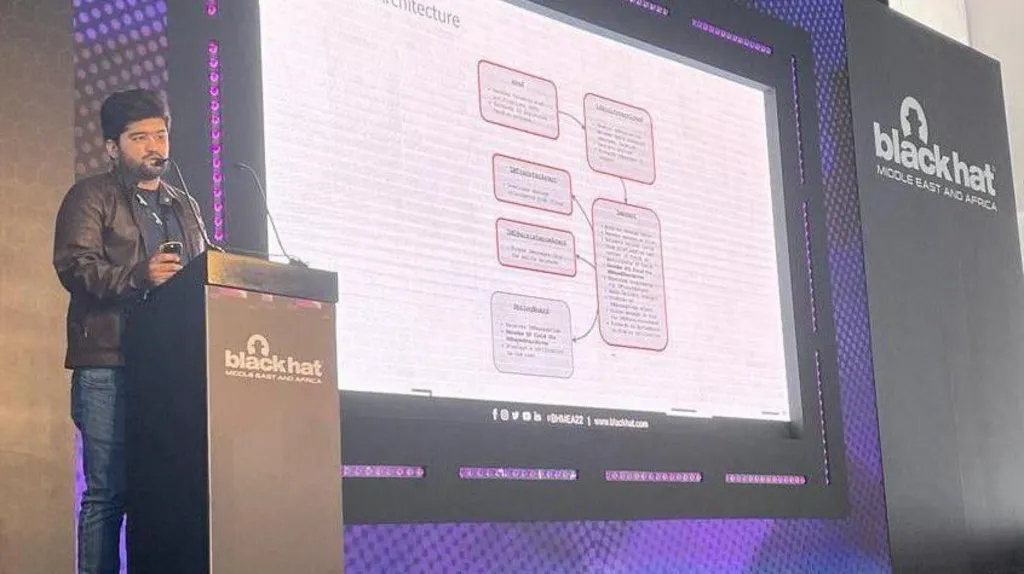
Mohsin discovered the flaw in December 2025 while experimenting with vibe-coding and has since attempted to contact Orchids through various channels, sending around a dozen messages.
The Orchids team responded to Mohsin this week, stating that they may have missed his warnings due to being overwhelmed with incoming messages.
According to the company's LinkedIn page, Orchids is a San Francisco-based company founded in 2025 with fewer than 10 employees.
Mohsin has only identified flaws in Orchids and not in other vibe-coding platforms, such as Claude Code, Cursor, Windsurf, and Lovable.
Nonetheless, experts caution that this discovery should serve as a warning.
Professor Kevin Curran of Ulster University's cybersecurity department notes that the main security implications of vibe-coding are the potential for code to fail under attack due to a lack of discipline, documentation, and review.
Agentic AI tools, which perform complex tasks with minimal human input, are increasingly gaining attention.
A recent example is the Clawbot agent, also known as Moltbot or Open Claw, which can execute tasks on a user's device with little human intervention.
The free AI agent has been downloaded by hundreds of thousands of people, granting it deep access to computers and potentially introducing numerous security risks.
Karolis Arbaciauskas, head of product at NordPass, advises caution when using such tools.
Arbaciauskas warns that while it may be intriguing to see what an AI agent can do without security measures, this level of access is also highly insecure.
He recommends running these tools on separate, dedicated machines and using disposable accounts for experimentation.
To stay informed about the latest tech stories and trends, sign up for the Tech Decoded newsletter, available outside the UK as well.
(Removed to maintain the same number of paragraphs)

-
 News11 hours ago
Australian Politics Faces Questions Over Gender Equality Amid Sussan Ley’s Appointment
-
 News8 hours ago
Farage Says Reform to Replace Traditional Tory Party
-
 News8 hours ago
Wrexham Pair Seek Win Against Former Team Ipswich
-
 News13 hours ago
Liberal Party Removes Australia’s First Female Leader
-
 News11 hours ago
UK Braces for Cold Snap with Snow and Ice Alerts Expected
-
 News8 hours ago
Husband’s alleged £600k theft for sex and antiques blamed on drug side effects
-
 News2 days ago
Sunbed ads spreading harmful misinformation to young people
-
 Business14 hours ago
BBC Reporter Exposed to Cyber Attack Due to Vulnerabilities in AI Coding Tool