
Business
Roadworks nationwide are causing disruptions, with conditions expected to worsen
The nation must weigh the advantages of enhanced infrastructure against the drawbacks of the upheaval it causes, raising the question of whether the current approach strikes the optimal balance.
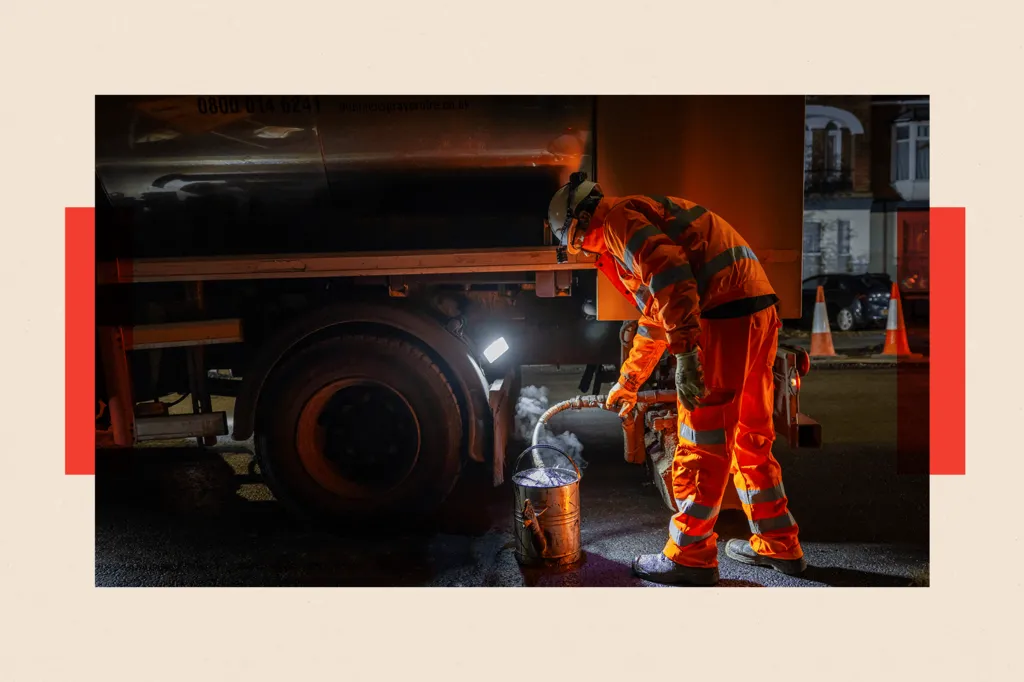
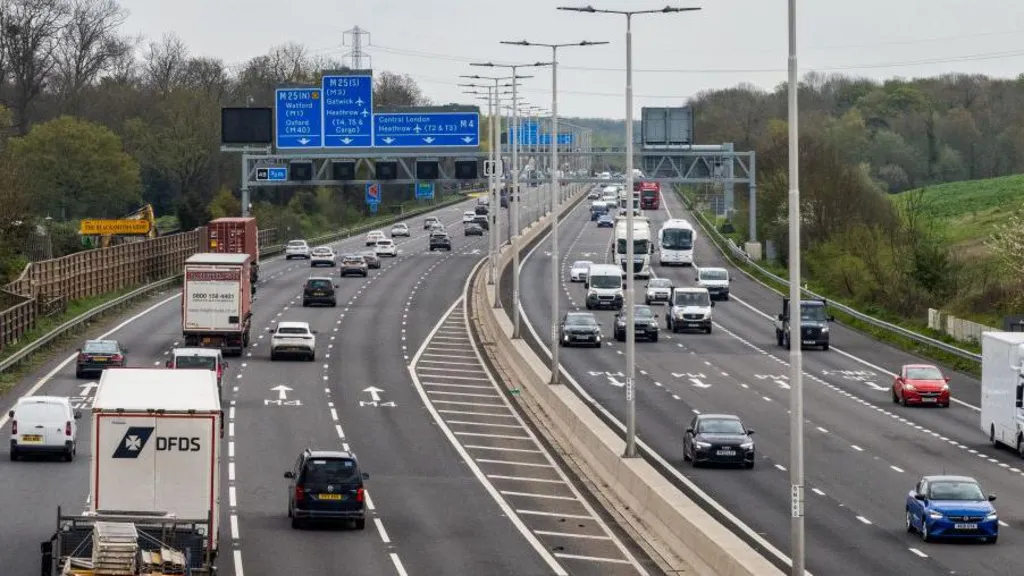
A recent late-night drive on the M6 towards the West Midlands was interrupted by the familiar sight of orange flashing lights and miles of cones, indicating road works ahead.
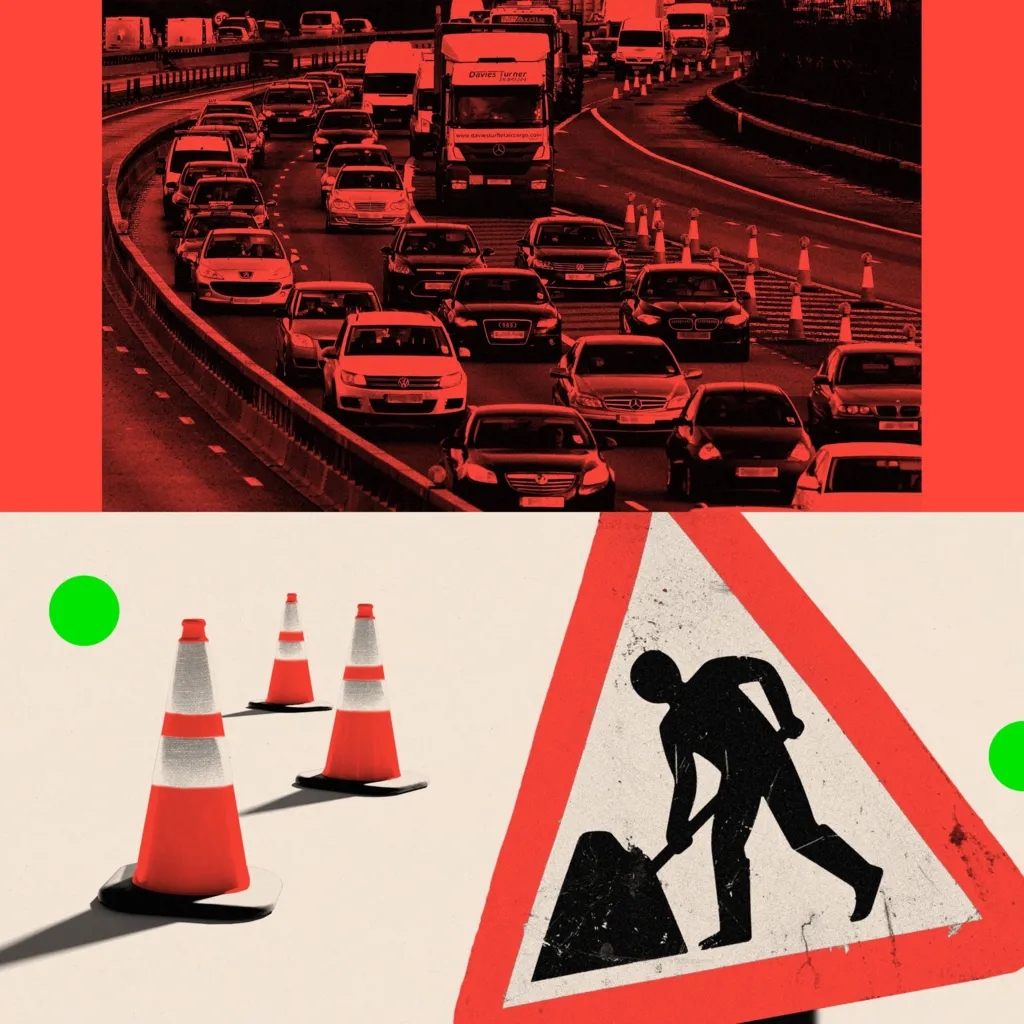
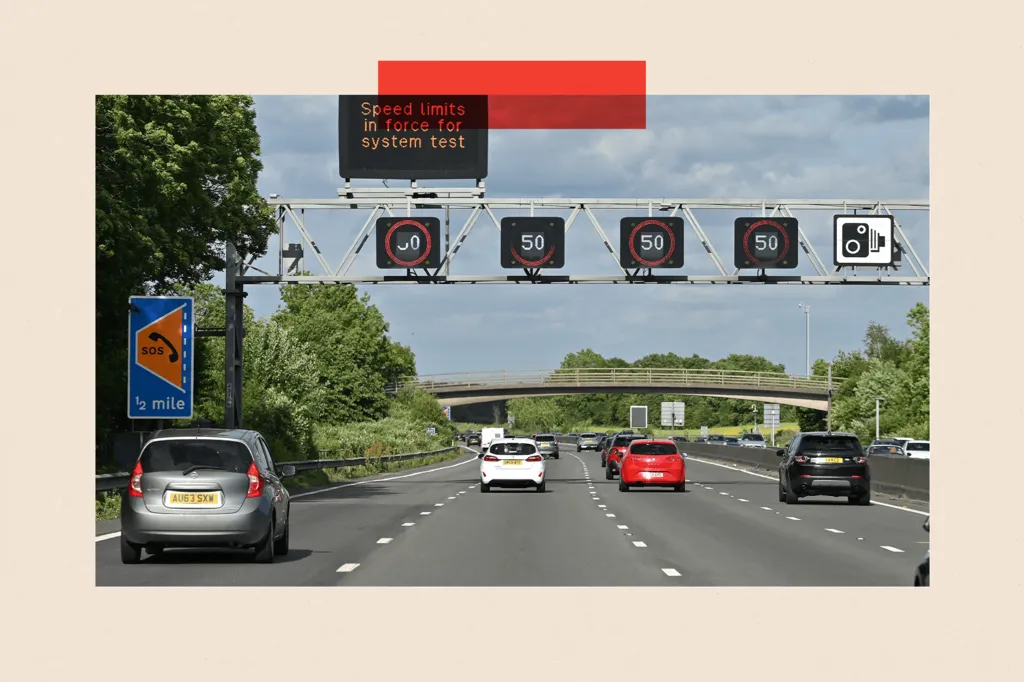
With two lanes closed and a 50mph speed limit in place, the usually bustling motorway was reduced to a near-empty stretch of road, with the overhead gantry serving as a reminder of the reduced speed limit.
As someone who covers thousands of miles on Britain's roads each year while presenting a Radio 4 programme, I have grown accustomed to the delays that often come with road works, and the frustration that can accompany them.
Brett Baines, a veteran HGV driver with nearly 30 years of experience, has also noticed an increase in road works, which he believes can be a significant source of frustration for drivers.
According to Baines, these road works often seem to "drag on for months, years," causing prolonged disruptions to traffic flow.
National Highways, the agency responsible for managing England's motorways and major routes, has announced that the country can expect to see even more road works in the future, as the nation's ageing roads undergo much-needed upgrades and repairs.
Much of England's road network was constructed in the 1960s and 1970s, during a period of rapid expansion in car ownership, and many of these roads and bridges are now approaching the end of their serviceable life, according to Nicola Bell, executive director of National Highways.
A similar situation exists in Wales, where a significant portion of the highways infrastructure was also built during the 1960s and 1970s, and the Welsh government has announced plans for "essential maintenance work" to be carried out, although the extent to which this will lead to increased disruption remains unclear, as it does in Scotland and Northern Ireland.
The impact of road works extends beyond mere inconvenience, as they can also influence people's perceptions of the country's overall functioning and affect their daily interactions with the state.
Furthermore, road works have a significant economic cost, with 2.2 million street and road works carried out in England between 2022 and 2023 resulting in approximately £4bn in travel disruption costs, according to the Department for Transport.
The challenge lies in striking a balance between the benefits of improved infrastructure and the costs associated with disruption, raising questions about whether the country has achieved the right equilibrium.
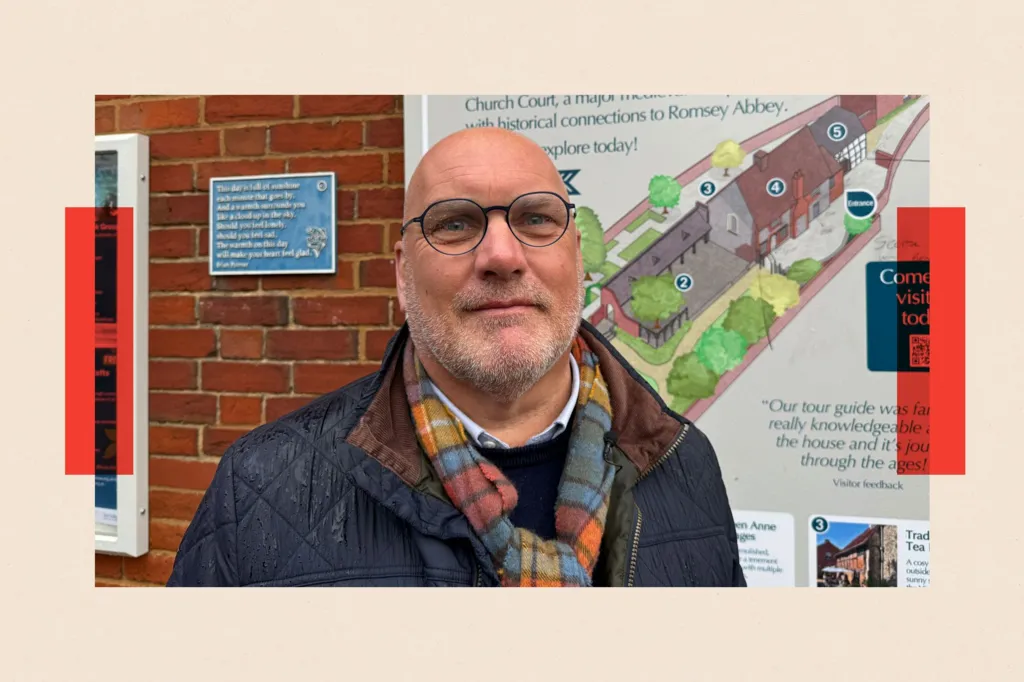
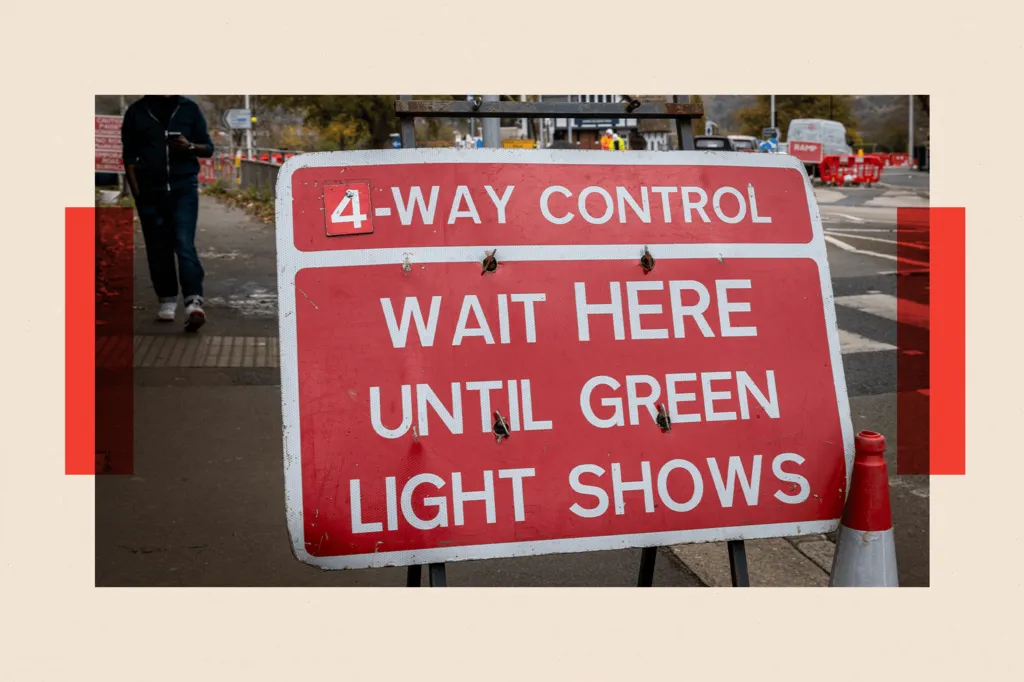
In the Hampshire village of Clanfield, resident David has expressed frustration with the frequent road closures and temporary traffic lights caused by utility companies' infrastructure replacement work.
As he approaches a set of temporary traffic lights, David notes that the issue is not just the presence of the lights, but the duration for which they have been in place.
The impact of these road works has been substantial, with David citing poor co-ordination as a major concern.
SGN, the company responsible for managing the gas network in southern England, has been replacing 10 miles of ageing pipework, a project it describes as "particularly challenging" but essential for bringing "vital improvements" to the area, with completion expected by May.

A spokesperson for SGN emphasized that the company is working to complete the project as quickly and safely as possible, while maintaining regular communication with the local community.
Similar utility company works are underway in other towns and villages, leading to increased road works and street works, often aimed at upgrading utilities such as water, energy, and broadband.
The Local Government Association of England and Wales has reported a 30% increase in utility company works over the past decade, contributing to the rise in road works and street works on local roads.
For residents like David, the knowledge that these works are necessary does not diminish the frustration they cause.
In David's view, the key to mitigating this frustration lies in improving "communication and co-ordination" between utility companies and local authorities.
In England, councils are responsible for maintaining all highways except major roads and motorways, with some road works carried out by councils and others by utility companies.
Nick Adams-King, leader of the Conservative-run county council in Hampshire, acknowledges that the roads in his area are in poor condition, estimating that it would cost £600m to bring them up to standard.
However, he notes that the council's annual budget is only around £70m, highlighting the significant funding gap.
The government has increased funding for highways maintenance, with the budget for local road repairs set to exceed £2bn per year by 2030, up from £1.6bn in 2026-27.
Nevertheless, Adams-King identifies another challenge: the significant influence utility companies have over the timing of their works, as well as their ability to declare emergency works and implement road closures and traffic lights with minimal notice.
This can leave councils with limited opportunity to manage the disruption, as they are often informed only six working hours in advance, by which point it may be too late to take effective action.
To reduce disruption, local authorities employ various measures, including permit schemes that grant them greater control over the timing and execution of works.
However, concerns have been raised about one type of permit, the "immediate permit," which is used for urgent or emergency works and does not require prior notice to be given to local authorities.
These permits accounted for nearly a third of all street works in England in 2023-4, leading some councils to suggest that they are being misused.
One authority reported an instance where a utility company cited a "crackly phone line" as the reason for an immediate permit, despite the issue having been known about for weeks.
In July last year, a report by the House of Commons Transport Select Committee emphasized the importance of these permits but urged the government to consult on the definition of urgent works.
The government has also increased the fines that local authorities can impose for street works offences, doubling them from £120 to £240.
Streetworks UK, a body representing utility companies, maintains that the majority of works – 69% – are carried out in a planned and co-ordinated manner.
Clive Bairsto, the chief executive of Streetworks UK, disputes the notion that utility companies are over-using immediate permits, citing a lack of evidence to support this claim.
At a small shopping precinct in Rochdale, Greater Manchester, the owner of Amber Pets, Angela Collinge, has been running her business for 27 years but is now struggling with the impact of road works on her customers.
The constant congestion and road works have led to a decline in customer numbers, with many regulars avoiding the area due to the disruptions.
Utility companies in Rochdale have stated that essential works have been carried out to upgrade or maintain vital infrastructure, including gas pipes, water mains, and broadband, and that they have co-ordinated with the local council to minimize disruption.
The companies claim to have taken steps to keep local residents informed and to have completed the works as quickly and safely as possible.
Two firms are currently trialing a new approach in which they carry out gas and water works simultaneously, aiming to reduce disruption in the area, with potential for this approach to be expanded if successful.
The trial may offer a glimpse into a potential solution for minimizing the impact of road works on local communities and businesses.
Local MP Paul Waugh is calling for greater action to address the economic impact of road works, emphasizing the need for utilities companies to recognize the damage caused by prolonged disruptions.
Waugh criticizes the current approach, stating that a more coordinated system is necessary to replace the existing "make do and mend" mentality, which has led to inefficiencies and delays.
Clive Bairsto, however, argues that utilities companies are making an effort to coordinate their work where possible, highlighting the complexities involved in managing infrastructure projects.
The challenges faced by businesses due to road works are a nationwide issue, affecting various sectors and communities across the country.
Clare Matterson, director general of the Royal Horticultural Society (RHS), cites the example of the RHS gardens at Wisley, near junction 10 of the M25 in Surrey, which have been impacted by ongoing road works.
National Highways has invested over £300m in a project to improve congestion and safety at this junction over the past three and a half years.
Despite this investment, the RHS claims to have lost nearly £14m as a result of the disruptions, with visitor numbers dropping by over 350,000 in a year.
Matterson describes the difficulties faced by visitors, including families and older individuals, who have been stressed by the traffic conditions and have opted to cancel their memberships or postpone visits.

The RHS acknowledges the need for improvements but questions the duration and extent of the disruptions, suggesting that alternative approaches could have been explored.
The project has been delayed by an additional nine months due to extreme weather conditions, according to National Highways.
The RHS is now seeking compensation for the losses incurred, highlighting the need for more effective management of infrastructure projects.
National Highways is attempting to minimize disruptions by closing the M25 entirely over several weekends, a strategy aimed at accelerating the works.
Nicola Bell of National Highways explains that this approach allows for more efficient completion of the project, reducing the overall duration of the disruptions.
Bell expresses sympathy for businesses like the RHS, acknowledging the challenges posed by construction projects adjacent to their operations.
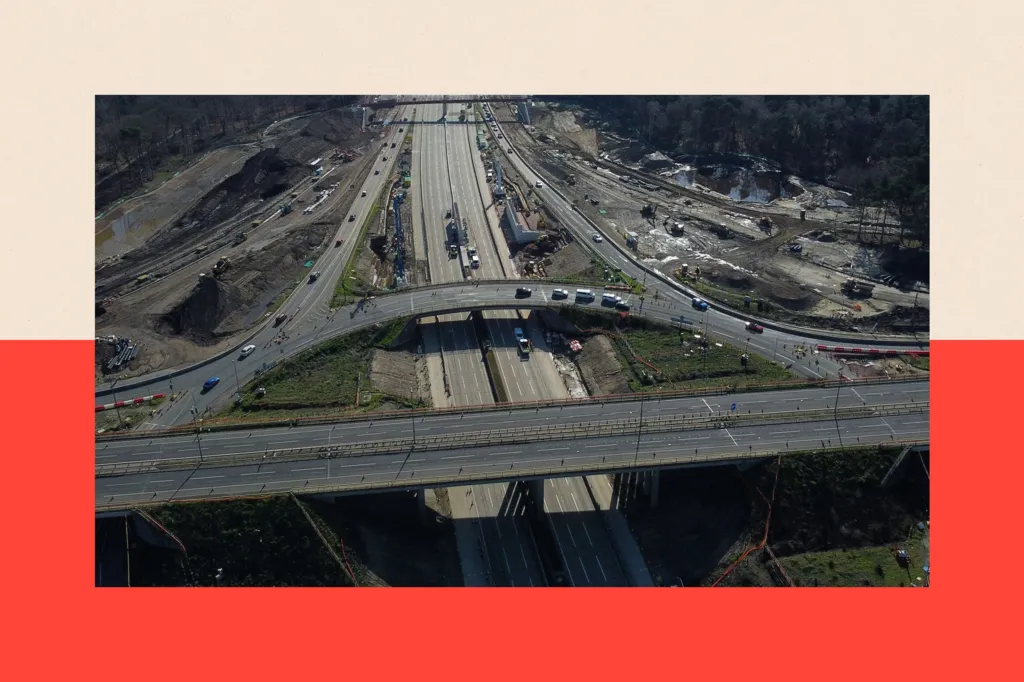
The strategic road network, which accounts for only 2% of England's roads, carries a significant proportion of the country's traffic and freight, making it a critical component of the national infrastructure.
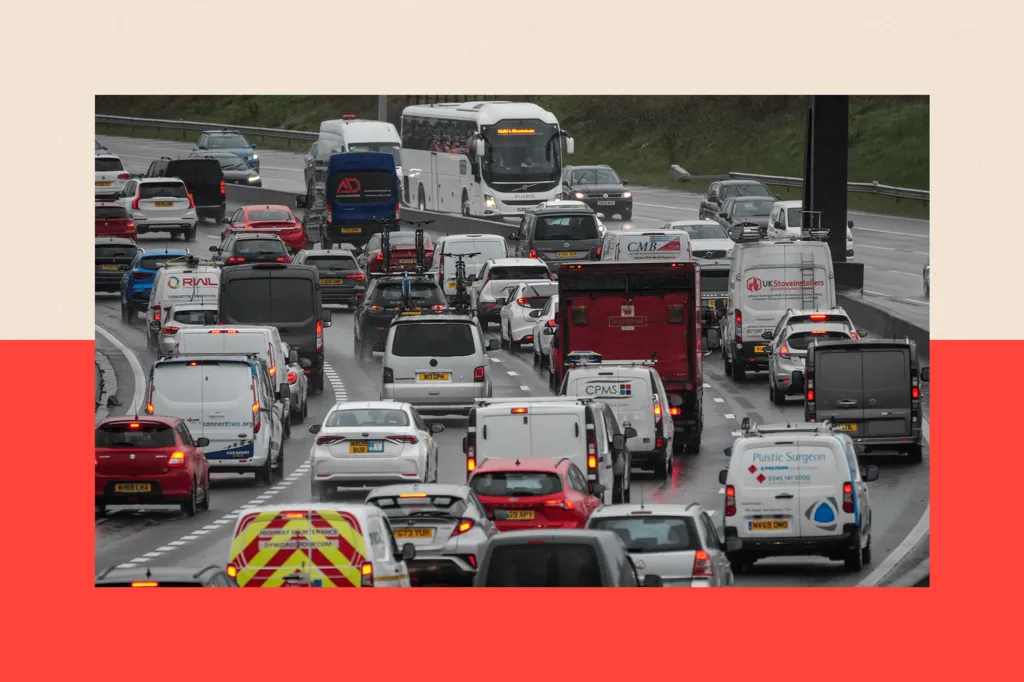
Delays on major roads in England have increased between 2019 and 2025, partly due to road works, highlighting the need for more effective management of infrastructure projects.
A report by the Department for Transport (DfT) on National Highways' performance notes the government's concern over rising delays and their impact on businesses and road users.
The report emphasizes the importance of addressing delays on the strategic road network to drive economic growth.
The government has announced plans to invest £25bn in the strategic road network between 2026 and 2031, aiming to improve the country's infrastructure.
A new approach to managing road works has been tested in Hampshire, where a garden village is being built, requiring the construction of an additional junction on the M27.
The project involved building a concrete tunnel in a nearby field, which was then slid into place, minimizing disruptions to the motorway.
John Beresford, managing director of Buckland Development, explains that the goal was to minimize long-term disruptions by completing the work quickly, despite the short-term inconvenience.
James Barwise, policy lead at the Road Haulage Association, suggests that short-term whole-road closures can be beneficial, as they allow for more efficient completion of works.
Barwise acknowledges that such closures can be disruptive but notes that they can be mitigated by advance notice, allowing hauliers to plan accordingly.
Local authorities are exploring alternative solutions, including lane rental schemes, which charge utility companies for works on busy routes during peak times.
Councillor Tom Hunt, chair of the Local Government Association's inclusive growth committee, argues that lane rental schemes can lead to more efficient and faster works.
However, Clive Bairsto of Streetworks UK warns that such schemes could result in increased costs for consumers, as the costs of lane rental are passed on to them.
Bairsto emphasizes the need for a balanced approach, acknowledging that some disruptions are necessary to maintain and improve the country's infrastructure.
The issue of road works management is complex, with multiple factors at play, including co-ordination, communication, and duration.
Nicola Bell of National Highways notes that the lack of investment in infrastructure has led to increased road works, as the country seeks to upgrade its networks.
The government's emphasis on improving infrastructure to drive economic growth suggests that road works will continue to be a feature of the national landscape.
The key question remains whether these works can be managed more effectively to minimize their impact on daily journeys, businesses, and the overall quality of life for motorists.
As the nation grapples with the challenges of infrastructure development, it is clear that a more nuanced approach is needed to balance the need for improvement with the need to minimize disruptions.
The search for solutions continues, with various stakeholders working to find more effective ways to manage road works and mitigate their impact.
Ultimately, the goal is to create a more efficient and sustainable infrastructure network that supports the country's economic growth while minimizing the inconvenience to road users.

Business
Artist Alleges AirAsia Used His Work Without Permission
A street artist from Penang has reported that one of his artworks has been replicated and featured on the design of an airplane.
A lawsuit has been filed by a Malaysian-based artist against AirAsia and its parent company, Capital A Berhad, alleging unauthorized use of the artist's designs on one of the airline's planes.
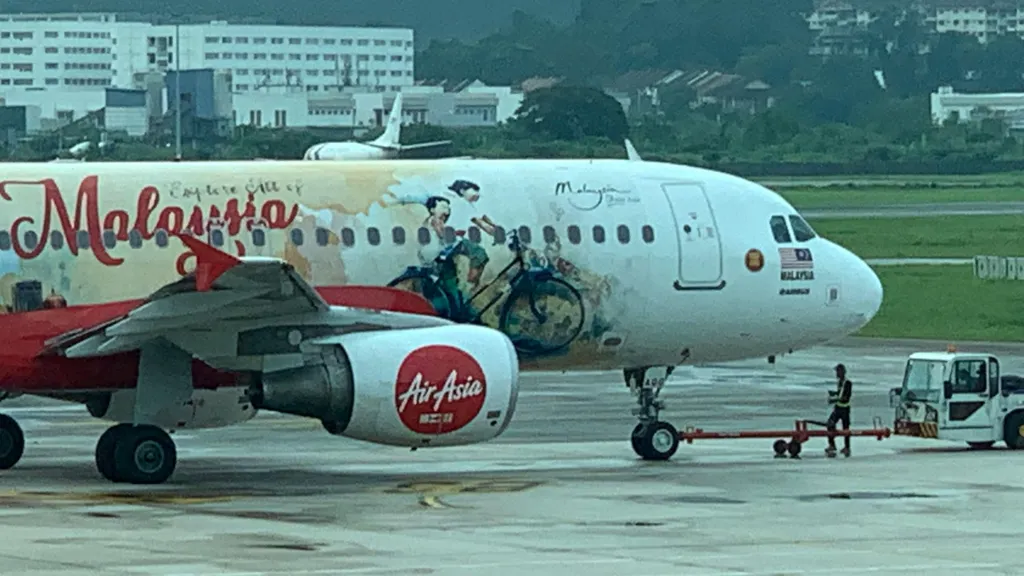
According to the lawsuit, Ernest Zacharevic, a Lithuanian-born artist residing in Penang, claims that his 2012 street mural, Kids on Bicycle, was reproduced and displayed on an AirAsia aircraft in late 2024 without his permission.
Zacharevic states that the use of his design was unauthorized, and no licensing agreement or consent was obtained, adding that the livery was removed after he publicly expressed concerns about the matter.
The BBC has reached out to AirAsia for a statement regarding the allegations.
In an interview with the BBC on Thursday, Zacharevic recalled that he first became aware of the alleged copyright infringement in October 2024, when he discovered that an AirAsia plane was featuring a livery resembling his artwork.
With over a decade of experience in Malaysia, Zacharevic is known for his roadside murals in Penang, which have become a staple of the local art scene.
One of Zacharevic's notable works is the 2012 street mural Kids on Bicycle, created for a local festival, which features two children on a bicycle integrated into the mural, located in George Town's heritage district.
The mural has become a popular tourist attraction, with many visitors taking photos in front of the iconic artwork.
Zacharevic alleges that his work was reproduced on an AirAsia plane without his knowledge or consent, and he personally witnessed the plane in operation at an airport.
Recalling the incident, Zacharevic expressed his discomfort with the situation, which occurred in 2024.
He took to social media to address the issue, posting a photo of the plane and tagging the airline, suggesting that they needed to discuss the use of his artwork.

Since then, Zacharevic has engaged in discussions with the company, but they have been unable to come to a mutually agreeable resolution.
This is not the first instance of Zacharevic's work being used in connection with AirAsia, as he claims the airline has also used his artwork on a delivery bag for its food services arm.
Court documents reveal that Zacharevic had previously discussed a potential collaboration with AirAsia in 2017, where he would create art for the airline's jets and a mural in one of their offices.
According to the documents, Zacharevic had informed the airline of his work and business rates during these discussions.
The lawsuit asserts that despite being aware of Zacharevic's work and rates, the airline proceeded to reproduce and publicly display one of his notable works, thereby infringing on his copyright and moral rights.
As the largest low-cost carrier in Asia, AirAsia operates over 200 jets to more than 100 destinations, and has recently announced plans to resume flights from Kuala Lumpur to London via Bahrain.
Zacharevic has stated that he will leave it to the court to determine any potential compensation he may be entitled to.
The artist emphasized that he does not consider the use of his artwork to be a mere reference to cultural or geographical associations, but rather a distinct artistic creation.
Zacharevic stressed that his artwork is the result of years of professional training, skill, and labor, and should be recognized as such.
Business
US Businesses and Consumers Bear Brunt of Trump Tariff Costs, According to NY Fed
In 2022, the United States saw a significant increase in collective import tariff rates, with rates rising by more than 300 percent for a range of imported goods.
The modification of tariff agreements by President Donald Trump with several countries had a consistent outcome: increased costs for US-based companies and consumers.

According to a study released on Thursday by the Federal Reserve Bank of New York, the average tariff rate on imported goods increased significantly, rising from 2.6% at the beginning of the year to 13% in 2025.
The New York Fed's research revealed that US companies absorbed approximately 90% of the costs associated with the higher tariffs imposed by Trump on goods from countries such as Mexico, China, Canada, and the European Union.
The Federal Reserve Bank of New York stated that "the majority of the economic burden of the high tariffs imposed in 2025 continues to be borne by US firms and consumers."
When tariff rates changed and increased in the previous year, exporting countries did not adjust their prices to mitigate potential declines in US demand.
Instead of lowering prices, exporters maintained their existing prices and transferred the tariff costs to US importers, who subsequently increased the prices of these goods for consumers.
The response of exporters in 2025 was similar to their reaction in 2018, when Trump introduced certain tariffs during his first term, resulting in higher consumer prices with minimal other economic effects, as noted by the New York Fed at the time.
The New York Fed's findings on Thursday are consistent with the results of other recent analyses.
The Kiel Institute for the World Economy, a German research organization, reported last month that its research indicated "nearly complete pass-through of tariffs to US import prices."
By analyzing 25 million transactions, Kiel researchers discovered that the prices of goods from countries like Brazil and India did not decrease.
The Kiel report noted that "trade volumes declined" instead, indicating that exporters preferred to reduce the quantity of goods shipped to the US rather than lower their prices.
The National Bureau of Economic Research also found that the pass-through of tariffs to US import prices was "nearly 100%", meaning that the US bears the cost of the price increase, not the exporting countries.
Similarly, the Tax Foundation, a Washington DC-based think tank, found that the increased tariffs on goods in 2025 resulted in higher costs for American households.
The Tax Foundation considered tariffs as a new tax on consumers and estimated that the 2025 increases resulted in an average cost of $1,000 (£734.30) per household, with a projected cost of $1,300 in 2026.
The Tax Foundation reported that the "effective" tariff rate, which accounts for decreased consumer purchases due to higher prices, is now 9.9%, representing the highest average rate since 1946.
The Tax Foundation concluded that the economic benefits of tax cuts included in Trump's "Big Beautiful Bill" will be entirely offset by the impacts of the tariffs on households.
Business
BBC Reporter Exposed to Cyber Attack Due to Vulnerabilities in AI Coding Tool
The demand for vibe-coding tools, which enable individuals without coding experience to develop applications using artificial intelligence, is experiencing rapid growth.
A significant and unresolved cyber-security vulnerability has been identified in a popular AI coding platform, according to information provided to the BBC.

The platform, known as Orchids, utilizes a "vibe-coding" approach, enabling individuals without technical expertise to create apps and games by inputting text prompts into a chatbot.
In recent months, such platforms have gained widespread popularity, often being touted as an early example of how AI can rapidly and affordably perform various professional tasks.
However, experts warn that the ease with which Orchids can be compromised highlights the risks associated with granting AI bots extensive access to computers in exchange for autonomous task execution.
Despite repeated requests for comment, the company has not responded to the BBC's inquiries.
Orchids claims to have a user base of one million and boasts partnerships with top companies, including Google, Uber, and Amazon.
According to ratings from App Bench and other analysts, Orchids is considered the top program for certain aspects of vibe coding.
Cyber-security researcher Etizaz Mohsin demonstrated the platform's security flaws to the BBC.
To test the platform's security, a spare laptop was used to download the Orchids desktop app and initiate a vibe-coding project.
A request was made to the Orchids AI assistant to generate code for a computer game based on the BBC News website.
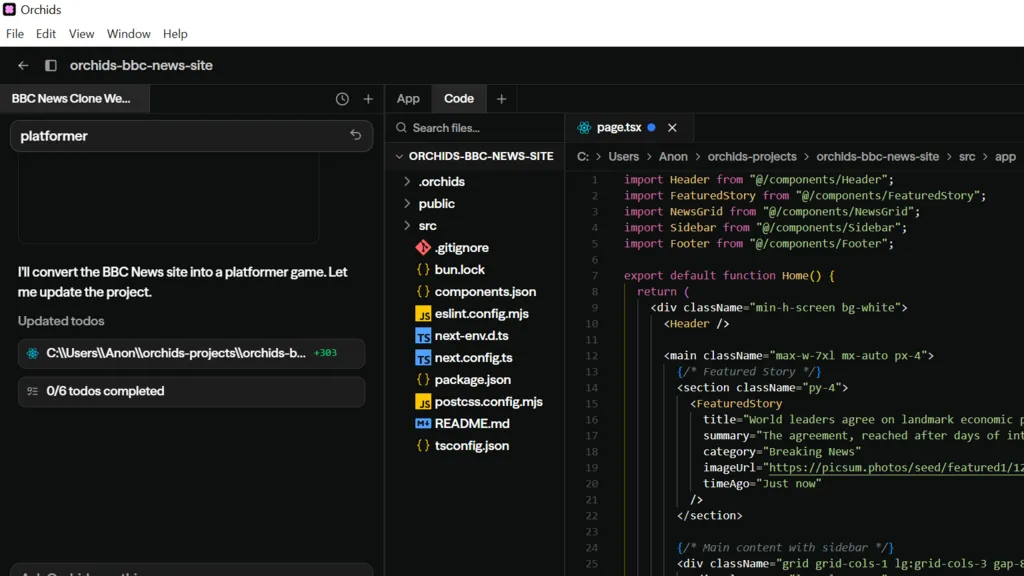
The AI assistant automatically compiled code on the screen, which, without prior experience, was unintelligible.
By exploiting a specific cyber-security weakness, Mohsin was able to access the project and view and edit the code.
Mohsin then added a line of code to the project, which went unnoticed.
This action apparently allowed him to gain access to the computer, as evidenced by the subsequent appearance of a "Joe is hacked" notepad file on the desktop and a changed wallpaper featuring an AI hacker image.
The potential implications of this hack on the platform's numerous projects are significant.
A malicious hacker could have easily installed a virus on the machine without any action required from the victim.
Sensitive personal or financial data could have been compromised.
An attacker could have accessed internet history or even used the computer's cameras and microphones for surveillance.
Most cyber-attacks involve tricking victims into downloading malicious software or divulging login credentials.
This particular attack was carried out without any involvement from the victim, known as a zero-click attack.
Mohsin stated that the vibe-coding revolution has introduced a new class of security vulnerabilities that did not previously exist, highlighting the risks associated with relying on AI to handle tasks.
The concept of AI handling tasks autonomously comes with significant risks, according to Mohsin.
Mohsin, a 32-year-old from Pakistan currently residing in the UK, has a history of discovering dangerous software flaws, including work on the Pegasus spyware.

Mohsin discovered the flaw in December 2025 while experimenting with vibe-coding and has since attempted to contact Orchids through various channels, sending around a dozen messages.
The Orchids team responded to Mohsin this week, stating that they may have missed his warnings due to being overwhelmed with incoming messages.
According to the company's LinkedIn page, Orchids is a San Francisco-based company founded in 2025 with fewer than 10 employees.
Mohsin has only identified flaws in Orchids and not in other vibe-coding platforms, such as Claude Code, Cursor, Windsurf, and Lovable.
Nonetheless, experts caution that this discovery should serve as a warning.
Professor Kevin Curran of Ulster University's cybersecurity department notes that the main security implications of vibe-coding are the potential for code to fail under attack due to a lack of discipline, documentation, and review.
Agentic AI tools, which perform complex tasks with minimal human input, are increasingly gaining attention.
A recent example is the Clawbot agent, also known as Moltbot or Open Claw, which can execute tasks on a user's device with little human intervention.
The free AI agent has been downloaded by hundreds of thousands of people, granting it deep access to computers and potentially introducing numerous security risks.
Karolis Arbaciauskas, head of product at NordPass, advises caution when using such tools.
Arbaciauskas warns that while it may be intriguing to see what an AI agent can do without security measures, this level of access is also highly insecure.
He recommends running these tools on separate, dedicated machines and using disposable accounts for experimentation.
To stay informed about the latest tech stories and trends, sign up for the Tech Decoded newsletter, available outside the UK as well.
(Removed to maintain the same number of paragraphs)

-
 News8 hours ago
Australian Politics Faces Questions Over Gender Equality Amid Sussan Ley’s Appointment
-
 News5 hours ago
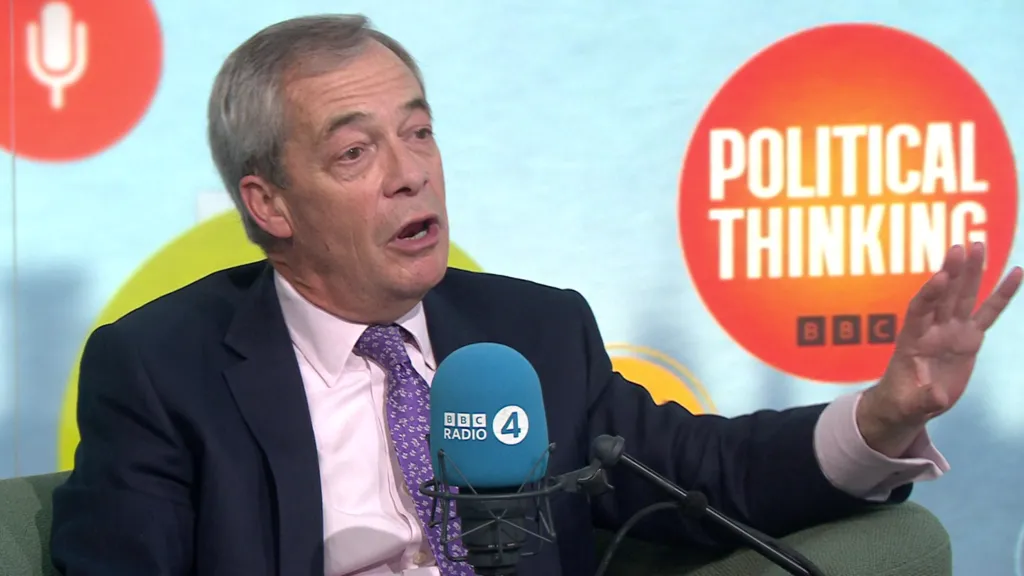
Farage Says Reform to Replace Traditional Tory Party
-
 News5 hours ago
Wrexham Pair Seek Win Against Former Team Ipswich
-
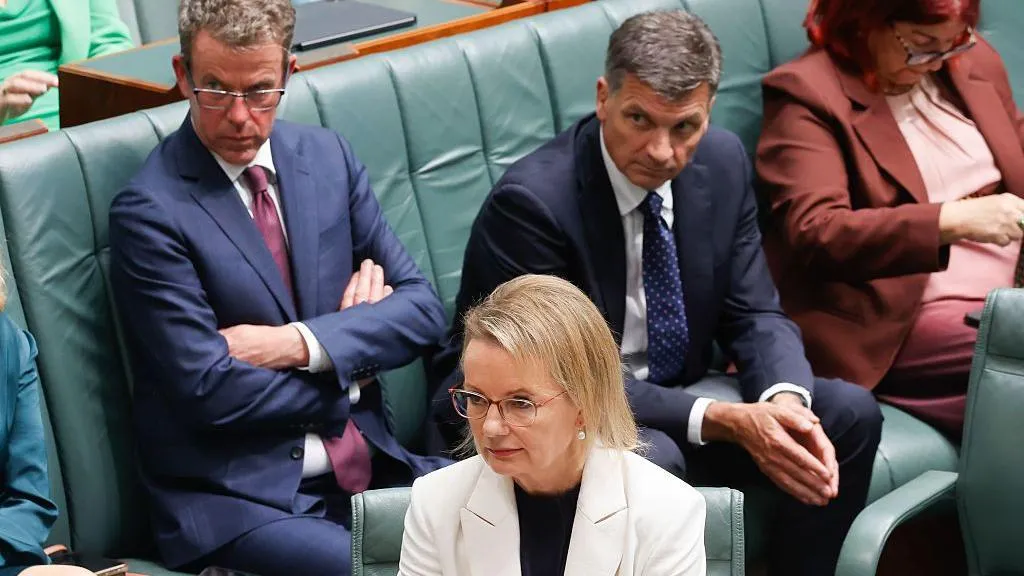 News11 hours ago
Liberal Party Removes Australia’s First Female Leader
-
 News9 hours ago
UK Braces for Cold Snap with Snow and Ice Alerts Expected
-
 News5 hours ago
Husband’s alleged £600k theft for sex and antiques blamed on drug side effects
-
 News2 days ago
Sunbed ads spreading harmful misinformation to young people
-
 Business11 hours ago
BBC Reporter Exposed to Cyber Attack Due to Vulnerabilities in AI Coding Tool