
Business
Veteran Designer of Hello Kitty Retires After 46-Year Tenure
Under Yuko Yamaguchi’s guidance, the feline character achieved global icon status.
After a 46-year tenure, the creator of Hello Kitty is relinquishing her design role, marking the end of an era for the beloved character that has become a global phenomenon.
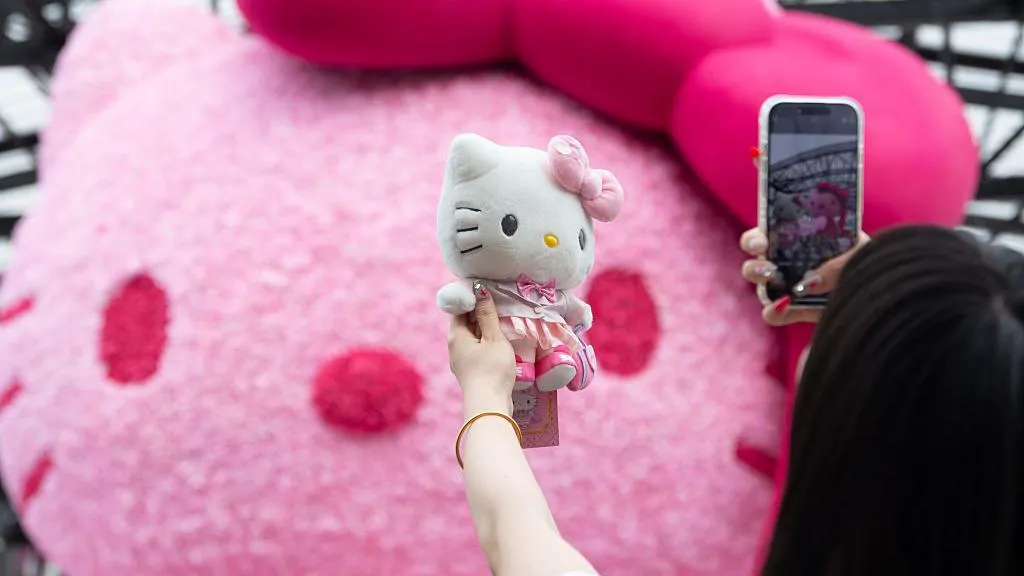
In 1980, Yuko Yamaguchi assumed design responsibilities for Hello Kitty, a character that, despite being commonly perceived as a feline, is actually a little girl from London, five years after the character's initial launch.
During Yamaguchi's four-decade stewardship, Hello Kitty has evolved into one of the most successful franchises worldwide, with its popularity extending far beyond its origins in Japan.
Sanrio, the company behind Hello Kitty, has expressed its gratitude to Yamaguchi, stating that she has "passed the torch" to the next generation of designers.
The launch of Hello Kitty coincided with the rising global popularity of Japanese 'kawaii' culture, a distinctively feminine and youthful aesthetic that has become a cultural phenomenon.
Yamaguchi often embodied the Hello Kitty spirit by wearing dresses inspired by the character and styling her hair in buns, reflecting her deep connection to the brand.
Now 70, Yamaguchi has been credited by Sanrio with transforming Hello Kitty into a universally beloved character, as noted on the company's website.
Sanrio has announced that one of its designers, known by the pseudonym "Aya", who has been working alongside Yamaguchi, will take over as the lead designer by the end of 2026.
Although Yamaguchi is stepping down from her design role, she will remain with Sanrio to offer guidance and support.
Hello Kitty first appeared on a coin purse in 1974, but it was in 1980 that the character began to gain widespread recognition, eventually becoming a global marketing sensation.
The character has been featured on a wide range of products, including clothing, accessories, video games, and even an Airbus plane, and has partnered with notable brands such as Unicef, Nintendo, and Balenciaga, as well as making an appearance as a float in the Macy's Thanksgiving Day Parade.
Hello Kitty-themed cafes can be found worldwide, and there is a dedicated theme park in Japan, with another park slated to open in China.
Unlike other popular Japanese exports, such as Pokemon, Hello Kitty has a relatively minimal backstory, with Sanrio describing her as "not quite a cat, but not a human either".
According to Sanrio, Hello Kitty was born in London, has a twin sister named Mimmy, and a boyfriend named Dear Daniel, although these details are not widely emphasized in the character's marketing.
A Warner Bros film featuring Hello Kitty is scheduled for release in 2028, marking the character's cinematic debut, although she has previously appeared in several animated series, always without speaking, due to her design lacking a mouth.
Business
US inflation slows as used vehicle prices decline
According to the most recent official data, prices increased by 2.4% over the 12 months ending in January, marking the smallest gain since May.
The US experienced a slowdown in inflation last month, driven by decreases in energy and used car prices.
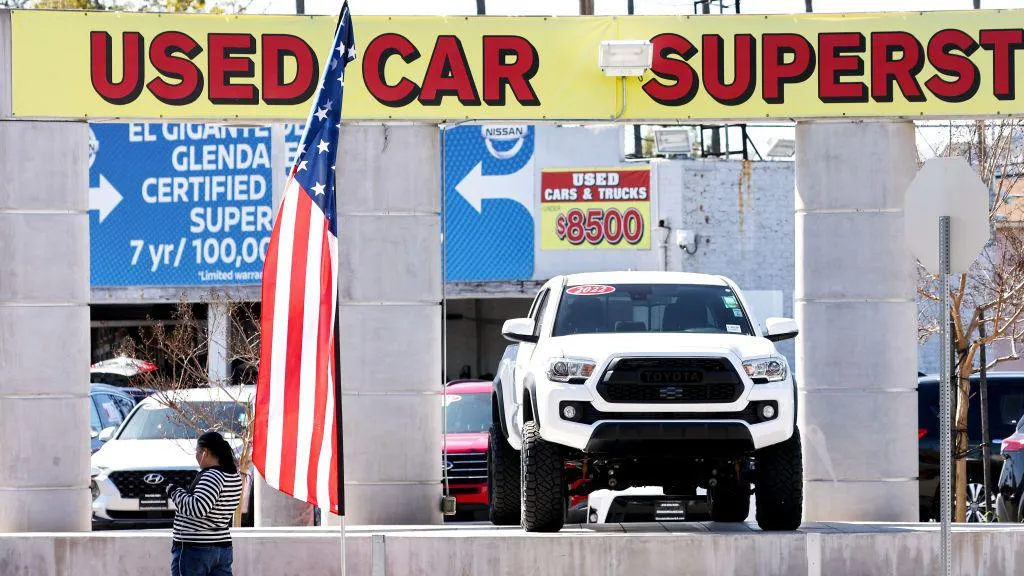
According to the Labor Department, the consumer price index increased by 2.4% over the past 12 months, ending in January, marking a decline from the previous month's 2.7% and the slowest rate since May.
This development may support the argument made by US President Donald Trump and others that the central bank has the flexibility to lower interest rates without triggering a surge in prices.
However, analysts caution that progress toward the Federal Reserve's inflation target of 2% may be hindered in the coming months if companies begin to pass on tariff costs to consumers more extensively.
Neil Birrell, chief investment officer at Premier Miton Investors, noted that the impact of tariffs remains uncertain and pointed out other data anomalies that could have influenced the January figures.
Birrell stated that the January report is likely to pave the way for a potential rate cut in the near future.
He added that the US economy appears to be performing well, with strong growth, stable inflation, a robust job market, and a Federal Reserve that has the ability to adjust its policies as needed.
Business
Artist Alleges AirAsia Used His Work Without Permission
A street artist from Penang has reported that one of his artworks has been replicated and featured on the design of an airplane.
A lawsuit has been filed by a Malaysian-based artist against AirAsia and its parent company, Capital A Berhad, alleging unauthorized use of the artist's designs on one of the airline's planes.
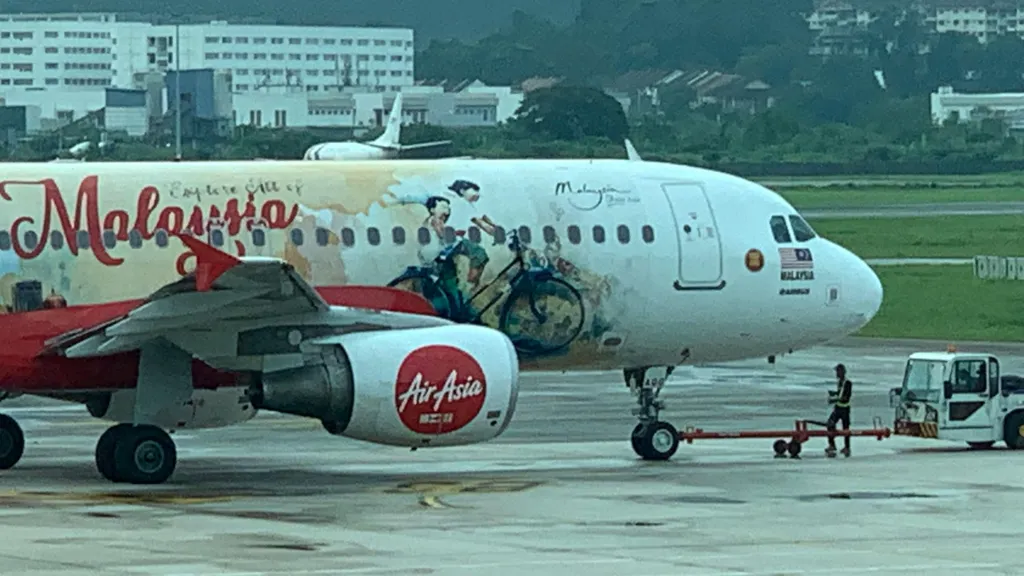
According to the lawsuit, Ernest Zacharevic, a Lithuanian-born artist residing in Penang, claims that his 2012 street mural, Kids on Bicycle, was reproduced and displayed on an AirAsia aircraft in late 2024 without his permission.
Zacharevic states that the use of his design was unauthorized, and no licensing agreement or consent was obtained, adding that the livery was removed after he publicly expressed concerns about the matter.
The BBC has reached out to AirAsia for a statement regarding the allegations.
In an interview with the BBC on Thursday, Zacharevic recalled that he first became aware of the alleged copyright infringement in October 2024, when he discovered that an AirAsia plane was featuring a livery resembling his artwork.
With over a decade of experience in Malaysia, Zacharevic is known for his roadside murals in Penang, which have become a staple of the local art scene.
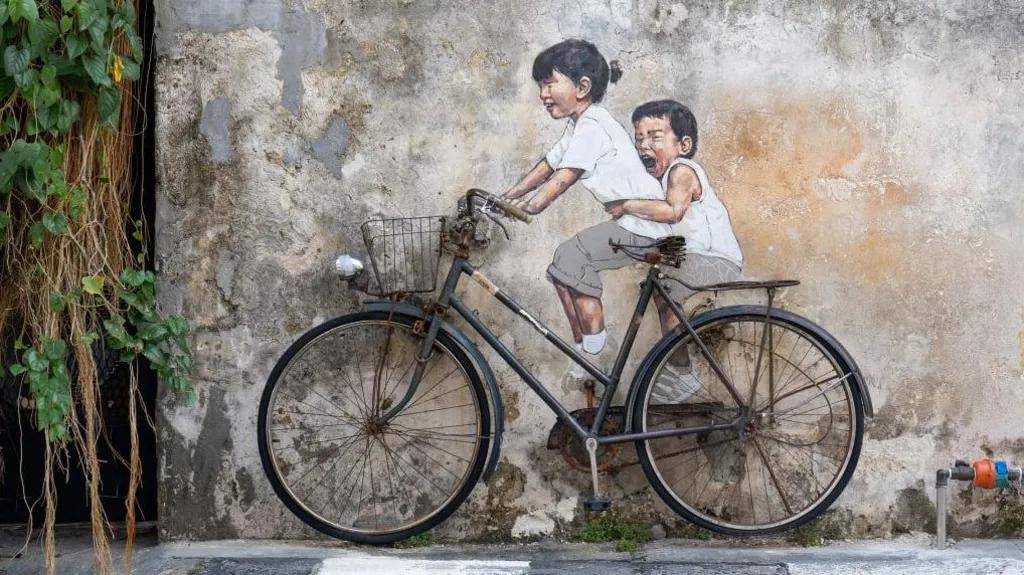
One of Zacharevic's notable works is the 2012 street mural Kids on Bicycle, created for a local festival, which features two children on a bicycle integrated into the mural, located in George Town's heritage district.
The mural has become a popular tourist attraction, with many visitors taking photos in front of the iconic artwork.
Zacharevic alleges that his work was reproduced on an AirAsia plane without his knowledge or consent, and he personally witnessed the plane in operation at an airport.
Recalling the incident, Zacharevic expressed his discomfort with the situation, which occurred in 2024.
He took to social media to address the issue, posting a photo of the plane and tagging the airline, suggesting that they needed to discuss the use of his artwork.
Since then, Zacharevic has engaged in discussions with the company, but they have been unable to come to a mutually agreeable resolution.
This is not the first instance of Zacharevic's work being used in connection with AirAsia, as he claims the airline has also used his artwork on a delivery bag for its food services arm.
Court documents reveal that Zacharevic had previously discussed a potential collaboration with AirAsia in 2017, where he would create art for the airline's jets and a mural in one of their offices.
According to the documents, Zacharevic had informed the airline of his work and business rates during these discussions.
The lawsuit asserts that despite being aware of Zacharevic's work and rates, the airline proceeded to reproduce and publicly display one of his notable works, thereby infringing on his copyright and moral rights.
As the largest low-cost carrier in Asia, AirAsia operates over 200 jets to more than 100 destinations, and has recently announced plans to resume flights from Kuala Lumpur to London via Bahrain.
Zacharevic has stated that he will leave it to the court to determine any potential compensation he may be entitled to.
The artist emphasized that he does not consider the use of his artwork to be a mere reference to cultural or geographical associations, but rather a distinct artistic creation.
Zacharevic stressed that his artwork is the result of years of professional training, skill, and labor, and should be recognized as such.
Business
US Businesses and Consumers Bear Brunt of Trump Tariff Costs, According to NY Fed
In 2022, the United States saw a significant increase in collective import tariff rates, with rates rising by more than 300 percent for a range of imported goods.
The modification of tariff agreements by President Donald Trump with several countries had a consistent outcome: increased costs for US-based companies and consumers.
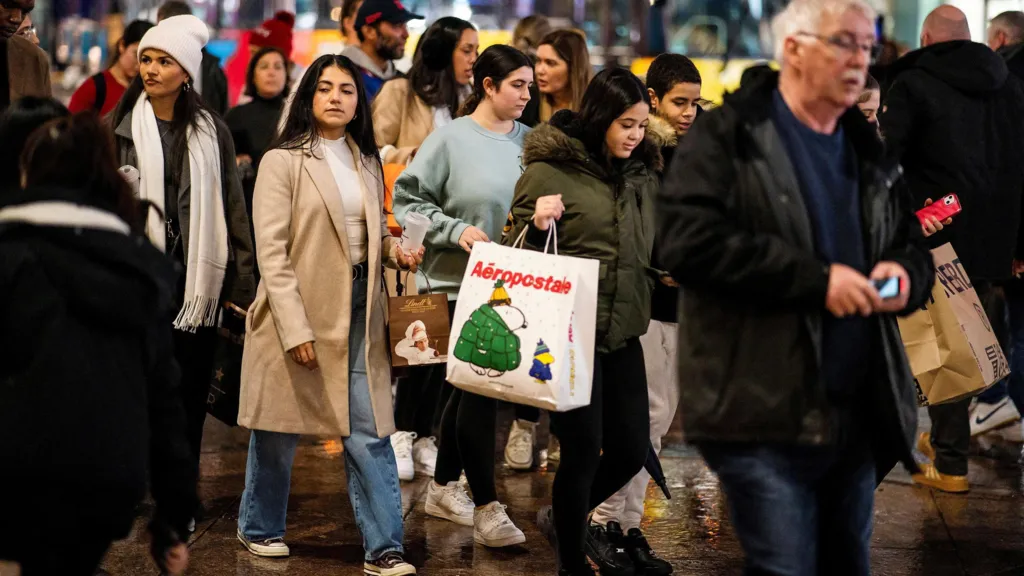
According to a study released on Thursday by the Federal Reserve Bank of New York, the average tariff rate on imported goods increased significantly, rising from 2.6% at the beginning of the year to 13% in 2025.
The New York Fed's research revealed that US companies absorbed approximately 90% of the costs associated with the higher tariffs imposed by Trump on goods from countries such as Mexico, China, Canada, and the European Union.
The Federal Reserve Bank of New York stated that "the majority of the economic burden of the high tariffs imposed in 2025 continues to be borne by US firms and consumers."
When tariff rates changed and increased in the previous year, exporting countries did not adjust their prices to mitigate potential declines in US demand.
Instead of lowering prices, exporters maintained their existing prices and transferred the tariff costs to US importers, who subsequently increased the prices of these goods for consumers.
The response of exporters in 2025 was similar to their reaction in 2018, when Trump introduced certain tariffs during his first term, resulting in higher consumer prices with minimal other economic effects, as noted by the New York Fed at the time.
The New York Fed's findings on Thursday are consistent with the results of other recent analyses.
The Kiel Institute for the World Economy, a German research organization, reported last month that its research indicated "nearly complete pass-through of tariffs to US import prices."
By analyzing 25 million transactions, Kiel researchers discovered that the prices of goods from countries like Brazil and India did not decrease.
The Kiel report noted that "trade volumes declined" instead, indicating that exporters preferred to reduce the quantity of goods shipped to the US rather than lower their prices.
The National Bureau of Economic Research also found that the pass-through of tariffs to US import prices was "nearly 100%", meaning that the US bears the cost of the price increase, not the exporting countries.
Similarly, the Tax Foundation, a Washington DC-based think tank, found that the increased tariffs on goods in 2025 resulted in higher costs for American households.
The Tax Foundation considered tariffs as a new tax on consumers and estimated that the 2025 increases resulted in an average cost of $1,000 (£734.30) per household, with a projected cost of $1,300 in 2026.
The Tax Foundation reported that the "effective" tariff rate, which accounts for decreased consumer purchases due to higher prices, is now 9.9%, representing the highest average rate since 1946.
The Tax Foundation concluded that the economic benefits of tax cuts included in Trump's "Big Beautiful Bill" will be entirely offset by the impacts of the tariffs on households.
-
 News13 hours ago
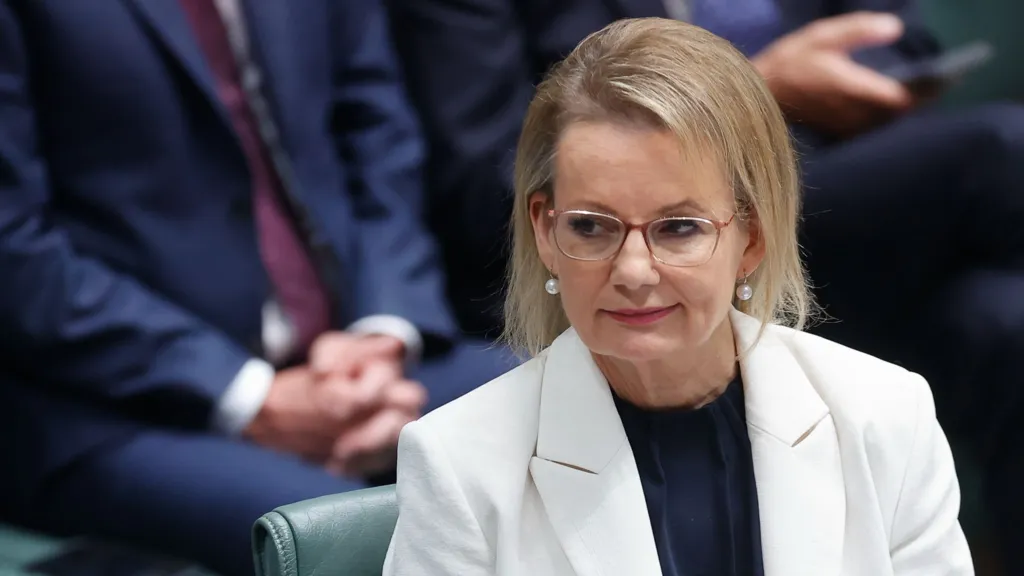
Australian Politics Faces Questions Over Gender Equality Amid Sussan Ley’s Appointment
-
 News10 hours ago
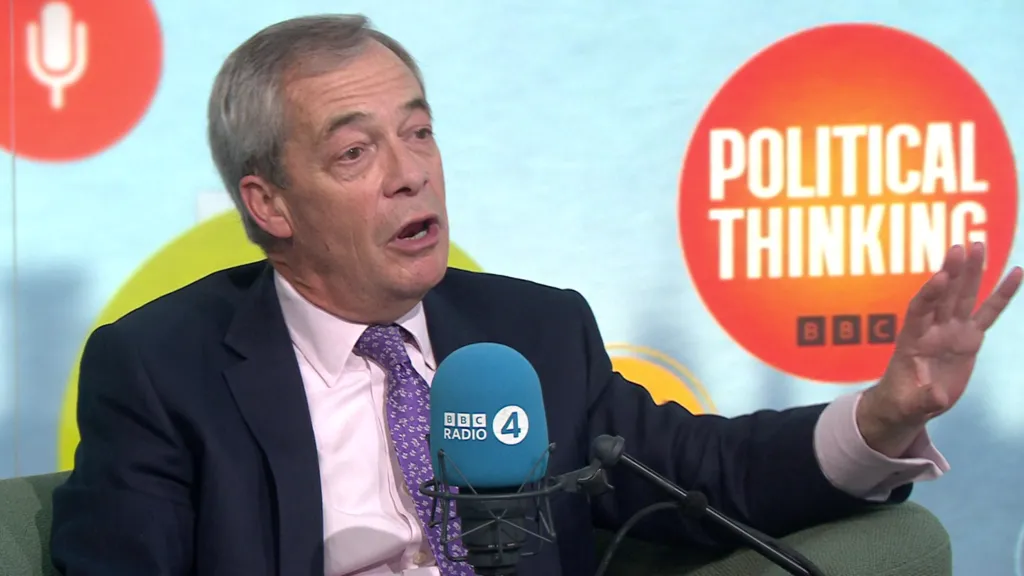
Farage Says Reform to Replace Traditional Tory Party
-
 News10 hours ago
Wrexham Pair Seek Win Against Former Team Ipswich
-
 News15 hours ago
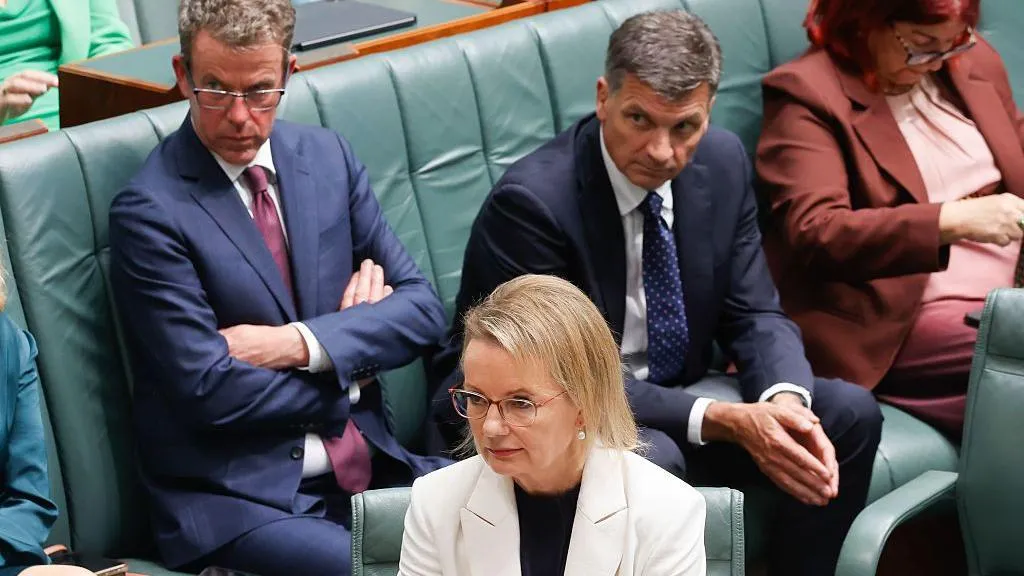
Liberal Party Removes Australia’s First Female Leader
-
 News13 hours ago
UK Braces for Cold Snap with Snow and Ice Alerts Expected
-
 News10 hours ago
Husband’s alleged £600k theft for sex and antiques blamed on drug side effects
-
 News2 days ago
Sunbed ads spreading harmful misinformation to young people
-
 Business15 hours ago
BBC Reporter Exposed to Cyber Attack Due to Vulnerabilities in AI Coding Tool