
News
Bats seek refuge in churches, causing damage and disruption
Research suggests that approximately 50 percent of churches in England are home to bat populations.
This task can only be accomplished under the cover of darkness, when the world is hushed and still.
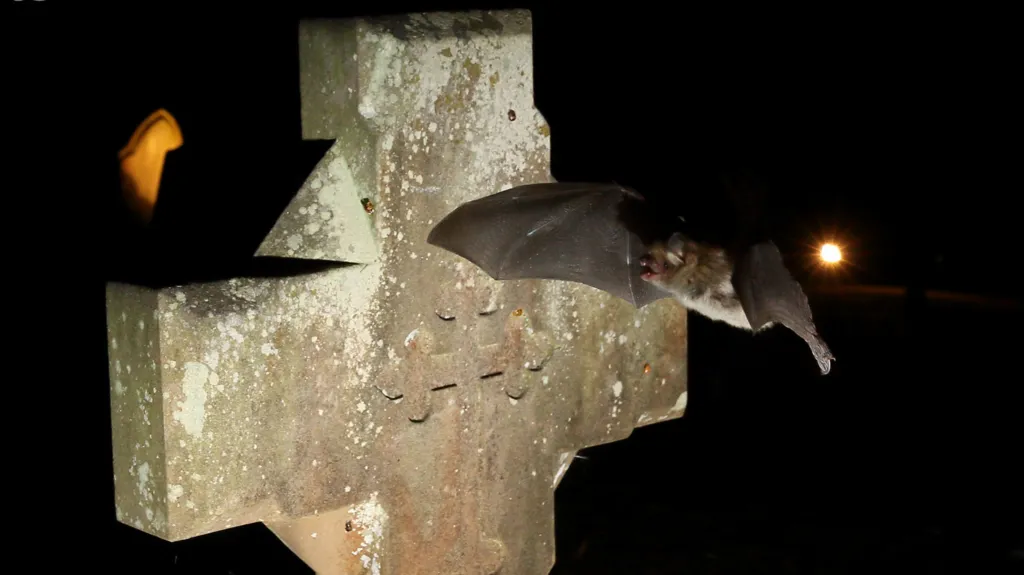
As the sun dips below the horizon, a team of bat hunters makes its way through the gravestones of Guestwick Church in Norfolk, their footsteps quiet on the evening air.
The creaky door swings open, revealing a dimly lit, deserted church interior, where the team begins to set up their specialized equipment.
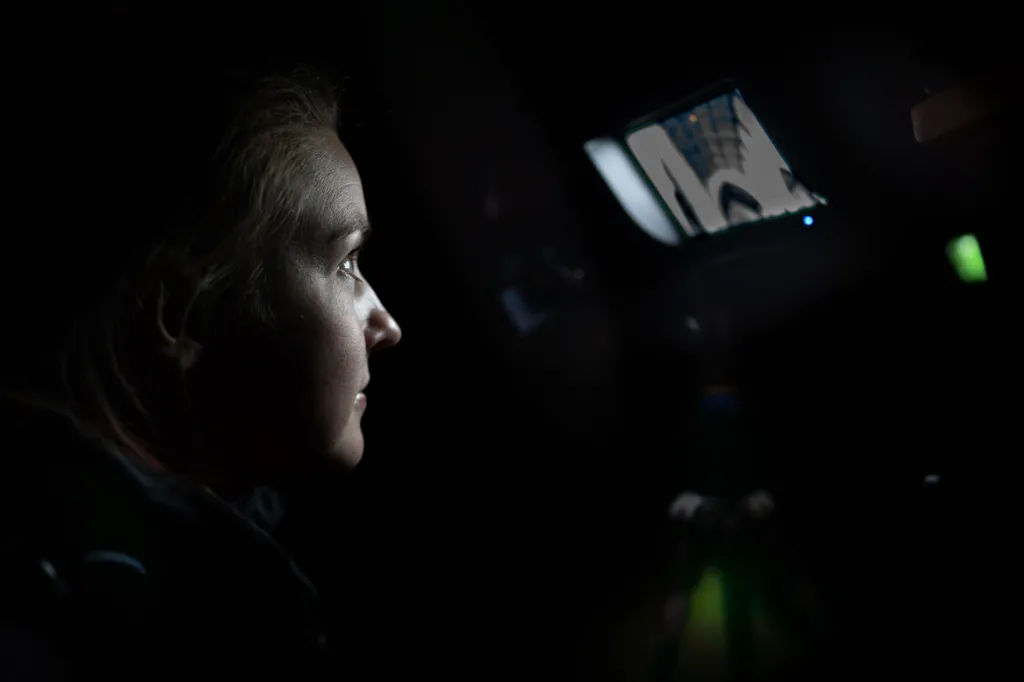
Infrared and thermal cameras are carefully positioned to capture the bats' movements, while audio detectors are tuned to frequencies that will pick up the sounds of the bats' high-pitched chatter.
Before long, the bats begin to emerge, flitting and swooping through the aisles as their amplified calls fill the historic building, creating an otherworldly atmosphere.
According to Diana Spencer of the Bats in Churches Project, many of these ancient churches have likely been home to bats for centuries, with some structures standing for over 1,000 years.
A recent study published in the British Ecological Society's journal People & Nature reveals that these historic buildings are providing crucial habitats for nocturnal animals like bats.
The research, which drew on citizen science surveys led by the Bat Conservation Trust, estimates that approximately half of England's churches – over 8,000 – are home to bat populations.
This figure rises to around 80% for older churches, highlighting the significant role these structures play in supporting bat populations.
Spencer notes that churches offer bats an ideal environment, with their complex architecture featuring numerous nooks and crannies for roosting, large open spaces for flight, and dry areas shielded from the elements.
This unique combination of features creates a "man-made forest" that is perfectly suited to the needs of bats, providing them with a safe and welcoming space to thrive.
Guestwick Church is home to two species of bats: Common Pipistrelles and Natterer's, which roost high up in the rafters, their tiny forms silhouetted against the darkness.
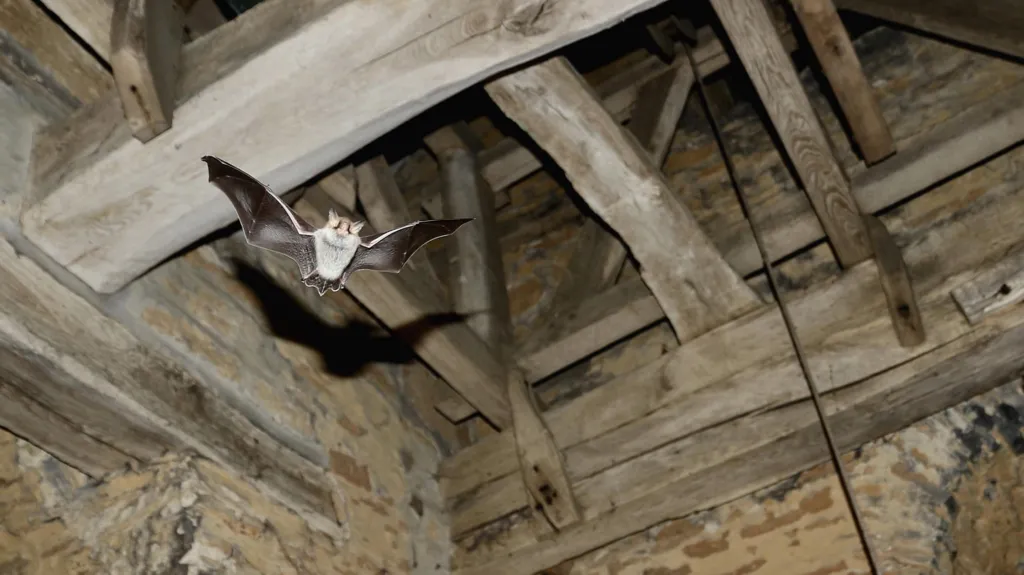
The Pipistrelles are the first to emerge, flying around the church for a few minutes before squeezing through narrow gaps around the door to venture out into the night.
The Natterer's bats follow shortly, preferring to exit through small holes in the roof as they take to the skies in search of food.
Without the aid of specialized cameras, the bats would be almost impossible to spot, lost in the darkness as they flit and flutter through the church.
The study found that around a third of the churches surveyed were unaware that they were hosting bat populations, highlighting the need for greater awareness and education.
In some cases, however, the presence of bats was all too apparent, with the animals leaving behind telltale signs of their occupancy, such as urine and droppings.
Graeme Peart, responsible for the upkeep of St Margaret's Church in Saxlingham, notes that the bats can be "lovely" but also "problematic," requiring careful management to mitigate the impact of their presence.
Peart has been dealing with the challenges posed by the bats for around 15 years, citing issues such as urine and droppings damage, as well as the destruction of brass fixtures.
One notable incident involved a carpet leading up to the altar, which became saturated with urine and droppings and had to be discarded, highlighting the need for effective solutions to manage the bats' presence.
As bats are legally protected in the UK, removal is not a viable option, and churches must instead work to find ways to coexist with these creatures.

St Margaret's Church has collaborated with the Bats in Churches team to develop a solution, constructing a sealed-off loft conversion above the vestry to provide an alternative roosting site for the bats.
Ecologist Phillip Parker climbs a ladder to show off the interior of the loft, which has been equipped with CCTV cameras to monitor the bats' behavior.
The idea behind the loft conversion is to encourage the bats to roost in this designated area, rather than in the main body of the church, reducing the impact of their presence on the church and its users.
The CCTV cameras have already yielded valuable insights into the bats' behavior, revealing patterns of activity that were previously unknown.
Parker notes that the bats' numbers can fluctuate significantly, with up to 100 individuals present in the loft at certain times, only to disappear for around 10 days before returning once more.
Without the CCTV cameras, these patterns would have gone unnoticed, highlighting the importance of monitoring and research in understanding and managing bat populations.
Initiatives like the loft conversion require significant investment, in terms of both time and money.

The construction of the loft and the ongoing monitoring of the bats has come at a cost of around £50,000, which was funded through the Heritage Lottery Fund and other partners.
According to Diana Spencer, there are often simpler and less costly solutions available, with grants offered by the Bat Conservation Trust to support churches in managing their bat populations.
Spencer suggests that churches can take straightforward steps to mitigate the impact of bats, such as using sheets or covers to protect vulnerable areas, or applying wax coatings to prevent damage from urine.
She advises anyone who discovers bats in a building to contact the National Bat Helpline for guidance and support.
It appears that increasing numbers of bats are seeking refuge in churches, driven by the loss of natural habitats and the destruction of old buildings.

Spencer notes that the decline of woodland habitats, combined with the trend towards warmer, more airtight homes, has reduced the availability of suitable roosting sites for bats, making churches an increasingly important haven.
As a result, church communities are having to adapt to living alongside these nocturnal creatures, with some parishes even embracing the presence of bats as a unique opportunity for engagement and education.
Spencer observes that bat-themed events and activities are becoming increasingly popular, with churches hosting "bat nights" and other events that attract people from the local community who might not otherwise visit the church.
These events offer a chance for people to learn about and appreciate bats, fostering a sense of wonder and connection with these fascinating creatures.
News
GB men’s curling team suffers upset defeat to Italy
At the 2026 Winter Olympics, Great Britain’s men’s curling team mounted a comeback against Italy following a disappointing beginning, ultimately falling short in their inaugural match.
Despite a valiant comeback, Team GB ultimately fell short as Italy held their composure to secure the win in the final end.
A dismal start to the match proved costly for Team GB's men, as they suffered their first defeat of the Winter Olympics at the hands of host nation Italy, despite a spirited fightback in the packed Cortina Curling Stadium.
Following victories in their first two matches, including a win over the Swedish rink that beat them in the gold-medal match four years ago, Team GB entered their second high-profile encounter in as many days in a confident position.
However, a disastrous opening end, in which Italy stole four points, left Team GB trailing and facing an uphill battle in front of a boisterous home crowd.
The British team, currently ranked number one in the world, gradually regained their footing and managed to level the score by the ninth end.
Ultimately, Italy maintained their composure in the final end to emerge victorious, winning 9-7 and adding Team GB to their list of scalps, which already included the Swedes.
"We had to dig deep and play some solid curling, but unfortunately, it wasn't enough to get us over the line," Team GB lead Hammy McMillan said in an interview with BBC Sport.
With seven wins from nine round-robin matches guaranteeing a spot in the semi-finals, Team GB remains in a strong position, although fewer wins may still be sufficient to advance.
The women's team is set to take to the ice next, facing South Korea in their second match at 13:05 GMT, while the men will return to action on Saturday against the Czech Republic at the same time.
Team GB is at the forefront of curling's technological advancements.
Embracing what sets you apart can be a powerful asset, according to some athletes.
A daily guide to the Winter Olympics is available for those looking to stay up-to-date with the action.
The looks of shock on the faces of Team GB's curlers told the story of a disastrous opening end.
With a stone in play, Mouat attempted a risky shot in an effort to claim two points, but it backfired, resulting in none of Team GB's stones in the house and four Italian stones in position.
However, the Scottish quartet, ranked number one in the world, quickly regained their composure and got back to their game.
The teams exchanged singles before a impressive final throw by Mouat, aided by a measurement to determine which stone was closest to the button, allowed Team GB to claim two points and narrow the gap to 5-3.
Another excellent team effort, which included a well-judged throw by Mouat, a solid sweep by Hammy McMillan and Bobby Lammie, and Grant Hardie's strategic expertise, forced Italy to concede a point in the fourth end, reducing the deficit to a single point at the break.
Italy blanked the sixth end and added two points in the seventh to rebuild their lead, but Team GB fought back with two points of their own, remarkably levelling the score with one end remaining after a steal.
The match came down to the final end, but Italy held their nerve to secure the win, prompting a deafening roar from the crowd.
"It's an incredible experience, and we need to get used to it," McMillan added, describing the electric atmosphere as "surreal" and "cool," more akin to a football match than a typical curling crowd.
News
Scotland Kicks Off Nations League Against Slovenia
Uefa has released the schedule for the Nations League, with Scotland set to begin their campaign on 26 September with an away match against Slovenia.
Uefa has released the schedule for the Nations League, with Scotland's campaign set to begin on 26 September with an away match against Slovenia.
The team's six group stage games will be played within a three-month period, culminating in a match against Switzerland on 16 November.
The fixture list was announced following Thursday's draw, which placed Scotland in a group with Switzerland, Slovenia, and North Macedonia.
Having been relegated from League A after a play-off loss to Greece last year, Scotland will compete in the second tier of the Nations League this year.
In response to the draw, head coach Steve Clarke noted that the teams in the group appear to be evenly matched.
Clarke reflected on the team's past experience in the competition, stating that it has been beneficial for Scotland.
He emphasized the importance of the Nations League, citing its role in helping the team qualify for Euro 2020, and anticipated a challenging set of matches.
A key matchup in the Nations League will see Scotland face off against Switzerland.
The group stage will determine the teams' fates, with the winner earning promotion, the runner-up entering a play-off, the third-placed team facing a relegation play-off, and the fourth-placed team being relegated directly.
The upcoming group games will mark a reunion for Scotland and Switzerland, who previously drew 1-1 in Cologne at Euro 2024.
Scotland's last encounter with Slovenia was during the 2018 World Cup qualification campaign, when they won 1-0 at home and drew 2-2 away.
The team has not played North Macedonia since the 2014 World Cup qualifiers, when they drew 1-1 at home and won 2-1 away, with goals from Ikechi Anya and Shaun Maloney.
The schedule for Scotland's Nations League campaign begins on 26 September with a match against Slovenia.
The team will then host Switzerland on 29 September, followed by a trip to face North Macedonia on 3 October.
Scotland will then play Slovenia at home on 6 October, before hosting North Macedonia on 11 November.
The final group stage match will see Scotland travel to face Switzerland on 16 November.
The team's home match against North Macedonia is set for 11 November.
The campaign will conclude with an away match against Switzerland on 16 November.
News
Golfer McIlroy Sinks Bunker Shot at Pebble Beach Pro-Am
At the AT&T Pebble Beach Pro-Am in California, Rory McIlroy achieved an eagle on the 14th hole at Spyglass Hill, capping off his opening round with a score of 68.
During the AT&T Pebble Beach Pro-Am in California, Rory McIlroy achieved an eagle on the 14th hole at Spyglass Hill, contributing to his first-round score of 68.
For further information, Rory McIlroy had a solid opening round, while Hisatsune took the lead.
Access to this content is restricted to users in the United Kingdom.
-
 News8 hours ago
Australian Politics Faces Questions Over Gender Equality Amid Sussan Ley’s Appointment
-
 News5 hours ago
Farage Says Reform to Replace Traditional Tory Party
-
 News5 hours ago
Wrexham Pair Seek Win Against Former Team Ipswich
-
 News11 hours ago
Liberal Party Removes Australia’s First Female Leader
-
 News9 hours ago
UK Braces for Cold Snap with Snow and Ice Alerts Expected
-
 News5 hours ago
Husband’s alleged £600k theft for sex and antiques blamed on drug side effects
-
 News2 days ago
Sunbed ads spreading harmful misinformation to young people
-
 Business11 hours ago
BBC Reporter Exposed to Cyber Attack Due to Vulnerabilities in AI Coding Tool