
News
Apollo 13 astronaut Jim Lovell passes away at 97
The Apollo 13 mission was saved from a potentially disastrous outcome by the swift actions of its commander, who successfully led his crew to safety after a life-threatening situation arose in space.
At the age of 97, astronaut Jim Lovell, who successfully navigated the Apollo 13 mission back to Earth in 1970, has passed away.
According to NASA, Lovell's ability to transform a potentially disastrous situation into a triumph was a testament to his exceptional skills, after an explosion on board the spacecraft forced the crew to abort their lunar landing attempt while hundreds of thousands of miles away from Earth.
The Apollo 13 mission's dramatic conclusion, in which Lovell and his fellow astronauts splashed down into the Pacific Ocean, was witnessed by tens of millions of people on television, cementing its place as one of the most enduring moments in space exploration history.
As a veteran of the Apollo 8 mission, Lovell held the distinction of being the first person to travel to the Moon twice, although he never actually set foot on its surface.
NASA's acting administrator, Sean Duffy, credited Lovell with playing a pivotal role in shaping the US space program's historic trajectory.
In a statement, Lovell's family remembered him for his unwavering optimism, sense of humor, and ability to inspire those around him to push beyond their limits, describing him as a truly unique individual.
Tom Hanks, who portrayed Lovell in the 1995 film Apollo 13, paid tribute to the astronaut as a pioneering figure who embodied the spirit of adventure and leadership.
Hanks reflected on Lovell's remarkable career, noting that his numerous spaceflights were driven by a passion for exploration, rather than a desire for wealth or fame, and that this sense of purpose was what truly defined him.
As a 16-year-old, Lovell's fascination with rocketry led him to construct a makeshift rocket in a Wisconsin field, using a combination of potassium nitrate, sulfur, and charcoal to create a primitive gunpowder.
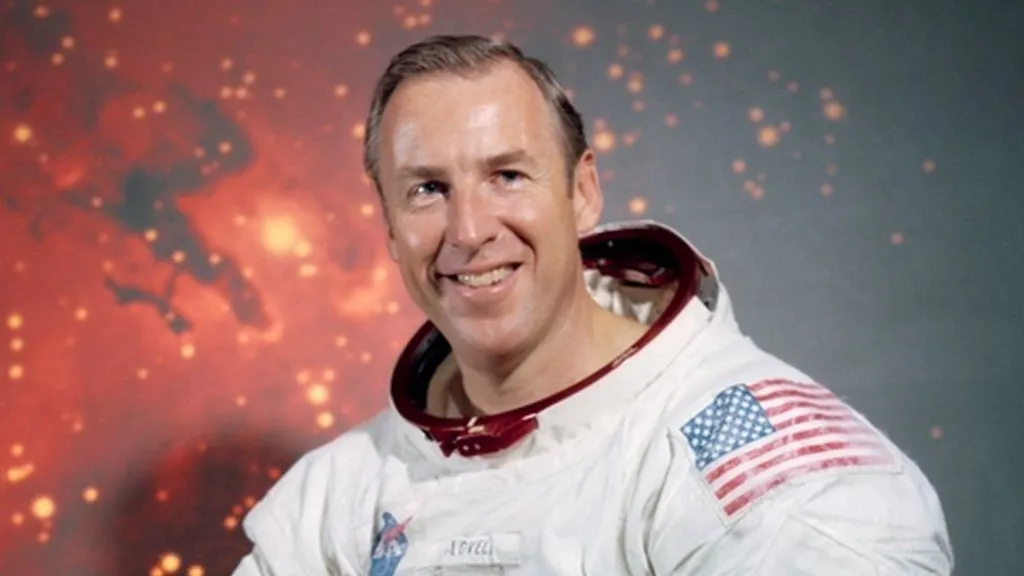
With the help of his science teacher, Lovell managed to acquire the necessary materials and, donning a welder's helmet for protection, launched his homemade rocket, which soared 80 feet into the air before exploding.
This early experiment, though hazardous, marked the beginning of Lovell's lifelong pursuit of a career in rocket science.
The near-disaster was a stark reminder of the risks involved in Lovell's chosen field, but it did not deter him from pursuing his dreams.
For Lovell, this childhood endeavor was more than just a passing fascination – it was the starting point for a journey that would eventually lead him to become a renowned American hero.
However, the path to achieving his goals would be fraught with challenges, and Lovell's determination would be tested time and again.
Born on March 25, 1928, just a year after Charles Lindbergh's historic transatlantic flight, James Arthur Lovell Jr grew up with a passion for airplanes that would eventually lead him to become a trailblazing astronaut.
As a young boy, Lovell's interest in airplanes was all-consuming, and he often found himself drawn to the thrill of flight.
Tragedy struck when Lovell was just five years old, as his father died in a car accident, leaving his mother, Blanche, to struggle to make ends meet.
With university education financially out of reach, Lovell's options seemed limited, but he found an alternative path through the US Navy, which was eager to recruit new pilots in the post-World War II era.
The Navy offered Lovell a chance to attend college while training as a fighter pilot, an opportunity he seized with enthusiasm.
Two years into the program, Lovell made a bold decision to switch to the Navy Academy at Annapolis, where he hoped to pursue his interest in rockets.
This gamble paid off, as Lovell's transfer to the Navy Academy proved to be a turning point in his career.
The outbreak of the Korean War just a few months later meant that many of Lovell's fellow pilots were deployed to Southeast Asia, while he was able to continue his education.
As a midshipman at Annapolis, Lovell faced strict rules, including a ban on marriage and limited time for socializing, but he managed to maintain a relationship with his high school sweetheart, Marilyn Gerlach.
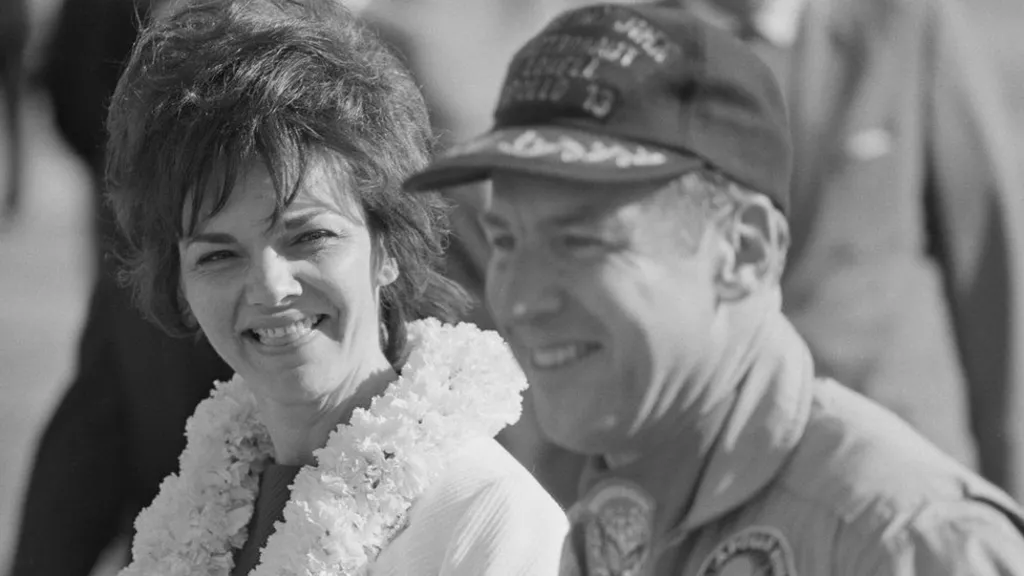
Despite the challenges, Lovell and Marilyn's relationship endured, and they eventually married just hours after his graduation in 1952.
The couple's union would last for over 70 years, until Marilyn's passing in 2023.
Lovell's passion for rocketry was unwavering, and he made every effort to pursue his interests, even writing his thesis on liquid-fuel engines while at the Navy Academy.
After graduating, Lovell hoped to specialize in this cutting-edge technology, but the Navy had other plans for him.
Instead, Lovell was assigned to fly Banshee jets off aircraft carriers at night, a high-risk endeavor that required great skill and bravery.
Although this experience was exhilarating, Lovell's true ambition remained focused on rocketry, and he continued to seek out opportunities to work in this field.
In 1958, Lovell applied to join NASA, which was then embarking on the ambitious Project Mercury program.
However, a temporary liver condition initially disqualified him from selection, and Lovell was forced to wait for another chance.
Four years later, Lovell reapplied and, after undergoing rigorous medical tests, was chosen as one of NASA's "New Nine" astronauts in June 1962.
This elite group, which included Neil Armstrong and John Young, was tasked with fulfilling President Kennedy's pledge to put American astronauts on the Moon.
Lovell's childhood dream had finally come within reach, and he was now part of a pioneering team that would push the boundaries of space exploration.
Three years later, Lovell was ready for his first spaceflight, aboard the Gemini 7 spacecraft, where he was joined by fellow astronaut Frank Borman.
The mission's objective was to determine whether humans could survive for two weeks in space, a crucial step towards achieving the ultimate goal of landing on the Moon.
With a steak-and-eggs breakfast behind them, Lovell and Borman blasted off into the unknown, embarking on a journey that would help pave the way for future generations of astronauts.
The success of this mission would be a testament to Lovell's dedication and perseverance, as he continued to pursue his passion for space exploration.
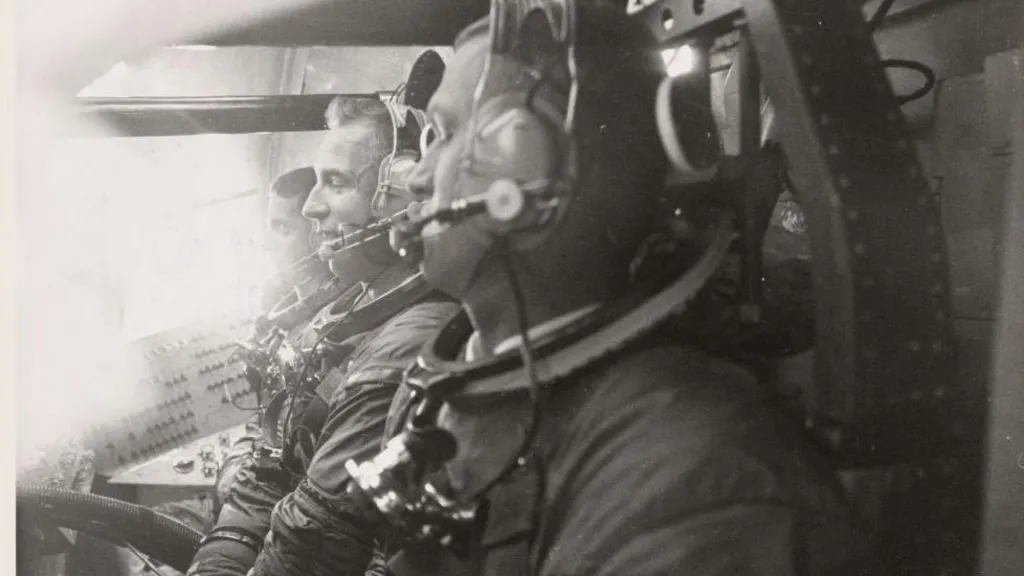
As Lovell and Borman soared into space, they were acutely aware of the challenges that lay ahead, but they were driven by a shared sense of purpose and a determination to succeed.
The Gemini 7 mission marked a significant milestone in the history of space travel, and Lovell's contribution to its success would be remembered as a pivotal moment in his remarkable career.
Following the completion of the endurance record, Lovell's subsequent mission was as commander of Gemini 12, where he was joined by rookie astronaut Buzz Aldrin.
During this flight, Aldrin demonstrated the feasibility of extravehicular activity, spending five hours outside the spacecraft to photograph star fields.
The next objective was the Moon itself.
The Apollo 8 crew, consisting of Lovell, Borman, and William Anders, would become the first humans to travel beyond low Earth orbit and enter the gravitational influence of another celestial body.
This mission was considered NASA's most perilous undertaking at the time.
The Saturn V rocket that propelled Lovell, Borman, and Anders into space at a speed of 25,000mph (40,233km/h) was enormous, with a size three times that of any Gemini-era rocket.
As the mission's navigator, Lovell brought a sextant on board to take star readings, serving as a backup navigation method in case the spacecraft's computers failed.
After 68 hours, the crew successfully entered the Moon's gravitational pull.
The spacecraft's engines fired, and Apollo 8 slipped behind the Moon, causing a temporary loss of radio contact with Mission Control.
The astronauts were awestruck as they gazed out the windows, witnessing the far side of the Moon for the first time in human history.
Borman's voice filled with wonder as he exclaimed, "Earthrise."
Lovell's response was immediate: "Get the camera, quick."
It was December 24, 1968, Christmas Eve.
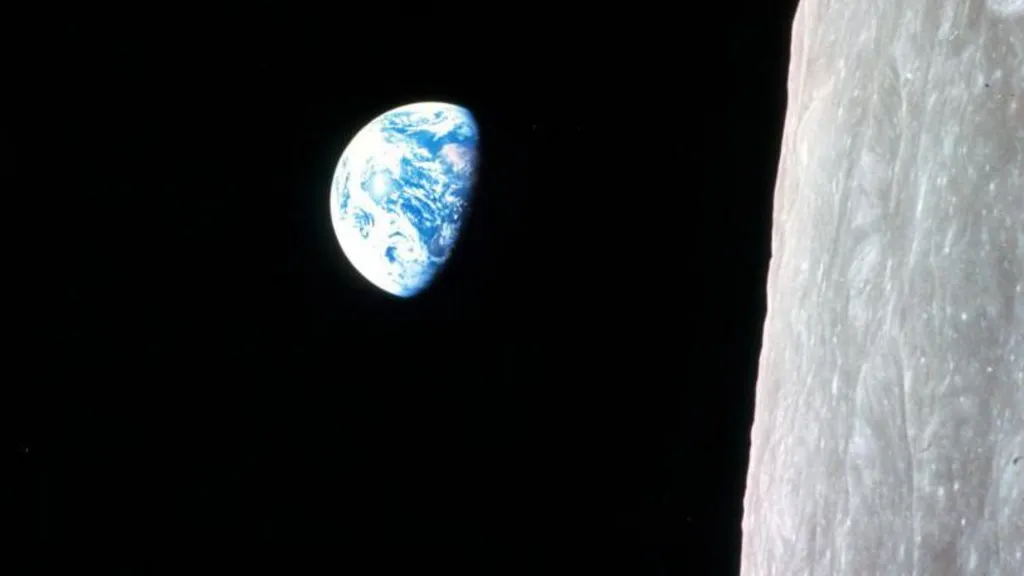
Despite the turmoil of the Vietnam War and social unrest in the United States, the Apollo 8 mission seemed to unite humanity in a shared sense of wonder.
As the world watched, people saw their planet in a new light – fragile and beautiful, suspended in the vastness of space.
Lovell recited a passage from the Book of Genesis, a text common to many of the world's major religions, in a broadcast to the people of Earth.
The passage began, "And God called the light Day, and the darkness he called Night. And the evening and the morning were the first day."
For Lovell, the experience of witnessing Earthrise was a pivotal moment that changed humanity's perspective forever.
As the spacecraft reestablished contact with Mission Control, Lovell was the first to announce their safe passage, saying, "Please be advised, there is a Santa Claus."
At that moment, a man in a blue Rolls-Royce arrived at Lovell's Houston residence, passing by the crowd of reporters gathered outside.
He handed a gift to Marilyn, who unwrapped the star-patterned tissue paper to reveal a mink jacket.
The accompanying card read, "Happy Christmas, and love from the Man in the Moon."
The Apollo 8 astronauts returned to Earth as celebrities, with their mission captivating a global television audience.
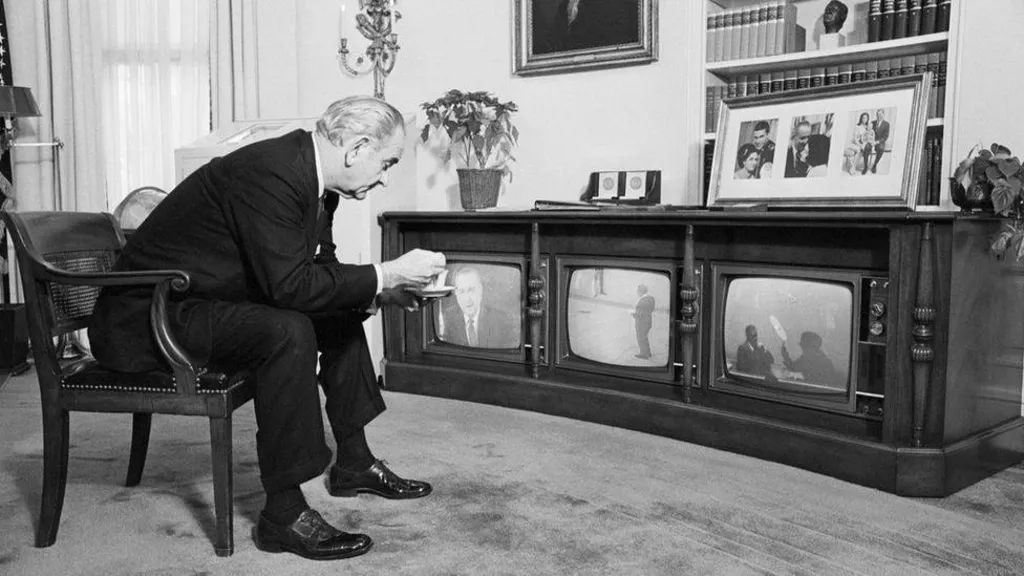
The crew received numerous honors, including ticker tape parades, congressional accolades, and a feature on the cover of Time Magazine, all before the first Moon landing.
The distinction of being the first humans to set foot on the Moon would eventually go to Neil Armstrong and Buzz Aldrin.
A year later, the dream of President Kennedy was finally realized, as Armstrong and Aldrin took their historic steps on the lunar surface.
In April 1970, Jim Lovell commanded the Apollo 13 mission, which proved that the crew's superstition about the number 13 was unfounded.
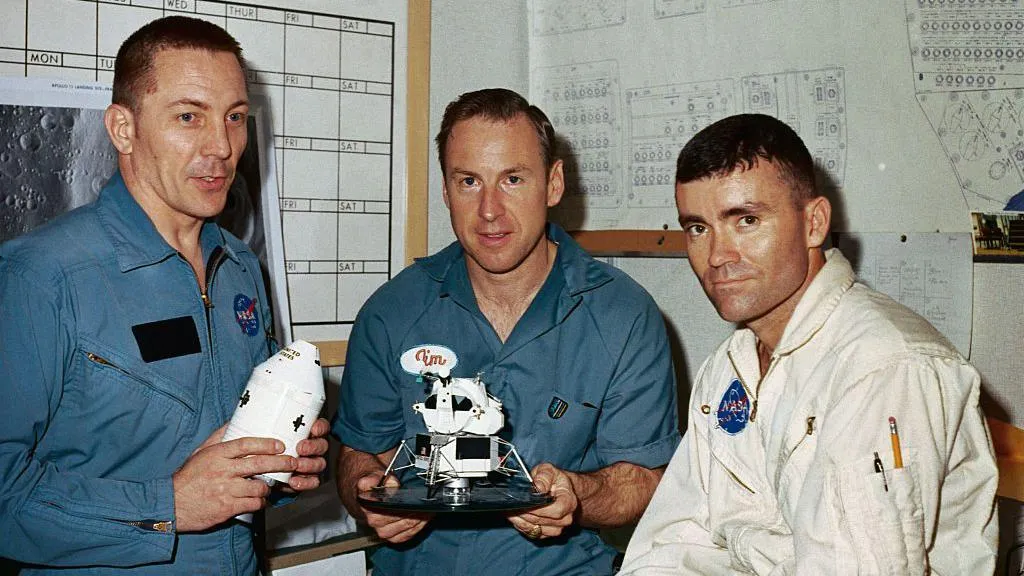
Lovell, along with Jack Swigert and Fred Haise, formed a team of highly trained scientists determined to follow in the footsteps of Armstrong and Aldrin.
However, their mission took a dramatic turn when they were 200,000 miles from Earth, en route to the Moon, and needed to stir the tanks containing essential oxygen and hydrogen.
Swigert activated the switch, but the command module, Odyssey, shuddered violently, leading to a loss of oxygen pressure and power.
Swigert's calm voice reported, "I believe we've had a problem here," which Lovell repeated to a stunned Mission Control: "Houston, we've had a problem."
The crew faced a catastrophic situation, with a massive explosion having crippled their spacecraft.
Haise and Lovell worked rapidly to activate the lunar module, Aquarius, as a lifeboat.
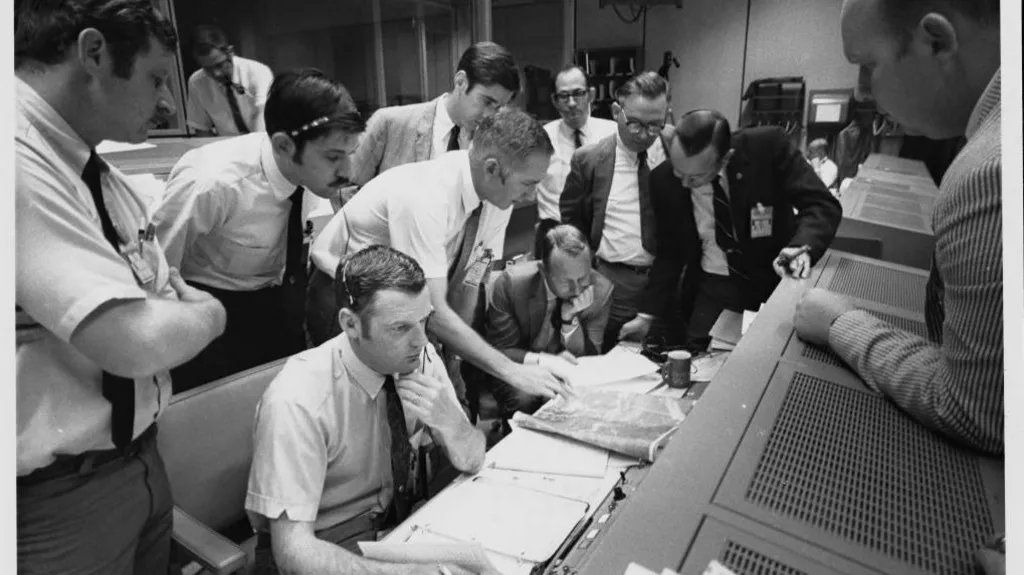
Although the module was not designed for use until the crew reached the Moon, it could sustain them until they returned to Earth's atmosphere.
The world held its collective breath as the crew fought for survival.
For the second time, Jim Lovell had brought humanity together, this time in a shared concern for the astronauts' fate.
Marilyn Lovell recalled the ordeal, saying, "For four days, I didn't know if I was a wife or a widow."
The crew endured freezing temperatures, rationed food and water, and waited anxiously for their return to Earth's atmosphere.
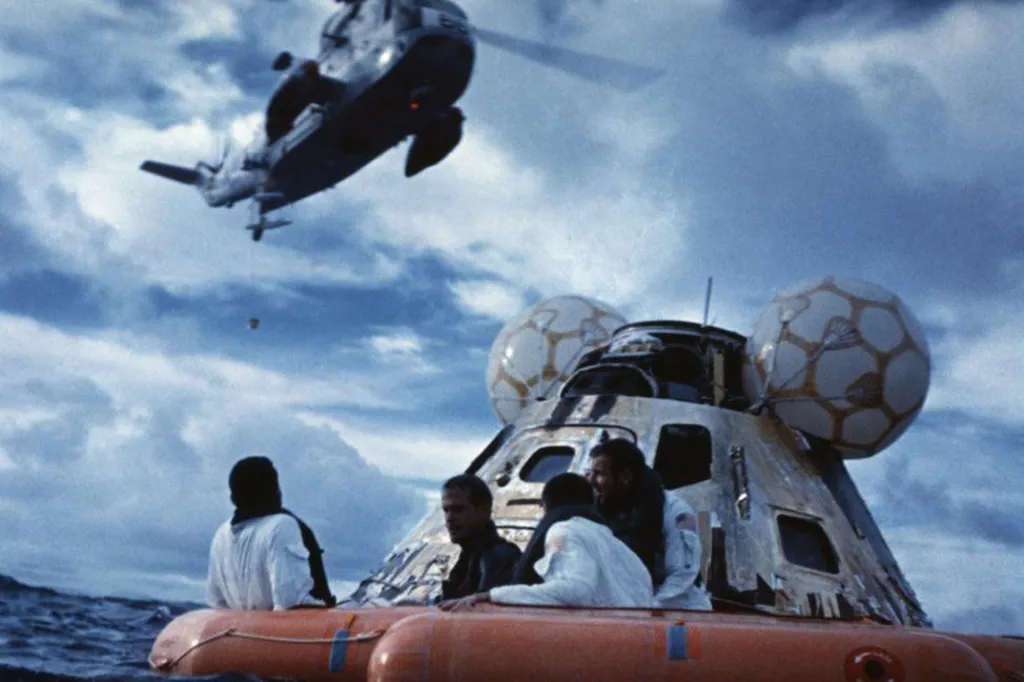
The usual radio silence during re-entry seemed to stretch on forever, leaving millions of television viewers fearing the worst.
After six agonizing minutes, Jack Swigert's voice finally broke the silence.
As the crew descended, the team on the ground anxiously waited for the parachutes to open, ensuring a safe landing for the astronauts.
The Apollo 13 mission is widely regarded as Nasa's most significant failure, yet it also showcased the agency's exceptional capabilities and resilience.
Following his retirement from the navy in 1973, Lovell pursued a more low-key lifestyle, taking on roles such as working for the Bay-Houston Towing Company, delivering speeches, and serving as the president of the National Eagle Scout Association.
Lovell's book, Lost Moon: The Perilous Voyage of Apollo 13, was adapted into a successful film in 1995, with Tom Hanks portraying the astronaut.
The film's director requested that Lovell make a cameo appearance, dressing up as an admiral to shake hands with Tom Hanks during a scene depicting the crew's rescue.
However, Lovell declined the suggestion, opting instead to stay true to his actual naval rank.
Having traveled to the Moon twice and experienced the historic Earthrise, Lovell had no desire to embellish his achievements, particularly when it came to his military career.
For the film cameo, Lovell chose to wear his old navy uniform, which reflected his actual rank of captain.
Lovell's insistence on authenticity was clear: he had retired as a captain and saw no reason to portray himself as anything else.



News
Tudor to take interim charge of Tottenham
Igor Tudor has reached an agreement to take the reins as Tottenham’s interim head coach for the remainder of the season.
Tottenham has reached an agreement with Igor Tudor to take the helm as interim head coach for the remainder of the current season.
For the latest updates, in-depth analysis, and perspectives from fans, look to Tottenham's recent news and discussion.
Do you have any questions about Tottenham – what information are you seeking?
News
UAE Defeats Canada to Enhance Super 8s Qualification Chances
The United Arab Emirates boosted their slim chances of advancing to the T20 World Cup Super 8s, securing a narrow five-wicket victory over Canada, thanks in part to Aryansh Sharma’s unbeaten 74.
In a crucial match for the United Arab Emirates, Aryansh Sharma achieved his fifth T20 international half-century, contributing to the team's victory over Canada.
The Men's T20 World Cup, being held in Group D in Delhi, saw an intense competition between the two teams.
Canada's innings resulted in a total of 150-7 after 20 overs, with Harsh Thaker scoring 50 runs off 41 balls, while Junaid Siddique took 5 wickets for 35 runs.
The UAE team responded with a total of 154 runs in 19.4 overs, led by Aryansh Sharma's unbeaten 74 runs off 53 balls and Sohaib Khan's 51 runs off 29 balls, despite Bin Zafar taking 3 wickets for 14 runs.
The United Arab Emirates secured a five-wicket win over Canada, boosting their chances in the tournament.
Aryansh Sharma played a pivotal role in the UAE's win, scoring an unbeaten 74 runs to help his team overcome Canada's total.
With four overs remaining, Canada seemed poised to defend their total, but Sohaib Khan's aggressive batting reignited the UAE's chase, as he scored 17 runs off Dillon Heyliger's bowling.
In the final over, the UAE required eight runs to win, and Aryansh Sharma eased the pressure by hitting a six off Jaskaran Singh's first ball.
Sohaib Khan was dismissed after scoring a rapid 51 runs off 29 balls, including four sixes, leaving the scores level.
Muhammad Arfan then sealed the victory with two balls to spare, hitting a four off Jaskaran Singh, as Aryansh Sharma top-scored with 74 runs off 53 balls.
The UAE now stands third in Group D with two points, but they face an uphill task in their upcoming matches against full members South Africa and Afghanistan to advance to the next phase.
Although the UAE has never beaten a full member in any World Cup format, their performance in this match has given them some confidence.
Earlier in the match, Junaid Siddique achieved the best bowling figures by a UAE player in a T20 World Cup, taking 5 wickets for 35 runs at the Arun Jaitley Stadium in Delhi.
Harsh Thaker's 41-ball half-century, which included three sixes and two fours, provided a solid foundation for Canada's total.
Thaker and Navneet Dhaliwal shared a 58-run partnership to help Canada recover from a difficult start, before Dhaliwal was run out for 34 runs.
After Thaker fell victim to Junaid Siddique's slower ball, Canada struggled to find boundaries against the UAE's tight bowling.
Shreyas Movva made a useful contribution of 21 runs off 21 balls, but Junaid Siddique took two wickets in the final over to claim his maiden five-wicket haul in T20 internationals.
In a separate match, Zimbabwe's Brilliant Muzarabani played a key role in his team's stunning win over Australia.
For more updates, notifications, and social media coverage, visit the BBC Sport website.
In another development, Paul Stirling has been ruled out of the remainder of the T20 World Cup due to injury.
News
Guardiola Advocates for Cultural Embrace to Foster a Better Society
Pep Guardiola, the manager of Manchester City, has stated that accepting diverse cultures will lead to a more harmonious society, in reaction to comments made by Sir Jim Ratcliffe regarding immigration.
As a player, Pep Guardiola earned 47 international caps for Spain, showcasing his skills on the global stage.
Manchester City's manager, Pep Guardiola, believes that embracing diverse cultures is essential for creating a more harmonious society.
Guardiola was questioned about his thoughts on comments made by Manchester United co-owner Sir Jim Ratcliffe, who stated that the UK had been "colonised by immigrants", sparking a debate.
Following criticism, Ratcliffe apologised for any offence caused, while still advocating for open discussion on the issue.
Ahead of Manchester City's FA Cup fourth-round match against Salford, Guardiola shared his perspective, saying that people seek better lives and opportunities, which can be found in their birthplace or elsewhere.
According to Guardiola, one's birthplace is not a determining factor in their potential or aspirations.
Many individuals are forced to leave their homelands due to problems in their native countries, rather than a desire to abandon their roots.
Guardiola emphasized that by genuinely embracing other cultures, society as a whole can improve, a notion he has no doubts about.
An examination of the facts behind Jim Ratcliffe's statements on immigration and benefits is also underway.
Sir Jim Ratcliffe, a billionaire, has made headlines, but who is he and how did he accumulate his wealth?
Born in Santpedor, Catalonia, Spain, Guardiola has had a diverse career, playing in Spain, Italy, Qatar, and Mexico, before transitioning to management.
As a manager, the 55-year-old has had stints in Spain, Germany, and England, taking the helm at Manchester City in 2016.
Guardiola views the issue of immigration as a global problem, stating that it is a concern that affects many countries.
He believes that immigrants are often unfairly blamed for problems in their adopted countries, highlighting the fact that one's birthplace is often a matter of circumstance.
Guardiola reiterated that people from all backgrounds strive for a better life, seeking opportunities that may be available in their birth country or elsewhere.
He stressed that factors such as skin colour or birthplace should not be barriers to achieving one's goals.
For the latest news, analysis, and fan perspectives on Manchester City, please refer to our dedicated section.
Do you have any questions about Manchester City that you would like answered?
-
 News11 hours ago
Australian Politics Faces Questions Over Gender Equality Amid Sussan Ley’s Appointment
-
 News8 hours ago
Farage Says Reform to Replace Traditional Tory Party
-
 News8 hours ago
Wrexham Pair Seek Win Against Former Team Ipswich
-
 News13 hours ago
Liberal Party Removes Australia’s First Female Leader
-
 News11 hours ago
UK Braces for Cold Snap with Snow and Ice Alerts Expected
-
 News8 hours ago
Husband’s alleged £600k theft for sex and antiques blamed on drug side effects
-
 News2 days ago
Sunbed ads spreading harmful misinformation to young people
-
 Business14 hours ago
BBC Reporter Exposed to Cyber Attack Due to Vulnerabilities in AI Coding Tool