
News
Watchdog reports many children failed by teaching standards
According to Estyn’s report, a significant number of teachers are found to have inadequate literacy skills.
Wales' education system is in need of immediate improvement, particularly in teaching and literacy, to prevent a significant number of young people from failing to reach their full potential, according to the country's education watchdog, Estyn.
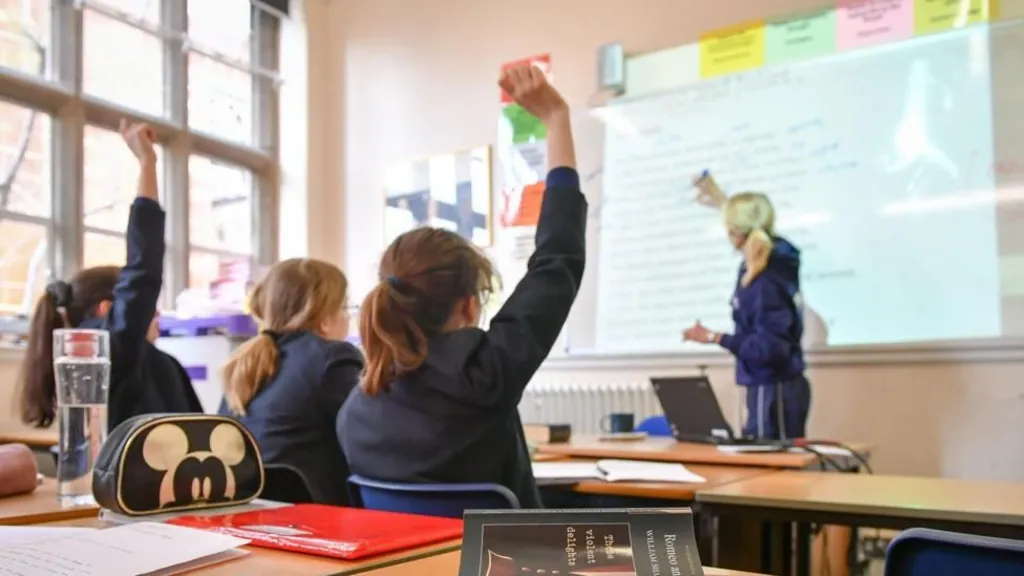
Estyn's annual report highlights a system plagued by inconsistencies and mixed priorities, with notable weaknesses in fundamental areas such as reading, mathematics, and digital skills, which are essential for a well-rounded education.
Owen Evans, Estyn's chief inspector, noted that while there are many strengths in the system, teaching quality in secondary schools is highly variable, and many teachers' literacy skills are inadequate, ultimately affecting the development of their pupils.
The Welsh government has stated that it will carefully consider the findings of the report.
The report identifies long-standing concerns regarding the quality of teaching, particularly in secondary schools, where high-quality teaching is consistently observed in only a minority of institutions.
In approximately two-thirds of the inspected secondary schools, teaching was deemed satisfactory in most lessons, but weaknesses were noted in other lessons, where expectations were set too low and feedback was inconsistent or unclear.
The report also criticizes the teacher training system, stating that it has failed to ensure an adequate supply of staff with the necessary skills and specializations.
Literacy, which encompasses listening, speaking, reading, and writing, is a fundamental aspect of all learning, according to the report.
However, issues such as limited clarity on national expectations and gaps in teachers' literacy knowledge, as well as inadequate teacher training programs, have hindered effective literacy instruction.
The Welsh government has faced criticism from experts and politicians for its approach to teaching reading skills to young children.
In response, the government has announced investments of £13.2m over three years in professional learning for literacy and £25m annually to support schools in numeracy and literacy.
Estyn has announced that it will focus on reading as a key area of improvement over the next three years, starting from September 2026.
Another significant concern highlighted in the report is the inability of schools to effectively evaluate their own strengths and weaknesses.
However, the report notes that many schools have demonstrated strong support for pupils' well-being and safeguarding.
Owen Evans expressed cautious optimism, citing examples of innovative practices and strong teaching, but emphasized the need for decisive action to address systemic weaknesses.
He noted that schools face numerous challenges, including financial pressures, increasing numbers of students being educated outside of traditional school settings, and growing demand for specialized provision.
Evans warned that without a sustained focus on addressing literacy and teaching quality concerns, many learners will continue to fall short of their potential.
Despite positive engagement with families in many schools, attendance remains a concern, with absences exceeding pre-pandemic levels.
The report stresses that teacher recruitment remains a pressing priority.
It notes that shortages in mathematics, science, and Welsh-medium education pose a risk to reform efforts and ambitions for a bilingual workforce.
In Welsh-medium schools, recruiting and retaining staff with strong oracy and writing skills is a significant concern.
Inspectors observed that many schools promote good behavior, while a few cases of pupil disruption were noted.
By August 2025, 18 primary and 11 secondary schools were placed in special measures, with 14 primary and 11 secondary schools requiring significant improvement.
The Welsh government stated that it will carefully consider the findings of Estyn's report, which provides an independent assessment of the education system.
The government acknowledged that while there are significant strengths in the system, there are also challenges that need to be addressed.
In an interview with the BBC, Owen Evans discussed the need to examine mobile phone usage in schools.
He noted that some schools have implemented effective strategies to limit mobile phone use, while others have found ways to utilize them for educational purposes.
Evans expressed reservations about implementing a blanket ban on mobile phones in schools, citing the need for a nuanced approach.
He emphasized that literacy remains a higher priority.
Evans suggested that while the debate about social media in schools is important, it is only one aspect of the broader systemic approach needed to improve education.
He noted that Estyn is engaged in the debate and is working to address the issue as part of its overall efforts to improve schools.
Plaid Cymru's education spokesperson, Cefin Campbell MS, criticized the Labour government for failing to address basic educational needs.
Campbell stated that a Plaid Cymru government would prioritize ensuring every pupil has the opportunity to reach their full potential.
A Reform UK Wales spokesperson argued that the Labour government has presided over a decline in educational standards, resulting in widespread functional illiteracy among children in Wales.
The spokesperson emphasized the need for reform in the education system.
Welsh Conservative shadow cabinet secretary for education, Natasha Asghar MS, expressed concern that many pupils are being let down by weak literacy standards and inconsistent teaching quality.
The Welsh Conservatives emphasized the importance of prioritizing educational standards.
News
GB men’s curling team suffers upset defeat to Italy
At the 2026 Winter Olympics, Great Britain’s men’s curling team mounted a comeback against Italy following a disappointing beginning, ultimately falling short in their inaugural match.
Despite a valiant comeback, Team GB ultimately fell short as Italy held their composure to secure the win in the final end.
A dismal start to the match proved costly for Team GB's men, as they suffered their first defeat of the Winter Olympics at the hands of host nation Italy, despite a spirited fightback in the packed Cortina Curling Stadium.
Following victories in their first two matches, including a win over the Swedish rink that beat them in the gold-medal match four years ago, Team GB entered their second high-profile encounter in as many days in a confident position.
However, a disastrous opening end, in which Italy stole four points, left Team GB trailing and facing an uphill battle in front of a boisterous home crowd.
The British team, currently ranked number one in the world, gradually regained their footing and managed to level the score by the ninth end.
Ultimately, Italy maintained their composure in the final end to emerge victorious, winning 9-7 and adding Team GB to their list of scalps, which already included the Swedes.
"We had to dig deep and play some solid curling, but unfortunately, it wasn't enough to get us over the line," Team GB lead Hammy McMillan said in an interview with BBC Sport.
With seven wins from nine round-robin matches guaranteeing a spot in the semi-finals, Team GB remains in a strong position, although fewer wins may still be sufficient to advance.
The women's team is set to take to the ice next, facing South Korea in their second match at 13:05 GMT, while the men will return to action on Saturday against the Czech Republic at the same time.
Team GB is at the forefront of curling's technological advancements.
Embracing what sets you apart can be a powerful asset, according to some athletes.
A daily guide to the Winter Olympics is available for those looking to stay up-to-date with the action.
The looks of shock on the faces of Team GB's curlers told the story of a disastrous opening end.
With a stone in play, Mouat attempted a risky shot in an effort to claim two points, but it backfired, resulting in none of Team GB's stones in the house and four Italian stones in position.
However, the Scottish quartet, ranked number one in the world, quickly regained their composure and got back to their game.
The teams exchanged singles before a impressive final throw by Mouat, aided by a measurement to determine which stone was closest to the button, allowed Team GB to claim two points and narrow the gap to 5-3.
Another excellent team effort, which included a well-judged throw by Mouat, a solid sweep by Hammy McMillan and Bobby Lammie, and Grant Hardie's strategic expertise, forced Italy to concede a point in the fourth end, reducing the deficit to a single point at the break.
Italy blanked the sixth end and added two points in the seventh to rebuild their lead, but Team GB fought back with two points of their own, remarkably levelling the score with one end remaining after a steal.
The match came down to the final end, but Italy held their nerve to secure the win, prompting a deafening roar from the crowd.
"It's an incredible experience, and we need to get used to it," McMillan added, describing the electric atmosphere as "surreal" and "cool," more akin to a football match than a typical curling crowd.
News
Scotland Kicks Off Nations League Against Slovenia
Uefa has released the schedule for the Nations League, with Scotland set to begin their campaign on 26 September with an away match against Slovenia.
Uefa has released the schedule for the Nations League, with Scotland's campaign set to begin on 26 September with an away match against Slovenia.
The team's six group stage games will be played within a three-month period, culminating in a match against Switzerland on 16 November.
The fixture list was announced following Thursday's draw, which placed Scotland in a group with Switzerland, Slovenia, and North Macedonia.
Having been relegated from League A after a play-off loss to Greece last year, Scotland will compete in the second tier of the Nations League this year.
In response to the draw, head coach Steve Clarke noted that the teams in the group appear to be evenly matched.
Clarke reflected on the team's past experience in the competition, stating that it has been beneficial for Scotland.
He emphasized the importance of the Nations League, citing its role in helping the team qualify for Euro 2020, and anticipated a challenging set of matches.
A key matchup in the Nations League will see Scotland face off against Switzerland.
The group stage will determine the teams' fates, with the winner earning promotion, the runner-up entering a play-off, the third-placed team facing a relegation play-off, and the fourth-placed team being relegated directly.
The upcoming group games will mark a reunion for Scotland and Switzerland, who previously drew 1-1 in Cologne at Euro 2024.
Scotland's last encounter with Slovenia was during the 2018 World Cup qualification campaign, when they won 1-0 at home and drew 2-2 away.
The team has not played North Macedonia since the 2014 World Cup qualifiers, when they drew 1-1 at home and won 2-1 away, with goals from Ikechi Anya and Shaun Maloney.
The schedule for Scotland's Nations League campaign begins on 26 September with a match against Slovenia.
The team will then host Switzerland on 29 September, followed by a trip to face North Macedonia on 3 October.
Scotland will then play Slovenia at home on 6 October, before hosting North Macedonia on 11 November.
The final group stage match will see Scotland travel to face Switzerland on 16 November.
The team's home match against North Macedonia is set for 11 November.
The campaign will conclude with an away match against Switzerland on 16 November.
News
Golfer McIlroy Sinks Bunker Shot at Pebble Beach Pro-Am
At the AT&T Pebble Beach Pro-Am in California, Rory McIlroy achieved an eagle on the 14th hole at Spyglass Hill, capping off his opening round with a score of 68.
During the AT&T Pebble Beach Pro-Am in California, Rory McIlroy achieved an eagle on the 14th hole at Spyglass Hill, contributing to his first-round score of 68.
For further information, Rory McIlroy had a solid opening round, while Hisatsune took the lead.
Access to this content is restricted to users in the United Kingdom.
-
 News8 hours ago
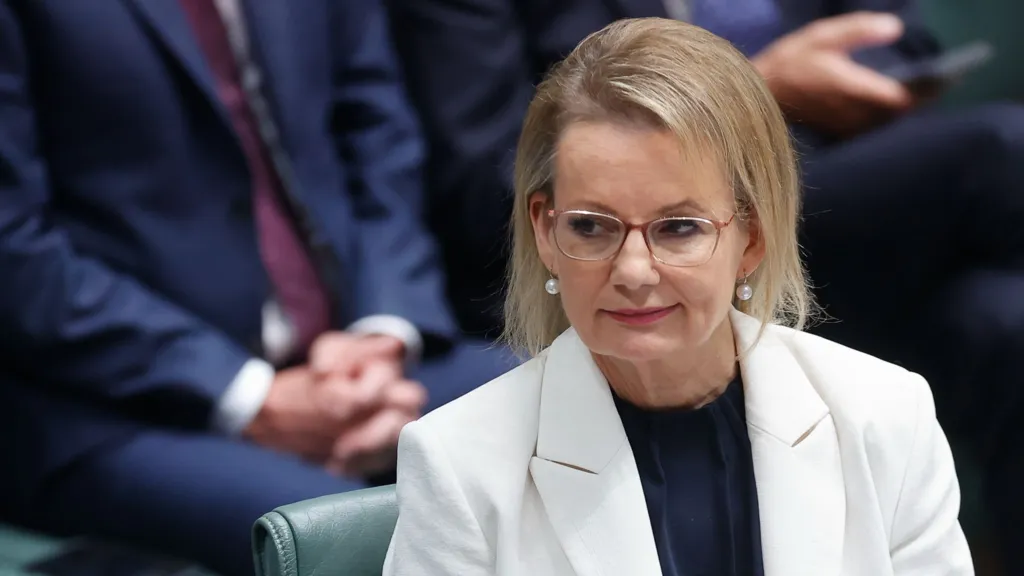
Australian Politics Faces Questions Over Gender Equality Amid Sussan Ley’s Appointment
-
 News5 hours ago
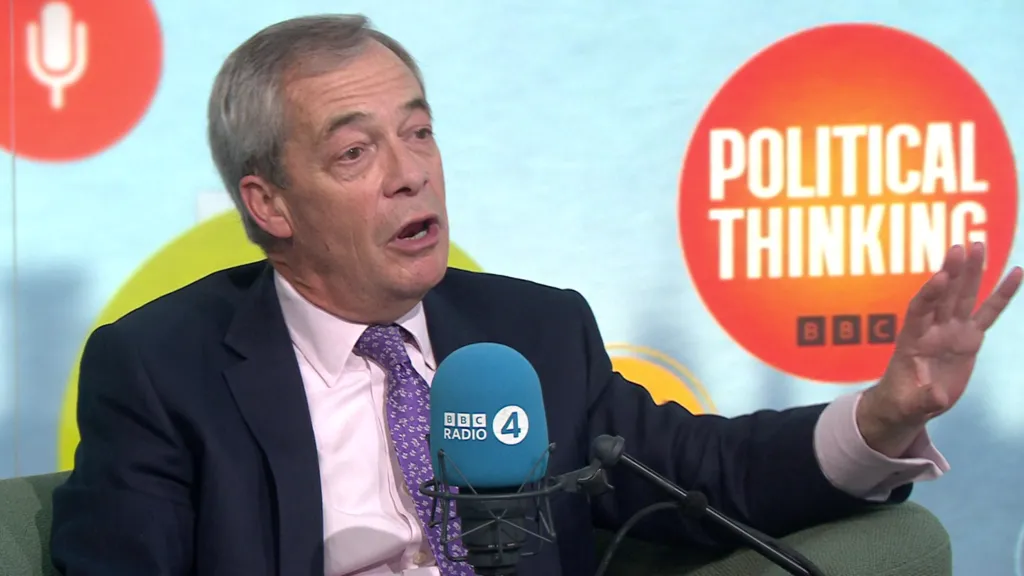
Farage Says Reform to Replace Traditional Tory Party
-
 News5 hours ago
Wrexham Pair Seek Win Against Former Team Ipswich
-
 News11 hours ago
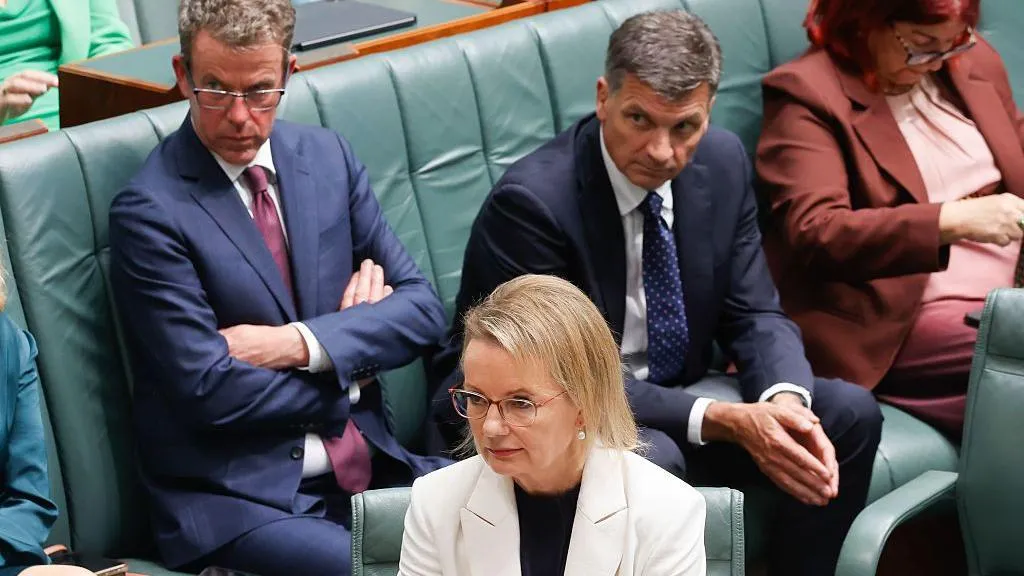
Liberal Party Removes Australia’s First Female Leader
-
 News8 hours ago
UK Braces for Cold Snap with Snow and Ice Alerts Expected
-
 News5 hours ago
Husband’s alleged £600k theft for sex and antiques blamed on drug side effects
-
 Business11 hours ago
BBC Reporter Exposed to Cyber Attack Due to Vulnerabilities in AI Coding Tool
-
 News8 hours ago
Canadian Town Unites in Mourning After Mass Shooting Leaves Community Reeling