
News
Stories of the last astronauts to walk on the Moon
Only five of the 24 astronauts who participated in Nasa’s Apollo missions to the Moon between the 1960s and 1970s are still alive.
The trailblazers of space exploration were the 24 Nasa astronauts who embarked on the Apollo missions to the Moon in the 1960s and 1970s, paving the way for future space travel.
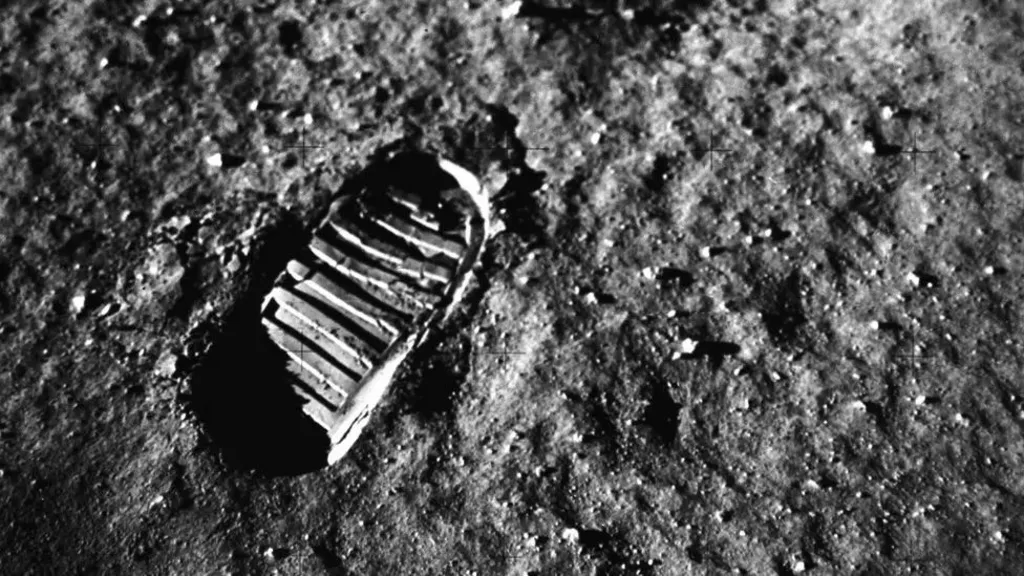
With the passing of Apollo 13 commander Jim Lovell, who successfully guided his crew back to Earth in 1970 after a life-threatening malfunction, the number of individuals who have ventured beyond Earth's orbit has dwindled to just five.
Over five decades have passed since humans last walked on the Moon, but the quest to return to the lunar surface is gaining momentum, with various space agencies and private companies working towards this goal.
Nasa's Artemis programme aims to establish a sustainable human presence on the Moon by the end of the decade, while China is also striving to achieve a manned lunar landing by 2030, having successfully landed a probe on the far side of the Moon in June 2024.
Several private companies have attempted to send spacecraft to the Moon, but their efforts have been met with limited success due to various technical issues and setbacks.
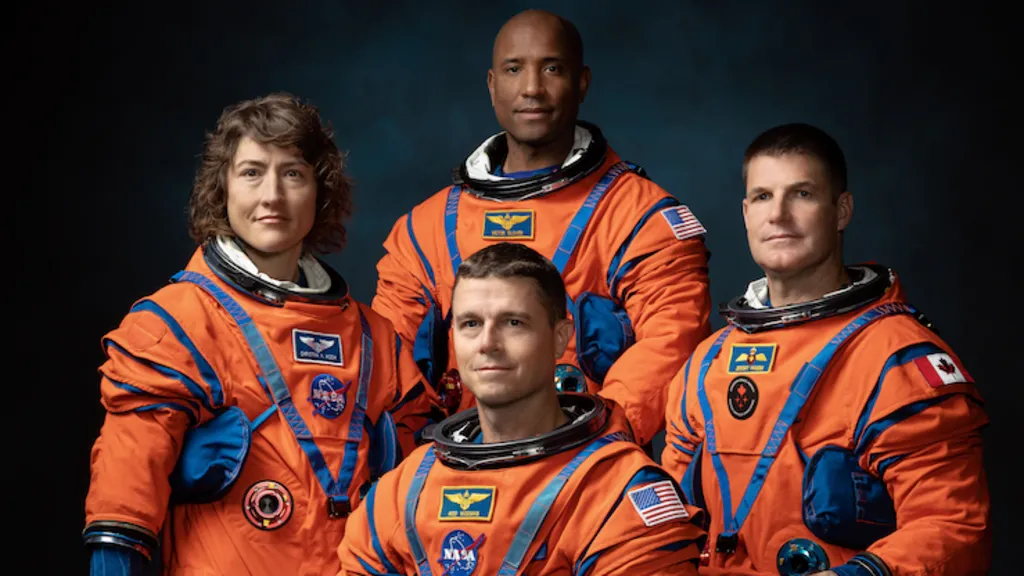
Nasa had initially planned to launch the Artemis 2 mission, its first crewed lunar expedition since Apollo 17 in 1972, in 2025, but the launch has been postponed to 2026 to allow for more thorough preparation and testing.
Meanwhile, companies like SpaceX and Boeing are continuing to develop their space technology, despite encountering significant challenges and setbacks along the way.
Boeing's Starliner experienced a major malfunction that left two astronauts stranded on the International Space Station, while SpaceX's Starship has suffered a series of explosive failures during testing, prompting concerns about the safety and reliability of these spacecraft.
The passing of time is taking its toll on the remaining Apollo astronauts, with their numbers steadily decreasing as they age.
Jim Lovell, along with fellow astronauts Frank Borman and Bill Anders, made history by undertaking the first lunar mission on Apollo 8, which tested the Command/Service Module and its life support systems in preparation for the Apollo 11 landing.
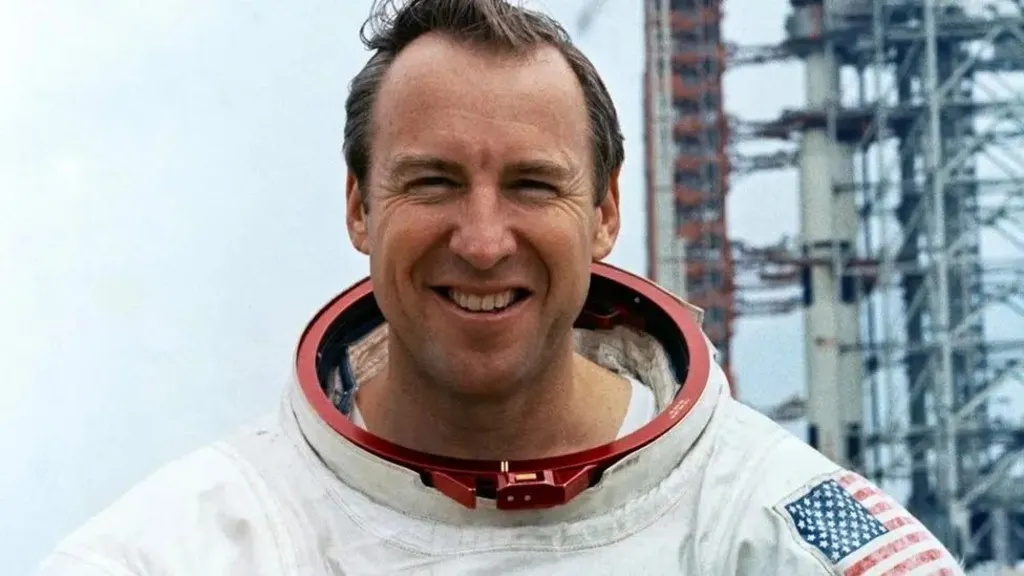
During the Apollo 8 mission, the spacecraft completed 10 orbits of the Moon before returning to Earth, and Lovell was later scheduled to become the fifth person to walk on the Moon as commander of Apollo 13, although this never came to fruition due to the mission's abrupt termination.
The story of the Apollo 13 mission and its heroic recovery was later immortalized in a film of the same name, in which Lovell was portrayed by actor Tom Hanks.
After retiring from Nasa in 1973, Lovell went on to work in the telecommunications industry, and his wife of over 60 years, Marilyn, passed away in August 2023, having been a focal point of media attention during the Apollo 13 crisis.
The question on everyone's mind now is: what about the remaining five astronauts who have walked on the Moon?
Who are these individuals, and what are their stories of adventure and bravery in space?
On July 21, 1969, Edwin "Buzz" Aldrin became the second person to set foot on the Moon's surface, stepping out of the lunar module Eagle just minutes after his commander, Neil Armstrong, made history by becoming the first person to walk on the Moon.
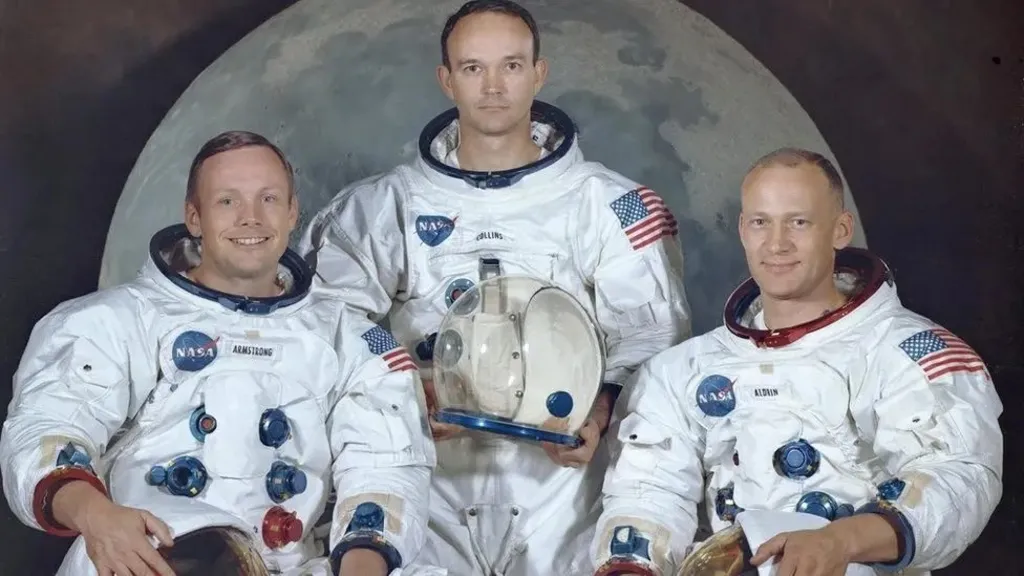
As Aldrin gazed out at the lunar landscape, he uttered the now-famous words: "Beautiful view."
Armstrong responded with: "Isn't that something?" and Aldrin replied: "Magnificent desolation," a phrase that would become synonymous with the Apollo 11 mission.
Although Aldrin was proud of his achievement, he reportedly felt a tinge of disappointment at not being the first person to walk on the Moon, a sentiment that was noted by his fellow astronaut Michael Collins.
Despite this, Aldrin remained proud of his role in the Apollo 11 mission and continued to advocate for space exploration, even punching a man who claimed the Moon landing was a hoax.
Following Neil Armstrong's passing in 2012, Aldrin paid tribute to his fellow astronaut and friend, describing him as a "true American hero" and the best pilot he had ever known.
Aldrin's thirst for adventure never wavered, and he went on to embark on expeditions to the North and South Poles, the latter at the age of 86, demonstrating his enduring passion for exploration.
As a prominent figure in the space community, Aldrin has continued to promote the importance of space travel and has become an inspiration to new generations, including the creators of the Toy Story franchise, who named the character Buzz Lightyear after him.
In January 2023, at the age of 93, Aldrin married for the fourth time, a testament to his boundless energy and enthusiasm for life.
Charlie Duke is one of the four remaining astronauts who have walked on the Moon, having done so at the age of 36, making him the youngest person to set foot on the lunar surface.
In a BBC interview, Duke recalled the "spectacular terrain" he encountered during his time on the Moon, describing the stark contrast between the blackness of space and the lunar horizon as "dramatic" and unforgettable.
Prior to his own Moonwalk, Duke played a crucial role in Nasa's Apollo programme as the Capsule Communicator, or Capcom, for the Apollo 11 mission, famously responding to Neil Armstrong's message from the Moon's surface with the words: "Roger, Tranquility. We copy you on the ground, you've got a bunch of guys about to turn blue, we're breathing again."
Duke's southern drawl and calm demeanor helped to reassure the astronauts on the Moon's surface, and he later reflected on the experience, saying he had been holding his breath in anticipation of the lunar landing.
In 2022, Duke expressed his excitement about Nasa's Artemis mission, but cautioned that the new generation of astronauts would face significant challenges, particularly with the planned landing near the Moon's South Pole, where the terrain is rugged and ice may be present.
Today, Duke lives outside San Antonio, Texas, with his wife of 60 years, Dorothy, and remains a prominent figure in the space community.
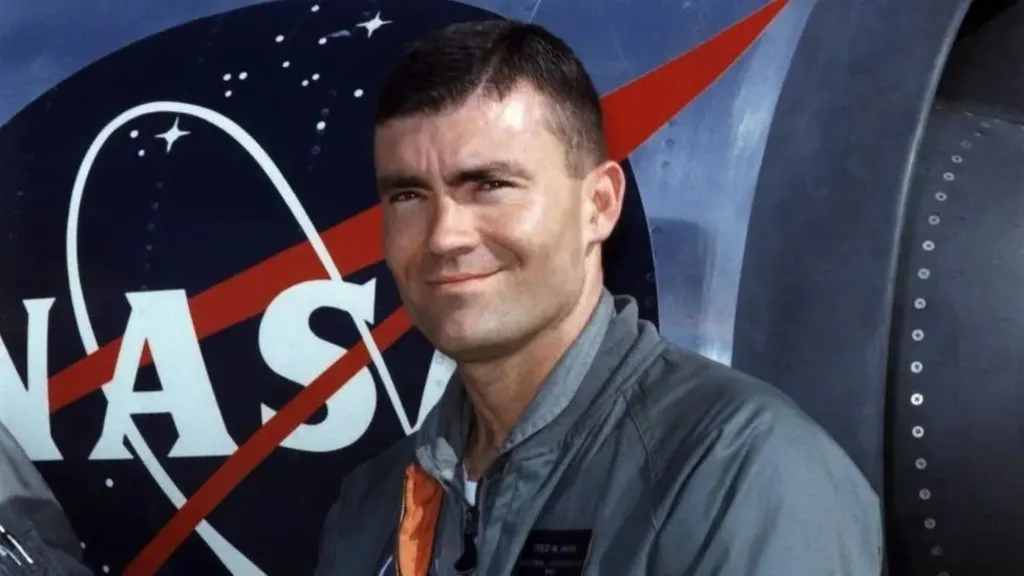
Fred Haise was a member of the Apollo 13 crew that narrowly avoided disaster in 1970 when an explosion occurred on board, forcing the mission to be aborted while the spacecraft was over 200,000 miles from Earth.
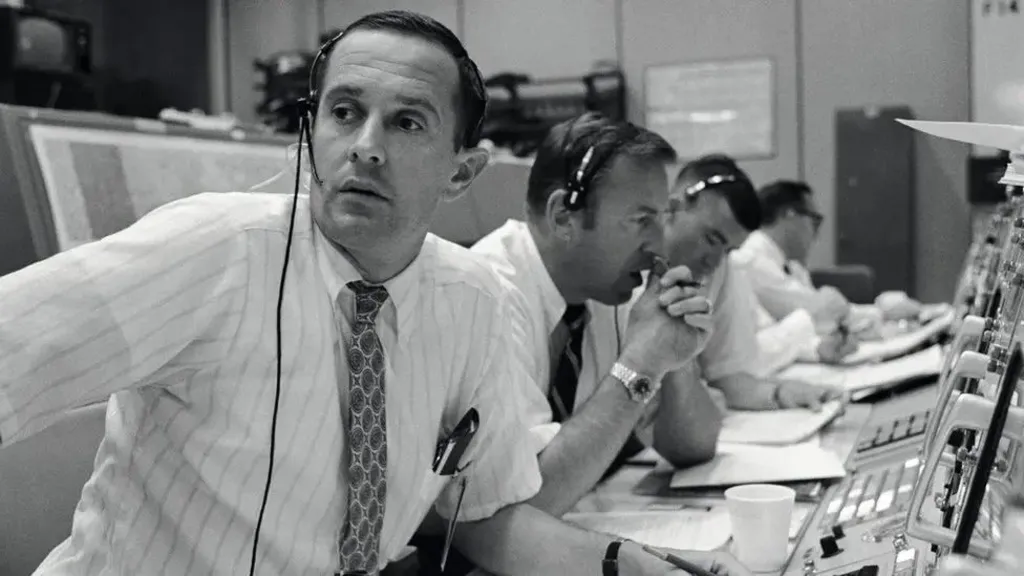
The world watched in suspense as Nasa worked to return the damaged spacecraft and its crew safely to Earth, and Haise, along with his crewmates James Lovell and Jack Swigert, became an overnight sensation, appearing on talk shows and captivating the nation's attention.
Although Haise never made it to the Moon, he later served as a test pilot on the prototype space shuttle Enterprise and has remained involved in the space community, sharing his experiences and insights with new generations of astronauts and engineers.
Haise's story is a testament to the bravery and resilience of the Apollo astronauts, who faced unimaginable challenges and risks in pursuit of their mission to explore the Moon and push the boundaries of human knowledge.
Now, as the space community looks to the future and the prospect of returning humans to the Moon, the legacy of astronauts like Haise, Lovell, Aldrin, and Duke serves as a reminder of the power of determination, courage, and innovation.
The Artemis programme and other lunar initiatives aim to build on the foundations laid by these pioneers, with the goal of establishing a sustainable human presence on the Moon and eventually sending humans to Mars and beyond.
As the world continues to push the boundaries of space exploration, the stories of the Apollo astronauts will remain an essential part of our collective heritage, inspiring future generations to reach for the stars and pursue their dreams, no matter how ambitious they may seem.
The Apollo astronauts' contributions to the field of space exploration are immeasurable, and their bravery, skill, and dedication have paved the way for the next great leap for humanity.
With their legacy serving as a guiding light, the space community will continue to strive for excellence, driven by the same sense of wonder, curiosity, and adventure that defined the Apollo era.
As we look to the future and the possibilities that lie ahead, we honor the memory of Jim Lovell and the other Apollo astronauts who have passed on, while celebrating the enduring spirit of exploration and discovery that they embodied.
Following his departure from NASA, Haise pursued a career in the aerospace industry, a path similar to that of many of his Apollo colleagues, until he retired.
Schmitt's background differed from that of many astronauts of his time, as he had not previously served as a pilot in the US military.
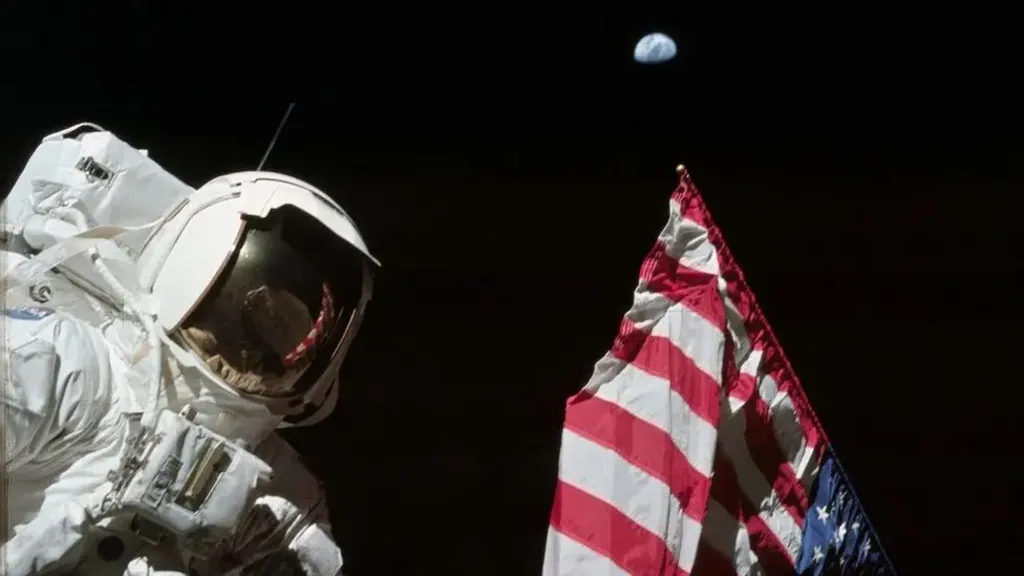
As a geologist and educator, Schmitt initially played a role in instructing NASA astronauts on geological observations during their lunar excursions, before being selected as a scientist-astronaut in 1965.
Schmitt was a member of the Apollo 17 crew, the final manned mission to the Moon, which landed in December 1972, with Commander Eugene Cernan being one of the last two individuals to walk on the lunar surface.
After leaving NASA in 1975, Schmitt went on to serve a single term as a US Senator representing New Mexico, and subsequently worked as a consultant across various industries, while also maintaining his academic pursuits.
Schmitt has also been noted for his public statements contradicting the prevailing scientific consensus on climate change.
David Scott, who commanded the Apollo 15 mission, is among the select group of four living individuals who have walked on the Moon, and also had the distinction of being one of the first to operate a vehicle on its surface.
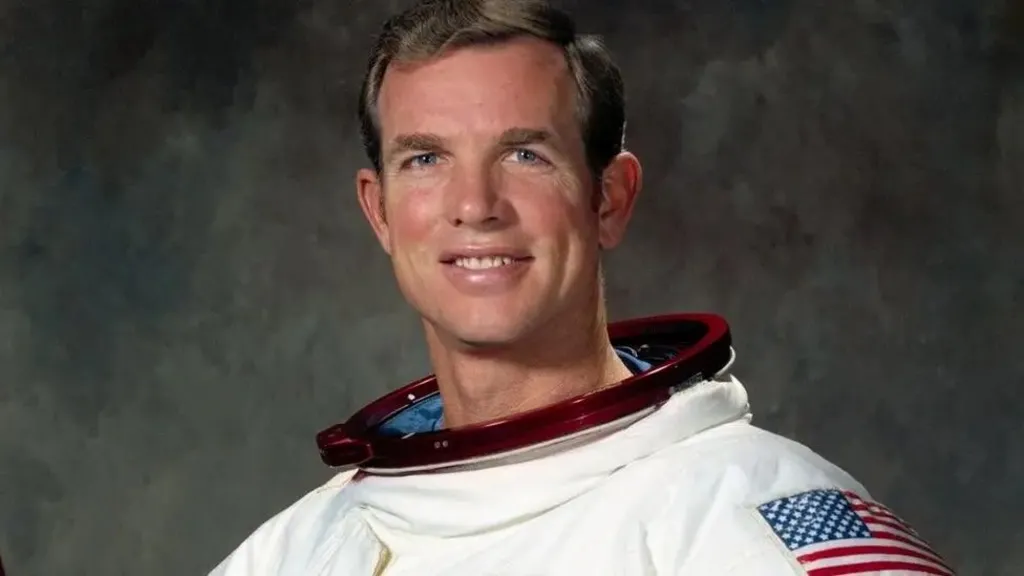
In 1971, Scott and his crewmate James Irwin conducted a test of the Lunar Roving Vehicle (LRV), which enabled astronauts to cover greater distances from the lunar module at speeds of up to 8 mph (12 km/h).
Recalling the experience, Scott noted that the initial uncertainty of the mission's success made the moment of deploying and successfully operating the LRV particularly exhilarating.
Upon returning from the Moon, Scott took on various management roles within NASA, prior to transitioning to the private sector.
Scott has also lent his expertise as a consultant on several film and television projects, including the movie Apollo 13 and the HBO miniseries From The Earth To The Moon.
The accomplishments of future lunar explorers remain to be seen, leaving room for anticipation and speculation about their achievements.



News
GB men’s curling team suffers upset defeat to Italy
At the 2026 Winter Olympics, Great Britain’s men’s curling team mounted a comeback against Italy following a disappointing beginning, ultimately falling short in their inaugural match.
Despite a valiant comeback, Team GB ultimately fell short as Italy held their composure to secure the win in the final end.
A dismal start to the match proved costly for Team GB's men, as they suffered their first defeat of the Winter Olympics at the hands of host nation Italy, despite a spirited fightback in the packed Cortina Curling Stadium.
Following victories in their first two matches, including a win over the Swedish rink that beat them in the gold-medal match four years ago, Team GB entered their second high-profile encounter in as many days in a confident position.
However, a disastrous opening end, in which Italy stole four points, left Team GB trailing and facing an uphill battle in front of a boisterous home crowd.
The British team, currently ranked number one in the world, gradually regained their footing and managed to level the score by the ninth end.
Ultimately, Italy maintained their composure in the final end to emerge victorious, winning 9-7 and adding Team GB to their list of scalps, which already included the Swedes.
"We had to dig deep and play some solid curling, but unfortunately, it wasn't enough to get us over the line," Team GB lead Hammy McMillan said in an interview with BBC Sport.
With seven wins from nine round-robin matches guaranteeing a spot in the semi-finals, Team GB remains in a strong position, although fewer wins may still be sufficient to advance.
The women's team is set to take to the ice next, facing South Korea in their second match at 13:05 GMT, while the men will return to action on Saturday against the Czech Republic at the same time.
Team GB is at the forefront of curling's technological advancements.
Embracing what sets you apart can be a powerful asset, according to some athletes.
A daily guide to the Winter Olympics is available for those looking to stay up-to-date with the action.
The looks of shock on the faces of Team GB's curlers told the story of a disastrous opening end.
With a stone in play, Mouat attempted a risky shot in an effort to claim two points, but it backfired, resulting in none of Team GB's stones in the house and four Italian stones in position.
However, the Scottish quartet, ranked number one in the world, quickly regained their composure and got back to their game.
The teams exchanged singles before a impressive final throw by Mouat, aided by a measurement to determine which stone was closest to the button, allowed Team GB to claim two points and narrow the gap to 5-3.
Another excellent team effort, which included a well-judged throw by Mouat, a solid sweep by Hammy McMillan and Bobby Lammie, and Grant Hardie's strategic expertise, forced Italy to concede a point in the fourth end, reducing the deficit to a single point at the break.
Italy blanked the sixth end and added two points in the seventh to rebuild their lead, but Team GB fought back with two points of their own, remarkably levelling the score with one end remaining after a steal.
The match came down to the final end, but Italy held their nerve to secure the win, prompting a deafening roar from the crowd.
"It's an incredible experience, and we need to get used to it," McMillan added, describing the electric atmosphere as "surreal" and "cool," more akin to a football match than a typical curling crowd.
News
Scotland Kicks Off Nations League Against Slovenia
Uefa has released the schedule for the Nations League, with Scotland set to begin their campaign on 26 September with an away match against Slovenia.
Uefa has released the schedule for the Nations League, with Scotland's campaign set to begin on 26 September with an away match against Slovenia.
The team's six group stage games will be played within a three-month period, culminating in a match against Switzerland on 16 November.
The fixture list was announced following Thursday's draw, which placed Scotland in a group with Switzerland, Slovenia, and North Macedonia.
Having been relegated from League A after a play-off loss to Greece last year, Scotland will compete in the second tier of the Nations League this year.
In response to the draw, head coach Steve Clarke noted that the teams in the group appear to be evenly matched.
Clarke reflected on the team's past experience in the competition, stating that it has been beneficial for Scotland.
He emphasized the importance of the Nations League, citing its role in helping the team qualify for Euro 2020, and anticipated a challenging set of matches.
A key matchup in the Nations League will see Scotland face off against Switzerland.
The group stage will determine the teams' fates, with the winner earning promotion, the runner-up entering a play-off, the third-placed team facing a relegation play-off, and the fourth-placed team being relegated directly.
The upcoming group games will mark a reunion for Scotland and Switzerland, who previously drew 1-1 in Cologne at Euro 2024.
Scotland's last encounter with Slovenia was during the 2018 World Cup qualification campaign, when they won 1-0 at home and drew 2-2 away.
The team has not played North Macedonia since the 2014 World Cup qualifiers, when they drew 1-1 at home and won 2-1 away, with goals from Ikechi Anya and Shaun Maloney.
The schedule for Scotland's Nations League campaign begins on 26 September with a match against Slovenia.
The team will then host Switzerland on 29 September, followed by a trip to face North Macedonia on 3 October.
Scotland will then play Slovenia at home on 6 October, before hosting North Macedonia on 11 November.
The final group stage match will see Scotland travel to face Switzerland on 16 November.
The team's home match against North Macedonia is set for 11 November.
The campaign will conclude with an away match against Switzerland on 16 November.
News
Golfer McIlroy Sinks Bunker Shot at Pebble Beach Pro-Am
At the AT&T Pebble Beach Pro-Am in California, Rory McIlroy achieved an eagle on the 14th hole at Spyglass Hill, capping off his opening round with a score of 68.
During the AT&T Pebble Beach Pro-Am in California, Rory McIlroy achieved an eagle on the 14th hole at Spyglass Hill, contributing to his first-round score of 68.
For further information, Rory McIlroy had a solid opening round, while Hisatsune took the lead.
Access to this content is restricted to users in the United Kingdom.
-
 News8 hours ago
Australian Politics Faces Questions Over Gender Equality Amid Sussan Ley’s Appointment
-
 News5 hours ago
Farage Says Reform to Replace Traditional Tory Party
-
 News5 hours ago
Wrexham Pair Seek Win Against Former Team Ipswich
-
 News11 hours ago
Liberal Party Removes Australia’s First Female Leader
-
 News9 hours ago
UK Braces for Cold Snap with Snow and Ice Alerts Expected
-
 News5 hours ago
Husband’s alleged £600k theft for sex and antiques blamed on drug side effects
-
 News2 days ago
Sunbed ads spreading harmful misinformation to young people
-
 Business11 hours ago
BBC Reporter Exposed to Cyber Attack Due to Vulnerabilities in AI Coding Tool