
News
Nasa plans to establish nuclear reactor on the Moon by 2030
A lunar reactor is being considered as a potential source of power for human presence on the Moon, however, its viability remains uncertain.
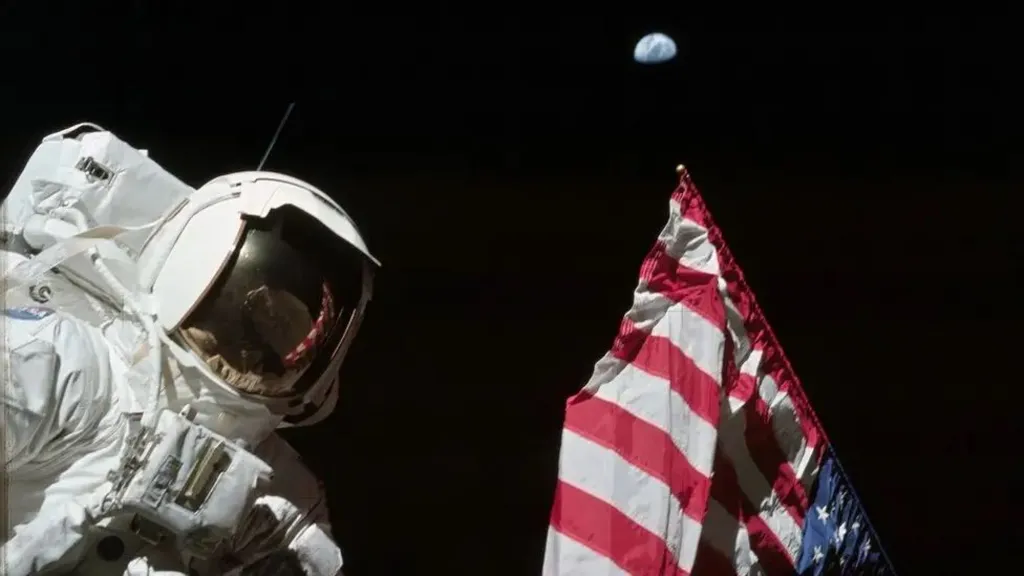
The US space agency Nasa is reportedly accelerating its plans to construct a nuclear reactor on the Moon, with a target completion date of 2030, as stated by US media outlets.
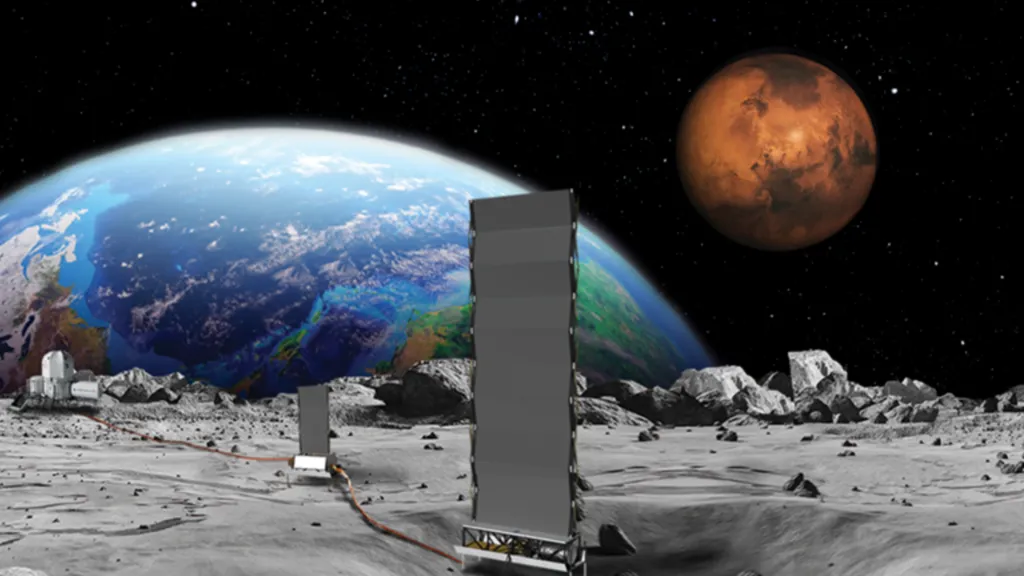
This initiative is part of a broader effort by the US to establish a permanent human settlement on the lunar surface, marking a significant milestone in space exploration.
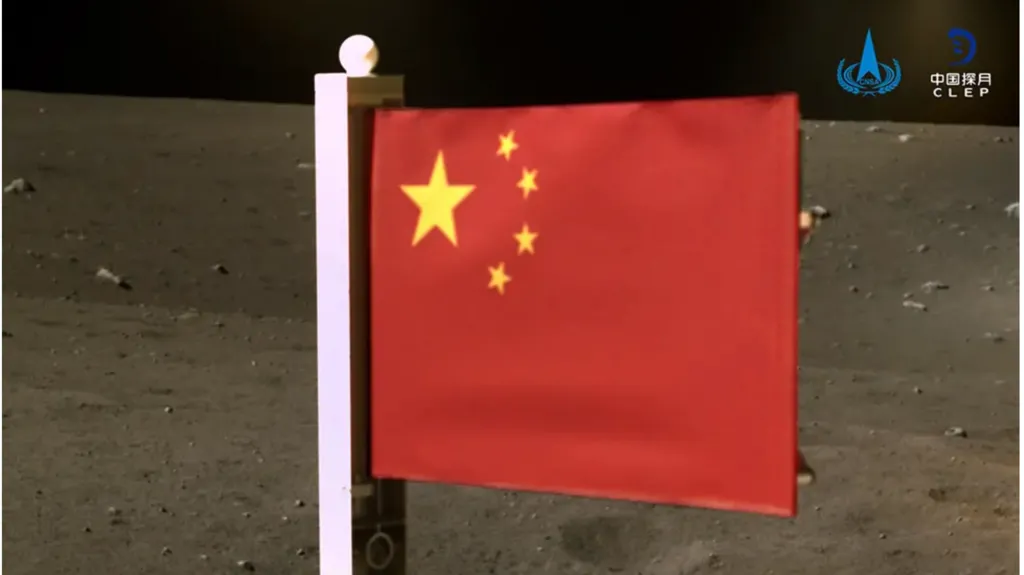
According to a report by Politico, the acting head of Nasa referenced similar plans by China and Russia, noting that these countries may potentially establish restricted areas on the Moon, sparking concerns about the implications of such actions.
However, the feasibility of this goal and the accompanying timeframe have raised questions, particularly in light of recent and substantial Nasa budget reductions, with some scientists expressing concerns that the plans may be driven by geopolitical considerations rather than scientific objectives.
A growing number of nations, including the US, China, Russia, India, and Japan, are actively engaged in exploring the Moon's surface, with several countries aiming to establish permanent human settlements in the near future.
In a statement, US Transport Secretary Sean Duffy, who has been appointed as the temporary head of Nasa by President Donald Trump, emphasized the need for swift action, citing the importance of advancing critical technology to support a future lunar economy, high-power energy generation on Mars, and strengthening national security in space.
Duffy has called for proposals from commercial companies to design and build a nuclear reactor capable of generating a minimum of 100 kilowatts of power, a relatively modest amount compared to other power sources.
For context, a typical on-shore wind turbine can produce 2-3 megawatts of power, highlighting the relatively small scale of the proposed lunar reactor.
The concept of utilizing a nuclear reactor as a power source on the Moon is not a new idea, with Nasa having previously issued contracts to companies to design such reactors.
In 2022, Nasa awarded three contracts worth $5 million each to companies to develop reactor designs, marking an initial step towards making nuclear power a reality on the lunar surface.
More recently, China and Russia announced plans to collaborate on the construction of an automated nuclear power station on the Moon by 2035, further underscoring the growing interest in lunar energy production.
Many experts agree that nuclear power is likely the most viable option for providing continuous energy on the lunar surface, given the unique challenges posed by the Moon's environment.
The lunar day, which is equivalent to four weeks on Earth, consists of two weeks of continuous sunlight followed by two weeks of darkness, making it difficult to rely solely on solar power.
Dr. Sungwoo Lim, a senior lecturer in space applications at the University of Surrey, notes that even a modest lunar habitat would require megawatt-scale power generation, which cannot be reliably achieved with solar arrays and batteries alone.
Lim emphasizes that nuclear energy is not only desirable but also inevitable for supporting human settlements on the Moon.
Lionel Wilson, a professor of earth and planetary sciences at Lancaster University, believes that it is technically possible to place nuclear reactors on the Moon by 2030, provided sufficient funding is allocated, and highlights the existence of designs for small reactors.
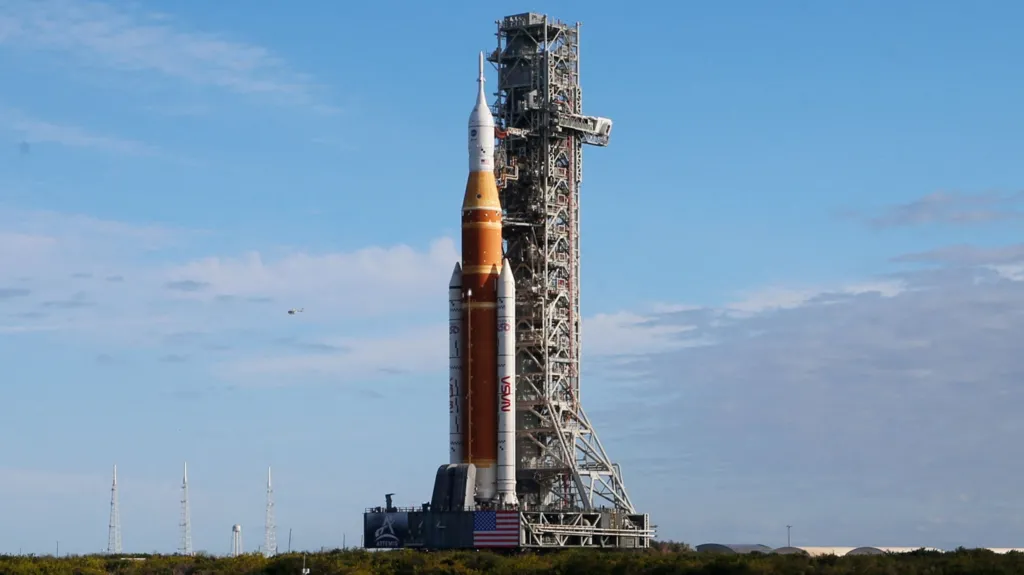
Wilson notes that the primary challenge lies in having enough Artemis launches to establish the necessary infrastructure on the Moon, referencing Nasa's Artemis spaceflight program.
Concerns have also been raised about the safety implications of launching radioactive materials through the Earth's atmosphere.
Dr. Simeon Barber, a planetary science specialist at the Open University, acknowledges that launching radioactive materials poses safety concerns, but notes that obtaining the necessary licenses and permits can mitigate these risks.
The directive from Duffy comes at a time of significant upheaval within Nasa, following the announcement of 24% budget cuts in 2026 by the Trump administration.
These cuts will affect a range of science programs, including the Mars Sample Return, which aims to retrieve samples from the planet's surface.
Some scientists have expressed concerns that the announcement is motivated by a desire to compete with other nations in the new lunar race, rather than being driven by scientific objectives.
Dr. Barber notes that the renewed focus on competition in space exploration is disappointing and concerning from a scientific perspective, as it may lead to a narrower focus on national interests rather than the broader goal of exploring the solar system.
Barber suggests that while competition can drive innovation, an overemphasis on national interests and establishing ownership may distract from the more significant objective of advancing scientific knowledge.
Duffy's comments about the potential for China and Russia to establish "keep-out zones" on the Moon appear to reference the Artemis Accords, an agreement signed by seven nations in 2020.
The Artemis Accords aim to establish principles for international cooperation on the Moon's surface, including the creation of safety zones around operations and assets.
These safety zones can be established around equipment and bases built on the Moon, potentially allowing countries to claim ownership and restrict access to certain areas.
Dr. Barber explains that establishing a nuclear reactor or base on the Moon could be used to claim a safety zone, effectively granting the operating country control over that area.
This raises concerns that the establishment of safety zones could be used to assert ownership and restrict access to certain areas of the Moon, undermining the principles of international cooperation.
Dr. Barber highlights the significant challenges that must be overcome before nuclear reactors can be safely and effectively used to support human settlements on the Moon.
Nasa's Artemis 3 mission, which aims to send humans to the lunar surface in 2027, has faced setbacks and uncertainty regarding funding, further complicating the plans for establishing a permanent human presence on the Moon.
Dr. Barber notes that having nuclear power for a base is of little use without a reliable means of transporting people and equipment, emphasizing the need for a more comprehensive and coordinated approach to lunar exploration.
The current plans appear disjointed, and a more integrated approach is necessary to achieve the goal of establishing a sustainable human presence on the Moon.


News
GB men’s curling team suffers upset defeat to Italy
At the 2026 Winter Olympics, Great Britain’s men’s curling team mounted a comeback against Italy following a disappointing beginning, ultimately falling short in their inaugural match.
Despite a valiant comeback, Team GB ultimately fell short as Italy held their composure to secure the win in the final end.
A dismal start to the match proved costly for Team GB's men, as they suffered their first defeat of the Winter Olympics at the hands of host nation Italy, despite a spirited fightback in the packed Cortina Curling Stadium.
Following victories in their first two matches, including a win over the Swedish rink that beat them in the gold-medal match four years ago, Team GB entered their second high-profile encounter in as many days in a confident position.
However, a disastrous opening end, in which Italy stole four points, left Team GB trailing and facing an uphill battle in front of a boisterous home crowd.
The British team, currently ranked number one in the world, gradually regained their footing and managed to level the score by the ninth end.
Ultimately, Italy maintained their composure in the final end to emerge victorious, winning 9-7 and adding Team GB to their list of scalps, which already included the Swedes.
"We had to dig deep and play some solid curling, but unfortunately, it wasn't enough to get us over the line," Team GB lead Hammy McMillan said in an interview with BBC Sport.
With seven wins from nine round-robin matches guaranteeing a spot in the semi-finals, Team GB remains in a strong position, although fewer wins may still be sufficient to advance.
The women's team is set to take to the ice next, facing South Korea in their second match at 13:05 GMT, while the men will return to action on Saturday against the Czech Republic at the same time.
Team GB is at the forefront of curling's technological advancements.
Embracing what sets you apart can be a powerful asset, according to some athletes.
A daily guide to the Winter Olympics is available for those looking to stay up-to-date with the action.
The looks of shock on the faces of Team GB's curlers told the story of a disastrous opening end.
With a stone in play, Mouat attempted a risky shot in an effort to claim two points, but it backfired, resulting in none of Team GB's stones in the house and four Italian stones in position.
However, the Scottish quartet, ranked number one in the world, quickly regained their composure and got back to their game.
The teams exchanged singles before a impressive final throw by Mouat, aided by a measurement to determine which stone was closest to the button, allowed Team GB to claim two points and narrow the gap to 5-3.
Another excellent team effort, which included a well-judged throw by Mouat, a solid sweep by Hammy McMillan and Bobby Lammie, and Grant Hardie's strategic expertise, forced Italy to concede a point in the fourth end, reducing the deficit to a single point at the break.
Italy blanked the sixth end and added two points in the seventh to rebuild their lead, but Team GB fought back with two points of their own, remarkably levelling the score with one end remaining after a steal.
The match came down to the final end, but Italy held their nerve to secure the win, prompting a deafening roar from the crowd.
"It's an incredible experience, and we need to get used to it," McMillan added, describing the electric atmosphere as "surreal" and "cool," more akin to a football match than a typical curling crowd.
News
Scotland Kicks Off Nations League Against Slovenia
Uefa has released the schedule for the Nations League, with Scotland set to begin their campaign on 26 September with an away match against Slovenia.
Uefa has released the schedule for the Nations League, with Scotland's campaign set to begin on 26 September with an away match against Slovenia.
The team's six group stage games will be played within a three-month period, culminating in a match against Switzerland on 16 November.
The fixture list was announced following Thursday's draw, which placed Scotland in a group with Switzerland, Slovenia, and North Macedonia.
Having been relegated from League A after a play-off loss to Greece last year, Scotland will compete in the second tier of the Nations League this year.
In response to the draw, head coach Steve Clarke noted that the teams in the group appear to be evenly matched.
Clarke reflected on the team's past experience in the competition, stating that it has been beneficial for Scotland.
He emphasized the importance of the Nations League, citing its role in helping the team qualify for Euro 2020, and anticipated a challenging set of matches.
A key matchup in the Nations League will see Scotland face off against Switzerland.
The group stage will determine the teams' fates, with the winner earning promotion, the runner-up entering a play-off, the third-placed team facing a relegation play-off, and the fourth-placed team being relegated directly.
The upcoming group games will mark a reunion for Scotland and Switzerland, who previously drew 1-1 in Cologne at Euro 2024.
Scotland's last encounter with Slovenia was during the 2018 World Cup qualification campaign, when they won 1-0 at home and drew 2-2 away.
The team has not played North Macedonia since the 2014 World Cup qualifiers, when they drew 1-1 at home and won 2-1 away, with goals from Ikechi Anya and Shaun Maloney.
The schedule for Scotland's Nations League campaign begins on 26 September with a match against Slovenia.
The team will then host Switzerland on 29 September, followed by a trip to face North Macedonia on 3 October.
Scotland will then play Slovenia at home on 6 October, before hosting North Macedonia on 11 November.
The final group stage match will see Scotland travel to face Switzerland on 16 November.
The team's home match against North Macedonia is set for 11 November.
The campaign will conclude with an away match against Switzerland on 16 November.
News
Golfer McIlroy Sinks Bunker Shot at Pebble Beach Pro-Am
At the AT&T Pebble Beach Pro-Am in California, Rory McIlroy achieved an eagle on the 14th hole at Spyglass Hill, capping off his opening round with a score of 68.
During the AT&T Pebble Beach Pro-Am in California, Rory McIlroy achieved an eagle on the 14th hole at Spyglass Hill, contributing to his first-round score of 68.
For further information, Rory McIlroy had a solid opening round, while Hisatsune took the lead.
Access to this content is restricted to users in the United Kingdom.
-
 News8 hours ago
Australian Politics Faces Questions Over Gender Equality Amid Sussan Ley’s Appointment
-
 News5 hours ago
Farage Says Reform to Replace Traditional Tory Party
-
 News5 hours ago
Wrexham Pair Seek Win Against Former Team Ipswich
-
 News11 hours ago
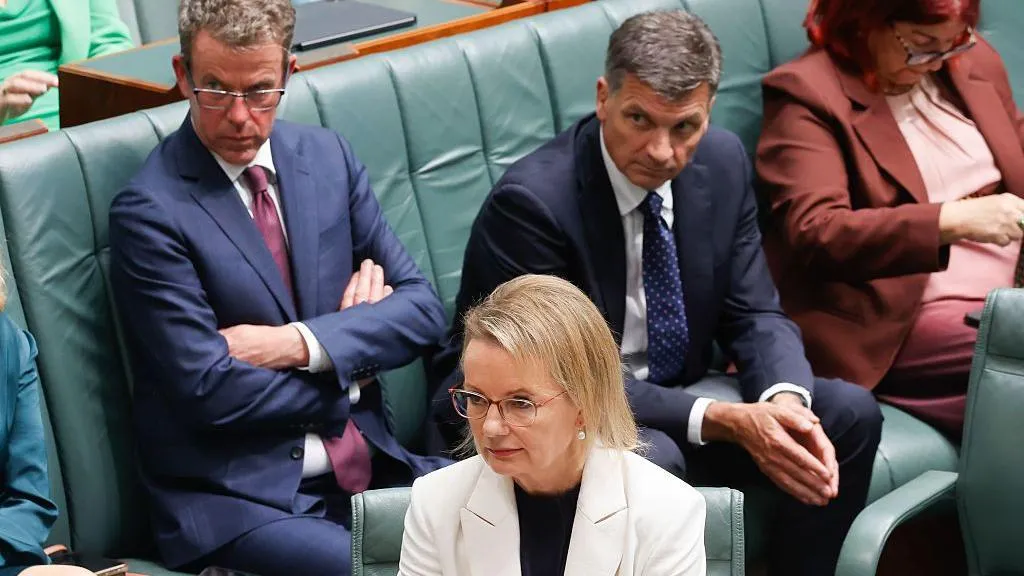
Liberal Party Removes Australia’s First Female Leader
-
 News9 hours ago
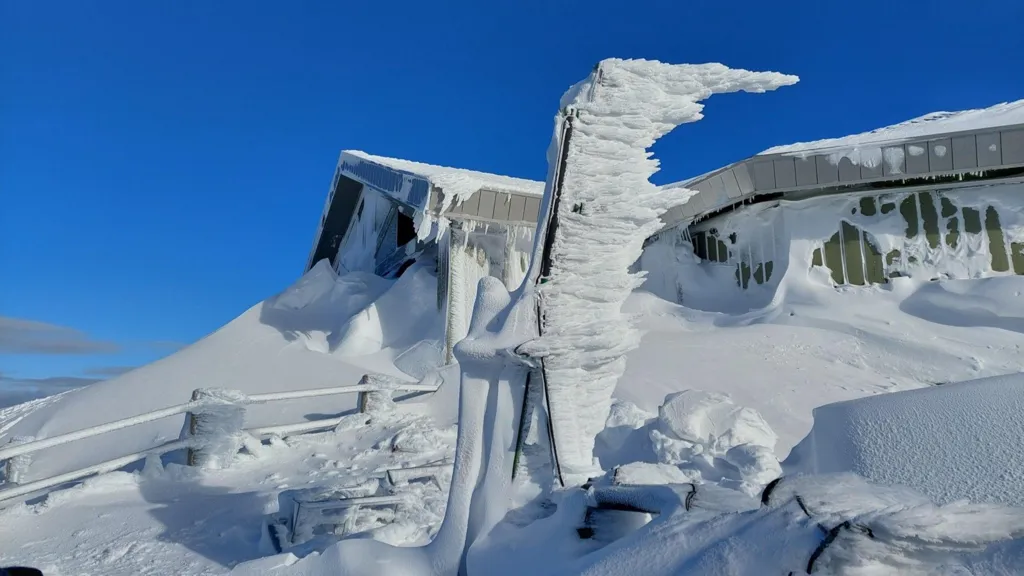
UK Braces for Cold Snap with Snow and Ice Alerts Expected
-
 News5 hours ago
Husband’s alleged £600k theft for sex and antiques blamed on drug side effects
-
 News2 days ago
Sunbed ads spreading harmful misinformation to young people
-
 Business11 hours ago
BBC Reporter Exposed to Cyber Attack Due to Vulnerabilities in AI Coding Tool