
News
Nasa’s Artemis II mission rocket arrives at launch site
The last stages of planning are currently in progress for a historic lunar mission, marking the first time a crew will travel to the Moon since the 1960s, a span of over five decades.
In preparation for the first crewed mission to the Moon in over 50 years, NASA's Space Launch System has been transported to the launch pad at Cape Canaveral, Florida, marking a significant step towards the upcoming Artemis II mission.
The 98m-tall rocket was relocated from the Vehicle Assembly Building to the launch pad over a period of nearly 12 hours, covering a distance of 4 miles (6.5km).
With the rocket now in position, the focus shifts to conducting final tests, checks, and a dress rehearsal to ensure a successful 10-day mission, which will see four astronauts travel around the Moon.
According to NASA, the earliest possible launch date for the Artemis II mission is 6 February, with additional launch windows available later in February, as well as in March and April.
The rocket's journey to the launch pad began at 07:04 local time (12:04 GMT) and concluded at 18:41 local time (23:42 GMT), with the rocket arriving at Launch Pad 39B at the Kennedy Space Center.

A massive crawler-transporter was used to transport the rocket, moving at a top speed of 0.82 mph (1.3 km/h) along the 4-mile route, with live coverage capturing the slow and deliberate process.
In the coming days, NASA will prepare the rocket for a "wet dress rehearsal," a critical test of fuel operations and countdown procedures to ensure the mission's success.
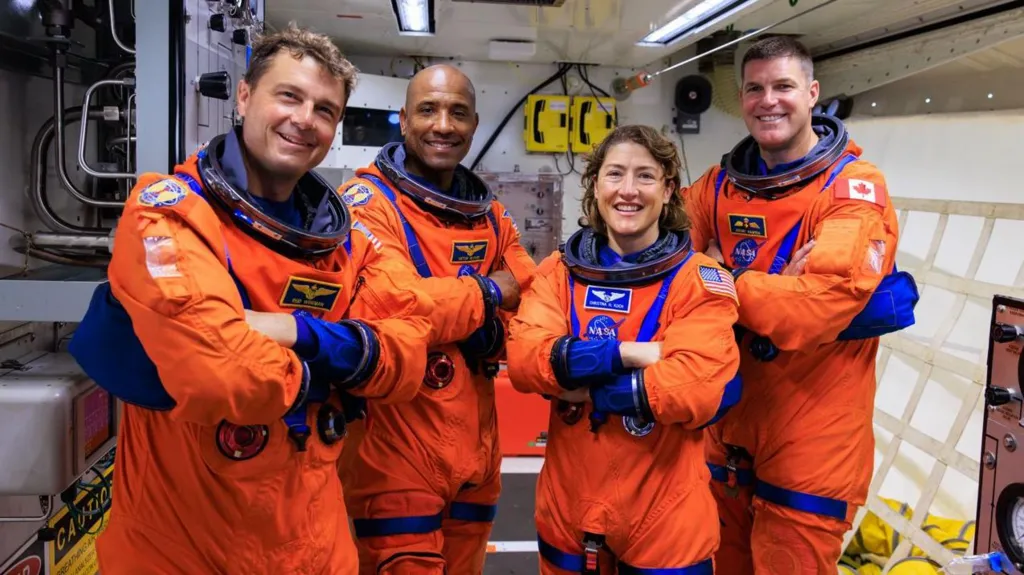
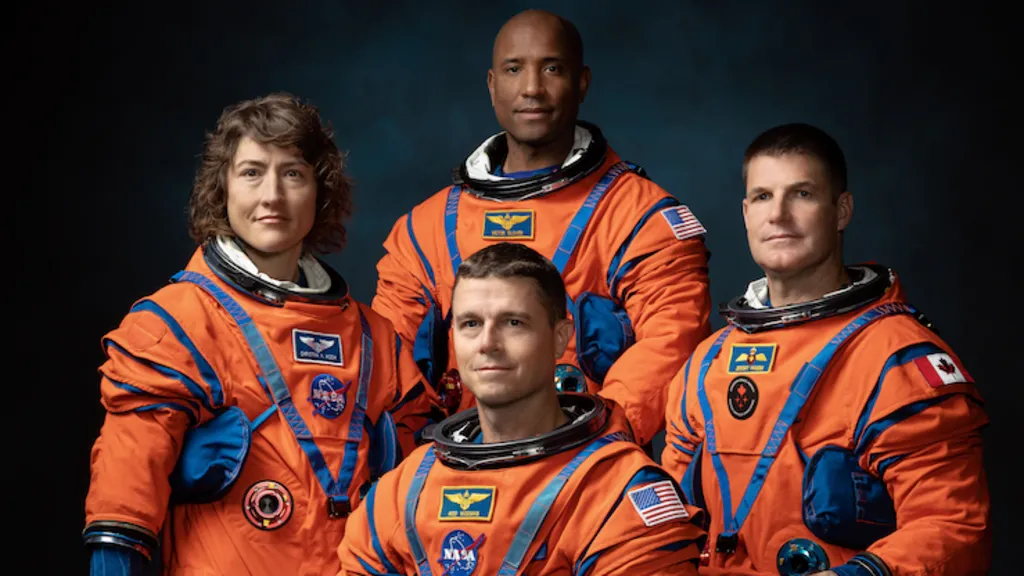
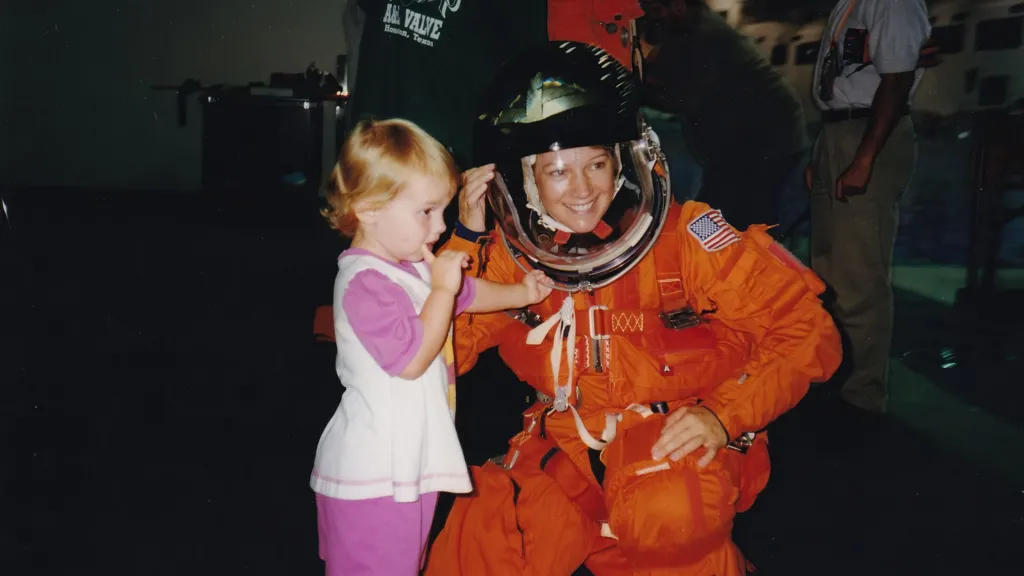
The Artemis II crew, consisting of NASA astronauts Reid Wiseman, Victor Glover, and Christina Koch, along with Canadian astronaut Jeremy Hansen, were present at the Kennedy Space Center to witness the rocket's relocation.
In the near future, these four astronauts will be secured inside a spacecraft atop the rocket, ready to embark on their historic journey to the Moon.
This mission will mark the first time humans have visited the Moon since the Apollo 17 landing in December 1972, a significant milestone in space exploration.
NASA has stated that the Artemis II mission has the potential to take astronauts further into space than ever before, pushing the boundaries of human spaceflight.
Although the Artemis II mission will not involve a lunar landing, it will lay the groundwork for future missions, including the Artemis III mission, which is slated to include a lunar landing.
The launch of the Artemis III mission is currently scheduled for "no earlier than" 2027, although experts predict that 2028 may be a more realistic target date.
Christina Koch expressed her excitement and awe upon seeing the rocket, describing it as an incredible experience.
Koch noted that astronauts tend to remain calm on launch day, attributing this to their extensive training and preparation, which enables them to focus on the mission at hand.
Jeremy Hansen expressed his hope that the mission would inspire people around the world, fostering a newfound appreciation for space exploration.
Hansen reflected on his own perspective on the Moon, stating that he had previously taken it for granted, but now sees it as a fascinating and complex celestial body worthy of further study.
Hansen believes that the Artemis II mission will captivate people's attention, encouraging them to gaze at the Moon with renewed interest, particularly as humans fly around its far side.
Prior to embarking on their lunar journey, the Artemis II crew will spend the first two days in orbit around the Earth, conducting initial checks and preparations.
According to Koch, the crew will enter an orbit approximately 40,000 miles out, equivalent to about one-fifth of the distance to the Moon, providing a unique perspective on the Earth.
Koch described the experience of seeing the Earth as a single, unified entity, a view that none of the astronauts have previously witnessed.
The crew will then travel over 250,000 miles to the Moon, conducting scientific experiments and operations along the way.
During their flyby of the Moon's far side, the astronauts will dedicate three hours to observing the lunar surface, taking images, and studying its geology to inform future landing sites.
A crucial component of the Orion spacecraft, the European Service Module, was manufactured in Bremen, Germany, by Airbus, a key contributor to the mission.
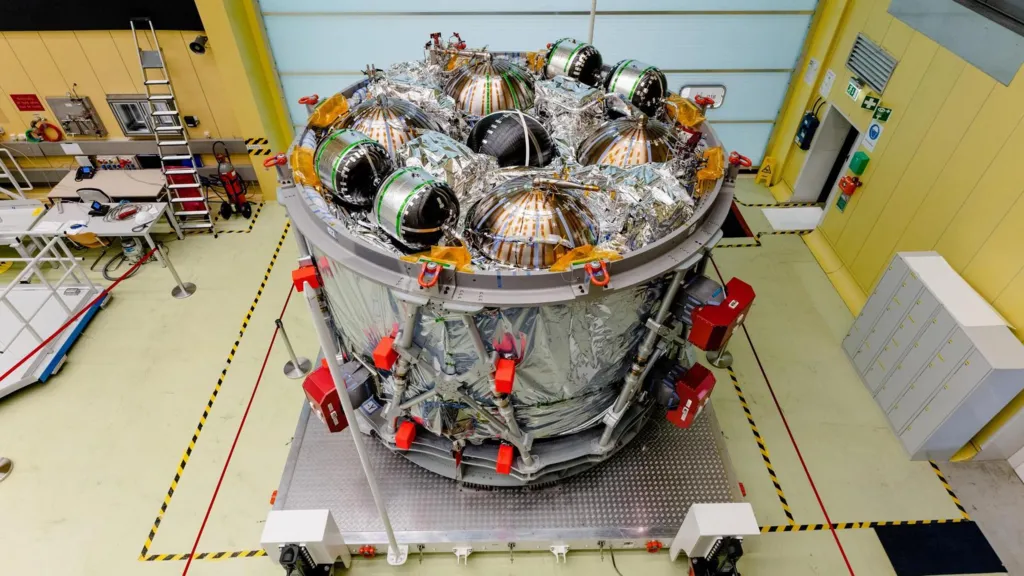
The European Service Module provides the necessary propulsion for the Orion spacecraft to reach the Moon, making it an essential component of the mission.
Sian Cleaver, a spacecraft engineer at Airbus, emphasized the importance of the European Service Module, stating that it is indispensable for the success of the mission.
The module's large solar arrays will generate the electrical power required for the spacecraft, while its tanks will supply oxygen, nitrogen, and water to sustain the astronauts during their journey.
Cleaver highlighted the module's critical role in providing life-support systems for the crew, ensuring their safety and well-being throughout the mission.
The Airbus team is currently working on building additional modules for future Artemis missions, a complex process that requires thousands of engineering hours and approximately 18 months to complete.
The team's primary objective is to ensure the safe transportation of astronauts to the Moon and back, a responsibility that demands meticulous attention to detail and perfection.
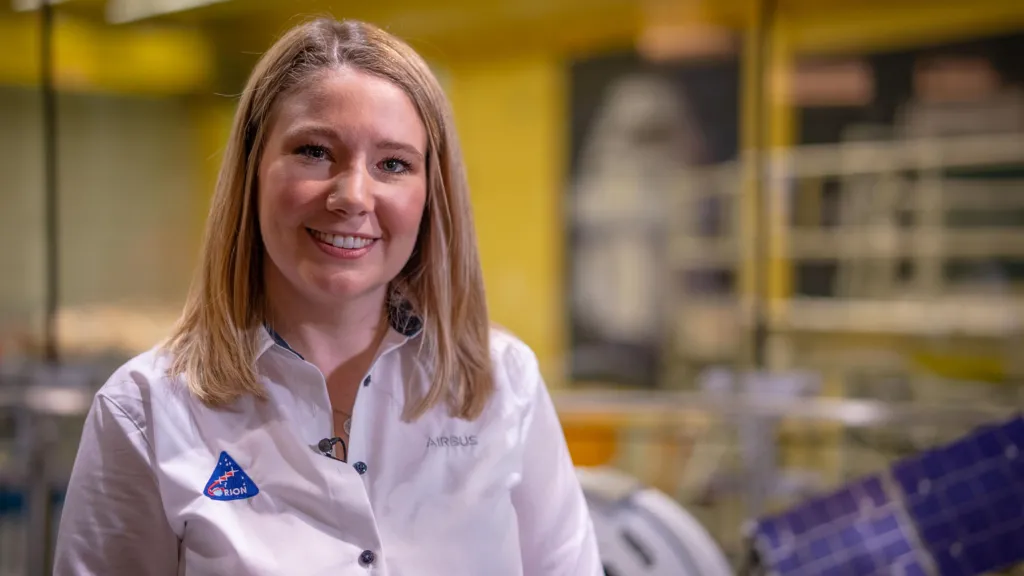
Cleaver reiterated the importance of safety, stating that the team must guarantee the astronauts' safe return, a top priority for the mission.
With the rocket now positioned on the launch pad, the Artemis team is working tirelessly to prepare for liftoff, driven by the urgency to meet the mission's timeline.
The mission has already experienced significant delays, and NASA is under pressure to launch the Artemis II mission as soon as possible, while maintaining its commitment to safety.
John Honeycutt, chair of the Artemis mission management team, emphasized that his primary responsibility is the safe return of the astronauts, and that the mission will only proceed when all safety protocols are met.
Honeycutt reaffirmed NASA's commitment to prioritizing crew safety above all else, stating that the mission will only launch when the team is confident that all necessary precautions have been taken.



News
Prince Andrew’s BBC Interview Contrasted with New Insights from Epstein Emails
The Epstein files’ recent release has led to renewed examination of statements made by Prince Andrew in 2019.
The recent release of the Epstein files has prompted a re-examination of statements made by Prince Andrew during a 2019 BBC Newsnight interview, which may now be subject to renewed scrutiny.
A review of the interview by BBC journalists Sean Coughlan and Sarah Campbell has been conducted, comparing Prince Andrew's responses with emails allegedly exchanged by the prince, now known as Andrew Mountbatten-Windsor.
Andrew Mountbatten-Windsor is under increasing pressure from US authorities and the family of Virginia Giuffre, who has made prominent allegations against him, to provide testimony in the US regarding his connection to Jeffrey Epstein.
Jeffrey Epstein, the convicted financier, was found guilty in 2008 of soliciting prostitution from a minor and took his own life in 2019 while awaiting trial for sex trafficking charges.
News
Serie A to air on BBC with live coverage of Scottish matches
A new multi-game rights deal has enabled the BBC to broadcast live coverage of matches featuring several Scotland internationals, including Scott McTominay, Billy Gilmour, Lewis Ferguson, Che Adams, Lennon Miller, Kieron Bowie, and Josh Doig, starting this Sunday.
A number of Scottish players, including Che Adams, Scott McTominay, Billy Gilmour, Lennon Miller, and Lewis Ferguson, are currently competing in Italy's top division, Serie A.
The upcoming Serie A match between Torino and Bologna will be a notable fixture, featuring several Scottish players.
The match is scheduled to take place on Sunday, 15 February, with a kick-off time of 17:00 GMT, at a venue that will be announced.
Fans can catch the live coverage of the match on BBC Alba, starting from 16:50.
A growing list of Scottish players, including Scott McTominay, Billy Gilmour, Lewis Ferguson, Che Adams, Lennon Miller, Josh Doig, and Kieron Bowie, are making a name for themselves in Serie A.
With a record number of Scots playing in Italy's top flight, the BBC is now providing live coverage of their matches, allowing fans to follow their favorite players.
As part of a new package, the BBC will broadcast eight live Serie A matches, showcasing the talents of Scottish players as they prepare for the upcoming World Cup.
The first match to be broadcast on BBC Alba will be the encounter between Torino, featuring striker Che Adams, and Bologna, featuring midfielder Lewis Ferguson, on Sunday, with a 17:00 GMT kick-off.
Bologna will be looking to bounce back from five consecutive domestic defeats, despite recent impressive results in the Europa League and against Celtic.
During their recent run, Bologna drew 2-2 with Celtic and secured a 3-0 win over Maccabi Tel Aviv in the Europa League.
Torino, on the other hand, has only managed one win in their last five outings but will be seeking to build on their recent 2-2 draw against Fiorentina.
Scotland's Nations League campaign is set to begin in Slovenia.
Clarke has confirmed that Barnes will not be making a switch to Scotland.
Scotland is scheduled to face Switzerland in the Nations League.
Future BBC Alba broadcasts will feature matches involving Napoli's Scottish duo, Scott McTominay and Billy Gilmour, who is nearing a return from injury, as well as Lennon Miller's Udinese, Josh Doig's Sassuolo, and Kieron Bowie's Hellas Verona.
The number of Scottish players in Serie A has reached a record high, with the likes of Liam Henderson, who has played for several Italian clubs, now competing in Serie B.
Further details of the Serie A matches to be broadcast on BBC Alba will be announced in the coming weeks.
Margaret Cameron, director of content at BBC Alba, expressed her excitement about the opportunity for Scottish fans to watch their favorite players in action, free-to-air, ahead of the World Cup.
Presenter Alex O'Henley is looking forward to hosting the coverage of what he describes as a "golden era" for Scottish players in Italy.
With the World Cup approaching, O'Henley believes it's an exciting time for Scottish fans to follow the fortunes of their players in Italy.
Kieron Bowie made his debut for Verona against Pisa.
Che Adams, who was born in Leicester, has established himself as a key player for Scotland, earning 45 caps and scoring 11 goals since switching allegiances in 2021.
This season, Adams has scored six goals in 26 appearances for Torino, who currently sit 13th in the Serie A table.
Kieron Bowie, who began his career with Raith Rovers, has risen to prominence with Hibernian, scoring nine goals in 30 appearances before joining Hellas Verona in January.
Bowie made his debut for Verona in a 0-0 draw against Pisa, earning his first start for the club.
Josh Doig, who started his career with Hibernian, has become a regular player in Serie A, first with Verona and now with Sassuolo, earning one cap for Scotland.
Doig has made 24 appearances, including 20 starts, for Sassuolo this season.
Lewis Ferguson, who began his career with Hamilton Academical, has become a key player for Bologna, earning 21 caps for Scotland and leading his team to a Coppa Italia final win over AC Milan.
Ferguson has made 29 appearances, including 21 starts, for Bologna this season, helping the team to eighth place in the table.
Billy Gilmour, who started his career with Rangers, has played for several clubs, including Chelsea and Norwich City, before joining Napoli in 2024, where he won his first league title.
Gilmour has been limited to 12 appearances, including six starts, this season due to injury, but is nearing a return to action.
Scott McTominay, who came through Manchester United's youth ranks, has become a key player for Napoli, earning 67 caps for Scotland and scoring 14 goals, including a notable overhead kick against Denmark.
McTominay has made 34 appearances for Napoli this season, scoring 10 goals and helping the team to a strong position in the table.
Lennon Miller, who began his career with Motherwell, has made a promising start to his career, earning four caps for Scotland and joining Udinese in August.
Miller has made 14 appearances, including six starts, for Udinese this season.
Fans can stay up-to-date with their favorite clubs through BBC Sport.
News
GB men’s curling team suffers upset defeat to Italy
At the 2026 Winter Olympics, Great Britain’s men’s curling team mounted a comeback against Italy following a disappointing beginning, ultimately falling short in their inaugural match.
Despite a valiant comeback, Team GB ultimately fell short as Italy held their composure to secure the win in the final end.
A dismal start to the match proved costly for Team GB's men, as they suffered their first defeat of the Winter Olympics at the hands of host nation Italy, despite a spirited fightback in the packed Cortina Curling Stadium.
Following victories in their first two matches, including a win over the Swedish rink that beat them in the gold-medal match four years ago, Team GB entered their second high-profile encounter in as many days in a confident position.
However, a disastrous opening end, in which Italy stole four points, left Team GB trailing and facing an uphill battle in front of a boisterous home crowd.
The British team, currently ranked number one in the world, gradually regained their footing and managed to level the score by the ninth end.
Ultimately, Italy maintained their composure in the final end to emerge victorious, winning 9-7 and adding Team GB to their list of scalps, which already included the Swedes.
"We had to dig deep and play some solid curling, but unfortunately, it wasn't enough to get us over the line," Team GB lead Hammy McMillan said in an interview with BBC Sport.
With seven wins from nine round-robin matches guaranteeing a spot in the semi-finals, Team GB remains in a strong position, although fewer wins may still be sufficient to advance.
The women's team is set to take to the ice next, facing South Korea in their second match at 13:05 GMT, while the men will return to action on Saturday against the Czech Republic at the same time.
Team GB is at the forefront of curling's technological advancements.
Embracing what sets you apart can be a powerful asset, according to some athletes.
A daily guide to the Winter Olympics is available for those looking to stay up-to-date with the action.
The looks of shock on the faces of Team GB's curlers told the story of a disastrous opening end.
With a stone in play, Mouat attempted a risky shot in an effort to claim two points, but it backfired, resulting in none of Team GB's stones in the house and four Italian stones in position.
However, the Scottish quartet, ranked number one in the world, quickly regained their composure and got back to their game.
The teams exchanged singles before a impressive final throw by Mouat, aided by a measurement to determine which stone was closest to the button, allowed Team GB to claim two points and narrow the gap to 5-3.
Another excellent team effort, which included a well-judged throw by Mouat, a solid sweep by Hammy McMillan and Bobby Lammie, and Grant Hardie's strategic expertise, forced Italy to concede a point in the fourth end, reducing the deficit to a single point at the break.
Italy blanked the sixth end and added two points in the seventh to rebuild their lead, but Team GB fought back with two points of their own, remarkably levelling the score with one end remaining after a steal.
The match came down to the final end, but Italy held their nerve to secure the win, prompting a deafening roar from the crowd.
"It's an incredible experience, and we need to get used to it," McMillan added, describing the electric atmosphere as "surreal" and "cool," more akin to a football match than a typical curling crowd.
-
 News9 hours ago
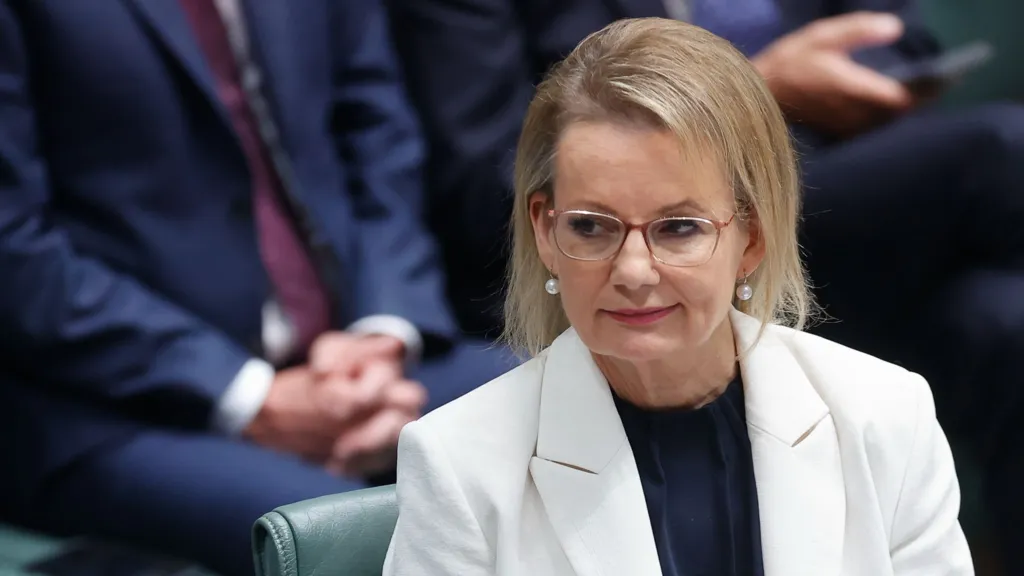
Australian Politics Faces Questions Over Gender Equality Amid Sussan Ley’s Appointment
-
 News6 hours ago
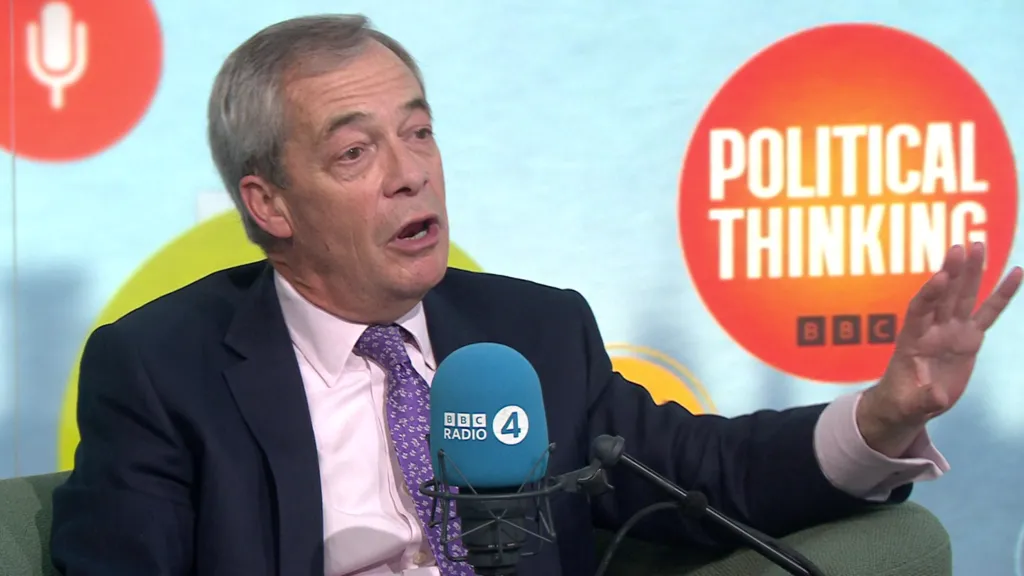
Farage Says Reform to Replace Traditional Tory Party
-
 News6 hours ago
Wrexham Pair Seek Win Against Former Team Ipswich
-
 News11 hours ago
Liberal Party Removes Australia’s First Female Leader
-
 News9 hours ago
UK Braces for Cold Snap with Snow and Ice Alerts Expected
-
 News6 hours ago
Husband’s alleged £600k theft for sex and antiques blamed on drug side effects
-
 News2 days ago
Sunbed ads spreading harmful misinformation to young people
-
 Business12 hours ago
BBC Reporter Exposed to Cyber Attack Due to Vulnerabilities in AI Coding Tool