
News
Rising rat populations overwhelm urban areas
The rat population is experiencing rapid growth in urban environments, prompting questions about the underlying causes of this surge and whether it can still be controlled.
An article narrated by Justin is available for listening.
In a surprising discovery, John Gladwin found a torn bag of soil under his kitchen sink one morning last year, prompting an investigation into the cause.
The presence of a strong, musty odor soon followed, reminiscent of the smell often found near communal trash areas.
John Gladwin's immediate reaction was, "I knew what it was straight away – rats."
Having previously spotted rats near the bins, he realized they had now invaded his home.
The sounds of rats scurrying in the cupboards and behind the bath panel, as well as the noise of them fighting under the bath, were unmistakable.
Taking swift action, Mr. Gladwin used peppermint oil and rat poison, successfully deterring the rats from returning, but the experience left him shaken, particularly due to concerns for his five children's health.
Additionally, he felt a sense of embarrassment about the situation.
Admitting to a rat infestation in one's home can be difficult, as it may be perceived as a reflection of the family's living conditions.
Cleankill, a pest control company, has reported a significant increase in rat-related callouts, with founder Clive Bury estimating a 20% rise over the past two years, primarily in the southern region of England.
Similar trends are being observed nationwide, with the British Pest Control Association noting that over half of its member companies have seen an increase in rat infestations over the past five years.
Due to their nocturnal nature and ability to live in hidden areas such as drains and sewers, accurately counting rat populations is challenging, with estimates ranging from 10 million to 120 million in the UK.
According to data gathered by Drain Detectives through Freedom of Information requests, more than 500,000 rodent infestations were reported to UK councils between 2023 and mid-this year.
The issue is not limited to the UK.
Several major cities, including Washington DC, San Francisco, New York City, Amsterdam, and Toronto, have also experienced a surge in rat populations.
As rats often scavenge in sewers and trash, they can transmit diseases such as leptospirosis and hantavirus to humans, highlighting the need for effective control measures.
Considering the difficulties in eradicating rats, it is essential to explore strategies for mitigating their impact on urban areas.
Bobby Corrigan, an expert in urban rodentology, has spent his career studying rats, from his early days as an exterminator in New York City to his current research endeavors.
His work has taken him to unusual locations, including sewers, where he has attempted to use poison baits to control rat populations.
During his academic pursuits, Corrigan went to great lengths to understand rat behavior, even sleeping in a rat-infested barn to observe them firsthand.
His observations revealed a complex social structure among rats, with evidence of altruistic behavior, such as young rats sharing food with older, less mobile individuals.
Corrigan is determined to understand the factors contributing to the rise in rat populations.
Several possible explanations have been proposed, including the growing demand for fast food, less frequent trash collection, and construction projects that disrupt sewer networks.
Additionally, research suggests that rising temperatures may also play a role in the increase in rat populations.
A study conducted by Corrigan and researchers from the University of Richmond found a correlation between temperature increases and rat activity in 16 cities, mostly in North America.
The results, published in Science Advances, showed significant increases in rat activity in 11 cities, with Washington DC experiencing a nearly 400% rise, San Francisco a 300% increase, and New York a 160% surge.
Only three cities, including Tokyo and New Orleans, saw declines in rat populations.

The study found that cities with greater temperature increases had larger rises in rat activity, with some areas experiencing temperature increases of up to 2C.
Corrigan believes that as temperatures continue to rise, particularly during winter months, the growth in rat populations is likely to persist.
According to the Climate Action Tracker, global temperatures are expected to rise by at least 1.9C and up to 2.7C above pre-industrial levels by 2100.
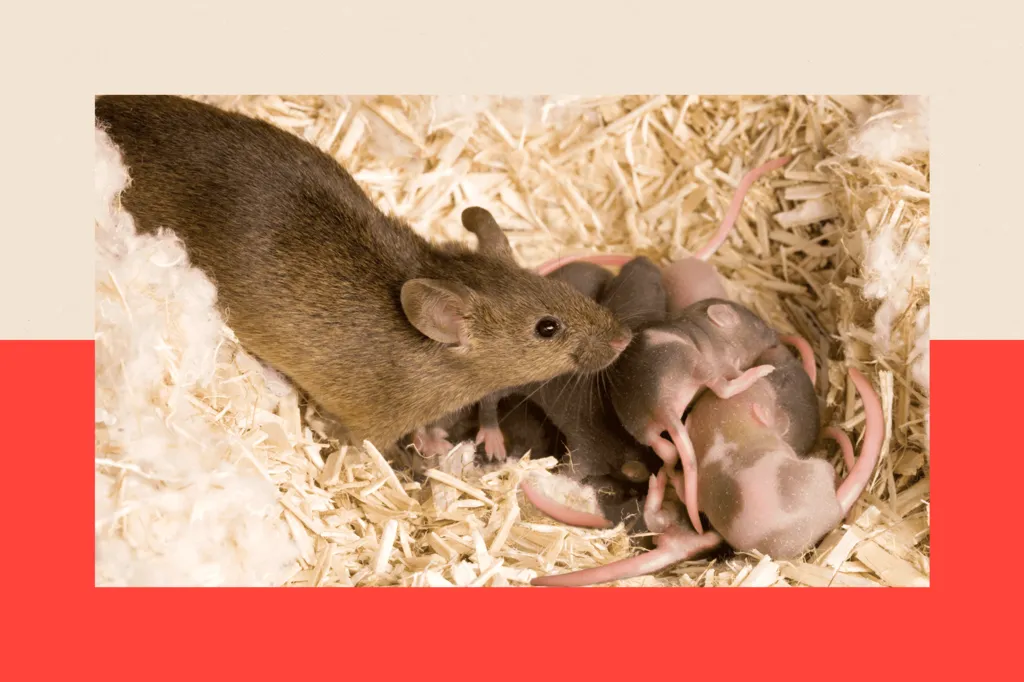
Rats are prolific breeders, with females producing up to six litters per year, each containing up to 12 pups.
These offspring can begin breeding after just nine weeks, allowing two rats to potentially produce over 1,000 descendants in a single year.
Urban areas, with their heat-trapping buildings and tarmac, tend to warm more quickly than rural areas, creating an ideal environment for rat populations to thrive.
The trend of people moving from rural areas to cities also contributes to the growth in rat populations, as it reduces their natural habitat and creates more opportunities for them to infest urban areas.
The increasing number of buildings and infrastructure in cities provides rats with more places to live and hide, making control efforts more challenging.
One interesting fact about rats is their inability to vomit, which, in theory, should make them more susceptible to poison baits.
However, rats are also neophobic, meaning they are cautious of new things, and this trait may be related to their inability to vomit, according to Professor Steven Belmain.
This cautious approach to life allows rats to avoid potential dangers, making them more resilient to control measures.
Rats will only try a small amount of a new food source before deciding whether it is safe to consume, demonstrating their adaptability and ability to thrive in various environments.
This unique combination of traits has enabled rats to survive and prosper in a wide range of settings, making them a formidable challenge for control efforts.
With three decades of experience under his belt, Dr. Alan Buckle from the University of Reading has dedicated his career to developing innovative rat poisons, but he admits that his efforts have been unsuccessful.

Rats are known to avoid substances that cause discomfort or pain, which is why anticoagulants, a type of poison that prevents blood clotting, are commonly used as they are slower-acting and allow rats to consume a lethal dose over time.
However, these substances can take up to a week to be effective and are considered inhumane as they cause internal bleeding, leading to a slow and painful death for the rats.
Furthermore, rats have developed genetic mutations in recent years, rendering them partially resistant to these potent drugs.
Researchers are exploring alternative methods, including the use of oral contraceptives, as a more humane approach to controlling rat populations.
Kathleen Corradi, who was appointed as New York's Rat Tsar by the Mayor in 2023, is all too familiar with the challenges of tackling rat infestations.
It's estimated that approximately three million rats inhabit the five boroughs of New York, and Corradi was allocated $3.5m (£2.6m) to increase public awareness about rat mitigation strategies.
Corradi established a "rat academy" to educate residents on how to prevent rat infestations in their neighborhoods.
As part of the academy, Corradi takes participants on a "rat walk" through neighborhoods, discussing both human and rat behavior and how they intersect.

The goal is to empower residents with knowledge on how to prevent rat infestations and take action in their own communities.
Corradi's team also encouraged residents to report rat sightings or evidence of rat-attracting behavior, which would prompt inspections and potential fines for non-compliance.
A key aspect of the initiative was the introduction of rat-proof bins, replacing traditional plastic bags, to reduce the availability of food sources for rats.
Although Corradi is stepping down from her role, she reports that the approach is showing promising results.
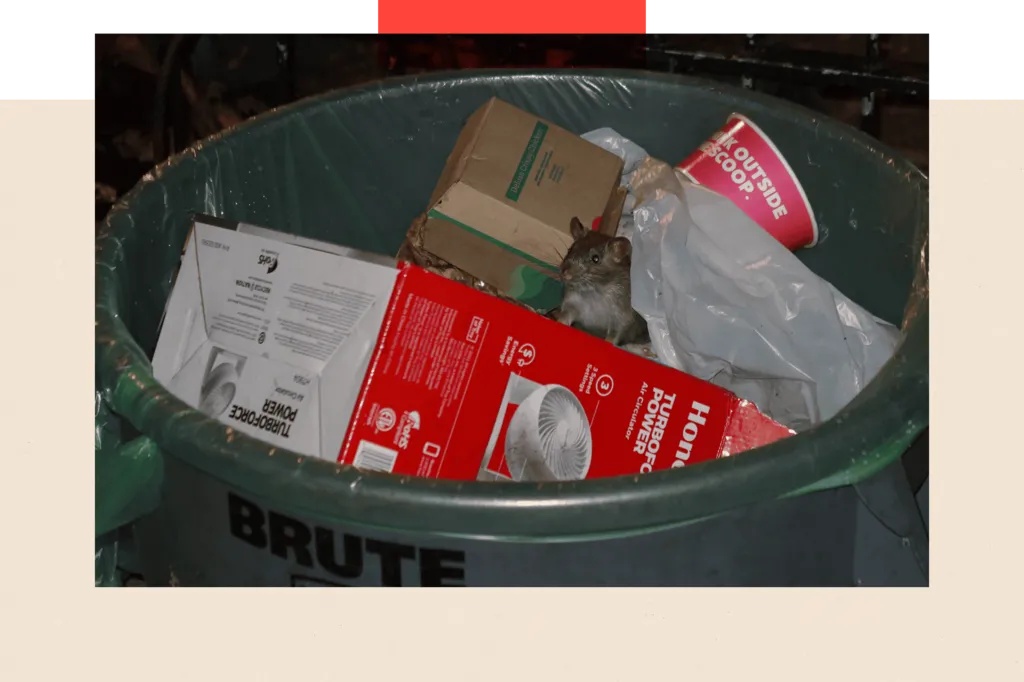
According to Corradi, the key to sustained reduction in rat populations lies in cutting off their access to food sources.
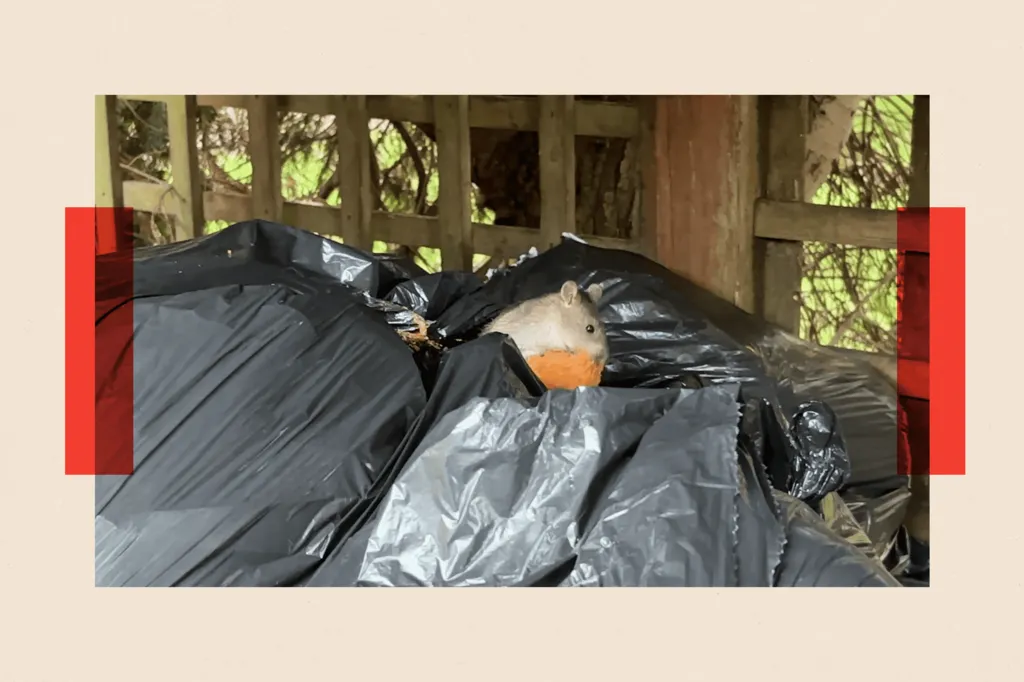
In Croydon, pest controller Alex Donnovan from Cleankill led an early-morning excursion to the backyard of an estate where John Gladwin resides, demonstrating the extent of the rat infestation.
As we stood still and quiet, a rat emerged from beneath the concrete walkway and scurried towards the communal bins, followed by another rat that appeared from a burrow at the end of the garden.
During our two-hour observation, several rats were seen climbing trees and one even jumped into a bin, rummaging through a plastic bag for food just meters away.
Donnovan believes that gaining control over such a severe infestation is nearly impossible, citing the abundance of food as a major obstacle.
He noted that even if rodenticide is used, the rats are unlikely to consume it due to the availability of alternative food sources, and the infested bins often become a deterrent for waste collection.
While warmer temperatures may contribute to growing rat populations, factors such as overflowing bins, fast food waste, and social fragmentation exacerbate the challenge of controlling rat infestations.

The UK's population is projected to increase from 67.6 million in 2022 to 72.5 million by 2032, with a growing proportion of people living in urban areas, according to the Office for National Statistics.
Instead of relying on poison, a more straightforward solution might be necessary to address the issue.
Dr. Corrigan argues that by taking care of the urban environment, the need for inhumane methods of rat control can be alleviated.
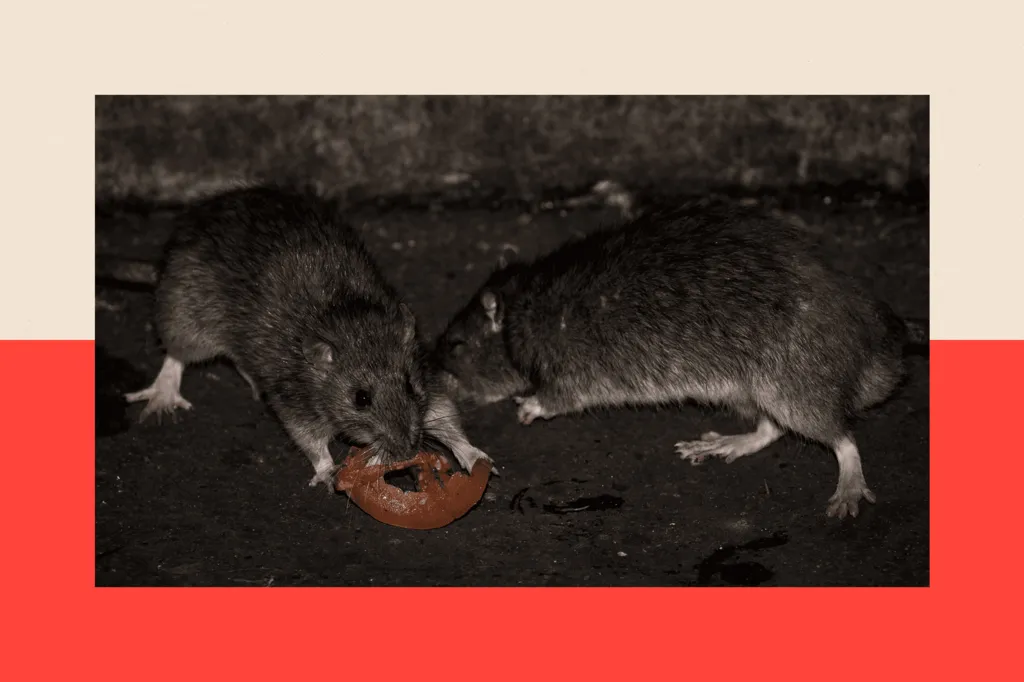
By denying rats access to food and scraps, the need for poisoning, killing, and torturing them can be avoided, according to Dr. Corrigan.
The challenge now is to implement this approach quickly, as Dr. Corrigan notes that the issue has been underestimated and neglected, allowing rat populations to spiral out of control.
The consequence of underestimating and ignoring the rat problem is now being felt, and it's essential to take action to address the issue.
Additional reporting for this article was provided by Florence Freeman.
The BBC InDepth section offers in-depth analysis, fresh perspectives, and thought-provoking content on the most pressing issues of the day, and readers can provide feedback by clicking on the button below.
News
GB men’s curling team suffers upset defeat to Italy
At the 2026 Winter Olympics, Great Britain’s men’s curling team mounted a comeback against Italy following a disappointing beginning, ultimately falling short in their inaugural match.
Despite a valiant comeback, Team GB ultimately fell short as Italy held their composure to secure the win in the final end.
A dismal start to the match proved costly for Team GB's men, as they suffered their first defeat of the Winter Olympics at the hands of host nation Italy, despite a spirited fightback in the packed Cortina Curling Stadium.
Following victories in their first two matches, including a win over the Swedish rink that beat them in the gold-medal match four years ago, Team GB entered their second high-profile encounter in as many days in a confident position.
However, a disastrous opening end, in which Italy stole four points, left Team GB trailing and facing an uphill battle in front of a boisterous home crowd.
The British team, currently ranked number one in the world, gradually regained their footing and managed to level the score by the ninth end.
Ultimately, Italy maintained their composure in the final end to emerge victorious, winning 9-7 and adding Team GB to their list of scalps, which already included the Swedes.
"We had to dig deep and play some solid curling, but unfortunately, it wasn't enough to get us over the line," Team GB lead Hammy McMillan said in an interview with BBC Sport.
With seven wins from nine round-robin matches guaranteeing a spot in the semi-finals, Team GB remains in a strong position, although fewer wins may still be sufficient to advance.
The women's team is set to take to the ice next, facing South Korea in their second match at 13:05 GMT, while the men will return to action on Saturday against the Czech Republic at the same time.
Team GB is at the forefront of curling's technological advancements.
Embracing what sets you apart can be a powerful asset, according to some athletes.
A daily guide to the Winter Olympics is available for those looking to stay up-to-date with the action.
The looks of shock on the faces of Team GB's curlers told the story of a disastrous opening end.
With a stone in play, Mouat attempted a risky shot in an effort to claim two points, but it backfired, resulting in none of Team GB's stones in the house and four Italian stones in position.
However, the Scottish quartet, ranked number one in the world, quickly regained their composure and got back to their game.
The teams exchanged singles before a impressive final throw by Mouat, aided by a measurement to determine which stone was closest to the button, allowed Team GB to claim two points and narrow the gap to 5-3.
Another excellent team effort, which included a well-judged throw by Mouat, a solid sweep by Hammy McMillan and Bobby Lammie, and Grant Hardie's strategic expertise, forced Italy to concede a point in the fourth end, reducing the deficit to a single point at the break.
Italy blanked the sixth end and added two points in the seventh to rebuild their lead, but Team GB fought back with two points of their own, remarkably levelling the score with one end remaining after a steal.
The match came down to the final end, but Italy held their nerve to secure the win, prompting a deafening roar from the crowd.
"It's an incredible experience, and we need to get used to it," McMillan added, describing the electric atmosphere as "surreal" and "cool," more akin to a football match than a typical curling crowd.
News
Scotland Kicks Off Nations League Against Slovenia
Uefa has released the schedule for the Nations League, with Scotland set to begin their campaign on 26 September with an away match against Slovenia.
Uefa has released the schedule for the Nations League, with Scotland's campaign set to begin on 26 September with an away match against Slovenia.
The team's six group stage games will be played within a three-month period, culminating in a match against Switzerland on 16 November.
The fixture list was announced following Thursday's draw, which placed Scotland in a group with Switzerland, Slovenia, and North Macedonia.
Having been relegated from League A after a play-off loss to Greece last year, Scotland will compete in the second tier of the Nations League this year.
In response to the draw, head coach Steve Clarke noted that the teams in the group appear to be evenly matched.
Clarke reflected on the team's past experience in the competition, stating that it has been beneficial for Scotland.
He emphasized the importance of the Nations League, citing its role in helping the team qualify for Euro 2020, and anticipated a challenging set of matches.
A key matchup in the Nations League will see Scotland face off against Switzerland.
The group stage will determine the teams' fates, with the winner earning promotion, the runner-up entering a play-off, the third-placed team facing a relegation play-off, and the fourth-placed team being relegated directly.
The upcoming group games will mark a reunion for Scotland and Switzerland, who previously drew 1-1 in Cologne at Euro 2024.
Scotland's last encounter with Slovenia was during the 2018 World Cup qualification campaign, when they won 1-0 at home and drew 2-2 away.
The team has not played North Macedonia since the 2014 World Cup qualifiers, when they drew 1-1 at home and won 2-1 away, with goals from Ikechi Anya and Shaun Maloney.
The schedule for Scotland's Nations League campaign begins on 26 September with a match against Slovenia.
The team will then host Switzerland on 29 September, followed by a trip to face North Macedonia on 3 October.
Scotland will then play Slovenia at home on 6 October, before hosting North Macedonia on 11 November.
The final group stage match will see Scotland travel to face Switzerland on 16 November.
The team's home match against North Macedonia is set for 11 November.
The campaign will conclude with an away match against Switzerland on 16 November.
News
Golfer McIlroy Sinks Bunker Shot at Pebble Beach Pro-Am
At the AT&T Pebble Beach Pro-Am in California, Rory McIlroy achieved an eagle on the 14th hole at Spyglass Hill, capping off his opening round with a score of 68.
During the AT&T Pebble Beach Pro-Am in California, Rory McIlroy achieved an eagle on the 14th hole at Spyglass Hill, contributing to his first-round score of 68.
For further information, Rory McIlroy had a solid opening round, while Hisatsune took the lead.
Access to this content is restricted to users in the United Kingdom.
-
 News8 hours ago
Australian Politics Faces Questions Over Gender Equality Amid Sussan Ley’s Appointment
-
 News5 hours ago
Farage Says Reform to Replace Traditional Tory Party
-
 News5 hours ago
Wrexham Pair Seek Win Against Former Team Ipswich
-
 News11 hours ago
Liberal Party Removes Australia’s First Female Leader
-
 News8 hours ago
UK Braces for Cold Snap with Snow and Ice Alerts Expected
-
 News5 hours ago
Husband’s alleged £600k theft for sex and antiques blamed on drug side effects
-
 Business11 hours ago
BBC Reporter Exposed to Cyber Attack Due to Vulnerabilities in AI Coding Tool
-
 News8 hours ago
Canadian Town Unites in Mourning After Mass Shooting Leaves Community Reeling