
News
Climate adviser warns of record-breaking heat in 2025
According to the Met Office, 2025 is expected to be the warmest year on record for the UK, based on available data.
A top climate adviser to the UK government has sounded the alarm on rising temperatures, stating that they will soon become the norm, and emphasized the need for increased preparedness to mitigate the effects of climate change.
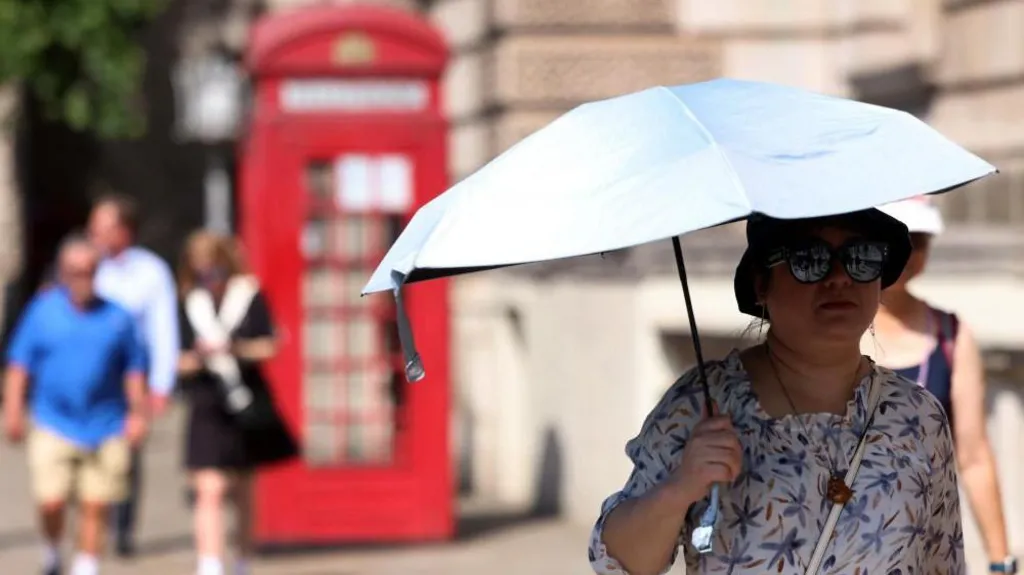
This warning comes as the Met Office announced that 2025 is poised to be the UK's hottest year on record, with climate change being the primary driver of the rising temperatures.
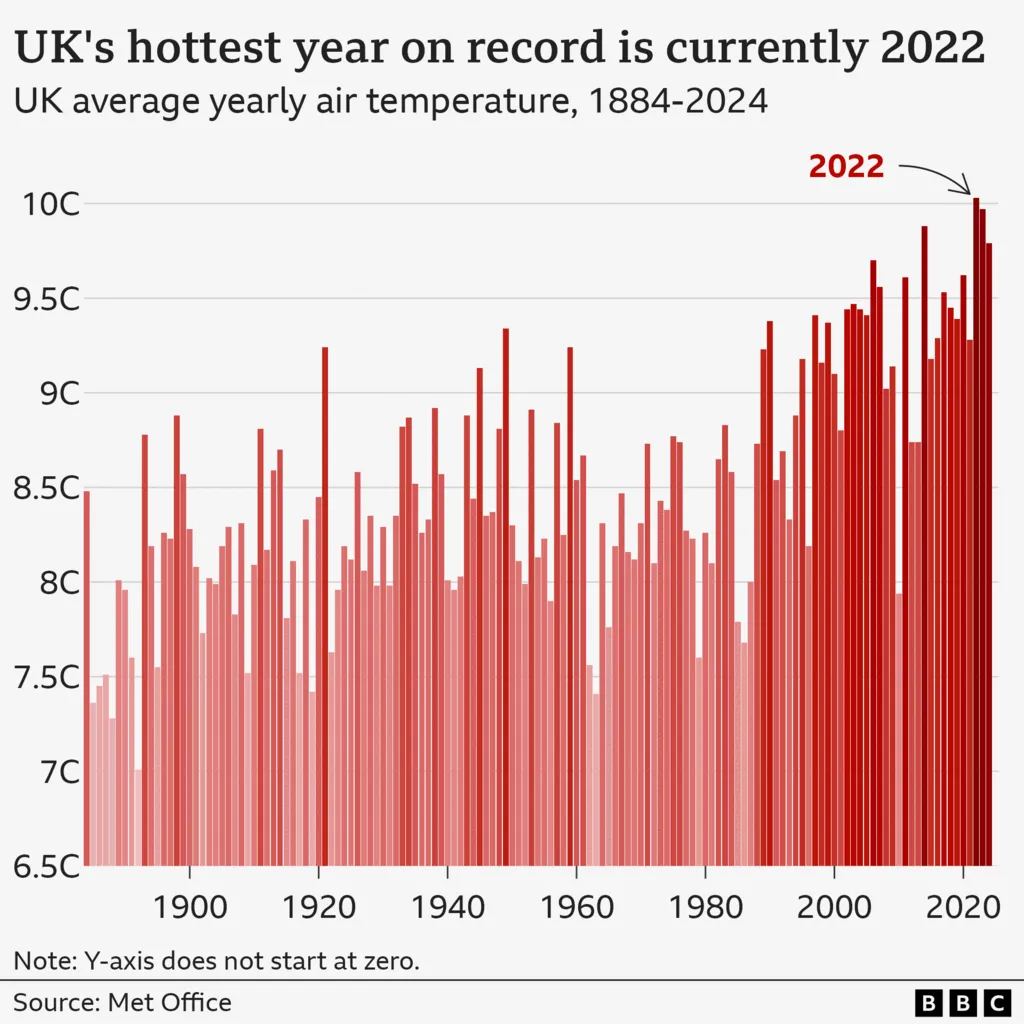
With only a short time left in the year, the average air temperature in the UK for 2025 is projected to reach approximately 10.05C, narrowly surpassing the previous record of 10.03C set in 2022.
According to Professor Rachel Kyte, "the data encapsulates our future," as she spoke to the BBC about the implications of the rising temperatures.
The key question now, Professor Kyte said, is "how we will prepare and build our resilience to this new reality."
The combination of low rainfall and persistent warmth during the spring and summer months left the country vulnerable to droughts and wildfires.
While yearly temperatures naturally fluctuate, scientists are clear that human-induced climate change is the primary factor driving the UK's rapid warming trend.
Professor Kyte, the UK's special representative for climate, noted that the carbon dioxide emissions from the last 20-30 years are now driving the current warmth, and that failing to curb emissions will lead to continued severe impacts.
To address the inevitability of higher temperatures, Professor Kyte emphasized the need for the UK to become more resilient through investments in nature and infrastructure.
She cautioned that failing to invest in adaptation measures now will result in significantly higher costs in the future.
By the end of 2025, the UK's 10 warmest years on record will all have occurred within the last two decades, based on measurements dating back to the late 1800s.
Amy Doherty, a climate scientist at the Met Office, stated that human-caused climate change is the primary driver of the warming trend in the UK, as it is globally.
Doherty warned that the UK will continue to experience more record-breaking heatwaves and extreme weather events, making what was once considered normal now seem relatively cool by comparison.
The Met Office's projection for 2025 is based on observed temperatures up to December 21 and assumes the remaining days of the year will be 2C below the long-term December average.
Although the Met Office cannot confirm with certainty that 2025 will be the hottest year, it is the most likely outcome.
If 2025 sets a new record, it will be the sixth time this century that the UK has experienced a new annual temperature record, following previous records in 2002, 2003, 2006, 2014, and 2022.
Mike Kendon, a climate scientist at the Met Office, noted that the changes observed in the UK are unprecedented in records dating back to the 19th century.
The expected new record for 2025 is attributed to the persistent heat experienced during the spring and summer months.
The UK's spring and summer were the warmest on record, with long, hot, and sunny days characterizing the periods.
Each month from March to August saw temperatures more than 2C above the long-term average between 1961 and 1990.
Temperatures peaked at 35.8C, and although this is below the 40C highs seen in July 2022, the UK experienced repeated hot spells throughout the year.
Four separate heatwaves were declared across the country, albeit relatively short-lived.
The UK Health Security Agency issued several heat-health alerts during the summer months.
Mr. Kendon warned that prolonged periods of hotter days and nights pose an increased risk to elderly and vulnerable individuals.
He also noted that the changing climate will impact the agriculture sector, influencing the types of crops that can be grown in the UK.
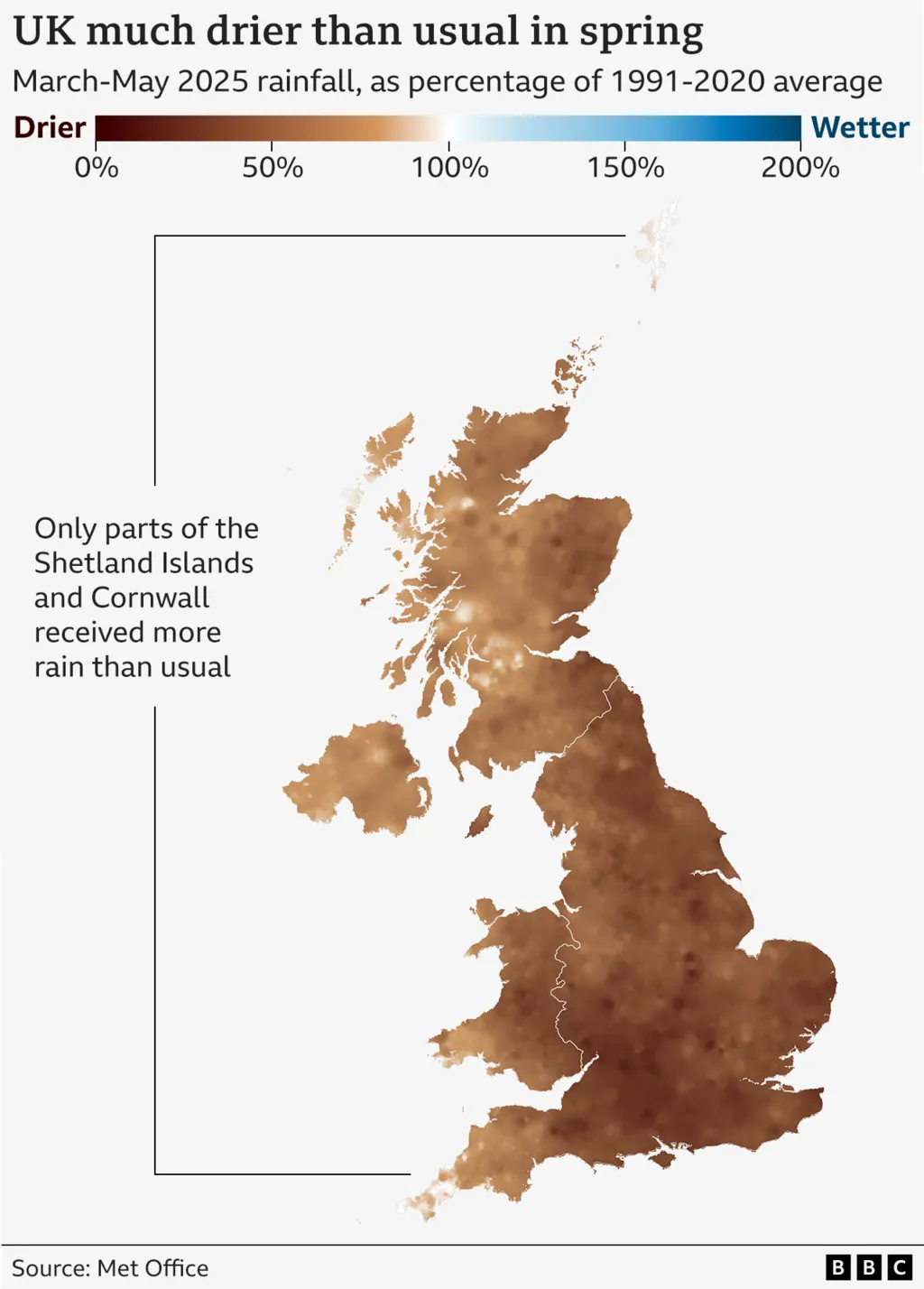
The spring season was particularly dry, with the UK experiencing its sixth driest spring since 1836.
The combination of warm weather and low rainfall led to drought conditions in large parts of the country.
Official droughts were declared in several regions of England and Wales by the Environment Agency and Natural Resources Wales, respectively.
Parts of eastern Scotland also experienced significant water scarcity, according to the Scottish Environment Protection Agency.
Recent rainfall has alleviated the drought conditions in most areas, but water levels remain below average in some regions.
Jess Neumann, associate professor of hydrology at the University of Reading, warned that the significant rainfall deficit has major implications for farming, river levels, and drinking water availability.
The repeated shifts between drought and flooding are making it challenging for communities to adapt to the increasing weather extremes.
The prolonged dry and warm weather created ideal conditions for wildfires, which have become increasingly common.
By late April, the area burned by wildfires in the UK had already surpassed the previous annual record, according to data from the Global Wildfires Information System.
More than 47,100 hectares have been burned throughout 2025, exceeding the previous high of 28,100 hectares in 2019.
Andy Cole, chief fire officer at Dorset & Wiltshire Fire and Rescue Service, reported that firefighters in his region responded to over 1,000 wildfires this year, an unprecedented number.
Cole, who has over 20 years of experience, noted a marked increase in the number of wildfires in recent years.
As the UK continues to warm due to greenhouse gas emissions, scientists expect the country to experience more extreme weather events.
Dr. Doherty warned that the conditions people will experience in the future will continue to change, with more wildfires, droughts, and heatwaves.
She also noted that the UK will experience more intense rainfall during the winter months, leading to increased flooding, as the climate continues to change.
Global temperatures are expected to make this year one of the hottest on record, with the European Copernicus climate service predicting it will be either the second or third warmest year ever documented, echoing the UK's own experience with extreme heat.
Meanwhile, the global effort to address climate change is facing challenges, as countries such as the US, a major fossil fuel producer, are reassessing their commitments to achieving net zero emissions, potentially undermining international cooperation.
This report was supplemented by contributions from Justin Rowlatt, Kate Stephens, and Zahra Fatima.



News
GB men’s curling team suffers upset defeat to Italy
At the 2026 Winter Olympics, Great Britain’s men’s curling team mounted a comeback against Italy following a disappointing beginning, ultimately falling short in their inaugural match.
Despite a valiant comeback, Team GB ultimately fell short as Italy held their composure to secure the win in the final end.
A dismal start to the match proved costly for Team GB's men, as they suffered their first defeat of the Winter Olympics at the hands of host nation Italy, despite a spirited fightback in the packed Cortina Curling Stadium.
Following victories in their first two matches, including a win over the Swedish rink that beat them in the gold-medal match four years ago, Team GB entered their second high-profile encounter in as many days in a confident position.
However, a disastrous opening end, in which Italy stole four points, left Team GB trailing and facing an uphill battle in front of a boisterous home crowd.
The British team, currently ranked number one in the world, gradually regained their footing and managed to level the score by the ninth end.
Ultimately, Italy maintained their composure in the final end to emerge victorious, winning 9-7 and adding Team GB to their list of scalps, which already included the Swedes.
"We had to dig deep and play some solid curling, but unfortunately, it wasn't enough to get us over the line," Team GB lead Hammy McMillan said in an interview with BBC Sport.
With seven wins from nine round-robin matches guaranteeing a spot in the semi-finals, Team GB remains in a strong position, although fewer wins may still be sufficient to advance.
The women's team is set to take to the ice next, facing South Korea in their second match at 13:05 GMT, while the men will return to action on Saturday against the Czech Republic at the same time.
Team GB is at the forefront of curling's technological advancements.
Embracing what sets you apart can be a powerful asset, according to some athletes.
A daily guide to the Winter Olympics is available for those looking to stay up-to-date with the action.
The looks of shock on the faces of Team GB's curlers told the story of a disastrous opening end.
With a stone in play, Mouat attempted a risky shot in an effort to claim two points, but it backfired, resulting in none of Team GB's stones in the house and four Italian stones in position.
However, the Scottish quartet, ranked number one in the world, quickly regained their composure and got back to their game.
The teams exchanged singles before a impressive final throw by Mouat, aided by a measurement to determine which stone was closest to the button, allowed Team GB to claim two points and narrow the gap to 5-3.
Another excellent team effort, which included a well-judged throw by Mouat, a solid sweep by Hammy McMillan and Bobby Lammie, and Grant Hardie's strategic expertise, forced Italy to concede a point in the fourth end, reducing the deficit to a single point at the break.
Italy blanked the sixth end and added two points in the seventh to rebuild their lead, but Team GB fought back with two points of their own, remarkably levelling the score with one end remaining after a steal.
The match came down to the final end, but Italy held their nerve to secure the win, prompting a deafening roar from the crowd.
"It's an incredible experience, and we need to get used to it," McMillan added, describing the electric atmosphere as "surreal" and "cool," more akin to a football match than a typical curling crowd.
News
Scotland Kicks Off Nations League Against Slovenia
Uefa has released the schedule for the Nations League, with Scotland set to begin their campaign on 26 September with an away match against Slovenia.
Uefa has released the schedule for the Nations League, with Scotland's campaign set to begin on 26 September with an away match against Slovenia.
The team's six group stage games will be played within a three-month period, culminating in a match against Switzerland on 16 November.
The fixture list was announced following Thursday's draw, which placed Scotland in a group with Switzerland, Slovenia, and North Macedonia.
Having been relegated from League A after a play-off loss to Greece last year, Scotland will compete in the second tier of the Nations League this year.
In response to the draw, head coach Steve Clarke noted that the teams in the group appear to be evenly matched.
Clarke reflected on the team's past experience in the competition, stating that it has been beneficial for Scotland.
He emphasized the importance of the Nations League, citing its role in helping the team qualify for Euro 2020, and anticipated a challenging set of matches.
A key matchup in the Nations League will see Scotland face off against Switzerland.
The group stage will determine the teams' fates, with the winner earning promotion, the runner-up entering a play-off, the third-placed team facing a relegation play-off, and the fourth-placed team being relegated directly.
The upcoming group games will mark a reunion for Scotland and Switzerland, who previously drew 1-1 in Cologne at Euro 2024.
Scotland's last encounter with Slovenia was during the 2018 World Cup qualification campaign, when they won 1-0 at home and drew 2-2 away.
The team has not played North Macedonia since the 2014 World Cup qualifiers, when they drew 1-1 at home and won 2-1 away, with goals from Ikechi Anya and Shaun Maloney.
The schedule for Scotland's Nations League campaign begins on 26 September with a match against Slovenia.
The team will then host Switzerland on 29 September, followed by a trip to face North Macedonia on 3 October.
Scotland will then play Slovenia at home on 6 October, before hosting North Macedonia on 11 November.
The final group stage match will see Scotland travel to face Switzerland on 16 November.
The team's home match against North Macedonia is set for 11 November.
The campaign will conclude with an away match against Switzerland on 16 November.
News
Golfer McIlroy Sinks Bunker Shot at Pebble Beach Pro-Am
At the AT&T Pebble Beach Pro-Am in California, Rory McIlroy achieved an eagle on the 14th hole at Spyglass Hill, capping off his opening round with a score of 68.
During the AT&T Pebble Beach Pro-Am in California, Rory McIlroy achieved an eagle on the 14th hole at Spyglass Hill, contributing to his first-round score of 68.
For further information, Rory McIlroy had a solid opening round, while Hisatsune took the lead.
Access to this content is restricted to users in the United Kingdom.
-
 News8 hours ago
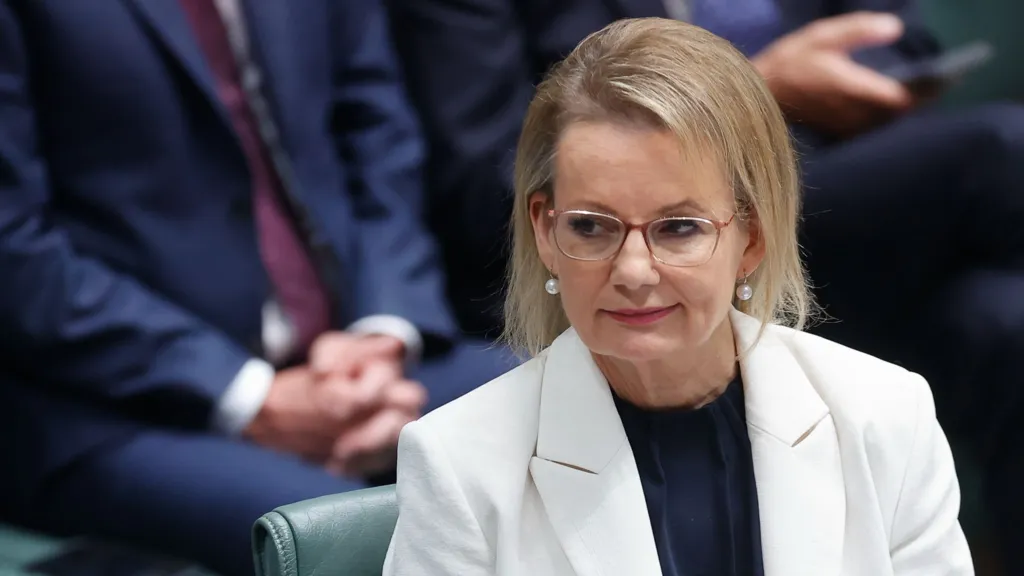
Australian Politics Faces Questions Over Gender Equality Amid Sussan Ley’s Appointment
-
 News5 hours ago
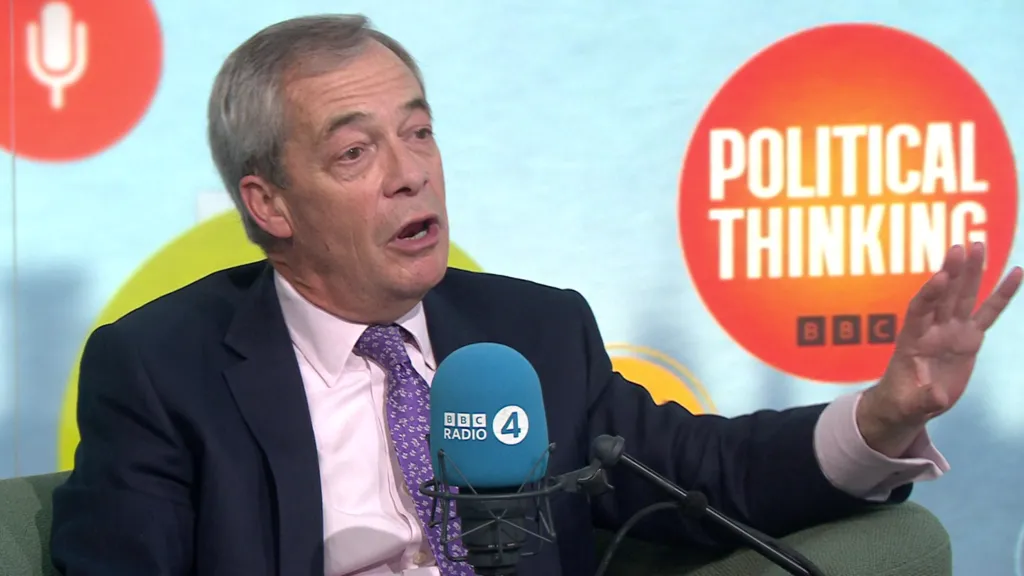
Farage Says Reform to Replace Traditional Tory Party
-
 News5 hours ago
Wrexham Pair Seek Win Against Former Team Ipswich
-
 News11 hours ago
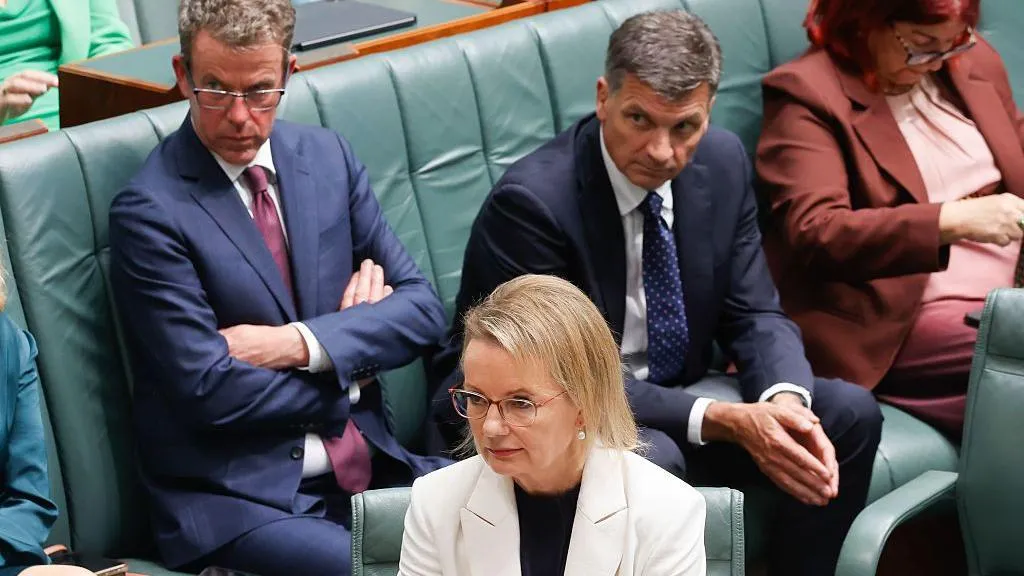
Liberal Party Removes Australia’s First Female Leader
-
 News9 hours ago
UK Braces for Cold Snap with Snow and Ice Alerts Expected
-
 News5 hours ago
Husband’s alleged £600k theft for sex and antiques blamed on drug side effects
-
 News2 days ago
Sunbed ads spreading harmful misinformation to young people
-
 Business11 hours ago
BBC Reporter Exposed to Cyber Attack Due to Vulnerabilities in AI Coding Tool