
News
Understanding the Importance of Critical Minerals
A global competition is underway as nations strive to obtain the essential minerals and rare earth elements required for the production of crucial goods.
The global competition for critical minerals and rare earths, essential components in a wide range of products including smartphones and electric vehicles, is intensifying.
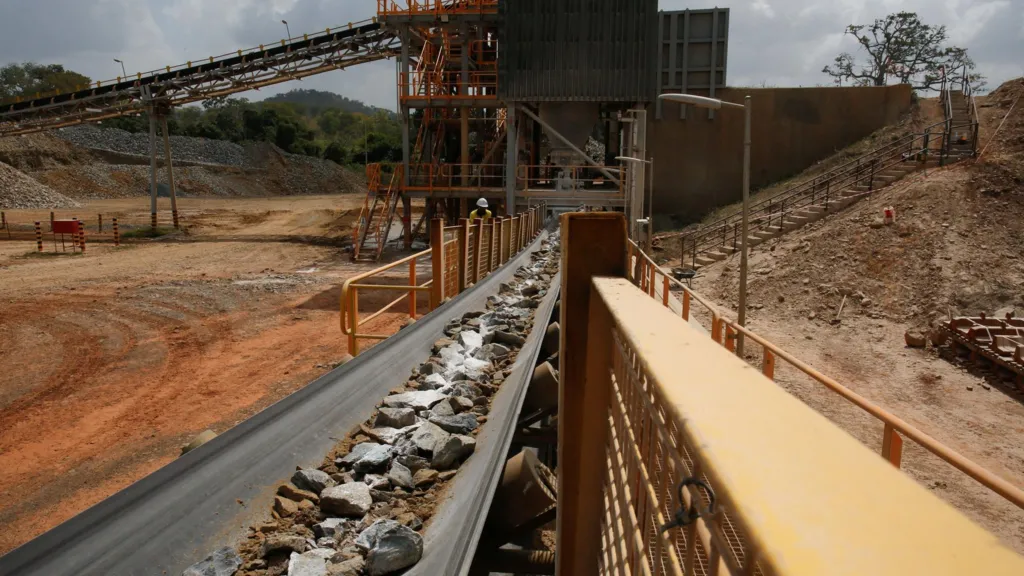
The US, under the leadership of President Donald Trump, has prioritized access to these minerals, exploring potential mining agreements in countries such as Greenland and Ukraine.
However, China maintains a dominant position in the processing of these minerals, resulting in a significant reliance on the country for global supplies.
Critical minerals are defined as those that a nation deems crucial to its economic or national security interests, yet may face challenges in obtaining a stable supply.
Certain critical minerals are expected to experience substantial growth in demand over the coming years, including:
The classification of critical minerals varies by country, depending on the specific resources available and the industries present.
For instance, copper is listed as a critical mineral in the US, but not in the UK.
The UK's list of critical minerals comprises 34 materials, including aluminium, cobalt, and helium.
Rare earth elements are a common feature on the critical minerals lists of many countries.
Characterized by their unique electrical and magnetic properties, rare earths consist of 17 elements within the lanthanide group of the periodic table, in addition to scandium and yttrium.
These elements play a vital role in the production of microchips, which are essential for various sectors, including defense and healthcare.
Additional applications of rare earths include:
The increasing demand for these minerals, driven by the growth of AI and green energy, is expected to continue, according to the International Energy Agency.
Despite their name, rare earth elements are relatively abundant, with neodymium found at a concentration of 20 parts per million in the Earth's crust, comparable to copper's concentration of 27 parts per million.
The most common critical minerals are distributed globally, with certain countries possessing significant reserves.
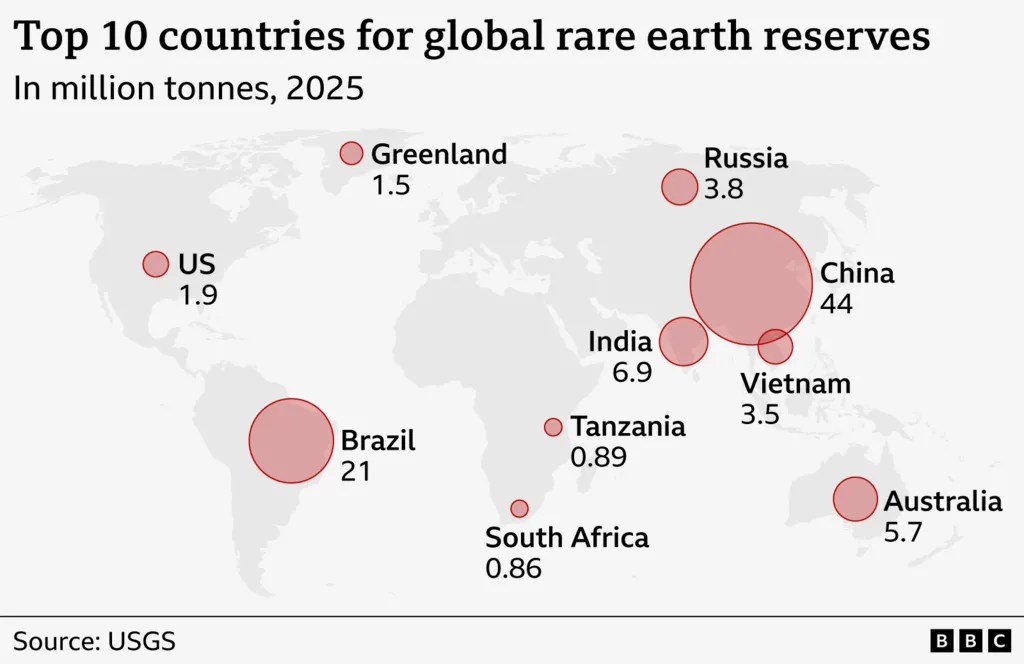
China holds an estimated 44 million tonnes of rare earth reserves, followed by Brazil with 21 million tonnes and Australia with approximately six million tonnes.
Countries such as Australia, Indonesia, and Chile have notable mining operations.
Australia is the leading producer of iron ore, gold, zinc, nickel, cobalt, and lithium, while Indonesia accounts for half of the world's nickel production.
Chile is the world's largest copper exporter, according to S&P Global analysts.
The International Energy Agency has warned that, although current mining projects may meet demand in most cases, copper and lithium may face shortages from the 2030s.
The availability of minerals is influenced not only by their presence beneath the Earth's surface but also by the ease of access and processing.
Many countries lack the capacity to process critical minerals, relying on other nations for refined materials.
For example, while silicon metal is mined in over 30 countries, only three have the capability to process it into polysilicon, a crucial component in microchip production.
China dominates the processing of various critical minerals, including rare earths, lithium, and cobalt.
In 2021, the Democratic Republic of Congo produced 70% of the world's cobalt, but 90% of it was refined in China, according to the Faraday Institution.
The same year, over 75% of the world's lithium supply came from Australia and Chile, yet 72% of the refining occurred in China, as reported by the World Economic Forum.
China is responsible for processing over 95% of certain rare earth elements.
Bob Ward, a researcher at the London School of Economics' Grantham Research Institute, noted that China recognized the growth potential of green energy a decade ago and strategically expanded its processing capabilities.
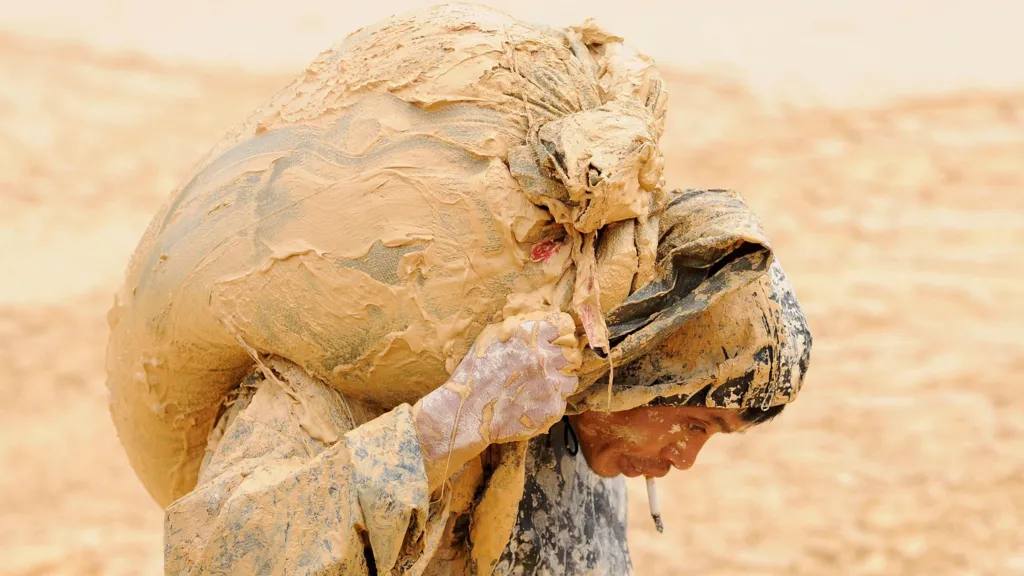
This has resulted in the US and other countries becoming heavily reliant on China, potentially exposing them to vulnerabilities.
A 2023 report by a US Government Select Committee cautioned that the failure to secure critical minerals supply chains could severely impact defense production and advanced technologies.
In 2025, the European Central Bank highlighted the risks associated with China's pivotal role in the rare earth supply chain, citing potential geopolitical disruptions.
President Trump has emphasized the need to strengthen the US' critical minerals production to reduce dependence on other countries.
In October 2025, the US signed a critical minerals agreement with Australia, with President Trump stating that the US would soon have an abundance of critical minerals and rare earths.
Although the US possesses rare earth mineral reserves, accounting for just over 2% of the global supply, establishing processing capabilities may take several years.
Gracelin Baskaran, director at the Centre for Strategic and International Studies, noted that no single country currently has the financial resources or technical expertise to surpass China's dominance in the field.
China's lower environmental standards for mining and processing activities have enabled the country to maintain lower costs compared to its competitors.

News
GB men’s curling team suffers upset defeat to Italy
At the 2026 Winter Olympics, Great Britain’s men’s curling team mounted a comeback against Italy following a disappointing beginning, ultimately falling short in their inaugural match.
Despite a valiant comeback, Team GB ultimately fell short as Italy held their composure to secure the win in the final end.
A dismal start to the match proved costly for Team GB's men, as they suffered their first defeat of the Winter Olympics at the hands of host nation Italy, despite a spirited fightback in the packed Cortina Curling Stadium.
Following victories in their first two matches, including a win over the Swedish rink that beat them in the gold-medal match four years ago, Team GB entered their second high-profile encounter in as many days in a confident position.
However, a disastrous opening end, in which Italy stole four points, left Team GB trailing and facing an uphill battle in front of a boisterous home crowd.
The British team, currently ranked number one in the world, gradually regained their footing and managed to level the score by the ninth end.
Ultimately, Italy maintained their composure in the final end to emerge victorious, winning 9-7 and adding Team GB to their list of scalps, which already included the Swedes.
"We had to dig deep and play some solid curling, but unfortunately, it wasn't enough to get us over the line," Team GB lead Hammy McMillan said in an interview with BBC Sport.
With seven wins from nine round-robin matches guaranteeing a spot in the semi-finals, Team GB remains in a strong position, although fewer wins may still be sufficient to advance.
The women's team is set to take to the ice next, facing South Korea in their second match at 13:05 GMT, while the men will return to action on Saturday against the Czech Republic at the same time.
Team GB is at the forefront of curling's technological advancements.
Embracing what sets you apart can be a powerful asset, according to some athletes.
A daily guide to the Winter Olympics is available for those looking to stay up-to-date with the action.
The looks of shock on the faces of Team GB's curlers told the story of a disastrous opening end.
With a stone in play, Mouat attempted a risky shot in an effort to claim two points, but it backfired, resulting in none of Team GB's stones in the house and four Italian stones in position.
However, the Scottish quartet, ranked number one in the world, quickly regained their composure and got back to their game.
The teams exchanged singles before a impressive final throw by Mouat, aided by a measurement to determine which stone was closest to the button, allowed Team GB to claim two points and narrow the gap to 5-3.
Another excellent team effort, which included a well-judged throw by Mouat, a solid sweep by Hammy McMillan and Bobby Lammie, and Grant Hardie's strategic expertise, forced Italy to concede a point in the fourth end, reducing the deficit to a single point at the break.
Italy blanked the sixth end and added two points in the seventh to rebuild their lead, but Team GB fought back with two points of their own, remarkably levelling the score with one end remaining after a steal.
The match came down to the final end, but Italy held their nerve to secure the win, prompting a deafening roar from the crowd.
"It's an incredible experience, and we need to get used to it," McMillan added, describing the electric atmosphere as "surreal" and "cool," more akin to a football match than a typical curling crowd.
News
Scotland Kicks Off Nations League Against Slovenia
Uefa has released the schedule for the Nations League, with Scotland set to begin their campaign on 26 September with an away match against Slovenia.
Uefa has released the schedule for the Nations League, with Scotland's campaign set to begin on 26 September with an away match against Slovenia.
The team's six group stage games will be played within a three-month period, culminating in a match against Switzerland on 16 November.
The fixture list was announced following Thursday's draw, which placed Scotland in a group with Switzerland, Slovenia, and North Macedonia.
Having been relegated from League A after a play-off loss to Greece last year, Scotland will compete in the second tier of the Nations League this year.
In response to the draw, head coach Steve Clarke noted that the teams in the group appear to be evenly matched.
Clarke reflected on the team's past experience in the competition, stating that it has been beneficial for Scotland.
He emphasized the importance of the Nations League, citing its role in helping the team qualify for Euro 2020, and anticipated a challenging set of matches.
A key matchup in the Nations League will see Scotland face off against Switzerland.
The group stage will determine the teams' fates, with the winner earning promotion, the runner-up entering a play-off, the third-placed team facing a relegation play-off, and the fourth-placed team being relegated directly.
The upcoming group games will mark a reunion for Scotland and Switzerland, who previously drew 1-1 in Cologne at Euro 2024.
Scotland's last encounter with Slovenia was during the 2018 World Cup qualification campaign, when they won 1-0 at home and drew 2-2 away.
The team has not played North Macedonia since the 2014 World Cup qualifiers, when they drew 1-1 at home and won 2-1 away, with goals from Ikechi Anya and Shaun Maloney.
The schedule for Scotland's Nations League campaign begins on 26 September with a match against Slovenia.
The team will then host Switzerland on 29 September, followed by a trip to face North Macedonia on 3 October.
Scotland will then play Slovenia at home on 6 October, before hosting North Macedonia on 11 November.
The final group stage match will see Scotland travel to face Switzerland on 16 November.
The team's home match against North Macedonia is set for 11 November.
The campaign will conclude with an away match against Switzerland on 16 November.
News
Golfer McIlroy Sinks Bunker Shot at Pebble Beach Pro-Am
At the AT&T Pebble Beach Pro-Am in California, Rory McIlroy achieved an eagle on the 14th hole at Spyglass Hill, capping off his opening round with a score of 68.
During the AT&T Pebble Beach Pro-Am in California, Rory McIlroy achieved an eagle on the 14th hole at Spyglass Hill, contributing to his first-round score of 68.
For further information, Rory McIlroy had a solid opening round, while Hisatsune took the lead.
Access to this content is restricted to users in the United Kingdom.
-
 News8 hours ago
Australian Politics Faces Questions Over Gender Equality Amid Sussan Ley’s Appointment
-
 News5 hours ago
Farage Says Reform to Replace Traditional Tory Party
-
 News5 hours ago
Wrexham Pair Seek Win Against Former Team Ipswich
-
 News11 hours ago
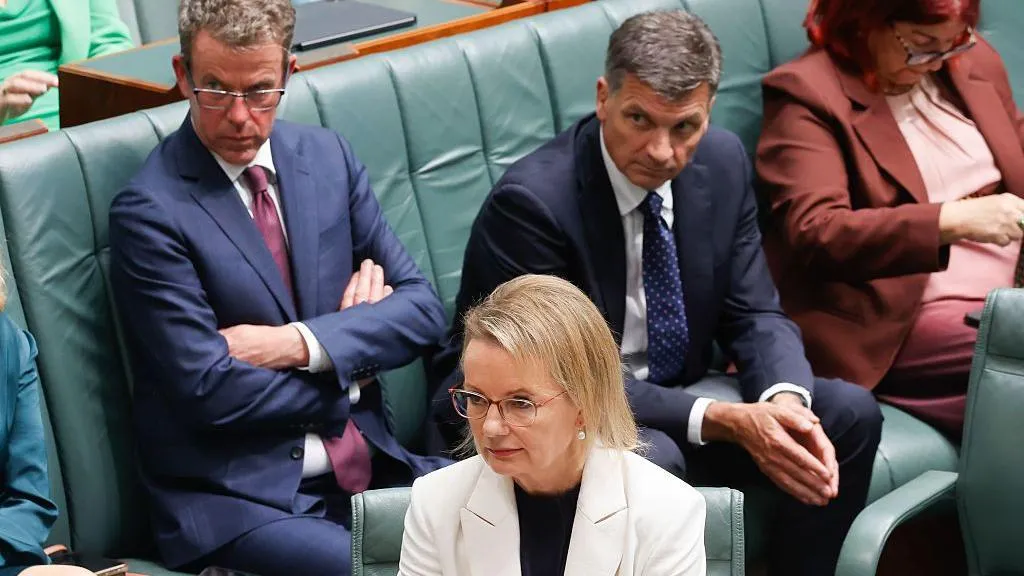
Liberal Party Removes Australia’s First Female Leader
-
 News8 hours ago
UK Braces for Cold Snap with Snow and Ice Alerts Expected
-
 News5 hours ago
Husband’s alleged £600k theft for sex and antiques blamed on drug side effects
-
 Business11 hours ago
BBC Reporter Exposed to Cyber Attack Due to Vulnerabilities in AI Coding Tool
-
 News8 hours ago
Canadian Town Unites in Mourning After Mass Shooting Leaves Community Reeling