
News
Guide to heat pumps and available grants
The government is offering grants to encourage the installation of heat pumps in a greater number of residences.
The UK government has unveiled a £15bn initiative, known as the Warm Homes Plan, aimed at assisting households in adopting green technologies, including heat pumps, to reduce energy bills and lower emissions contributing to global warming.
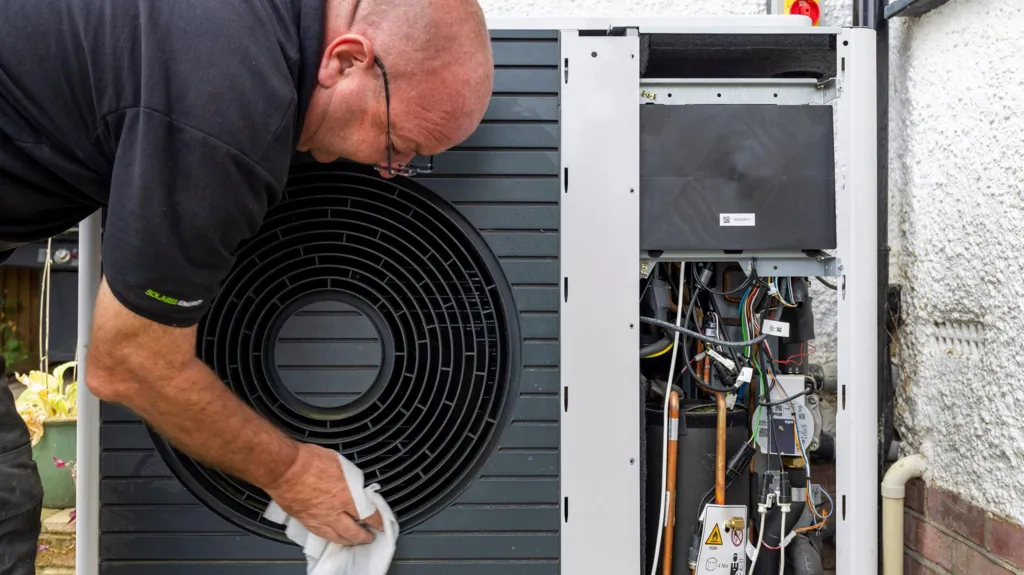
Given that home heating accounts for approximately one-fifth of the UK's emissions that contribute to global warming, transitioning from gas and oil to heat pumps is considered a crucial step.
Unlike traditional gas-powered systems, heat pumps operate on electricity and function by absorbing and amplifying heat from external sources, such as the air, ground, or water, to warm buildings.
Heat pumps are widely regarded as a key solution for reducing carbon dioxide emissions and achieving net-zero targets due to their ability to utilize electricity generated from increasingly clean sources.
Compared to gas boilers, heat pumps boast higher efficiency and can leverage electricity produced from renewable energy sources like wind and solar power, which are gradually replacing fossil fuels.
The most common type of heat pump, air source heat pumps, draw in outdoor air and transfer it over tubes containing refrigerant fluids, causing the refrigerants to evaporate into a gas as they absorb heat from the air, which is then compressed and circulated throughout the home.
A typical air source heat pump system consists of an outdoor unit, approximately 1m x 1m x 0.4m in size, and an indoor unit that includes a heat pump and a hot water cylinder, with the indoor unit being comparable in size to a standard gas boiler.
The size of the hot water cylinder varies depending on the size of the home, while the indoor unit remains relatively consistent in size.
Ground source heat pumps have been found to be more efficient than their air-source counterparts, although they are generally more expensive and less commonly used due to the need for extensive underground installations.
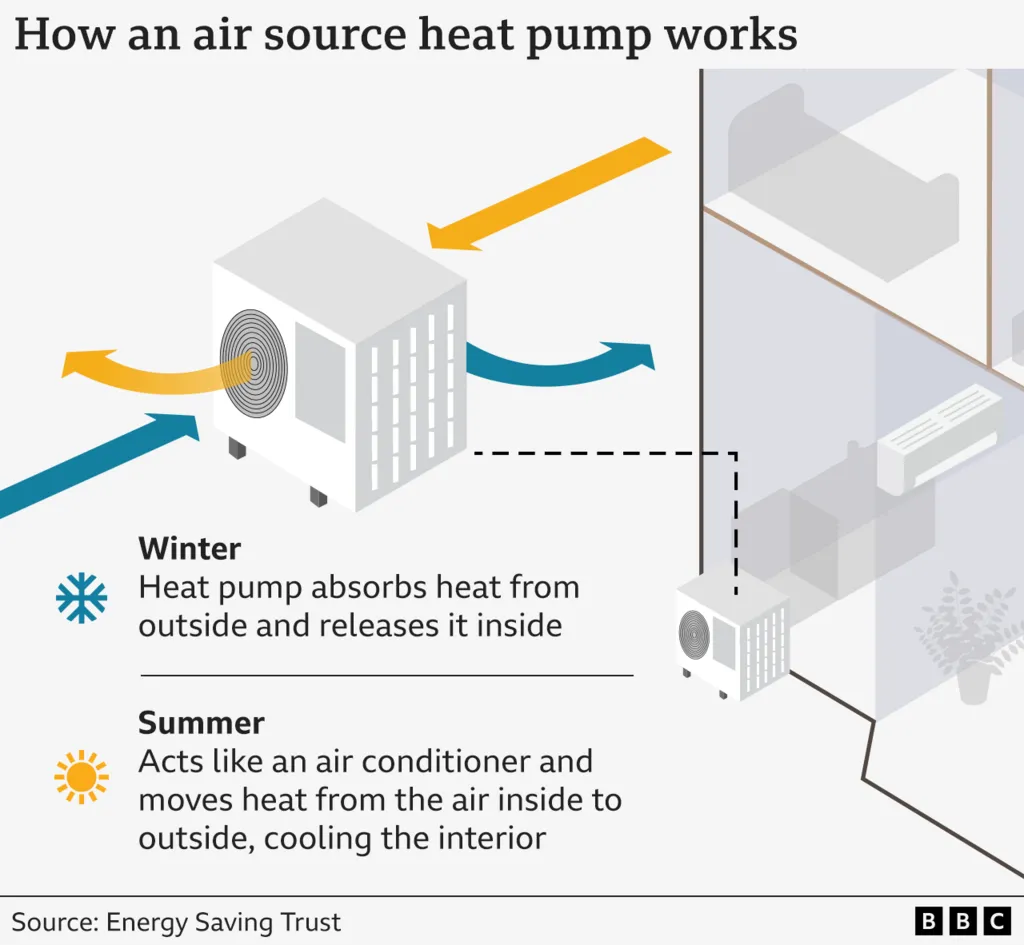
The higher cost of ground source heat pumps can be attributed to the requirement for either a deep borehole or a large network of underground pipes, making them less accessible to many households.
The Boiler Upgrade Scheme offers a grant of £7,500 to homeowners in England and Wales who install air source or ground source heat pumps, helping to offset the initial investment.
Despite the grant, households typically incur an additional £5,000 in expenses, which the UK's spending watchdog has cautioned may be prohibitively expensive for many families.
The grant is available for both existing homes and non-domestic buildings, provided they possess a valid Energy Performance Certificate (EPC) issued within the last decade.
The government's revised Warm Homes Plan has extended the Boiler Upgrade Scheme until 2029/30, ensuring continued support for households transitioning to heat pumps.
Recent changes to the scheme's rules have eliminated the requirement for existing loft or cavity wall insulation, potentially saving households around £2,500 in upfront costs, as a well-insulated home can optimize heat pump performance.
The government has allocated an additional £5bn in funding for the Social Housing Fund and the Warm Homes Local Grant, targeting low-income households and social housing.
The Warm Homes Local Grant provides funding for insulation, solar panels, and air source heat pumps, which can be accessed through local authorities.
To be eligible for the Warm Homes Local Grant, households must be located in England, own or rent their property, and possess an Energy Performance Certificate (EPC) with a rating between D and G.
Scotland and Northern Ireland have established separate initiatives to enhance home energy efficiency, and the UK government plans to allocate additional funds to these devolved programs.
Although the initial investment in heat pumps remains substantial, they can potentially become more cost-effective than gas boilers over time, according to the Climate Change Committee (CCC), which advises the UK government on emission reduction strategies.
The long-term cost of heat pumps depends on various factors, including energy prices and the efficiency of the system.
While electric heat pumps consume less energy than gas boilers, electricity is often more expensive than gas, affecting the overall cost-benefit analysis.
Specialized energy plans and solar panel installations can help heat pump owners reduce their energy expenses and reliance on the grid.
According to estimates by the social charity Nesta, the average household can save nearly £1,000 annually on energy bills by combining solar panels with a heat pump.
Previously, homeowners required planning permission to install heat pumps near neighboring properties due to noise concerns, but this regulation has been lifted to accelerate heat pump adoption.
The removal of this restriction is expected to facilitate the wider adoption of heat pumps, as concerns over noise have decreased with the development of newer, quieter models.
Although heat pumps are required to operate below a certain noise threshold, set at 42db, comparable to the output of a refrigerator, newer devices have mitigated noise concerns.
Regulations regarding the size and number of heat pumps that can be installed have been relaxed, providing households with more flexibility.
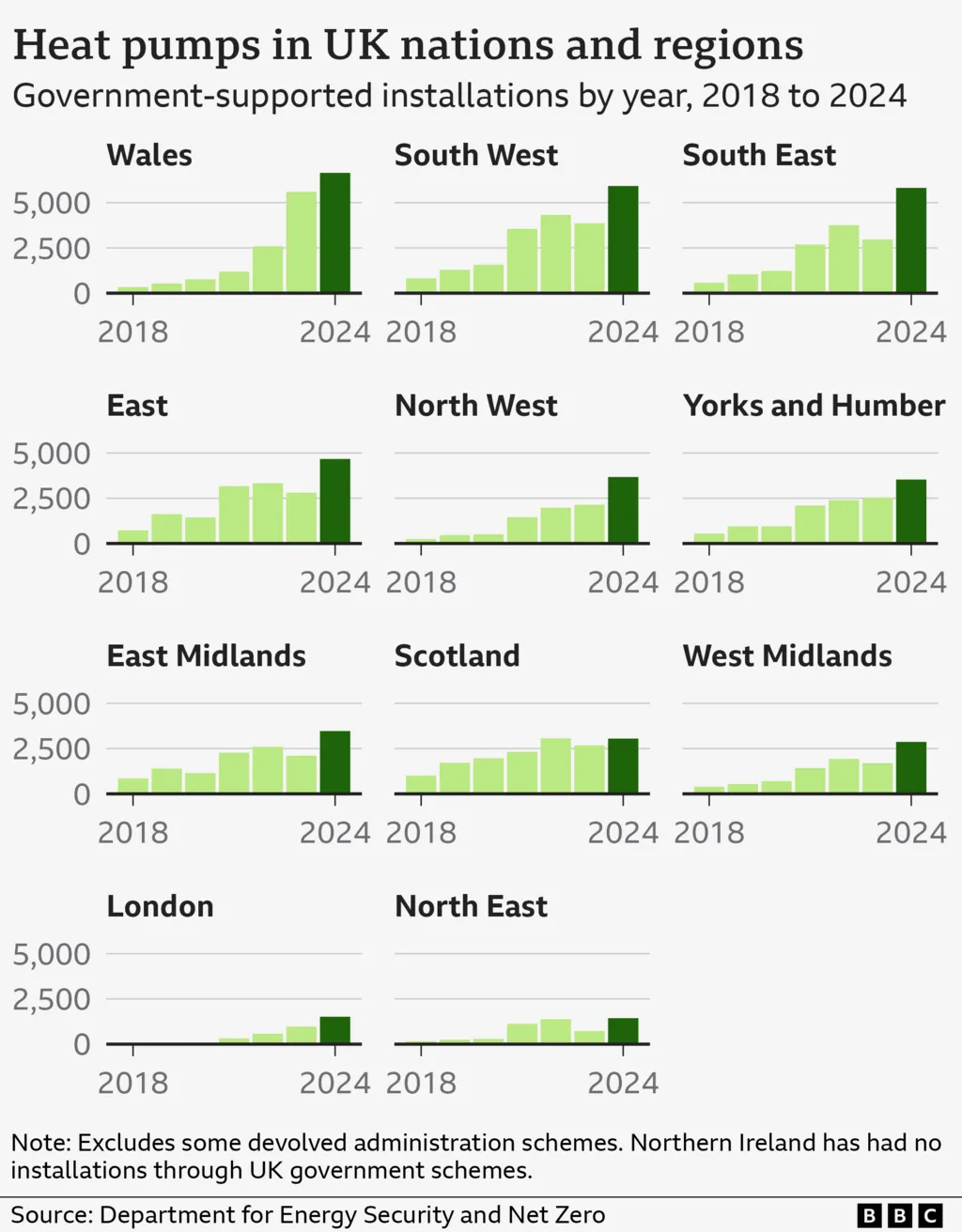
The rate of heat pump installations in the UK lags behind that of gas boilers, as well as other major European countries like France, Germany, and Italy.
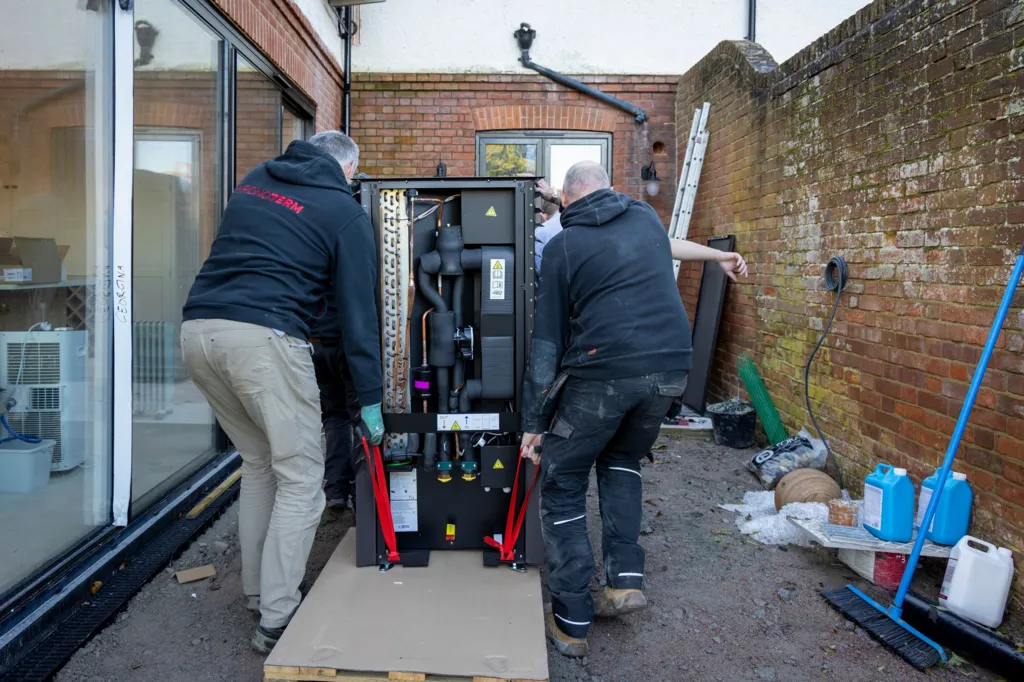
However, the UK's heat pump sales have shown an increase, with nearly 100,000 units sold in 2024, up from approximately 60,000 in 2023, according to the Heat Pump Association.
To meet climate targets, the Climate Change Committee recommends that heat pump sales must rise to nearly 450,000 units per year by 2030 and 1.5 million by 2035.
The CCC estimates that approximately half of all UK homes will need to be equipped with heat pumps by 2040 to achieve the desired emission reductions.
Achieving this goal will require a significant increase in the number of trained heat pump installers.
The Warm Homes Fund aims to provide low-interest and zero-interest loans for solar panels and domestic storage batteries to all households, facilitating the transition to renewable energy sources.
Although the government has not yet announced the details of the loan program, it is expected to release further information later this year.
Low-income households will be eligible for the technologies covered under the existing Social Housing Fund and Local Grant.
Those on low-income will have access to the technologies as part of the existing Social Housing Fund and Local Grant, ensuring that all households can participate in the transition to renewable energy.



News
Tudor to take interim charge of Tottenham
Igor Tudor has reached an agreement to take the reins as Tottenham’s interim head coach for the remainder of the season.
Tottenham has reached an agreement with Igor Tudor to take the helm as interim head coach for the remainder of the current season.
For the latest updates, in-depth analysis, and perspectives from fans, look to Tottenham's recent news and discussion.
Do you have any questions about Tottenham – what information are you seeking?
News
UAE Defeats Canada to Enhance Super 8s Qualification Chances
The United Arab Emirates boosted their slim chances of advancing to the T20 World Cup Super 8s, securing a narrow five-wicket victory over Canada, thanks in part to Aryansh Sharma’s unbeaten 74.
In a crucial match for the United Arab Emirates, Aryansh Sharma achieved his fifth T20 international half-century, contributing to the team's victory over Canada.
The Men's T20 World Cup, being held in Group D in Delhi, saw an intense competition between the two teams.
Canada's innings resulted in a total of 150-7 after 20 overs, with Harsh Thaker scoring 50 runs off 41 balls, while Junaid Siddique took 5 wickets for 35 runs.
The UAE team responded with a total of 154 runs in 19.4 overs, led by Aryansh Sharma's unbeaten 74 runs off 53 balls and Sohaib Khan's 51 runs off 29 balls, despite Bin Zafar taking 3 wickets for 14 runs.
The United Arab Emirates secured a five-wicket win over Canada, boosting their chances in the tournament.
Aryansh Sharma played a pivotal role in the UAE's win, scoring an unbeaten 74 runs to help his team overcome Canada's total.
With four overs remaining, Canada seemed poised to defend their total, but Sohaib Khan's aggressive batting reignited the UAE's chase, as he scored 17 runs off Dillon Heyliger's bowling.
In the final over, the UAE required eight runs to win, and Aryansh Sharma eased the pressure by hitting a six off Jaskaran Singh's first ball.
Sohaib Khan was dismissed after scoring a rapid 51 runs off 29 balls, including four sixes, leaving the scores level.
Muhammad Arfan then sealed the victory with two balls to spare, hitting a four off Jaskaran Singh, as Aryansh Sharma top-scored with 74 runs off 53 balls.
The UAE now stands third in Group D with two points, but they face an uphill task in their upcoming matches against full members South Africa and Afghanistan to advance to the next phase.
Although the UAE has never beaten a full member in any World Cup format, their performance in this match has given them some confidence.
Earlier in the match, Junaid Siddique achieved the best bowling figures by a UAE player in a T20 World Cup, taking 5 wickets for 35 runs at the Arun Jaitley Stadium in Delhi.
Harsh Thaker's 41-ball half-century, which included three sixes and two fours, provided a solid foundation for Canada's total.
Thaker and Navneet Dhaliwal shared a 58-run partnership to help Canada recover from a difficult start, before Dhaliwal was run out for 34 runs.
After Thaker fell victim to Junaid Siddique's slower ball, Canada struggled to find boundaries against the UAE's tight bowling.
Shreyas Movva made a useful contribution of 21 runs off 21 balls, but Junaid Siddique took two wickets in the final over to claim his maiden five-wicket haul in T20 internationals.
In a separate match, Zimbabwe's Brilliant Muzarabani played a key role in his team's stunning win over Australia.
For more updates, notifications, and social media coverage, visit the BBC Sport website.
In another development, Paul Stirling has been ruled out of the remainder of the T20 World Cup due to injury.
News
Guardiola Advocates for Cultural Embrace to Foster a Better Society
Pep Guardiola, the manager of Manchester City, has stated that accepting diverse cultures will lead to a more harmonious society, in reaction to comments made by Sir Jim Ratcliffe regarding immigration.
As a player, Pep Guardiola earned 47 international caps for Spain, showcasing his skills on the global stage.
Manchester City's manager, Pep Guardiola, believes that embracing diverse cultures is essential for creating a more harmonious society.
Guardiola was questioned about his thoughts on comments made by Manchester United co-owner Sir Jim Ratcliffe, who stated that the UK had been "colonised by immigrants", sparking a debate.
Following criticism, Ratcliffe apologised for any offence caused, while still advocating for open discussion on the issue.
Ahead of Manchester City's FA Cup fourth-round match against Salford, Guardiola shared his perspective, saying that people seek better lives and opportunities, which can be found in their birthplace or elsewhere.
According to Guardiola, one's birthplace is not a determining factor in their potential or aspirations.
Many individuals are forced to leave their homelands due to problems in their native countries, rather than a desire to abandon their roots.
Guardiola emphasized that by genuinely embracing other cultures, society as a whole can improve, a notion he has no doubts about.
An examination of the facts behind Jim Ratcliffe's statements on immigration and benefits is also underway.
Sir Jim Ratcliffe, a billionaire, has made headlines, but who is he and how did he accumulate his wealth?
Born in Santpedor, Catalonia, Spain, Guardiola has had a diverse career, playing in Spain, Italy, Qatar, and Mexico, before transitioning to management.
As a manager, the 55-year-old has had stints in Spain, Germany, and England, taking the helm at Manchester City in 2016.
Guardiola views the issue of immigration as a global problem, stating that it is a concern that affects many countries.
He believes that immigrants are often unfairly blamed for problems in their adopted countries, highlighting the fact that one's birthplace is often a matter of circumstance.
Guardiola reiterated that people from all backgrounds strive for a better life, seeking opportunities that may be available in their birth country or elsewhere.
He stressed that factors such as skin colour or birthplace should not be barriers to achieving one's goals.
For the latest news, analysis, and fan perspectives on Manchester City, please refer to our dedicated section.
Do you have any questions about Manchester City that you would like answered?
-
 News11 hours ago
Australian Politics Faces Questions Over Gender Equality Amid Sussan Ley’s Appointment
-
 News8 hours ago
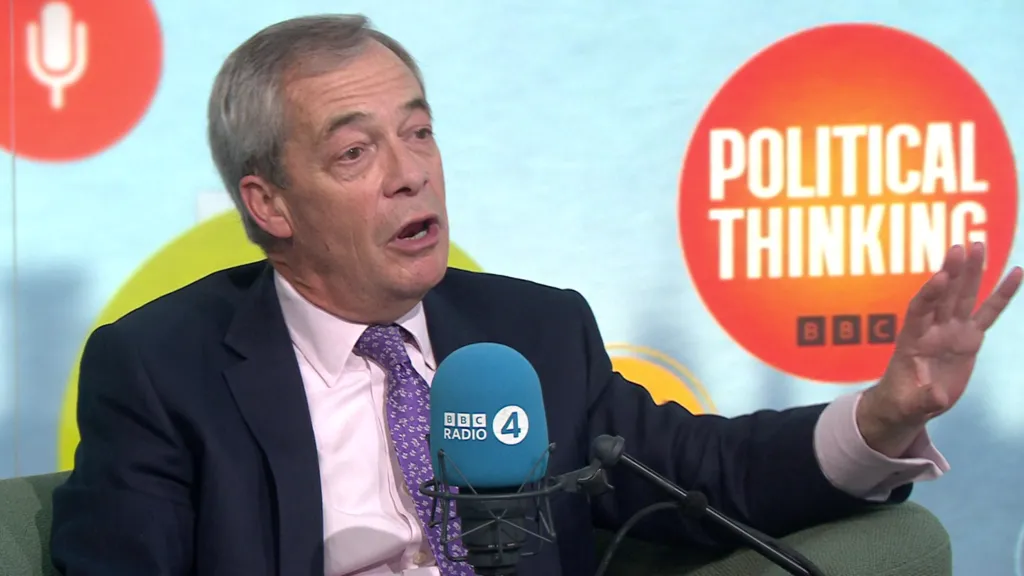
Farage Says Reform to Replace Traditional Tory Party
-
 News8 hours ago
Wrexham Pair Seek Win Against Former Team Ipswich
-
 News13 hours ago
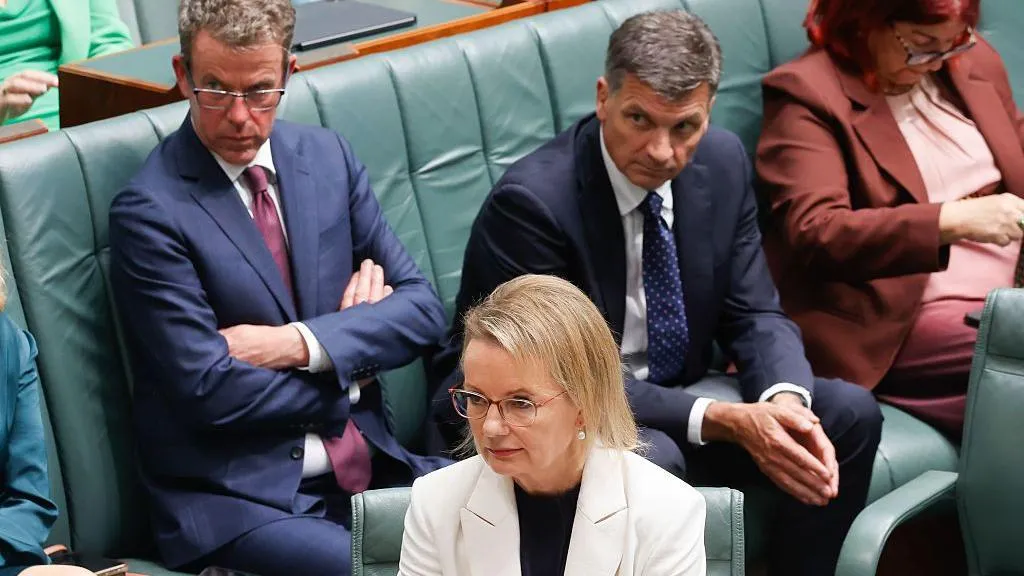
Liberal Party Removes Australia’s First Female Leader
-
 News11 hours ago
UK Braces for Cold Snap with Snow and Ice Alerts Expected
-
 News8 hours ago
Husband’s alleged £600k theft for sex and antiques blamed on drug side effects
-
 News2 days ago
Sunbed ads spreading harmful misinformation to young people
-
 Business14 hours ago
BBC Reporter Exposed to Cyber Attack Due to Vulnerabilities in AI Coding Tool