
News
Amorim’s Downfall: A Combination of Poor Strategy, Transfer Issues and Internal Unrest
Ruben Amorim’s tenure at Manchester United has come to an end after 14 months, prompting questions about the circumstances that led to his departure.
A tumultuous 14-month period at Manchester United has come to an end for Ruben Amorim, marked by controversy, transfers, and ultimately, his downfall.
A lasting impression of Amorim's tenure is the image of him in the dugout during a Carabao Cup match against Grimsby, a game that ended in a shocking 12-11 penalty defeat.
This loss, a first for the club against a fourth-tier team, occurred in August and set the tone for a troubled period under Amorim's leadership.
In the aftermath, Amorim's comments sparked concerns that he was struggling to cope with the pressure, only to later clarify that his emotions had gotten the better of him.
However, Amorim's unwavering commitment to his approach would ultimately prove to be a significant factor in his demise.
A critic with close ties to the team privately expressed that Amorim's media presence was his strongest suit, but this was not enough to offset his other shortcomings.
Amorim's final match in charge was a 1-1 draw against Leeds, a result that left the team in sixth place in the Premier League, but was overshadowed by his contentious remarks to the media.
In his last interaction with the press, Amorim made a veiled admission of internal divisions and later stated that he would not resign, effectively leaving the club with a choice: to support him or terminate his contract.
Given the ongoing concerns about his tactics and the hierarchy's disappointment with his treatment of academy players and senior squad members, the latter option became the most likely outcome.
The club's decision to part ways with Amorim was likely influenced by his refusal to adapt his tactics and his public criticism of certain players, which had already strained his relationship with the club's leadership.
As the aftermath of Amorim's departure continues to unfold, a closer examination of his time at Manchester United reveals the events that led to his dismissal.
Amorim remained in the dugout during the penalty shootout loss to Grimsby, a moment that would become a defining image of his tenure.
When Amorim was appointed, it was seen as a forward-thinking move, with the club bringing in a coach who would work within a modern structure and develop alongside the team.
However, Amorim's appointment also brought a specific style of play, including a 3-4-3 formation, which he had previously used at Sporting.
As Amorim faced increasing questions about his tactics, he became more resolute in his commitment to the system, believing that changing it would undermine his authority with the players.
Despite his conviction, Amorim acknowledged in October that he had to instruct his players to ignore external criticism of the system, which had been repeatedly called into question.
Amorim emphasized that he could not allow media pressure to dictate his decisions, stating that it was impossible to sustain a team under such conditions.
He acknowledged that his players were likely influenced by external voices, which could erode their confidence in him and the team's strategy.
Amorim asserted that his players needed to trust him, given his extensive experience and knowledge of the game.
The limitations of Amorim's approach were highlighted on December 30, when he reverted to a back four for the first time in a 1-0 win over Newcastle, only to switch back to a three-man defense against Wolves four days later.
This decision involved moving Patrick Dorgu from a right-sided attacking role to left wing-back, a move that surprised and dismayed fans.
The club had already attempted to sign Antoine Semenyo from Bournemouth, with the promise that he would play on the left wing, indicating a desire to move away from the 3-4-3 formation.
The fact that the club had spent over £200m on attacking players suggested that they envisioned a different future for the team, one that did not involve Amorim's preferred system.
The formation used against Wolves and the subsequent 1-1 draw were viewed negatively by the club, leading to further tension between Amorim and the hierarchy.
Technical director Jason Wilcox spoke with Amorim after the match, encouraging him to be more tactically flexible, but Amorim's response only exacerbated the situation.
The club's continued use of the back three against Leeds was seen as a significant step backward in Amorim's relationship with the leadership.
Amorim's criticism of the club's hierarchy and his refusal to adapt his tactics created an untenable situation.
The club believed that Wilcox's input was a normal part of the coaching process, while Amorim saw it as unwarranted interference.
The situation ultimately became too difficult to resolve, and the club decided to part ways with Amorim.
On Monday morning, Wilcox and chief executive Omar Berrada informed Amorim that his services were no longer required.
Despite being sixth in the Premier League, the club felt that with some tactical adjustments, the team could achieve better results, making Amorim's departure a necessary step.
The decision to terminate Amorim's contract marked the end of a tumultuous period at Manchester United.
The aftermath of Amorim's departure has been marked by discussions about the club's future and the search for a new manager.
Speculation is ongoing about who could be the next permanent manager of Manchester United.
Former player Gary Neville has called for the club to appoint a manager who fits the team's DNA and can bring stability to the squad.
Amorim's dismissal after 14 months in charge has been widely reported, with many analyzing the factors that contributed to his departure.
The Monday Night Club has discussed Amorim's sacking and the implications for the club's future.
Despite the controversy surrounding Amorim's tenure, many players remained supportive of him, at least those who were not part of the "bomb squad" that was exiled at the start of pre-season training.
During the team's summer trip to the United States, players expressed genuine enthusiasm for the upcoming season, and Amorim's quirks were seen as a normal part of his coaching style.
However, these quirks ultimately proved to be a minor part of the larger issues that led to Amorim's departure from Manchester United.
A unique aspect of United's training sessions before European games was Amorim's decision to observe sprints and rondos from a distance, often 50 yards away from his coaching staff, during the initial 15 minutes when the doors were open to the media.
As the training sessions progressed, Amorim became more involved, taking charge with a whistle in hand, although he was selective about which parts of the training he allowed the media to witness.
In May, during United's post-season trip to Malaysia, the team had a fully open training session, but the overall organization of the trip was not entirely professional due to the significant amount of downtime allotted to the players.
Upon arriving at their Chicago training base in July, media access to the team's training sessions was restricted, which contrasted with the openness Amorim displayed during his media conferences.
Amorim's meticulous approach to preparation was evident in his attention to detail, demonstrating a high level of dedication to his craft.
Footage from Amorim's first training session at United showcased his hands-on approach, as he provided midfielder Kobbie Mainoo with specific instructions on the number of strides to take after making a pass and how to position his body for optimal passing angles.
During the summer, Amorim employed an unusual tactic, having two players occupy the same positions during training, then guiding them through various scenarios to ensure they moved into the correct areas of the pitch.
Although this method may seem unorthodox, it was a deliberate strategy, given that players had designated roles and a hierarchy was established within the team.
The theoretical foundations and practical applications of Amorim's approach were sound, but the actual outcomes in matches often differed from expectations.
Amorim's decision to assign Mason Mount to the left wing-back position, which drew criticism from former United captain Gary Neville after a 3-1 loss to Brentford, could have been avoided if he had considered alternative options for the role.
The question of who will be the next permanent manager of Manchester United remains to be seen.
A comparison of Amorim's managerial record with those of his predecessors at Manchester United provides an interesting perspective on his tenure.
Typically, discussions surrounding the appointment of a new manager become public knowledge long after the fact, but this time, the circumstances are different.
This instance is an exception, as it is known that Dan Ashworth, who was hired as sporting director in July 2024, left the position five months later due to disagreements over potential replacements for Erik ten Hag.
Ashworth's suggestions were deemed unimpressive, leading to his departure, and Berrada subsequently recruited Amorim from Sporting, presenting him with an ultimatum to join immediately or risk losing the opportunity.
At the time of Amorim's appointment, United's hierarchy included Berrada, Wilcox as technical director, Christopher Vivell as interim director of recruitment, and Sir Dave Brailsford as a football club director.
Currently, Wilcox, Vivell, and Berrada remain integral to United's recruitment team, with Wilcox taking on additional responsibilities and Vivell transitioning to a permanent role, while Brailsford has stepped back to focus on his broader role as Ineos' head of sport.
As the club navigates the aftermath of another failed managerial appointment, the spotlight falls not only on Amorim but also on the key figures involved in the recruitment process.
It has become apparent that Amorim was committed to a specific formation, which he refused to alter despite external criticism, whereas United insiders claim he had privately expressed a willingness to adapt.
The discrepancy between Amorim's private assurances and his actual actions has been a source of frustration for those within the club.
Under Amorim's management, United has experienced unprecedented struggles, considering the club's significant financial resources.
According to Deloitte's 2025 rankings, Manchester United is the fourth-richest club in the world, yet they have struggled to compete with smaller, well-run teams like Brentford, Bournemouth, and Brighton, ultimately finishing behind West Ham and level with Wolves in the previous season.
Amorim had promised improvements for the current season, which has materialized to some extent, but the question remains whether a 15th-place finish is an acceptable benchmark for a Manchester United manager.
The focus should not be solely on the coach, as the club's hierarchy also bears responsibility for the current situation.
The appointment of Amorim and the subsequent events raise questions about the effectiveness of United's recruitment team, including Berrada and Wilcox, whose experience as a technical director was limited to 15 months at Southampton prior to joining United.
In hiring Amorim and presenting him with an ultimatum, United's hierarchy must have been aware that the squad did not align with his preferred style, yet they still chose to back him with significant investments and support his decisions, including the exile of key players like Marcus Rashford, Jadon Sancho, Antony, and Alejandro Garnacho.
The decision to sign off on Amorim's choice to exile Garnacho, which potentially reduced the player's market value, may have been a point of contention, given that Garnacho's desire to join Chelsea limited his options.
Amorim's desire to change the main striker led to the departure of £72m Rasmus Hojlund, who joined Napoli, and the signing of Benjamin Sesko, who has scored two goals in 17 appearances after his £74m move from RB Leipzig.
However, United's hierarchy drew a line at Amorim's request to sign Aston Villa's World Cup-winning goalkeeper Emiliano Martinez, instead opting to invest in the development of young goalkeeper Senne Lammens, who is seen as a potential future star.
The decision to prioritize investments in the forward positions, rather than strengthening the goalkeeping position, reflects the club's focus on maximizing returns on their investments.
The wisdom of selling Scott McTominay and spending significantly more on Manuel Ugarte, who did not participate in the Europa League final, has raised questions about the club's recruitment strategy.
Recruitment has been a longstanding issue at United, predating Amorim's tenure, as evident in the failed pursuit of Semenyo, which highlights the club's diminished appeal to top talent.
Amorim's departure marks the end of another chapter in Manchester United's managerial history, joining a list of predecessors that includes David Moyes, Louis van Gaal, Jose Mourinho, Ole Gunnar Solskjaer, Ralf Rangnick, and Erik ten Hag.
As the search for a new manager begins, it is clear that a change in leadership alone may not be enough to address the underlying problems at the club.
The latest news, analysis, and fan perspectives on Manchester United are available for those seeking to stay informed about the club's developments.
The search for a successor is on. But it may take more than a new man at the helm, with a new formation, to sort out the problems at Manchester United.
Latest Manchester United news, analysis and fan views
Ask about Man Utd – what do you want to know?

News
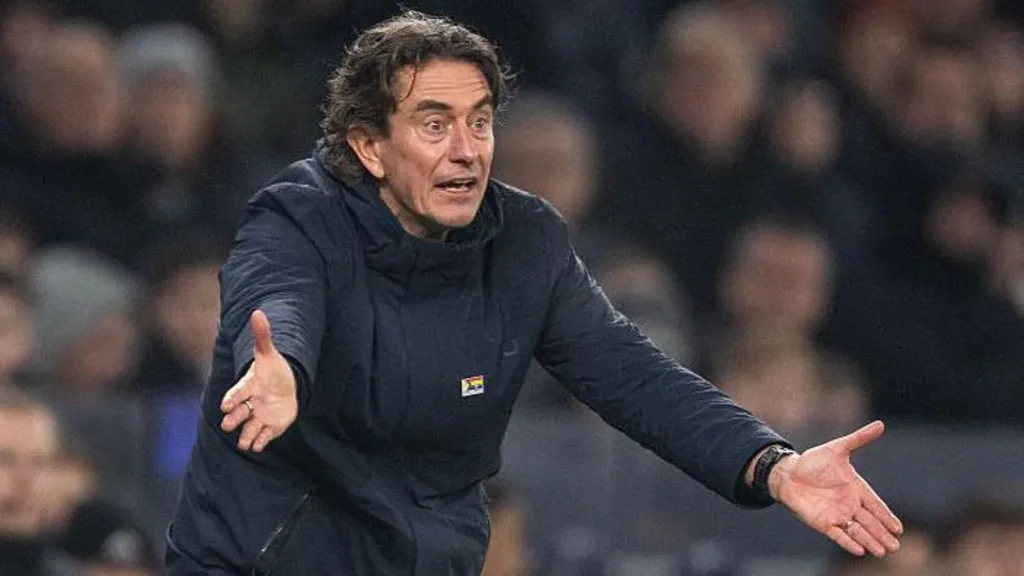
Tudor to take interim charge of Tottenham
Igor Tudor has reached an agreement to take the reins as Tottenham’s interim head coach for the remainder of the season.
Tottenham has reached an agreement with Igor Tudor to take the helm as interim head coach for the remainder of the current season.
For the latest updates, in-depth analysis, and perspectives from fans, look to Tottenham's recent news and discussion.
Do you have any questions about Tottenham – what information are you seeking?
News
UAE Defeats Canada to Enhance Super 8s Qualification Chances
The United Arab Emirates boosted their slim chances of advancing to the T20 World Cup Super 8s, securing a narrow five-wicket victory over Canada, thanks in part to Aryansh Sharma’s unbeaten 74.
In a crucial match for the United Arab Emirates, Aryansh Sharma achieved his fifth T20 international half-century, contributing to the team's victory over Canada.
The Men's T20 World Cup, being held in Group D in Delhi, saw an intense competition between the two teams.
Canada's innings resulted in a total of 150-7 after 20 overs, with Harsh Thaker scoring 50 runs off 41 balls, while Junaid Siddique took 5 wickets for 35 runs.
The UAE team responded with a total of 154 runs in 19.4 overs, led by Aryansh Sharma's unbeaten 74 runs off 53 balls and Sohaib Khan's 51 runs off 29 balls, despite Bin Zafar taking 3 wickets for 14 runs.
The United Arab Emirates secured a five-wicket win over Canada, boosting their chances in the tournament.
Aryansh Sharma played a pivotal role in the UAE's win, scoring an unbeaten 74 runs to help his team overcome Canada's total.
With four overs remaining, Canada seemed poised to defend their total, but Sohaib Khan's aggressive batting reignited the UAE's chase, as he scored 17 runs off Dillon Heyliger's bowling.
In the final over, the UAE required eight runs to win, and Aryansh Sharma eased the pressure by hitting a six off Jaskaran Singh's first ball.
Sohaib Khan was dismissed after scoring a rapid 51 runs off 29 balls, including four sixes, leaving the scores level.
Muhammad Arfan then sealed the victory with two balls to spare, hitting a four off Jaskaran Singh, as Aryansh Sharma top-scored with 74 runs off 53 balls.
The UAE now stands third in Group D with two points, but they face an uphill task in their upcoming matches against full members South Africa and Afghanistan to advance to the next phase.
Although the UAE has never beaten a full member in any World Cup format, their performance in this match has given them some confidence.
Earlier in the match, Junaid Siddique achieved the best bowling figures by a UAE player in a T20 World Cup, taking 5 wickets for 35 runs at the Arun Jaitley Stadium in Delhi.
Harsh Thaker's 41-ball half-century, which included three sixes and two fours, provided a solid foundation for Canada's total.
Thaker and Navneet Dhaliwal shared a 58-run partnership to help Canada recover from a difficult start, before Dhaliwal was run out for 34 runs.
After Thaker fell victim to Junaid Siddique's slower ball, Canada struggled to find boundaries against the UAE's tight bowling.
Shreyas Movva made a useful contribution of 21 runs off 21 balls, but Junaid Siddique took two wickets in the final over to claim his maiden five-wicket haul in T20 internationals.
In a separate match, Zimbabwe's Brilliant Muzarabani played a key role in his team's stunning win over Australia.
For more updates, notifications, and social media coverage, visit the BBC Sport website.
In another development, Paul Stirling has been ruled out of the remainder of the T20 World Cup due to injury.
News
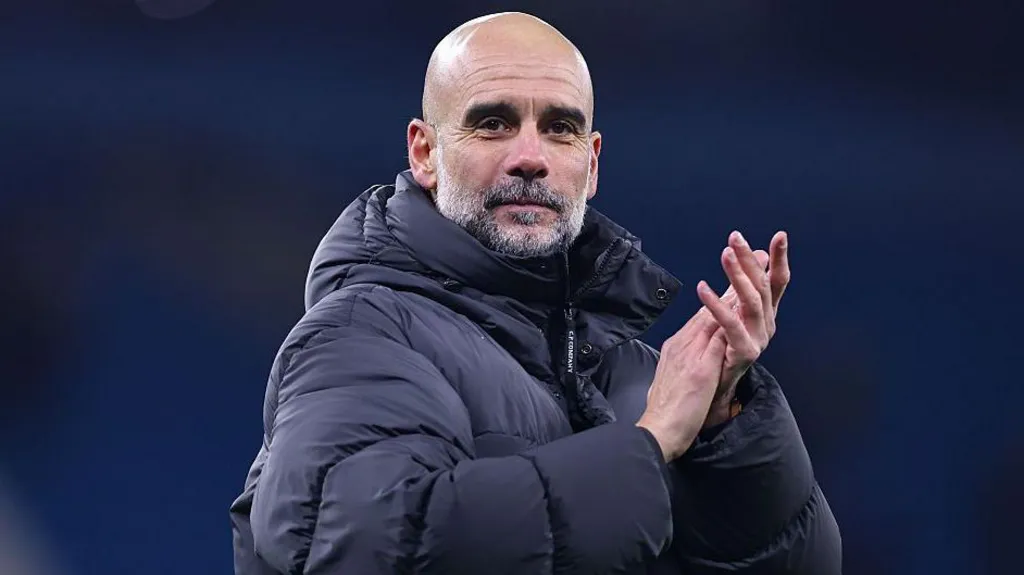
Guardiola Advocates for Cultural Embrace to Foster a Better Society
Pep Guardiola, the manager of Manchester City, has stated that accepting diverse cultures will lead to a more harmonious society, in reaction to comments made by Sir Jim Ratcliffe regarding immigration.
As a player, Pep Guardiola earned 47 international caps for Spain, showcasing his skills on the global stage.
Manchester City's manager, Pep Guardiola, believes that embracing diverse cultures is essential for creating a more harmonious society.
Guardiola was questioned about his thoughts on comments made by Manchester United co-owner Sir Jim Ratcliffe, who stated that the UK had been "colonised by immigrants", sparking a debate.
Following criticism, Ratcliffe apologised for any offence caused, while still advocating for open discussion on the issue.
Ahead of Manchester City's FA Cup fourth-round match against Salford, Guardiola shared his perspective, saying that people seek better lives and opportunities, which can be found in their birthplace or elsewhere.
According to Guardiola, one's birthplace is not a determining factor in their potential or aspirations.
Many individuals are forced to leave their homelands due to problems in their native countries, rather than a desire to abandon their roots.
Guardiola emphasized that by genuinely embracing other cultures, society as a whole can improve, a notion he has no doubts about.
An examination of the facts behind Jim Ratcliffe's statements on immigration and benefits is also underway.
Sir Jim Ratcliffe, a billionaire, has made headlines, but who is he and how did he accumulate his wealth?
Born in Santpedor, Catalonia, Spain, Guardiola has had a diverse career, playing in Spain, Italy, Qatar, and Mexico, before transitioning to management.
As a manager, the 55-year-old has had stints in Spain, Germany, and England, taking the helm at Manchester City in 2016.
Guardiola views the issue of immigration as a global problem, stating that it is a concern that affects many countries.
He believes that immigrants are often unfairly blamed for problems in their adopted countries, highlighting the fact that one's birthplace is often a matter of circumstance.
Guardiola reiterated that people from all backgrounds strive for a better life, seeking opportunities that may be available in their birth country or elsewhere.
He stressed that factors such as skin colour or birthplace should not be barriers to achieving one's goals.
For the latest news, analysis, and fan perspectives on Manchester City, please refer to our dedicated section.
Do you have any questions about Manchester City that you would like answered?
-
 News11 hours ago
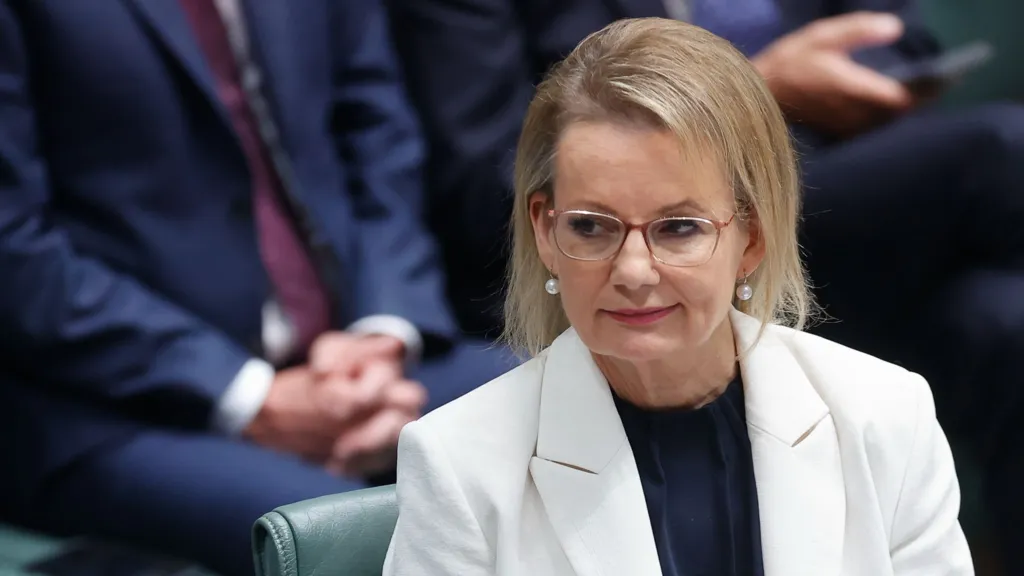
Australian Politics Faces Questions Over Gender Equality Amid Sussan Ley’s Appointment
-
 News8 hours ago
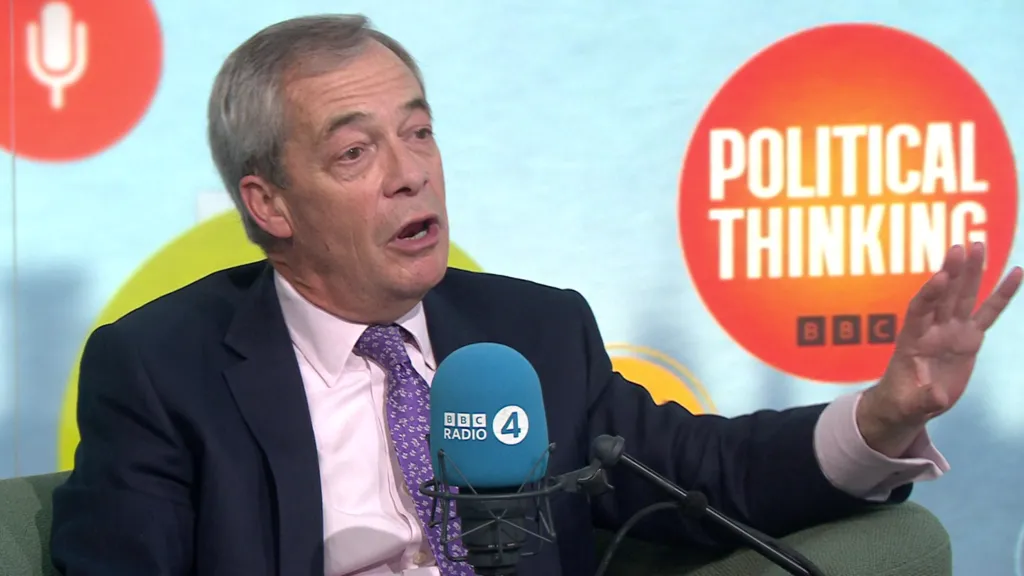
Farage Says Reform to Replace Traditional Tory Party
-
 News8 hours ago
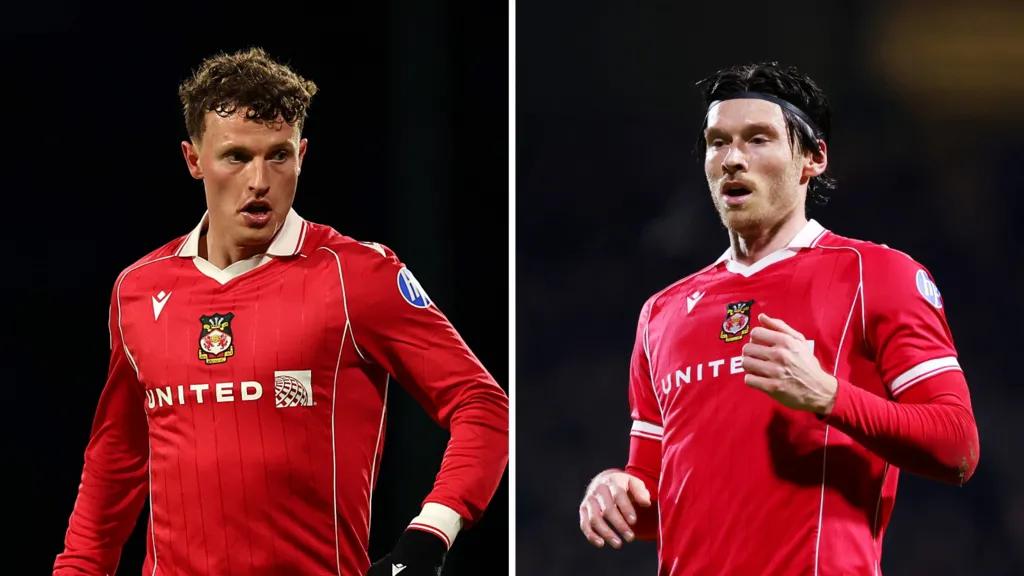
Wrexham Pair Seek Win Against Former Team Ipswich
-
 News13 hours ago
Liberal Party Removes Australia’s First Female Leader
-
 News11 hours ago
UK Braces for Cold Snap with Snow and Ice Alerts Expected
-
 News8 hours ago
Husband’s alleged £600k theft for sex and antiques blamed on drug side effects
-
 News2 days ago
Sunbed ads spreading harmful misinformation to young people
-
 Business14 hours ago
BBC Reporter Exposed to Cyber Attack Due to Vulnerabilities in AI Coding Tool