
News
Athlete Describes Unusual Sensation of Flying Without Skis
In the event of a 40-foot fall onto compacted snow, a Winter Olympics competitor would typically get back up and attempt the feat once more.
Overcoming fear is a crucial aspect of success for Team GB Winter Olympians, who must learn to manage their nerves in order to perform at their best.
When a Winter Olympian experiences a severe fall, such as a 40-foot drop onto compacted snow, their ability to bounce back and continue competing is a testament to their mental and physical toughness.
In winter sports, the margin between success and failure is extremely narrow, with even the smallest miscalculation potentially resulting in a serious injury or a missed opportunity for a medal.
For elite Winter Olympic athletes, developing strategies to cope with fear and anxiety is just as essential as honing their technical skills.
As athletes prepare for the Milan-Cortina Games, they must push themselves to their limits, venturing outside of their comfort zones in pursuit of excellence.
According to Zoe Atkin, a Team GB Winter Olympic medal hopeful and freestyle skier, overcoming fear is the biggest challenge she faces in her sport.
Atkin competes in the ski halfpipe event, which involves dropping into a 22-foot-deep pipe and executing as many tricks as possible while airborne.
Athletes in this event are judged on their amplitude, or the height they achieve, as well as the difficulty and execution of their tricks.
As a student at Stanford University, Atkin is studying symbolic systems, an interdisciplinary field that combines computer science and cognitive science to study machines that mimic the human brain.
This field of study has helped Atkin understand the biological processes underlying fear, which she believes has been beneficial to her skiing career.
Atkin has found that her fear is at its lowest point on competition days, when her focus is on performing to the best of her ability.
Instead, she experiences fear during training sessions, when she is attempting new and unfamiliar maneuvers.
To manage her nerves, Atkin practices meditation and focuses on the present moment, which helps her to stay calm and composed under pressure.
Atkin emphasizes that her sport is highly precise and requires a great deal of skill and strategy, rather than simply being driven by adrenaline.
Despite the risks involved, Atkin views her sport as a nuanced and complex discipline that demands a high level of technical expertise.
Atkin made her Winter Olympics debut in 2022, finishing ninth in the ski halfpipe event.
Her sister, Izzy Atkin, won a bronze medal in the slopestyle event at the 2018 Pyeongchang Winter Olympics.
This historic victory marked Britain's first skiing medal at a Winter Olympics, coming 16 years after Alain Baxter was stripped of his slalom bronze medal due to a doping violation.
Zoe Atkin was inspired by her sister's achievement and decided to pursue her own career in skiing, with the support of her parents.
Atkin has worked with a sports psychologist to develop strategies for managing her fear and anxiety, which she believes has been essential to her progress as an athlete.
Despite her youth, Atkin has already experienced a great deal of pressure and expectation, both from herself and others.
As the reigning world champion, Atkin has enjoyed a highly successful season, winning gold at the X Games and finishing on the podium in multiple World Cup events.
However, she acknowledges that even with her impressive track record, she still experiences fear and must continually push herself outside of her comfort zone to progress.
Atkin believes that embracing this process of continuous improvement is essential to her growth as an athlete.
Unlike her sister, who was forced to retire from competitive skiing due to a serious injury, Atkin has been fortunate in avoiding major setbacks.
Her teammate, Kirsty Muir, has not been as lucky, having suffered a torn cruciate ligament in December 2023 that kept her out of competition for a year.
Muir competes in the ski slopestyle and big air events, which involve performing tricks on rails and ramps.
She is all too familiar with the risks of serious injury in her sport, having experienced her fair share of crashes and setbacks.
Muir's road to recovery was challenging, but she has since returned to competition and is preparing for the Milan-Cortina Games.
Despite the difficulties she faced during her time off, Muir has enjoyed a successful season, winning World Cup events and claiming gold at the X Games.
Muir acknowledges that the sport is constantly evolving, and it was difficult for her to take time off without feeling left behind.
However, she has learned to adapt to new situations and overcome her fears, recognizing that crashes and injuries are an inevitable part of her sport.
For Muir, the key to managing fear is accepting that unexpected events will occur and being prepared to respond accordingly.
She recalls instances where her skis have come off or her goggles have obstructed her vision, but she has learned to stay focused and adapt to these situations.
Muir believes that worrying about potential risks is counterproductive and that athletes must be prepared to respond to unexpected challenges as they arise.
By adopting this mindset, Muir is able to stay calm and composed under pressure, even in the face of uncertainty.
Muir experienced a crash during the big air event at the 2022 Beijing Winter Olympics, but she has since bounced back and is ready for her next competition.
As athletes prepare to begin their runs, they must clear their minds and focus on the task at hand, pushing aside fears and doubts.
Atkin achieves this state of mind through meditation, which helps her to stay present and focused.
By letting go of unhelpful thoughts and distractions, Atkin is able to perform at her best, unencumbered by fear or anxiety.
Experiencing frightening falls is an inherent part of the process, and it requires a certain level of mental resilience to accept and move forward from them.
A key aspect of training involves learning how to fall safely, which includes techniques such as opening up and landing on one's side when over-rotating, allowing athletes to develop air awareness and prepare for significant falls.
Overcoming a mental block on a particular trick was a challenge that needed to be addressed through dedication and perseverance.
By committing to small, daily steps and gradually building confidence, it became possible to confront and overcome the fear associated with the trick, ultimately leading to a sense of personal accomplishment.
GB Snowsport, the national governing body, has implemented various techniques to help athletes manage their nerves, including freediving and breathing exercises, to improve focus under pressure.
According to Muir, the key to preparation lies in initiating the process well in advance of the actual event.
Muir notes that fear typically arises when attempting something new, which can feel like a significant leap of faith.
When attempting a new trick, the approach is gradual, with each step designed to ensure comfort and confidence before making the final attempt, which can still be challenging.
Muir focuses on centring herself and identifying the right moment to act, which, although intimidating, can also be incredibly rewarding.
Acknowledging the risks associated with the sport and accepting personal responsibility is crucial, as it allows athletes to feel more in control.
At the start of the course, all distractions fade away, and the focus shifts to delivering the best possible performance.
Following a serious injury, Muir has returned as a primary medal contender for GB in 2026.
In their efforts to manage fear, Atkin and Muir employ distinct approaches.
Atkin's strategy involves reframing fear as a natural, positive response, acknowledging that it is normal to feel fear but also recognizing the extensive training that has prepared her for the challenge.
Atkin points out that even a person without training would logically feel fear in a high-pressure situation like a halfpipe, but years of dedicated training can help mitigate this fear.
Muir's approach, on the other hand, combines rigorous training and technique with a touch of superstition and personal habits.
Muir always carries a lucky snood, a face mask used for skiing, which she obtained from a skier she admired at a dry ski slope when she was younger.
This snood has been a constant companion, and Muir believes it brings her good fortune.
Music also plays a significant role in Muir's preparation, with "The Pretender" by Foo Fighters serving as her competition song, which she only listens to during competitions to help her focus.
Muir's musical preferences were influenced by her family, with her father introducing her to rock music and her sister being a fan of Nirvana, which eventually led to her appreciation for Foo Fighters.

News
Tudor to take interim charge of Tottenham
Igor Tudor has reached an agreement to take the reins as Tottenham’s interim head coach for the remainder of the season.
Tottenham has reached an agreement with Igor Tudor to take the helm as interim head coach for the remainder of the current season.
For the latest updates, in-depth analysis, and perspectives from fans, look to Tottenham's recent news and discussion.
Do you have any questions about Tottenham – what information are you seeking?
News
UAE Defeats Canada to Enhance Super 8s Qualification Chances
The United Arab Emirates boosted their slim chances of advancing to the T20 World Cup Super 8s, securing a narrow five-wicket victory over Canada, thanks in part to Aryansh Sharma’s unbeaten 74.
In a crucial match for the United Arab Emirates, Aryansh Sharma achieved his fifth T20 international half-century, contributing to the team's victory over Canada.
The Men's T20 World Cup, being held in Group D in Delhi, saw an intense competition between the two teams.
Canada's innings resulted in a total of 150-7 after 20 overs, with Harsh Thaker scoring 50 runs off 41 balls, while Junaid Siddique took 5 wickets for 35 runs.
The UAE team responded with a total of 154 runs in 19.4 overs, led by Aryansh Sharma's unbeaten 74 runs off 53 balls and Sohaib Khan's 51 runs off 29 balls, despite Bin Zafar taking 3 wickets for 14 runs.
The United Arab Emirates secured a five-wicket win over Canada, boosting their chances in the tournament.
Aryansh Sharma played a pivotal role in the UAE's win, scoring an unbeaten 74 runs to help his team overcome Canada's total.
With four overs remaining, Canada seemed poised to defend their total, but Sohaib Khan's aggressive batting reignited the UAE's chase, as he scored 17 runs off Dillon Heyliger's bowling.
In the final over, the UAE required eight runs to win, and Aryansh Sharma eased the pressure by hitting a six off Jaskaran Singh's first ball.
Sohaib Khan was dismissed after scoring a rapid 51 runs off 29 balls, including four sixes, leaving the scores level.
Muhammad Arfan then sealed the victory with two balls to spare, hitting a four off Jaskaran Singh, as Aryansh Sharma top-scored with 74 runs off 53 balls.
The UAE now stands third in Group D with two points, but they face an uphill task in their upcoming matches against full members South Africa and Afghanistan to advance to the next phase.
Although the UAE has never beaten a full member in any World Cup format, their performance in this match has given them some confidence.
Earlier in the match, Junaid Siddique achieved the best bowling figures by a UAE player in a T20 World Cup, taking 5 wickets for 35 runs at the Arun Jaitley Stadium in Delhi.
Harsh Thaker's 41-ball half-century, which included three sixes and two fours, provided a solid foundation for Canada's total.
Thaker and Navneet Dhaliwal shared a 58-run partnership to help Canada recover from a difficult start, before Dhaliwal was run out for 34 runs.
After Thaker fell victim to Junaid Siddique's slower ball, Canada struggled to find boundaries against the UAE's tight bowling.
Shreyas Movva made a useful contribution of 21 runs off 21 balls, but Junaid Siddique took two wickets in the final over to claim his maiden five-wicket haul in T20 internationals.
In a separate match, Zimbabwe's Brilliant Muzarabani played a key role in his team's stunning win over Australia.
For more updates, notifications, and social media coverage, visit the BBC Sport website.
In another development, Paul Stirling has been ruled out of the remainder of the T20 World Cup due to injury.
News
Guardiola Advocates for Cultural Embrace to Foster a Better Society
Pep Guardiola, the manager of Manchester City, has stated that accepting diverse cultures will lead to a more harmonious society, in reaction to comments made by Sir Jim Ratcliffe regarding immigration.
As a player, Pep Guardiola earned 47 international caps for Spain, showcasing his skills on the global stage.
Manchester City's manager, Pep Guardiola, believes that embracing diverse cultures is essential for creating a more harmonious society.
Guardiola was questioned about his thoughts on comments made by Manchester United co-owner Sir Jim Ratcliffe, who stated that the UK had been "colonised by immigrants", sparking a debate.
Following criticism, Ratcliffe apologised for any offence caused, while still advocating for open discussion on the issue.
Ahead of Manchester City's FA Cup fourth-round match against Salford, Guardiola shared his perspective, saying that people seek better lives and opportunities, which can be found in their birthplace or elsewhere.
According to Guardiola, one's birthplace is not a determining factor in their potential or aspirations.
Many individuals are forced to leave their homelands due to problems in their native countries, rather than a desire to abandon their roots.
Guardiola emphasized that by genuinely embracing other cultures, society as a whole can improve, a notion he has no doubts about.
An examination of the facts behind Jim Ratcliffe's statements on immigration and benefits is also underway.
Sir Jim Ratcliffe, a billionaire, has made headlines, but who is he and how did he accumulate his wealth?
Born in Santpedor, Catalonia, Spain, Guardiola has had a diverse career, playing in Spain, Italy, Qatar, and Mexico, before transitioning to management.
As a manager, the 55-year-old has had stints in Spain, Germany, and England, taking the helm at Manchester City in 2016.
Guardiola views the issue of immigration as a global problem, stating that it is a concern that affects many countries.
He believes that immigrants are often unfairly blamed for problems in their adopted countries, highlighting the fact that one's birthplace is often a matter of circumstance.
Guardiola reiterated that people from all backgrounds strive for a better life, seeking opportunities that may be available in their birth country or elsewhere.
He stressed that factors such as skin colour or birthplace should not be barriers to achieving one's goals.
For the latest news, analysis, and fan perspectives on Manchester City, please refer to our dedicated section.
Do you have any questions about Manchester City that you would like answered?
-
 News11 hours ago
Australian Politics Faces Questions Over Gender Equality Amid Sussan Ley’s Appointment
-
 News8 hours ago
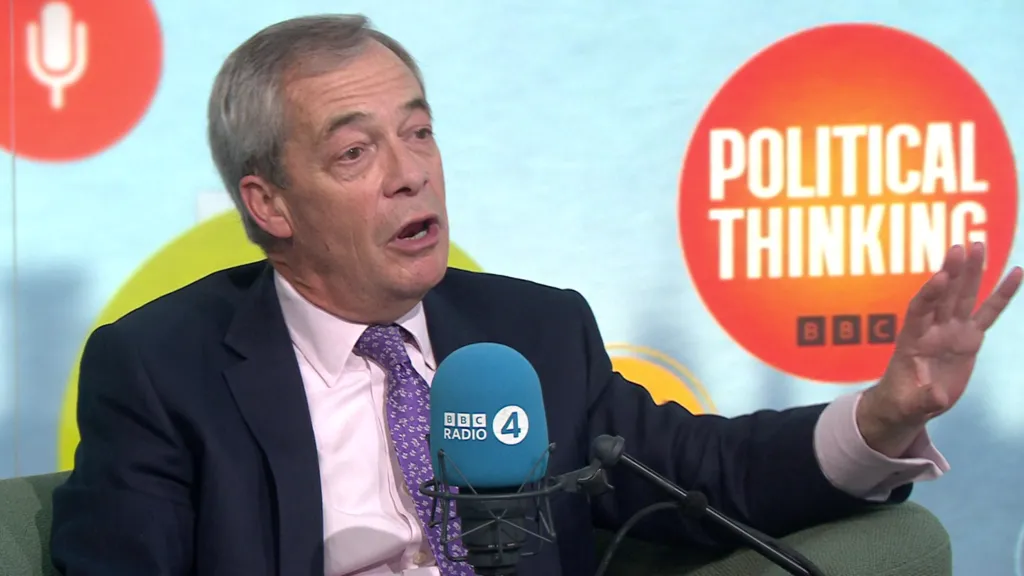
Farage Says Reform to Replace Traditional Tory Party
-
 News8 hours ago
Wrexham Pair Seek Win Against Former Team Ipswich
-
 News13 hours ago
Liberal Party Removes Australia’s First Female Leader
-
 News11 hours ago
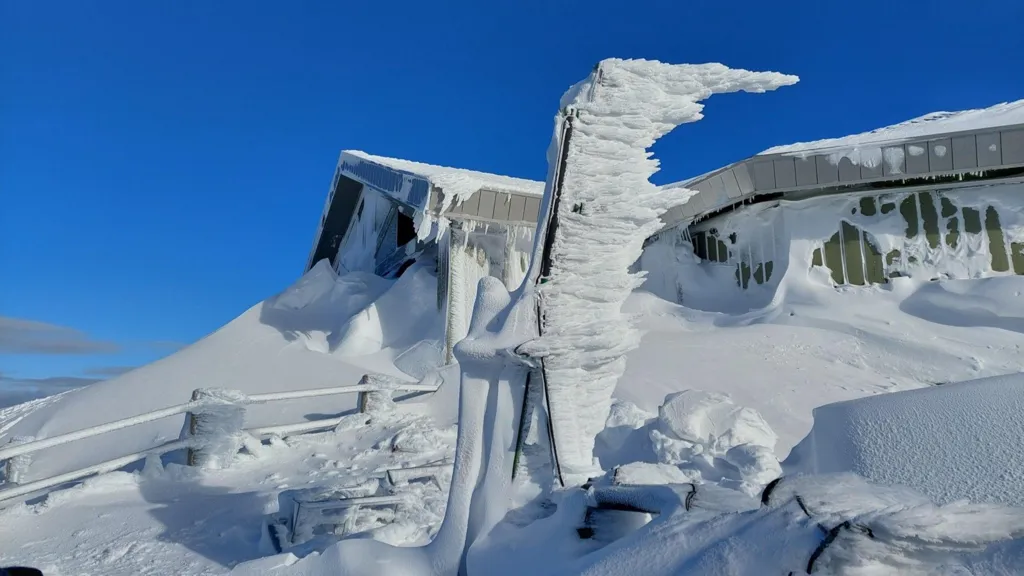
UK Braces for Cold Snap with Snow and Ice Alerts Expected
-
 News8 hours ago
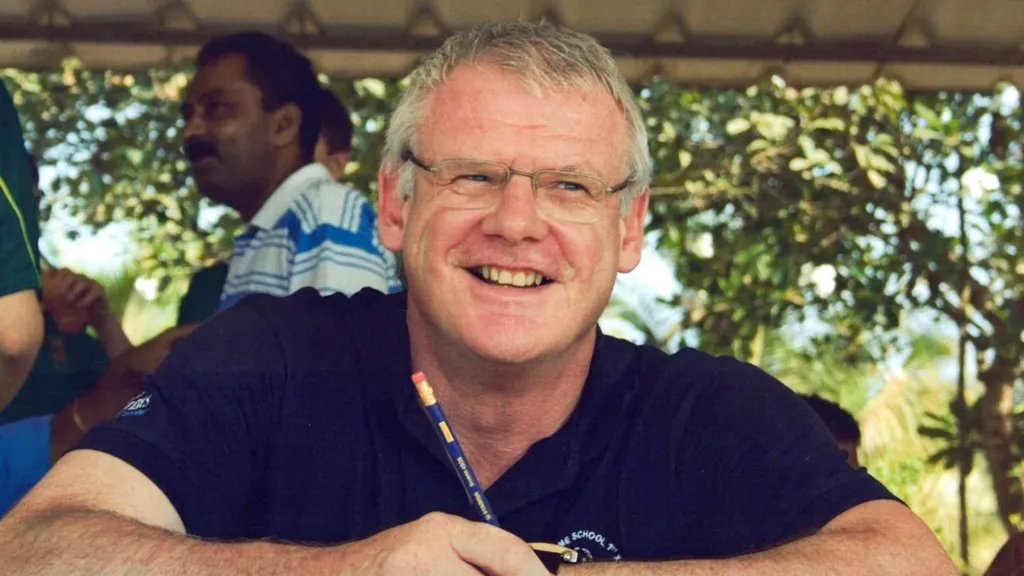
Husband’s alleged £600k theft for sex and antiques blamed on drug side effects
-
 News2 days ago
Sunbed ads spreading harmful misinformation to young people
-
 Business14 hours ago
BBC Reporter Exposed to Cyber Attack Due to Vulnerabilities in AI Coding Tool