
News
Ireland Seeks Redemption in Match Without Spectators
Ireland’s Captain Caelan Doris has emphasized that the team must have all players contributing in order to move past their loss to France and secure a win against Italy.
Ireland captain Caelan Doris is urging his team to deliver a strong performance against Italy, following their disappointing loss to France last week.
Historically, Ireland have dominated Italy in their home Six Nations matches, winning their last five encounters by at least 30 points, including a 2024 match where they held Italy scoreless, but a similar outcome is not expected this time around.
Italy's confidence is high after their 18-15 victory over Scotland in Rome, where they excelled in the set-piece and defended well in the closing stages.
Gonzalo Quesada's team put in an impressive display despite the challenging weather conditions, and their win has given them momentum ahead of their trip to Dublin.
In contrast, Ireland's camp has been introspective after their 16-year-low Six Nations loss to France, with head coach Andy Farrell expressing his disappointment and the need for improvement.
Farrell was critical of his team's performance, particularly in the first half, and has made several changes to the lineup for the Italy match, including the exclusion of Josh van der Flier, Jacob Stockdale, Tommy O'Brien, and Cian Prendergast.
The Irish coach has also spoken about the need for his team to "simplify things" and understand their identity, following a clear-the-air meeting with the squad.
Farrell has emphasized the importance of players not overthinking their roles and instead focusing on their strengths, as they prepare to face Italy.
The Irish coach's message to his players is to trust their instincts and not overcomplicate their game plan against Italy.
Ireland's review of their loss to France was a candid and honest assessment, with players and coaches alike acknowledging the need for improvement.
Ireland has made six changes to their team for the Italy match, with newcomers Cormac Izuchukwu and Rob Baloucoune, as well as uncapped lock Edwin Edogbo, set to feature.
Captain Caelan Doris believes that the new players must take ownership of their roles and contribute to the team's overall performance.
Doris expressed his enthusiasm for the team's lineup, despite the changes, and emphasized the importance of cohesion and trust among the players.
The Irish captain's message to the new players is to have faith in their abilities and enjoy the experience, while also focusing on the team's core strengths.
Doris stressed that every player must be fully committed and take responsibility for their actions on the field, in order to achieve a positive outcome.
He added that creating a sense of unity and purpose through their actions can have a profound impact on the team's performance.
Doris reiterated that every player must be fully invested and take ownership of their role, in order to achieve success against Italy.
Edwin Edogbo, the towering Munster lock, is set to make his Test debut for Ireland on Saturday.
Ireland's loss to France was marked by a lack of intent, and head coach Andy Farrell has responded by making changes to the team, including the inclusion of wingers James Lowe and Rob Baloucoune.
The hope is that these changes will help Ireland to rediscover their sense of purpose and direction against Italy.
Lowe, a experienced player, was dropped for the France match, but returns to the lineup, while Baloucoune makes his first appearance for Ireland since November 2022.
The inclusion of Cormac Izuchukwu in the back row is expected to add dynamism and ball-carrying ability to Ireland's attack.
There is also excitement about the potential of Edwin Edogbo, who has impressed for Munster despite struggling with injuries earlier in his career.
Caelan Doris will switch back to open-side flanker, a position he has played before against Italy, and where he has scored tries in the past.
Regardless of his position, Doris is focused on helping Ireland to move past their loss to France and deliver a strong performance against Italy.
The Irish captain reflected on the team's discussions throughout the week, which have centered on accountability, simplicity, and a renewed focus on their core values.
Doris emphasized the importance of the team holding each other accountable and taking ownership of their actions, in order to drive improvement.
The Irish captain acknowledged that the loss to France has served as a reference point, but expressed confidence that the team can learn from the experience and move forward.
Doris believes that Ireland has the potential to improve, but must focus on executing their game plan effectively and trusting their strengths.
The match between Ireland and Italy is scheduled to take place on Saturday, 14 February, at 14:10 GMT.
The Aviva Stadium in Dublin will host the encounter.
Fans can listen to live commentary of the match on BBC Sounds, BBC Radio 5 Sports Extra 2, BBC Radio Ulster, and the BBC Sport website and app, as well as follow live text commentary.
Italy has a chance to cause a major upset in the Six Nations, and will be looking to build on their win over Scotland last week.
The Italians pushed Ireland close last year, losing 22-17, and will be hoping to go one better this time around.
Despite the absence of Juan Ignacio Brex, Italy has a number of threats, including Tommaso Menoncello, one of the most exciting young talents in European rugby.
The Italian forwards have shown their ability to compete with top teams, having dominated Scotland and caused problems for South Africa's pack in November.
Caelan Doris acknowledged that Italy is no longer just a passionate team, but a side with a well-rounded attack and strong defense.
The Irish captain noted that Italy's attack is now a significant threat, and that their ability to play with width and depth makes them a challenging opponent.
Doris also highlighted the improvement in Italy's scrum, as well as the quality of their back three and the physicality of their forwards.
The Ireland team to face Italy is: Osborne; Baloucoune, Ringrose, McCloskey, Lowe; S Prendergast, Casey; Loughman, Sheehan, Clarkson, McCarthy, Ryan, Izuchukwu, Doris (capt), Conan.
Ireland's substitutes for the match include Kelleher, O'Toole, Furlong, Edogbo, Beirne, Timoney, Gibson-Park, and Crowley.
The Italian team features Pani, Lynagh, Marin, Menoncello, and Ioane in the backline, with P Garbisi and Fusco in the half-back positions, and a forward pack consisting of Fischetti, Nicotera, Ferrari, N Cannone, Zambonin, Lamaro as captain, Zuliani, and L Cannone.
Italy's replacement players are Di Bartolomeo, Spagnolo, Hasa, Ruzza, Favretto, Odiase, A Garbisi, and Odogwu.
On Saturday, Hollie Davidson of Scotland will make history by becoming the first female referee to officiate a men's Six Nations match, with the fixture being Ireland's home game against Italy.






News
Police Launch Probe into Fatal Incident Involving Male Victim
A murder inquiry has been initiated by the Police Service of Northern Ireland after a man died in the southern area of Belfast.
A homicide inquiry is underway in south Belfast's Cromwell Road area after a man's death on Wednesday prompted a police investigation.

Emergency services responded to a report of a safety concern, which led to the discovery of the 33-year-old victim.
Despite being transported to a medical facility for treatment, the man succumbed to his injuries and was pronounced dead.
Detective Inspector Jack Kelly provided an update on the case, stating that a 32-year-old suspect, who was taken into custody in connection with the incident, is currently being held.
As the police investigation continues, authorities are urging anyone with relevant information to come forward and assist with their enquiries.
News
Scotland’s Dual Identity Raises Questions Ahead of England Match
As Scotland prepare to take the field on Saturday, the question remains as to which aspect of their persona will dominate, according to Tom English.
The Scottish rugby team's mindset is a multifaceted entity that can be difficult to comprehend. It has the potential to overwhelm and disorient, making it a challenging concept to grasp.
The dynamic between Scotland and England, as well as England's perception of this relationship, is complex and multifaceted. Recently, head coach Gregor Townsend stated that the Calcutta Cup is Scotland's most important match of the year, a view shared by captain Sione Tuipulotu.
Although the Calcutta Cup is Scotland's biggest game, it has not been the most significant indicator of their performance in recent years. Since Townsend took over, the team's record has been impressive, with four consecutive Calcutta Cup wins and five victories in eight matches.
In a recent newspaper column, England forward Courtney Lawes expressed his frustration with Scotland's approach, suggesting that they only play well when facing England.
Lawes' comments provided insight into England's perspective on Scotland's resurgence in the Calcutta Cup, stating, "I've never understood why Scotland think beating England can salvage a poor season."
Historically, this was indeed the case, but it no longer applies. If Scotland were to beat only England in the Six Nations, it would be considered a disappointing season, rather than one saved by a single victory.
Lawes also noted, "If Scotland played every week like they do against England, they would have a good chance of winning the competition."
He further stated, "This mindset seems to be a significant weakness in the Scottish psyche, holding them back from achieving more."
Scotland captain Tuipulotu described his team as "desperate" to win.
Scotland has made four changes to their lineup for the highly anticipated match against England, which they consider their most important game of the season.
The upcoming match against England is seen as an opportunity for Scotland to redeem themselves.
However, the challenge posed by England may not be as formidable as it seems, given their inconsistent performance under Townsend's tenure.
It is uncertain whether Scotland's victories against England were due to their own improved performance or England's defensive weaknesses and mental frailties.
Lawes is correct that Scotland has not won any major titles, but England's own record is not impressive, with only one Six Nations win since 2017.
Other teams, such as France, Ireland, and Wales, have won Grand Slams during this period, while England has not won a Slam in over a decade and has only won two in the history of the Six Nations.
England's performance in the Six Nations has been inconsistent, with only one first-place finish, two second-place finishes, two third-place finishes, one fourth-place finish, and two fifth-place finishes in the past eight years.
Perhaps the perception that Scotland raises their game against England is misguided, and instead, England's performance has been subpar.
However, with Steve Borthwick as their new head coach, England appears to have improved, with 12 consecutive wins and a well-organized team.
The upcoming match at Murrayfield will be a significant test of England's newfound strength, and Tuipulotu has emphasized Scotland's desperation to win.
(No changes, as this paragraph is a video notification)
Tuipulotu has expressed Scotland's desperation to beat England.
The match is scheduled for Saturday, 14 February, at 16:40 GMT.
The match will take place at Scottish Gas Murrayfield.
Live commentary will be available on BBC Radio 5 Live, BBC Radio Scotland, BBC Sounds, and the BBC Sport website and app.
Scotland's players and coaches have faced intense criticism following their loss to Italy, with concerns over their defensive performance and set piece.
The team's inability to create line breaks is a significant concern, and a victory on Saturday would be a crucial step towards redemption.
Tuipulotu's comments suggest that Scotland is preparing for a strong reaction, but the absence of key players who have made significant contributions in the past is a notable concern.
In 2024, Scotland's ability to quickly move the ball to the wide channels was decisive, with Blair Kinghorn and Duhan van der Merwe playing key roles.
However, Van der Merwe will not be playing, and Kinghorn is not in top form, which could impact Scotland's attack.
Van der Merwe has a history of performing well against England, but he will not be starting on Saturday.
Van der Merwe's recent form has been inconsistent, and England may have targeted him with high kicks if he were selected.
Townsend's decision to select a back three based on form rather than taking a risk on Van der Merwe is understandable, but it may have been beneficial to include him in the hope of creating chaos.
The absence of Kinghorn and Van der Merwe places more pressure on Finn Russell to deliver a standout performance.
Russell has been playing a more controlled game with Bath, but he may need to adopt a more expansive approach on Saturday.
Scotland's best chance of winning may be to play to their strengths, using their speed and ambition to outmaneuver England.
Although the team is missing key players, they still have the potential to play an exciting brand of rugby, as seen in their autumn performances against the All Blacks and Argentina.
Scotland's inconsistency makes it difficult to predict which side will dominate on Saturday.
A strong reaction from Scotland is expected, but the outcome against a resilient England team is uncertain.
News
Trump’s Climate Policy Shift May Have Six Key Consequences
A Thursday announcement has effectively stripped away the legal foundation underlying a significant portion of US environmental laws.
The US government, under President Donald Trump, has announced the reversal of a key scientific ruling made during the Obama era, which had deemed certain greenhouse gases a threat to public health and the environment, thereby underpinning various environmental regulations.

Experts predict that this decision will have significant environmental and economic consequences, and it is likely to face legal challenges from environmental groups, who argue that the US Environmental Protection Agency (EPA) has overstepped its authority.
Several potential impacts of this reversal are noteworthy, including the effects on industries that produce greenhouse gases.
One of the most immediate consequences of this legislative change will be the reduction of restrictions on industries that produce greenhouse gases, particularly vehicle manufacturers, which will no longer be subject to the same level of scrutiny.
The original endangerment finding, made in 2009, was based on a comprehensive report by the EPA, which identified six greenhouse gases, including carbon monoxide and methane, as posing a threat to current and future generations due to their potential to cause harm to human health and the environment.
The EPA's report was prompted by a 2007 US Supreme Court decision, which ruled that the agency was responsible for regulating greenhouse gases under the Clean Air Act, as these gases were considered air pollutants.
Greenhouse gases have the effect of trapping heat in the atmosphere, leading to a rise in temperatures, which can have devastating consequences for the environment and human health.
The impact of the endangerment finding had been significant, as greenhouse gas levels in the US had peaked in the late 2000s and had been declining steadily since then, indicating a positive trend in reducing pollution.
With the reversal of the endangerment finding, the legal basis for limiting the amount of greenhouse gases that US industries can emit has been removed, which could lead to an increase in pollution.
According to estimates by the non-profit Environmental Defense Fund, the removal of the endangerment finding could result in an additional 7.5-18 billion tonnes of greenhouse gases being emitted by 2055, which is roughly three times the current annual emissions.
The Environmental Defense Fund also estimates that this increase in emissions could have significant economic costs, potentially running into trillions of dollars, due to the negative impacts on human health and the environment.
While the Trump administration argues that removing the endangerment finding will have economic benefits, particularly for the automotive industry, environmental groups have expressed strong opposition to the decision, citing the potential harm to human health and the environment.
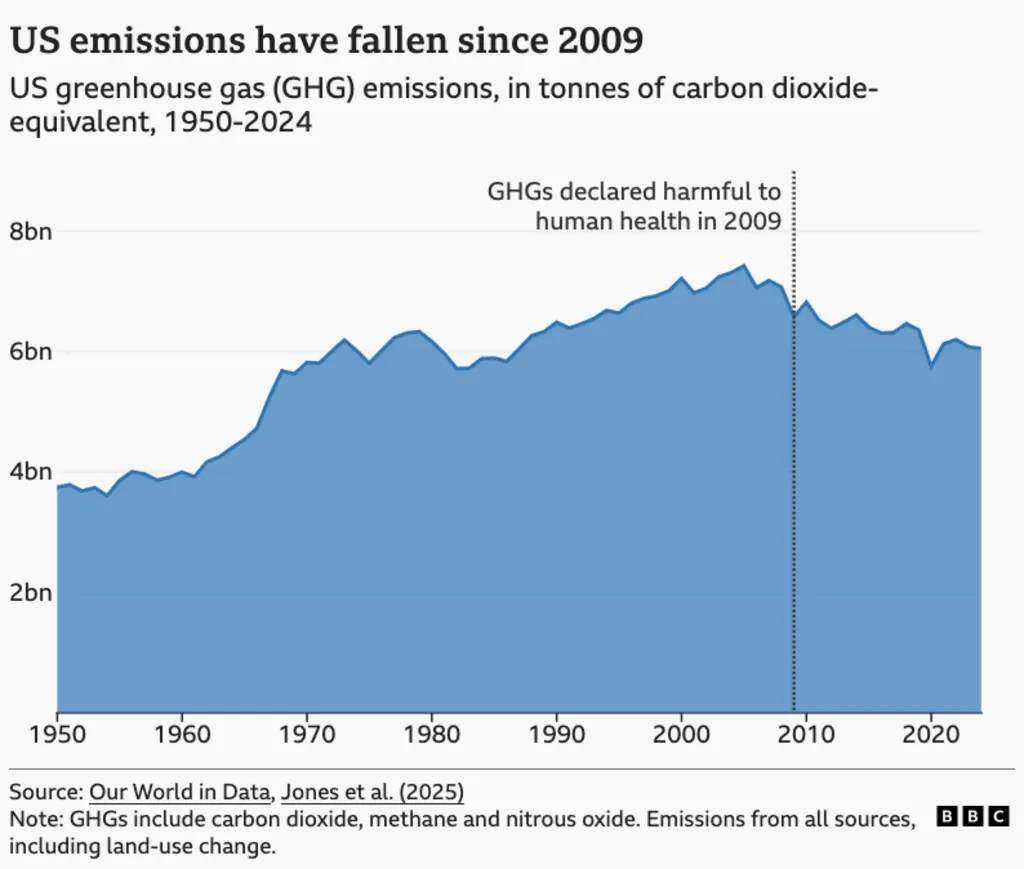
The White House claims that the reversal of the endangerment finding will reduce the cost of vehicle production by around $2,400 per car, which could benefit the automotive industry.
Since 2009, the endangerment finding had led to the implementation of policies that promoted fuel efficiency and the adoption of electric vehicles, including the Inflation Reduction Act, which was a key policy of the Biden administration.
However, the Trump administration has already begun to dismantle some of these policies, and the reversal of the endangerment finding is seen as a further step in this direction.
The decision has been welcomed by some in the automotive industry, who argue that it will help to address the imbalance between emissions standards and customer demand.
Ford, a major vehicle manufacturer, has stated that the reversal of the endangerment finding will help to correct some of the unachievable emissions regulations that were put in place by the previous administration.
However, there are concerns that the reversal of the endangerment finding may not have a significant impact on the automotive industry, as many countries still have strict emissions standards in place, and US manufacturers may need to comply with these standards in order to remain competitive.
According to Michael Gerrard, a climate law expert from Columbia University, the reversal of the endangerment finding may actually put US automakers at a disadvantage, as other countries may be less likely to purchase American vehicles that do not meet their emissions standards.
Gerrard argues that the reversal of the endangerment finding may ultimately harm the US automotive industry, as it may lead to a decline in exports and a loss of competitiveness in the global market.
The endangerment finding had led to a 2011 US Supreme Court ruling, which gave the EPA the authority to regulate greenhouse gas emissions, taking this power away from the court system.
With the reversal of the endangerment finding, legal experts predict that this authority may be reversed, leading to an increase in public nuisance actions, which are lawsuits brought by individuals or groups who have been harmed by pollution.
A public nuisance refers to any activity that interferes with the rights of the public, including the right to a safe and healthy environment.
Prior to the 2011 ruling, there were several court cases brought by US states against companies that were alleged to have caused pollution, seeking compensation for the harm caused.
With the reversal of the endangerment finding, it is possible that similar lawsuits may be brought again, as companies may be held liable for the harm caused by their emissions.
Robert Percival, a University of Maryland environmental law professor, argues that the Trump administration's decision to reverse the endangerment finding may ultimately backfire, as it may lead to an increase in lawsuits and a decline in the competitiveness of US industries.
The EPA has stated that maintaining greenhouse gas emissions standards is not necessary to fulfill its core mission of protecting human health and the environment, despite evidence to the contrary.
Scientists have consistently shown that pollutants, including greenhouse gases, can have significant negative impacts on human health, including causing premature deaths and health problems.
The Environmental Defense Fund estimates that the increase in emissions resulting from the reversal of the endangerment finding could lead to between 15,400 and 58,000 premature deaths by 2055.
The Fund also estimates that there could be tens of millions more asthma attacks and tens of thousands more hospital visits over the same period, due to the negative impacts of air pollution on human health.
The reversal of the endangerment finding raises questions about how the US will continue to compete in the global renewable energy market, as other countries are moving forward with aggressive plans to reduce their emissions and transition to clean energy.
The Biden administration had promoted policies that incentivized the development of domestic renewable energy technologies, in an effort to keep the US competitive in the global market.
Margo T Oge, a former head of the EPA, argues that the US is falling behind in the transition to clean energy, as other countries are accelerating their efforts to reduce emissions and promote renewable energy.
Oge points to the growing market share of electric vehicles produced by EU and Chinese companies, which is a sign that the US is losing its competitive edge in the clean energy sector.
According to Oge, if the US abandons its clean energy standards, it will not be saving the American auto industry, but rather leaving it behind in the transition to a cleaner, more sustainable economy.
Former US Secretary of State John Kerry has also expressed concerns about the US falling behind in the clean energy sector, citing the example of China, which is now producing more wind and solar energy than any other country.
Kerry argues that China's transition to clean energy is driven by the demand of its population for clean air and a healthy environment, and that the US should follow suit in order to remain competitive.
Kerry questions why the US would want to abandon its clean energy standards, given the clear benefits of transitioning to a cleaner, more sustainable economy.
Kerry argues that the US should be promoting clean energy and reducing emissions, rather than rolling back regulations and abandoning its commitment to a sustainable future.
Despite the arguments in favor of promoting clean energy and reducing emissions, the Trump administration has pointed to the economic costs of regulation as a reason for reversing the endangerment finding, citing the need to promote economic growth and competitiveness.
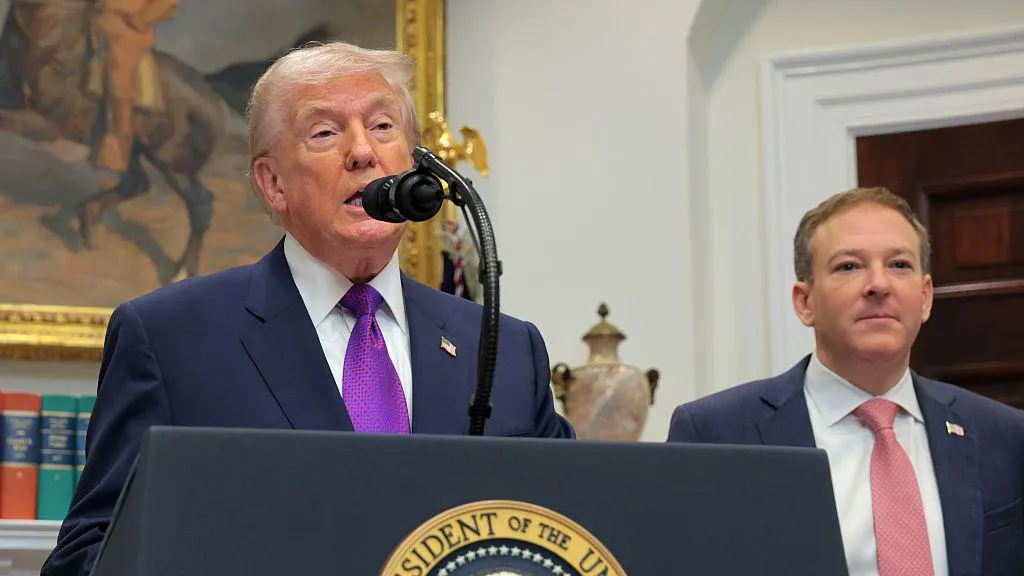
On Thursday, EPA administrator Lee Zeldin unveiled a significant policy shift, characterizing it as the most substantial deregulatory move in the history of the United States. According to Zeldin, this action will yield substantial savings for American taxpayers, totaling over $1.3 trillion [£950bn].
Diana Furchtgott-Roth, a former official in the US Department of Transportation during the Trump administration's early years, shared her perspective with the BBC. She asserted that stringent emissions regulations have driven up costs and prompted manufacturers to relocate outside the country.
Furchtgott-Roth explained to the BBC that this shift in manufacturing has led to production being outsourced to countries like China, where environmental standards are less stringent.
She argued that the notion of reducing global emissions by relocating energy-intensive manufacturing to countries like China and India, where production methods are often less environmentally friendly, is misguided and ultimately fails to achieve the intended goal of decreasing global emissions.
-
 News15 hours ago
Australian Politics Faces Questions Over Gender Equality Amid Sussan Ley’s Appointment
-
 News12 hours ago
Farage Says Reform to Replace Traditional Tory Party
-
 News12 hours ago
Wrexham Pair Seek Win Against Former Team Ipswich
-
 News17 hours ago
Liberal Party Removes Australia’s First Female Leader
-
 News15 hours ago
UK Braces for Cold Snap with Snow and Ice Alerts Expected
-
 News12 hours ago
Husband’s alleged £600k theft for sex and antiques blamed on drug side effects
-
 News2 days ago
Sunbed ads spreading harmful misinformation to young people
-
 Business17 hours ago
BBC Reporter Exposed to Cyber Attack Due to Vulnerabilities in AI Coding Tool