
News
Managers Reveal Strategies for Making a Lasting Impression
Former Premier League manager Tony Pulis outlines in his BBC Sport column the crucial steps a manager can take prior to, during, and following matches in order to achieve desired outcomes.
A significant aspect of a manager's role is the work that takes place around a match, including the preparations beforehand, the events during the game, and the analysis that follows.
For me, the process of preparing for the next game would begin approximately two hours after the conclusion of the previous one.
The lengthy drive home after a Saturday match, which could take over three hours, provided an opportunity to make phone calls and utilize the quiet time productively.
During my tenure at Stoke City, chairman Peter Coates would often contact me after a loss, whereas he would not reach out after a win, recognizing that I would not require reassurance in such instances.
Regardless of the outcome, I would always discuss the game with my assistants, David Kemp and Gerry Francis, to gain a more nuanced understanding of the match, often doing so away from the stadium to gain a fresh perspective.
I would also touch base with my chief scout, who would have attended our upcoming opponent's game, to gather information on their strategy, strengths, and weaknesses, as well as any injuries they may have sustained.
By the time I arrived home, I would have already begun analyzing our opponent's previous games, which I could access through recordings, and would often watch these while having dinner in front of the TV.
Sundays were typically spent with family, but I would return to work either late that night or early the following morning, with a clear understanding of what was required for our next match.
A photo of Tony Pulis working with West Brom on the training ground in 2015 serves as a reminder of the importance of preparation in football management.
The players' schedules are also built around the next game, with Mondays featuring a light training session for those who played on Saturday, accompanied by a debriefing and a match-related game against the reserves.
Throughout my managerial career, I have always sought to clearly communicate my expectations to the players, using a combination of positive and negative examples from the previous game to illustrate my points.
If further clarification was needed, we would address the issue directly on the training pitch, with the players who did not start on Saturday participating in a more intense session afterwards.
This type of work was essential to our success, as it allowed us to refine our strategy and ensure that every player understood their role within the team, regardless of whether we were at Stoke, Crystal Palace, or West Brom.
Although our approach may have varied between clubs, our objectives and the challenges we faced remained largely the same.
Establishing a clear team identity and implementing a system that suits the players is crucial for success, but a manager must also possess the confidence and courage to lead and make tough decisions.
Players will inevitably test their manager, but they will respect a leader who remains resolute and composed under pressure, which is particularly important on game days.
A notable example of this is when we were scheduled to play against top-tier teams, and I would make a concerted effort to exude confidence in our abilities and tactics.
While this approach did not always yield the desired results, I believed that it was essential to convey this confidence to the players, as it would have a positive impact on their performance.
A photo of the West Brom dressing room before a game against West Ham in 2015, featuring Tony Pulis's iconic baseball cap, serves as a reminder of the attention to detail that is required in football management.
After a week of intense preparation, during which every player's role and responsibilities were meticulously drilled into them, I would focus on identifying potential weaknesses in our opponents and developing strategies to exploit them.
Set-plays have long been a key aspect of football, and we would work extensively on both attacking and defending these situations, recognizing their potential to significantly impact the outcome of a game.
Each player was aware of their individual challenges and responsibilities, whether in attack or defense, and we would work tirelessly to ensure that they were adequately prepared.
On the day of a home game, I would arrive at the stadium around 11am, and in my earlier years, I would also engage in personal training sessions before the match.
As the players began to arrive, I would review everything one last time, and once they were all settled, I would deliver a brief, low-key talk before leaving the dressing room.
Upon receiving the opposition's teamsheet, approximately 75 minutes before kickoff, I would carefully review our assignments and ensure that our players were aware of their marking responsibilities, as I have always been a proponent of man-marking.
I would then take this information into the dressing room, before exiting once more, until the players returned from their warm-ups, at which point I would focus on conveying confidence and positivity.
The actual team talk and the final messages conveyed to the players could vary significantly depending on the circumstances, and it was not always me who delivered these talks.
On one notable occasion, at Stoke, I asked Ricardo Fuller to address the team before our FA Cup semi-final against Bolton at Wembley in 2011.
Despite being injured and unable to participate in the game, Fuller delivered an inspiring speech, quoting Nelson Mandela, which had a profound impact on the team.
We went on to win the game 5-0, and to this day, Fuller believes that his speech played a significant role in motivating the team to achieve that remarkable result.
This experience highlights the importance of adaptability and creativity in football management, as there is no one-size-fits-all approach to success.
During my early years at Stoke, we often found ourselves as underdogs, and the atmosphere at our matches was electric, regardless of the opposition.
As the team became more established, our opponents began to prepare more effectively for our matches, and our supporters' expectations evolved, recognizing that we were no longer the underdogs.
To counter this, I began to employ more psychological tactics to generate a positive atmosphere in the dressing room, which would help motivate the players.
This might involve referencing recent criticism or negative media coverage, or even drawing on memories from our earlier days as a club, to inspire a positive response from the team.
This approach proved highly effective, particularly in matches where we were favored to win.
A photo of Tony Pulis and his long-time assistant Dave Kemp discussing tactics during a game serves as a reminder of the importance of collaboration and strategy in football management.
The messages conveyed at halftime are also critical, as they can significantly impact the outcome of the game.
I would typically focus on two or three key points, but it is essential to be cautious in what you say and do, as the halftime break can dramatically alter the flow of the game.
I have witnessed my team dominate the first half, only to lose control in the second, and conversely, I have seen them struggle initially, only to regain their composure and go on to win.
A key concern for managers and coaches is something that I, too, had to be mindful of during my tenure.
I recall a particular match where Stoke were leading 2-0 at halftime against Blackburn, and as the team left the pitch, I sensed a hint of complacency among the players, who were congratulating each other.
To address this, I decided to take a firm approach in the dressing room, singling out my captain, Ryan Shawcross, who had put in an outstanding performance in the first half, and giving him a stern talking-to, which caught everyone off guard.
By the end of the match, we had secured a well-deserved win, but Ryan Shawcross approached me on Monday, still upset and seeking clarification on my actions during the halftime break.
I explained to him that my intention was to counter the anticipated strong response from Blackburn in the second half, led by their manager, Sam Allardyce, by putting our team on high alert.
Although this tactic was effective on that occasion, it was not always the case.
As a manager, one has the ability to make adjustments during the game as well.
When I first started managing, teams were only allowed one substitute, whereas now, up to five players can be replaced.
This means that half of the starting outfield team can be changed, and with the large squads that exist today, this can be a significant advantage for coaches.
Looking at the top teams' benches nowadays, I am often struck by the exceptional quality of players available, which is a notable difference from 30 years ago.
Making substitutions is often a pre-planned strategy, although I have removed players from the game due to poor performance, or to protect a lead or push for a goal.
As I mentioned earlier, the game has undergone significant changes over the past 30 years, with computers now playing a crucial role in providing managers with valuable information, including scouting reports.
This technological advancement also extends to in-game analysis, where computers on the sidelines can provide data that influences a manager's decisions on substitutions and overall team strategy.
However, I have always relied on my own observations and experience, despite the impressive advancements in team analysis and live game data.
The right decisions can have a profound impact on the outcome of a game, and I have heard commentators praise managers for their clever substitutions.
While I have received similar accolades, the truth is that sometimes I had selected the wrong starting lineup to begin with.
If I were truly a genius, I would have chosen a different starting XI and gotten it right from the start.
Dealing with the media is an integral part of a Premier League manager's job.
Following a match, I would typically move on quickly, regardless of the result, and address any concerns with the players on Monday.
The manager is often the focal point of media attention after a game, with questions about tactics, substitutions, and performance being posed, often with a focus on the result.
In the aftermath of a Premier League fixture, managers are subjected to intense scrutiny, with questions about their decisions and team performance being asked, sometimes in a high-pressure environment.
The losing team's manager, in particular, is likely to face more challenging questions, which are often predetermined.
For the winning team, there is praise, but regardless of the outcome, the focus must be on moving forward.
After a match, I would promptly leave the stadium, already thinking about the next game.
My attention would quickly shift to the upcoming match, as I drove home.
Entertainment And Arts
Spielberg Contributes $25,000 to Van Der Beek’s $2 Million Crowdfunding Campaign
The relatives of the deceased actor, known for his role in Dawson’s Creek, have expressed gratitude to those who contributed to the $2m fund.
A donation of $25,000 (£21,000) has been made by film director Steven Spielberg and his wife, Kate Capshaw, to a GoFundMe campaign that has raised over $2m (£1.6m) for the family of late actor James Van Der Beek.

Van Der Beek, who passed away at the age of 48, is survived by his wife Kimberly and their six children, and the crowdfunding effort to support his family has now exceeded its initial target of $2m.
Other notable donors include Oscar-winning actress Zoe Saldana, who contributed $2,500 (£2,108), and director Jon M Chu, who gave $10,000 (£8,432) to the cause.
A statement from the organizers of the fundraiser, Friends of the Van Der Beek family, expressed gratitude to all contributors, stating that their support is deeply appreciated.
The statement highlighted the significance of the donations, saying that the kindness shown by contributors is beyond words.
It also noted that the outpouring of support has been a source of comfort during a difficult time, serving as a reminder of the power of love, community, and the enduring legacy of James Van Der Beek.
Van Der Beek was perhaps best known for his starring role in the popular US teen drama series Dawson's Creek, which aired from 1998 to 2003, although he remained associated with the show until 2023.
Although Van Der Beek and Spielberg never collaborated on a project, the late actor's character in Dawson's Creek was a fan of Spielberg's work, with posters of films like ET and Schindler's List featured in his bedroom.
At a Dawson's Creek cast reunion event last year, Spielberg paid tribute to Van Der Beek by sending a video message.
In the message, Spielberg said, "Dawson, you made it," and jokingly added that he hoped to one day have a room like Dawson's, filled with memorabilia from his films.
Van Der Beek passed away on Wednesday after a battle with bowel cancer.

He had been dealing with the diagnosis since August 2023 and publicly disclosed his condition in November 2024.
The GoFundMe campaign was launched to help the family with medical expenses, which had depleted their funds.
The statement from the organizers concluded by saying that the family is currently taking time to grieve and be together, and thanked everyone for their compassionate and generous support in honoring James Van Der Beek's life.
News
Zimbabwe Shocks Australia with Muzarabani’s Exceptional Performance
Zimbabwe secured a stunning 23-run victory over Australia in the T20 World Cup, with Blessing Muzarabani playing a key role by taking 4-17.
In the current T20 world rankings, Zimbabwe occupies the 12th position.
The Men's T20 World Cup is underway in Group B at Colombo.
Zimbabwe's innings concluded at 169-2 after 20 overs, with Bennett scoring an unbeaten 64 off 56 deliveries, while Green claimed 1-6.
Australia's reply ended at 146 after 19.3 overs, as Renshaw top-scored with 65 off 44 balls, and Muzarabani took 4-17.
The match resulted in a 23-run victory for Zimbabwe.
A standout performance from Blessing Muzarabani, who took 4-17, helped Zimbabwe secure a thrilling 23-run win over Australia in the T20 World Cup.
After being set a target of 170, Australia found themselves in trouble at 29-4, but a 77-run partnership between Matthew Renshaw and Glenn Maxwell for the fifth wicket gave them hope.
With 34 runs needed from the last two overs, Renshaw's dismissal for 65, caught off Muzarabani with eight balls remaining, essentially sealed the game's outcome.
The result has left Group B finely balanced after two matches each, with Australia trailing Zimbabwe and Sri Lanka by two points, ahead of their meeting with Sri Lanka on Monday.
Initially, Zimbabwe's approach to batting first at the R. Premadasa Stadium appeared overly cautious.
Brian Bennett's innings of 64 not out from 56 balls, including seven fours, was played at a strike rate of 114.28, as he anchored the Zimbabwean batting.
In contrast, Tadiwanashe Marumani and Ryan Burl adopted a more aggressive approach, scoring 35 off 21 and 30 balls, respectively.
A late surge from Zimbabwe skipper Sikandar Raza, who scored 25 off 13 balls, including the team's only six on the final ball, provided a boost to their total.
Australia's target seemed achievable, given their total of 182-6 in their previous win against Ireland.
However, the Australian batting line-up was severely dented by the loss of key wickets, including Josh Inglis, Travis Head, Cameron Green, and Tim David, courtesy of Muzarabani and Brad Evans.
A partnership between Renshaw and Maxwell offered some respite, but when Maxwell fell for 31, dragged on to Burl, the pressure mounted on Australia.
Muzarabani's return to bowl the penultimate over proved decisive, as he removed Renshaw, and Zimbabwe subsequently wrapped up the win.
There are calls for the ICC to review the rules regarding 12th men.
For more information, including notifications and social media updates, visit BBC Sport.
A blogger who participates in the FPL is also competing in the T20 World Cup.
News
FA Cup Finalists Outside the Big Six Since 2008
As the FA Cup resumes this weekend, assess your understanding of past finalists that have competed from beyond the Premier League’s top six clubs.
This weekend, the FA Cup resumes with 32 teams remaining in contention for the historic trophy, which has been awarded for 155 years and will be presented to the winner in May.
Historically, the Premier League's top six clubs – Arsenal, Chelsea, Liverpool, Manchester City, Manchester United, and Tottenham – have dominated the FA Cup, claiming 32 titles out of the last 37.
However, in recent years, teams outside of this elite group have experienced some notable victories in the competition.
Since 2008, 10 teams from outside the traditional 'big six' have advanced to the FA Cup final – can you identify all of them?
For more quizzes, visit our Football Quizzes and Sports Quizzes sections, where you can also subscribe to receive the latest quizzes directly on your device.
We have a quiz question tailored to each Premier League team – test your knowledge and see how you score.
Can you recall every team that has won the Women's Champions League?
Which players have made the most appearances in the Premier League – can you name them all?
Explore our Sports Quizzes page for a wide range of challenging and engaging quizzes.
-
 News7 hours ago
Australian Politics Faces Questions Over Gender Equality Amid Sussan Ley’s Appointment
-
 News4 hours ago
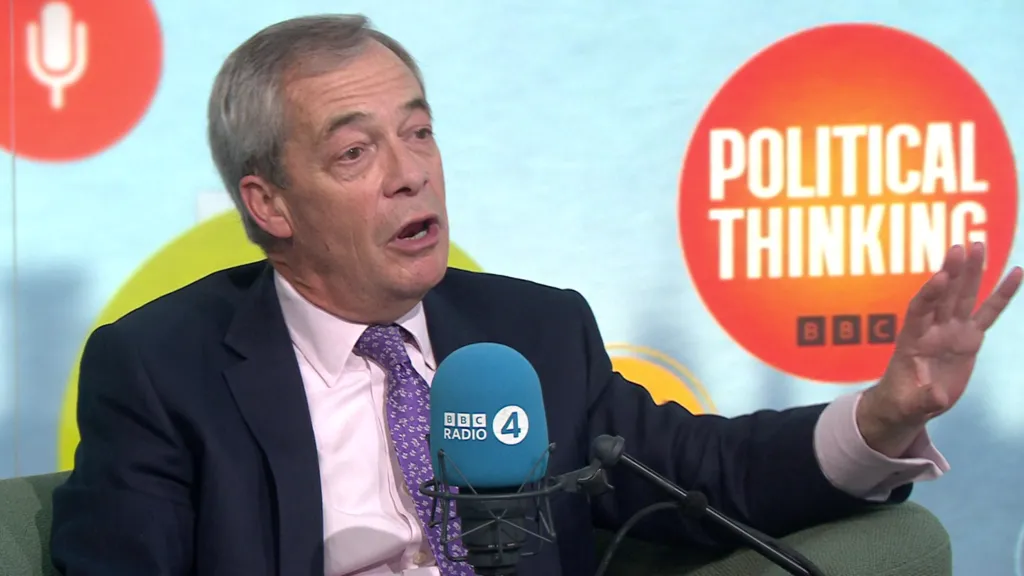
Farage Says Reform to Replace Traditional Tory Party
-
 News4 hours ago
Wrexham Pair Seek Win Against Former Team Ipswich
-
 News7 hours ago
UK Braces for Cold Snap with Snow and Ice Alerts Expected
-
 News9 hours ago
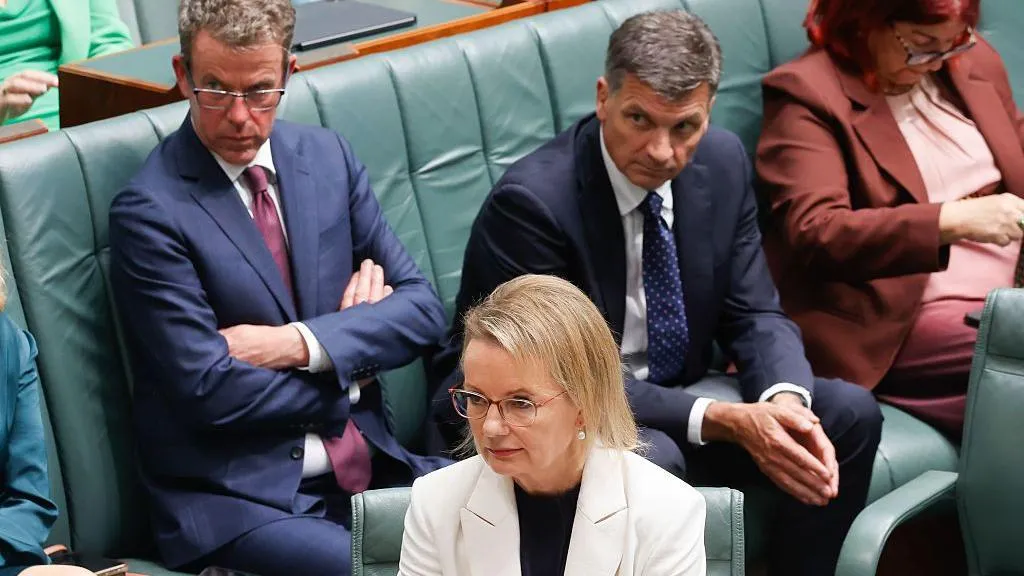
Liberal Party Removes Australia’s First Female Leader
-
 News4 hours ago
Husband’s alleged £600k theft for sex and antiques blamed on drug side effects
-
 Business10 hours ago
BBC Reporter Exposed to Cyber Attack Due to Vulnerabilities in AI Coding Tool
-
 News2 days ago
Sunbed ads spreading harmful misinformation to young people