
News
Tuipulotu Credits Scotland for Delivering Under Townsend
Captain Sione Tuipulotu credited the team’s Calcutta Cup victory to a strong performance by Scotland, which in turn alleviated some of the pressure on head coach Gregor Townsend.
Captain Sione Tuipulotu has praised Scotland's impressive Calcutta Cup win, which came after a difficult week for head coach Gregor Townsend, with the team delivering a much-needed triumph.
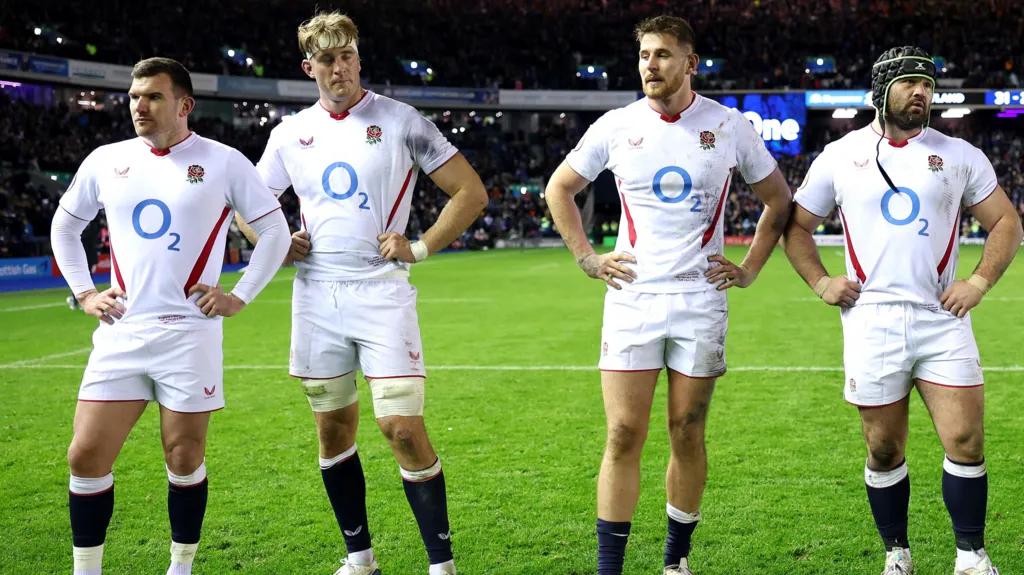
Following their opening Six Nations defeat to Italy in Rome, Scotland's championship aspirations were under scrutiny as they hosted an in-form England side at Murrayfield, with Townsend's position under increased pressure.
The hosts made a stunning start, racing into a 17-0 lead within 15 minutes, a cushion they maintained for the remainder of the match.
Scotland's performance was characterized by pace and flair, with fly-half Finn Russell playing a pivotal role in the victory.
Russell's vision and distribution were instrumental in creating tries for Huw Jones and Jamie Ritchie, as Scotland's attacking play flourished.
Despite England's response, which included a try from Henry Arundell before his dismissal for a second yellow card, Scotland continued to play with freedom, adding a third try after Ellis Genge failed to gather Russell's chip, allowing Ben White to capitalize.
England, who had won their previous 12 Tests, attempted a comeback in the second half, but Scotland's defense held firm, and they sealed a bonus-point victory with Jones' second try, following a charged-down drop-goal attempt by George Ford.
Tuipulotu expressed his pride in the team's performance, saying he was "extremely proud" of the way they responded to their defeat in Italy.
The Scotland captain acknowledged that the team had deserved criticism after their loss to Italy, but felt they had redeemed themselves with a strong display against England.
Tuipulotu stated that the team had felt under pressure, but had rallied behind their coach, delivering a performance that justified their support.
The captain admitted to feeling a sense of guilt, recognizing the challenges faced by head coaches, who receive criticism when the team performs poorly.
Tuipulotu praised his teammates for their commitment to the coach and their role in the victory, saying they had "got behind our coach and delivered a performance."
The Scotland Rugby Podcast has reaction from a jubilant Murrayfield, with players and coaches reflecting on the impressive win.
Scotland will now travel to Spain to recover before their next championship match against Wales, looking to build on their momentum.
Tuipulotu emphasized the importance of maintaining their performance level, saying the team would do everything possible to replicate their victory against Wales.
The Glasgow Warriors centre said he wanted to enjoy the win, but was already focused on preparing for the next match, ensuring they "prepare to the best of our abilities to back up this performance."
Former Scotland captain John Barclay echoed Tuipulotu's sentiments, stressing the need for consistency and saying that the best teams are able to maintain their performance levels.
Barclay, speaking on ITV, said that Scotland must "back it up" and avoid a significant drop-off in performance if they are to progress as a team.
The former skipper emphasized that the team's focus should be on replicating their Calcutta Cup win, with Tuipulotu and Townsend already highlighting the importance of consistency.
Barclay noted that the top teams are able to maintain their performance levels, with minimal drop-off, and that Scotland must strive to achieve this if they are to succeed.
Scotland's convincing win over England has rejuvenated their championship campaign, with the team sweeping aside their opponents in a stunning Calcutta Cup victory.
Townsend has expressed his pride in the team's performance, which saw them dominate England and regain the Calcutta Cup.
The match highlights are available, showcasing Scotland's impressive display.
Townsend has spoken about Scotland's emphatic victory, praising the team's performance and highlighting the challenges they faced.
The Scotland head coach has faced a difficult period, with three defeats in four Tests and speculation about his future, but the win over England has eased the pressure.
Townsend's position had been under scrutiny, with some questioning whether he had taken the team as far as he could, but the Calcutta Cup win has provided a timely boost.
The head coach praised the team's first-half display, saying it was some of the best rugby he had seen from a Scotland team.
Townsend told ITV that the team's performance in the opening 20 minutes was exceptional, and that he was proud of the way they fought for each other and the supporters in the second half.
The head coach attributed the team's success to their aggressive and fast-paced play, saying that Finn Russell had one of his best games for Scotland and the forwards' work-rate was superb.
Scotland have now won five of the last six Calcutta Cup matches, with Russell's missed conversion last year denying them a sixth consecutive win.
Former Scotland prop Peter Wright praised the team's performance, saying they had made England look "pretty mediocre."
Wright noted that Scotland's inconsistency is frustrating, as they can produce performances like the Calcutta Cup win, but also struggle, as they did against Italy.
The former prop said that the players deserved credit for their display, which was a significant improvement on their previous outing.
Scotland's players have been praised for their commitment to the coach and their role in the victory.
The match highlights are available, showcasing Scotland's impressive display.
England head coach Steve Borthwick said that Scotland's players had "shown up" for their coach, delivering a performance that justified their support.
Townsend dismissed the idea that Scotland only produce their best performances against England, saying that the team sees it as a positive that they can raise their game for the Calcutta Cup match.
The head coach said that the team had played some of their best rugby against England, and that this was a testament to the players' ability to perform under pressure.
Townsend emphasized that the team's focus is on the positives, rather than the negatives, and that they are proud of their record in the Calcutta Cup fixture.
The head coach reflected on the team's performance against Italy, saying that they had shown resilience and determination, even in defeat, and that he was proud of the players' efforts in difficult conditions.
The players' dedication and hard work throughout the week are evident, and their performance on the weekend is a testament to their commitment. Regardless of the outcome, it is clear that their energy and effort are not the issue. The team's efforts have been commendable, and their coach's pride in them has been consistent, whether in victory or not, as seen in the past two weeks.




News
Former President Obama responds to racist video tweeted by Trump comparing him to an ape
A former US president expressed concern over the decline of “shame” and “decorum” in public office, without directly referencing Trump.
In a recent podcast interview, former President Barack Obama touched on the decline of civility in public discourse, implying that a sense of shame and decorum has been lost among some public officials, in an apparent reference to a racist video shared by President Donald Trump's social media account.
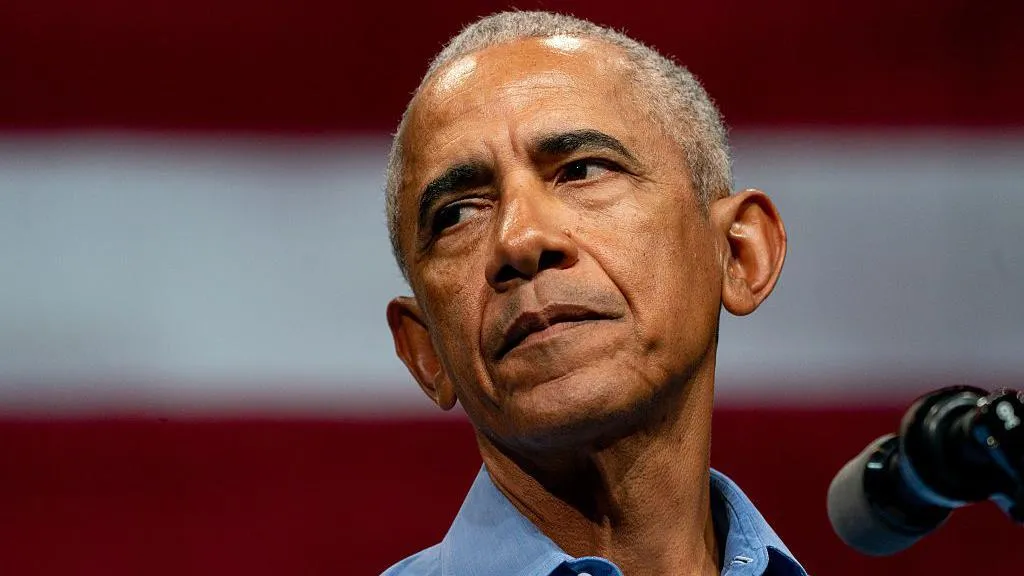
The video in question featured a clip portraying Obama and his wife Michelle as apes, sparking widespread condemnation from both Democratic and Republican lawmakers.
Initially, the White House defended the video, dismissing criticism as "fake outrage," but later attributed the post to a staff member and removed it.
Obama's comments came during a conversation with liberal podcaster Brian Tyler Cohen, who asked the former president about the state of political discourse, citing Trump's video as one example of recent controversies.
The offending clip, set to the song "The Lion Sleeps Tonight," was appended to a video posted on Trump's Truth Social account, which contained unsubstantiated claims about voter fraud in the 2020 election.
The post prompted outrage from politicians across the aisle, including senior members of Trump's own Republican Party.
Republican Senator Tim Scott, the sole black Republican senator, denounced the video as "the most racist thing I've seen out of this White House."
The clip appears to have originated from an X post by conservative meme creator Xerias in October and recalls racist caricatures that have historically compared black people to monkeys.
When questioned by reporters, Trump claimed he had not seen the part of the video depicting the Obamas.
Trump also stated that he did not believe he had made a mistake and had no intention of apologizing.
The 47-minute podcast episode, released on Saturday, began with Cohen asking Obama to share his thoughts on the current state of US discourse, which Obama described as having "devolved to a level of cruelty that we haven't seen before."
Cohen referenced White House claims that victims of Immigration and Customs Enforcement (ICE) are "domestic terrorists" and noted that Trump had recently shared an image of Obama's face superimposed on an ape's body.
Obama responded by emphasizing that most Americans find such behavior "deeply troubling."
He acknowledged that such actions can be attention-grabbing and serve as a distraction.
However, Obama noted that during his travels across the US, he has met many people who still value "decency, courtesy, kindness."
He contrasted this with the "clown show" that often plays out on social media and television.
Obama expressed concern that some individuals who once adhered to certain standards of decorum and respect for public office now seem to operate without shame.
This shift, he implied, marks a significant loss of dignity and civility in public life.
Notably, Obama did not mention Trump by name during his response.
The wide-ranging interview also covered topics such as Obama's support for peaceful protesters opposing immigration operations, his thoughts on electoral redistricting, and his upcoming presidential library in Chicago, scheduled to open next year.
News
Forensic Evidence Exposes Man’s False Claim of Girlfriend’s Death in Car Accident
Jenna Watkins was abandoned by her boyfriend on a secluded mountain road, with him alleging that her death occurred as a result of a vehicular accident.
A nighttime search for a missing brother led two men down a remote mountain road, where they had been informed his car had been involved in an accident.

Upon locating the vehicle, they discovered the body of a young woman, 21-year-old Jenna Watkins, lying nearby, while their brother was nowhere to be found.
Initially, it appeared that Jenna had been ejected from the car and fatally injured in the crash on the Bwlch mountain road in south Wales, a tragic accident that, although unfortunate, was not uncommon.
However, a subsequent examination of Jenna's body revealed a different story, one that is detailed in a new documentary about the case.
Just prior to the fatal incident on 21 April 2007, Jenna's mother, Pauline, received a disturbing and final phone call from her daughter.
Pauline recalled that around 10 pm, Jenna called her, screaming and crying, and she could hear the car in the background, with the driver, Jason Shaddick, yelling at Jenna.
Pauline attempted to calm Jenna down, advising her to put on her seatbelt, as she feared for her daughter's safety due to the sound of the car and Shaddick's aggressive behavior.
The phone call abruptly ended, leaving Pauline in a state of distress.
Jason Shaddick, Jenna's partner, was the individual being searched for by his brothers.
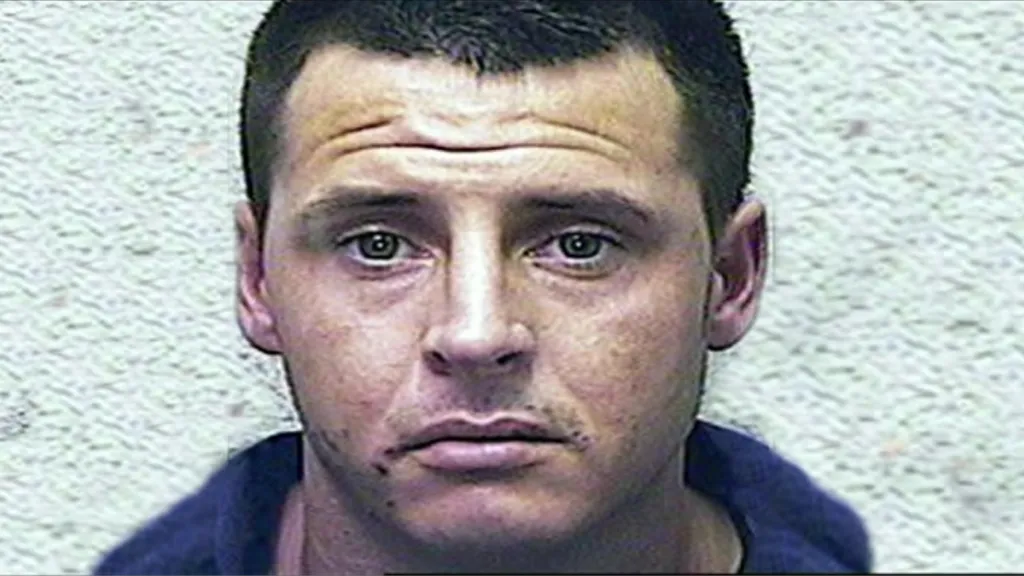
The couple resided together in Neath, where they were known to the community.
Dr Richard Shepherd, a former Home Office forensic pathologist, shared his expertise with the BBC One Wales series, The Truth About My Murder, stating that the initial evidence suggested a tragic road traffic accident.
Typically, front seat passengers who wear seatbelts suffer from chest, rib, and breastbone injuries due to the immense pressure of the impact.
However, Dr Shepherd noted that Jenna did not exhibit these injuries, leading him to suggest that she may have been thrown from the car at the time of the crash.
Further examination revealed severe bruising on Jenna's body, particularly on her legs and head, but Dr Shepherd observed that there were no typical abrasions associated with someone hitting the road.
The initial theory of a car accident began to raise questions, as the evidence did not seem to add up.
Daylight investigations at the scene also sparked concerns, as Jenna was found face down with her jewelry and possessions scattered around her, which seemed inconsistent with the initial accident theory.

Insp Emma White, the family liaison officer, stated that the scene did not appear to be consistent with someone being thrown from a vehicle, based on the condition of the windows and other factors.
As the investigation continued, Pauline received a visit from the police that would change her life forever.
Pauline recalled that she tried to avoid hearing the devastating news, refusing to sit down and attempting to talk over the officer, as she sensed what he was about to say.
Jason Shaddick was initially missing, but after an appeal, he appeared at Neath police station, where he declined to answer any questions.
With limited information available, the pathology team's work became crucial in uncovering the truth.
Fatal neck injuries are common in individuals ejected from moving vehicles, but the examination of Jenna's neck revealed a different story, with her larynx crushed, suggesting extreme pressure had been applied.
Dr Shepherd stated that this, combined with the distribution of bruising and lack of bone fractures, led him to suspect that Jenna's death may have been caused by strangulation.
When presented with this information, Shaddick responded in writing, providing his version of events.
According to Insp White, Shaddick claimed that he had crashed the car because Jenna was assaulting him, and he was acting in self-defense.
Shaddick alleged that he had put his arm around Jenna to calm her down, and it was only when she went limp that he realized he had accidentally killed her.
As Shaddick continued to refuse to answer questions, the police turned to others to gather more information about Jenna and the couple's relationship.

Pauline shared that Jenna had a close call with meningitis as a toddler, which made her more determined to take extra care of her youngest child.
Jenna often brought gifts and treats for her mother, wanting to make her happy.
Shaddick, 28, and Jenna were known in the area as a fun-loving couple who enjoyed socializing, with Shaddick working in a car parts factory and Jenna working in a call center, both in Swansea.
The couple was affectionately referred to as "the Hollywood couple" due to their stylish clothing.
However, their relationship had a darker side, with reports of intense arguments and violent outbursts.
Insp White stated that the couple would often have loud, heated arguments, with Jenna sometimes having to defend herself physically.
Pauline had previously found one of Jenna's broken necklaces outside her house, which raised concerns about Shaddick's behavior.

Insp White noted that this incident, combined with Shaddick's history of controlling behavior, raised red flags, particularly given the similarities to the crime scene.
Pauline described Shaddick's behavior as controlling and possessive, with Jenna often changing her clothes to avoid his disapproval.
Pauline characterized Shaddick as "horrible" and "nasty," with a history of violent behavior.
Insp White discovered that Shaddick had previous convictions for assaulting a former girlfriend, which further supported the suspicions of a troubled relationship.
Pauline had previously expressed concerns to Jenna about her safety, warning her that Shaddick might hurt her or worse.
Pauline recalled questioning Jenna about bruises on her body, urging her to leave Shaddick and come home, as she feared for her daughter's safety.
The post-mortem examination conducted by Dr. Shepherd revealed evidence of old bruising on Jenna's body, suggesting she had suffered heavy blows, likely from a clenched fist.
Injuries found on Jenna's cheeks and chin contradicted Shaddick's claim of being a victim of her aggression, indicating that his account was false.
According to Dr. Shepherd, bite marks were discovered, which appeared to have been inflicted with significant force.
The nature of Jenna's wounds suggested that she was the victim of an attack, rather than the aggressor.
On the evening prior to her death, Jenna and Shaddick attended a party in Port Talbot, where they argued, and Jenna departed before Shaddick followed her in his car.

Shaddick alleged that the argument continued in the car due to Jenna's supposed cocaine use, which he disapproved of, and claimed he bit her in self-defense after she grabbed his testicles.
Toxicology results showed that Jenna had no cocaine in her system and had consumed very little alcohol.
In contrast, the tests revealed that Shaddick had used cocaine and had high levels of alcohol in his system at the time.
Dr. Shepherd noted that Jenna's body exhibited signs of a desperate attempt to defend herself, but ultimately, she was overpowered, bitten, and strangled in a headlock that ended her life rapidly.
Shaddick was subsequently charged with murder and stood trial.
On November 28, 2007, he was found guilty of Jenna's murder and received a life sentence with a minimum term of 13 years, before being released in February 2021.
For Pauline, the sentence imposed on Shaddick was insufficient.
"Thirteen years is far too lenient," she said. "The thought of him resuming his life is unbearable, and it fills me with anger every time I visit Jenna's grave."
Pauline has preserved Jenna's childhood bedroom in its original state since her death.
"This room holds great sentimental value for me, and I feel closest to Jenna here," she said. "I also keep her photos with me at all times, so I can see her and feel her presence."
For Pauline, the passage of 18 years has not diminished her grief, and like many other bereaved mothers, she has found it impossible to move on.
News
Scotland Enjoys Flawless Day in Stunning Performance
According to Tom English, Scotland delivered a performance that was quintessentially them, full of thrilling moments and unpredictable twists, making for a thoroughly captivating display.
This video is unavailable for playback.
Townsend reflects on Scotland's decisive win over England.
In the aftermath of Scotland's resounding victory, captain Sione Tuipulotu discussed the team's traumatic experience following their loss in Rome the previous week, describing it as a painful ordeal that now feels like a distant memory.
Tuipulotu revealed that he had never felt such intense hurt after a game as he did after the Italy match, and that he had internalized the pain before unleashing it on England.
The Scotland captain's words suggested a sense of introspection and emotional release, as if he had worked through his feelings and emerged stronger on the other side.
Meanwhile, coach Gregor Townsend chose his words carefully, avoiding any temptation to criticize his detractors or gloat over the win.
Townsend's stoic demeanor belied the significance of the victory, giving no hint of the satisfaction he must have felt at proving his critics wrong.
The past week had been particularly challenging for Townsend, but the win over England provided a measure of redemption, at least for the time being, and reinforced his belief in the team's potential.
However, the question remains whether Scotland can replicate this level of intensity and performance when the stakes are lower and the opposition is less formidable.
With the Rome debacle still fresh in their minds, Scotland were able to channel their emotions into a dominant display against England, but the challenge now is to find similar motivation for their upcoming match against Wales in Cardiff.
The next test for Scotland is just around the corner, and it's another must-win encounter.
Scotland's victory was a testament to the team's resilience and Townsend's leadership, with Tuipulotu playing a key role in the win.
England's error-prone performance ultimately cost them the game, as they failed to live up to their reputation in the oldest Test match at Murrayfield.
Scotland's stunning Calcutta Cup win was a resounding statement of their capabilities, as they swept aside a lackluster England team.
However, the victory came at a cost, with three key players – Jack Dempsey, Jamie Ritchie, and Jamie Dobie – ruled out of the upcoming match against Wales due to injury.
The loss of these players is a significant blow, but Townsend has faith in his backup options and is confident that the team can build on their momentum and secure another win.
The pressure has now shifted to England, who must confront their own doubts and concerns after a disappointing performance.
A pertinent question for England is why they consistently struggle to match Scotland's intensity and passion, and whether it's time for them to re-examine their own approach.
Tuipulotu had spoken about his team's desperation to prove themselves against England, and they delivered a dominant performance that exceeded expectations.
The win was a masterclass in controlled aggression, with Scotland combining skill, intelligence, and ruthlessness to devastating effect.
The match was notable for its individual performances, with every Scotland player contributing to the team's success, both in attack and defense.
The team's collective effort was a testament to their character and determination, as they stood up for themselves, their coach, and their supporters.
The latest podcast episode discusses Scotland's impressive win and their resurgence in the Calcutta Cup.
One of the most striking aspects of the match was the sense of surrealism that pervaded the occasion, with Scotland's dominance defying expectations.
The fact that Scotland had secured a bonus point and were 18 points clear of England was a remarkable turnaround, given the pre-match predictions.
What was particularly noteworthy, however, was the absence of Scotland's traditional weaknesses, both on and off the pitch, which allowed them to maintain their composure and secure the win.
In recent seasons, Scotland have often been prone to mental lapses and conceding big leads, but on this occasion, they showed a newfound resilience and focus.
The lack of anxiety and self-doubt that often accompanies Scotland's performances was a welcome change, replaced by a sense of confidence and conviction.
England's attempts to mount a comeback were met with a fierce resistance from Scotland, who demonstrated a perfect balance of ambition and pragmatism.
The combination of Finn Russell's creative genius and the team's collective ferocity proved unbeatable, as they delivered a performance that was both exhilarating and entertaining.
Scotland's psychology is a fascinating topic, with the team's unpredictability and tendency to defy expectations making them a captivating and often bewildering spectacle to watch.
-
 News2 days ago
Australian Politics Faces Questions Over Gender Equality Amid Sussan Ley’s Appointment
-
 News2 days ago
Farage Says Reform to Replace Traditional Tory Party
-
 News2 days ago
Husband’s alleged £600k theft for sex and antiques blamed on drug side effects
-
 Business2 days ago
BBC Reporter Exposed to Cyber Attack Due to Vulnerabilities in AI Coding Tool
-
 News2 days ago
Wrexham Pair Seek Win Against Former Team Ipswich
-
 News2 days ago
Liberal Party Removes Australia’s First Female Leader
-
 News2 days ago
UK Braces for Cold Snap with Snow and Ice Alerts Expected
-
 Health2 days ago
NHS Waiting List Hits Three-Year Low