
Asia
Bangladesh’s youth appear to be turning against India
Tensions between Bangladesh and its South Asian neighbour India have reached a record low, amid a growing wave of anti-Indian sentiment in Bangladesh.
Dhaka University is once again a hub of vocal expression, with its walls serving as a canvas for lively discussions.
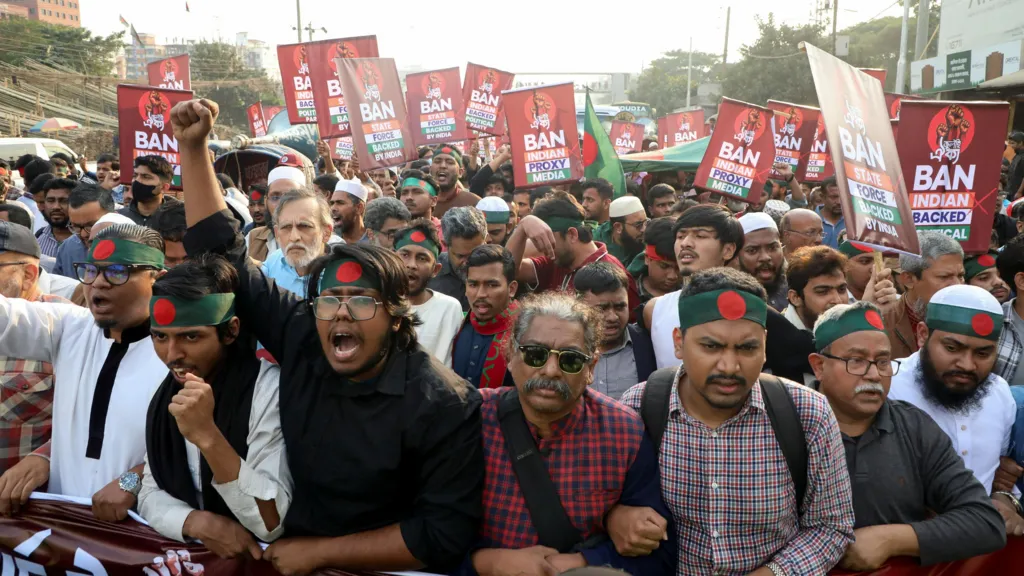
The university's walls and corridors are adorned with a mix of angry, humorous, and poetic graffiti, reflecting the sentiments of the July 2024 uprising that led to the downfall of Sheikh Hasina's 15-year rule. Hasina, who was once hailed as a pro-democracy champion, had reportedly become increasingly authoritarian, prompting her critics to speak out. Following her resignation, she relocated to India.
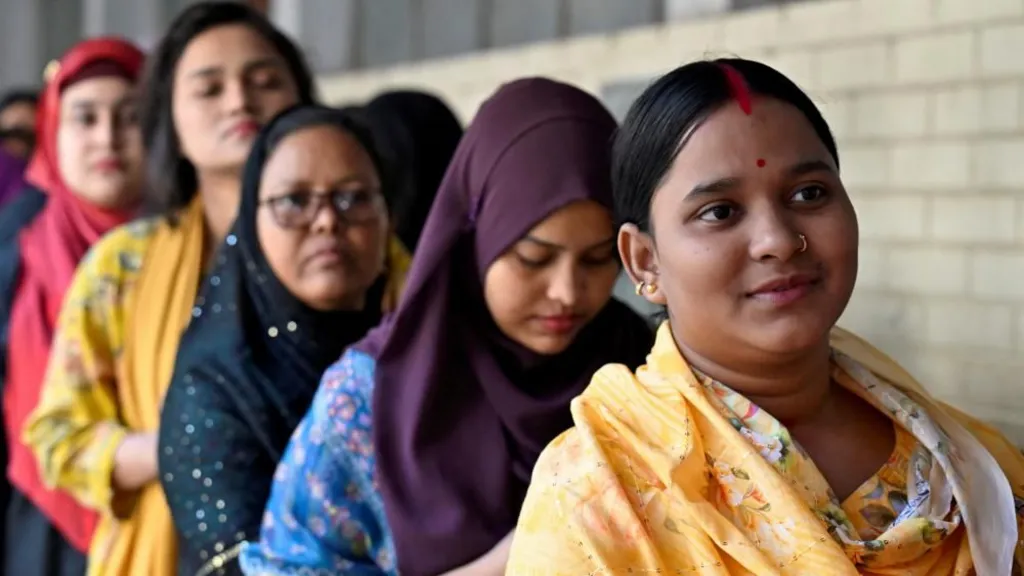
Students are engaged in lively debates about politics, gathering in small groups to discuss the issues of the day. A Chinese New Year celebration, marked by red lanterns on a lawn, is a subtle yet significant indicator of the country's complex relationships with major regional players, including China and India. For many young people, the upcoming election on 12 February will be their first opportunity to participate in a genuine democratic process.
In the aftermath of Sheikh Hasina's departure, Nobel Peace Prize winner Muhammad Yunus assumed a leadership role. Hasina currently resides in exile in India, which has declined to extradite her to face a death sentence handed down in absentia for her alleged role in the violent security crackdown of 2024. According to the UN, this crackdown resulted in the deaths of approximately 1,400 people, with the majority of fatalities attributed to security forces.
The Awami League, Bangladesh's oldest party, which previously held around 30% of the popular vote, has been disqualified from participating in the election. Analysts suggest that the main opposition party, the Bangladesh Nationalist Party (BNP), is now positioning itself to fill the void left by the Awami League. Meanwhile, the prominent Islamist party, Jamaat-e-Islami, has formed an alliance with a new party that emerged from the student-led uprising.
The campus slogans, however, extend beyond domestic democratic concerns, increasingly shifting focus to issues beyond the country's borders.
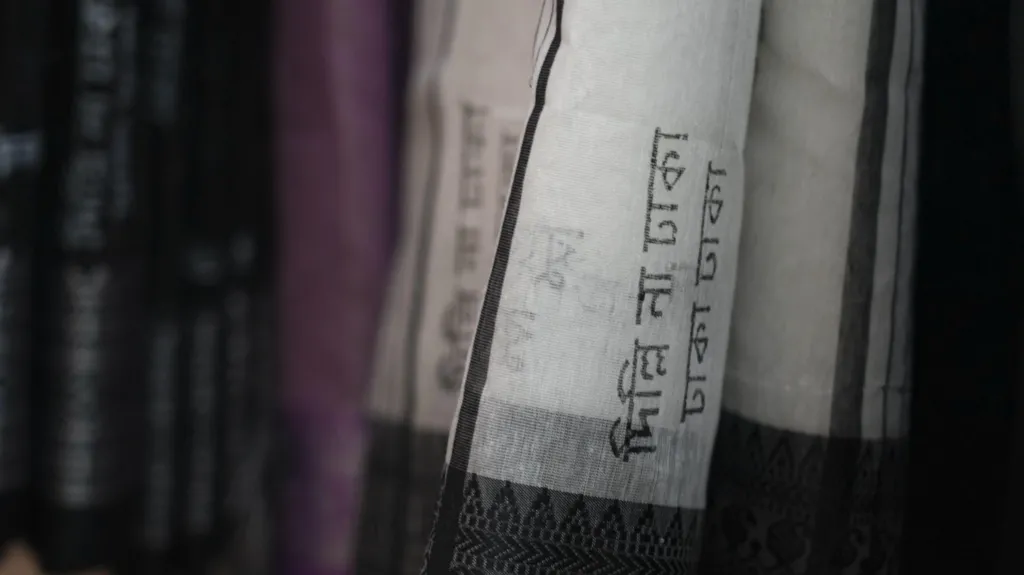
Graffiti and embroidered saris bearing the phrase "Dhaka, not Delhi" have become common sights, reflecting a growing sentiment among young people in Bangladesh. The term "hegemony" has also entered everyday conversation, symbolizing India's significant influence over Bangladesh.
According to Mosharraf Hossain, a 24-year-old sociology student, many young people in Bangladesh perceive India as having interfered in their country's affairs for years, particularly since the 2014 election, which was largely a one-party contest.
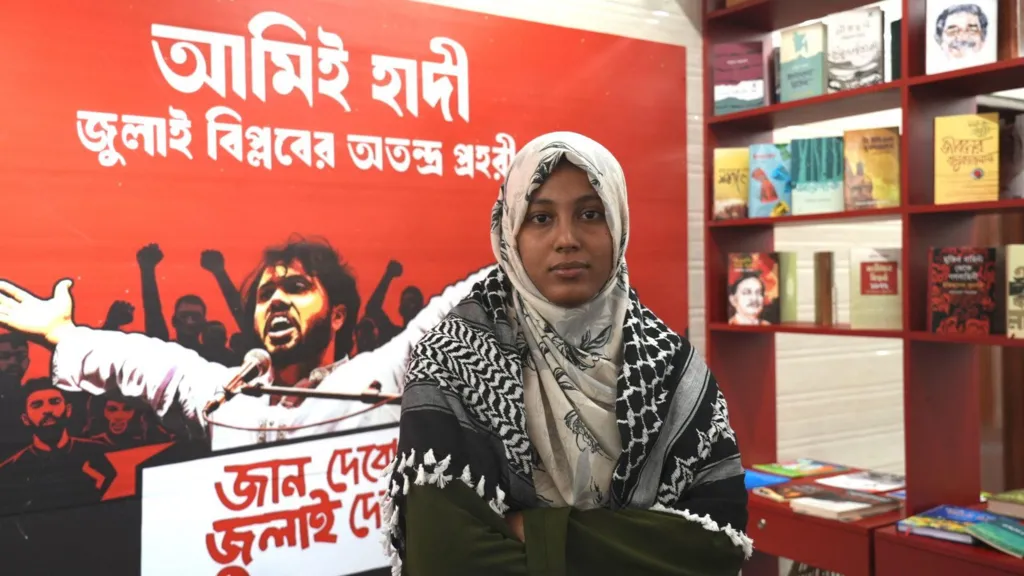
The widespread perception that India has contributed to Bangladesh's democratic decline has led to a significant increase in anti-Indian sentiment, causing a notable deterioration in India-Bangladesh relations, which were previously considered a model of regional diplomacy.
Avinash Paliwal, a professor of politics and international studies at SOAS University of London, attributes India's struggles in Bangladesh to the deep-seated anti-Indian sentiment prevalent in the country, as well as a shift in India's domestic political discourse towards a more hardened and often hostile stance towards its neighbour.
Criticisms have been leveled against Delhi for its perceived backing of Prime Minister Hasina's increasingly authoritarian rule in her later years, with some viewing India as an overbearing presence in the region. The disputed general elections of 2014, 2018, and 2024, which Delhi reportedly endorsed, have contributed to these sentiments.
According to Hossain, India's unwavering support for Hasina's regime, without applying any pressure or scrutiny, has led many to believe that India tacitly backed the erosion of democratic institutions in Bangladesh.
A deep-seated sense of disillusionment has taken hold, fueled by long-standing issues such as border violence, water-sharing disputes, trade restrictions, and provocative statements from Indian politicians and media outlets. This has given rise to a widespread perception that India regards Bangladesh not as an equal sovereign nation, but rather as a subordinate entity.
Allegations of wrongdoing by an Indian conglomerate that supplies electricity to Bangladesh have been widely reported in local media, despite the company's denial of any wrongdoing. Meanwhile, social media platforms like Facebook have become a hub for campaigns calling for a ban on a prominent daily newspaper accused of being an "Indian agent." The suspension of most visa services by both countries has further strained relations.
Recent decisions by Delhi, including the exclusion of a Bangladeshi cricket player from the Indian Premier League and the refusal to relocate Bangladesh's T20 World Cup matches from India to Sri Lanka, have exacerbated tensions and resentment in Bangladesh.
According to Paliwal, India maintains communication channels with various stakeholders in Bangladesh, but converting these interactions into favorable political results is difficult given the current political atmosphere.
The Indian capital has initiated efforts to expand its engagement with different groups.
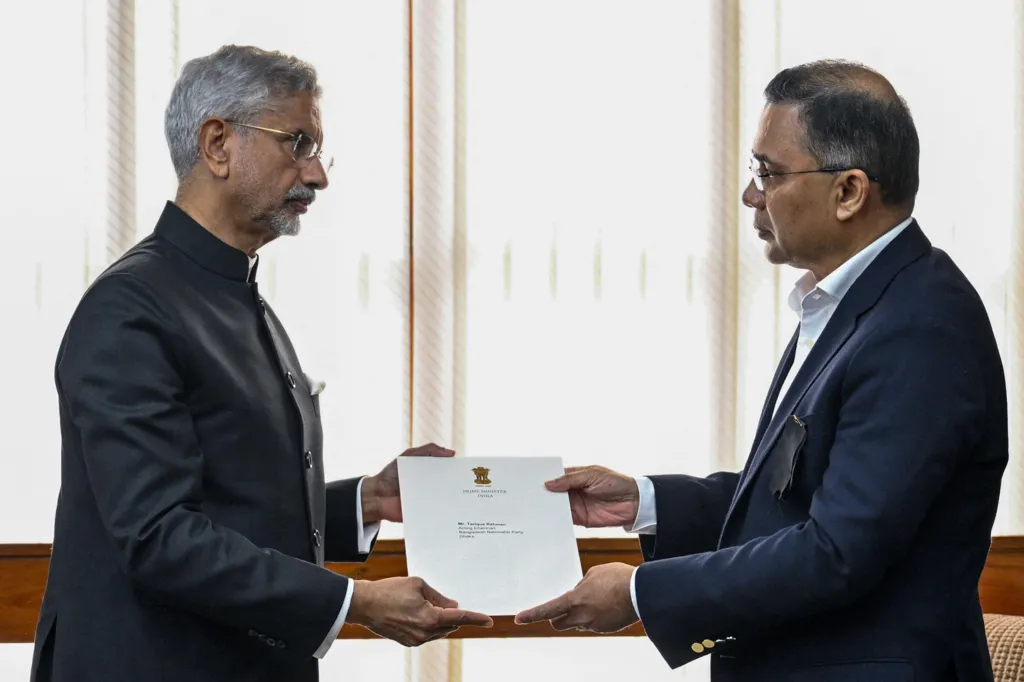
In a recent visit to Dhaka, Foreign Minister S Jaishankar attended the funeral of former Prime Minister Khaleda Zia, leader of the Bangladesh Nationalist Party, and took the opportunity to meet with the party's acting chairman, Tarique Rahman. After 17 years in exile in London, the 60-year-old Rahman has returned and is now a leading contender in the upcoming election.
India has also established communication with Islamist groups, with a senior Jamaat-e-Islami leader reporting that Indian officials have met with the party's leadership on four occasions over the past year, including an invitation to the Indian High Commission's Republic Day event at a hotel in Dhaka.
Despite these strategic adjustments, the overall downturn in relations persists, with Kamal Ahmed, consulting editor of The Daily Star, describing the current situation as the lowest point in the bilateral relationship, a sentiment he expressed in an interview with the BBC, surpassing even previous crises.
A notable difference can be observed when comparing the current situation to the period under Sheikh Hasina's leadership.
During her 17-year tenure, Dhaka had established significant cooperation with India across various sectors, including security, transit, trade, cultural exchange, and people-to-people connections. However, according to Ahmed, the current state of affairs is stagnant, with no progress in either people-to-people interactions or goodwill.
The turning point that transformed skepticism into outrage was India's reaction following Hasina's ousting in August of the previous year. Many in Bangladesh had anticipated that India would reassess its policy, which had largely focused on supporting a single party. Instead, India seemed to reinforce its stance by offering refuge to Hasina and imposing stricter visa and trade regulations. Ahmed notes that this move was perceived in Dhaka as a sign that Bangladeshis were not being valued as neighboring citizens.
The use of strong language has further exacerbated the situation.
Ahmed questions the impact of Indian politicians' statements, which have referred to Bangladeshi migrants as "termites" and suggested that Bangladesh should be taught a lesson, drawing comparisons to Israel's actions in Gaza, asking how such rhetoric could be expected to resonate with the people of Bangladesh.
In response to recent events, a backlash has emerged, with many calling for a boycott of Indian products and the cessation of IPL broadcasts, fueled by growing discontent. According to Ahmed, a key principle is at play: "Culture, trade, and respect are reciprocal," he notes, criticizing the current Indian leadership for not adhering to this principle.
However, officials in Dhaka advise against viewing the relationship between the two countries solely through the lens of crises, suggesting a more nuanced approach is necessary.
Shafiqul Alam, press secretary to Yunus, characterizes the relationship with India as complex and multifaceted, with geographical and political factors at play. He highlights the shared history, language, and geography of the two nations, including the 54 rivers and 4,096km border, which facilitates significant trade and daily movement.
Nevertheless, Alam acknowledges that public opinion in Bangladesh has undergone a significant shift, with many citizens expressing increased dissatisfaction.
When asked about the restrictions on free elections in Bangladesh for over 15 years, many Bangladeshis point to the authoritarian rule of Sheikh Hasina and suggest that India has supported her regime. Alam notes that this perception is widespread, with many believing that India's backing has been a key factor in Hasina's enduring power.
The 2024 violence led to Hasina's departure for India, a move that continues to be a source of contention.
Alam references the significant number of young people killed during the unrest, followed by Hasina's flight to India, which was perceived as a gesture of diplomatic courtesy rather than an acknowledgment of her role in the crisis, further exacerbating public outrage.
Alam expresses dissatisfaction with the Indian media's coverage, characterizing it as sensationalized and misrepresenting isolated incidents as widespread religious violence, while acknowledging that such incidents do occur; he invites Indian journalists to visit and witness the situation firsthand.
According to India, independent sources have recorded over 2,900 incidents of violence targeting minorities, including fatalities, arson, and land seizures, during the interim government's term, arguing that these incidents cannot be entirely attributed to media hyperbole or political violence.
Ali Riaz, a scholar and special assistant to Yunus, suggests that the rift between the parties stems from a more profound issue than a simple misunderstanding.
According to his assessment, the relationship has hit rock bottom. He suggests that over time, interactions between Bangladesh and India have become limited to exchanges between a single party or individual and the Indian establishment, rather than a broader bilateral connection.
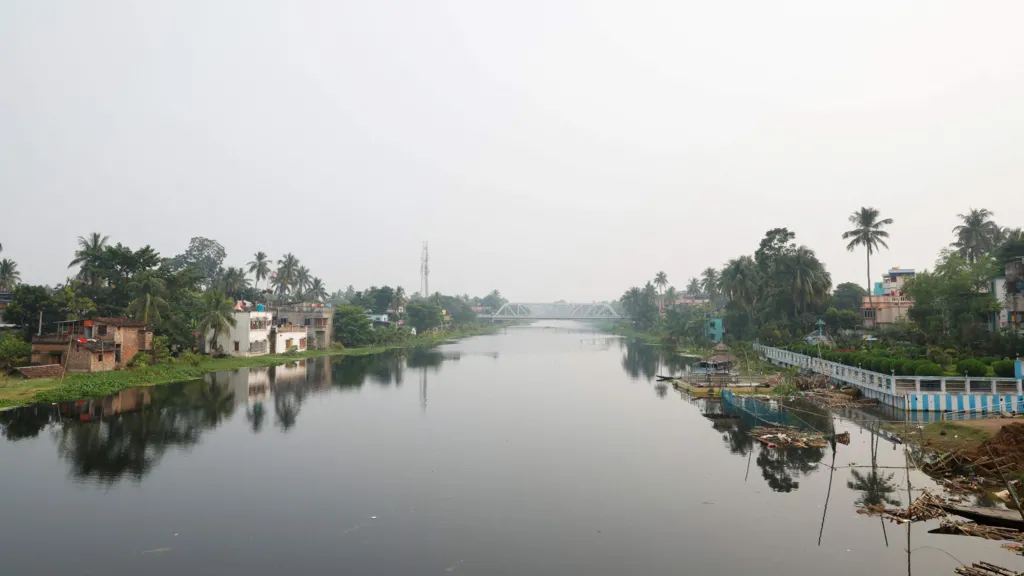
Riaz points to long-standing disputes as a major contributor to the strain. The issue of water sharing, in particular, creates a power imbalance, as control over this resource can lead to an unequal dynamic in the relationship.
The killing of Bangladeshis at the border has further exacerbated tensions. This issue is perceived as a reflection of how the Indian establishment values the lives of Bangladeshi citizens. India has maintained that its forces were not responsible for any unlawful killings in specific incidents along the border.
Analysts view these problems as systemic issues, rather than isolated incidents, and see them as indicative of a deeper imbalance in the relationship.
Critics argue that this imbalance was exacerbated after Hasina's departure from power. Mohammad Touhid Hossain, who serves as foreign affairs adviser to Yunus, notes that India missed an opportunity to recalibrate its approach when dealing with the interim government. He recalls that Bangladesh made several attempts to move forward, but India's response was inconsistent, alternating between engagement and disengagement.
India has expressed concerns about the worsening security situation in Bangladesh, emphasizing the need for elections that are peaceful, free, fair, inclusive, and credible.
The current political tensions are also affecting economic relations between the two countries. According to Fahmida Khatun, a researcher at the Centre for Policy Dialogue, bilateral trade, which currently stands at $13.5 billion, has the potential to increase significantly if trade barriers are reduced and diplomatic relations are strengthened. Khatun notes that political tensions have led to economic strain.
However, the increasing tensions at the government level do not necessarily reflect the dynamics on the ground.
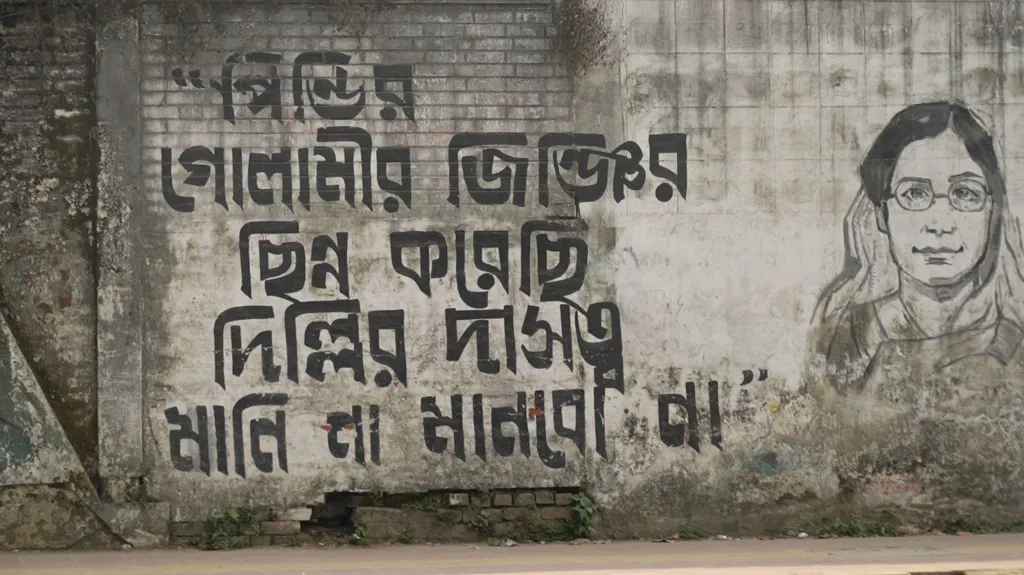
Fatima Tasnim Juma, a member of the cultural organization Inquilab Mancha, which is known for its nationalist and anti-India stance, says, "Whenever I think of India, I view it as an adversary."
Nevertheless, Juma's personal experience tells a different story. Having grown up in a predominantly Hindu area, she has seen relatives move freely across the border, highlighting the complexity of the issue. Juma clarifies that her opposition is directed towards the Indian government and its institutions, rather than the Indian people themselves.
The issue of anti-Indian sentiment has been relatively muted in recent campaigns, not due to a decline in its presence, but rather because all political candidates acknowledge the inevitability of re-establishing relations with India.
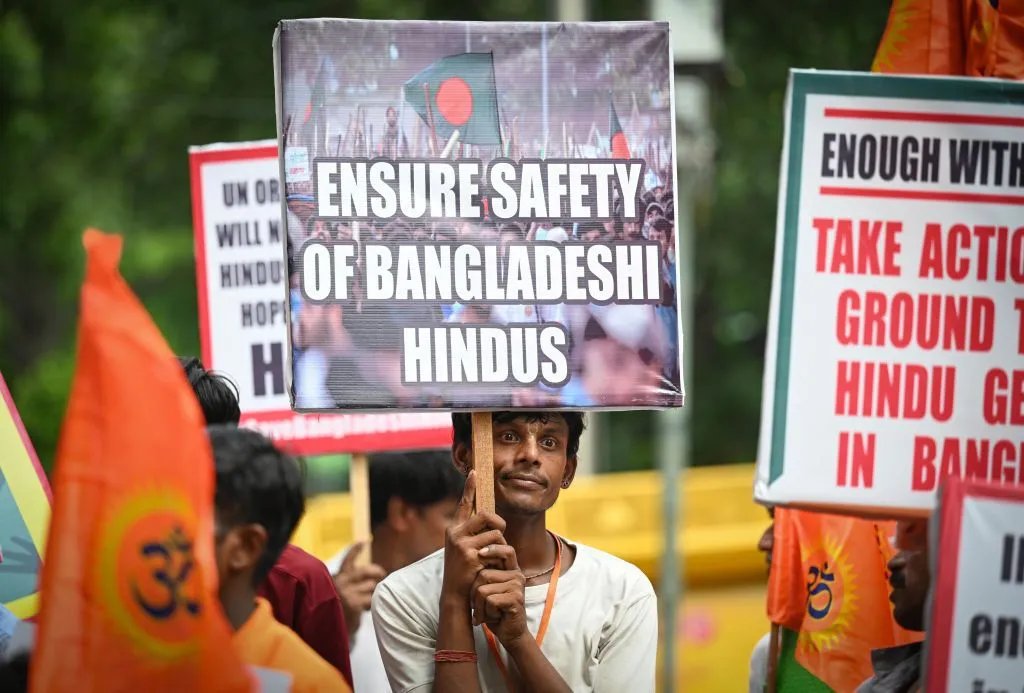
The process of mending India-Bangladesh relations is expected to be a lengthy and complex one, rather than a superficial or rapid fix.
According to Alam, a simple change in government or the presence of an election will not be enough to facilitate a reset, as underlying issues will persist and continue to pose a challenge.
While the rift between the two nations is significant, it is not insurmountable, notes Riaz, who believes that the onus of repairing the relationship falls primarily on India, and will require a shift away from relying on select intermediaries to manage its interactions with Dhaka; Ahmed concurs that Bangladesh is willing to work towards normalizing ties, but emphasizes that India must be willing to adapt its approach to accommodate whichever party holds power in Bangladesh.
Politicians often discuss the prospect of a reset in terms that are as much about ethics as they are about strategy, highlighting the multifaceted nature of the issue.
According to Mahdi Amin, a close adviser to BNP leader Rahman, a nation's size is directly proportional to its responsibilities, emphasizing the importance of shouldering obligations that come with growth.
Mahdi Amin believes that fostering people-to-people connections between India and Bangladesh requires a policy shift, one that prioritizes the needs and desires of the Bangladeshi population, rather than solely catering to governmental interests.
Ahsanul Mehboob Zubair, assistant general secretary of Jamaat-e-Islami, strikes a similar note, suggesting that a productive relationship between the two countries can be achieved if leaders approach each other with genuine intentions, acknowledge current realities, and demonstrate mutual respect.
There is still an opportunity for improvement, and the emergence of a new government could potentially be a turning point.
Analyst Paliwal observes that the present state of affairs is characterized by a significant downturn in diplomatic relations, yet stops short of being a complete breakdown in the relationship's foundational structure.
The proximity and historical ties between India and Bangladesh, coupled with their common cultural legacy, make it impractical for the two nations to disregard their relationship.
Asia
Emergency call recording reveals boy’s heroic swim to save family
A 13-year-old boy, Austin Appelbee, took action to secure assistance for his mother and siblings when they were pulled out into the ocean.
An audio recording has been made public by authorities, capturing a distress call made by a 13-year-old Australian boy who swam for an extended period to seek assistance for his family after they were caught in a strong current at sea in early February.
During the call, the boy, identified as Austin Appelbee, informs emergency services that his brother, Beau, 12, sister, Grace, eight, and their mother remain in the water, awaiting rescue.
Austin expresses concern for his family's well-being, stating that he is unsure of their current condition, which is causing him significant distress.
The teenager also reports feeling severely exhausted, a result of his prolonged and physically demanding effort to reach shore and call for help.
Following the call, Austin lost consciousness and was hospitalized, where he later received news that his mother, brother, and sister had been rescued approximately 14 kilometers offshore and were in good health.
Asia
Australian opposition leader faces pressure after key staff member quits
The departure of a high-ranking colleague has created an opportunity for a potential challenge to Sussan Ley, who holds the distinction of being the first female leader of the Liberal party.
Sussan Ley, the first female leader of the Liberal Party, is facing renewed scrutiny following the departure of Angus Taylor, her shadow defence minister, from the party's leadership team.
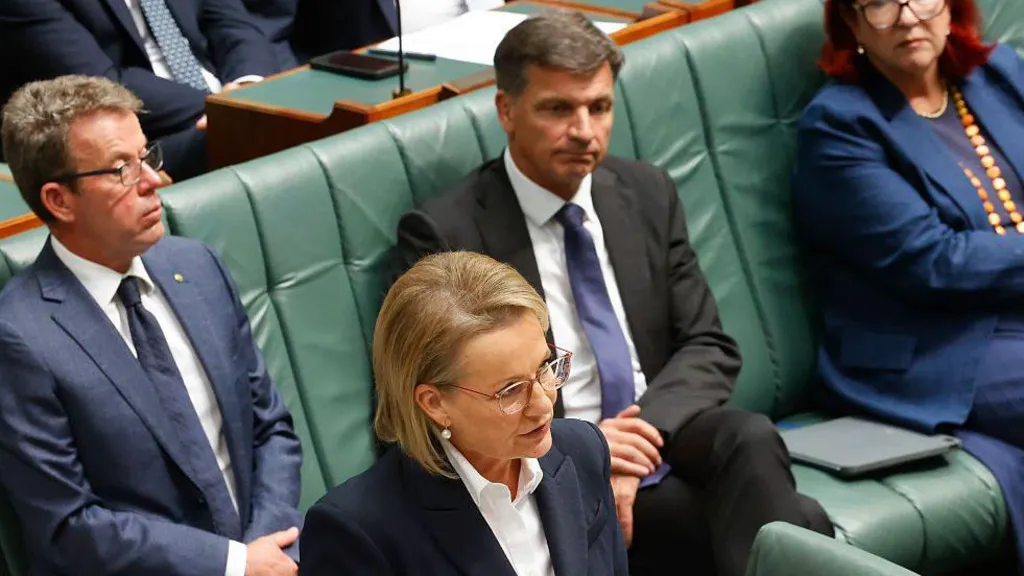
Taylor's resignation is expected to pave the way for a potential challenge to Ley's leadership, with local media outlets suggesting he has been quietly working to unseat her for some time.
Ley's tenure has been marked by struggles, including a narrow victory over Taylor in a leadership contest last year, which was held in the aftermath of the party's worst-ever electoral performance.
The Liberal-National coalition, a partnership that dates back to the 1940s, has experienced significant instability under Ley's leadership, having split and reunited twice during her tenure.
On Wednesday, Taylor, a member of the party's conservative faction, announced his resignation from the leadership team, citing his commitment to continuing to serve the Liberal Party.
In a statement to reporters, Taylor expressed his disappointment with the party's inability to hold the current Labor government accountable, emphasizing the need to protect Australians' way of life and restore their standard of living.
Taylor stated that he does not believe Ley is capable of leading the party effectively, citing the need for a change in leadership.
It remains to be seen whether Taylor's allies within the shadow cabinet will follow his lead and resign from their positions.
Local media reports suggest that Taylor's supporters are planning to request a special party meeting to consider a spill motion, which would allow the party to reconsider its leadership.
If Taylor were to succeed in his bid for leadership, it would bring an end to the ongoing speculation surrounding Ley's tenure, which has been marred by uncertainty.
The coalition's most recent split, which occurred in January, was followed by a reunification just days ago, after a dispute over hate speech laws, which Ley had supported in the wake of the Bondi Beach attack in December.
At the time of the initial split, Nationals leader David Littleproud explicitly stated that his party could not continue to serve in a shadow cabinet under Ley's leadership.
Recent polling data has shown the One Nation party, which secured 6% of the national vote in the previous election, surpassing the Coalition to take second place behind Labor, while Ley's personal approval ratings remain low.
The coalition has yet to reach a consensus on the factors that contributed to its decisive election loss to Labor, which saw the Liberals suffer significant losses in major cities.
In the aftermath of the election, the coalition briefly split over disagreements on climate and energy policy, including its commitment to achieving net-zero emissions by 2050, a policy that the Liberals later abandoned under pressure from the Nationals and their own right-wing faction.
The Nationals, which have a strong presence in rural areas and tend to lean more conservative than the Liberals, have been pushed further to the right in response to the surge in support for the One Nation party, according to political analysts, who note that this shift may hinder the Liberals' ability to appeal to centrist voters in urban areas.
Asia
India sets 3-hour deadline for social media firms to remove illegal content
Concerns have been raised that the regulations may pose a difficulty for tech companies in terms of compliance and potentially lead to increased censorship.
In a significant update to its existing regulations, India has implemented new rules requiring social media companies to delete unlawful content within a three-hour window after being notified, a substantial reduction from the previous 36-hour timeframe.
These revised guidelines, set to come into effect on February 20, will apply to prominent platforms such as Meta, YouTube, and X, as well as content generated using artificial intelligence.
The government has not provided a specific reason for shortening the deadline for removing objectionable content.
Critics, however, are concerned that this move may be part of a broader effort to increase oversight of online content, potentially leading to censorship in a country with over a billion internet users, which is the world's largest democracy.
In the past, Indian authorities have utilized existing Information Technology rules to direct social media platforms to remove content deemed illegal under laws related to national security and public order, granting them broad authority over online content.
According to transparency reports, Indian authorities requested the removal of more than 28,000 URLs or web links in 2024, which were subsequently blocked.
The BBC has sought comment from the Ministry of Electronics and Information Technology regarding the latest amendments, while Meta has declined to comment; the BBC has also reached out to X and Google, the owner of YouTube, for their response.
The updated regulations also introduce new guidelines for AI-generated content, marking a significant development in the country's approach to regulating online material.
For the first time, Indian law defines AI-generated content, including audio and video that has been created or altered to appear realistic, such as deepfakes, while excluding ordinary editing, accessibility features, and genuine educational or design work.
Platforms that allow users to create or share AI-generated content must clearly label it, and where possible, add permanent markers to facilitate tracing its origin.
Once labels are added to AI-generated content, companies will not be permitted to remove them; furthermore, they must utilize automated tools to detect and prevent the dissemination of illegal AI content, including deceptive or non-consensual material.
Technology experts and digital rights groups have expressed concerns regarding the feasibility and implications of the new regulations.
The Internet Freedom Foundation has stated that the shortened timeline will effectively transform platforms into "rapid fire censors," highlighting the potential risks associated with the updated rules.
The group has argued that the extremely short deadlines will eliminate the possibility of meaningful human review, forcing platforms to rely on automated removals, which may lead to over-removal of content.
Anushka Jain, a research associate at the Digital Futures Lab, has welcomed the requirement for labeling AI-generated content, suggesting that it could enhance transparency; however, she has also cautioned that the three-hour deadline may push companies towards complete automation.
Jain has noted that companies are already struggling to comply with the 36-hour deadline due to the need for human oversight, and that a fully automated process may result in the censorship of legitimate content.
Prasanto K Roy, a Delhi-based technology analyst, has described the new regulations as "perhaps the most extreme takedown regime in any democracy," highlighting the challenges associated with compliance.
Roy has stated that meeting the new requirements will be "nearly impossible" without extensive automation and minimal human oversight, as the tight deadline leaves little room for assessing the legitimacy of removal requests.
Regarding the labeling of AI-generated content, Roy has acknowledged the positive intention behind the regulation but has also noted that reliable and tamper-proof labeling technologies are still in development.
The BBC has requested a response from the Indian government regarding the concerns raised by technology experts and digital rights groups.
-
 News11 hours ago
Australian Politics Faces Questions Over Gender Equality Amid Sussan Ley’s Appointment
-
 News8 hours ago
Farage Says Reform to Replace Traditional Tory Party
-
 News8 hours ago
Wrexham Pair Seek Win Against Former Team Ipswich
-
 News13 hours ago
Liberal Party Removes Australia’s First Female Leader
-
 News11 hours ago
UK Braces for Cold Snap with Snow and Ice Alerts Expected
-
 News8 hours ago
Husband’s alleged £600k theft for sex and antiques blamed on drug side effects
-
 News2 days ago
Sunbed ads spreading harmful misinformation to young people
-
 Business14 hours ago
BBC Reporter Exposed to Cyber Attack Due to Vulnerabilities in AI Coding Tool