
News
Arundhati Roy’s Iconic Film Remains a Timeless Reflection of India Today
Approximately four decades later, a film adaptation of the Booker prize-winning author’s first novel, a campus satire, is scheduled to be shown in Berlin.
In the sweltering Delhi afternoons of the late 1980s, a group of architecture students would often congregate, engaging in intense discussions and daydreams as they navigated a city that seemed perpetually under construction.
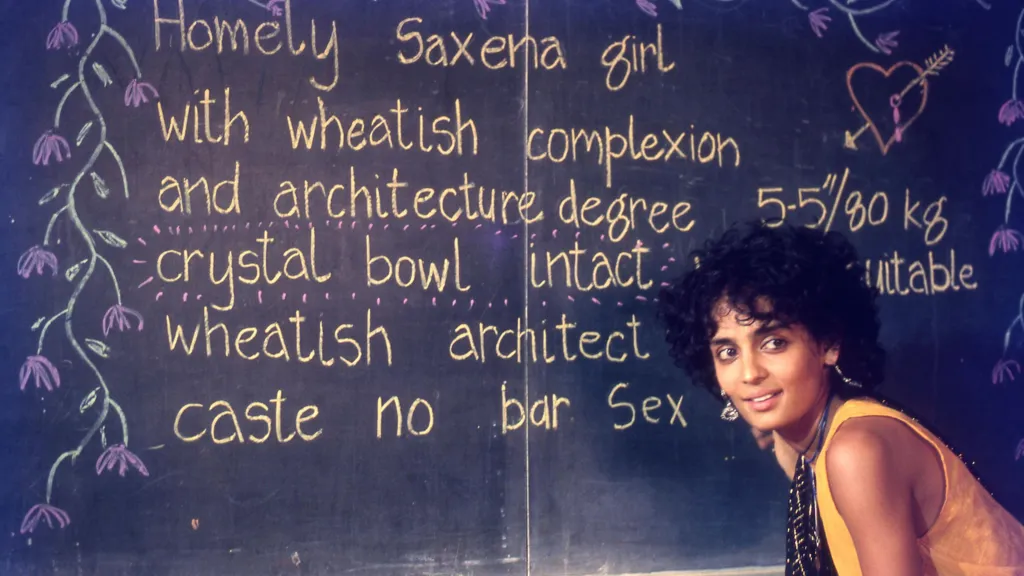
These students were characterized by their idealism and impatience, often expressing themselves through witty one-liners and sarcasm, while also being keenly aware that the professional world they were entering might not have a place for them.
This is the backdrop for the 1989 television film "In Which Annie Gives It Those Ones," penned by acclaimed author Arundhati Roy and directed by Pradip Krishen.
Nearly four decades after its initial broadcast on India's state-run Doordarshan, a restored version of the film is set to make its global debut at the Berlin International Film Festival's Berlinale Classics section in 2026.
The Film Heritage Foundation, which oversaw the restoration, plans to release the film in select Indian theaters in March, with ticket prices kept low to attract a younger audience.
According to Shivendra Singh Dungarpur, filmmaker and Director at the Film Heritage Foundation, "Our goal was to make the film accessible to everyone, as it holds significant cultural value, evident in its dialogue, portrayal of college life, and character development, all of which achieved something unique."
Often regarded as India's first English-language feature film, "Annie" occupies a distinct position in the country's cinematic history, blending local flavors with a cosmopolitan voice, and modest production values with exacting writing standards.
Produced on a limited budget, the film follows a group of final-year students at Delhi's School of Planning and Architecture as they meander through their academic journey, often finding themselves at a crossroads.
The film's title is derived from a colloquialism used by Delhi University students, where "giving it those ones" refers to performing one's usual routine, complete with all the accompanying mistakes.
At the film's center is Anand "Annie" Grover, a charming yet distractible fifth-year student torn between his idealistic aspirations and chronic procrastination.
Annie's hostel room is home to a few hens, and he spends his time concocting grandiose schemes to transform India, including a plan to plant trees along railway tracks using waste from passing trains as fertilizer; four years prior, he had scribbled a crude joke about the dean in the men's toilet, and has failed every exam since.
Surrounding Annie is a diverse group of classmates, each with their own distinct personality, engaging in intense debates about topics ranging from the works of Le Corbusier and Karl Marx to the price of cigarettes, all with equal passion and seriousness.
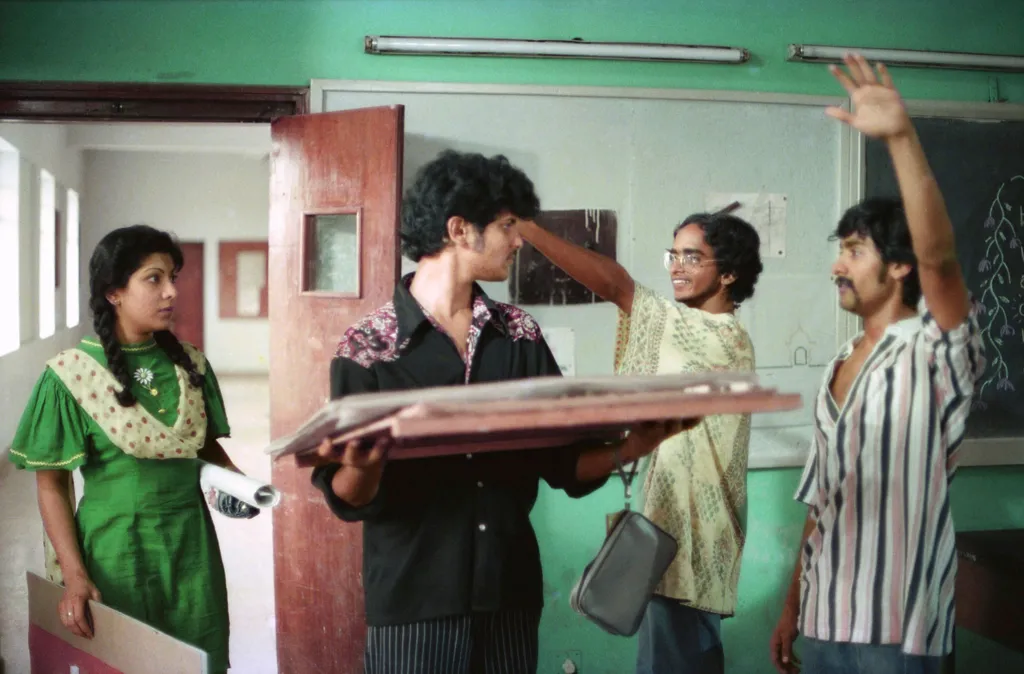
Arundhati Roy makes a appearance in the film as Radha, a sharp and confident character, while a young Shah Rukh Khan also features in the ensemble cast, marking his screen debut.
One of the standout aspects of "Annie" is its candid and unvarnished portrayal of student life, capturing the messy hostel rooms, friends lounging on charpoys and engaging in heated discussions, and the general irreverence towards authority that defined the era.
The students in the film often mock the institutional rituals and openly ridicule their principal, referring to him as Yamdoot, the Hindu god of death, who addresses them condescendingly as "My dear donkey."
Radha, played by Roy, embodies the film's carefree and defiant spirit, often smoking beedis and dressing boldly, capturing the essence of the campus's free-spirited energy.
In her memoir "Mother Mary Comes to Me," Roy reflects on how the script was influenced by the "wacky anarchy" of the campus, the "stoned, bombed-out students," and the unique dialect of English that blended Hindi and English.
The response to the film was overwhelmingly positive, with Roy recalling that at its first screening in Delhi, the audience was completely enthralled, recognizing themselves in the characters, language, and humor.
The initial screening saw students packing the hall, laughing, cheering, and whistling along with the film, as they saw their own lives and experiences reflected on screen.
Beyond its campus setting, "Annie" captures a moment in Indian cinema and state broadcasting where there was a greater degree of freedom to explore youth culture, language, and social critique.
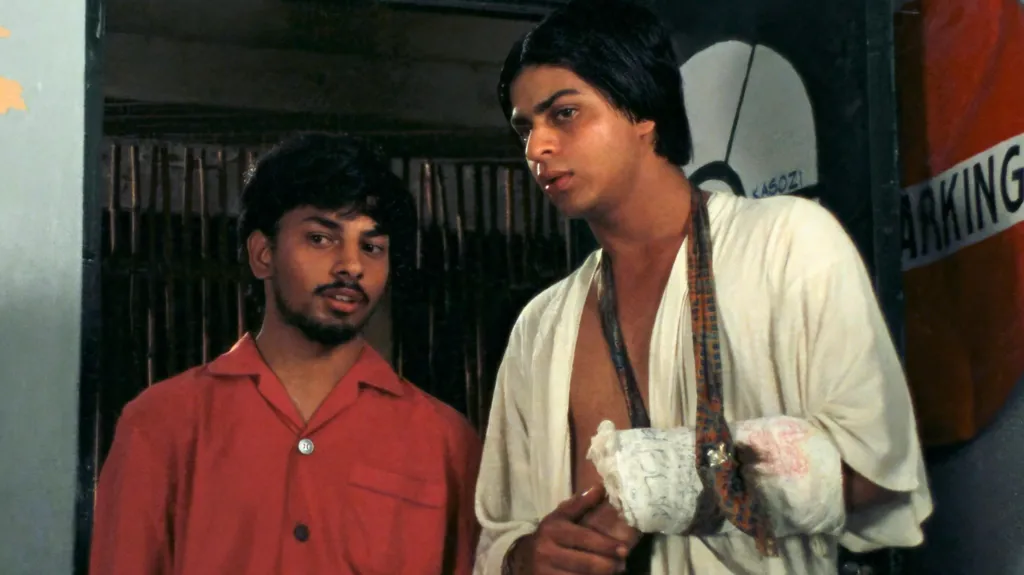
In the late 1980s, television programming allowed for more satire and exploration of student life than it does today, while films that challenged social norms or institutions often faced censorship in the decades that followed.
Upon its release, "Annie" won two National Awards, for best screenplay and best English-language feature, but largely disappeared from public view after its initial television premiere on Doordarshan.
Despite this, the film's reputation continued to grow quietly over the years.
Bootleg recordings of the film circulated among architecture students and film enthusiasts, who came to regard it as one of the few credible English-language Indian films of its time.
As Dungarpur noted, "Nobody had really made a film about English-speaking students in India before, and audiences weren't used to hearing English spoken so casually, but that's how students in some colleges communicate with each other, and 'Annie' captured that without pretension."
He adds that the film also resonated with audiences because it tapped into the mood of a country on the cusp of economic liberalization, where a government job represented both security and stagnation, and the debates about hierarchy, bureaucracy, and institutional power remain relevant today.
According to Dungarpur, "The issues the film addresses are still prevalent, which is why it continues to resonate with audiences; it hasn't become dated in the way one might expect."
The restoration of the film began almost by chance, when director Pradip Krishen stumbled upon trunks of scripts and papers while moving house, and was about to discard them before a friend alerted Dungarpur, who retrieved the material and later proposed restoring the film.
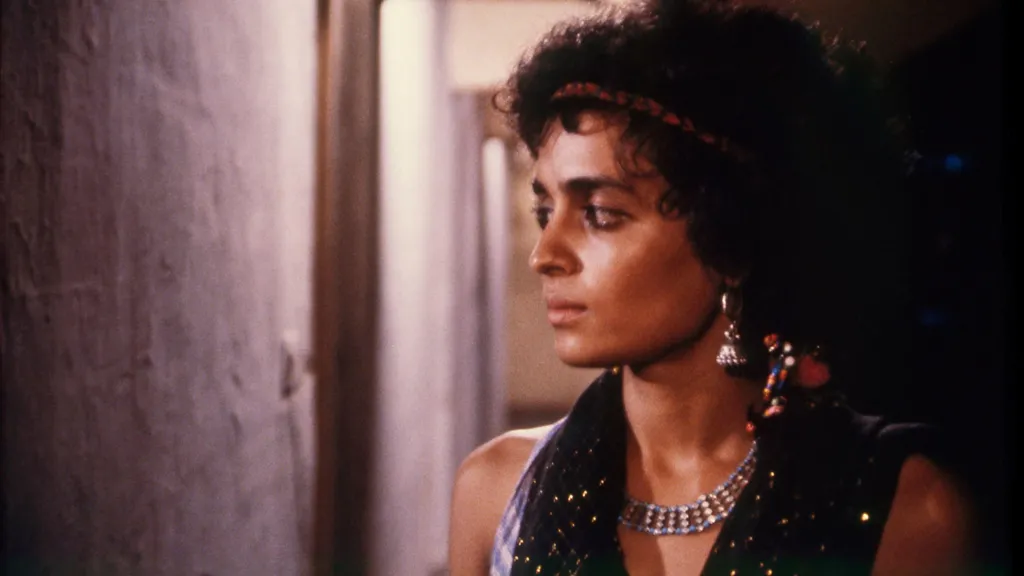
The restoration process required meticulous and painstaking effort, as the colors had faded and the soundtrack posed significant challenges.
As Dungarpur recalled, "There's a scene where Arundhati Roy is wearing a red sari, but in the surviving print, the red had almost disappeared, so we had to figure out what kind of red it was originally."
Viewing "Annie" today, it's striking to see how the film serves as a precursor to Roy's later life as a celebrated novelist and one of India's most polarizing writers, and yet, the film itself is marked by a lighthearted and playful tone that belies her later reputation.
As Roy has stated in a recent interview, the film's dissent lies not in its slogans, but in its tone, which is characterized by a sense of hope and celebration rather than anger.
According to Krishen, "The students in the film were rebelling, but with a sense of hope and joy, not anger; the film is about people finding happiness in being themselves and refusing to conform."
As the film returns to the screen, younger viewers may catch a glimpse of a bygone era, with its flared trousers, drafting tables, and cigarette smoke wafting under fluorescent lights.
However, they may also recognize the persistence of the very systems the film gently satirizes, which remain relevant today.
As Dungarpur noted, "Younger viewers will see how cool that time was, but they'll also see how much of it feels familiar, and that's what makes the film so enduring."
News
England Faces Murrayfield Test as New Era Begins
England enter the match with significant momentum, while Scotland are looking to rebound from a difficult experience, yet the rich history of rugby’s oldest Test fixture between the two nations is unavoidable.
Finn Russell is one of only two players from Scotland's matchday 23 that defeated England at Murrayfield in 2018 who will be involved in the upcoming match.
A single pass changed the course of the game, leaving England's defence reeling and redefining the trajectory of the match.
Prior to 2018, Scotland had not beaten England at home in 10 years and had failed to score a try against them at Murrayfield in 14 years.
The historical record between the two teams was even more dismal for Scotland, with only three wins in their previous 29 meetings.
The oldest international rugby fixture was beginning to show signs of fatigue, with the rivalry losing some of its luster.
However, 31 minutes into the 2018 Calcutta Cup match, Russell unleashed a long, looping pass that caught England's defence off guard, allowing Huw Jones to break through and create a scoring opportunity.
The resulting try, scored by Sean Maitland, marked a turning point in the match and sparked a new era of competitiveness between the two teams.
Scotland went on to win the match 25-13, and since then, England have struggled to regain the upper hand, winning only two of their last eight meetings.
The two teams will meet again on Saturday, 14th February at 16:40 GMT.
The match will take place at Scottish Gas Murrayfield.
Live commentary will be available on BBC Radio 5 Live, BBC Radio Scotland, BBC Sounds, and the BBC Sport website and app.
What was once a relatively easy win for England has become a challenging benchmark that they have struggled to reach in recent years.
As soon as the Six Nations schedule was released, England's trip to Murrayfield was identified as a crucial match that could make or break their title aspirations.
Despite their past struggles, England are currently on a 12-match winning streak and are focused on the future, rather than dwelling on past defeats.
They have developed a strong squad with significant depth, which has allowed them to overcome injuries and other setbacks.
England's centre position, once a concern, is now a strength, with Ollie Lawrence available but not selected for the matchday 23.
Joe Heyes has established himself as a high-quality tight-head prop, allowing England to absorb the loss of Will Stuart to injury.
Flanker Tom Curry, a key player for England, will start on the bench.
England have a number of options available, and their momentum is building, but they still have some doubts to address, particularly in regards to their ability to win away from home.
Captain Maro Itoje returns to the England starting XV to face Scotland.
George Ford has been working to maintain his fitness and stay competitive at fly-half, even at the age of 32.
The rivalry between Scotland and England is not just about the current teams, but also about developing the next generation of players.
England's winning streak has been built on some close victories, including a win over France in last year's Six Nations that was aided by French errors.
Their one-point win over Scotland in the same tournament could have gone either way, with Finn Russell missing a late conversion attempt.
England's autumn campaign included wins over Italy and Wales, as well as a two-Test series victory over Argentina, but the Pumas were not at full strength.
England's win over New Zealand was a highlight of their autumn campaign, but the All Blacks were not at their best, having recently changed coaches.
England's current run has been built largely on home wins, and they now face a challenge in breaking their away losing streak against Scotland.
If they fail to win, their upcoming away matches against France and South Africa will become even more daunting.
England's team includes some relatively inexperienced players, such as Henry Arundell and Tommy Freeman, who will face a tough test against Scotland.
Guy Porter, with only eight caps, will be targeted by Scotland's experienced flanker Jamie Ritchie.
Luke Cowan-Dickie's line-out throwing has been inconsistent, and England's replacements did not have the desired impact against Wales last week.
These are minor concerns, but England will still need to address them if they are to overcome Scotland.
In contrast, Scotland are dealing with more significant issues, including a recent defeat to Italy that has raised questions about the team's future.
However, Scotland still have some experienced players, including Finn Russell and Huw Jones, who were part of the team that beat England in 2018.
These players will be looking to draw on their past successes to inspire their team to victory.
Russell and Jones are the only two players from the 2018 matchday 23 who will be involved in the upcoming match, and England will need to find a way to break their link to the past.
England must find a way to overcome the historical significance of the match and the experience of Scotland's key players.
This video is not available to play.
Former England player Chris Ashton's team selections have been met with surprise by some, including Scotland's John Barclay.
The Sport's Strangest Crimes podcast explores the "Bloodgate" scandal and other unusual stories from the world of sport.
The most recent episode of the Rugby Union Weekly podcast is now available to stream.
News
FA Cup Victory Proves Memorable and Coaching Ronaldo Presents No Difficulty
Roberto Martinez, the manager of Portugal’s national team, engages in a conversation with Kelly Somers, discussing his experiences and career in the sport of football.
A new series, The Football Interview, has been launched, featuring in-depth conversations between host Kelly Somers and prominent figures from the sports and entertainment worlds, exploring the nation's passion for football.
The series delves into the minds of its guests, discussing their motivations, career highlights, and personal reflections, providing a unique glimpse into the lives of football's most notable personalities.
New episodes of The Football Interview will be available on weekends via BBC iPlayer, BBC Sounds, and the BBC Sport website, with this week's episode airing on BBC One at 00:15 GMT on Sunday, 15 February, and following Sportscene in Scotland.
———————————————————
When Roberto Martinez joined Wigan in 1995, it is unlikely that he envisioned himself leading the team to FA Cup victory nearly two decades later.
However, that is precisely what transpired, as Martinez masterminded Wigan's 1-0 win over Manchester City in the 2013 FA Cup final.
That same season, Wigan was relegated from the Premier League, and Martinez soon left to manage Everton, a position he held for three years before being sacked.
Since then, Martinez has gone on to manage at the international level, first with Belgium and currently with Portugal, a role he has held since January 2023.
Under Martinez's guidance, Portugal secured its second Nations League title by defeating Spain, and he has been reflecting on his experiences in the sport.
Tragedy struck the Portuguese team less than a month after their Nations League victory, as forward Diogo Jota and his brother Andre Silva were killed in a car accident in northern Spain, prompting Martinez to express his desire to honor Jota's memory.
In an extended conversation with Kelly Somers, Martinez discussed various topics, including his FA Cup win, his time managing Belgium's 'golden generation,' and his personal decision to abstain from alcohol.
This video can not be played
Martinez shares his thoughts on club versus country and his experience managing Belgium's 'golden generation'
Kelly Somers: Let's begin with your introduction to football. What drew you to the sport?
Roberto Martinez: For me, football was a way of life, having grown up in a family that was deeply passionate about the game. My father was a coach, and I would often attend team talks and be present in the dressing room, which became a comfortable environment for me.
Kelly: Was the local team where you first played organized football?
Roberto: Yes, I started playing for a local team at the under-nines level. In Spain, we played futsal in school on Fridays and football on Saturdays.
Kelly: At what point did you realize you had the potential to make a career out of football?
Roberto: At 16, I knew I had to take my football to a more professional level. I moved to Zaragoza, where I studied and played football, and my parents would visit me on weekends to watch me play.
Kelly: Looking back on your career, which club do you feel was the most successful or enjoyable for you?
Roberto: Each club presented unique challenges and experiences. When I arrived in the UK in 1995, the Bosman ruling had just been introduced, and I was one of the first three Spaniards to play in the country.
Kelly: You were part of the infamous 'Three Amigos,' weren't you?
Roberto: Yes, we were. I've always been open to new experiences and challenges. When the opportunity arose to move to the UK without speaking English, my response was, 'Why not?'
Kelly: You didn't speak any English when you first arrived?
Roberto: No, I didn't. On my first day at Wigan, the press officer asked me to speak to the local media, but I had to decline due to my language barrier.
Martinez holds the FA Cup trophy alongside matchwinner Ben Watson after Wigan's historic win over Manchester City in 2013
Kelly: Let's discuss the 2013 FA Cup final, which remains one of the greatest upsets in the competition's history. How do you reflect on that achievement?
Roberto: I feel immense pride, as it was a testament to the fact that dreams can come true in the FA Cup. We were the underdogs, but we performed well and deserved the win.
Kelly: When did you realize you wanted to become a manager?
Roberto: I've always been drawn to management, largely due to my father's influence. I found it fascinating and believed it was the best way to make a meaningful impact on the game.
Kelly: Did you envision yourself as a manager before you became a player?
Roberto: Yes, I think so. My experiences as a player, particularly when I moved to the UK, taught me valuable lessons about the importance of addressing individual needs within a team.
Kelly: Who, aside from your father, has had the most significant influence on your managerial style?
Roberto: I've been inspired by Johan Cruyff's approach to the game, particularly his time at Barcelona. He revolutionized the sport, and his influence can still be seen today.
Kelly: Have you had the opportunity to learn from any notable managers or mentors?
Roberto: I've learned by observing and analyzing games, trying to understand the thought processes behind different managerial decisions. I've also followed various World Cups and international tournaments.
Kelly: It sounds like your wife has been on some interesting 'holidays' with you, following these tournaments.
Roberto: Yes, she was initially unaware that our vacations coincided with major football events.
Kelly: I'm sure she caught on eventually.
Roberto: Indeed, she did. And I still owe her a proper honeymoon, as our actual honeymoon was during the World Cup in South Africa.
Kelly: Having experienced management from both club and international levels, what key differences have you observed between the two?
Roberto: In the Premier League, the focus is on the next match, preparing players to make a difference and secure a win. In contrast, international football involves identifying and nurturing talent, creating a competitive team within a limited timeframe – typically three days. This approach differs significantly from the more methodical and tactically synchronized environment of club football. Representing one's country adds an emotional layer, as it affects not only the players but also their families and communities. My fascination with the World Cup, which began with the 1978 tournament in Argentina, ultimately led me to transition into international football.
Martinez is set to lead Portugal in the 2026 World Cup.
Kelly: Reflecting on your time with Belgium, you had an exceptional group of players, often referred to as the 'golden generation'. What challenges did you face, and what did you take away from that experience?
Roberto: The primary challenge was managing the expectation that came with being labeled a 'golden generation'. However, the players were accustomed to high-pressure environments, having played for top clubs. I focused on fostering a collective mindset, encouraging the team to work together to become the best version of themselves. With players like Eden Hazard, Kevin de Bruyne, and Romelu Lukaku, we aimed to make history for Belgian football.
Our journey to the 2018 World Cup was remarkable, with six wins in seven games. Although we lost to France in the semi-finals, we secured the bronze medal, cementing our status as the 'golden generation'. This achievement marked a turning point, as the team maintained its number one ranking for four consecutive years. It was an exciting period, as we worked towards a common goal, making Belgian football history.
Kelly: I'd like to ask you to recall a game from your career, either as a player or manager, that you wish you could relive.
Roberto: If I could relive a game, it would be the 2018 World Cup semi-final against France, which we lost 1-0. Despite having nearly 60% possession, the outcome was decided by a single action. I often think about what could have been done differently, and this experience has been valuable in my growth as a manager.
Kelly: Do you still think about that game, or have you been able to move on?
Roberto: Occasionally, I reflect on it, considering what could have been done differently. This exercise helps me learn from the experience, as the margins between success and failure are often small. Having been in such high-stakes games, I believe I can apply those lessons to future matches.
Kelly: You now have a talented group of players with Portugal, having already won the Nations League. The pressure to perform will be high, but it's also an exciting opportunity.
Roberto: The pressure is enjoyable, given Portugal's rich football tradition and the calibre of players like Luis Figo, Joao Pinto, and Rui Costa. Although the team has won numerous titles, the World Cup remains an elusive goal. With a committed group of players, including our 41-year-old captain, Cristiano Ronaldo, and the youngest player, who was born in the year Ronaldo made his national team debut, we're looking forward to the challenge. Our first objective was to qualify, which we've accomplished, and now we're focused on the tournament ahead.
Kelly: What's it like managing Cristiano Ronaldo?
Roberto: Managing Ronaldo is straightforward due to his high standards, work ethic, and dedication to the game. He sets an excellent example for the team, and his current form is impressive, with 25 goals in his last 30 international appearances. As a national team coach, I value his contributions, not just his past achievements, but what he brings to the team now.
Kelly: Many people are wondering how long Cristiano Ronaldo can continue playing at this level. Having worked with him closely, what's your assessment?
Roberto: Based on the data, Ronaldo's physical stats indicate that he can continue playing for a long time. Ultimately, the decision to retire will be his, and I believe he'll make that choice when he feels he's no longer contributing to the team. He's self-critical and will likely decide to stop playing when he no longer meets his own expectations.
Ronaldo is poised to participate in his sixth World Cup.
Kelly: You're married to a Scottish woman and have two daughters. Is that correct?
Kelly: Did you meet your wife during your time in Scotland?
Roberto: Yes, I met her in Motherwell, which was a wonderful experience.
Kelly: That must create an interesting cultural dynamic at home, especially when Portugal plays against Scotland.
Roberto: Indeed, it can be challenging for my in-laws to support Portugal when they play against Scotland. However, it's all part of the fun, and I feel fortunate to have such a unique blend of cultures in my life. My priority is being a good father and husband, and everything else is secondary.
Kelly: Is there something about yourself that might surprise people?
Roberto: I've never consumed alcohol, having made a promise to my father at the age of 16.
Roberto: This commitment was made when I had the opportunity to join Zaragoza, and my father expressed concerns about the potential pitfalls of being young and away from home. I assured him that I would focus on my studies, avoid drinking and smoking, and now, at 52, I'm proud to have kept that promise.
Kelly: If you were to win the World Cup next summer, would you consider making another commitment or celebrating in a special way?
Roberto: Perhaps I would make another commitment, but for now, I'm focused on the task at hand.
(No changes, as this paragraph appears to be a notification or advertisement)
News
FA Cup Victory Proves Memorable and Coaching Ronaldo Presents No Difficulty
Roberto Martinez, the manager of Portugal’s national team, engages in a conversation with Kelly Somers, discussing his experiences and career in the sport of football.
A new series, The Football Interview, has been launched, featuring in-depth conversations between host Kelly Somers and prominent figures from the sports and entertainment worlds, exploring the nation's passion for football.
The series delves into the minds of its guests, discussing their motivations, career highlights, and personal reflections, providing a unique glimpse into the lives of football's most notable personalities.
New episodes of The Football Interview will be available on weekends via BBC iPlayer, BBC Sounds, and the BBC Sport website, with this week's episode airing on BBC One at 00:15 GMT on Sunday, 15 February, and following Sportscene in Scotland.
———————————————————
When Roberto Martinez joined Wigan in 1995, it is unlikely that he envisioned himself leading the team to FA Cup victory nearly two decades later.
However, that is precisely what transpired, as Martinez masterminded Wigan's 1-0 win over Manchester City in the 2013 FA Cup final.
That same season, Wigan was relegated from the Premier League, and Martinez soon left to manage Everton, a position he held for three years before being sacked.
Since then, Martinez has gone on to manage at the international level, first with Belgium and currently with Portugal, a role he has held since January 2023.
Under Martinez's guidance, Portugal secured its second Nations League title by defeating Spain, and he has been reflecting on his experiences in the sport.
Tragedy struck the Portuguese team less than a month after their Nations League victory, as forward Diogo Jota and his brother Andre Silva were killed in a car accident in northern Spain, prompting Martinez to express his desire to honor Jota's memory.
In an extended conversation with Kelly Somers, Martinez discussed various topics, including his FA Cup win, his time managing Belgium's 'golden generation,' and his personal decision to abstain from alcohol.
This video can not be played
Martinez shares his thoughts on club versus country and his experience managing Belgium's 'golden generation'
Kelly Somers: Let's begin with your introduction to football. What drew you to the sport?
Roberto Martinez: For me, football was a way of life, having grown up in a family that was deeply passionate about the game. My father was a coach, and I would often attend team talks and be present in the dressing room, which became a comfortable environment for me.
Kelly: Was the local team where you first played organized football?
Roberto: Yes, I started playing for a local team at the under-nines level. In Spain, we played futsal in school on Fridays and football on Saturdays.
Kelly: At what point did you realize you had the potential to make a career out of football?
Roberto: At 16, I knew I had to take my football to a more professional level. I moved to Zaragoza, where I studied and played football, and my parents would visit me on weekends to watch me play.
Kelly: Looking back on your career, which club do you feel was the most successful or enjoyable for you?
Roberto: Each club presented unique challenges and experiences. When I arrived in the UK in 1995, the Bosman ruling had just been introduced, and I was one of the first three Spaniards to play in the country.
Kelly: You were part of the infamous 'Three Amigos,' weren't you?
Roberto: Yes, we were. I've always been open to new experiences and challenges. When the opportunity arose to move to the UK without speaking English, my response was, 'Why not?'
Kelly: You didn't speak any English when you first arrived?
Roberto: No, I didn't. On my first day at Wigan, the press officer asked me to speak to the local media, but I had to decline due to my language barrier.
Martinez holds the FA Cup trophy alongside matchwinner Ben Watson after Wigan's historic win over Manchester City in 2013
Kelly: Let's discuss the 2013 FA Cup final, which remains one of the greatest upsets in the competition's history. How do you reflect on that achievement?
Roberto: I feel immense pride, as it was a testament to the fact that dreams can come true in the FA Cup. We were the underdogs, but we performed well and deserved the win.
Kelly: When did you realize you wanted to become a manager?
Roberto: I've always been drawn to management, largely due to my father's influence. I found it fascinating and believed it was the best way to make a meaningful impact on the game.
Kelly: Did you envision yourself as a manager before you became a player?
Roberto: Yes, I think so. My experiences as a player, particularly when I moved to the UK, taught me valuable lessons about the importance of addressing individual needs within a team.
Kelly: Who, aside from your father, has had the most significant influence on your managerial style?
Roberto: I've been inspired by Johan Cruyff's approach to the game, particularly his time at Barcelona. He revolutionized the sport, and his influence can still be seen today.
Kelly: Have you had the opportunity to learn from any notable managers or mentors?
Roberto: I've learned by observing and analyzing games, trying to understand the thought processes behind different managerial decisions. I've also followed various World Cups and international tournaments.
Kelly: It sounds like your wife has been on some interesting 'holidays' with you, following these tournaments.
Roberto: Yes, she was initially unaware that our vacations coincided with major football events.
Kelly: I'm sure she caught on eventually.
Roberto: Indeed, she did. And I still owe her a proper honeymoon, as our actual honeymoon was during the World Cup in South Africa.
Kelly: Having experienced management from both club and international levels, what key differences have you observed between the two?
Roberto: In the Premier League, the focus is on the next match, preparing players to make a difference and secure a win. In contrast, international football involves identifying and nurturing talent, creating a competitive team within a limited timeframe – typically three days. This approach differs significantly from the more methodical and tactically synchronized environment of club football. Representing one's country adds an emotional layer, as it affects not only the players but also their families and communities. My fascination with the World Cup, which began with the 1978 tournament in Argentina, ultimately led me to transition into international football.
Martinez is set to lead Portugal in the 2026 World Cup.
Kelly: Reflecting on your time with Belgium, you had an exceptional group of players, often referred to as the 'golden generation'. What challenges did you face, and what did you take away from that experience?
Roberto: The primary challenge was managing the expectation that came with being labeled a 'golden generation'. However, the players were accustomed to high-pressure environments, having played for top clubs. I focused on fostering a collective mindset, encouraging the team to work together to become the best version of themselves. With players like Eden Hazard, Kevin de Bruyne, and Romelu Lukaku, we aimed to make history for Belgian football.
Our journey to the 2018 World Cup was remarkable, with six wins in seven games. Although we lost to France in the semi-finals, we secured the bronze medal, cementing our status as the 'golden generation'. This achievement marked a turning point, as the team maintained its number one ranking for four consecutive years. It was an exciting period, as we worked towards a common goal, making Belgian football history.
Kelly: I'd like to ask you to recall a game from your career, either as a player or manager, that you wish you could relive.
Roberto: If I could relive a game, it would be the 2018 World Cup semi-final against France, which we lost 1-0. Despite having nearly 60% possession, the outcome was decided by a single action. I often think about what could have been done differently, and this experience has been valuable in my growth as a manager.
Kelly: Do you still think about that game, or have you been able to move on?
Roberto: Occasionally, I reflect on it, considering what could have been done differently. This exercise helps me learn from the experience, as the margins between success and failure are often small. Having been in such high-stakes games, I believe I can apply those lessons to future matches.
Kelly: You now have a talented group of players with Portugal, having already won the Nations League. The pressure to perform will be high, but it's also an exciting opportunity.
Roberto: The pressure is enjoyable, given Portugal's rich football tradition and the calibre of players like Luis Figo, Joao Pinto, and Rui Costa. Although the team has won numerous titles, the World Cup remains an elusive goal. With a committed group of players, including our 41-year-old captain, Cristiano Ronaldo, and the youngest player, who was born in the year Ronaldo made his national team debut, we're looking forward to the challenge. Our first objective was to qualify, which we've accomplished, and now we're focused on the tournament ahead.
Kelly: What's it like managing Cristiano Ronaldo?
Roberto: Managing Ronaldo is straightforward due to his high standards, work ethic, and dedication to the game. He sets an excellent example for the team, and his current form is impressive, with 25 goals in his last 30 international appearances. As a national team coach, I value his contributions, not just his past achievements, but what he brings to the team now.
Kelly: Many people are wondering how long Cristiano Ronaldo can continue playing at this level. Having worked with him closely, what's your assessment?
Roberto: Based on the data, Ronaldo's physical stats indicate that he can continue playing for a long time. Ultimately, the decision to retire will be his, and I believe he'll make that choice when he feels he's no longer contributing to the team. He's self-critical and will likely decide to stop playing when he no longer meets his own expectations.
Ronaldo is poised to participate in his sixth World Cup.
Kelly: You're married to a Scottish woman and have two daughters. Is that correct?
Kelly: Did you meet your wife during your time in Scotland?
Roberto: Yes, I met her in Motherwell, which was a wonderful experience.
Kelly: That must create an interesting cultural dynamic at home, especially when Portugal plays against Scotland.
Roberto: Indeed, it can be challenging for my in-laws to support Portugal when they play against Scotland. However, it's all part of the fun, and I feel fortunate to have such a unique blend of cultures in my life. My priority is being a good father and husband, and everything else is secondary.
Kelly: Is there something about yourself that might surprise people?
Roberto: I've never consumed alcohol, having made a promise to my father at the age of 16.
Roberto: This commitment was made when I had the opportunity to join Zaragoza, and my father expressed concerns about the potential pitfalls of being young and away from home. I assured him that I would focus on my studies, avoid drinking and smoking, and now, at 52, I'm proud to have kept that promise.
Kelly: If you were to win the World Cup next summer, would you consider making another commitment or celebrating in a special way?
Roberto: Perhaps I would make another commitment, but for now, I'm focused on the task at hand.
(No changes, as this paragraph appears to be a notification or advertisement)
-
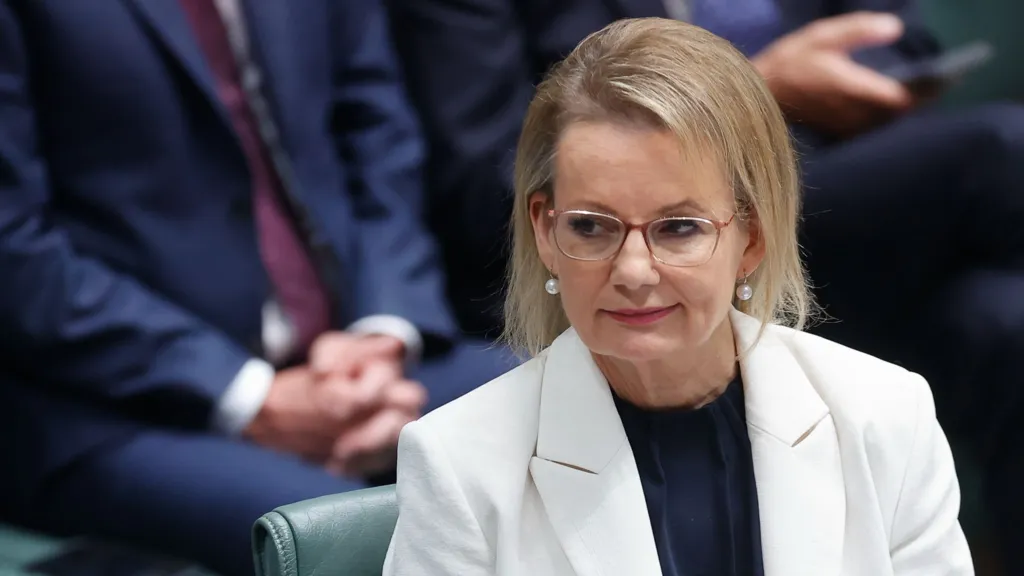 News1 day ago
Australian Politics Faces Questions Over Gender Equality Amid Sussan Ley’s Appointment
-
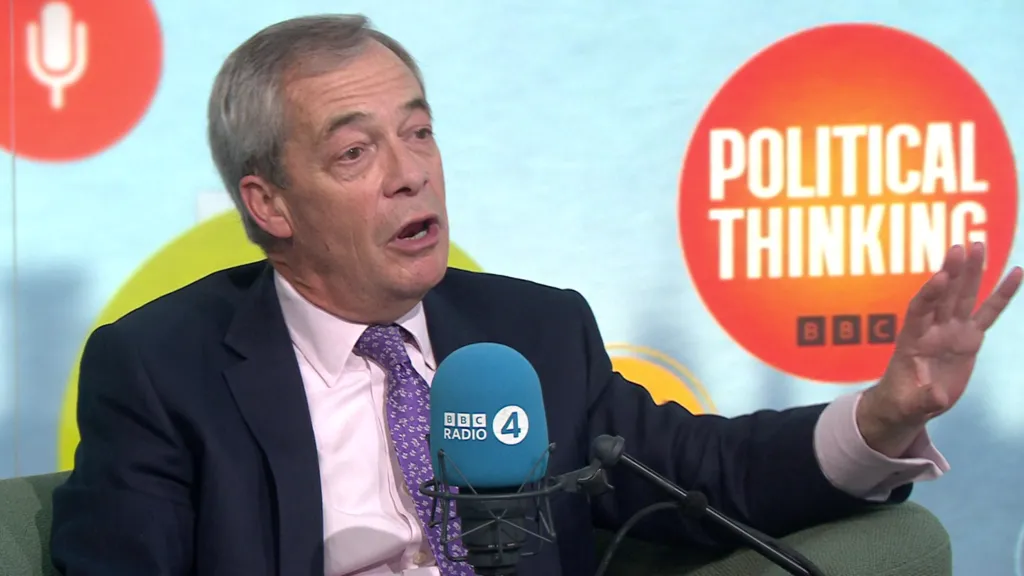 News1 day ago
Farage Says Reform to Replace Traditional Tory Party
-
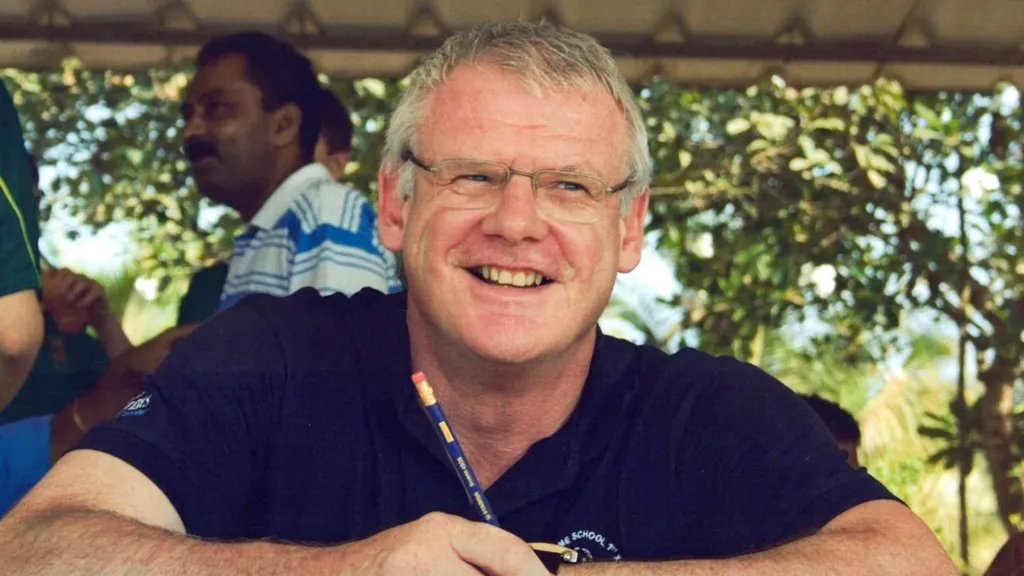 News1 day ago
Husband’s alleged £600k theft for sex and antiques blamed on drug side effects
-
 News1 day ago
Wrexham Pair Seek Win Against Former Team Ipswich
-
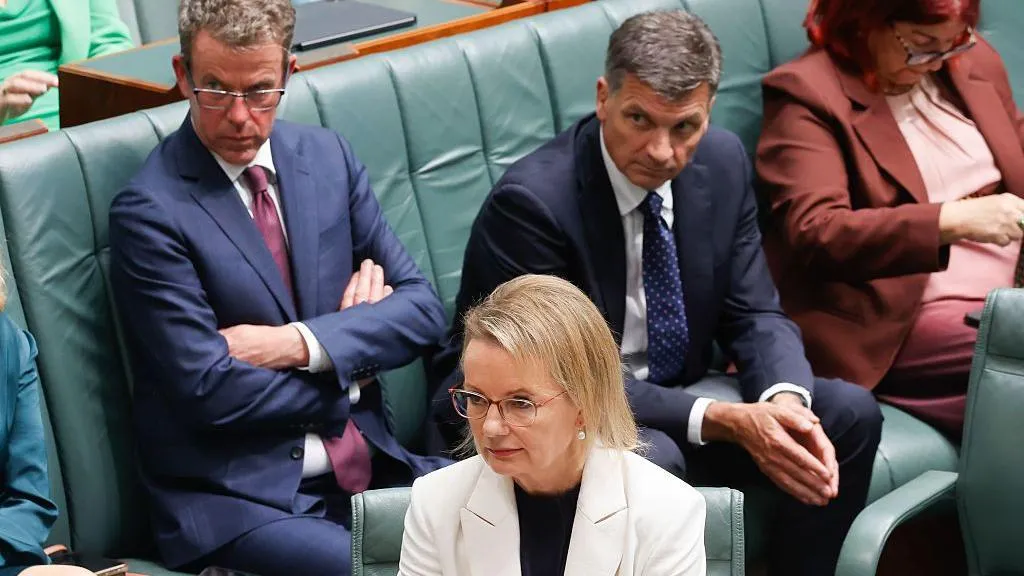 News1 day ago
Liberal Party Removes Australia’s First Female Leader
-
 News1 day ago
UK Braces for Cold Snap with Snow and Ice Alerts Expected
-
 News3 days ago
Sunbed ads spreading harmful misinformation to young people
-
 Business1 day ago
BBC Reporter Exposed to Cyber Attack Due to Vulnerabilities in AI Coding Tool