
Australia
Series of shark attacks occurs within 48 hours on east Australian beaches
In Australia, the number of incidents involving humans and sharks is increasing, yet specialists emphasize that the sharks themselves are not to blame.
According to shark researcher Chris Pepin-Neff, the recent spate of shark encounters off Australia's east coast is unprecedented, with four incidents occurring within a 48-hour period, including three within a relatively short 15km stretch.
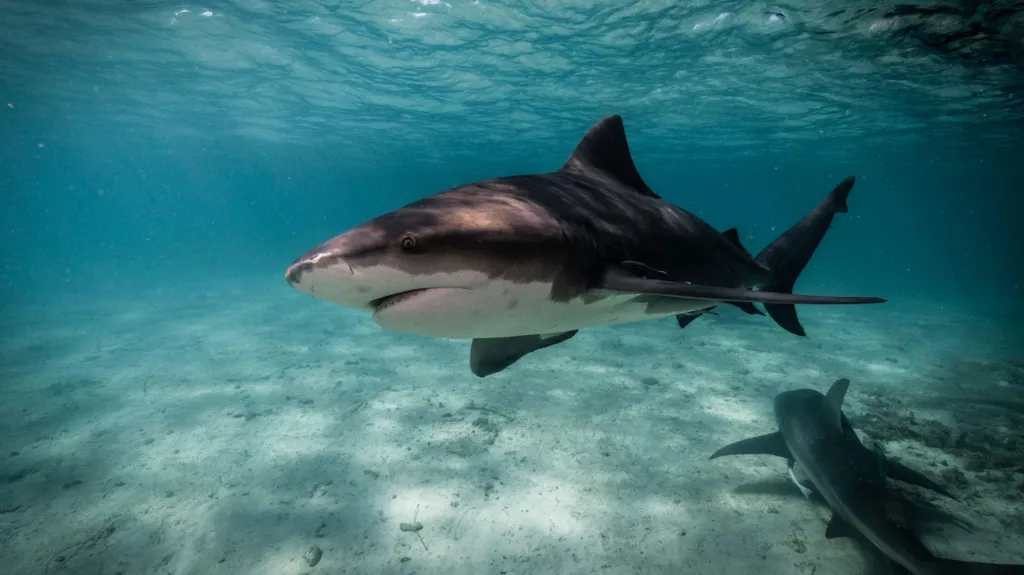
A series of shark attacks took place between 18 and 19 January, resulting in the death of a 12-year-old boy who was swimming in Sydney Harbour. On the following day, two separate incidents were reported: an 11-year-old's surfboard was damaged at Dee Why beach, and a man was attacked at Manly, suffering critical injuries that required hospitalization.
On 20 January, a fourth incident occurred approximately 300km further up the coast, where a surfer suffered a chest wound after a shark bit his board.
Chris Pepin-Neff, an associate professor of public policy at the University of Sydney with 20 years of research experience, describes the recent incidents as the most concentrated series of shark bites he has ever observed, both in terms of geographical proximity and time.
The consecutive shark encounters have sparked widespread concern, prompting the closure of numerous beaches and renewing debate about the need for shark culls, with many advocating for such measures to prevent further attacks.
According to experts, a more effective approach would involve gaining a deeper understanding of shark behavior and reevaluating the dynamic between humans and sharks.
Analysts point to multiple potential factors that may have led to the recent spate of incidents, suggesting that the sharks themselves are not the primary issue.
Typically, unprovoked shark attacks are triggered by a combination of environmental factors and attractants present in the water.
In Sydney, three recent incidents, believed to have involved bull sharks, occurred after a period of heavy rainfall, with the city's official weather station recording 127mm of rainfall within a 24-hour period, marking the wettest January day in 38 years.
Rebecca Olive, a senior research fellow at RMIT University, notes that the heavy rainfall would have created ideal conditions for bull sharks to be present in the area.
According to an expert, bull sharks are well-suited to warm, brackish environments that other shark species tend to avoid. The combination of river mouths, estuaries, and the influx of freshwater from recent rainfall created an ideal setting for these sharks.
Experts, including Olive, point out that the freshwater influx would have carried sewage and nutrients into the ocean, attracting bait fish, which in turn would draw in sharks.
Pepin-Neff observes that there appears to be an attractant in the water, proposing that the unique combination of low-salinity freshwater may have triggered a surge in marine life, creating a rich ecosystem.
As bait fish move towards the surface, bull sharks follow, concentrating activity in the near-shore area and increasing the likelihood of encounters between humans and sharks.
Data from official sources indicates a steady increase in shark bite incidents in Australia over the past three decades, with reported cases rising from approximately eight to 10 annually in the 1990s to an average of around 25 per year from 2010 onwards.
The rise in shark encounter numbers does not necessarily indicate an increase in aggression among sharks. Instead, it is probable that improved data collection methods and various human-related factors are contributing to the higher figures.
Factors such as the expanding coastal population, a growing participation in water sports, and the use of thicker wetsuits that enable longer stays in the ocean are likely contributing to the increase in reported encounters.
According to Pepin-Neff, the total number of encounters has increased significantly, largely due to the substantial growth in the number of people engaging in water activities.
However, researchers observe that the incidence of shark bites has not risen in proportion to the increasing number of people participating in water activities, suggesting that the risk remains relatively low.
Olive notes that, considering the large number of people using the ocean daily, shark incidents and attacks are relatively rare, and fatalities are even more uncommon, highlighting the low risk associated with shark encounters.
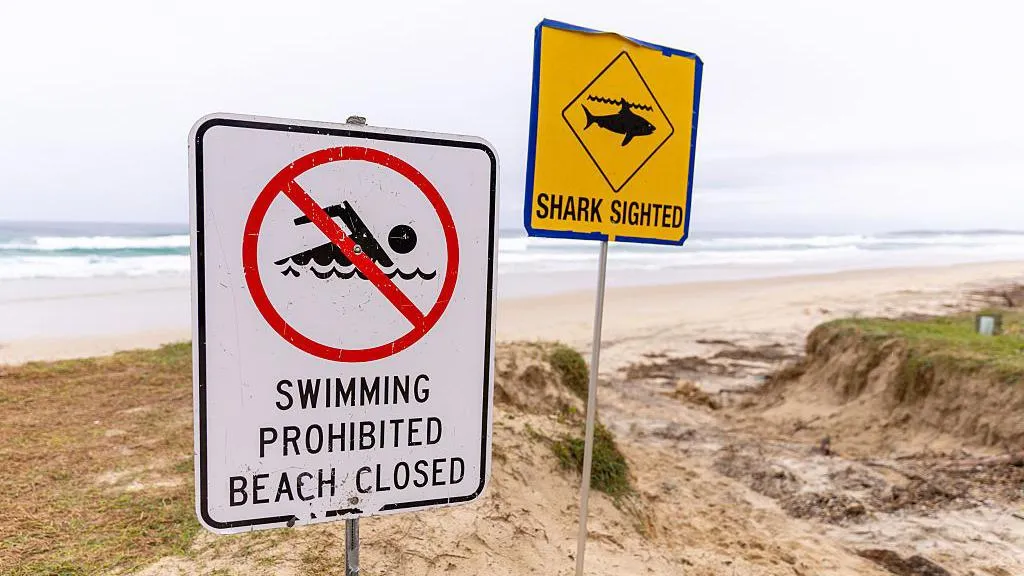
According to Olive, the perceived increase in shark sightings and encounters may be attributed to enhanced visibility, driven by improved reporting mechanisms, the rise of drone footage, and extensive media coverage, rather than an actual surge in shark activity.
Pepin-Neff notes that the use of vague terminology to describe shark encounters can exacerbate public concern and skew the perception of risk, contributing to a distorted understanding of the situation.
The tendency to categorize shark sightings, encounters, and bites under the broad term "attack" can create an exaggerated sense of danger, misrepresenting the actual level of risk involved.
As Pepin-Neff points out, the lack of precise language to describe shark incidents without resorting to the phrase "shark attack" can lead to a more emotional and intense community reaction, which may not accurately reflect the circumstances of the event.
Following a series of shark incidents in Sydney, fears have been rekindled, prompting renewed calls for a cull, which would typically involve the use of nets or baited drumlines to capture and kill sharks in the vicinity of popular beaches.
The proposal has been met with skepticism by experts in the field.
According to Olive, while she understands the impulse to call for culls after an incident, she firmly believes that culling sharks is not an effective way to ensure safety for surfers and swimmers, and instead serves to perpetuate a false sense of security.
Pepin-Neff emphasizes that the available scientific data does not support the use of shark culls as a means of mitigating the risk of attacks.
Pepin-Neff notes that culling sharks has no tangible impact on safety, instead providing a sense of reassurance to politicians and activists, while failing to address the underlying issues.
In the event of a shark encounter, Pepin-Neff suggests that the key factor is not the presence of sharks, but rather the presence of an attractant that draws them to a particular location.
Eliminating all sharks from Sydney Harbor would not necessarily prevent shark encounters, as a single shark from a nearby location could still be drawn to the area if attractants are present.
According to Olive and Pepin-Neff, reducing the risk of shark encounters involves being aware of the factors that increase their likelihood. Individuals can take precautions such as avoiding water activities after heavy rainfall, while local councils can consider constructing shark-free enclosures for safe swimming.
On a larger scale, Olive and Pepin-Neff stress that beachgoers must adopt a more realistic understanding of the ocean, recognizing its potential dangers and taking necessary precautions.
Pepin-Neff suggests that Australians should approach the ocean with the same caution they would exercise in the wilderness, stating that the country's residents are well-versed in navigating the bush and should apply similar principles to the ocean.
This shift in mindset, they argue, will require a dual reassessment: not only of humans' relationship with the ocean, but also of their perception and interaction with sharks.
The notion that the ocean is inherently safe while sharks are inherently dangerous is misguided, according to experts. In reality, the ocean poses numerous risks, whereas sharks are not always a threat to humans.
Humans often find themselves in sharks' territory, but that does not mean they are a desired meal, as the saying goes, emphasizing that people are more of an obstacle than a food source for sharks.
Asia
Emergency call recording reveals boy’s heroic swim to save family
A 13-year-old boy, Austin Appelbee, took action to secure assistance for his mother and siblings when they were pulled out into the ocean.
An audio recording has been made public by authorities, capturing a distress call made by a 13-year-old Australian boy who swam for an extended period to seek assistance for his family after they were caught in a strong current at sea in early February.
During the call, the boy, identified as Austin Appelbee, informs emergency services that his brother, Beau, 12, sister, Grace, eight, and their mother remain in the water, awaiting rescue.
Austin expresses concern for his family's well-being, stating that he is unsure of their current condition, which is causing him significant distress.
The teenager also reports feeling severely exhausted, a result of his prolonged and physically demanding effort to reach shore and call for help.
Following the call, Austin lost consciousness and was hospitalized, where he later received news that his mother, brother, and sister had been rescued approximately 14 kilometers offshore and were in good health.
Asia
Australian opposition leader faces pressure after key staff member quits
The departure of a high-ranking colleague has created an opportunity for a potential challenge to Sussan Ley, who holds the distinction of being the first female leader of the Liberal party.
Sussan Ley, the first female leader of the Liberal Party, is facing renewed scrutiny following the departure of Angus Taylor, her shadow defence minister, from the party's leadership team.

Taylor's resignation is expected to pave the way for a potential challenge to Ley's leadership, with local media outlets suggesting he has been quietly working to unseat her for some time.
Ley's tenure has been marked by struggles, including a narrow victory over Taylor in a leadership contest last year, which was held in the aftermath of the party's worst-ever electoral performance.
The Liberal-National coalition, a partnership that dates back to the 1940s, has experienced significant instability under Ley's leadership, having split and reunited twice during her tenure.
On Wednesday, Taylor, a member of the party's conservative faction, announced his resignation from the leadership team, citing his commitment to continuing to serve the Liberal Party.
In a statement to reporters, Taylor expressed his disappointment with the party's inability to hold the current Labor government accountable, emphasizing the need to protect Australians' way of life and restore their standard of living.
Taylor stated that he does not believe Ley is capable of leading the party effectively, citing the need for a change in leadership.
It remains to be seen whether Taylor's allies within the shadow cabinet will follow his lead and resign from their positions.
Local media reports suggest that Taylor's supporters are planning to request a special party meeting to consider a spill motion, which would allow the party to reconsider its leadership.
If Taylor were to succeed in his bid for leadership, it would bring an end to the ongoing speculation surrounding Ley's tenure, which has been marred by uncertainty.
The coalition's most recent split, which occurred in January, was followed by a reunification just days ago, after a dispute over hate speech laws, which Ley had supported in the wake of the Bondi Beach attack in December.
At the time of the initial split, Nationals leader David Littleproud explicitly stated that his party could not continue to serve in a shadow cabinet under Ley's leadership.
Recent polling data has shown the One Nation party, which secured 6% of the national vote in the previous election, surpassing the Coalition to take second place behind Labor, while Ley's personal approval ratings remain low.
The coalition has yet to reach a consensus on the factors that contributed to its decisive election loss to Labor, which saw the Liberals suffer significant losses in major cities.
In the aftermath of the election, the coalition briefly split over disagreements on climate and energy policy, including its commitment to achieving net-zero emissions by 2050, a policy that the Liberals later abandoned under pressure from the Nationals and their own right-wing faction.
The Nationals, which have a strong presence in rural areas and tend to lean more conservative than the Liberals, have been pushed further to the right in response to the surge in support for the One Nation party, according to political analysts, who note that this shift may hinder the Liberals' ability to appeal to centrist voters in urban areas.
Asia
Australian author guilty of creating child abuse material
In the author’s novel, which falls under the erotic genre, the main character is 18 years old and engages in role-playing as a young child.
A court in Australia has convicted an author of producing child sex abuse material, which was presented in the form of a romance novel featuring an age-gap relationship.

During the trial in a New South Wales court, it was revealed that the novel revolves around the story of Lucy, an 18-year-old, and Arthur, a 45-year-old friend of her father, including descriptions of Arthur's desires that originated when Lucy was a minor, as well as scenes where Lucy pretends to be a young child.
Lauren Mastrosa, who works in marketing for a Christian charity, faced charges after her book generated widespread outrage on the internet, but she maintained in court that the protagonist, Lucy, is explicitly portrayed as an adult throughout the story.
Magistrate Bree Chisholm delivered a verdict on Tuesday, stating that the novel's content constitutes the sexual objectification of children, thus rejecting Mastrosa's defense.
Prior to the complaint filed with the police, Lauren Mastrosa, 34, had shared an advance copy of the novel, whose title has not been disclosed by the BBC, with 21 readers in March of the previous year, prompting a subsequent investigation into its contents.
After reviewing the book, published under the pseudonym Tori Woods, Chisholm concluded that a typical reader would likely find the content to be unquestionably objectionable.
The novel, whose cover features a pastel pink background and title spelled out in alphabet blocks reminiscent of children's toys, portrays its protagonist exhibiting immature behavior, dressing in childish attire, and communicating in a simplistic manner.
According to Chisholm, the occasional mentions of the character's age as 18 were not enough to counteract the overall impression that the character is a minor.
As reported by the Australian Associated Press, Chisholm noted that the book's descriptive language and character portrayals, which evoke the image of a young child, are used in sections where sexual activity is described.
Chisholm stated that the narrative ultimately creates a disturbing visual impression in the reader's mind, suggesting an adult male engaging in sexual activity with a minor.
Mastrosa has been convicted of three offenses: creating, possessing, and distributing child abuse material, and is scheduled to appear in court for sentencing on April 28.
Following Mastrosa's charges, BaptistCare informed the Daily Telegraph that she had been removed from her position temporarily, pending the outcome of an investigation.
-
 News10 hours ago
Australian Politics Faces Questions Over Gender Equality Amid Sussan Ley’s Appointment
-
 News7 hours ago
Farage Says Reform to Replace Traditional Tory Party
-
 News7 hours ago
Wrexham Pair Seek Win Against Former Team Ipswich
-
 News12 hours ago
Liberal Party Removes Australia’s First Female Leader
-
 News10 hours ago
UK Braces for Cold Snap with Snow and Ice Alerts Expected
-
 News7 hours ago
Husband’s alleged £600k theft for sex and antiques blamed on drug side effects
-
 News2 days ago
Sunbed ads spreading harmful misinformation to young people
-
 Business12 hours ago
BBC Reporter Exposed to Cyber Attack Due to Vulnerabilities in AI Coding Tool