
News
Gisèle Pelicot Shares Experience with BBC, Describes Feeling Overwhelmed by Trauma
The central figure in France’s most high-profile rape case has shared her story in a comprehensive interview with Newsnight, discussing themes of betrayal, recovery, and making a positive choice.
Gisèle Pelicot, the central figure in France's most high-profile rape case, has shared her traumatic experience with BBC Newsnight, recounting the moment she discovered her husband's heinous crimes: drugging her and subjecting her to repeated rapes by numerous men over several years.

Ms Pelicot, 73, describes the instant she grasped the full extent of her husband's atrocities as a moment of profound shock, likening it to a devastating tsunami that left her reeling.
In a candid interview preceding the release of her memoir, A Hymn To Life, Ms Pelicot recounts the anguish of informing her three children about their father's crimes, an experience she considers one of the most challenging of her life.
She reflects on her decision to forgo anonymity and expresses no regret over that choice, while also revealing that she still harbors unanswered questions for her ex-husband, currently serving a 20-year prison term, which she hopes to one day ask him.
This article contains graphic descriptions of rape and sexual abuse.
The opulent Hôtel de Ville in central Paris stands in stark contrast to the somber courtrooms where Ms Pelicot was last seen during the four-month trial that sent shockwaves through France.
Ms Pelicot recounts the fateful moment that marked the beginning of her descent into a living nightmare, a journey that would expose the darkest aspects of her marriage.
The turning point came when her husband, Dominique Pelicot, was summoned to a police station in Mazan, southern France, for secretly filming women in a supermarket, an incident that would ultimately unravel the shocking truth.
During the police inquiry, Ms Pelicot was questioned by an officer who posed a series of probing questions about her husband's character and their marital life, to which she responded, unaware of the horrors that were about to be revealed.
The officer's warning that he was about to share disturbing information with her proved to be a gross understatement, as the truth would shatter her world forever.
The policeman presented her with two photographs of a lifeless woman on a bed, part of a vast collection of images and videos taken by her husband while she was unconscious, a discovery that would change her life irrevocably.
Ms Pelicot's initial reaction was one of utter disorientation, as she failed to recognize the woman in the photos, surrounded by strangers whose presence she couldn't explain.
As she recounts this traumatic experience, her voice remains steady, though her emotions are palpable, a testament to the enduring impact of that moment.
The police informed Ms Pelicot that she had been subjected to repeated rapes by dozens of men, a revelation that would haunt her, with many of the perpetrators remaining unidentified due to her husband's meticulous yet sinister record-keeping.
In the aftermath of this devastating news, Ms Pelicot was advised against being alone and sought solace in a friend, to whom she confided the horrific truth about her husband's crimes, marking the first time she uttered the word "rape" in connection with her experiences.
The Newsnight interview with Gisèle Pelicot can be viewed on YouTube.
The painful task of informing her three adult children, David, Caroline, and Florian, about their father's heinous crimes was an ordeal Ms Pelicot had to endure, aware that the news would shatter their lives.
Ms Pelicot acknowledges that making those phone calls was the most difficult task she has ever faced, knowing that her children's lives would never be the same.
She vividly recalls her children's reactions, from Caroline's anguished scream to David's stunned silence and Florian's immediate concern for her well-being, each response a testament to the profound impact of the news.
The family's world was turned upside down, as they struggled to come to terms with the atrocities committed by the man they once trusted and loved.
In the days that followed, Ms Pelicot's children rallied around her, and together they began the long and arduous process of rebuilding their lives, a journey marked by the destruction of family belongings and memories tainted by their father's crimes.
As her children purged their home of reminders of their father, Ms Pelicot stood by, a poignant symbol of her own struggle to come to terms with the past.
The experience has left an indelible mark on their lives, as they grapple with the aftermath of the trial and the knowledge of their father's unspeakable crimes.
For Ms Pelicot, her children have been the one constant source of comfort and strength, a reminder of the life she had built before the revelations about her husband's crimes.
Since becoming a mother at a young age, Ms Pelicot had devoted herself to creating a loving and stable home for her children, a testament to her own experiences of loss and hardship.
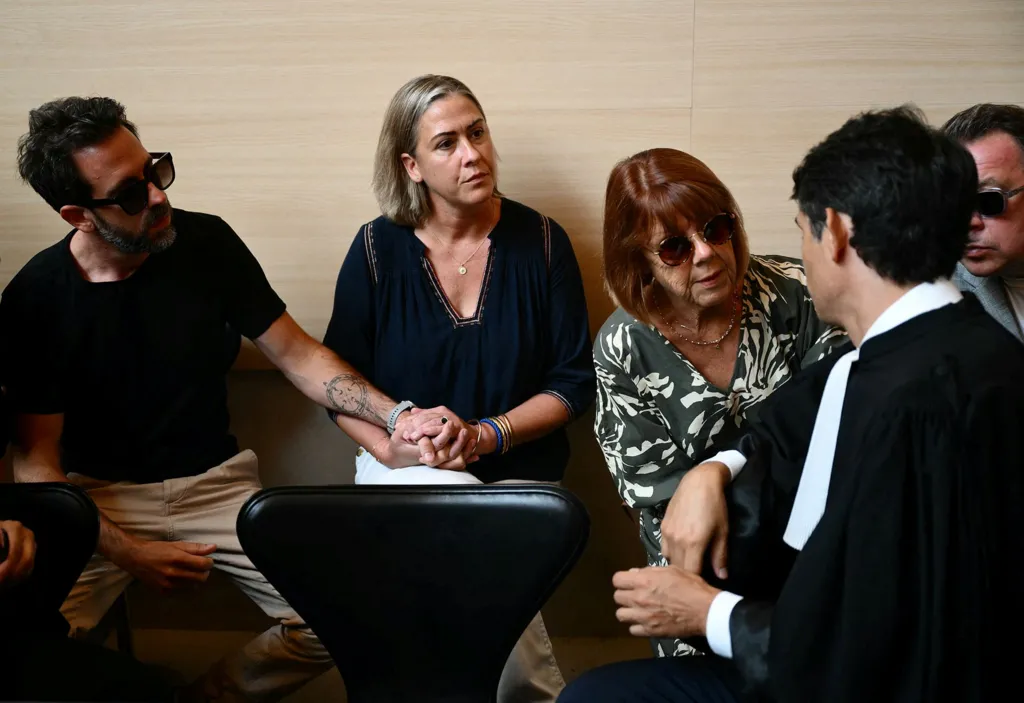
Having lost her mother, brother, and father at a young age, Ms Pelicot had sought to recreate a sense of family and love through her own marriage and parenthood.
In the interview, Ms Pelicot fondly remembers her parents, whose marriage had been a powerful influence on her own understanding of love and relationships.
The loss of her mother at the age of nine had a profound impact on her family, plunging them into a grief that would take years to overcome, a pain that she would later try to heal through her own marriage to Dominique Pelicot in 1973.
The early years of their marriage were marked by love and a desire to build a family, a dream that would eventually turn into a nightmare.
By 2011, Ms Pelicot had begun to experience strange symptoms, including memory loss and gynecological issues, which would later be attributed to the sedatives and assaults she suffered at the hands of her husband and his accomplices.
As she sought medical help, her husband remained by her side, a constant presence that belied the horrors he had perpetrated against her.
The realization that her husband, the man she had shared her life with, could have committed such atrocities is still a source of profound shock and disillusionment for Ms Pelicot.
It would later be revealed that her husband had not only drugged her but also administered powerful muscle relaxants to prevent her from feeling pain the next day, a twisted attempt to conceal his crimes.
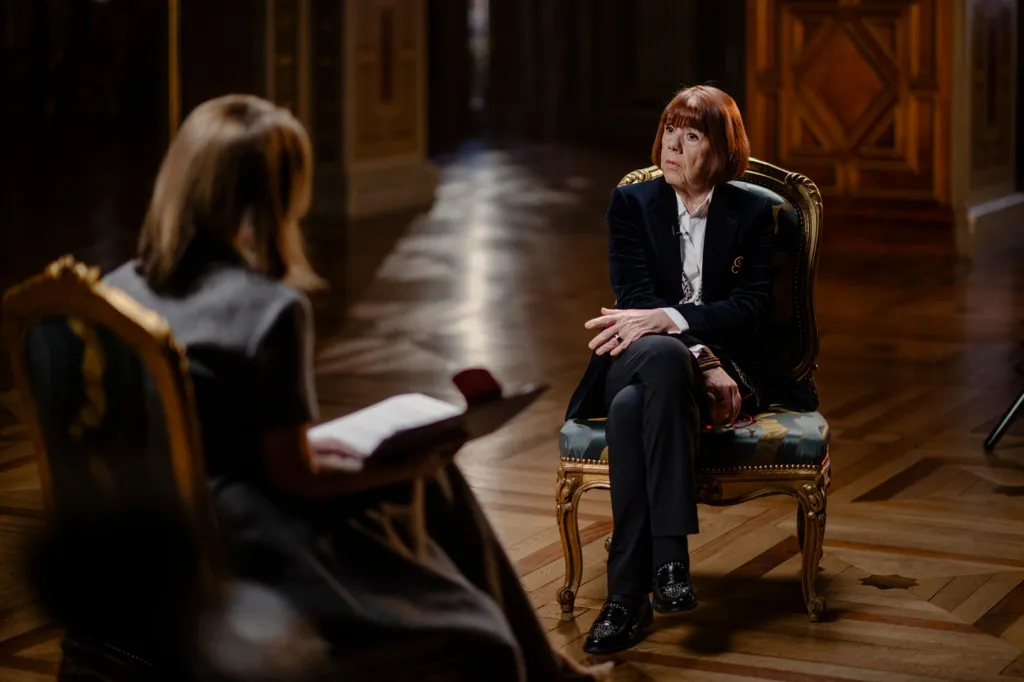
Ms Pelicot now recognizes that her body had been pushed to the brink of collapse, her survival hanging in the balance as she endured the repeated assaults.
The lack of mercy shown by her husband is a painful truth that Ms Pelicot still grapples with, a testament to the enduring trauma she has suffered.
The aftermath of the trial has taken a toll on the entire family, a painful process of healing and rebuilding that continues to this day.
Ms Pelicot acknowledges that the experience has not brought her family closer together, as one might expect, but rather has forced them to confront the darkest aspects of their lives and rebuild themselves from the ground up.
Her daughter Caroline, in particular, has been left to deal with the aftermath of her father's crimes, including the discovery of photos of her taken without her consent, a painful reminder of the suffering she has endured.
The knowledge that her husband had cast a predatory gaze on their own daughter is a truth that Ms Pelicot finds utterly unbearable, a painful reminder of the horrors that have haunted their family.
Ms Pelicot's ex-husband has provided conflicting accounts regarding the photographs in question. Caroline, Ms Pelicot's daughter, believes she was also drugged and raped by him, but due to insufficient evidence, he has not been prosecuted.
The relationship between Ms Pelicot and her daughter was strained during the trial, with Caroline expressing feelings of being a "forgotten victim". At various points, both before and after the trial, Ms Pelicot lost contact with some of her children.
According to Ms Pelicot, "my daughter, Caroline, is filled with hatred and anger, emotions I don't experience. I felt a sense of betrayal and outrage towards my ex-husband, but that's my natural response to the situation."
Ms Pelicot reports that she and her daughter are currently working to repair their relationship.
"We both needed time to find our own paths," Ms Pelicot explains. "Now, we're trying to bring each other peace and hope we're on the right road to healing."
In 2022, the police informed Ms Pelicot that her ex-husband had confessed to attempting to rape a young woman. He is also under investigation for the 1991 murder of a 23-year-old estate agent in Paris, a claim he denies.
The possibility that her ex-husband may be a murderer, in addition to being a serial rapist, is a daunting prospect for Ms Pelicot to consider.
"I hope he is not responsible for this heinous crime," Ms Pelicot says. "If he is, it would be another descent into hell for me and our children."
During the investigation, Ms Pelicot relocated to the Île de Ré, a small island off the Atlantic coast of France. "I wanted to keep a low profile," she says. "I didn't want anyone to know who I was."
As a rape victim in France, Ms Pelicot was entitled to an anonymous trial. However, she initially hesitated when her daughter suggested an open hearing, citing concerns about being publicly identified as a victim.
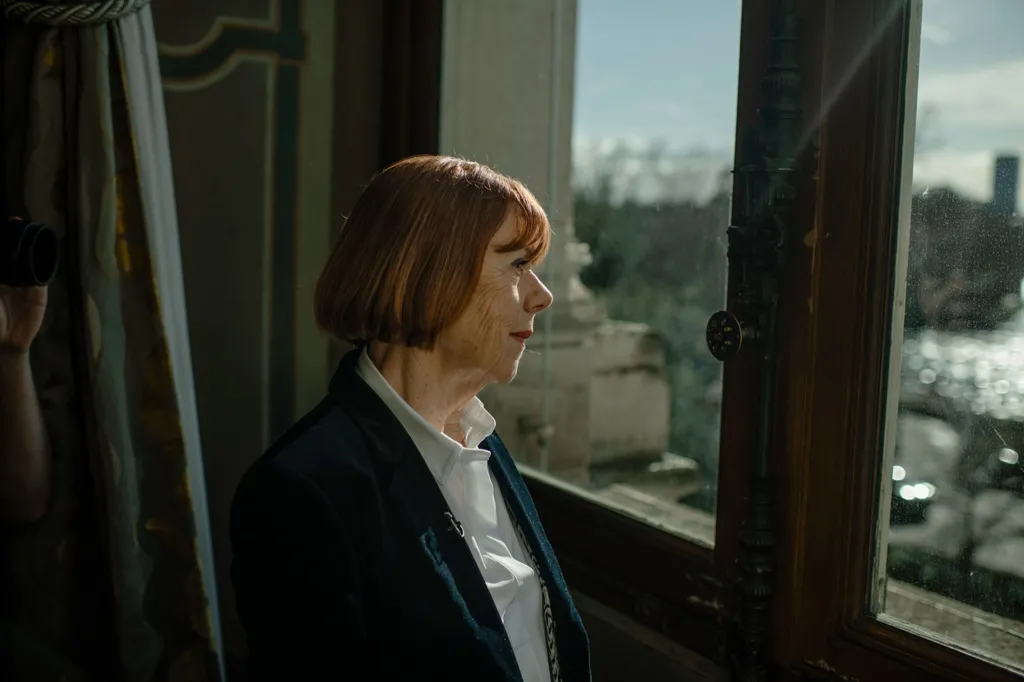
Four months before the trial, while walking on the beach, Ms Pelicot had a change of heart.
She realized that a closed hearing would also grant anonymity to the defendants and their lawyers, leaving her outnumbered. This prompted her to reconsider her decision.
"For over four years, I carried the shame," Ms Pelicot says. "I felt it was a double punishment for victims, a suffering we imposed on ourselves."
Her lawyers gave her a week to decide whether to open the trial to the public and media. However, she made up her mind in just one night.
Ms Pelicot's decision to have an open trial was a remarkable choice.
"I have never regretted my decision," she says. "It's a message to all victims who are hesitant to come forward. It could give them the strength I found within myself."
"We all have inner resources we're not aware of," Ms Pelicot explains. "If I could do this, I'm convinced other victims can too."
In 2024, the Pelicot trial garnered widespread attention in France and beyond.
Ms Pelicot's ability to confront the trauma she experienced, which she refers to as "filth", is a testament to her resilience.
Every day, she walked into the Avignon courthouse with her head held high. A group of women gathered outside to show their support, and Ms Pelicot acknowledged them with a nod and a hand on her heart.
The presence of dozens of cameras provided Ms Pelicot with "unbelievable strength", she says.
"The cameras helped me cope with what was happening in the courtroom," she explains. "I think it would have been difficult without them."
Ms Pelicot received a personal letter from Queen Camilla, expressing admiration for her courage. "I was touched and honored," Ms Pelicot says. "I'm grateful for her support."
Throughout the interview, Ms Pelicot remains composed and assured. However, when shown videos of French women thanking her for her bravery, she becomes emotional.

One woman says, "Thank you for being so brave."
Another woman exclaims, "We're here to support you! Life is beautiful, madame!"
As Ms Pelicot watches the videos, she wipes away a tear for the first time.
"It's very moving because these are the faces I saw during the trial," she says. "I saw their posters, their collages, and their banners."
"They were truly exceptional," Ms Pelicot says with a smile.
During the trial, Ms Pelicot and her family endured nearly four months of implicit and explicit accusations of complicity from the defendants and their lawyers. "The courtroom is a place of humiliation," she says.
At the time, Ms Pelicot referred to the trial as the "trial of cowardice". Her voice still rises when recalling those moments.
"The defendants didn't want to take responsibility for their actions," Ms Pelicot says. "They acted as if they had committed a minor offense and refused to acknowledge that I couldn't have given consent."
"Then, the video evidence would be shown, and they would still deny any wrongdoing," she explains.

"It's frustrating," Ms Pelicot says. "Where do we go from there?"
"I believe they thought they hadn't raped me because my ex-husband had given his consent," Ms Pelicot concludes. "Therefore, they didn't consider it rape."
The judges overseeing the case rejected this argument, and all defendants were found guilty. Ms Pelicot's ex-husband received a 20-year sentence, while the other 50 men received sentences ranging from five to 15 years.
As Ms Pelicot speaks, a man named Jean-Loup watches over her. She met him on Île de Ré in 2023. "We were lucky to find each other," she says. "We fell in love unexpectedly, like teenagers."
They have been together since then. "Life brought us a man who shares my values and principles, and who has also experienced many challenges," Ms Pelicot says.
"You see, life is full of surprises," she continues. "It's brought color and joy into our lives."
It has been almost six years since Ms Pelicot saw the photos of a woman who appeared to be "dead". The question of why her ex-husband subjected her to years of abuse remains. In court, Dominique Pelicot admitted to wanting to "break an unbreakable woman".
The woman recalls that her former partner had wanted her to engage in swinging sessions, but she consistently declined due to her modest nature. She believes he may have found alternative means to circumvent her reservations by rendering her incapacitated.
The question of what motivated her former partner to commit such acts remains a puzzle. She admits that she may grapple with this inquiry for the rest of her life.
Ms Pelicot plans to visit her ex-husband in prison, seeking clarification on his potential involvement in the disappearance of their daughter, Caroline, as well as a murder case in which he has been implicated.
According to Ms Pelicot, a face-to-face meeting with her ex-husband is necessary to obtain the answers she seeks, although she is uncertain whether she will actually receive them.
As she navigates the process of rebuilding her life, Ms Pelicot reports that she is making progress in her healing.

Despite the traumatic experiences she endured, Ms Pelicot is reluctant to entirely renounce the life she shared with her former husband.
To cope with her circumstances, Ms Pelicot has found it essential to believe that the 50-year period she spent with her ex-husband was not entirely devoid of authenticity, as acknowledging the opposite would render her existence meaningless.
During a rare court appearance, Ms Pelicot addressed her ex-husband, characterizing the extent of his betrayal as "immeasurable".
She expressed her sentiment that she had consistently attempted to guide him towards a more virtuous path, whereas he opted for a darker route.
Ms Pelicot reiterates that life is marked by choices and the decision to pursue either a positive or negative trajectory, emphasizing the coexistence of good and evil.
For her part, Ms Pelicot affirms that she has consistently chosen to pursue a path of righteousness, as evident in her composed demeanor.



News
England’s Archer Claims Two Wickets in Scotland Match
England made a solid beginning in their T20 World Cup clash with Scotland, thanks to Jofra Archer, who claimed the wickets of George Munsey and Brandon McMullen.
England has made a promising beginning in their T20 World Cup clash with Scotland, thanks to Jofra Archer's dismissals of George Munsey and Brandon McMullen.
For continuous updates on the match, follow our live coverage of England versus Scotland.
Please note that live access is restricted to users based in the United Kingdom.
News
Ireland crush Oman with dominant batting display at World Cup
Ireland secured their first victory at the 2026 T20 World Cup, defeating Oman by 96 runs after posting a total of 235-5, with Lorcan Tucker contributing an unbeaten 94.
In their 2026 T20 World Cup match, Ireland secured a 96-run victory over Oman, with Lorcan Tucker contributing an unbeaten 94 to their total of 235-5, marking the team's first win in the tournament.
A detailed account of the match is available, highlighting Lorcan Tucker's crucial 94, which played a significant role in keeping Ireland's chances alive in the 2026 T20 World Cup.
Access to certain content is restricted to users based in the United Kingdom.
News
GB women stun Canada, reigning curling world champions
At the 2026 Winter Olympics, Great Britain’s female curling team commenced their competition with a notable win, edging out Canada, a strong medal contender, by a score of 7-6.
After dropping their first two matches, the British women's team staged a comeback, defeating the reigning world champions in a remarkable turn of events.
The Team GB women's curling team secured their first win of the Winter Olympics, edging out Canada, a strong medal contender, with a 7-6 score.
Following disappointing losses to China and South Korea in their initial matches, Rebecca Morrison's team was not expected to bounce back against the world champions.
However, the British team significantly improved their performance, with Morrison making crucial shots that had eluded her earlier in the competition, ultimately overcoming a Canadian team that had appeared vulnerable after losing to the United States on Friday.
It wasn't until the third end that the Scottish team scored, but after Canada's skip, Rachel Homan, made an error, Morrison remained composed and scored three points.
Another impressive shot by Morrison in the fourth end forced Homan into a mistake, allowing GB to steal a point and take a 4-2 lead into the break.
Day-by-day guide to the Winter Olympics
Full schedule including times of medal events
Winter Olympics 2026 medal table
Unlike their previous matches, where they lost momentum after the interval, the British team maintained their pace this time.
The teams traded points in the sixth and seventh ends, before Morrison, who was gaining confidence, scored two more points to give her team a four-point lead going into the penultimate end.
Canada struggled to find their footing, with Homan, who has yet to win Olympic gold despite her impressive career, unable to regain her composure. With only one point in the ninth end, they required a miraculous comeback, but GB was determined to secure the win.
The British women's team will aim to continue their surprise resurgence on Sunday when they face Sweden at 13:05 GMT.
With six more round-robin matches to play, the team is targeting five or six wins to potentially secure a semi-final spot.
Meanwhile, the GB men's team will play their fourth match of nine against the Czech Republic at 13:05 GMT on Saturday.
-
 News1 day ago
Australian Politics Faces Questions Over Gender Equality Amid Sussan Ley’s Appointment
-
 News1 day ago
Farage Says Reform to Replace Traditional Tory Party
-
 News1 day ago
Husband’s alleged £600k theft for sex and antiques blamed on drug side effects
-
 Business1 day ago
BBC Reporter Exposed to Cyber Attack Due to Vulnerabilities in AI Coding Tool
-
 News1 day ago
Wrexham Pair Seek Win Against Former Team Ipswich
-
 News1 day ago
Liberal Party Removes Australia’s First Female Leader
-
 News1 day ago
UK Braces for Cold Snap with Snow and Ice Alerts Expected
-
 News3 days ago
Sunbed ads spreading harmful misinformation to young people