
Latin America
Candidate with tough-on-crime stance wins Costa Rica presidency
Laura Fernández secured a first-round victory in the election, a contest that took place against a backdrop of growing worries over organised crime.
Costa Rica's presidential election has been won by Laura Fernández, the nominee of the governing Sovereign People's Party, which holds a conservative stance.
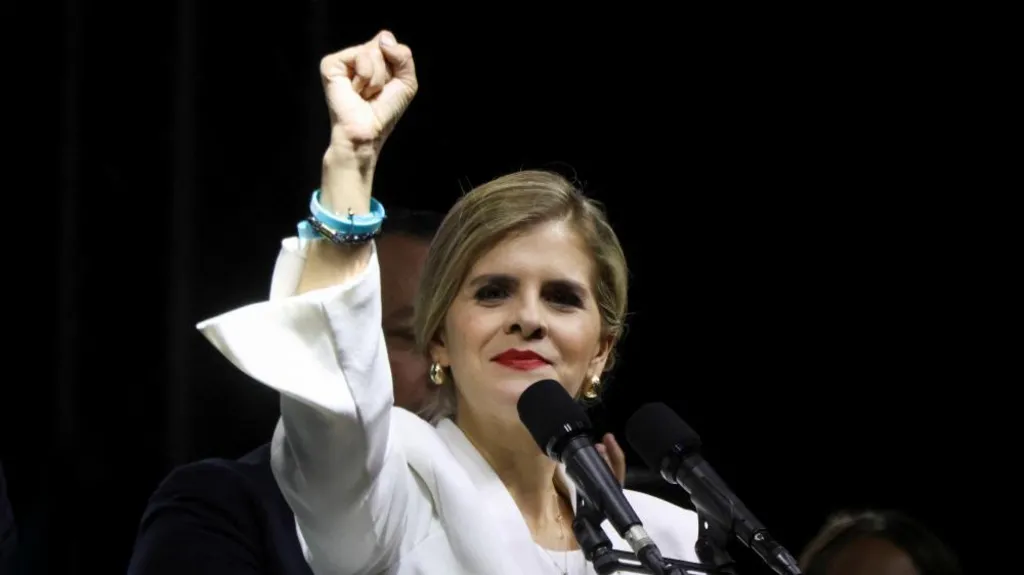
As the vote count nears completion, with over 88% of ballots tallied, Fernández maintains a significant lead, securing more than 48% of the vote, while Álvaro Ramos, the centrist candidate, has acknowledged defeat.
Fernández's campaign centered on building upon the crime-fighting policies initiated by outgoing President Rodrigo Chaves, who had chosen her as his preferred successor, with a focus on intensifying efforts to combat crime.
A key concern for voters in the Central American nation was the recent escalation of violence linked to the drug trade, an issue that weighed heavily on the minds of citizens as they cast their ballots.
By surpassing the 40% threshold required for an outright victory in the first round, Fernández's substantial share of the vote eliminates the need for a subsequent runoff election.
The swearing-in ceremony for Fernández is scheduled to take place on May 8.
During her address after winning the election, the 39-year-old leader stated that she intends to continue implementing the initiatives introduced by her predecessor, Chaves, for whom she served as chief of staff.
According to Costa Rica's constitutional provisions, presidents are prohibited from seeking re-election for consecutive terms, which made Chaves ineligible to run again.
There are indications that Fernández may offer Chaves a position in her administration.
In recent years, Costa Rica, a country known for its stability and safety in Central America, has experienced an increase in criminal activity, largely attributed to the growing presence of transnational crime groups in the region.
During her campaign, Fernández expressed her intention to adopt certain policies implemented by El Salvador's President Nayib Bukele as a model for her own administration.
President Bukele enjoys extremely high approval ratings among Salvadorans, who appreciate his tough stance on crime, which has led to a significant decrease in the country's murder rate.
Fernández has announced plans to implement a state of emergency in areas controlled by gangs and complete the construction of a maximum-security prison, similar to El Salvador's Cecot facility.
In response to critics' concerns that her policies might infringe upon citizens' rights, Fernández stated in her victory speech that her government would prioritize "dialogue, national harmony, and respect for the rule of law".
However, Fernández also adopted a more confrontational tone, accusing the opposition of "obstruction and sabotage", referencing the challenges faced by her predecessor in passing legislation through a parliament dominated by opposition members.
Following her party's significant win of 30 seats out of 57 in parliament, Fernández is poised to enjoy greater legislative support compared to her predecessor.
Prior to her presidential campaign, the 39-year-old held various positions, including that of planning minister.
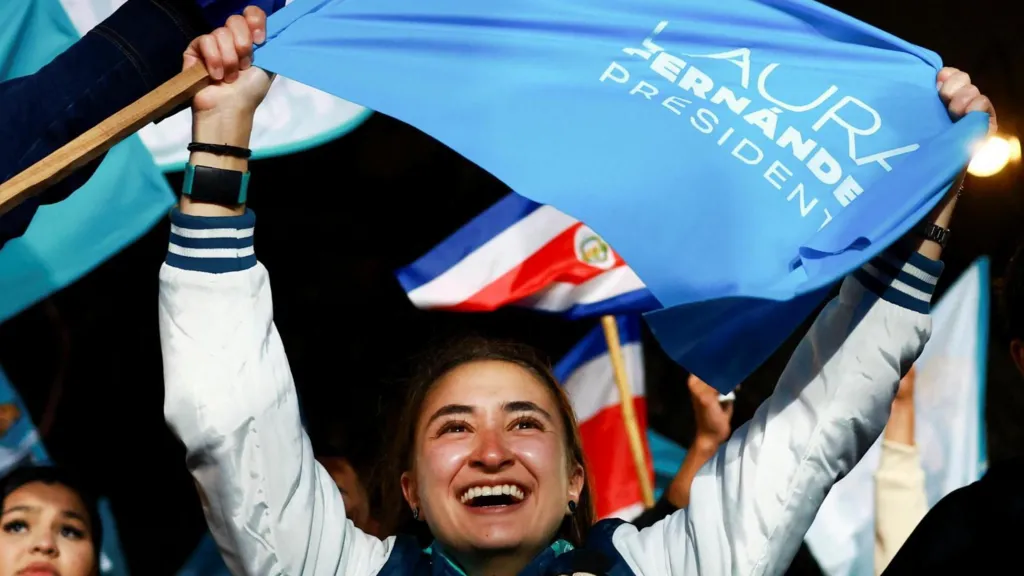
Fernández is often viewed as the political successor to Chaves, mirroring his straightforward and occasionally forceful approach to governance.
It is anticipated that Fernández will continue to nurture the strong relationship established by her predecessor with the United States.
Under Chaves, Costa Rica entered into a "safe third-country migrant agreement" with the US, enabling the Trump administration to deport migrants from countries other than Costa Rica to the country.
Under the terms of the agreement, the US is permitted to relocate migrants from nations deemed unsafe to a third country that is considered secure.
According to the Trump administration, Costa Rica has been identified as a major hub for cocaine trafficking, with criminal organisations increasingly using the country as a transit point to smuggle cocaine into the US.
Fernández has indicated that she is prepared to implement a state of emergency, which would involve suspending certain citizen rights, if organised crime continues to expand its presence in specific areas.
Upon taking office, Fernández will become the second female leader of the Central American country, following in the footsteps of Laura Chinchilla, who was elected as president in 2010.
Latin America
Venezuelan opposition politician under house arrest following kidnapping, according to son
Venezuelan security forces rearrested Juan Pablo Guanipa on Sunday, a short time following his release along with other jailed politicians.
Following his capture by security forces on Sunday, Venezuelan opposition politician Juan Pablo Guanipa has been returned to his home, where he is currently under house arrest, according to his son.
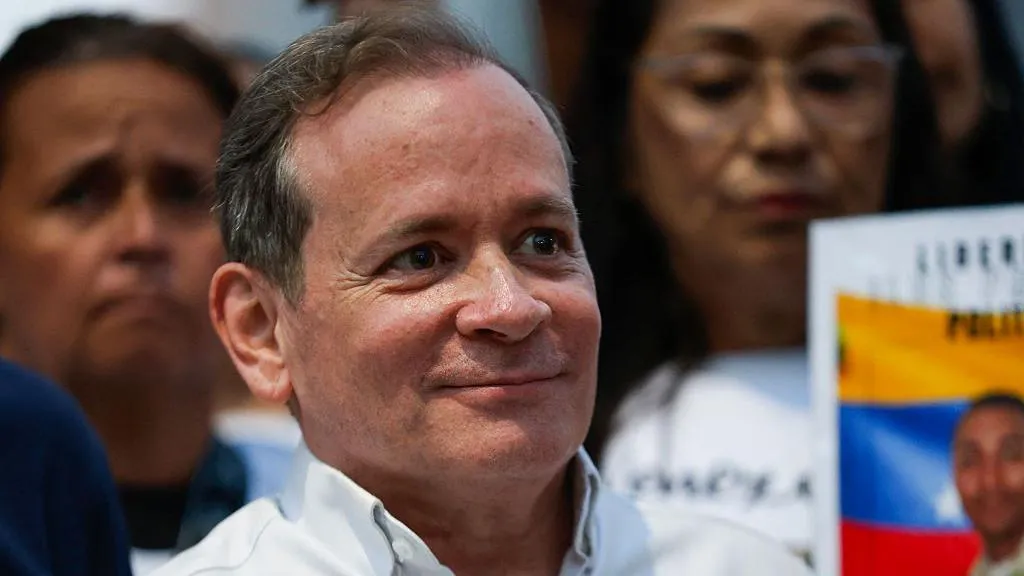
Ramón Guanipa expressed relief that his family has been reunited, but emphasized that his father's continued detention is unwarranted.
Opposition leader María Corina Machado reported that Guanipa was taken into custody by heavily armed individuals in Caracas on Sunday, just hours after his initial release from prison, along with other political prisoners.
In a subsequent statement, Interior and Justice Minister Diosdado Cabello confirmed that an individual had been rearrested for allegedly violating the terms of their release.
Cabello stated on Monday that some politicians apparently believed they could act with impunity.
Guanipa, a former vice-president of the National Assembly, had spent eight months in prison before being freed, along with several other political prisoners, after the US took action against Venezuelan President Nicolás Maduro in January.
In a BBC interview on Tuesday, Ramón Guanipa recounted that his father, the leader of the Justice First party, was initially released from prison on Sunday at approximately 11:00 local time.
After his release, Guanipa spent time with families awaiting the release of other political prisoners.
According to Ramón, his father made public statements, mobilized supporters, and participated in an interview before being detained by unidentified security forces.
Ramón stated that he was informed his father would be returned home and placed under house arrest, but no further details were provided regarding the timing of his transport.
Later on Tuesday, Ramón posted an update on his father's X account, confirming that Juan Pablo Guanipa was back at their home in Maracaibo and expressing relief that their family would soon be reunited.
However, Ramón emphasized that his father remains unjustly detained, as house arrest is still a form of imprisonment, and called for his full freedom, as well as that of all political prisoners.
Ramón expressed gratitude to the US government, including President Donald Trump and Secretary of State Marco Rubio, for their support of freedom in Venezuela and their efforts on behalf of political prisoners.
The Justice First party had previously stated that the 61-year-old Guanipa was kidnapped by government forces while traveling between locations.
The party reported that those accompanying Guanipa were warned that weapons were pointed at them before he was taken away in a car.
The Justice First party held Delcy Rodríguez, Jorge Rodríguez, and Diosdado Cabello accountable for any harm that might come to Guanipa, referencing the interim president, National Assembly speaker, and interior minister, respectively.
The party also urged the international community to demand Guanipa's immediate release and an end to the Venezuelan government's persecution of opposition members.
After Guanipa's recapture on Sunday, Ramón and opposition figure Edmundo González requested proof of his safety.
According to the Venezuelan human rights group Foro Penal, Guanipa was among at least 30 individuals released from prison on Sunday.
Guanipa was elected governor of the Zulia region in 2017 but was barred from taking office after refusing to swear an oath before Maduro's National Constituent Assembly.
He then went into hiding after being accused of terrorism and treason for challenging the 2024 election results.
Guanipa was eventually tracked down and detained by security forces in May 2025.
Opposition groups and human rights organizations have long maintained that the Maduro government uses detention of political prisoners to suppress dissent and silence critics.
Many political prisoners were detained after the 2024 presidential election, which Maduro claimed to have won despite opposition from his opponents and many countries.
The Venezuelan government has consistently denied holding political prisoners, instead asserting that those detained were arrested for criminal activities.
Latin America
Venezuelan opposition leader kidnapped shortly after release
María Corina Machado, a Nobel Peace Prize recipient, has stated that Juan Pablo Guanipa, a prominent political figure, was forcibly detained in the city of Caracas.
According to María Corina Machado, a prominent figure in Venezuela's opposition, her colleague Juan Pablo Guanipa was abducted shortly after his release from custody, in a disturbing turn of events.
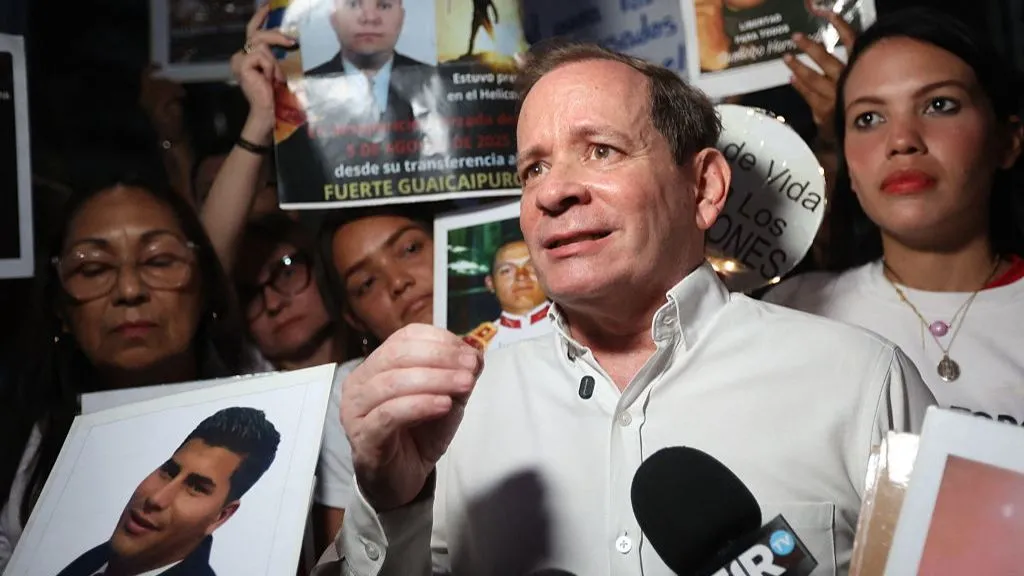
On Sunday, it was reported that Guanipa, who leads the Justice First party, was taken in the Los Chorros area of Caracas, the Venezuelan capital, sparking concern among his supporters.
In a social media post made early on Monday, Machado described the circumstances of Guanipa's disappearance, stating that a group of heavily armed individuals, dressed in plain clothes and traveling in four vehicles, forcibly took him away.
Guanipa, a former vice-president of the National Assembly, had been imprisoned for eight months before his release, which was part of a broader wave of releases that followed the US action against Venezuelan President Nicolás Maduro in January.
The Justice First party, a centre-right political organization, issued a statement alleging that Guanipa's kidnapping was carried out by the "repressive forces" of the government, while he was en route between two locations.
According to individuals who were with him, Guanipa was forced into a vehicle after guns were allegedly trained on the group.
In a social media statement, Justice First assigned responsibility for Juan Pablo Guanipa's safety to several high-ranking Venezuelan officials, including Delcy Rodríguez, Jorge Rodríguez, and Diosdado Cabello, who hold key positions in the government.
The party has urged the global community to call for Guanipa's immediate liberation and an end to the Venezuelan government's alleged harassment of opposition members.
Edmundo González, a prominent opposition figure, has requested confirmation of Guanipa's status, stating that the lack of information regarding his whereabouts is equivalent to a forced disappearance.
In a social media post made just hours prior, Ramón Guanipa, Juan Pablo's son, had expressed optimism about his father's expected release, anticipating a family reunion.
Following his detention, a video was uploaded online in which he called for immediate evidence confirming his father's safety and well-being.
In the video, Ramón Guanipa explicitly stated that he holds the current regime accountable for his father's fate, condemning the ongoing repression and urging an end to it.
According to Foro Penal, an organization that supports political prisoners in Venezuela, Guanipa was one of at least 30 individuals released on Sunday.
As the leader of the Justice First party, Guanipa won the governorship of the Zulia region in the 2017 election; however, he was prevented from assuming office after refusing to take an oath before the National Constituent Assembly established by Maduro.
After questioning the outcome of the 2024 election, Guanipa faced accusations of terrorism and treason, prompting him to go into hiding for his own protection.
In May 2025, Venezuelan security forces located and took him into custody.
According to opposition groups and human rights organizations, the Maduro government has a history of detaining political prisoners as a means of suppressing opposition and quieting critics.
Latin America
Giant jellyfish spotted off Argentina’s coast
Scientists conducting research in the deep waters of the South Atlantic have made a notable discovery, encountering a rare species of jellyfish known as the phantom jellyfish.
In the deep waters off Argentina, researchers have made a notable discovery, encountering a rare species of jellyfish that is not often seen.
The giant phantom jellyfish, known scientifically as Stygiomedusa gigantea, was captured on film at a depth of 250 metres in the South Atlantic Ocean.
A team of scientists from the Schmidt Ocean Institute has obtained footage of the creature, which can reach a diameter of up to 1 metre (3.3 feet) and has arms that extend up to 10 metres (33 feet) in length.
Characterised by their long, pink, ribbon-like appendages, the four arms of the giant phantom jellyfish are used for capturing prey, including fish and plankton, rather than for stinging, as the institute's findings indicate.
In addition to the jellyfish, the research team's expedition also yielded discoveries of 28 potentially new species, among them corals, sea urchins, and sea anemones.
-
 News7 hours ago
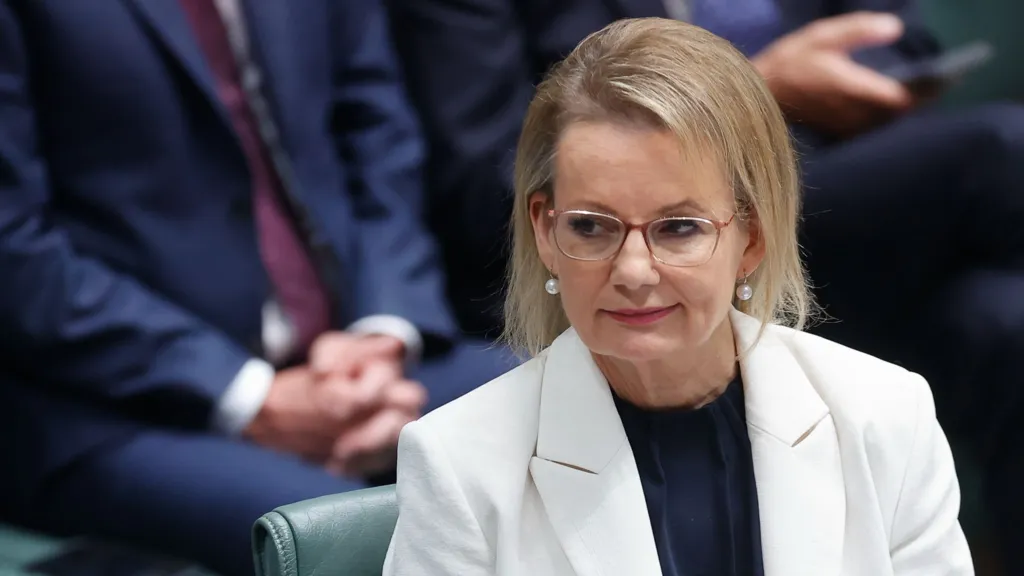
Australian Politics Faces Questions Over Gender Equality Amid Sussan Ley’s Appointment
-
 News4 hours ago
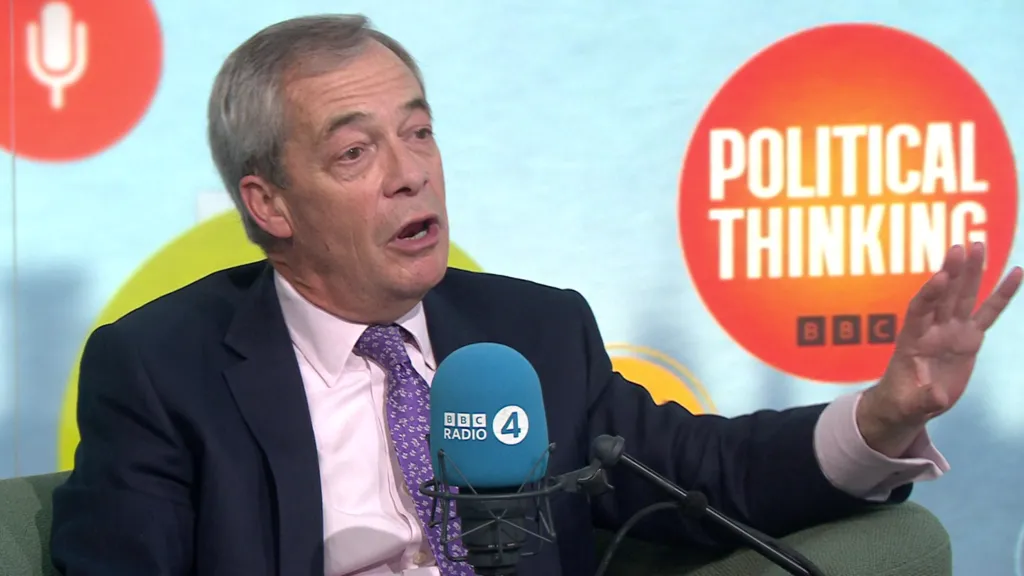
Farage Says Reform to Replace Traditional Tory Party
-
 News4 hours ago
Wrexham Pair Seek Win Against Former Team Ipswich
-
 News7 hours ago
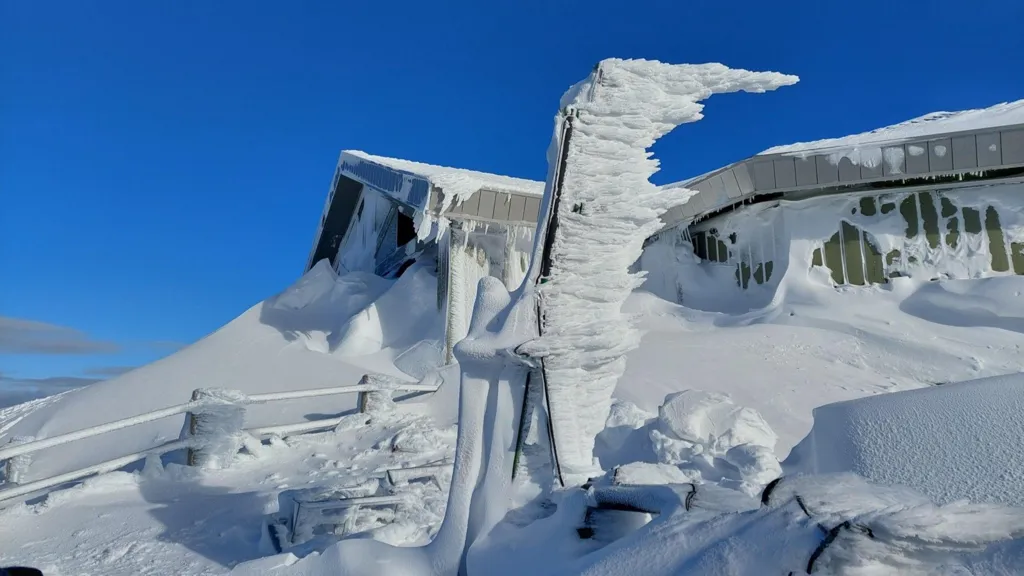
UK Braces for Cold Snap with Snow and Ice Alerts Expected
-
 News9 hours ago
Liberal Party Removes Australia’s First Female Leader
-
 News4 hours ago
Husband’s alleged £600k theft for sex and antiques blamed on drug side effects
-
 Business10 hours ago
BBC Reporter Exposed to Cyber Attack Due to Vulnerabilities in AI Coding Tool
-
 News2 days ago
Sunbed ads spreading harmful misinformation to young people