
Latin America
Venezuelan opposition politician under house arrest following kidnapping, according to son
Venezuelan security forces rearrested Juan Pablo Guanipa on Sunday, a short time following his release along with other jailed politicians.
Following his capture by security forces on Sunday, Venezuelan opposition politician Juan Pablo Guanipa has been returned to his home, where he is currently under house arrest, according to his son.
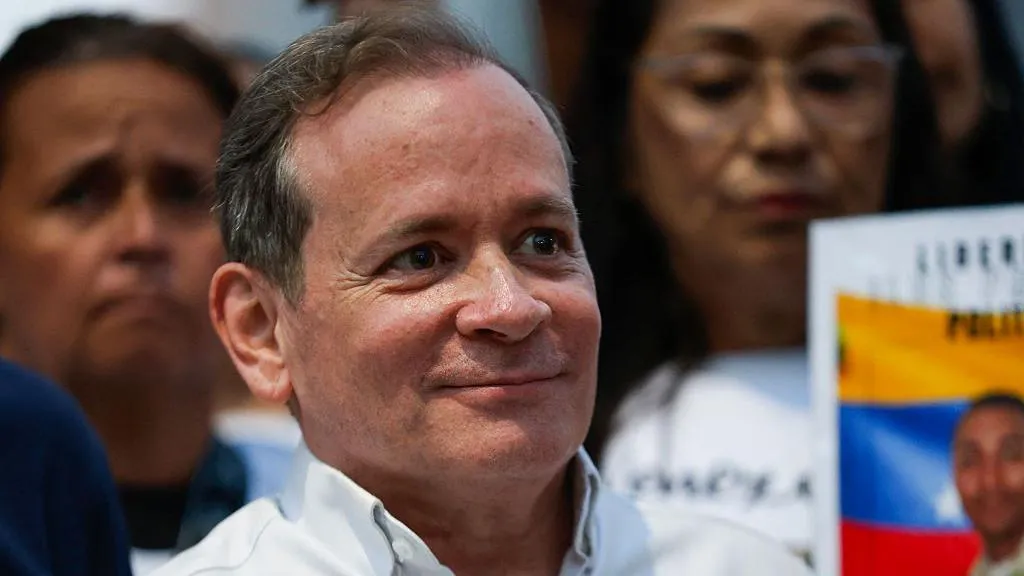
Ramón Guanipa expressed relief that his family has been reunited, but emphasized that his father's continued detention is unwarranted.
Opposition leader María Corina Machado reported that Guanipa was taken into custody by heavily armed individuals in Caracas on Sunday, just hours after his initial release from prison, along with other political prisoners.
In a subsequent statement, Interior and Justice Minister Diosdado Cabello confirmed that an individual had been rearrested for allegedly violating the terms of their release.
Cabello stated on Monday that some politicians apparently believed they could act with impunity.
Guanipa, a former vice-president of the National Assembly, had spent eight months in prison before being freed, along with several other political prisoners, after the US took action against Venezuelan President Nicolás Maduro in January.
In a BBC interview on Tuesday, Ramón Guanipa recounted that his father, the leader of the Justice First party, was initially released from prison on Sunday at approximately 11:00 local time.
After his release, Guanipa spent time with families awaiting the release of other political prisoners.
According to Ramón, his father made public statements, mobilized supporters, and participated in an interview before being detained by unidentified security forces.
Ramón stated that he was informed his father would be returned home and placed under house arrest, but no further details were provided regarding the timing of his transport.
Later on Tuesday, Ramón posted an update on his father's X account, confirming that Juan Pablo Guanipa was back at their home in Maracaibo and expressing relief that their family would soon be reunited.
However, Ramón emphasized that his father remains unjustly detained, as house arrest is still a form of imprisonment, and called for his full freedom, as well as that of all political prisoners.
Ramón expressed gratitude to the US government, including President Donald Trump and Secretary of State Marco Rubio, for their support of freedom in Venezuela and their efforts on behalf of political prisoners.
The Justice First party had previously stated that the 61-year-old Guanipa was kidnapped by government forces while traveling between locations.
The party reported that those accompanying Guanipa were warned that weapons were pointed at them before he was taken away in a car.
The Justice First party held Delcy Rodríguez, Jorge Rodríguez, and Diosdado Cabello accountable for any harm that might come to Guanipa, referencing the interim president, National Assembly speaker, and interior minister, respectively.
The party also urged the international community to demand Guanipa's immediate release and an end to the Venezuelan government's persecution of opposition members.
After Guanipa's recapture on Sunday, Ramón and opposition figure Edmundo González requested proof of his safety.
According to the Venezuelan human rights group Foro Penal, Guanipa was among at least 30 individuals released from prison on Sunday.
Guanipa was elected governor of the Zulia region in 2017 but was barred from taking office after refusing to swear an oath before Maduro's National Constituent Assembly.
He then went into hiding after being accused of terrorism and treason for challenging the 2024 election results.
Guanipa was eventually tracked down and detained by security forces in May 2025.
Opposition groups and human rights organizations have long maintained that the Maduro government uses detention of political prisoners to suppress dissent and silence critics.
Many political prisoners were detained after the 2024 presidential election, which Maduro claimed to have won despite opposition from his opponents and many countries.
The Venezuelan government has consistently denied holding political prisoners, instead asserting that those detained were arrested for criminal activities.
Latin America
Venezuelan opposition leader kidnapped shortly after release
María Corina Machado, a Nobel Peace Prize recipient, has stated that Juan Pablo Guanipa, a prominent political figure, was forcibly detained in the city of Caracas.
According to María Corina Machado, a prominent figure in Venezuela's opposition, her colleague Juan Pablo Guanipa was abducted shortly after his release from custody, in a disturbing turn of events.
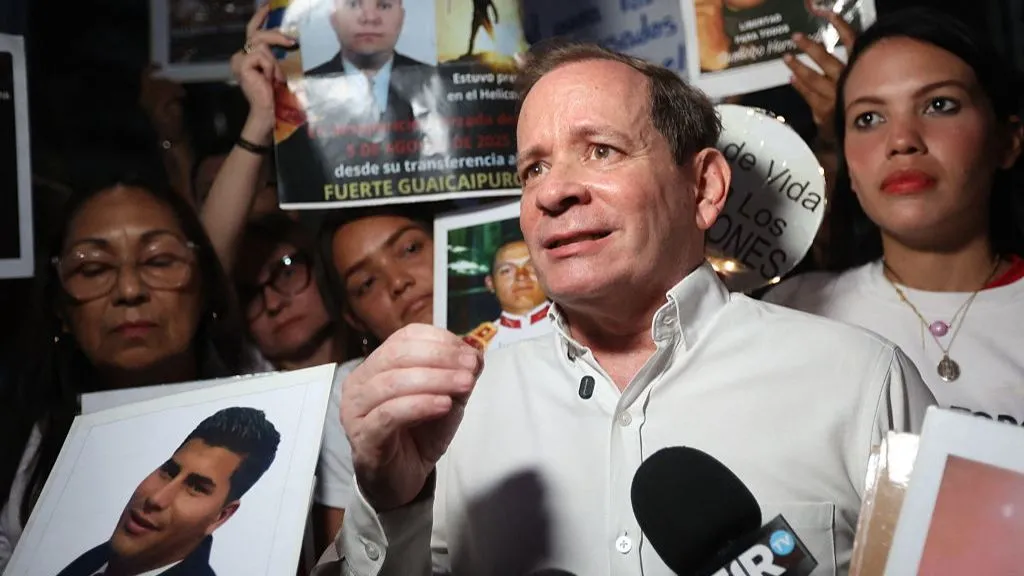
On Sunday, it was reported that Guanipa, who leads the Justice First party, was taken in the Los Chorros area of Caracas, the Venezuelan capital, sparking concern among his supporters.
In a social media post made early on Monday, Machado described the circumstances of Guanipa's disappearance, stating that a group of heavily armed individuals, dressed in plain clothes and traveling in four vehicles, forcibly took him away.
Guanipa, a former vice-president of the National Assembly, had been imprisoned for eight months before his release, which was part of a broader wave of releases that followed the US action against Venezuelan President Nicolás Maduro in January.
The Justice First party, a centre-right political organization, issued a statement alleging that Guanipa's kidnapping was carried out by the "repressive forces" of the government, while he was en route between two locations.
According to individuals who were with him, Guanipa was forced into a vehicle after guns were allegedly trained on the group.
In a social media statement, Justice First assigned responsibility for Juan Pablo Guanipa's safety to several high-ranking Venezuelan officials, including Delcy Rodríguez, Jorge Rodríguez, and Diosdado Cabello, who hold key positions in the government.
The party has urged the global community to call for Guanipa's immediate liberation and an end to the Venezuelan government's alleged harassment of opposition members.
Edmundo González, a prominent opposition figure, has requested confirmation of Guanipa's status, stating that the lack of information regarding his whereabouts is equivalent to a forced disappearance.
In a social media post made just hours prior, Ramón Guanipa, Juan Pablo's son, had expressed optimism about his father's expected release, anticipating a family reunion.
Following his detention, a video was uploaded online in which he called for immediate evidence confirming his father's safety and well-being.
In the video, Ramón Guanipa explicitly stated that he holds the current regime accountable for his father's fate, condemning the ongoing repression and urging an end to it.
According to Foro Penal, an organization that supports political prisoners in Venezuela, Guanipa was one of at least 30 individuals released on Sunday.
As the leader of the Justice First party, Guanipa won the governorship of the Zulia region in the 2017 election; however, he was prevented from assuming office after refusing to take an oath before the National Constituent Assembly established by Maduro.
After questioning the outcome of the 2024 election, Guanipa faced accusations of terrorism and treason, prompting him to go into hiding for his own protection.
In May 2025, Venezuelan security forces located and took him into custody.
According to opposition groups and human rights organizations, the Maduro government has a history of detaining political prisoners as a means of suppressing opposition and quieting critics.
Latin America
Giant jellyfish spotted off Argentina’s coast
Scientists conducting research in the deep waters of the South Atlantic have made a notable discovery, encountering a rare species of jellyfish known as the phantom jellyfish.
In the deep waters off Argentina, researchers have made a notable discovery, encountering a rare species of jellyfish that is not often seen.
The giant phantom jellyfish, known scientifically as Stygiomedusa gigantea, was captured on film at a depth of 250 metres in the South Atlantic Ocean.
A team of scientists from the Schmidt Ocean Institute has obtained footage of the creature, which can reach a diameter of up to 1 metre (3.3 feet) and has arms that extend up to 10 metres (33 feet) in length.
Characterised by their long, pink, ribbon-like appendages, the four arms of the giant phantom jellyfish are used for capturing prey, including fish and plankton, rather than for stinging, as the institute's findings indicate.
In addition to the jellyfish, the research team's expedition also yielded discoveries of 28 potentially new species, among them corals, sea urchins, and sea anemones.
Latin America
Survivor describes shark attack experience
While vacationing in the Caribbean with his wife, Peter Smith experienced a dramatic turn of events during a swim.
As Peter Smith's vacation in Tobago drew to a close, he opted to spend the final hour of his trip swimming in the ocean.
According to Peter Smith, a retired IT director, the seas were calm and ideal for swimming at the time of the incident. He waded into the water, covering a distance of no more than 20 feet (6m), until the water reached his waist.
Peter and his wife Joanna, who reside in Hertfordshire, were on holiday with friends, and the possibility of a shark encounter was not a concern for them, as such incidents are extremely rare on the island.
Peter recounts the shocking moment when he felt a massive impact on his leg, prompting him to look down and see a large shark.
Peter estimates the shark to have been around 10 feet (3m) in length, and recalls that his mind was racing at an incredible speed in the moments that followed.
A bull shark, known for its aggressive behavior in shallow waters, was the species responsible for the attack that Peter endured.
Speaking to BBC News for the first time since the incident occurred in April 2024, Peter recounts the details of his ordeal and explains why the experience has not instilled a fear of sharks in him.
At 66 years old, Peter claims he was able to identify the bull shark immediately when it bit his leg, prompting him to resist in an effort to avoid being pulled underwater.
Peter describes his response to the attack, saying, "I punched the shark repeatedly, although I'm not entirely sure what my goal was – I just kept hitting it." He adds, "I have never struck anything with as much force as I did that shark."
The shark's attack on Peter's leg was followed by bites to his left arm and stomach, resulting in significant blood loss and a rapidly escalating situation.
The animal's assault temporarily subsided, allowing bystanders to pull Peter to safety.
John and Moira, who were in the water with Peter, played a crucial role in fending off the shark and alerting others to the danger. Meanwhile, Joanna, who was on the beach, was alerted to the emergency by Moira's cries for help and rushed to the water's edge.
Joanna recounts the traumatic scene, saying, "The image of his severe injuries is still etched in my mind – the exposed bones were a horrific sight." She also remembers being ushered away from the scene, with someone warning, "Get her away from here."
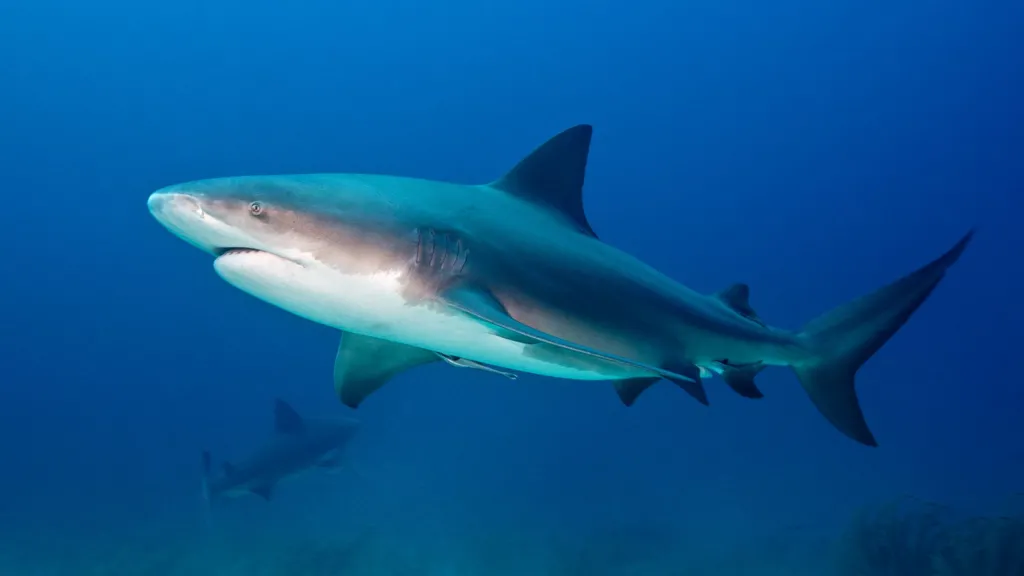
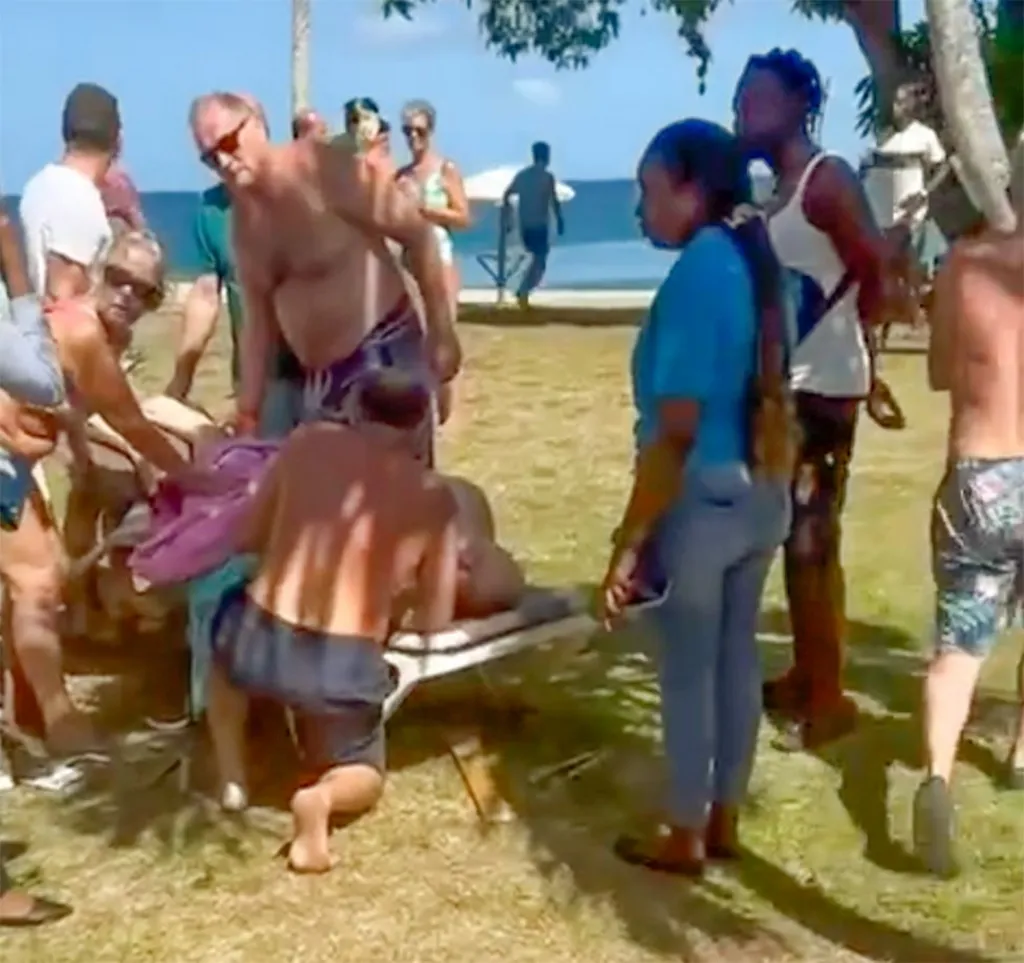
Peter was rushed to the island's sole hospital, where medical staff attended to his severe wounds, including deep stomach lacerations, a significant arm bite, and a traumatic thigh injury that had torn away a substantial portion of his upper leg.
As Peter was being loaded into the ambulance, the severity of his injuries began to take hold, and he describes the overwhelming pain and chaos that followed. "I was screaming and crying, losing a significant amount of blood, and my consciousness was slipping," he recalls. "People around me were shouting, urging me to stay awake."
A traumatic experience unfolded for Joanna, a 64-year-old retired NHS worker, as her husband was rushed to medical attention, leaving her uncertain about his chances of survival due to his alarming condition.
Joanna recalls the moment when medical staff in Tobago approached her about signing a consent form that would allow them to amputate her husband's limbs if necessary, but it soon became clear that he required more specialized care elsewhere, having exhausted the island's blood supply.
Her husband was subsequently transferred to Jackson Memorial Hospital in Miami, Florida, where he underwent an extensive series of operations over several weeks, including a procedure involving the application of a special membrane to facilitate a skin graft.
During one of these operations, medical staff informed him that the membrane in question was derived from shark tissue, prompting a moment of levity, as Peter now jokingly notes that he has a piece of shark integrated into his leg.
The road to recovery proved to be a lengthy and challenging one, with Peter requiring rehabilitation to regain his ability to walk due to the severe injury to his upper thigh, and he continues to cope with the long-term effects of nerve damage in his arm, resulting in permanent loss of sensation in his fingers and difficulties with gripping.
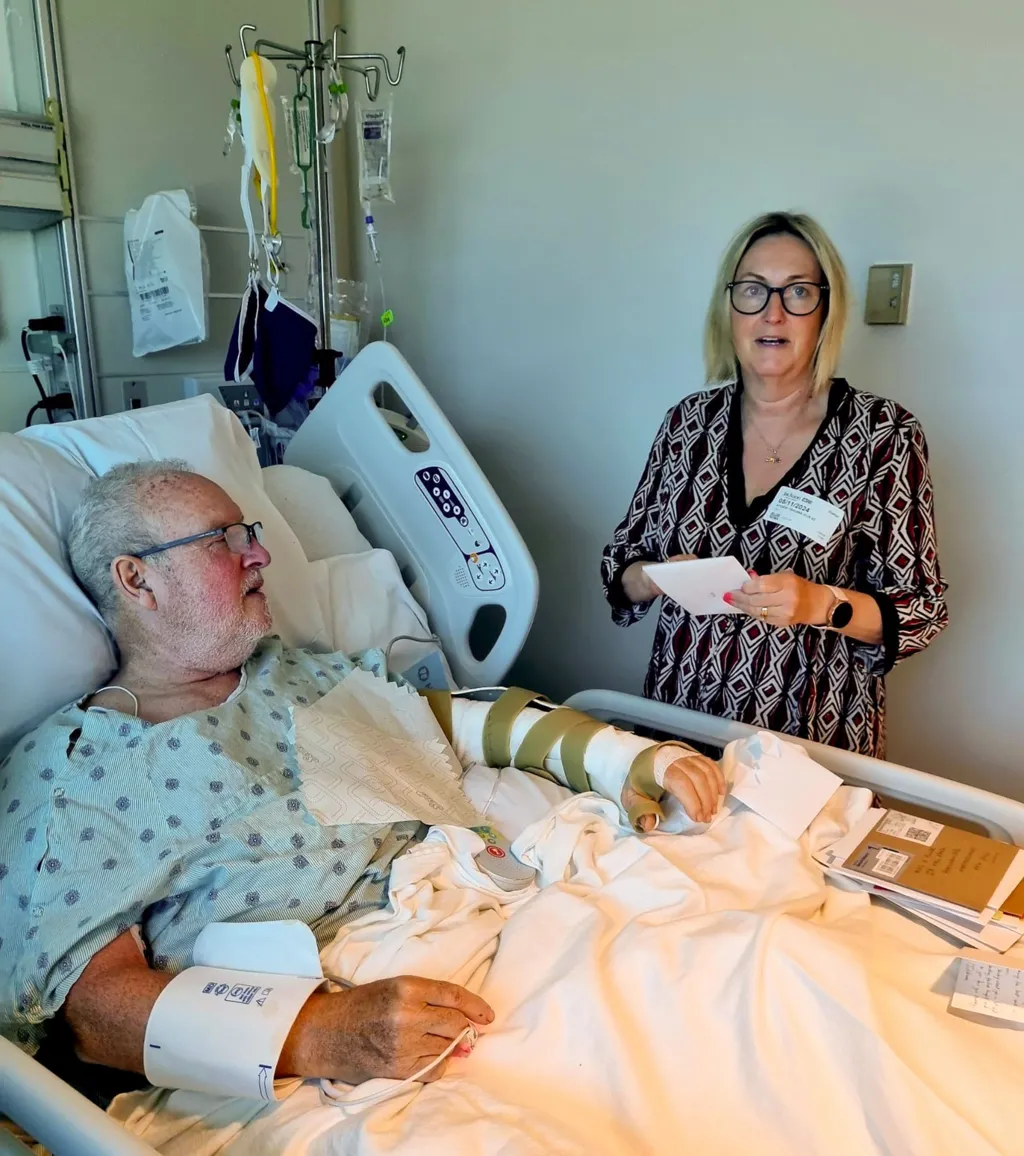
He expresses appreciation for his circumstances, noting that despite mobility issues, he is fortunate to have retained the use of his limbs. Initially, it seemed unlikely that he would be able to keep them.
His gratitude extends to both his medical team and the individuals who provided assistance during the incident. He acknowledges the bravery of those who helped him, stating that he will always be thankful for their support.
A series of recent incidents in Australia has highlighted the presence of bull sharks in the area. Between January 29 and 31, four shark attacks occurred, resulting in the fatal injury of a 12-year-old boy. Three of these incidents took place within a 15km radius on the eastern coast.
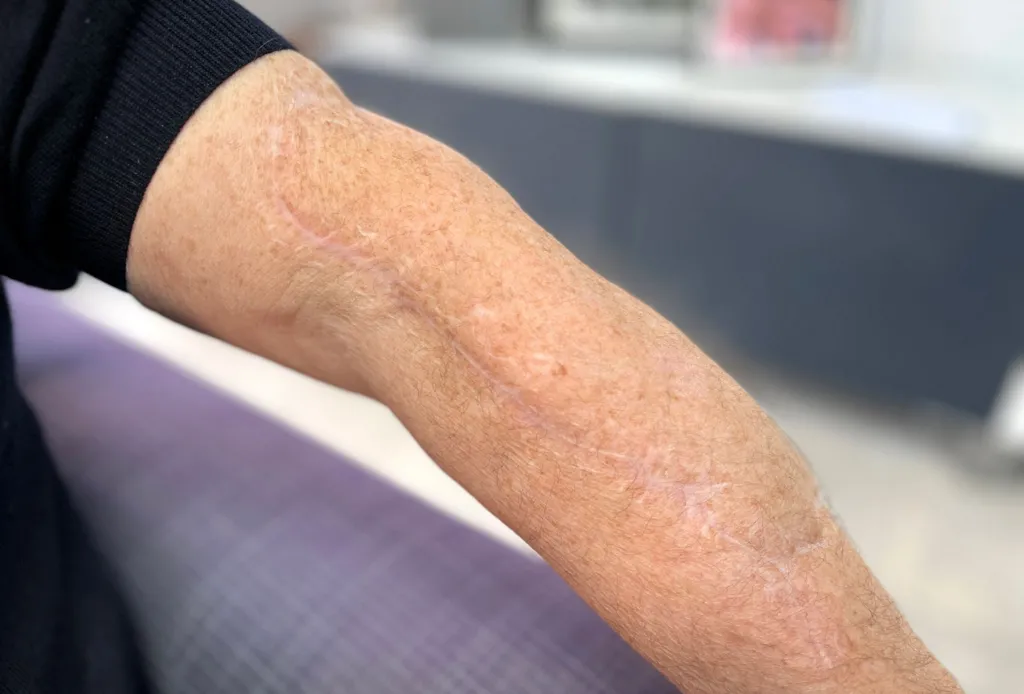
Experts have reminded the public that shark attacks are relatively rare, especially when compared to the large number of people engaging in water-based activities. They advise individuals to exercise caution when in the ocean, recognizing that it is a natural environment with inherent risks.
The International Shark Attack File, a reputable global database, reports that the 2024 incident involving Peter was the first recorded shark attack in Tobago, with no prior incidents documented in the region.
According to shark expert Tom 'The Blowfish' Hird, bull sharks are known for their aggressive behavior, particularly when provoked by boats or tagging. Hird notes that these sharks have a tendency to retaliate in such situations.
Despite their reputation, Hird points out that shark attacks resulting in fatalities are extremely rare, suggesting that humans are not a preferred prey. He emphasizes that if sharks like bull, tiger, or great whites were to target humans, the outcome would be devastating.
Hird argues that the negative portrayal of sharks is unjustified, stating that most sharks quickly learn to avoid humans due to their ability to defend themselves and their unpalatability as prey.
Peter, a victim of a shark incident, does not want his experience to harm the reputation of Tobago, and he claims to have no reason to fear the island or its waters.
Peter expresses his appreciation for the people of Tobago, who relied on tourism for their income, and says he would return to the island. He still has fond memories of his time there, recalling the sky and the sea.
For those who have endured a shark attack, the experience can be traumatic, raising questions about the long-term psychological impact of such an encounter, and whether survival comes at the cost of living with lasting fear.
-
 News5 hours ago
Australian Politics Faces Questions Over Gender Equality Amid Sussan Ley’s Appointment
-
 News3 hours ago
Farage Says Reform to Replace Traditional Tory Party
-
 News3 hours ago
Wrexham Pair Seek Win Against Former Team Ipswich
-
 News8 hours ago
Liberal Party Removes Australia’s First Female Leader
-
 News6 hours ago
UK Braces for Cold Snap with Snow and Ice Alerts Expected
-
 News3 hours ago
Husband’s alleged £600k theft for sex and antiques blamed on drug side effects
-
 News2 days ago
Sunbed ads spreading harmful misinformation to young people
-
 News14 hours ago
Ukraine Athletes Show Support for Barred Competitor with On-Field Gesture