
Middle East
Eyewitness describes Iran protest crackdown
A resident who fled Iran recounts witnessing chaotic scenes in her hometown, where security personnel reportedly fired on crowds.
A note to readers: the following account includes descriptions that may be upsetting to some individuals.
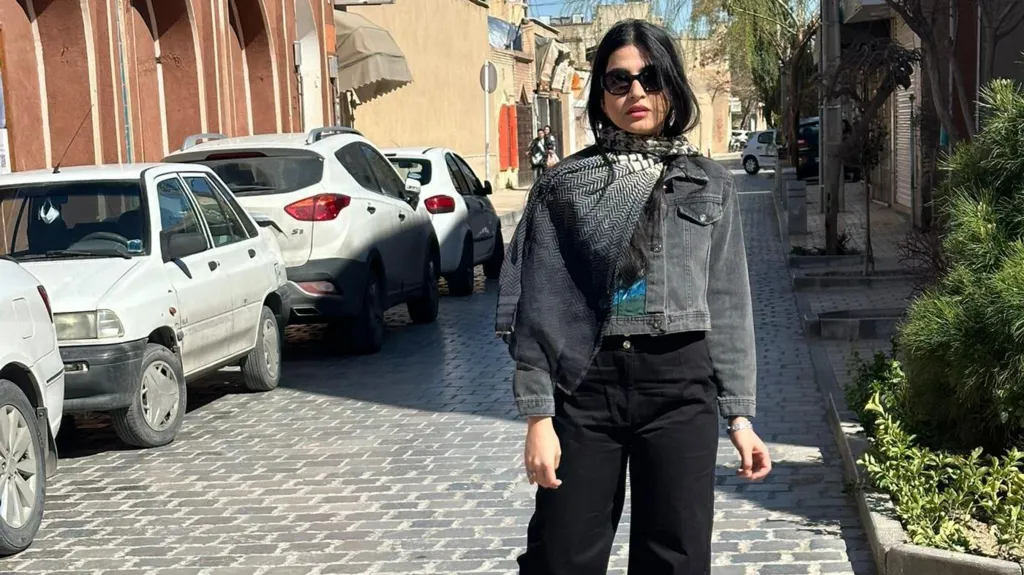
A woman from Iran has shared her firsthand experience of the violent suppression of protests in her home country, recounting how her local community was transformed into a scene of chaos as security personnel used live ammunition against demonstrators.
A nationwide internet shutdown, now entering its third week in Iran, has limited the flow of information about the situation, restricting the ability of many to report on events.
However, some individuals who have departed Iran have been able to provide personal accounts of the developments they witnessed.
Parnia, a resident of London, recounted to the BBC her experience of being in the central Iranian city of Isfahan, visiting family, when protests initially erupted in Tehran and subsequently spread rapidly nationwide, with demonstrations in Isfahan's Hakim Nezami and Khaghani neighbourhoods drawing hundreds of participants within a matter of days.
The crowd consisted of individuals ranging in age from 7 to 70, according to eyewitness accounts. On a single street, estimates suggest that between 200 to 300 people had gathered. Chants of "Death to the dictator" and "Long live the shah" filled the air, with the "dictator" referring to Iran's Supreme Leader Ayatollah Ali Khamenei, and the shah being a nod to the late Iranian monarch who was overthrown in 1979, as well as his son, exiled Crown Prince Reza Pahlavi.
Isfahan has a history of protests and subsequent crackdowns, but the recent unrest sparked by the Iranian currency's collapse has been particularly notable. Parnia, who witnessed the events, stated that she had never seen a situation like this before in the city.
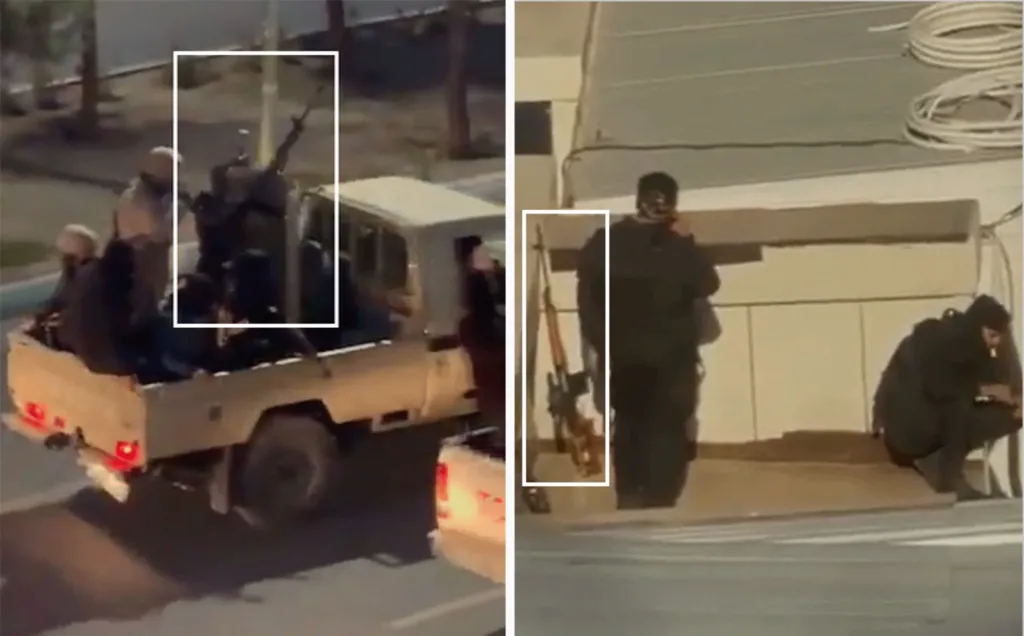
The security forces' response to the protesters began with the deployment of tear gas, followed by the formation of a line and the firing of birdshot, according to Parnia's account.
Parnia recounted the chaotic scene, describing how she witnessed people being shot and falling to the ground, with blood visible on the street.
In an attempt to escape the violence, Parnia fled through alleyways and was abruptly pulled into an apartment building by a woman. Upon entering, she found herself among a group of injured protesters who had also sought refuge there.
A witness described a gruesome scene in the lobby, where blood was visible on the floor, and a young girl was injured, with her leg riddled with pellets.
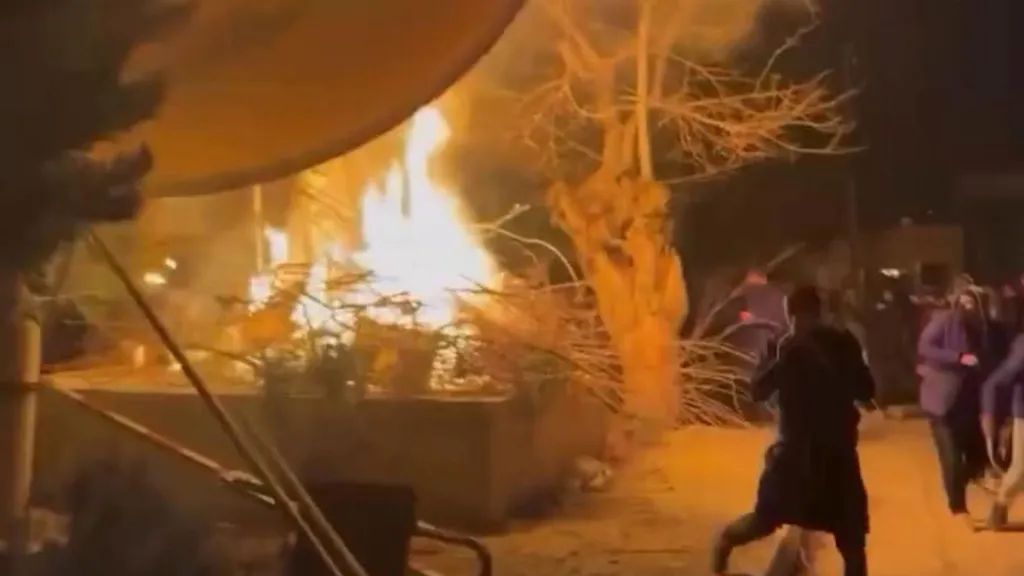
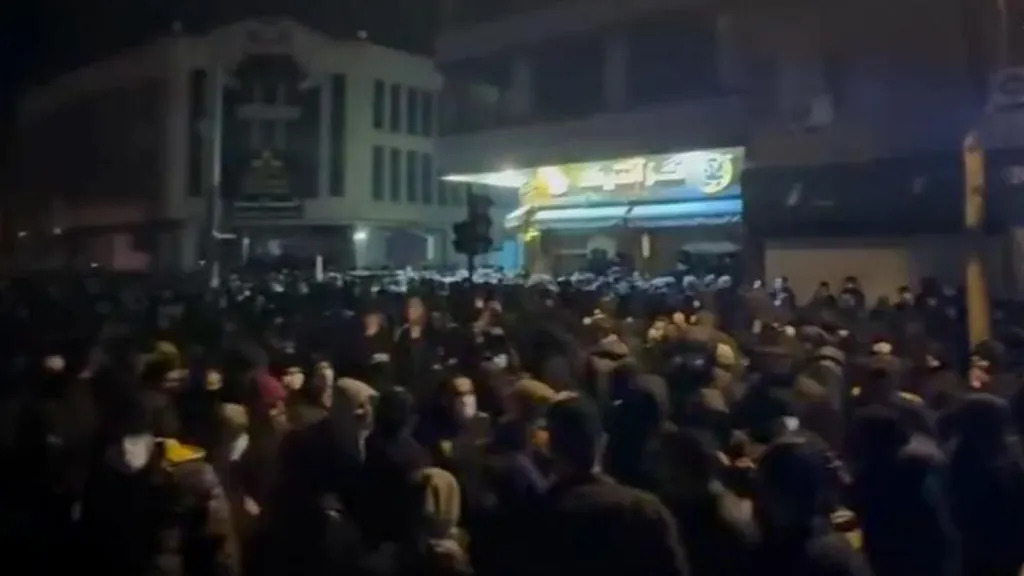
BBC-verified footage from that evening reveals a significant presence of protesters in Isfahan's streets, with some areas blocked off using traffic sign poles and large metal barriers, apparently as a measure to shield themselves from potential gunfire.
Additional video footage shows a group of protesters forcing their way into the premises of Iran's national broadcaster, Irib, which was subsequently set ablaze.
In a statement on Friday, 9 January, Iran's leader, Khamenei, vowed that the country would not yield in its response to what he termed "destructive elements", this came a day after US President Donald Trump issued a warning that Iran would face severe consequences if it resorted to violence against its citizens.
Following Khamenei's address, the Revolutionary Guards sent out a mass text message to the Iranian public, advising them to avoid participating in street gatherings in areas experiencing unrest, and cautioning against collaborating with individuals it labeled as "terrorist mercenaries", an offense it equated with treason.
On Friday evening, Parnia once again took to the streets to protest, undeterred by the potential dangers.
According to Parnia, the mood among protesters was one of cautious optimism, with a palpable sense of fear evident on the faces of those in attendance, who were reluctant to congregate in large groups or approach the security forces.
Parnia recalled that some protesters were willing to take a stand, even if it meant putting themselves in harm's way, in the hope that their actions would prompt a swift response from Trump.
In contrast to the previous day's events, which were captured in footage obtained by the BBC showing sizable crowds on main streets in Parnia's neighborhood, Friday's scene was markedly different, according to Parnia.
Parnia described how, on Friday, protesters had fragmented into small groups, gathering in alleyways, and that any attempt to assemble in larger numbers on the main streets was quickly met with the sound of live gunfire, followed by screams and shouts.
The BBC has been unable to obtain footage from Friday night's events due to internet disruptions and protesters choosing not to carry their phones, limiting access to visual evidence.
A local clinic in the area was overwhelmed, with Parnia painting a picture of utter disorder as medical staff struggled to treat injured demonstrators.
According to Parnia, communication was severely restricted, with no functioning phone lines, leaving people unable to contact their loved ones, and many opting to avoid hospitals due to concerns about potential arrest.
Medical personnel at the clinic were only able to provide basic care, cleaning wounds before releasing patients, as the city remained under a heavy security presence, with tear gas still lingering in the air the following day and checkpoints in place.
Parnia departed Isfahan on the same day, traveling to Tehran to board a return flight to London.
Upon arriving in Tehran at 6pm, the scene was marked by closed shops and large crowds in the streets. By 8pm, the atmosphere shifted as chanting began and gunshots could be heard.
The airport was overwhelmed with activity, as numerous foreign airlines had cancelled flights, leaving many passengers frustrated. However, a flight operated by an Iranian airline was available, providing a means to depart.
Following her return to the UK, Parnia has maintained contact with friends based in Isfahan.
According to information Parnia received, medical staff at Feiz eye hospital in Isfahan performed approximately 300 surgeries to treat patients suffering from birdshot-related facial injuries, which involved removing their eyes.
Parnia's friends in Isfahan reported that it has become a common sight to see individuals wearing eye patches while out in public, a stark observation made each time they venture into the streets.
Security forces are reportedly overseeing hospitals and detaining individuals with gunshot wounds in Isfahan, according to accounts from multiple healthcare professionals who have spoken to the BBC.
Friends of Parnia have allegedly stated that numerous injured individuals are contracting infections, prompting some doctors to discreetly refer them to private clinics for treatment by surgeons.
The Iranian government has stated that approximately 3,000 people lost their lives during the protests, whereas HRANA, a US-based human rights organization, has verified over 4,600 fatalities, with an additional 9,700 cases awaiting review; the group also reports that at least 7,300 people have suffered severe injuries, leading many to speculate that the actual numbers may be higher.
Parnia is making preparations to participate in Iranian opposition demonstrations in the UK, aiming to serve as a voice for protesters who have been silenced.
Parnia has also voiced displeasure over certain international media reports that imply a lack of unity among Iranians and the country's political opposition.
In recent times, the people of Iran have taken to the streets to express their desires, suffering significant consequences as a result.
Middle East
BBC reports from Tehran as Iran commemorates Islamic revolution anniversary
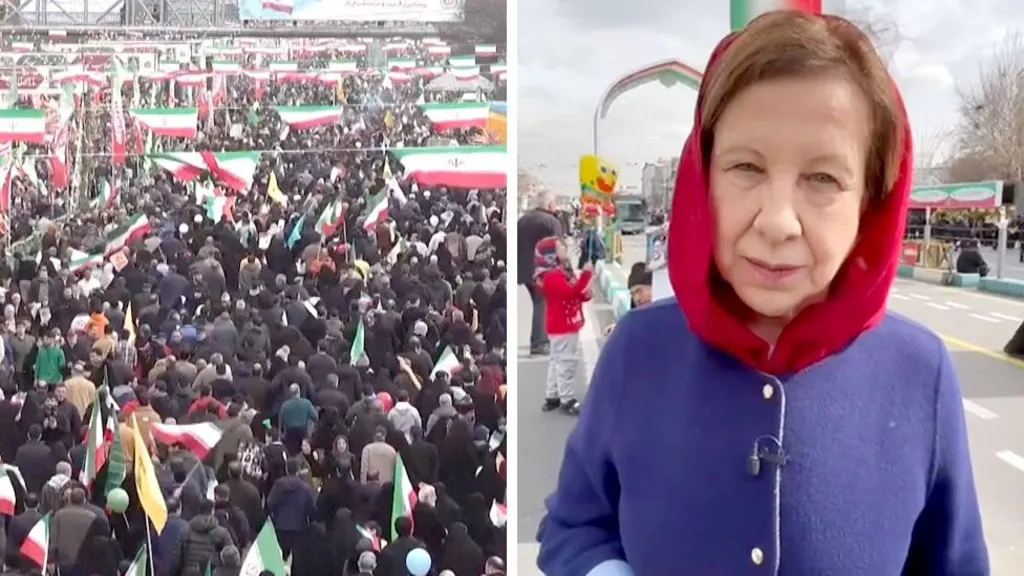
BBC correspondent Lyse Doucet has arrived in Iran, marking her first visit to the country since authorities suppressed widespread demonstrations against the government.
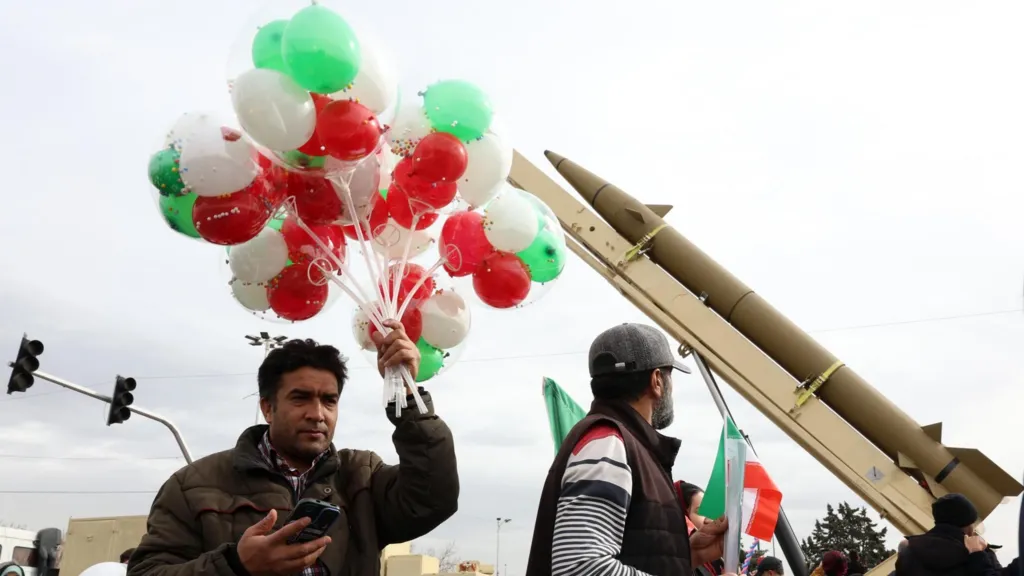
Iran's government has staged a display of strength to commemorate the 47th anniversary of the Islamic revolution, following a period of intense repression of anti-government demonstrations.
The BBC has gained access to Tehran for the first time since the authorities' crackdown on protests, which resulted in the deaths of at least 6,490 people, according to estimates by human rights activists.
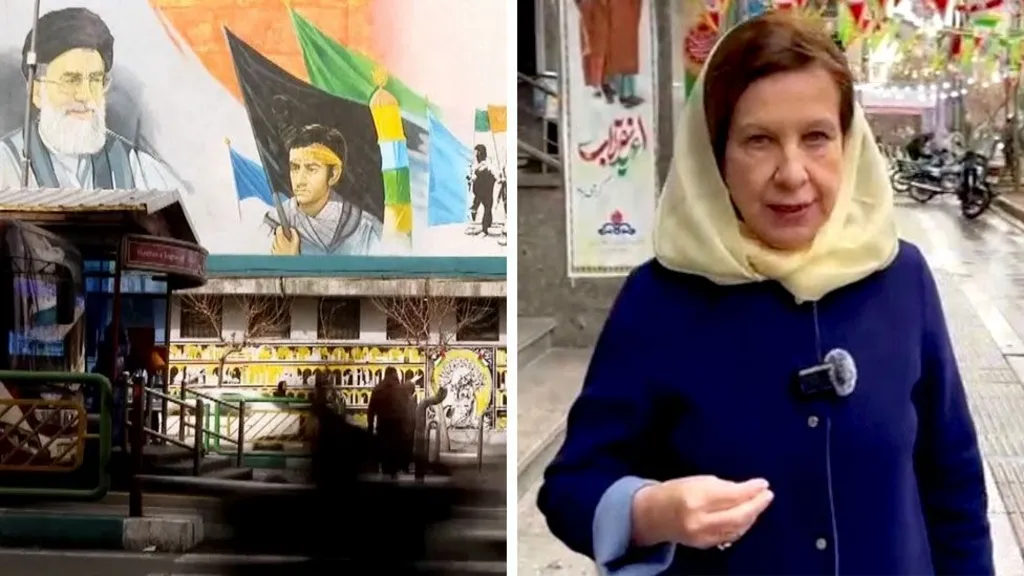
Lyse Doucet, the BBC's chief international correspondent, observes that the capital's streets, adorned with festive decorations and filled with crowds of supporters, reflect the government's desired image of a unified nation, with Iranians demonstrating their allegiance to the Islamic Republic and its founding revolution.
Middle East
BBC reports from Tehran for the first time since the protest crackdown
In Iran, the aftermath of the government’s crackdown on protests remains a sensitive issue, with the effects of the unusually strong measures still being felt, according to Lyse Doucet, reporting from the country.
For the first time since a nationwide crackdown on anti-government demonstrations, a BBC team has entered Iran to report on the current situation.
As Iran commemorates the 47th anniversary of the Islamic Revolution, the streets of Tehran are adorned with festive decorations, yet the memory of the recent protests and the subsequent use of force by security personnel remains a sensitive issue.
According to human rights activists, the confirmed number of protester fatalities stands at a minimum of 6,400, although they caution that the actual death toll may ultimately be significantly higher.
Asia
Indonesia plans to deploy up to 8,000 troops to Gaza
As part of the second phase of the ceasefire agreement facilitated by the US in the previous year, this nation would become the first to take such action.
Indonesia is making preparations to deploy a contingent of up to 8,000 soldiers to Gaza, marking the first such commitment under the second phase of a ceasefire agreement facilitated by the United States towards the end of last year.
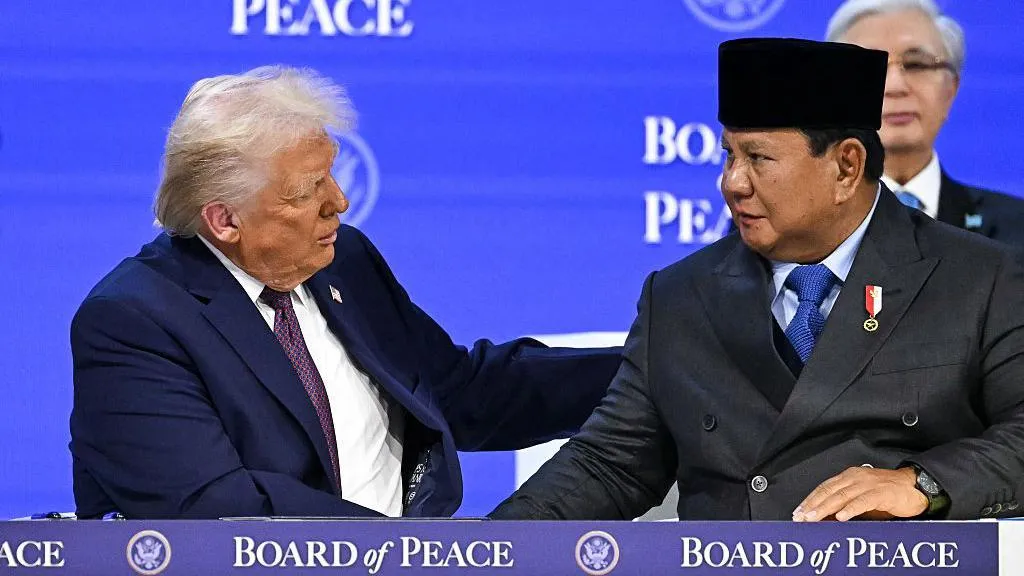
According to General Maruli Simanjuntak, the army's chief of staff, training for these troops is already underway, with a focus on providing medical and engineering support in Gaza.
Indonesia has recently joined the Board of Peace initiated by President Donald Trump, an announcement that was made last month.
The United Nations Security Council has given Indonesia a mandate to establish an International Stabilization Force, tasked with securing border areas in Gaza and overseeing the demilitarization of the territory, including the disarmament of Hamas.
The Board of Peace, scheduled to convene for the first time in Washington on February 19, will also play a role in overseeing the establishment of a new technocratic government in Gaza and guiding post-conflict reconstruction efforts.
While the specifics of the Indonesian troop deployment, including timing and role, have yet to be finalized, it appears that President Prabowo Subianto is moving forward with the plan.
President Subianto's decision to participate in Trump's Board of Peace has drawn criticism from certain Islamic groups within Indonesia, where there is significant public discontent regarding the US role in Israel's military actions in Gaza.
President Subianto has countered that, as the world's most populous Muslim nation, Indonesia has a responsibility to contribute to stabilizing Gaza, with the ultimate goal of achieving a two-state solution to the Israeli-Palestinian conflict.
A report by Israel's public broadcaster Kan indicates that a location in southern Gaza, situated between Rafah and Khan Younis, has been designated for the Indonesian army to construct barracks that will accommodate several thousand troops.
Other Muslim countries, including Turkey and Pakistan, are considering troop deployments as well, but have emphasized that their roles would be limited to peacekeeping and would not involve participation in the planned disarmament of Hamas.
However, given Hamas's refusal to disarm as long as Israel maintains its presence in parts of Gaza, a lasting peace that an international force could support has yet to be achieved.
-
 News10 hours ago
Australian Politics Faces Questions Over Gender Equality Amid Sussan Ley’s Appointment
-
 News7 hours ago
Farage Says Reform to Replace Traditional Tory Party
-
 News7 hours ago
Wrexham Pair Seek Win Against Former Team Ipswich
-
 News12 hours ago
Liberal Party Removes Australia’s First Female Leader
-
 News10 hours ago
UK Braces for Cold Snap with Snow and Ice Alerts Expected
-
 News7 hours ago
Husband’s alleged £600k theft for sex and antiques blamed on drug side effects
-
 News2 days ago
Sunbed ads spreading harmful misinformation to young people
-
 Business12 hours ago
BBC Reporter Exposed to Cyber Attack Due to Vulnerabilities in AI Coding Tool