
Middle East
Syria’s Kurds feel betrayed as US withdraws support
For years, the United States collaborated with Kurdish forces in the fight against the Islamic State. However, under the presidency of Donald Trump, the US has shifted its stance, now aligning itself with the current leadership in Syria.
Commander Azad, a seasoned Syrian Kurdish fighter, bears the physical marks of his years of combat, including a limp, which he carries with a sense of pride and duty.
Recounting his injuries, Commander Azad explains that his leg was damaged in a 2018 bombing by a Turkish warplane, while his arm still bears the scar of shrapnel from a suicide bombing. He also suffered injuries to his back, abdomen, and lower body in multiple attacks by the Islamic State group, also known as Daesh.
However, Commander Azad's most recent pain stems from a sense of betrayal, which he believes was perpetrated by the United States, a former ally. The US and Kurdish forces had previously collaborated to drive the Islamic State group out of the approximately one-third of Syria and Iraq that it had occupied since 2014.
That alliance has now come to an end.
Commander Azad, who sports a distinctive handle-bar moustache and wears a green fringed scarf, expresses his disillusionment, stating that history will judge the actions of the US. While acknowledging the moral implications of the situation, he affirms the Kurdish commitment to continuing their fight, saying, "We will persevere until our last breath, and we will not be swayed by setbacks."
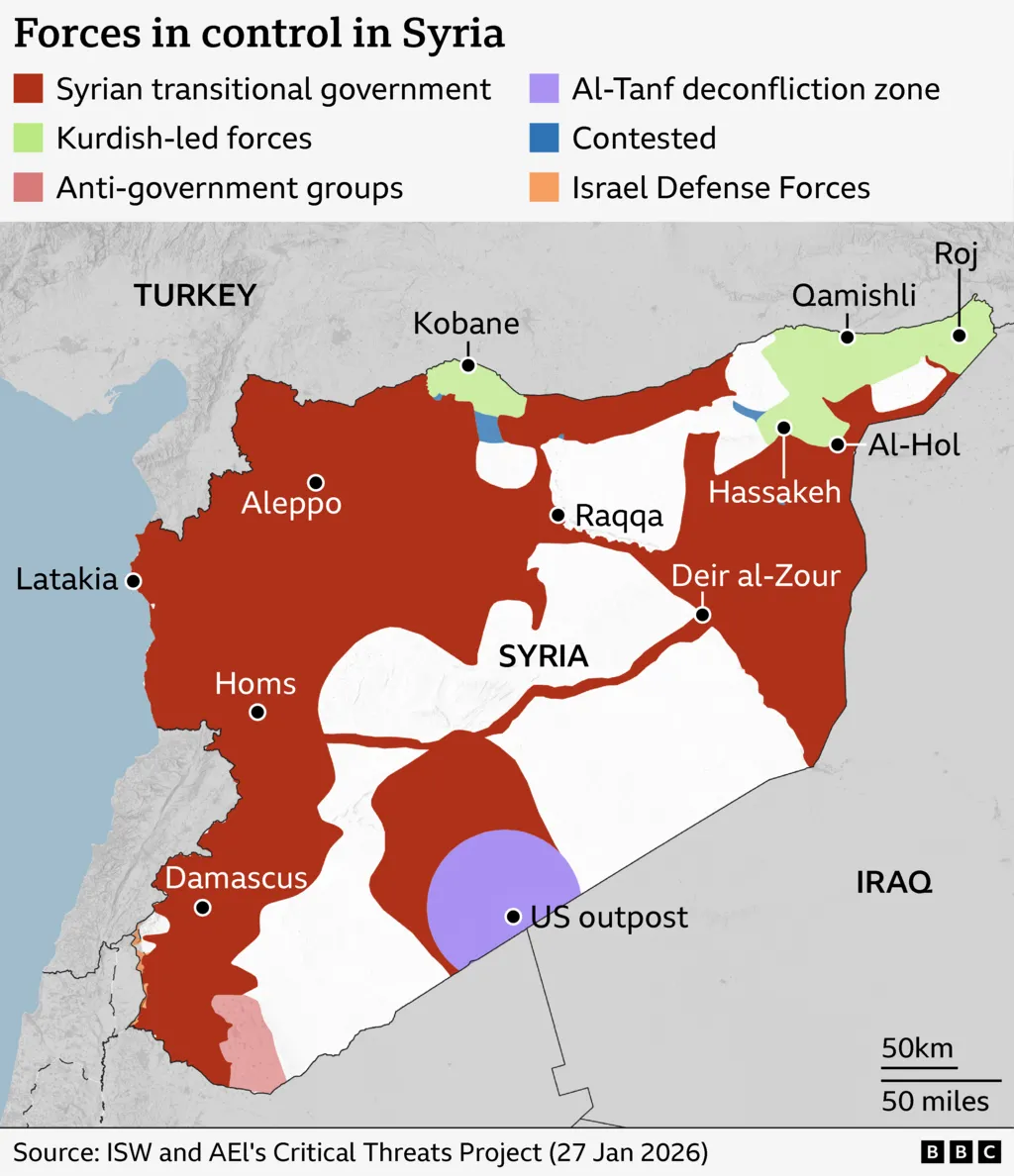
The current conflict in Syria pits the central government in Damascus against the Kurdish autonomous region in the north-east, as the government seeks to assert its control over the entire country.
Over the past two weeks, Syrian government forces have made significant gains, displacing the Kurdish-led Syrian Democratic Forces (SDF) from resource-rich areas they had controlled for 10 years, following their victory over the Islamic State (IS).
Amidst the escalating conflict, the White House has expressed strong support for Syria's interim president, Ahmed al-Sharaa, a former jihadist. This move has been perceived as a setback for the Kurds, who suffered heavy losses – 11,000 fighters – in their battle against IS.
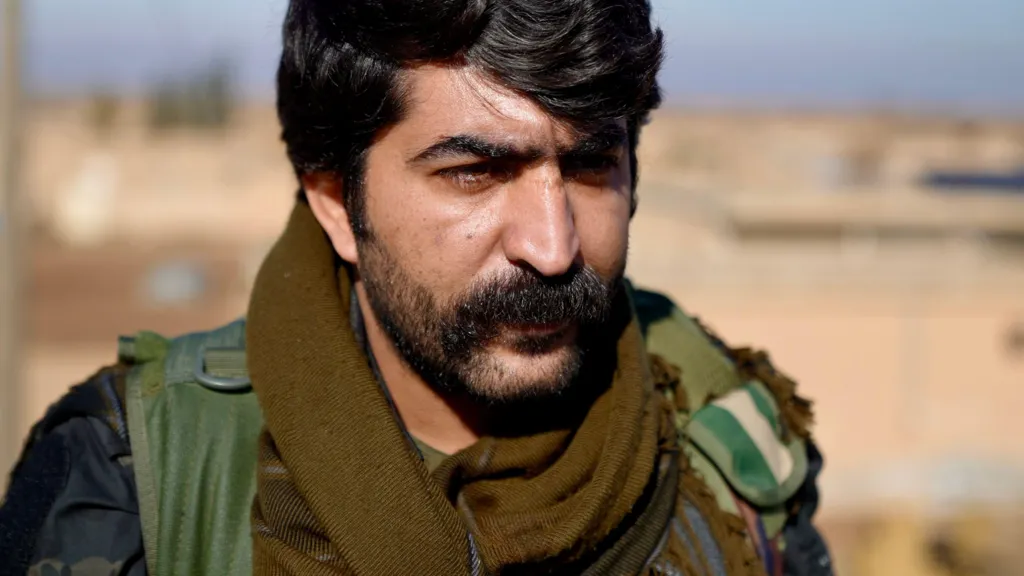
According to Commander Azad, the interim president bears similarities to Abu Bakr al-Baghdadi, the deceased founder of IS. He draws parallels between the two, stating that the president, also known as Abu Mohammed Al Jolani, will perpetuate a state of war in Syria.
Ahmed al-Sharaa's past is marked by his involvement in fighting US troops in Iraq and his role in establishing an al-Qaeda offshoot in Syria, which, despite shared roots, was a fierce opponent of IS. He later severed ties with al-Qaeda and, in a significant turn of events, assumed power in Damascus in December 2024, succeeding Bashar al-Assad.
To the Kurdish community, Al Sharaa's transformation from a jihadi to a suited individual has not altered their perception of him.
With a stiff gait, Commander Azad ascends to a rooftop offering a panoramic view of the surrounding countryside.
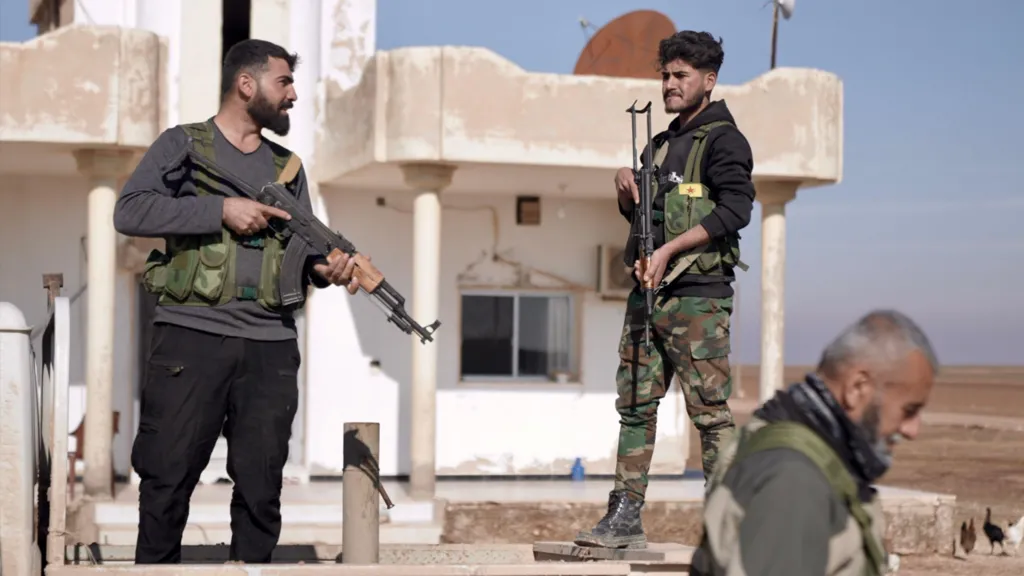
The landscape below is characterized by sheep grazing in fields and laundry hanging from a clothesline in a residential backyard. However, the presence of a pickup truck equipped with an anti-aircraft machine gun, parked near the entrance, and a group of troops wearing camouflage attire, underscores the reality of the location as the SDF's final checkpoint in Hassakeh province.
Commander Azad points to the horizon, indicating the proximity of Syrian government forces, approximately seven kilometers away, in an Arab village. He expresses a sense of cautious optimism, stating that while there is currently no immediate threat, he is prepared for the possibility of conflict, invoking the words of Che Guevara, the Cuban revolutionary leader, saying "if it comes, let it be welcome."
A tentative ceasefire between the two sides was set to lapse on February 7, but a recent agreement has been reached to extend the truce and initiate the process of integrating Kurdish forces into the Syrian military. This development follows a previous integration agreement, signed in March of the previous year, which ultimately failed to materialize.
Siyamend Ali, a member of the People's Protection Units (YPG), a key component of the SDF, emphasizes that while war is not the preferred option, the group will defend itself if necessary. "We will respond if forced into conflict," he states.
Ali warns that any potential conflict would lead to devastating consequences for the opposing side, with each neighborhood potentially becoming a battleground.
Having already experienced significant losses in the fight against IS, Ali reflects on the high number of comrades he has lost, which totals in the hundreds.
In a somber tone, Ali recalls his fallen friends, noting that they included childhood companions, classmates, and family members, all of whom have made the ultimate sacrifice. He now continues their legacy, following in their footsteps.
At a separate frontline location, where newly constructed earthworks serve as defensive barriers, the prospect of all-out war looms large, with potentially dire consequences for the Kurdish forces and far-reaching implications that extend beyond this region of Syria.
Following the Islamic State's defeat in Syria in 2019, the region has become a temporary holding area for the remaining elements of the group's self-proclaimed "caliphate". Approximately 8,000 suspected IS fighters are being held in Kurdish-run detention facilities, while around 34,000 of their family members are being detained in camps. The question remains as to what will happen to these detention centers if the region becomes a conflict zone.
The Syrian government has assumed control of the al-Hol camp, located in eastern Hassakeh.
During a visit to the camp last October, accompanied by an armed escort, the reception was hostile, with veiled women, dressed in black, displaying aggressive behavior. One of the women made a threatening gesture, drawing her finger across her throat.
The Roj camp, another major detention center, remains under Kurdish control, housing over 2,000 foreign women and children who have not been convicted of any crimes.
The camp's rows of blue and white tents provide inadequate protection against the harsh winter conditions. Children are seen playing in the mud, surrounded by fences, walls, and watchtowers, highlighting the fact that Roj essentially functions as a prison.
Upon our return to the camp, we found manager Hekmiya Ibrahim expressing growing concern. Despite her petite stature, she exudes determination and strength. According to Ibrahim, the detainees have become more emboldened in recent times, likely due to developments outside the camp.
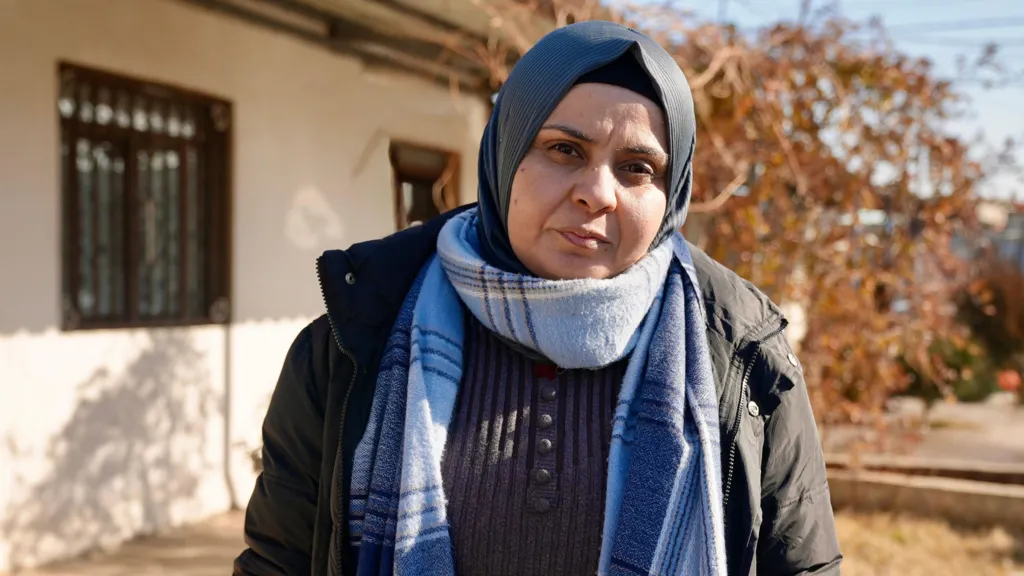
Ibrahim described the scene that unfolded when news of the government takeover of al-Hol reached the camp, saying, "The detainees emerged from their tents, shouting 'Allahu Akbar' in unison, and the chanting resonated throughout the entire camp."
Ibrahim pulled out her phone to show us images of the IS flag, which had been recently painted on one of the camp's walls in black and white. She also shared threats made against the staff, including statements such as "We will return," "You are infidels," and "ISIS will eliminate you."
Ibrahim cautioned that certain individuals within the camp, including some younger detainees, may pose a threat to global security.
Ibrahim cited a specific incident from last October involving twin brothers from Turkmenistan, where one brother killed the other. When questioned, the perpetrator stated that he would commit the act again if his brother were to come back to life, highlighting the disturbing nature of the incident.
The justification given was that the deceased brother did not hold extremist views to the desired extent.
During a visit to the camp's bleak marketplace, we encountered women who emphasized that their children should not be held accountable for the actions of others and deserved a chance at a normal life. Two women from North Africa, who wished to remain anonymous, shared their stories with us.
One of the women expressed her desire to leave the camp, citing her daughter's right to access education, healthcare, and basic freedoms. She hoped that her child could receive medical attention without the presence of soldiers and enjoy simple pleasures like visiting a park.
When questioned about their decision to join IS, the woman's companion intervened, stating that she had not willingly joined the group. She claimed that her husband had forced her to come to the camp, and after his death, she and her children were left to face the consequences. She noted that her children's perception of the world was limited to the confines of the camp.
Approximately 40 British nationals, including 25 children, remain confined within the camp. We met one of these individuals, a young boy who spoke fluent English and greeted one of our BBC colleagues with a handshake, inquiring about their well-being. Due to circumstances, we are unable to disclose his identity.
A UK national expressed a desire to return home, but declined to be interviewed due to the presence of camp guards. Two other British women, including Shamima Begum, who traveled to IS territory as a teenager, also refused to speak. According to camp staff, Begum was avoiding interaction by staying in her tent.
A Bosnian woman became emotional when reflecting on her decision to join IS. She expressed remorse, stating, "I regret coming here with my husband, as it has ruined my life." She struggled to understand her own actions, describing her decision as a mistake.
The woman reported that her husband's radicalization occurred over time, after they met in college. By the time this change took place, they already had one child together, and she later gave birth to a second child in Syria.
The woman voiced concerns about the potential for conflict, saying, "We are alarmed by reports of a possible war." She expressed hope for a peaceful resolution, allowing her and others to return to their home countries.
As the situation in Syria continues to evolve, countries that have been willing to leave their citizens in Kurdish camps for an extended period, including the UK, may be forced to reevaluate their stance.
Reporting for this article was also contributed by Wietske Burema, Goktay Koraltan, and Bizhar Shareef


Middle East
BBC reports from Tehran as Iran commemorates Islamic revolution anniversary
BBC correspondent Lyse Doucet has arrived in Iran, marking her first visit to the country since authorities suppressed widespread demonstrations against the government.
Iran's government has staged a display of strength to commemorate the 47th anniversary of the Islamic revolution, following a period of intense repression of anti-government demonstrations.
The BBC has gained access to Tehran for the first time since the authorities' crackdown on protests, which resulted in the deaths of at least 6,490 people, according to estimates by human rights activists.
Lyse Doucet, the BBC's chief international correspondent, observes that the capital's streets, adorned with festive decorations and filled with crowds of supporters, reflect the government's desired image of a unified nation, with Iranians demonstrating their allegiance to the Islamic Republic and its founding revolution.
Middle East
BBC reports from Tehran for the first time since the protest crackdown
In Iran, the aftermath of the government’s crackdown on protests remains a sensitive issue, with the effects of the unusually strong measures still being felt, according to Lyse Doucet, reporting from the country.
For the first time since a nationwide crackdown on anti-government demonstrations, a BBC team has entered Iran to report on the current situation.
As Iran commemorates the 47th anniversary of the Islamic Revolution, the streets of Tehran are adorned with festive decorations, yet the memory of the recent protests and the subsequent use of force by security personnel remains a sensitive issue.
According to human rights activists, the confirmed number of protester fatalities stands at a minimum of 6,400, although they caution that the actual death toll may ultimately be significantly higher.
Asia
Indonesia plans to deploy up to 8,000 troops to Gaza
As part of the second phase of the ceasefire agreement facilitated by the US in the previous year, this nation would become the first to take such action.
Indonesia is making preparations to deploy a contingent of up to 8,000 soldiers to Gaza, marking the first such commitment under the second phase of a ceasefire agreement facilitated by the United States towards the end of last year.
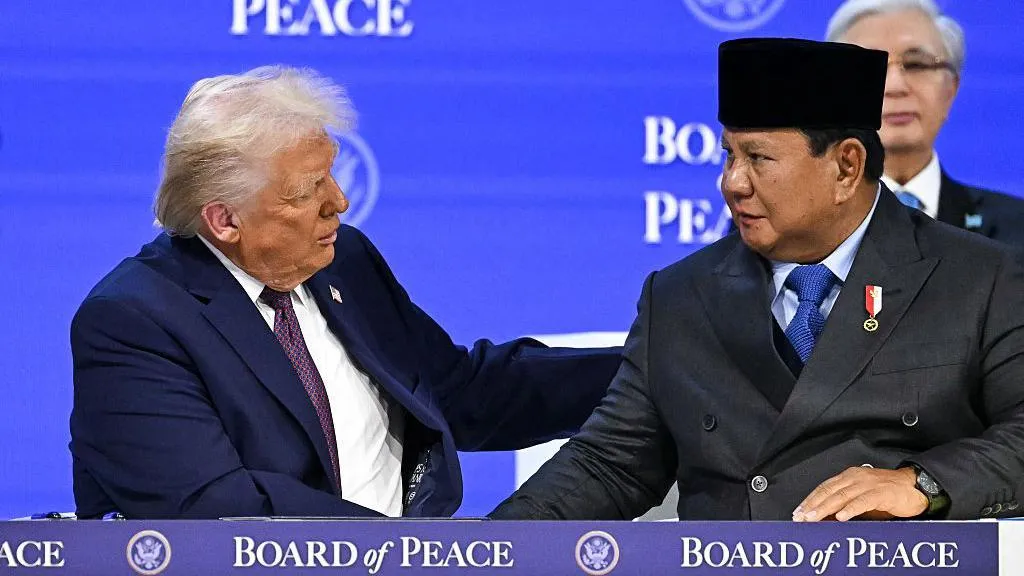
According to General Maruli Simanjuntak, the army's chief of staff, training for these troops is already underway, with a focus on providing medical and engineering support in Gaza.
Indonesia has recently joined the Board of Peace initiated by President Donald Trump, an announcement that was made last month.
The United Nations Security Council has given Indonesia a mandate to establish an International Stabilization Force, tasked with securing border areas in Gaza and overseeing the demilitarization of the territory, including the disarmament of Hamas.
The Board of Peace, scheduled to convene for the first time in Washington on February 19, will also play a role in overseeing the establishment of a new technocratic government in Gaza and guiding post-conflict reconstruction efforts.
While the specifics of the Indonesian troop deployment, including timing and role, have yet to be finalized, it appears that President Prabowo Subianto is moving forward with the plan.
President Subianto's decision to participate in Trump's Board of Peace has drawn criticism from certain Islamic groups within Indonesia, where there is significant public discontent regarding the US role in Israel's military actions in Gaza.
President Subianto has countered that, as the world's most populous Muslim nation, Indonesia has a responsibility to contribute to stabilizing Gaza, with the ultimate goal of achieving a two-state solution to the Israeli-Palestinian conflict.
A report by Israel's public broadcaster Kan indicates that a location in southern Gaza, situated between Rafah and Khan Younis, has been designated for the Indonesian army to construct barracks that will accommodate several thousand troops.
Other Muslim countries, including Turkey and Pakistan, are considering troop deployments as well, but have emphasized that their roles would be limited to peacekeeping and would not involve participation in the planned disarmament of Hamas.
However, given Hamas's refusal to disarm as long as Israel maintains its presence in parts of Gaza, a lasting peace that an international force could support has yet to be achieved.
-
 News10 hours ago
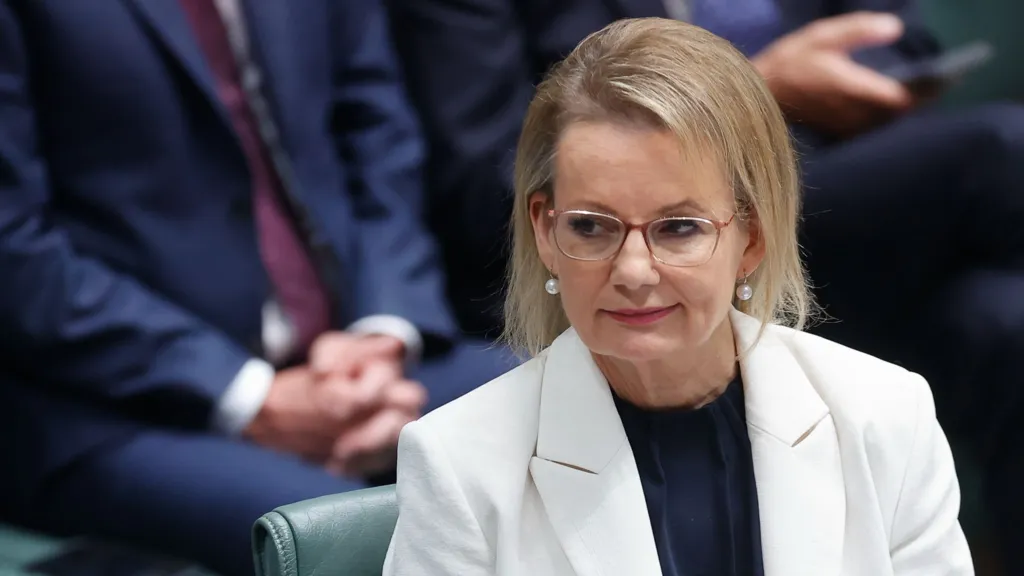
Australian Politics Faces Questions Over Gender Equality Amid Sussan Ley’s Appointment
-
 News7 hours ago
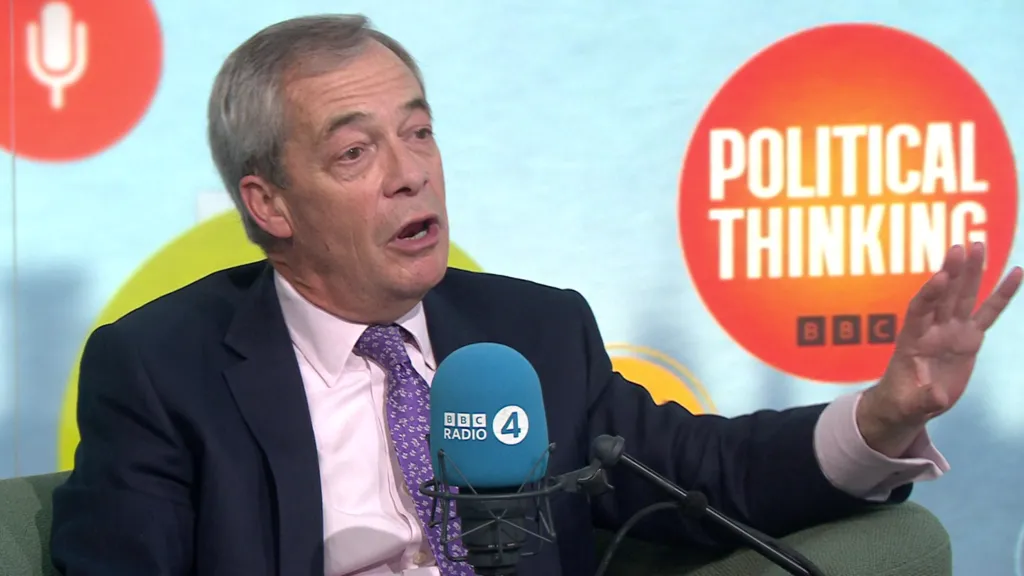
Farage Says Reform to Replace Traditional Tory Party
-
 News7 hours ago
Wrexham Pair Seek Win Against Former Team Ipswich
-
 News12 hours ago
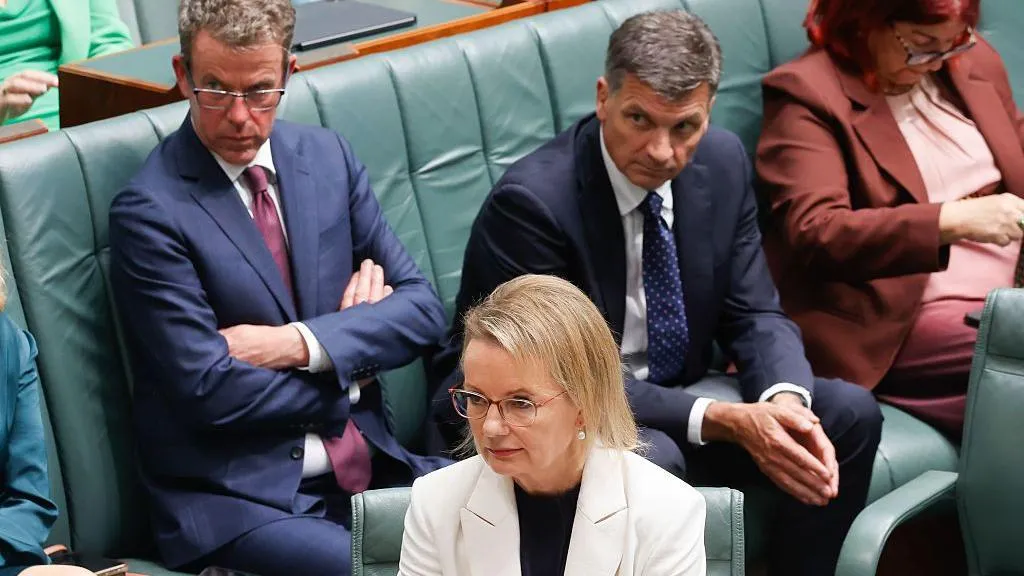
Liberal Party Removes Australia’s First Female Leader
-
 News10 hours ago
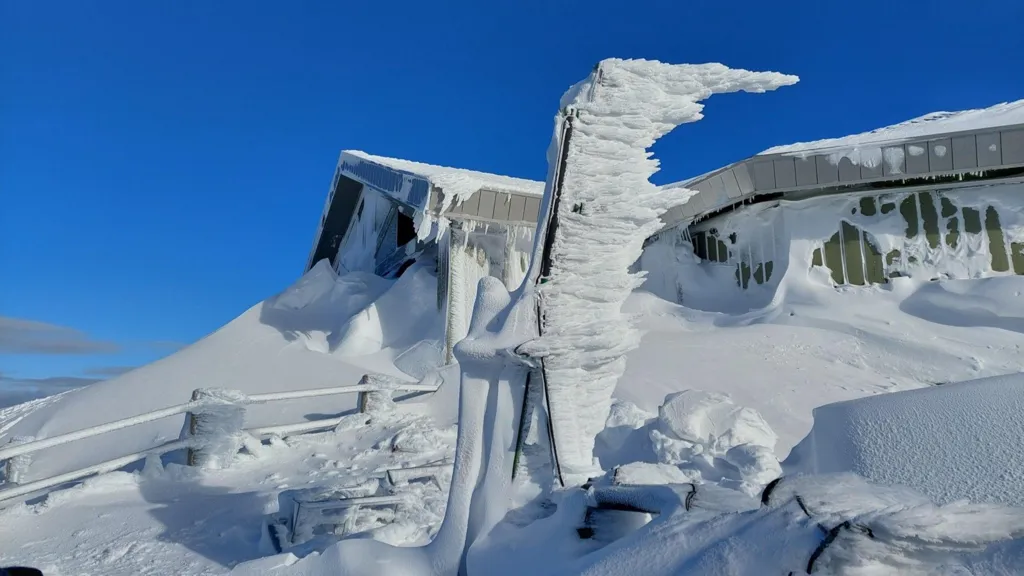
UK Braces for Cold Snap with Snow and Ice Alerts Expected
-
 News7 hours ago
Husband’s alleged £600k theft for sex and antiques blamed on drug side effects
-
 News2 days ago
Sunbed ads spreading harmful misinformation to young people
-
 Business12 hours ago
BBC Reporter Exposed to Cyber Attack Due to Vulnerabilities in AI Coding Tool