
News
Sanctions-busting shadow ships are increasing – the big question is what to do about them
When nations evade or disregard regulations to export oil, what measures can governments take in response?
An urgent email was sent to the Mumbai office of the International Transport Workers Federation (ITF) on January 26, from a crew member on a tanker near Singapore, prompting an investigation into the vessel's activities.
The email, allegedly written on behalf of five colleagues, outlined a series of grievances, including unpaid wages, poor treatment, and dwindling provisions, aboard the tanker, which was operating under the name Beeta.
As the world's leading organization representing seafarers, the ITF's Mumbai staff were accustomed to handling complaints from around the globe, but this particular case caught their attention due to its unique circumstances.
Notably, the email had been copied to multiple ITF offices, as well as sanctions enforcement agencies in several countries, indicating a potential connection to illicit activities.
The crew member explicitly stated that the vessel was sanctioned and blacklisted, sparking further inquiry into its true identity and operations.
According to the sailor, the tanker, known as the Beeta, was actually an American-sanctioned vessel called the Gale, operating under a false name.
The crew members were eager to leave the vessel, citing concerns about their safety and well-being.
In an interview with the BBC, the sailor expressed his distress, stating that his extensive experience at sea had given him a clear understanding of right and wrong.
Unwittingly, the crew member had become embroiled in a complex issue at the forefront of global geopolitics, involving a growing number of tankers transporting Russian and Iranian oil while evading maritime regulations and concealing their identities.
This "shadow fleet" of tankers is expanding rapidly, with estimates suggesting it now comprises approximately 1,468 vessels, nearly triple its size since Russia's full-scale invasion of Ukraine four years ago.
Data from TankerTrackers.com indicates that these vessels account for around 18-19% of the global tanker fleet, carrying roughly 17% of all seaborne crude oil, according to Michelle Wiese Bockman, a senior maritime intelligence analyst at Windward AI.
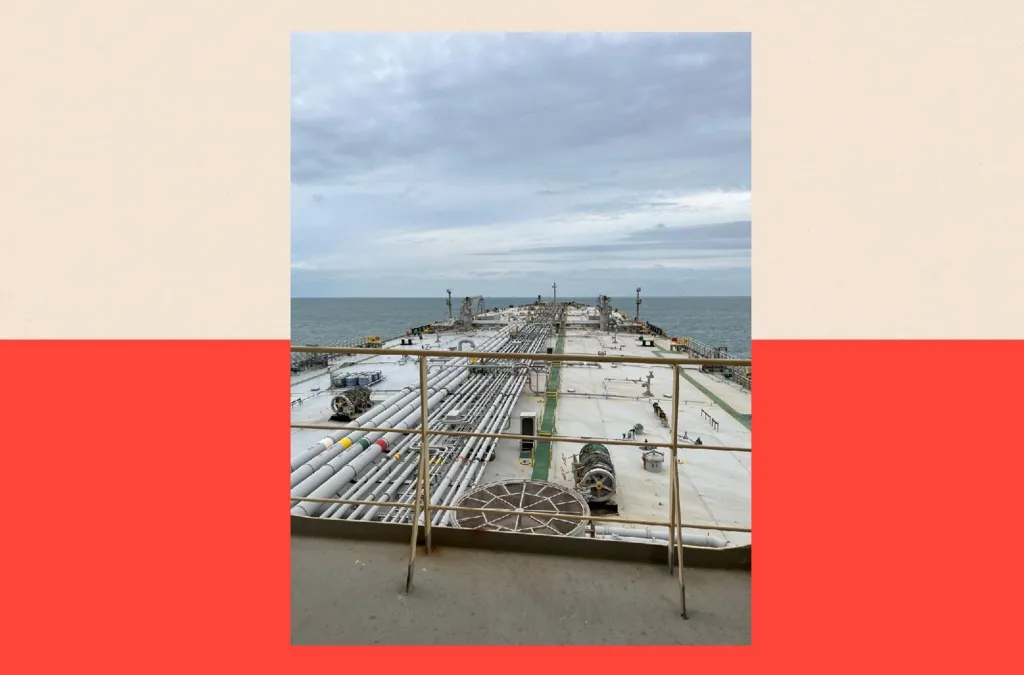
The phenomenon of shadow fleets first emerged in the 2010s, as countries like North Korea and Iran sought to circumvent international sanctions, and has since proliferated, leaving Western governments struggling to keep pace.
When countries flout or circumvent rules to export oil, using the profits to fund military activities or repression, it poses a significant challenge for governments to respond effectively.
The definition of shadow vessels can vary, but they often exhibit certain characteristics, such as being old, poorly maintained, and having opaque ownership and management structures.
These vessels frequently change their names, identification numbers, and flags, and may have substandard insurance or fake documentation.
Shadow vessels often disable or manipulate their automatic identification system (AIS) to avoid detection, making it difficult to track their movements.
Seafarers recruited to work on these vessels may not be fully aware of the nature of their employment, with contracts typically lasting six to nine months.
Russian engineer Denis, who worked on the EU- and UK-sanctioned tanker Serena, stated that he was unaware of the vessel's true nature until he boarded it.
During his time on the Serena, Denis discovered that the vessel was flying a false Gambian flag, and he only realized it was under sanctions when he went aboard.
Denis needed the work and stayed on the vessel, but his experience highlights the challenges faced by seafarers working on shadow vessels.
Nathan Smith, an ITF inspector familiar with the Serena, noted that once seafarers are at sea, they can be effectively held captive on board, with limited means of escape or recourse.
Smith has heard numerous accounts of abuse and exploitation on shadow vessels, describing the situation as "modern-day slavery."
Denis's experience on the Serena was marked by deteriorating conditions, including faulty equipment and a lack of spare parts, which raised serious concerns about safety.
During a stop at the Russian port of Vladivostok in October, the crew attempted to repair a davit, but the port official issued a certificate of successful inspection despite the vessel's poor condition.
The BBC has approached the Port of Vladivostok for comment on the matter, but Denis's account highlights the difficulties faced by seafarers in reporting concerns or seeking help.
Establishing ownership of shadow vessels is notoriously difficult, as they often have complex ownership structures and shell companies, making it hard to identify the real beneficial owners.
The ITF and other organizations have struggled to make contact with the owners of the Gale and Serena, with the beneficial owner of the Gale remaining unknown.
Crews on shadow vessels are particularly vulnerable to exploitation, with unpaid wages, abandonment, and poor working conditions being common issues.
Denis's experience has made him more cautious, and he now takes steps to identify and avoid working on vessels that may be involved in illicit activities.
Experts have identified a subset of shadow vessels known as "zombie ships," which steal the identities of decommissioned or scrapped vessels to conceal their true nature.
These zombie ships often disappear from tracking systems after being sanctioned, only to reappear under a new name, using a stolen International Maritime Organisation (IMO) number.
By reprogramming their AIS tracking system, zombie ships can masquerade as legitimate vessels, evading sanctions and continuing to operate with impunity.
The Gale is an example of a zombie ship, having assumed multiple identities since being sanctioned by the US for its involvement in exporting Iranian oil.
According to Kpler, a global trade intelligence company, the Gale has used various stolen IMO numbers and false identities, including "Sea Shell" and "Beeta," to evade detection.
On January 31, the Gale, operating under the name Beeta, loaded a cargo of Iranian oil, which was later transferred to another vessel via a ship-to-ship transfer, a common practice among shadow vessels.
TankerTrackers.com tracked the shipment, which was delivered by a US-sanctioned vessel, using satellite imagery, AIS data, and shoreline photography.
The ship-to-ship transfer took place south of the Riau Archipelago, approximately 150 miles east of Singapore, highlighting the complexities of tracking and monitoring shadow vessels.
The use of zombie ships and other tactics by shadow vessels poses significant challenges for governments and regulatory agencies seeking to enforce sanctions and prevent the illicit export of oil.
As the shadow fleet continues to expand, it is essential for governments and organizations to develop effective strategies to track, monitor, and regulate these vessels, protecting the rights of seafarers and preventing the misuse of oil profits.
The case of the Gale and other zombie ships serves as a reminder of the need for increased vigilance and cooperation to address the issue of shadow vessels and their role in global illicit activities.
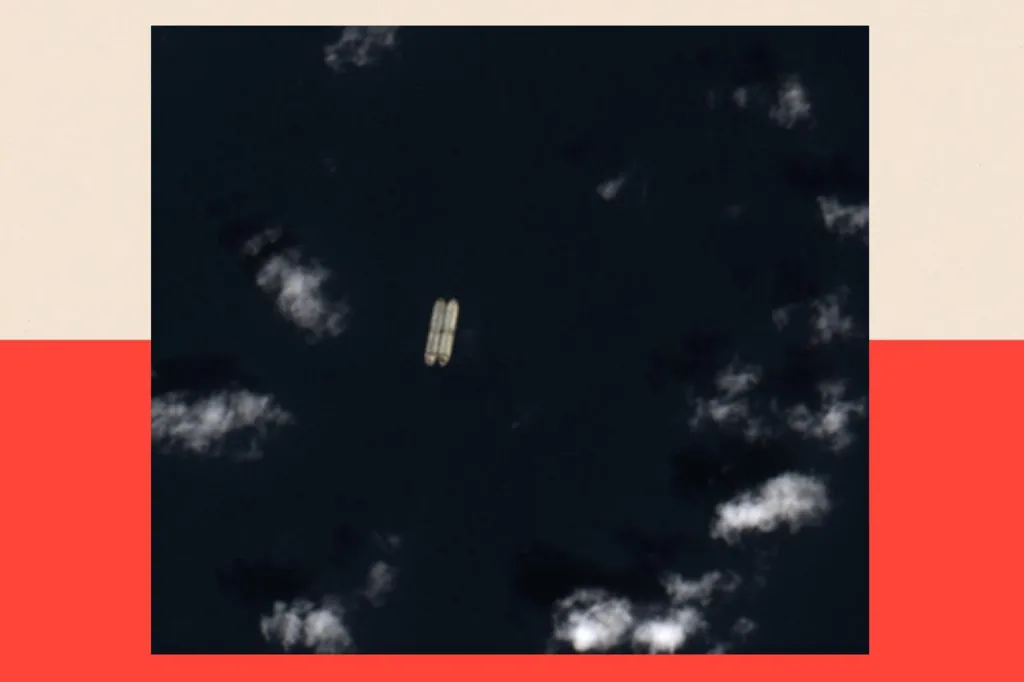
According to Michelle Wiese Bockmann of Windward AI, the region has become a hotspot for maritime lawlessness, with numerous tankers congregating to store or transfer Iranian oil, earning it the label of an "epicentre of maritime lawlessness".
In 2025, China imported approximately 1.8 million barrels of sanctioned Iranian crude per day, as reported by Bockmann, with the Chinese embassy being contacted by the BBC for a response to these claims.
Bockmann notes that the origin and destination of the oil remain obscure, as tankers deliberately conceal their loading and unloading activities, often using multiple vessels to transport the cargo, making it difficult to track.
The Gale's history and behavior are characteristic of a so-called "zombie ship", a vessel that operates outside of regular maritime norms.
A computer screenshot obtained from a crew member who contacted the ITF appears to provide instructions on how to manipulate the ship's location, a technique known as "spoofing", which can be used to disguise a vessel's actual position.
Two additional screenshots, taken on January 26, demonstrate the use of spoofing, with one showing the tanker's genuine location east of Singapore.
A second screenshot, taken just five minutes later, displays a fabricated location, approximately 2,800 miles away, off the coast of the Indian state of Gujarat, highlighting the ease with which a vessel's location can be manipulated.
Ana Subasic, an analyst at Kpler, a global trade intelligence company, states that the confirmed connection between the Gale, Sea Shell, and Beeta, combined with fabricated AIS position history and prior impersonation, suggests deliberate identity manipulation.
While there is no evidence to suggest that the Serena is a "zombie vessel", its former engineer claims to have seen equipment on board that would enable the ship to fake its position, raising concerns about its potential involvement in illicit activities.
The former engineer, Denis, revealed that he had discussed turning off the AIS and other forms of manipulation with the bridge officers, and that the vessel was equipped with technology to alter its position, which he believes is used for transporting sanctioned cargo.
The combination of these practices and the ongoing conflict in Ukraine and the Middle East, fueled by Russian and Iranian oil revenues, has sparked a pressing debate in Western capitals about how to respond effectively.
The recent actions of Donald Trump in Venezuela, where seven tankers have been seized since early December as part of a pressure campaign on the regime of then-president Nicolás Maduro, demonstrate that one possible solution is the use of force.
The operation to capture the Russian-flagged tanker Marinera involved a two-week chase by the US military, including a coastguard vessel and special forces, across the North Atlantic.
The Marinera, previously known as the Guyanese-flagged Bella 1, was wanted by the US for transporting sanctioned oil from both Venezuela and Iran, and had changed its name and flag in an attempt to gain international protection.
The change in name and flag was a tactic to provide the tanker with a degree of anonymity and protection from international authorities.
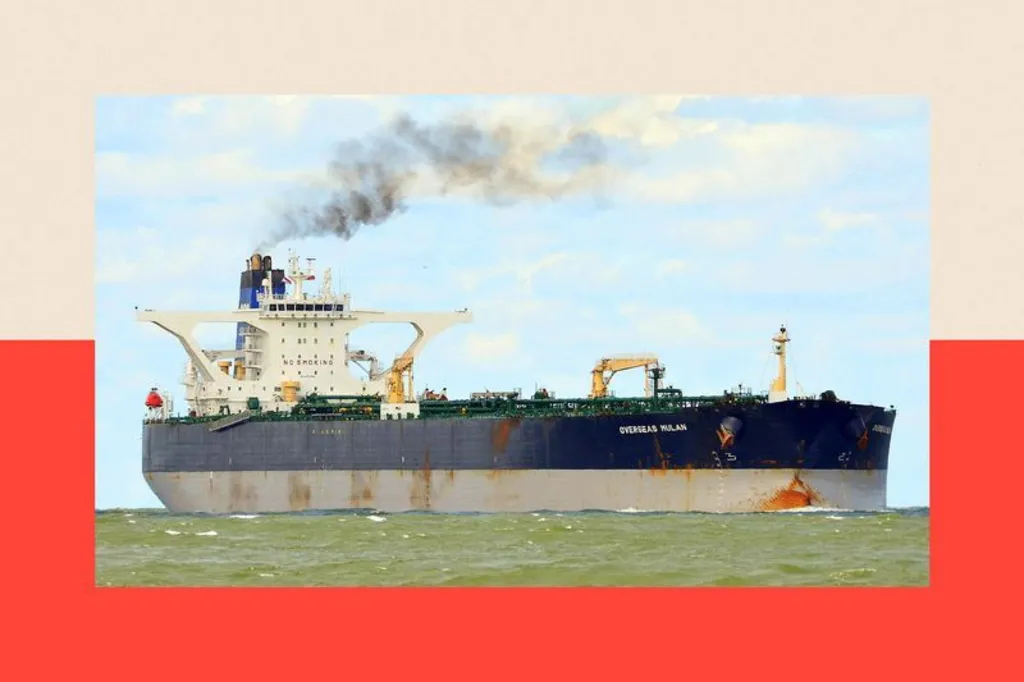
Russia responded to the US pursuit of the Marinera by requesting that the US call off its chase and claiming to have dispatched a submarine to escort the tanker, which was empty at the time, with the Russian Foreign Ministry denying any wrongdoing.
Undeterred by the potential for an international incident, the US intercepted the Marinera in international waters between Iceland and the UK on January 7.
The UK became involved in the operation, providing an RAF surveillance aircraft and a Royal Navy support ship to assist in the capture of the tanker.
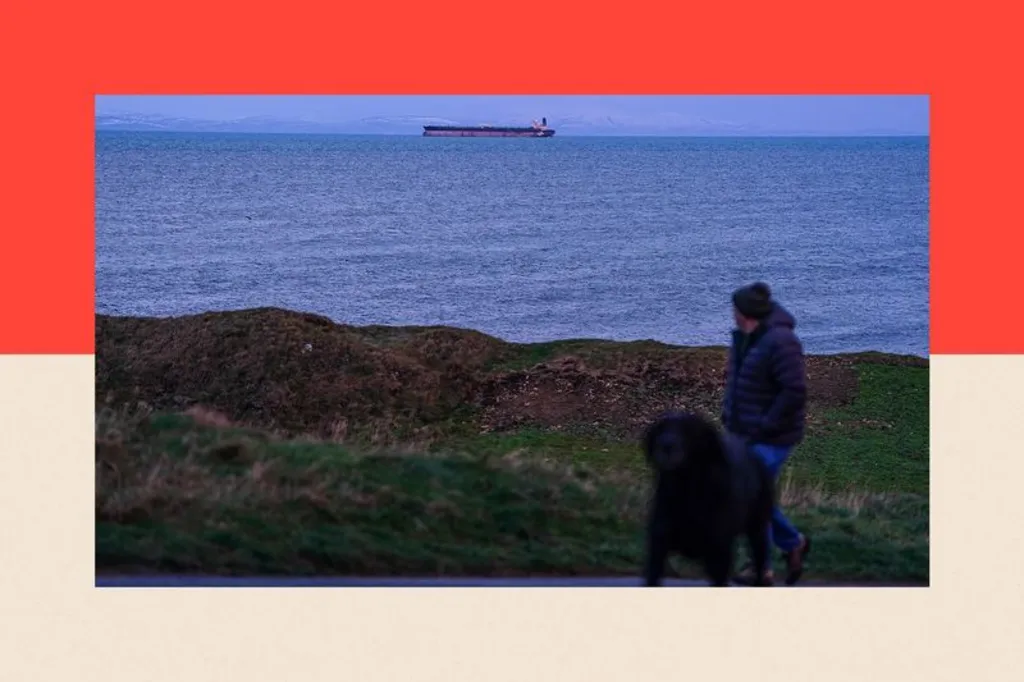
UK Defence Secretary John Healey stated that the action was taken in full compliance with international law and marked an escalation of efforts against "shadow vessels" operating outside of regular maritime norms.
The US's assertive approach may have prompted European partners to consider taking more robust action against vessels suspected of violating international sanctions.
Two weeks after the Marinera incident, France launched an operation in the Mediterranean to seize the Grinch, another Russia-linked tanker suspected of violating international sanctions.
The UK was involved in the operation, with a Royal Navy patrol boat, HMS Dagger, shadowing the Grinch as it passed through the Strait of Gibraltar.
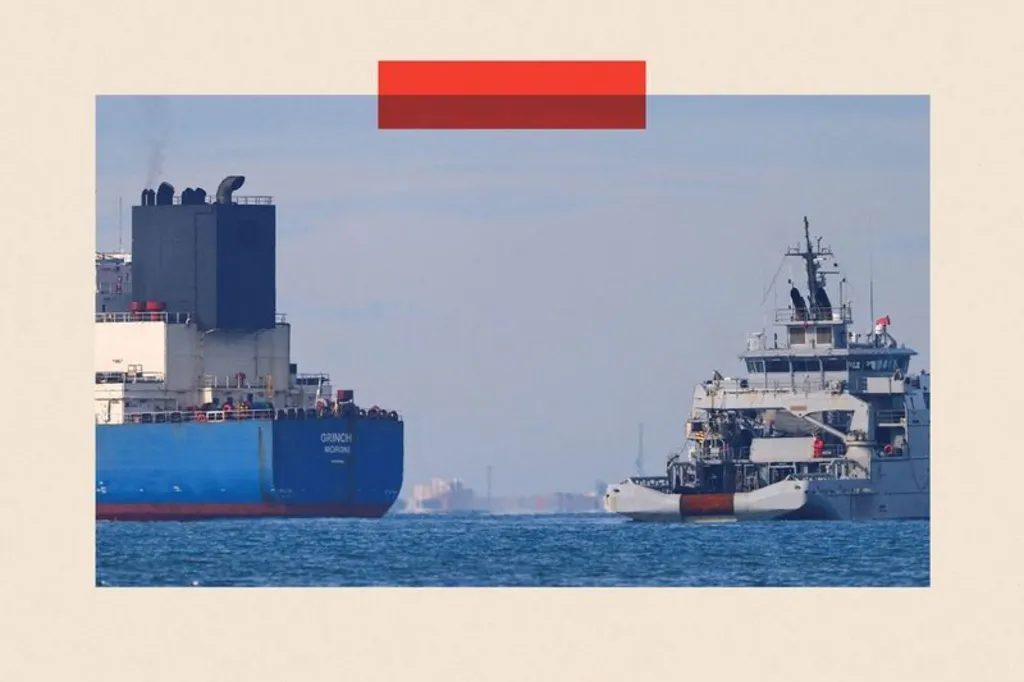
With at least one sanctioned vessel passing through the English Channel daily, according to experts, speculation is growing that the UK may soon conduct its own interceptions.
Defence Secretary Healey has indicated that "further military options" are being explored to address the issue of sanctioned vessels.
For many, such action cannot come soon enough, as the ongoing presence of sanctioned vessels in international waters continues to pose a significant challenge.
Tom Keatinge, founding director of the Centre for Finance and Security at the Royal United Services Institute (Rusi) in London, notes that there is considerable frustration among policymakers in Brussels and London regarding Russia's continued sale of oil despite sanctions.
Keatinge, who leads a maritime sanctions task force at Rusi, brings together representatives from industry and government to discuss the issue, and some participants are eager to see more decisive action taken.
Keatinge observes that some individuals are keen to take a more aggressive approach, but notes that this community has thus far been restrained.
He states that a more forthright approach is needed, but acknowledges that making such decisions is often a difficult "50-50 call", requiring careful consideration of the potential consequences.
However, there are significant constraints to consider when taking action against sanctioned vessels, including the potential consequences of such actions.
Keatinge highlights the challenges of dealing with the aftermath of seizing a large vessel, including the need to maintain it and provide a skeleton crew, as well as the potential environmental risks posed by older vessels.
Once seized, tankers require ongoing maintenance, including keeping their engines running and providing a minimal crew, which can be a significant undertaking.
The Marinera remains moored in the Moray Firth, while other US-seized vessels are being held off the coast of Texas and Puerto Rico, highlighting the logistical challenges of dealing with such vessels.
Bockmann notes that the costs of holding such vessels, particularly older ones that may pose environmental risks, are substantial, and the US is likely incurring significant expenses in maintaining the vessels it has seized.
The question of what to do with the oil itself is also a significant challenge, with different approaches being considered by various countries.
Donald Trump's approach is to confiscate the oil, with the US assuming control of Venezuela's oil industry and the president claiming that 50 million barrels have been taken so far.
The US has taken control of Venezuela's oil industry, with Trump stating that both Venezuela and the US will benefit from the arrangement.
Trump has said that "Venezuela is going to get some and we're going to get some" in a recent interview, outlining the US's approach to the situation.
However, it is unlikely that European allies will follow the US's lead in confiscating oil, with such an approach likely being seen as too extreme.
Keatinge notes that confiscating oil would likely be considered a step too far by the Foreign Office, highlighting the differences in approach between the US and its European allies.
Ukraine has been taking a more direct approach to targeting Russian shadow fleet tankers, with at least seven vessels being hit by drones and mines in recent months.
The majority of these attacks have occurred in the Black Sea, although one incident involved the tanker Qendil, which was critically damaged while traversing the Mediterranean in December, and another involved the Mersin, which was attacked and immobilized off the coast of Senegal in late November; Ukraine has not publicly confirmed its involvement in these incidents.
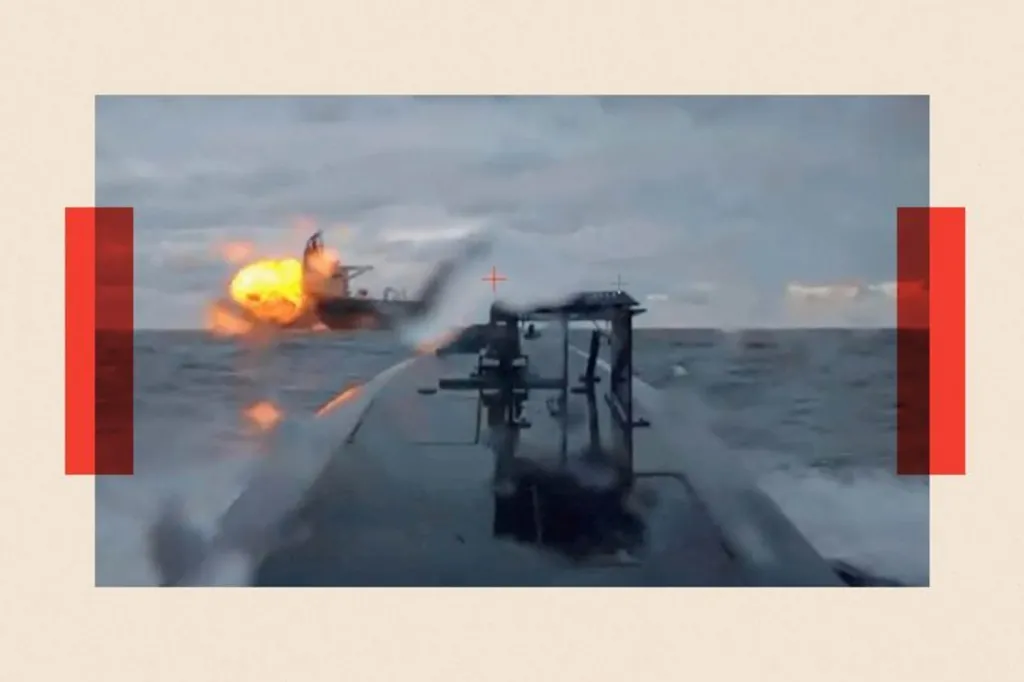
The international community has primarily responded to the issue through bureaucratic means, including imposing sanctions on hundreds of vessels and persuading countries such as The Gambia, Sierra Leone, and Comoros to strengthen their regulations, as well as addressing the issue of insurance for these ships.
According to a report by the BBC in November, citing the International Maritime Organization (IMO), the number of vessels operating with false flags worldwide more than doubled in the past year, exceeding 450.
In an effort to curb these activities, the European Commission introduced new regulations last year requiring all vessels entering EU waters to provide proof of insurance.
The UK has a voluntary reporting scheme in place, but many shadow fleet vessels ignore these regulations or alter their course when confronted.
The sheer scale of the shadow fleet poses significant resource challenges for authorities seeking to monitor and regulate these vessels.
Furthermore, there are concerns that Russian ships may be involved in the monitoring or sabotage of undersea cables, which adds a national security dimension to the issue.
In late January, the UK and 13 other countries with coastlines on the Baltic and North Sea issued a joint warning about the growing threat to maritime safety and security posed by the manipulation of Automatic Identification Systems (AIS) and interference with Global Navigation Satellite Systems.
The statement noted that vessels sailing under flags of convenience may be considered stateless under the UN Convention on the Law of the Sea, which provides a legal basis for the detention and seizure of such ships.
According to Windward AI's Bockmann, the Trump administration's actions against Venezuela demonstrate the possibilities for European leaders to take action against shadow fleets.
Bockmann suggests that there is a growing willingness to intervene against the most egregious offenders, with a "low threshold" for action being established.
In October, the Trump administration imposed sanctions on Russia's two largest oil companies, Lukoil and Rosneft, as part of a broader effort to restrict Russian oil exports.
The EU's next package of sanctions against Russia may include a comprehensive ban on maritime services, which would prevent European tankers from transporting Russian oil under the current price cap.
Currently, around 30% of Russia's maritime oil exports are carried on EU-owned vessels, highlighting the potential impact of such a ban.
However, Russia and Iran have historically demonstrated an ability to adapt to sanctions and wartime conditions, suggesting that the shadow fleet will continue to evolve and operate in the face of increasing restrictions.
Image: Getty Images
News
Aberdeen to unveil new manager soon with Docherty set to take assistant role
Aberdeen has bolstered its interim management team with the return of Tony Docherty, who previously served as an assistant manager, to support Peter Leven, amid anticipation of a permanent appointment announcement that sporting director Lutz Pfannenstiel had indicated would be made “imminently”.
Ross County parted ways with Tony Docherty in December, and he has now taken on a new role.
Aberdeen have brought in former assistant manager Tony Docherty to support Peter Leven's interim management team, despite sporting director Lutz Pfannenstiel indicating that a permanent appointment was imminent.
Docherty's return to Aberdeen comes just a week after Eirik Horneland, a former coach of Rosenborg, Brann, and Saint-Etienne, emerged as a top contender to succeed Jimmy Thelin, who was sacked earlier.
As Aberdeen delays making a full-time appointment, speculation surrounding Eirik Horneland's availability has arisen, with reports suggesting the 50-year-old Norwegian may not be able to take on the role until summer.
Since Jimmy Thelin's dismissal on January 4, Lutz Pfannenstiel has been leading the search for a replacement, and he confirmed that Tony Docherty would be joining the team to assist Peter Leven during the interim period.
Dundee Utd are facing a challenging schedule, with four matches in 14 days set to take place on a weather-affected pitch.
According to Stavrum, Eirik Horneland's coaching style, characterized by intensity, would be a good fit for Aberdeen.
Tony Docherty initially joined Aberdeen in 2013 as part of Derek McInnes' management team and spent eight years at the club.
Before his stint at Aberdeen, Docherty served as McInnes' assistant at Kilmarnock and later managed Dundee and Ross County, but his time at Ross County ended in December when he was let go with the team at the bottom of the Championship.
Lutz Pfannenstiel praised Tony Docherty's experience, stating that he has a deep understanding of the club and will be a valuable asset during the transition period.
Pfannenstiel highlighted Docherty's extensive knowledge of the Scottish Premiership, gained through his experience as both a coach and manager, which will be beneficial to the team in the short term.
The club's managerial search is nearing its conclusion, and an announcement regarding the new head coach is expected soon, according to Pfannenstiel.
Peter Leven, who is serving as caretaker manager for the third time, expressed his enthusiasm for Tony Docherty's appointment.
Leven welcomed Docherty's return, stating that his experience will be a significant boost to the team, particularly during the upcoming matches.
Leven noted that Docherty was eager to join the team and that his presence will provide valuable support during both training sessions and matches.
Eirik Horneland left his position at Saint-Etienne in early February, at which point his team was fourth in France's second tier.
If Aberdeen decides to wait until summer for Horneland to take over, it will be similar to the six-month delay that occurred when Jimmy Thelin joined the club from Elfsborg in the summer of 2024.
For the latest news, analysis, and fan perspectives on Aberdeen, visit our dedicated page.
News
Peter Murrell faces allegations of misusing £459,000 in funds over 12 years
Allegations have been made that he bought various items, such as luxury goods, jewellery, cosmetics, two cars and a motorhome, in an improper manner.
Peter Murrell, the former chief executive of the Scottish National Party, is facing allegations of embezzling £459,000 from the party over a 12-year period.

An indictment document obtained by BBC News outlines the case against Murrell, who is the estranged husband of former Scottish First Minister Nicola Sturgeon.
The alleged embezzlement is said to have occurred between August 2010 and January 2023, according to the indictment.
It is claimed that Murrell used party funds to purchase luxury items, including jewellery, cosmetics, and vehicles, such as two cars and a motorhome.
The Scottish Sun was the first to report on the details of the indictment.
A preliminary hearing in the case is scheduled to take place at the High Court in Glasgow on Friday, 20 February, where Murrell is expected to appear.
During his initial court appearance at Edinburgh Sheriff Court, Murrell made no plea and was subsequently granted bail.
Murrell's arrest in 2023 was part of Operation Branchform, a police investigation into the SNP's funding and finances, which led to him being charged with embezzlement in April 2024.
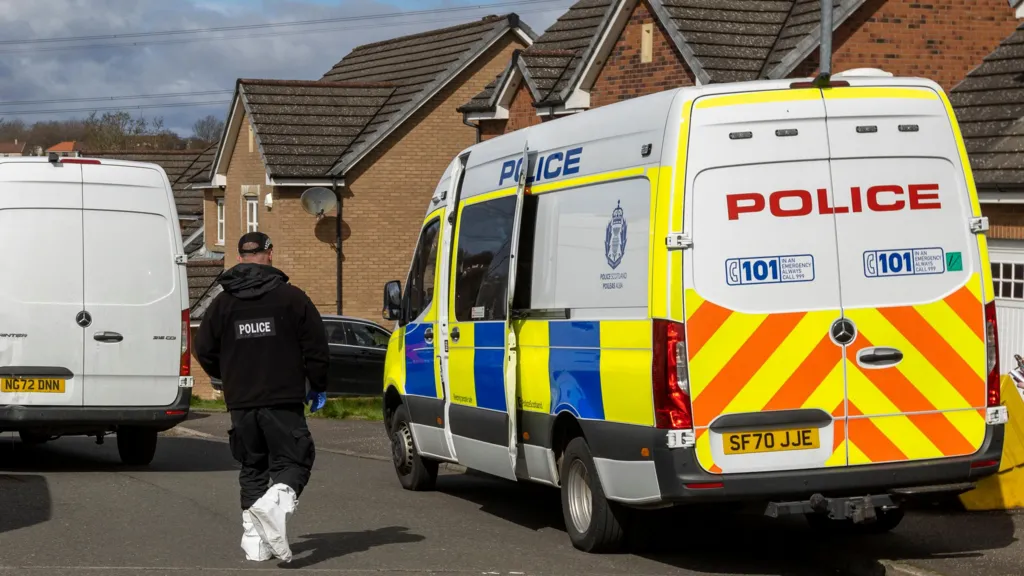
Although Sturgeon was questioned by police as part of the investigation, she is no longer considered a suspect.
BBC News has obtained a copy of the indictment against Murrell ahead of his upcoming court appearance.
It is worth noting that the indictment is subject to change until the case is heard in court and may be amended throughout the judicial process.
The indictment alleges that Murrell purchased a £124,550 motorhome for personal use and created false documents to justify the expense as a legitimate party expenditure.
Murrell is also accused of using £57,500 of party funds to buy a Jaguar I-PACE car in 2019, and falsifying an invoice to conceal the true nature of the purchase.
Furthermore, it is alleged that when the Jaguar was sold in 2021, Murrell deposited more than £47,000 into his personal bank account.
The indictment also claims that Murrell embezzled £16,489 from the SNP to partially fund the purchase of a Volkswagen Golf in 2016.
A list of over 80 retailers is included in the indictment, where Murrell allegedly made purchases totalling more than £159,000 between 2014 and 2022, using party credit or charge cards for personal expenses.
The retailers named in the indictment include Harrods, the Royal Mint, John Lewis, Homebase, and Argos, among others.
It is alleged that Murrell used SNP credit or charge cards to make these purchases and then inserted false or inaccurate accounting codes and descriptions into the party's accounting systems.
The indictment also accuses Murrell of making purchases worth over £81,600 through Amazon using the same method.
Murrell served as the SNP's chief executive for 22 years before his departure.
Murrell and Sturgeon were married in 2010, but announced their separation in January 2025, after being together for many years.
News
Bangladesh Nationalist Party Wins Landslide in Country’s First Poll Since Youth-Led Protests
The public is looking forward to a shift back to democratic governance, following a 15-year period of authoritarian leadership by Sheikh Hasina.
In a significant shift in the country's political landscape, the Bangladesh Nationalist Party (BNP) has achieved a decisive majority in parliament, 18 months after widespread protests led to the ousting of Sheikh Hasina, the country's longest-serving prime minister.
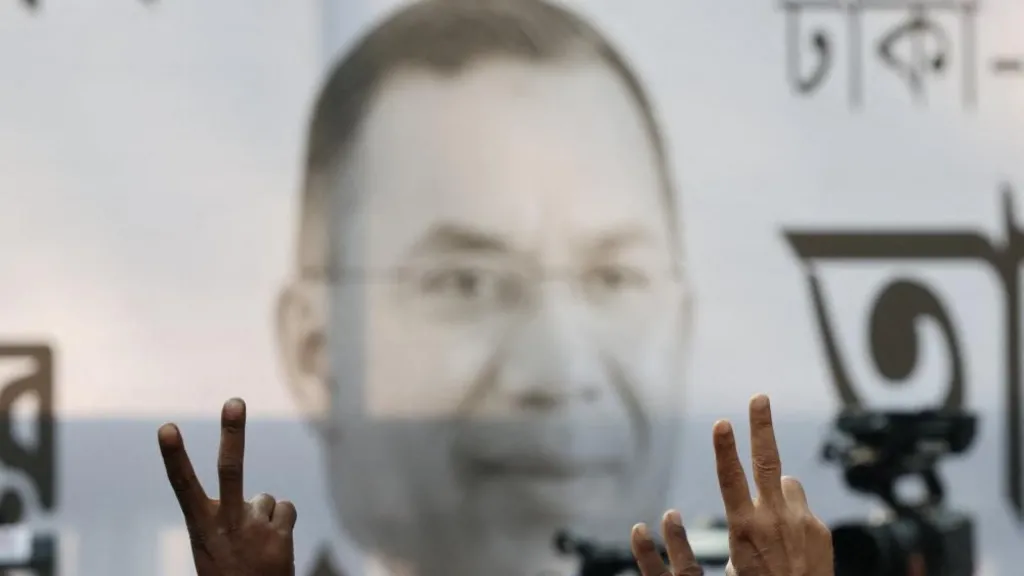
The BNP secured over two-thirds of the seats in the recent general election, with the Jamaat party, the main Islamist party in the country, coming in second; meanwhile, the Awami League, led by Hasina, was not allowed to participate in the election.
As the BNP's leader, Tarique Rahman is poised to become the next prime minister, facing significant challenges in revitalizing the economy and restoring democratic principles after 15 years of authoritarian rule under Hasina's leadership.
In a concurrent referendum, voters also expressed support for comprehensive democratic reforms, which are expected to shape the country's future.
Following Friday prayers in Dhaka, Tarique Rahman expressed gratitude to his supporters, stating, "I am grateful for the love you have shown me"; his party has chosen not to hold a victory procession.
Rahman, who was elected to parliament for the first time, was among the 212 successful BNP candidates; according to the Election Commission, voter turnout was 59.44%.
This marks a significant turnaround for Rahman, who spent 17 years in self-imposed exile in London before taking over as party leader after his mother, former Prime Minister Khaleda Zia, passed away in December.
During his campaign, Rahman pledged to restore democratic principles and practices in the country.
The new government will need to address pressing issues, including economic revitalization, controlling rising food prices, and creating employment opportunities for the country's large youth population.
Rebuilding relations with neighboring India is also a key priority for the incoming government.
In the aftermath of his victory, Rahman received a congratulatory call from Indian Prime Minister Narendra Modi, who acknowledged his "remarkable victory".
Modi took to social media to reaffirm India's commitment to promoting peace, progress, and prosperity in both countries, citing their deep historical and cultural ties.
Although the BNP has pledged to bring about change, the party has faced criticism in the past for corruption and alleged human rights abuses during its previous tenure in government in the early 2000s.
The recent election represents a pivotal moment for the country, with one of the two main parties achieving a significant victory, presenting both opportunities and risks.
Proposed constitutional reforms include introducing term limits for the prime minister, establishing a directly elected upper house of parliament, strengthening presidential powers, and increasing judicial independence.
The reforms also aim to increase female representation in parliament, an area where significant progress is still needed, as evidenced by the limited number of successful female candidates in the recent election.
As the newly elected leader, Tarique Rahman will face intense scrutiny as he works to deliver on his promises to a predominantly young electorate eager for change, many of whom participated in the student-led protests that ultimately led to Hasina's removal and paved the way for the February 12 election.
-
 News10 hours ago
Australian Politics Faces Questions Over Gender Equality Amid Sussan Ley’s Appointment
-
 News7 hours ago
Farage Says Reform to Replace Traditional Tory Party
-
 News7 hours ago
Wrexham Pair Seek Win Against Former Team Ipswich
-
 News12 hours ago
Liberal Party Removes Australia’s First Female Leader
-
 News10 hours ago
UK Braces for Cold Snap with Snow and Ice Alerts Expected
-
 News7 hours ago
Husband’s alleged £600k theft for sex and antiques blamed on drug side effects
-
 News2 days ago
Sunbed ads spreading harmful misinformation to young people
-
 Business12 hours ago
BBC Reporter Exposed to Cyber Attack Due to Vulnerabilities in AI Coding Tool