
News
Jeane Freeman, SNP politician and Covid response leader, profiled
Having dedicated her life to public service, the ex-SNP politician took on the health portfolio on the cusp of the worldwide pandemic.
The legacy of Jeane Freeman, who passed away at the age of 72, will be forever tied to the Covid-19 pandemic of 2020, during which she played a crucial role in guiding the Scottish government's response alongside then First Minister Nicola Sturgeon.
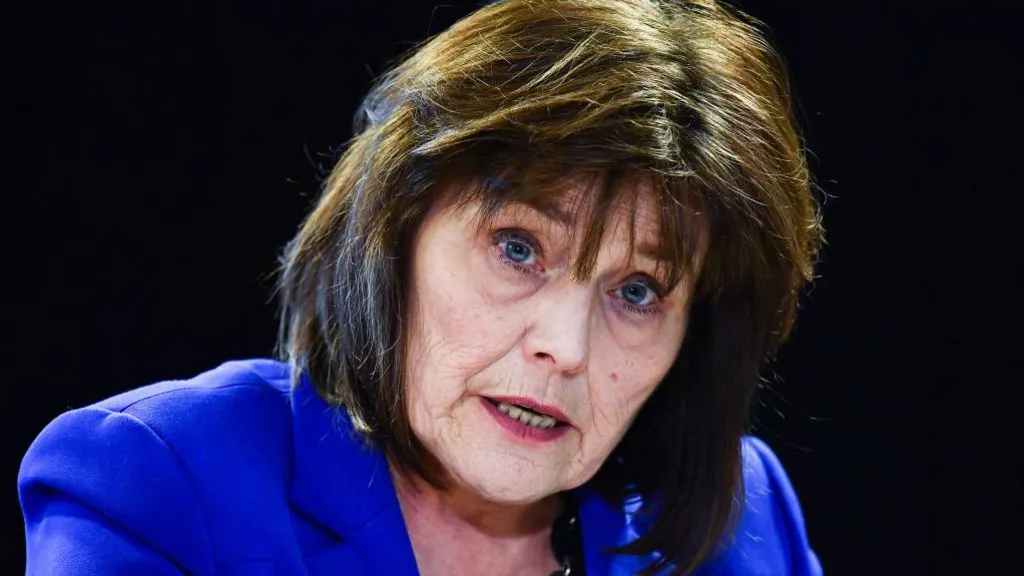
Freeman's tenure as cabinet secretary for health, a position she assumed in 2018, was marked by unprecedented challenges, despite having only entered the Scottish Parliament in 2016 as a member for the Ayrshire seat of Carrick, Cumnock and Doon Valley.
The health department, notorious for its complexity and vast budget, poses significant scrutiny and pressure on its leaders, making it one of the most demanding roles in government.
Unfortunately, Freeman's time in office coincided with the pandemic and ongoing concerns surrounding the safety of two newly built Scottish hospitals, which added to the existing challenges she faced.
Although her time in office was dominated by the pandemic, Freeman's work built upon decades of experience in politics and public service, providing a foundation for her leadership.
Freeman's entry into the Scottish Parliament in 2016, at the age of 62, marked a significant milestone in her career, as she had already established herself as a prominent figure in Scottish politics.
Her transition into political office was a natural progression of her personal and professional journey, which had been shaped by her experiences and values.
Initially a nurse and member of the Communist Party, Freeman later joined the Labour Party in the 1980s and founded Apex Scotland, a charity focused on offender rehabilitation, for which she was awarded an OBE in 1996.
Prior to her election to the Scottish Parliament, Freeman had run unsuccessfully as a Labour candidate in local council elections and was one of several high-profile women who were not selected to stand in the first Scottish Parliament election in 1999.
Following this, Freeman was appointed to a senior role in the civil service, where she worked closely with ministers in the early days of the Scottish Parliament.
In 2001, she became a special advisor to First Minister Jack McConnell, a position that granted her significant influence within the Scottish executive.
During her time as a special advisor, Freeman developed a reputation for her ability to drive policy and implementation across various departments, with one of her notable achievements being the NHS takeover of the Golden Jubilee Hospital.
After leaving her role as special advisor in 2005, Freeman established a public affairs consultancy and served on the boards of several public bodies.
This led to accusations of a "Labour mafia" and earned her the nickname "quango queen" from some critics and sections of the media, although some of these critics would later become her colleagues.
However, her experience working under a Labour first minister had a profound impact on Freeman, as she began to question the limitations of the devolved settlement and eventually came to support Scottish independence.
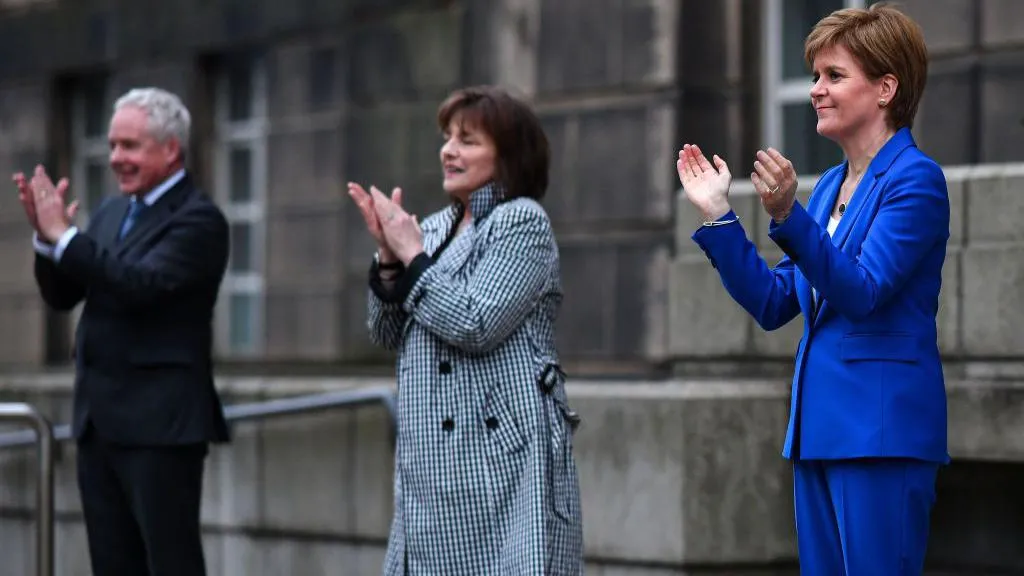
Over the course of the next decade, Freeman's perspective on independence evolved, and she became an advocate for this cause, driven by her conviction that it was essential for addressing Scotland's challenges.
In 2014, Freeman co-founded Women for Independence, a group that played a significant role in the independence referendum, reflecting both her long-standing commitment to feminism and her desire to amplify women's voices in the political debate.
This marked a significant turning point in her career, as she later joined the SNP and was selected to stand as a candidate in her native Ayrshire ahead of the 2016 election, under the leadership of Nicola Sturgeon.
Freeman spent her entire tenure at Holyrood in government, first as minister for social security and later, in 2018, as cabinet secretary for health.
In an interview with Holyrood magazine, Freeman acknowledged the immense responsibility that came with her role, stating that the true pressure lay in the fact that she was dealing with people's lives and well-being.
She emphasized that the gravity of this responsibility was not lost on her, recognizing that the decisions she made had a direct impact on individuals and families.
The Covid-19 pandemic, which struck in 2020, presented unprecedented challenges for governments worldwide, as they struggled to contain the spread of the virus, implement lockdown measures, and mitigate the economic impact.
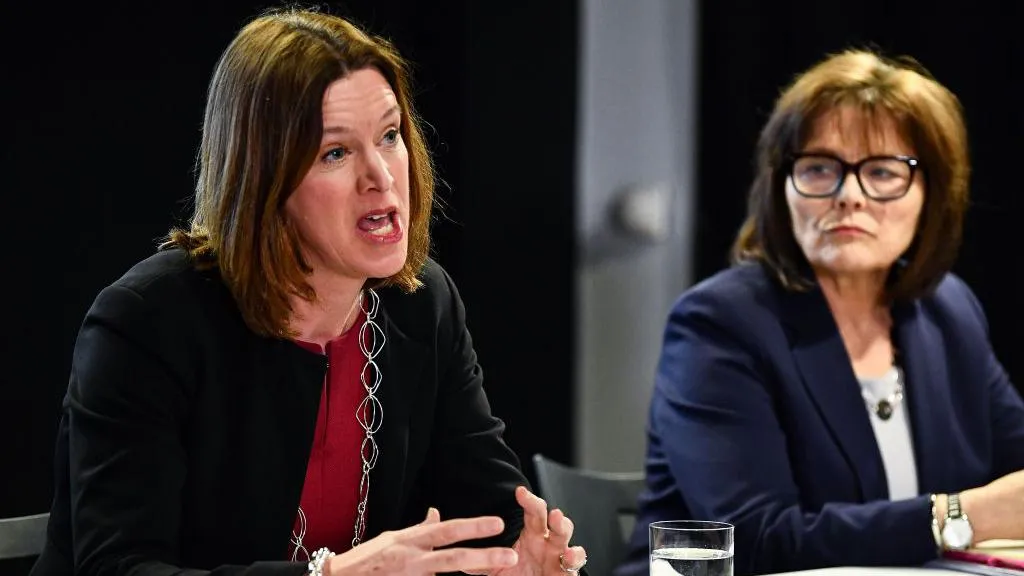
Throughout this period, Freeman stood alongside Nicola Sturgeon in press conferences, providing updates and guidance to the public, and was present at the launch of the vaccine rollout.
However, the decision to discharge elderly hospital patients to care homes without requiring a negative test result during the early stages of the pandemic would later become a subject of controversy and scrutiny for Freeman.
The subsequent high mortality rates in care homes, where the virus spread rapidly among vulnerable residents, led to a change in guidance on testing, but not before significant harm had been done.
In a 2025 interview with the BBC, Freeman acknowledged the anger and grief of those who had lost loved ones and recognized that the policy had contributed to the deaths, while also defending the decisions made at the time as the best possible under the circumstances.
As health secretary, Freeman had initially aimed to address the issue of waiting times, but the pandemic ultimately derailed this effort.
Another controversy that marred her tenure was the concern over deaths at the Queen Elizabeth University Hospital in Glasgow, which were potentially linked to problems with the hospital's ventilation and water systems, an issue that had been inherited from Sturgeon's time in the health department.
In response to allegations of a cover-up and repeated calls for her resignation, Freeman established a public inquiry in 2019 to investigate the matter.
In January 2026, NHS Greater Glasgow and Clyde acknowledged that, on the balance of probabilities, the hospital environment, particularly the water system, had caused some infections, a conclusion that came more than five years after the inquiry was launched.
Freeman's prompt action in 2019, when she postponed the opening of the new Sick Children's Hospital in Edinburgh due to concerns over its ventilation system, potentially prevented a similar crisis from unfolding.
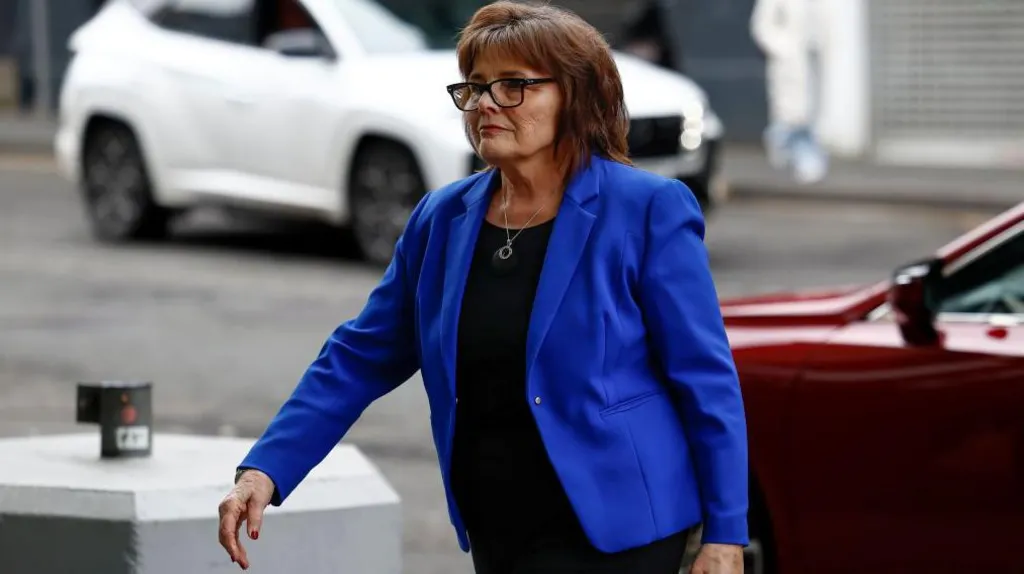
Although this decision resulted in a two-year delay and additional costs of £40m, it ultimately ensured the safety of patients and staff, as the hospital was able to open without the same issues that had plagued the Glasgow hospital.
The legacy of the pandemic, the hospital infections, and the subsequent public inquiries continued to cast a shadow over Freeman's life after she left office, with her being called to give evidence and speak publicly about her decisions and regrets.
During this time, Freeman also began volunteering at the Beatson cancer unit in Glasgow, where she would take the tea trolley around the wards, a task that brought her joy and fulfillment, according to her partner.
The ongoing hospitals inquiry, which was still a source of controversy at the time of Freeman's death, will ultimately provide a conclusion on these matters.
Freeman was notable for her candor and willingness to acknowledge the mistakes made by her government, as well as the immense pressure they faced, demonstrating a level of introspection and accountability rare in politics.
In an interview with LBC radio, discussing the UK Covid inquiry's findings, Freeman reflected on the complexity of the decisions made during the pandemic, stating that they were never straightforward choices between right and wrong.
She emphasized that she had never claimed to have made perfect decisions, but rather had done her best with the information available at the time.
Freeman's approach was characterized by a commitment to transparency and a willingness to learn from mistakes, as she consistently maintained that she had made the best decisions possible given the circumstances.
News
GB men’s curling team suffers upset defeat to Italy
At the 2026 Winter Olympics, Great Britain’s men’s curling team mounted a comeback against Italy following a disappointing beginning, ultimately falling short in their inaugural match.
Despite a valiant comeback, Team GB ultimately fell short as Italy held their composure to secure the win in the final end.
A dismal start to the match proved costly for Team GB's men, as they suffered their first defeat of the Winter Olympics at the hands of host nation Italy, despite a spirited fightback in the packed Cortina Curling Stadium.
Following victories in their first two matches, including a win over the Swedish rink that beat them in the gold-medal match four years ago, Team GB entered their second high-profile encounter in as many days in a confident position.
However, a disastrous opening end, in which Italy stole four points, left Team GB trailing and facing an uphill battle in front of a boisterous home crowd.
The British team, currently ranked number one in the world, gradually regained their footing and managed to level the score by the ninth end.
Ultimately, Italy maintained their composure in the final end to emerge victorious, winning 9-7 and adding Team GB to their list of scalps, which already included the Swedes.
"We had to dig deep and play some solid curling, but unfortunately, it wasn't enough to get us over the line," Team GB lead Hammy McMillan said in an interview with BBC Sport.
With seven wins from nine round-robin matches guaranteeing a spot in the semi-finals, Team GB remains in a strong position, although fewer wins may still be sufficient to advance.
The women's team is set to take to the ice next, facing South Korea in their second match at 13:05 GMT, while the men will return to action on Saturday against the Czech Republic at the same time.
Team GB is at the forefront of curling's technological advancements.
Embracing what sets you apart can be a powerful asset, according to some athletes.
A daily guide to the Winter Olympics is available for those looking to stay up-to-date with the action.
The looks of shock on the faces of Team GB's curlers told the story of a disastrous opening end.
With a stone in play, Mouat attempted a risky shot in an effort to claim two points, but it backfired, resulting in none of Team GB's stones in the house and four Italian stones in position.
However, the Scottish quartet, ranked number one in the world, quickly regained their composure and got back to their game.
The teams exchanged singles before a impressive final throw by Mouat, aided by a measurement to determine which stone was closest to the button, allowed Team GB to claim two points and narrow the gap to 5-3.
Another excellent team effort, which included a well-judged throw by Mouat, a solid sweep by Hammy McMillan and Bobby Lammie, and Grant Hardie's strategic expertise, forced Italy to concede a point in the fourth end, reducing the deficit to a single point at the break.
Italy blanked the sixth end and added two points in the seventh to rebuild their lead, but Team GB fought back with two points of their own, remarkably levelling the score with one end remaining after a steal.
The match came down to the final end, but Italy held their nerve to secure the win, prompting a deafening roar from the crowd.
"It's an incredible experience, and we need to get used to it," McMillan added, describing the electric atmosphere as "surreal" and "cool," more akin to a football match than a typical curling crowd.
News
Scotland Kicks Off Nations League Against Slovenia
Uefa has released the schedule for the Nations League, with Scotland set to begin their campaign on 26 September with an away match against Slovenia.
Uefa has released the schedule for the Nations League, with Scotland's campaign set to begin on 26 September with an away match against Slovenia.
The team's six group stage games will be played within a three-month period, culminating in a match against Switzerland on 16 November.
The fixture list was announced following Thursday's draw, which placed Scotland in a group with Switzerland, Slovenia, and North Macedonia.
Having been relegated from League A after a play-off loss to Greece last year, Scotland will compete in the second tier of the Nations League this year.
In response to the draw, head coach Steve Clarke noted that the teams in the group appear to be evenly matched.
Clarke reflected on the team's past experience in the competition, stating that it has been beneficial for Scotland.
He emphasized the importance of the Nations League, citing its role in helping the team qualify for Euro 2020, and anticipated a challenging set of matches.
A key matchup in the Nations League will see Scotland face off against Switzerland.
The group stage will determine the teams' fates, with the winner earning promotion, the runner-up entering a play-off, the third-placed team facing a relegation play-off, and the fourth-placed team being relegated directly.
The upcoming group games will mark a reunion for Scotland and Switzerland, who previously drew 1-1 in Cologne at Euro 2024.
Scotland's last encounter with Slovenia was during the 2018 World Cup qualification campaign, when they won 1-0 at home and drew 2-2 away.
The team has not played North Macedonia since the 2014 World Cup qualifiers, when they drew 1-1 at home and won 2-1 away, with goals from Ikechi Anya and Shaun Maloney.
The schedule for Scotland's Nations League campaign begins on 26 September with a match against Slovenia.
The team will then host Switzerland on 29 September, followed by a trip to face North Macedonia on 3 October.
Scotland will then play Slovenia at home on 6 October, before hosting North Macedonia on 11 November.
The final group stage match will see Scotland travel to face Switzerland on 16 November.
The team's home match against North Macedonia is set for 11 November.
The campaign will conclude with an away match against Switzerland on 16 November.
News
Golfer McIlroy Sinks Bunker Shot at Pebble Beach Pro-Am
At the AT&T Pebble Beach Pro-Am in California, Rory McIlroy achieved an eagle on the 14th hole at Spyglass Hill, capping off his opening round with a score of 68.
During the AT&T Pebble Beach Pro-Am in California, Rory McIlroy achieved an eagle on the 14th hole at Spyglass Hill, contributing to his first-round score of 68.
For further information, Rory McIlroy had a solid opening round, while Hisatsune took the lead.
Access to this content is restricted to users in the United Kingdom.
-
 News8 hours ago
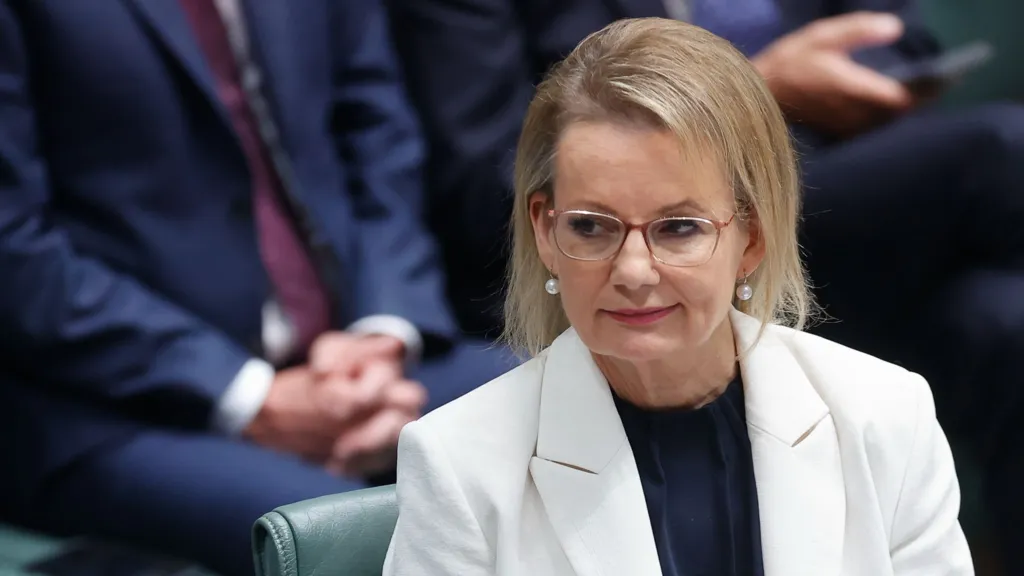
Australian Politics Faces Questions Over Gender Equality Amid Sussan Ley’s Appointment
-
 News5 hours ago
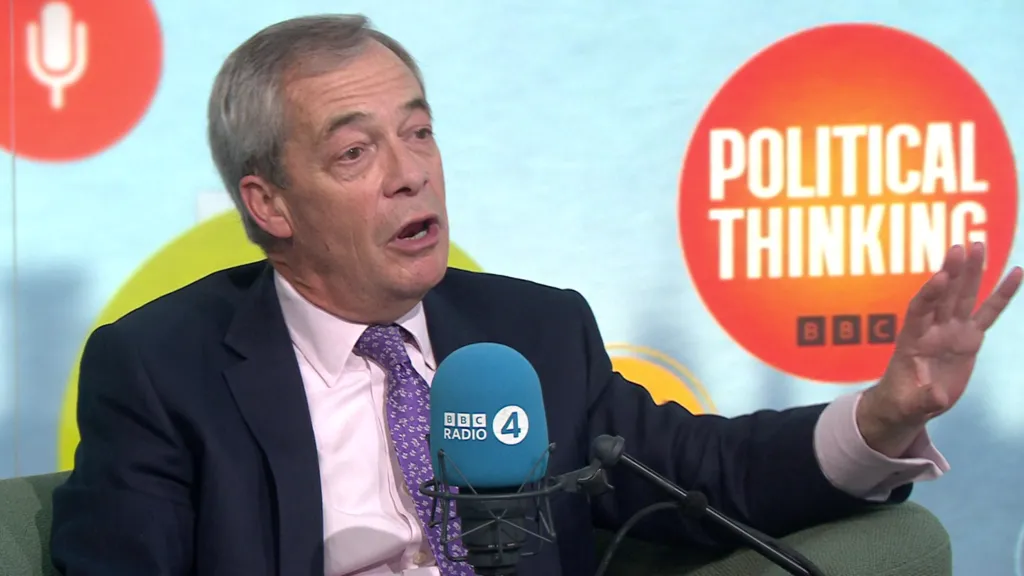
Farage Says Reform to Replace Traditional Tory Party
-
 News5 hours ago
Wrexham Pair Seek Win Against Former Team Ipswich
-
 News11 hours ago
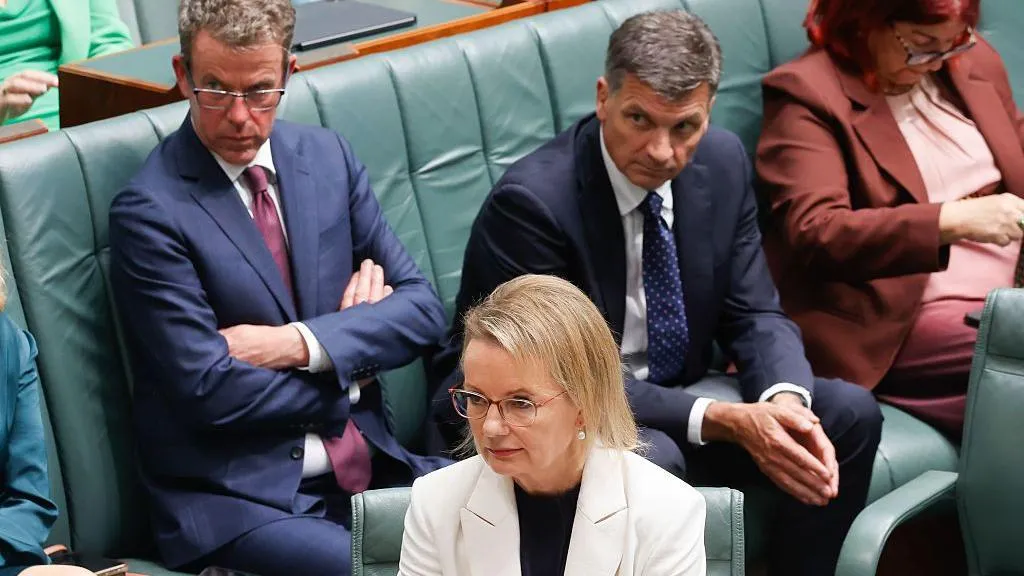
Liberal Party Removes Australia’s First Female Leader
-
 News9 hours ago
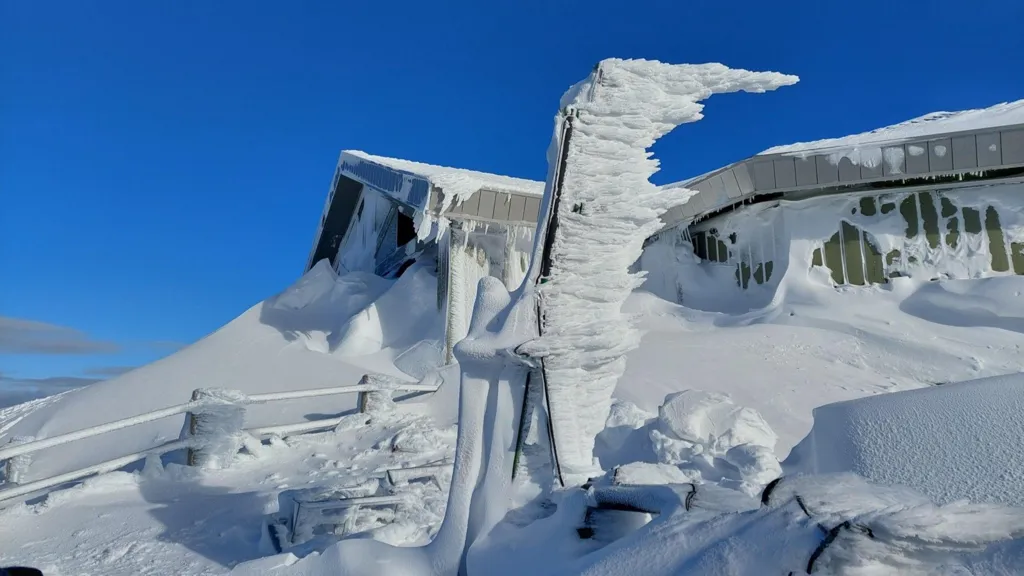
UK Braces for Cold Snap with Snow and Ice Alerts Expected
-
 News5 hours ago
Husband’s alleged £600k theft for sex and antiques blamed on drug side effects
-
 News2 days ago
Sunbed ads spreading harmful misinformation to young people
-
 Business11 hours ago
BBC Reporter Exposed to Cyber Attack Due to Vulnerabilities in AI Coding Tool