
News
Six key lessons learned after having my car stolen
There is a growing trend of keyless thefts, with vehicle crime becoming more sophisticated and technologically advanced, often involving coordinated efforts.
As I stand at my garden gate, car key in hand, I'm met with an unexpected sight: my car is nowhere to be found.
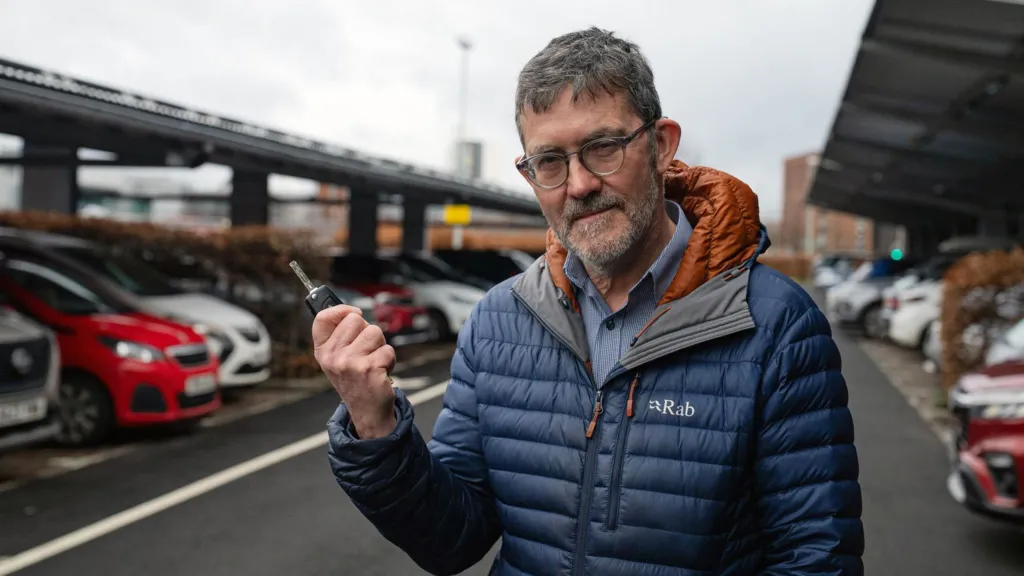
Initially, I consider various innocent explanations for its disappearance, such as a busy road or a misplaced parking spot, but it soon becomes clear that my car has been stolen.
A visit from two police officers reveals that my car was detected by a number plate recognition camera in Glasgow, approximately 20 miles away, shortly after midnight, but the trail ends there.
In the aftermath, I join the ranks of around 130,000 UK drivers who fall victim to car theft each year, navigating the process of filing a police report, submitting an insurance claim, and purchasing a replacement vehicle.
As I delve deeper into the world of car crime, I uncover some surprising facts about its evolving nature.
Since the 1990s, most vehicles have been equipped with coded keys containing electronic microchips paired with engine immobilisers, designed to prevent theft without the key.
However, this security measure did not deter the thieves who stole my car, leaving me wondering how they managed to bypass the system.
The police officers who visited my home informed me about a technique known as a "relay attack", which enables thieves to steal cars without the owner's keys.
The process involves one thief using a device to capture the radio signal emitted by the key fob, which is then relayed to an accomplice standing near the car.
The accomplice uses another device to receive the signal, allowing them to unlock and start the car if it has a keyless ignition system, making it possible to drive away in a matter of seconds.
The thief near the property typically stands close to where the car owner is likely to keep their keys, such as the kitchen or hallway, to capture the signal.
If the car has a keyless ignition system, the thieves can simply press the start button and drive away, often in under a minute.
Another method used by thieves is a "CAN bus attack", where a device is connected to the car's wiring network, sending fake messages to the electronic control system and bypassing the immobiliser.
In November, law enforcement officials in France and Italy arrested five individuals suspected of manufacturing devices used for car theft, which were being sold worldwide disguised as portable Bluetooth speakers.
These devices, often traded on the Dark Web or through encrypted messaging, can be expensive, but for professional car crime gangs, they represent a worthwhile long-term investment.
After sharing my experience with colleagues, one of them suggested keeping car keys in the fridge or microwave to prevent signal cloning, as the metal surroundings block the signal.
This simple technique is based on the principle that surrounding the key with metal prevents the signal from being cloned.
For several weeks, I stored the keys to my replacement car in the fridge until I purchased a more reliable and hygienic solution, a Faraday pouch.
A Faraday pouch is a small, metal-mesh-lined bag or box that blocks electromagnetic signals, preventing key cloning, and can be purchased for a relatively low cost.
My interest in car theft led to an invitation to Police Scotland's national training centre, where Sgt Ally Mackay demonstrated the effectiveness of signal-blocking containers and offered advice on their use.
Sgt Mackay recommended investing in a Faraday pouch but replacing it every couple of years, as its effectiveness diminishes over time.
My stolen car was not a luxury vehicle, but a 12-year-old Ford Fiesta with 100,000 miles on the clock, leaving me wondering why it was targeted.
Initially, I suspected that the thieves might have been joyriders who would drive recklessly and eventually abandon the car, but it's possible that it was stolen for other reasons.
A friend who works in the motor trade suggested that my car might have been stolen for its engine, which could be sold for a significant profit.
During my visit to the Police Scotland training college, I met Vince Wise, a former Met officer who specialises in car theft, and he agreed that my car was likely stolen for its parts.
Vince Wise explained that the increasing value of vehicles and the demand for parts have made car theft a lucrative business, with stolen cars often being broken up for second-hand components.
"In the past, it was easy to steal a car and sell it, but now, due to the rising value of vehicles and the demand for parts, it's become a more complex and profitable crime," he said.
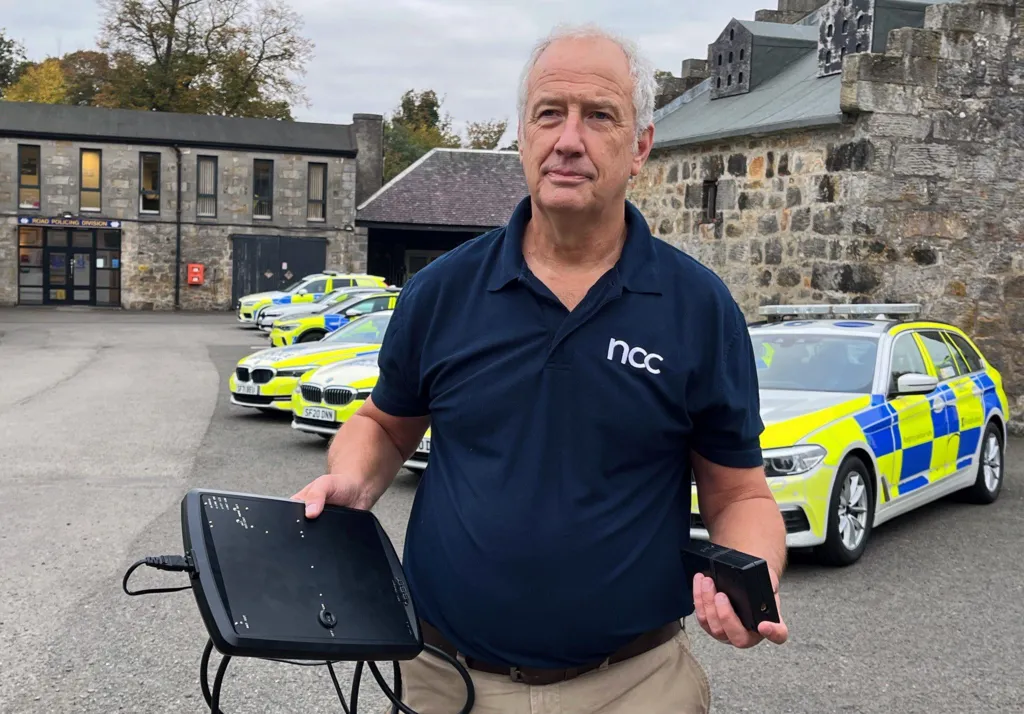
Low-value cars like mine often end up in "chop shops", where they are dismantled for spare parts that can be sold at a fraction of the cost of manufacturer's originals.
According to data from Police Scotland, Ford Fiestas are the most commonly stolen cars in Scotland, with 534 reported thefts over an 18-month period.
The Vauxhall Corsa ranked second, with 167 reported thefts, likely due to the popularity and abundance of these models, which creates a high demand for second-hand spares.
The popularity of these models contributes to their appeal to thieves, as there is a large market for spare parts.
The high cost of manufacturer's parts has inadvertently created an incentive for car theft, as well as encouraging insurers to write off damaged vehicles, which can then be sold for parts.
This has created a cycle where write-offs are bought, repaired with stolen parts, and then sold on, often without the buyer's knowledge of the car's history.
Vince Wise noted that some individuals specialise in selling vehicles in the sub-£5,000 bracket, where buyers may be less likely to scrutinise the car's pedigree.
While stolen low-value cars like mine tend to remain local, high-value vehicles are often exported abroad, where they can be sold for a significant profit.
The development of the shipping container industry has simplified the process of exporting stolen vehicles, making it easier for thieves to transport them to other countries.
Vince Wise shared his experience of intercepting stolen vehicles at UK container ports, destined for countries such as Tanzania, Kenya, and South Africa.
The reason for this is that cars in the UK are right-hand drive, which is also the configuration used in many former British colonies in Africa, making them a convenient market for stolen vehicles.
The fact that these countries have a similar driving configuration to the UK makes it easier for thieves to sell stolen vehicles there, often without arousing suspicion.
This has created a significant market for stolen vehicles, with many being exported to Africa, where they can be sold for a substantial profit, often without being detected.

Investigations have revealed that eastern Europe, Russia, and the Middle East are among the most common destinations for exported vehicles, where criminals are less concerned about the car's drive type.
I consulted with experts on car crime to gather their advice on preventing vehicle theft. They emphasized that installing a tracker significantly increases the likelihood of recovering a stolen car.
UK law enforcement agencies only endorse tracking devices that have earned "secured by design" accreditation, although some individuals have reported success with using discreet, low-cost "airtag" type trackers to gather crucial information about a vehicle's whereabouts.
However, my experts focused on more straightforward, low-tech solutions. Sgt Ally McKay's top recommendation was careful consideration of where to park one's vehicle.
Sgt McKay advised parking in a visible, well-lit area, such as a driveway, and choosing a location with CCTV coverage or natural surveillance from neighbors, as these factors can serve as a deterrent to potential thieves.
He also emphasized the importance of understanding how one's car key works and, if necessary, using a Faraday pouch to protect it, noting that some smart fobs now offer the option to disable the signal at night.
Another crucial step, according to experts, is manually verifying that one's car is locked, as thieves may employ tactics like signal blockers to deceive owners into thinking their vehicle is secure.
Additionally, traditional physical security devices, such as steering wheel locks or wheel clamps, can increase the difficulty for criminals, even if they are not foolproof.
The visible presence of additional security measures can make potential thieves think twice, as it indicates that the owner has taken extra precautions.
The Royal United Services Institute (Rusi), a security think tank, conducted a comprehensive review of UK car crime trends last year.
The study found that car crime has become increasingly sophisticated, professionalized, and globalized, with ties to organized crime, resulting in a costly "arms race" between criminals and manufacturers.
In England and Wales, the number of vehicle thefts has increased by approximately 75% over the past decade, exceeding 120,000 per year, and reversing the decline seen in the 1990s when new security technologies became widespread.
In contrast, Northern Ireland has experienced a steady decline in vehicle thefts, while Scotland has maintained a relatively stable annual figure of around 5,000.
According to Rusi's researcher, the variation in theft rates across regions may be due to a time lag, as new methods of theft can take up to 10 years to spread throughout the UK.
It has been several months since my car was stolen, and there have been no further developments since the last reported sighting in Glasgow.
Although my insurers have paid out and a replacement car has been purchased, law enforcement officials stress that car theft is not a victimless crime, as it ultimately leads to higher insurance premiums, affecting all drivers.
News
Tudor to take interim charge of Tottenham
Igor Tudor has reached an agreement to take the reins as Tottenham’s interim head coach for the remainder of the season.
Tottenham has reached an agreement with Igor Tudor to take the helm as interim head coach for the remainder of the current season.
For the latest updates, in-depth analysis, and perspectives from fans, look to Tottenham's recent news and discussion.
Do you have any questions about Tottenham – what information are you seeking?
News
UAE Defeats Canada to Enhance Super 8s Qualification Chances
The United Arab Emirates boosted their slim chances of advancing to the T20 World Cup Super 8s, securing a narrow five-wicket victory over Canada, thanks in part to Aryansh Sharma’s unbeaten 74.
In a crucial match for the United Arab Emirates, Aryansh Sharma achieved his fifth T20 international half-century, contributing to the team's victory over Canada.
The Men's T20 World Cup, being held in Group D in Delhi, saw an intense competition between the two teams.
Canada's innings resulted in a total of 150-7 after 20 overs, with Harsh Thaker scoring 50 runs off 41 balls, while Junaid Siddique took 5 wickets for 35 runs.
The UAE team responded with a total of 154 runs in 19.4 overs, led by Aryansh Sharma's unbeaten 74 runs off 53 balls and Sohaib Khan's 51 runs off 29 balls, despite Bin Zafar taking 3 wickets for 14 runs.
The United Arab Emirates secured a five-wicket win over Canada, boosting their chances in the tournament.
Aryansh Sharma played a pivotal role in the UAE's win, scoring an unbeaten 74 runs to help his team overcome Canada's total.
With four overs remaining, Canada seemed poised to defend their total, but Sohaib Khan's aggressive batting reignited the UAE's chase, as he scored 17 runs off Dillon Heyliger's bowling.
In the final over, the UAE required eight runs to win, and Aryansh Sharma eased the pressure by hitting a six off Jaskaran Singh's first ball.
Sohaib Khan was dismissed after scoring a rapid 51 runs off 29 balls, including four sixes, leaving the scores level.
Muhammad Arfan then sealed the victory with two balls to spare, hitting a four off Jaskaran Singh, as Aryansh Sharma top-scored with 74 runs off 53 balls.
The UAE now stands third in Group D with two points, but they face an uphill task in their upcoming matches against full members South Africa and Afghanistan to advance to the next phase.
Although the UAE has never beaten a full member in any World Cup format, their performance in this match has given them some confidence.
Earlier in the match, Junaid Siddique achieved the best bowling figures by a UAE player in a T20 World Cup, taking 5 wickets for 35 runs at the Arun Jaitley Stadium in Delhi.
Harsh Thaker's 41-ball half-century, which included three sixes and two fours, provided a solid foundation for Canada's total.
Thaker and Navneet Dhaliwal shared a 58-run partnership to help Canada recover from a difficult start, before Dhaliwal was run out for 34 runs.
After Thaker fell victim to Junaid Siddique's slower ball, Canada struggled to find boundaries against the UAE's tight bowling.
Shreyas Movva made a useful contribution of 21 runs off 21 balls, but Junaid Siddique took two wickets in the final over to claim his maiden five-wicket haul in T20 internationals.
In a separate match, Zimbabwe's Brilliant Muzarabani played a key role in his team's stunning win over Australia.
For more updates, notifications, and social media coverage, visit the BBC Sport website.
In another development, Paul Stirling has been ruled out of the remainder of the T20 World Cup due to injury.
News
Guardiola Advocates for Cultural Embrace to Foster a Better Society
Pep Guardiola, the manager of Manchester City, has stated that accepting diverse cultures will lead to a more harmonious society, in reaction to comments made by Sir Jim Ratcliffe regarding immigration.
As a player, Pep Guardiola earned 47 international caps for Spain, showcasing his skills on the global stage.
Manchester City's manager, Pep Guardiola, believes that embracing diverse cultures is essential for creating a more harmonious society.
Guardiola was questioned about his thoughts on comments made by Manchester United co-owner Sir Jim Ratcliffe, who stated that the UK had been "colonised by immigrants", sparking a debate.
Following criticism, Ratcliffe apologised for any offence caused, while still advocating for open discussion on the issue.
Ahead of Manchester City's FA Cup fourth-round match against Salford, Guardiola shared his perspective, saying that people seek better lives and opportunities, which can be found in their birthplace or elsewhere.
According to Guardiola, one's birthplace is not a determining factor in their potential or aspirations.
Many individuals are forced to leave their homelands due to problems in their native countries, rather than a desire to abandon their roots.
Guardiola emphasized that by genuinely embracing other cultures, society as a whole can improve, a notion he has no doubts about.
An examination of the facts behind Jim Ratcliffe's statements on immigration and benefits is also underway.
Sir Jim Ratcliffe, a billionaire, has made headlines, but who is he and how did he accumulate his wealth?
Born in Santpedor, Catalonia, Spain, Guardiola has had a diverse career, playing in Spain, Italy, Qatar, and Mexico, before transitioning to management.
As a manager, the 55-year-old has had stints in Spain, Germany, and England, taking the helm at Manchester City in 2016.
Guardiola views the issue of immigration as a global problem, stating that it is a concern that affects many countries.
He believes that immigrants are often unfairly blamed for problems in their adopted countries, highlighting the fact that one's birthplace is often a matter of circumstance.
Guardiola reiterated that people from all backgrounds strive for a better life, seeking opportunities that may be available in their birth country or elsewhere.
He stressed that factors such as skin colour or birthplace should not be barriers to achieving one's goals.
For the latest news, analysis, and fan perspectives on Manchester City, please refer to our dedicated section.
Do you have any questions about Manchester City that you would like answered?
-
 News11 hours ago
Australian Politics Faces Questions Over Gender Equality Amid Sussan Ley’s Appointment
-
 News8 hours ago
Farage Says Reform to Replace Traditional Tory Party
-
 News8 hours ago
Wrexham Pair Seek Win Against Former Team Ipswich
-
 News13 hours ago
Liberal Party Removes Australia’s First Female Leader
-
 News11 hours ago
UK Braces for Cold Snap with Snow and Ice Alerts Expected
-
 News8 hours ago
Husband’s alleged £600k theft for sex and antiques blamed on drug side effects
-
 News2 days ago
Sunbed ads spreading harmful misinformation to young people
-
 Business14 hours ago
BBC Reporter Exposed to Cyber Attack Due to Vulnerabilities in AI Coding Tool