
News
April Jones’ Sister Continues to Grapple with Aftermath of 2012 Murder
The vanishing of April in 2012 prompted the largest missing person inquiry ever undertaken by UK law enforcement, as recorded in police history.
A warning to readers: the following article contains disturbing details about a murder case.
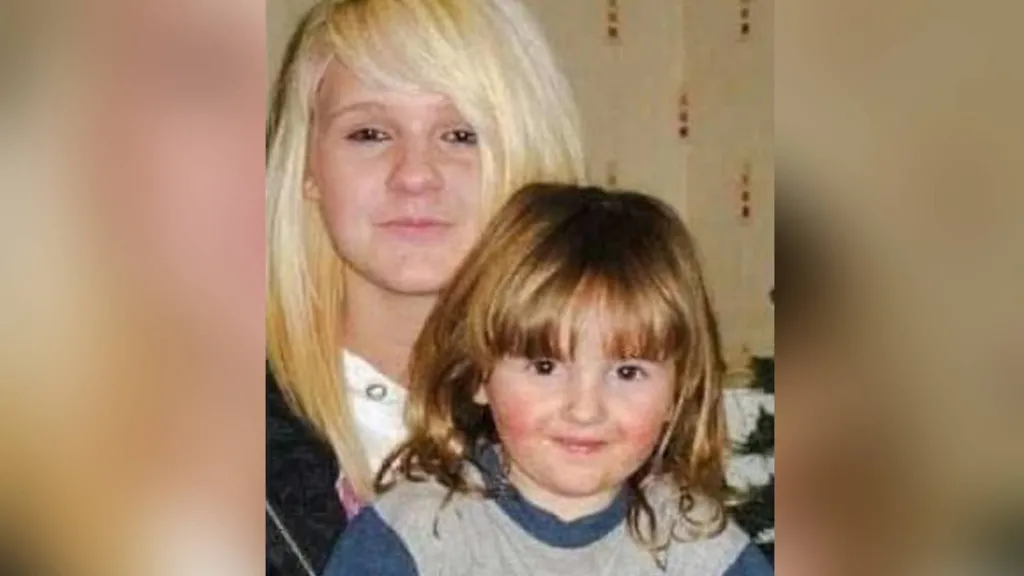
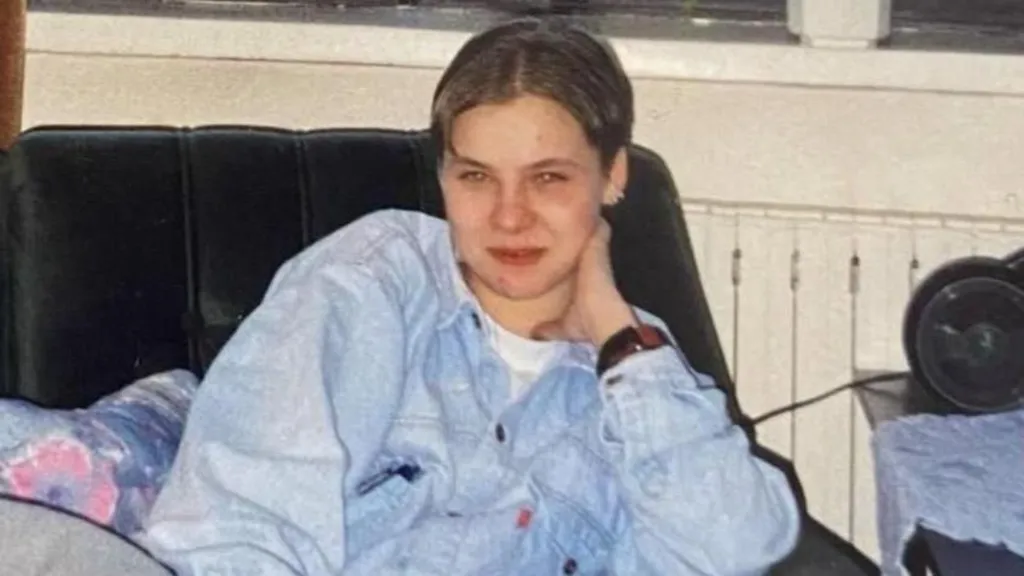
Hazel Jones, the sister of April Jones, who was abducted and murdered in 2012 at the age of five, has spoken out about the lasting impact of her sister's death, saying she is "still trying to come to terms with the nightmare" of losing April.
In her first public statement, 31-year-old Hazel Jones described how the trauma of April's death has had a profound effect on her life, making it difficult for her to move on.
On 1 October 2012, April was playing with friends near her home in Machynlleth, Powys, when she was taken by Mark Bridger, who was driving a Land Rover.
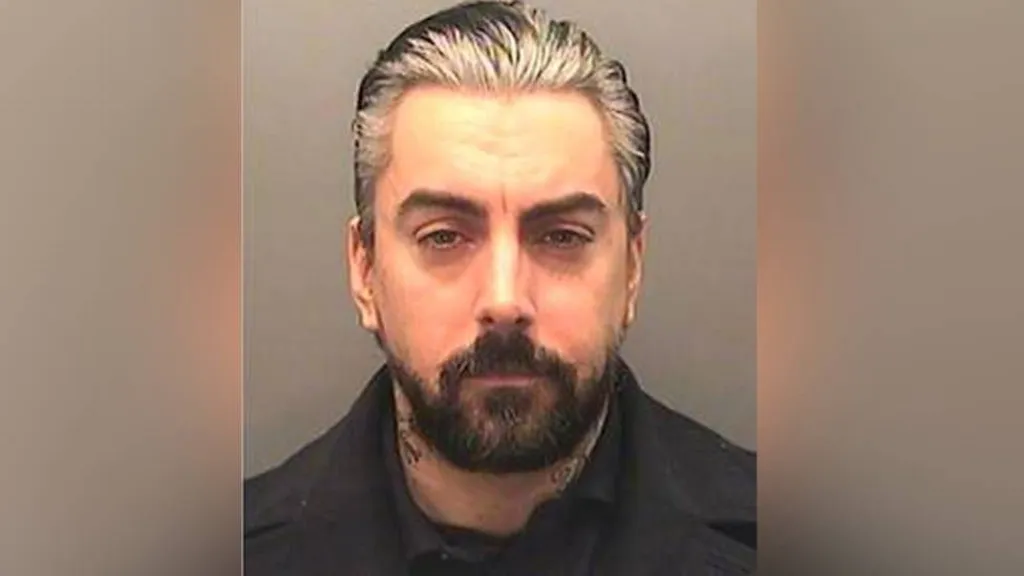
Bridger, then 47, was later convicted of abducting and murdering April in a crime that was motivated by sexual desires.
Despite extensive search efforts, April's body was never fully recovered; only fragments of her remains were found at Bridger's cottage.
Hazel explained that she had chosen not to speak publicly about her sister's death until now, saying, "It was just too much to process, given the brutal nature of April's murder and kidnapping."
Recalling the moment she learned her half-sister was missing, Hazel said she was at home in Aberaeron when her mother broke the news to her, leaving her in shock.
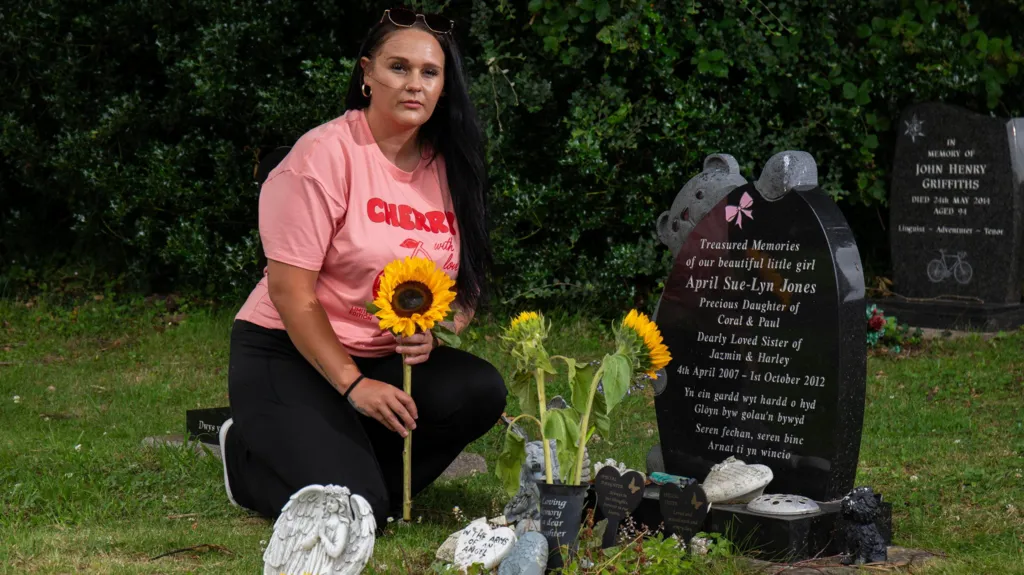
Hazel's mother told her, "Hazel, April's missing," and Hazel remembers responding with disbelief, asking her mother to repeat the news.
Hazel then traveled 30 miles to Machynlleth to be with her father, Paul, and the rest of her family, trying to make sense of what was happening.
The reality of the situation sank in the following day, and Hazel realized that April was not just missing, but had actually disappeared.
Hazel remembered thinking that such a tragedy could not happen in their quiet town, but it did, and it happened to their family.
The search for April became the largest missing person operation in UK police history, covering 60 square kilometers and involving hundreds of experts and thousands of volunteers.
The investigation focused on approximately 650 areas near April's hometown, with authorities working tirelessly to find her.

Bridger initially claimed that he had accidentally hit April with his vehicle, but could not recall what he had done with her body.
However, evidence found at his cottage, including bone fragments consistent with a juvenile human skull, contradicted his story.
Further investigation revealed blood stains near several knives, including one that had been badly burned, despite Bridger's attempts to clean the cottage.
Those who knew Bridger described him as confident and charming, but the discovery of his computer revealed a dark secret.
Police found a collection of child sex abuse images, as well as evidence of disturbing search terms, including "naked young five-year-old girls," and pictures of murder victims.
Bridger also had Facebook pictures of local young girls, including April and her sisters, which further implicated him in the crime.
Bridger was sentenced to a whole-life tariff, a rare punishment, and has maintained his claim that he cannot remember what happened to April's body.
Hazel, who was 18 and pregnant at the time of April's disappearance, described feeling "petrified" when she learned about the circumstances of her sister's death.

The realization that there were people like Bridger in their community made Hazel fearful for her own child's safety, and she struggled to come to terms with the fact that she was bringing a new life into a world with such dangers.
Hazel found it difficult to reconcile her grief with the joy of becoming a mother, and she remembered feeling overwhelmed by the experience.
Just weeks after April's disappearance, Hazel gave birth to her daughter, Amelia, a bittersweet moment that was marked by both joy and sorrow.

The similarities between Amelia and April made the grieving process even more challenging for Hazel, as she struggled to mourn her sister while also caring for her new child.
When Hazel's family visited her in the hospital, they were struck by the resemblance between Amelia and April, which made the loss feel even more poignant.
The similarity between the two girls served as a painful reminder of what Hazel had lost, and it made her grief even more difficult to bear.
Now a mother of three, Hazel still struggles with anxiety, and the trauma of April's death continues to affect her life.
Hazel reflected on the fact that April had only just begun to experience life, and that her death was a tragic loss of potential.
Hazel hopes that her own daughter will have the opportunity to experience the world and live a full life, something that April was denied.
Hazel's father, Paul Jones, passed away on 14 May 2025, after being diagnosed with a brain disease in 2018.
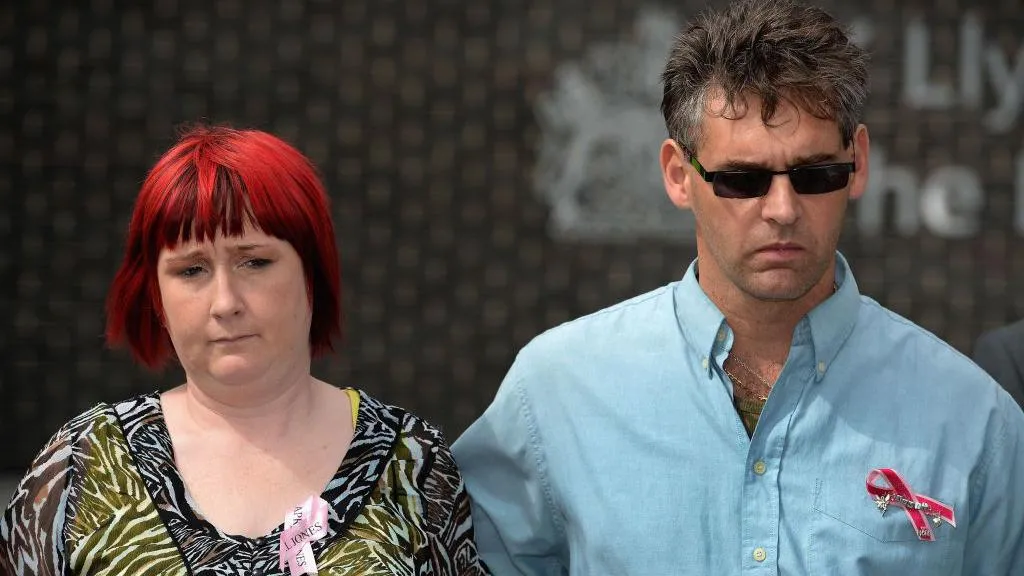
Hazel believes that her father was never the same after April's death, and that a part of him died along with his daughter.
Hazel finds comfort in the thought that her father is now at peace, reunited with April, and that he is no longer suffering.
Hazel's father's passing was a significant loss for her, and she feels that a part of her own identity is gone.
Hazel has chosen to be open with her children about April's death, and she has kept a collection of memories and newspaper clippings for them to look at when they are ready.

Hazel wants her children to be aware of the dangers in the world, and she hopes that by being honest with them, she can help them develop a sense of caution and self-awareness.
However, the trauma of April's death continues to cast a long shadow over Hazel's life, and she is "terrified" about her children growing up and facing the dangers of the world.
Hazel's fear for her children's safety is a constant presence in her life, and she worries about the potential risks and threats that they may face as they grow older.

The memory of April's death serves as a painful reminder of the dangers that exist in the world, and Hazel is determined to do everything she can to protect her own children from harm.
Thirteen years have passed, yet the reality of the situation remains difficult to accept. It is unclear whether this is a result of denial or simply the inability to process the events that occurred.
The passage of time has not diminished the sense of disbelief, and there is still a lingering expectation that the situation will somehow be reversed, as if it were all just a bad dream.


News
Bhatia and Hisatsune Take the Lead, McIlroy Faces Uphill Battle
At the AT&T Pebble Beach Pro-Am, Akshay Bhatia carded a 64, eight under par, to move into a tie for second-round lead with Ryo Hisatsune, both players sitting at 15 under.
Rory McIlroy trails the leaders by six strokes as the tournament heads into the weekend, following a second round that saw him card a 67.
The current standings at the AT&T Pebble Beach Pro-Am after round two are as follows:
A Bhatia (US) and R Hisatsune (Jap) are tied at the top with a score of -15, while R Fowler (US) and S Burns (US) are one stroke back at -14, and MW Lee (Aus), S Straka (Aut), and J Bridgeman (US) are at -12.
Other notable players include M Fitzpatrick (Eng), K Bradley (US), H Matsuyama (Jap), J Spieth (US), and X Schauffele (US) at -10, T Fleetwood (Eng) and R McIlroy (NI) at -9, S Lowry (Ire) at -8, S Scheffler (US) at -6, and J Rose (Eng), H Hall (Eng), and R MacIntyre (Sco) at -5.
Akshay Bhatia's impressive eight-under-par 64 has earned him a share of the lead with Ryo Hisatsune, both sitting at 15 under par.
Defending champion Rory McIlroy finished his second round with a birdie, signing for a 67, but remains six strokes off the pace.
McIlroy's round was marked by five birdies and an eagle, but he was hindered by bogeys on the 10th and 14th holes, before closing with a strong four on the par-five 18th.
Earlier in the day, Akshay Bhatia had posted one of the top rounds at Spyglass Hill, while Ryo Hisatsune recovered from a mid-round slump to pick up four shots in his final five holes.
Rickie Fowler has moved into a tie for second place alongside Sam Burns, with a score of 14 under, as he seeks his first victory since July 2023.
Sepp Straka of Austria is the highest-placed European player at 12 under, with England's Matt Fitzpatrick two strokes back, alongside a group including Keegan Bradley, Jordan Spieth, and Xander Schauffele.
Tommy Fleetwood of England followed his opening 67 with a 68 to join Rory McIlroy at nine under, while Shane Lowry of Ireland is one stroke behind.
Scottie Scheffler has rejuvenated his chances with a strong stretch of three birdies and an eagle on five holes after the turn, bringing him to six under par.
Justin Rose and Harry Hall of England, along with Scotland's Robert MacIntyre, are currently at five under par, with each player having completed one round at both Pebble Beach and Spyglass Hill.
The remaining rounds will be played exclusively at Pebble Beach, with no 36-hole cut in place at the $20m (£14.7m) PGA Tour event.
News
Bangladesh’s New Leader Faces Challenge of Delivering Reform After Landslide Election Victory
Bangladesh is poised to have Tarique Rahman as its next prime minister, a development that comes 18 months following the removal of the country’s longest-serving leader amid widespread demonstrations.
It has been over two years since Sheikh Hasina's election victory, which was widely criticized as being unfairly influenced in her favor. At the time, it seemed unlikely that her 15-year hold on power would be disrupted so suddenly, or that a rival party, which had been largely dismissed, would make such a significant comeback.

However, in the context of Bangladeshi politics, this shift is merely another instance of the alternating pattern of power between Hasina's Awami League and the Bangladesh Nationalist Party (BNP), which have been trading power for decades.
This marks the first time that Tarique Rahman, the new leader of the BNP, has formally led the party and contested an election.
His mother, Khaleda Zia, who passed away late last year, had led the party for four decades, taking over after the assassination of his father, Ziaur Rahman, the founder of the BNP and a key figure in Bangladesh's war for independence.
Tarique Rahman has faced allegations of corruption and benefiting from nepotism during his mother's tenure. He returned to Bangladesh five days before her death, ending his 17-year self-imposed exile in London.
Although Rahman, 60, has occasionally acted as the de-facto chair of the BNP when his mother was imprisoned or ill, he is largely viewed as an untested leader.
According to political scientist Navine Murshid, Rahman's lack of experience may actually work in his favor, as people are willing to give change a chance and are hopeful for positive outcomes.
The BNP's primary objective is to restore democracy in Bangladesh, according to the party.

Senior BNP leader Amir Khasru Mahmud Chowdhury stated that the party's first priority is to rebuild the country's democratic and financial institutions, which have been damaged over the past decade.
Bangladesh has a history of broken promises, with parties often becoming increasingly authoritarian after coming to power.
However, the country's young people, who played a key role in the "July uprising" of 2024 that led to Hasina's ouster, appear less willing to accept the status quo this time around.
Tazin Ahmed, a 19-year-old who participated in the uprising, expressed her desire for a better future, stating that the real victory will be when the country is free from corruption and has a stable economy.
Ahmed emphasized that the resignation of the previous prime minister was not the ultimate goal, but rather a step towards achieving a corruption-free and prosperous Bangladesh.
Her cousin, Tahmina Tasnim, 21, echoed similar sentiments, calling for unity among the people and a stable nation with a strong economy, and warning that they will not hesitate to take action if necessary.
Since Hasina's departure, Bangladesh's interim leader, Mohammad Yunus, has struggled to maintain law and order.

The new government will need to prioritize restoring law and order, as well as addressing the country's economic challenges, including high food prices and unemployment among the large youth population.
Sociologist Samina Luthfa noted that the lack of experience in governing is a challenge faced by all parties.
The Islamist Jamaat-e-Islami, which has been banned twice in Bangladesh's history, including during Hasina's tenure, has won a significant number of seats in this election.
The National Citizens Party (NCP), a new party formed by some of the students who led the uprising, has won six seats in its first election.
Luthfa observed that the incoming parliament will feature many new leaders who have never held office before.
She noted that the NCP's young members have a lot to learn, while the more experienced politicians lack experience in governing the country, making it a challenging task ahead.
Jamaat's election manifesto focused on secular and development-oriented policies, with no mention of Islamic law.

However, the party's website suggests that its ultimate goal is to implement Islamic law, which has raised concerns about its intentions if it were to come to power.
Murshid stated that Jamaat's performance in the election was not unexpected, given its strong organization and grassroots efforts over the years.
She acknowledged that Jamaat is a well-organized party, but also expressed concerns about its inherently anti-democratic and patriarchal nature.
Luthfa criticized all parties for failing to adequately represent women in Bangladesh, with only about 4% of candidates being female.
She emphasized that the women who participated in the July uprising have been let down by all parties, which have failed to translate their collective energy into meaningful political representation.
Luthfa urged parliament members to quickly nominate skilled and deserving women to the reserved seats in parliament.
In Bangladesh's parliament, 50 seats are reserved for women, who are nominated by parties in proportion to their electoral performance.
While this election was distinct from previous ones under Hasina, being genuinely competitive and with an uncertain outcome, the exclusion of her party has raised questions about the election's credibility.
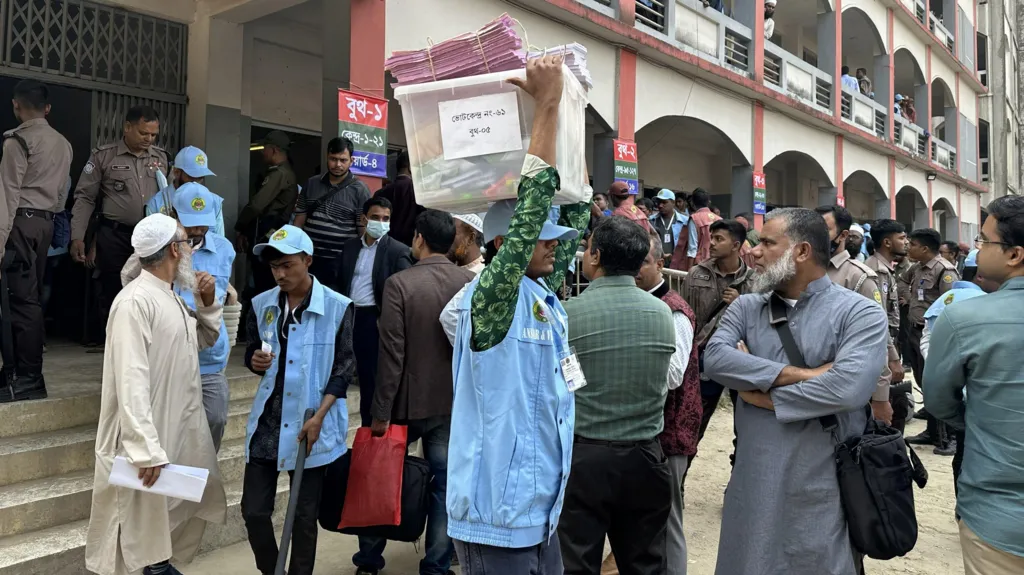
When asked if the BNP would support allowing the Awami League to re-enter the political process, senior leader Chowdhury stated that it is not up to the BNP to decide, citing the Awami League's questionable credibility.
Chowdhury noted that the Awami League's past actions, including allegations of killing and persecuting its own people, would need to be addressed before it could be considered a viable political force again.
Hasina, currently in exile in India, has denounced the recent election as a "farce" and called for a new election in which the Awami League can participate.
While public opinion is currently strongly against the Awami League, it would be premature to write off the party entirely, given Bangladesh's complex political history.
The situation remains fluid, with the new government facing significant challenges in restoring stability and democracy to the country.
Additional reporting by Aakriti Thapar
News
Valentine’s Day in Kenya Sees Cash Replacing Traditional Flowers
In Kenya, the practice of giving bouquets of cash as gifts has gained significant traction, but recent cautions may potentially curb its growing popularity.
In Nairobi, the Kenyan capital, a distinctive red hue has dominated the city's landscape every 14 February for as long as many residents can recall, a tradition that has become an integral part of the city's culture.

As people commemorate Valentine's Day, the streets are filled with individuals donning red attire or carrying red roses, embracing the symbolic color of love and romance.
Local traders capitalize on the demand for fresh flowers, leveraging Kenya's position as a leading global producer of cut flowers to offer an array of blooms to customers.
However, a newer trend has emerged, with some individuals opting for bouquets composed of folded, rolled, or fastened banknotes in various colors, rather than traditional flowers.
This phenomenon has spread to other African nations, prompting central banks in Kenya, Uganda, Rwanda, Botswana, and Namibia to issue public warnings about the potential consequences of damaging or defacing banknotes in the process of creating these cash bouquets.
The central banks have cautioned against practices that involve gluing, taping, stapling, or pinning banknotes together, which can render them unusable.
According to the Central Bank of Kenya, banknotes are often subjected to various forms of damage, including being glued, taped, or stapled, which can compromise their integrity.
Damaged banknotes can be rejected by automated teller machines and cash-sorting equipment, resulting in significant costs to taxpayers as they are removed from circulation.
While the Central Bank of Kenya does not object to the practice of gifting cash, it has emphasized that damaging banknotes is a serious offense that can lead to imprisonment for up to seven years.
The popularity of cash bouquets can be attributed, in part, to celebrities and online influencers who often share videos of themselves presenting these unique gifts to their followers.
The demand for cash bouquets extends beyond Valentine's Day, with people also using them to celebrate birthdays and other special occasions throughout the year.
These bouquets come in a variety of designs, with creators tailoring their arrangements to suit the preferences and budgets of individual clients.
The amounts used in these bouquets can range from as little as 1,000 shillings ($8; £6) to as much as a million shillings, according to Angela Muthoni, a florist at the Gift and Flowers shop in central Nairobi.
Cash bouquets can be presented in various forms, including floral designs, combinations of flowers and money, elegant wrappings, cake designs, or gift boxes.
Muthoni reports that money bouquets have gained significant popularity over the past two years, with her shop receiving between 15 and 20 orders daily in the lead-up to Valentine's Day, despite the Central Bank's warning.
Muthoni notes that gifting cash eliminates the stress of choosing a present, as "everyone loves money," making it a convenient and appreciated gift.
Some Kenyans argue that the trend of giving money bouquets reflects a growing emphasis on materialism, where people seek to purchase love and affection rather than cultivating meaningful relationships.
Haskell Austin, a 24-year-old, attributes the phenomenon to peer pressure, preferring to give flowers as a more thoughtful and personal gesture.
Austin describes the idea of gifting money as "materialistic" and suggests that, if cash must be given, a straightforward transfer is a more practical and respectful approach.
Instead of creating elaborate bouquets, Austin recommends simply transferring funds, which he believes is a more considerate and efficient way to show appreciation.
Lynn, who wished to remain anonymous, expressed disappointment at the timing of the Central Bank's warning, as she had been looking forward to receiving a cash bouquet on Valentine's Day.
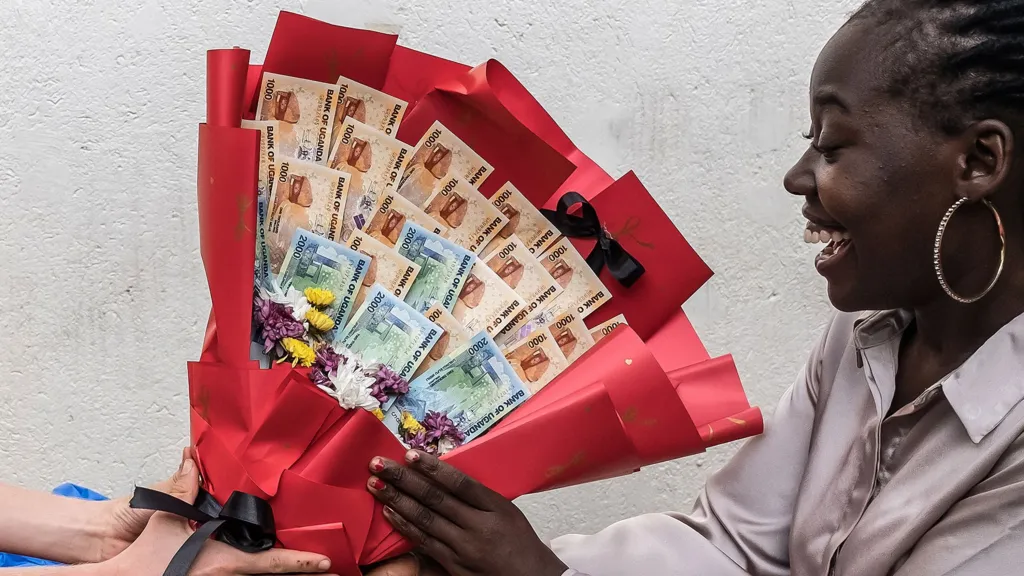
Despite the warning, Lynn notes that people remain enthusiastic about the trend, with many still eager to give and receive cash bouquets.
Nicole Rono, another resident, shares Lynn's sentiment, stating that she would prefer to receive cash, as "who doesn't love money?" and noting that flowers, while nice, are not as practical or desirable.
Benjamin Nambwaya, a university student, observes that the culture of giving money bouquets is often driven by social expectations, with women typically being the recipients.
Nambwaya believes that this trend can have negative consequences, potentially "destroying relationships" by creating unrealistic expectations and pressures to provide financial gifts.
Nambwaya prefers giving flowers, which he considers a more thoughtful and romantic gesture, allowing him to express his feelings without the burden of financial expectations.
In his view, flowers are a more appropriate way to show appreciation and affection, as they represent a small, meaningful gesture rather than a grand, expensive display.
According to economic expert Odhiambo Ramogi, the popularity of cash bouquets reflects a broader cultural shift towards a more capitalistic approach to life, where special occasions like Valentine's Day are seen as opportunities for commercialization and marketing.
Ramogi argues that this trend is driven by the influence of advertising and marketing, which often emphasizes the importance of material gifts and displays of wealth on special occasions.
For Muthoni, the decision to give cash or flowers ultimately depends on the individual's preferences and values, as people have different ways of expressing love and appreciation.
Muthoni acknowledges that, while some people may prefer more traditional or sentimental gifts, others may view money as a more practical and desirable option, as it can be used to purchase a wide range of goods and services.
In her view, the key to a successful gift is understanding the recipient's needs and preferences, and tailoring the gift accordingly, whether it be cash, flowers, or something else entirely.
The Central Bank's warning has sparked a wide range of reactions on social media, with some people praising the move as a necessary measure to prevent the damage of banknotes, while others have ridiculed it or expressed disappointment.
The debate has also inspired humorous responses, such as memes featuring bouquets made from rolled chapati bread, highlighting the creative and often humorous ways that people are responding to the trend.
On TikTok, Kenyan Scott Ian Obaro noted that the trend may have contributed to a culture of "showing off," where people feel pressure to display their wealth and status through elaborate gifts and displays.
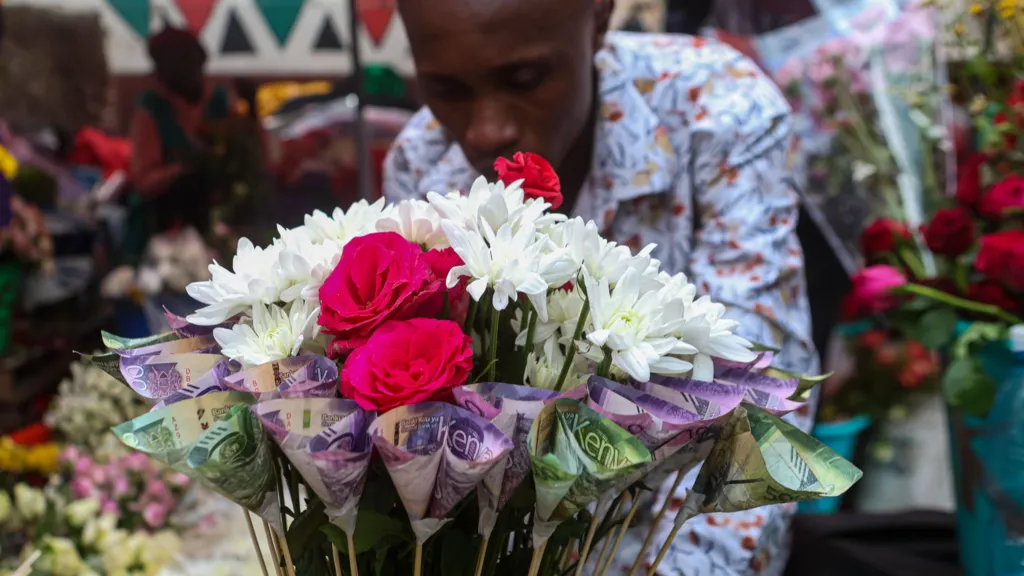
Ramogi suggests that the preference for cash over flowers in African cultures may be due to the fact that giving flowers is a relatively foreign concept, and that many people in Kenya and other African countries would prefer to receive money as a practical way to address their needs.
According to Ramogi, the tradition of giving flowers is a Western custom that has not been widely adopted in Africa, where people often prioritize more practical and tangible gifts, such as money or other forms of material support.
Ramogi believes that the combination of this cultural preference with the growing emphasis on materialism has led to the rise of cash bouquets, where people use banknotes as a symbol of love and appreciation, rather than traditional flowers.
The intervention by Kenya's regulator, along with those in other countries, may help to slow the growth of the cash bouquet trend, as people become more aware of the potential consequences of damaging banknotes.
Muthoni is concerned that the move could have a negative impact on the livelihoods of people who have built businesses around creating cash bouquets, but she remains optimistic that there is room for innovation and adaptation in the industry.
According to her, bouquets featuring transparent pockets that can safely contain money are among her designs, and she is also exploring alternative concepts, including digital arrangements.
In response to the warning from Kenya's central bank, some individuals have opted to use US dollars instead, which would not be subject to the same restrictions.
Given the persistence of this practice, it is unlikely that the tradition of giving money bouquets will be discontinued in the near future.
For additional news and updates from Africa, visit BBCAfrica.com.

-
 News22 hours ago
Australian Politics Faces Questions Over Gender Equality Amid Sussan Ley’s Appointment
-
 News19 hours ago
Farage Says Reform to Replace Traditional Tory Party
-
 News19 hours ago
Wrexham Pair Seek Win Against Former Team Ipswich
-
 News1 day ago
Liberal Party Removes Australia’s First Female Leader
-
 News22 hours ago
UK Braces for Cold Snap with Snow and Ice Alerts Expected
-
 News19 hours ago
Husband’s alleged £600k theft for sex and antiques blamed on drug side effects
-
 News3 days ago
Sunbed ads spreading harmful misinformation to young people
-
 Business1 day ago
BBC Reporter Exposed to Cyber Attack Due to Vulnerabilities in AI Coding Tool