
News
Game-changing cancer test means I met my granddaughter
Following her diagnosis with inoperable cancer, Pat Grant feared she would not live to see the birth of her first grandchild.
Upon learning she would soon become a grandmother, Pat Grant's cancer diagnosis led her to fear she might never have the chance to meet her grandchild.
As a vibrant 78-year-old, Pat had always been active, participating in aqua-aerobics and dance classes after retiring from her career as a social worker.
However, following her diagnosis with inoperable lung cancer, Pat began to experience significant weight loss and declining health.
After participating in a Welsh clinical trial for a groundbreaking cancer blood test, Pat was informed that her specific type of cancer might be responsive to targeted medication.
Pat, a resident of Cardiff, recalled feeling subdued about the upcoming birth of her grandchild due to her poor health at the time.

Nevertheless, she decided to take a chance on the experimental treatment, reasoning that she had nothing to lose.
Although the treatment was not guaranteed to be effective, Pat was willing to try it, acknowledging the uncertainties involved.
Gradually, Pat started to feel her strength returning, a development she described as progressing from her toes upward.
As a result, Pat was able to fulfill her role as a grandmother and establish a meaningful relationship with her grandchild.
She not only met her grandchild but also celebrated the child's first birthday, a milestone she had initially feared she would miss.
Pat, affectionately known as "Noisy Nanna," delights in spending time with her grandchild, singing and engaging in playful activities together.
She feels grateful for the opportunity to have shared in her grandchild's life and hopes to continue doing so in the future.
The QuicDNA test, a innovative diagnostic tool, is being implemented as a standard procedure across NHS Wales for patients with advanced lung cancer.

With additional funding from the Welsh and UK governments, the rollout of QuicDNA is being accelerated and expanded to include other types of cancer, such as colorectal, prostate, and cancers of unknown origin.
Patients with lung cancer are also being offered follow-up tests to monitor the effectiveness of their treatments and make any necessary adjustments.
Shortly before his 40th birthday, Craig Maxwell was diagnosed with a lung tumor, but doctors encountered difficulties in obtaining a tissue sample.
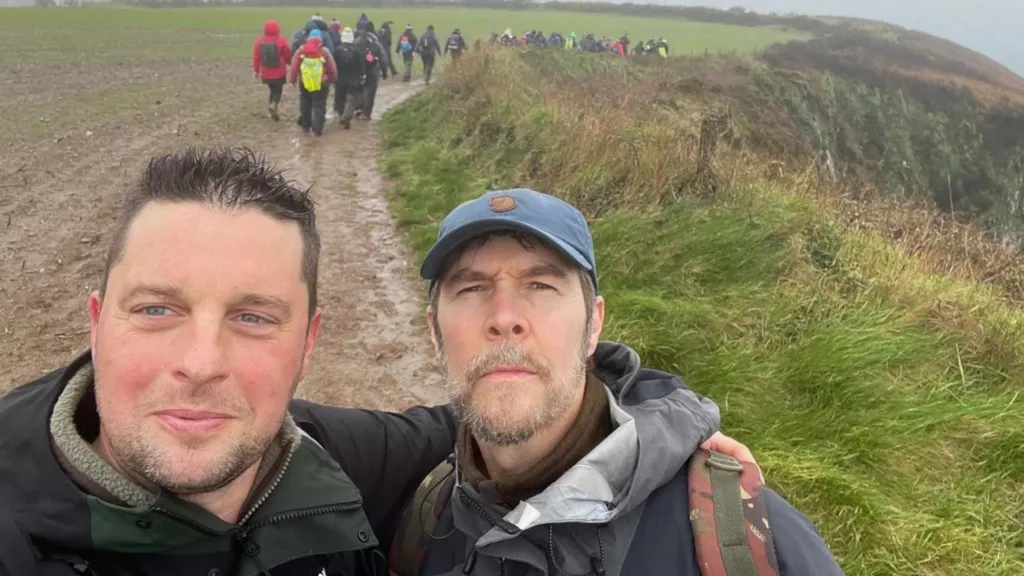
It took nearly three months for Craig, from Penarth, to receive a definitive diagnosis of inoperable stage 4 non-smoking lung and bone cancer.
Craig described the 78-day waiting period as the most challenging time for him and his loved ones, marked by uncertainty and fear about the future.
The delay in receiving a diagnosis and starting treatment took a significant toll on Craig's health, causing him to deteriorate rapidly.
As a father, Craig found it particularly difficult to be unable to support his children during this period, which motivated him to advocate for change.
It was during this time that Craig learned about the QuicDNA project, a initiative aimed at improving cancer diagnosis and treatment.
Although some funding had already been secured, an additional £300,000 was needed to launch the project.
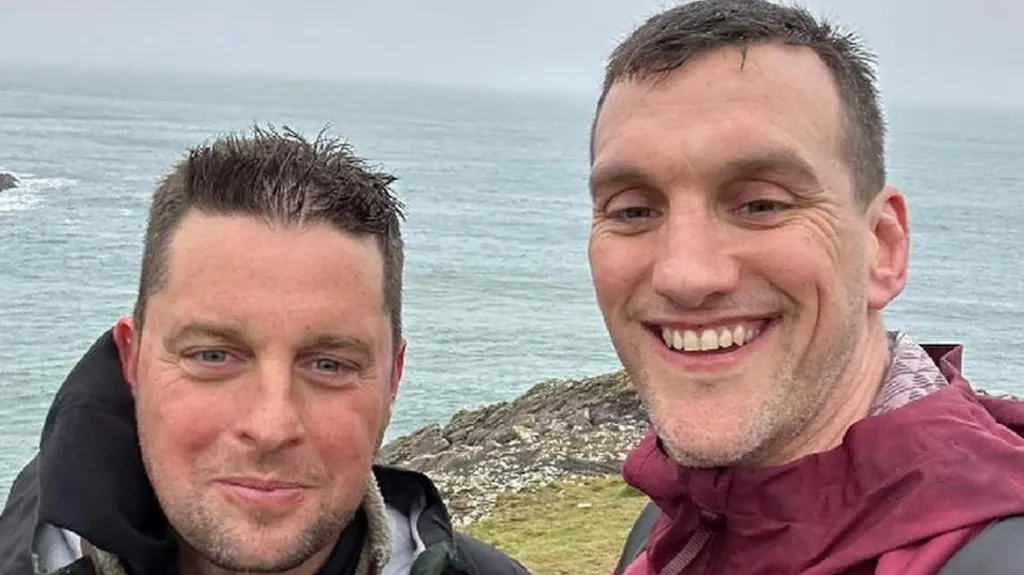
Craig went on to raise a total of £1.7 million to support the QuicDNA research and other related initiatives.
As a result of his involvement in the project, Craig was able to regain his health and resume his active lifestyle, including climbing Mount Toubkal and coaching his son's rugby team.
He also had the opportunity to attend the Dance World Cup in Ireland with his daughter, experiences he cherishes deeply.
Craig attributes his improved health to the precision medicine and personalized treatment approach made possible by the QuicDNA project.
Despite his significant contribution to the project, Craig remains humble, acknowledging that he is part of a larger team working towards a common goal.
Traditionally, cancer diagnosis involves surgically removing tissue from a tumor to examine its cellular composition.
However, this method can be invasive and may cause harm, and in some cases, doctors may struggle to obtain a suitable sample.
As cancer cells grow, they release tiny fragments of their DNA into the bloodstream, which can be detected using a simple blood test.
This "liquid biopsy" offers a non-invasive alternative to traditional tissue sampling methods.
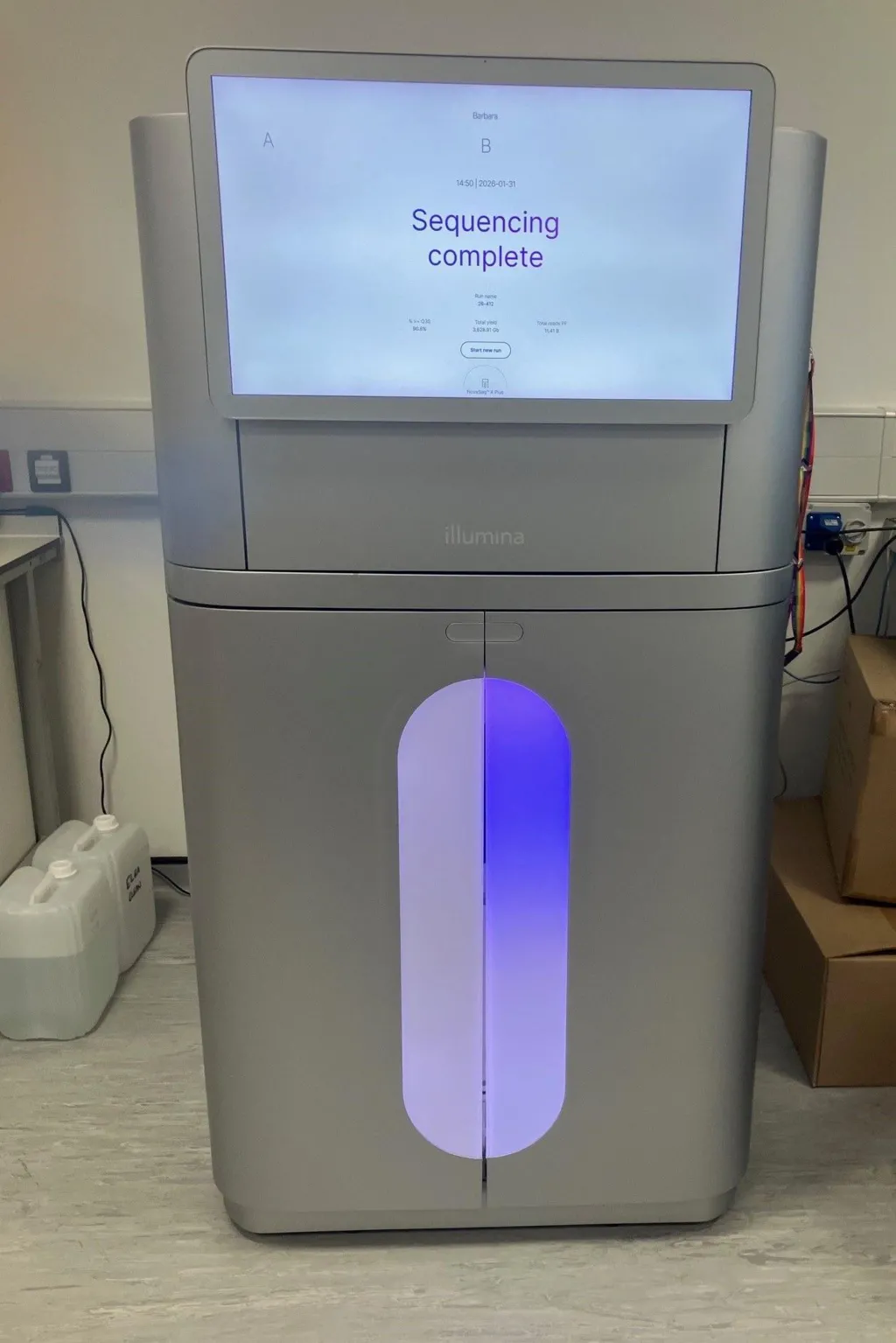
The DNA extracted from the blood sample is then analyzed using advanced computerized sequencers, which can cost around £1 million each, to create a detailed map of the cancer's genetic code.
This information can be used to determine the most effective treatment approach and monitor the patient's response to therapy.
According to Dr. Magda Meissner, chief investigator of the QuicDNA study, these DNA blood tests can provide results within two weeks, enabling timely treatment decisions.
For patients with advanced lung cancer, prompt diagnosis is critical, as delays can result in rapid deterioration and reduced treatment options.
In some cases, the QuicDNA test can be life-saving, allowing patients to receive timely treatment and potentially extending their lifespan.
Despite the progress made, significant challenges remain in the field of cancer diagnosis and treatment.
Waiting times for cancer diagnosis and treatment in Wales and the UK often exceed recommended targets, and survival rates lag behind those in other developed countries.
Lowri Griffiths, of Tenovus Cancer Care and Chair of the Wales Cancer Alliance, welcomes the introduction of the QuicDNA test as a positive development, but emphasizes the need for systemic change to address the broader challenges in cancer care.
To achieve meaningful improvements in cancer outcomes, investment in comprehensive reforms and infrastructure upgrades is necessary, according to Griffiths.
International comparisons reveal a concerning trend, highlighting the significant efforts required for improvement to reach the standards set by top-performing countries.





News
GB men’s curling team suffers upset defeat to Italy
At the 2026 Winter Olympics, Great Britain’s men’s curling team mounted a comeback against Italy following a disappointing beginning, ultimately falling short in their inaugural match.
Despite a valiant comeback, Team GB ultimately fell short as Italy held their composure to secure the win in the final end.
A dismal start to the match proved costly for Team GB's men, as they suffered their first defeat of the Winter Olympics at the hands of host nation Italy, despite a spirited fightback in the packed Cortina Curling Stadium.
Following victories in their first two matches, including a win over the Swedish rink that beat them in the gold-medal match four years ago, Team GB entered their second high-profile encounter in as many days in a confident position.
However, a disastrous opening end, in which Italy stole four points, left Team GB trailing and facing an uphill battle in front of a boisterous home crowd.
The British team, currently ranked number one in the world, gradually regained their footing and managed to level the score by the ninth end.
Ultimately, Italy maintained their composure in the final end to emerge victorious, winning 9-7 and adding Team GB to their list of scalps, which already included the Swedes.
"We had to dig deep and play some solid curling, but unfortunately, it wasn't enough to get us over the line," Team GB lead Hammy McMillan said in an interview with BBC Sport.
With seven wins from nine round-robin matches guaranteeing a spot in the semi-finals, Team GB remains in a strong position, although fewer wins may still be sufficient to advance.
The women's team is set to take to the ice next, facing South Korea in their second match at 13:05 GMT, while the men will return to action on Saturday against the Czech Republic at the same time.
Team GB is at the forefront of curling's technological advancements.
Embracing what sets you apart can be a powerful asset, according to some athletes.
A daily guide to the Winter Olympics is available for those looking to stay up-to-date with the action.
The looks of shock on the faces of Team GB's curlers told the story of a disastrous opening end.
With a stone in play, Mouat attempted a risky shot in an effort to claim two points, but it backfired, resulting in none of Team GB's stones in the house and four Italian stones in position.
However, the Scottish quartet, ranked number one in the world, quickly regained their composure and got back to their game.
The teams exchanged singles before a impressive final throw by Mouat, aided by a measurement to determine which stone was closest to the button, allowed Team GB to claim two points and narrow the gap to 5-3.
Another excellent team effort, which included a well-judged throw by Mouat, a solid sweep by Hammy McMillan and Bobby Lammie, and Grant Hardie's strategic expertise, forced Italy to concede a point in the fourth end, reducing the deficit to a single point at the break.
Italy blanked the sixth end and added two points in the seventh to rebuild their lead, but Team GB fought back with two points of their own, remarkably levelling the score with one end remaining after a steal.
The match came down to the final end, but Italy held their nerve to secure the win, prompting a deafening roar from the crowd.
"It's an incredible experience, and we need to get used to it," McMillan added, describing the electric atmosphere as "surreal" and "cool," more akin to a football match than a typical curling crowd.
News
Scotland Kicks Off Nations League Against Slovenia
Uefa has released the schedule for the Nations League, with Scotland set to begin their campaign on 26 September with an away match against Slovenia.
Uefa has released the schedule for the Nations League, with Scotland's campaign set to begin on 26 September with an away match against Slovenia.
The team's six group stage games will be played within a three-month period, culminating in a match against Switzerland on 16 November.
The fixture list was announced following Thursday's draw, which placed Scotland in a group with Switzerland, Slovenia, and North Macedonia.
Having been relegated from League A after a play-off loss to Greece last year, Scotland will compete in the second tier of the Nations League this year.
In response to the draw, head coach Steve Clarke noted that the teams in the group appear to be evenly matched.
Clarke reflected on the team's past experience in the competition, stating that it has been beneficial for Scotland.
He emphasized the importance of the Nations League, citing its role in helping the team qualify for Euro 2020, and anticipated a challenging set of matches.
A key matchup in the Nations League will see Scotland face off against Switzerland.
The group stage will determine the teams' fates, with the winner earning promotion, the runner-up entering a play-off, the third-placed team facing a relegation play-off, and the fourth-placed team being relegated directly.
The upcoming group games will mark a reunion for Scotland and Switzerland, who previously drew 1-1 in Cologne at Euro 2024.
Scotland's last encounter with Slovenia was during the 2018 World Cup qualification campaign, when they won 1-0 at home and drew 2-2 away.
The team has not played North Macedonia since the 2014 World Cup qualifiers, when they drew 1-1 at home and won 2-1 away, with goals from Ikechi Anya and Shaun Maloney.
The schedule for Scotland's Nations League campaign begins on 26 September with a match against Slovenia.
The team will then host Switzerland on 29 September, followed by a trip to face North Macedonia on 3 October.
Scotland will then play Slovenia at home on 6 October, before hosting North Macedonia on 11 November.
The final group stage match will see Scotland travel to face Switzerland on 16 November.
The team's home match against North Macedonia is set for 11 November.
The campaign will conclude with an away match against Switzerland on 16 November.
News
Golfer McIlroy Sinks Bunker Shot at Pebble Beach Pro-Am
At the AT&T Pebble Beach Pro-Am in California, Rory McIlroy achieved an eagle on the 14th hole at Spyglass Hill, capping off his opening round with a score of 68.
During the AT&T Pebble Beach Pro-Am in California, Rory McIlroy achieved an eagle on the 14th hole at Spyglass Hill, contributing to his first-round score of 68.
For further information, Rory McIlroy had a solid opening round, while Hisatsune took the lead.
Access to this content is restricted to users in the United Kingdom.
-
 News8 hours ago
Australian Politics Faces Questions Over Gender Equality Amid Sussan Ley’s Appointment
-
 News5 hours ago
Farage Says Reform to Replace Traditional Tory Party
-
 News5 hours ago
Wrexham Pair Seek Win Against Former Team Ipswich
-
 News11 hours ago
Liberal Party Removes Australia’s First Female Leader
-
 News9 hours ago
UK Braces for Cold Snap with Snow and Ice Alerts Expected
-
 News5 hours ago
Husband’s alleged £600k theft for sex and antiques blamed on drug side effects
-
 News2 days ago
Sunbed ads spreading harmful misinformation to young people
-
 Business11 hours ago
BBC Reporter Exposed to Cyber Attack Due to Vulnerabilities in AI Coding Tool