
News
The science behind Olympic ice production
The process of creating Olympic ice for the Milan-Cortina event is being detailed by our Ask Me Anything team.
The standard for international competitions, including the Winter Olympics, is a uniform ice surface referred to as Olympic ice.
Trained experts, dubbed 'ice masters', oversee the creation and upkeep of this surface, bringing their specialized skills to the task.
Their primary objective is to provide a surface that meets the needs of athletes competing in various ice sports, such as curling, figure skating, and ice hockey.
In preparation for the men's and women's ice hockey matches, a brand-new arena was constructed in Milan-Cortina, despite facing delays, concerns, and rushed construction timelines.
The process of creating the ice for these competitions raises an interesting question: what steps are involved in making the rink's ice surface?
The process begins with the installation of a 5-centimetre insulation layer on the concrete floor, followed by the placement of a vapour barrier. Subsequently, engineers add mats infused with glycol, which helps maintain the ice at a low temperature.
The construction of the rink continues with the installation of boards and glass walls, after which approximately two inches of water is poured over the mat. This marks the initial formation of the ice sheets.
The ice surface is then coated with a layer of white paint and sealed. Additionally, the necessary markings and logos for ice hockey are applied to the surface.
The final step involves flooding the rink with an additional 3-4 centimetres of water to create the ice playing surface. To maintain optimal conditions, the temperature is kept within a range of -5 to -4 degrees Celsius.
To ensure a smooth playing surface, resurfacing machines, commonly referred to as Zambonis, are regularly deployed to remove a layer of ice and create a new, even surface.
According to Mark Messer, the ice master responsible for the long track speed skating event, the most significant challenge is adapting to a new system with limited preparation time, given the high-profile nature of the competition.
Messer noted that while temporary ice setups have been successfully implemented in the past, the scale of this particular endeavor is unprecedented, especially in the context of an Olympic Games.
The upcoming Milan-Cortina event will mark a historic first, as it will be the inaugural time a temporary venue is utilized for long track speed skating at a Winter Olympics.
We invite you to submit your questions for further information.
The process of repairing the ice surface is facilitated by the use of ice resurfacing machines, which focus on restoring the top layer to optimal condition.
The Winter Olympics feature a range of sports, each with its own unique ice requirements to ensure optimal athlete performance.
Ice conditions vary significantly from one sport to another, with some necessitating softer or harder surfaces, as well as specific temperature ranges.
According to Messer, in an interview with BBC Sport, the diversity of ice types used in various winter sports is often underestimated, with each discipline having distinct requirements and conditions.
In the case of curling, the ice surface must have a pebbled finish, which is achieved by spraying the surface with water that then freezes into small droplets.
For ice hockey, a harder ice surface is essential, as it enables players to make sudden stops when necessary, relying on the ice's rigidity for stability and control.
The conditions required for long track speed skating are quite specific, with a need for a thin and hard ice surface, making it the coldest of all Olympic ice disciplines.
A unique challenge awaits technicians in Milan-Cortina, where figure skating and short track speed skating will share a venue, necessitating surface adjustments that can take up to three hours to complete during the Games.
Figure skating demands a warmer, softer ice surface to facilitate safe landings, as excessively cold ice can be prone to shattering upon impact, whereas short track speed skating necessitates a thinner, colder surface.
According to Moffatt, the standards for these events must be exceptionally high, stating, "These are the best athletes in the world, so everything has to be the best."
Among the competitors in figure skating's ice dance category will be Team GB's Lilah Fear and Lewis Gibson.
The quality of water used is crucial in producing and sustaining Olympic-grade ice.
To achieve optimal conditions, ice technicians assess the water's pH levels and treat it to eliminate impurities and minerals.
Additionally, they monitor the total dissolved solids, which encompasses all organic and inorganic matter, including minerals, present in the water.
An imbalance in the total dissolved solids can have adverse effects: excessive levels can cause the ice to become cloudy, while insufficient levels can prevent the ice from forming a solid bond, leading to breakage.
Various external factors can potentially alter the ice's condition, which may, in turn, impact an athlete's performance.
Several factors are considered when evaluating a venue, including abrupt temperature fluctuations, lighting conditions, and crowd density.
According to Messer, numerous elements influence the final outcome, such as air temperature, air movement, humidity, spectator noise, lighting heat, water composition, and other factors. Additionally, the operator of the ice resurfacer has a significant impact on ice conditions.
This report is part of BBC Sport's Ask Me Anything series, which provides in-depth information on various topics.
LeBron James's potential participation in the NBA All-Star game remains a possibility.
The use of pickle juice among athletes has sparked curiosity, prompting an examination of its purposes and benefits.

News
GB men’s curling team suffers upset defeat to Italy
At the 2026 Winter Olympics, Great Britain’s men’s curling team mounted a comeback against Italy following a disappointing beginning, ultimately falling short in their inaugural match.
Despite a valiant comeback, Team GB ultimately fell short as Italy held their composure to secure the win in the final end.
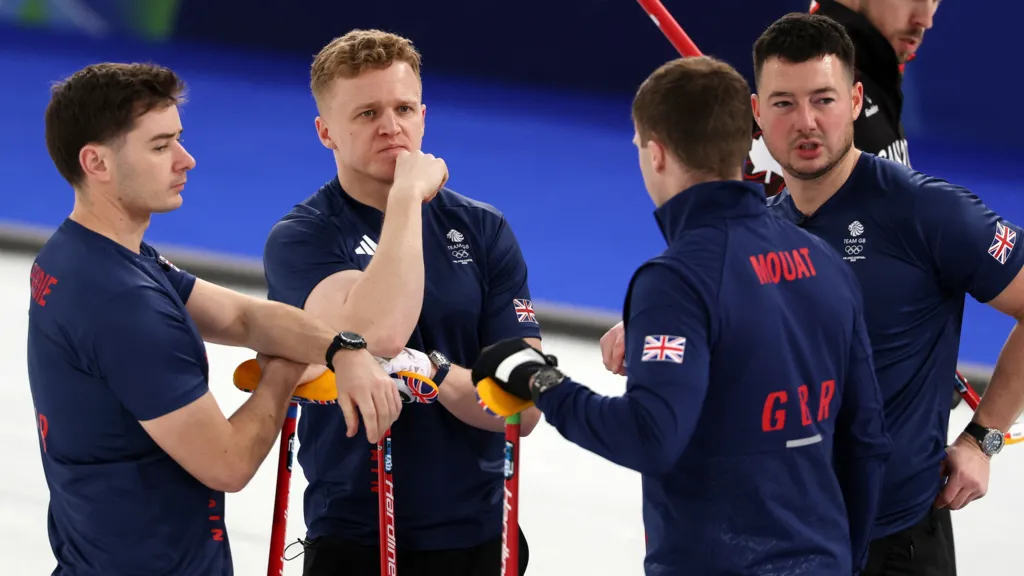
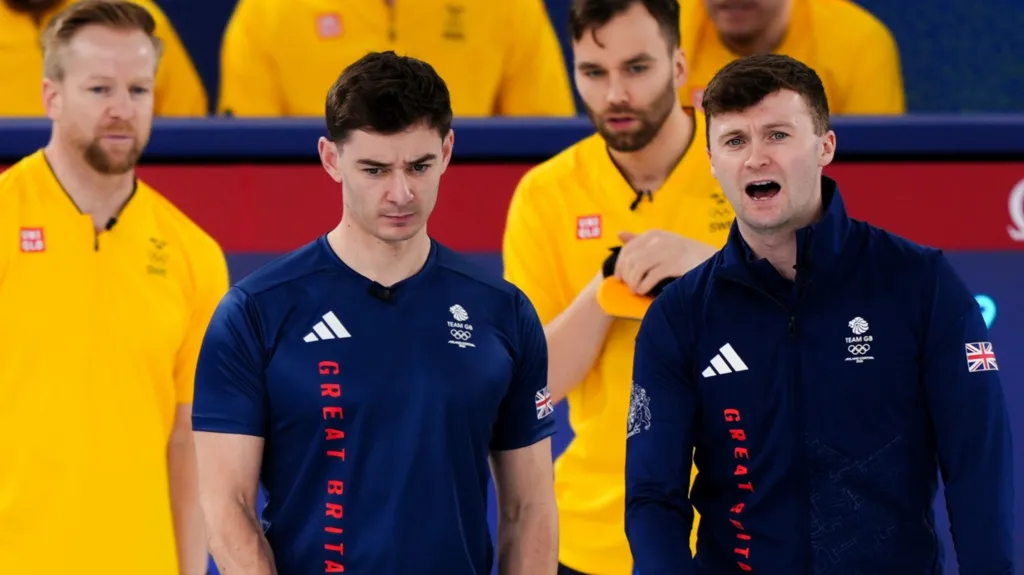
A dismal start to the match proved costly for Team GB's men, as they suffered their first defeat of the Winter Olympics at the hands of host nation Italy, despite a spirited fightback in the packed Cortina Curling Stadium.
Following victories in their first two matches, including a win over the Swedish rink that beat them in the gold-medal match four years ago, Team GB entered their second high-profile encounter in as many days in a confident position.
However, a disastrous opening end, in which Italy stole four points, left Team GB trailing and facing an uphill battle in front of a boisterous home crowd.
The British team, currently ranked number one in the world, gradually regained their footing and managed to level the score by the ninth end.
Ultimately, Italy maintained their composure in the final end to emerge victorious, winning 9-7 and adding Team GB to their list of scalps, which already included the Swedes.
"We had to dig deep and play some solid curling, but unfortunately, it wasn't enough to get us over the line," Team GB lead Hammy McMillan said in an interview with BBC Sport.
With seven wins from nine round-robin matches guaranteeing a spot in the semi-finals, Team GB remains in a strong position, although fewer wins may still be sufficient to advance.
The women's team is set to take to the ice next, facing South Korea in their second match at 13:05 GMT, while the men will return to action on Saturday against the Czech Republic at the same time.
Team GB is at the forefront of curling's technological advancements.
Embracing what sets you apart can be a powerful asset, according to some athletes.
A daily guide to the Winter Olympics is available for those looking to stay up-to-date with the action.
The looks of shock on the faces of Team GB's curlers told the story of a disastrous opening end.
With a stone in play, Mouat attempted a risky shot in an effort to claim two points, but it backfired, resulting in none of Team GB's stones in the house and four Italian stones in position.
However, the Scottish quartet, ranked number one in the world, quickly regained their composure and got back to their game.
The teams exchanged singles before a impressive final throw by Mouat, aided by a measurement to determine which stone was closest to the button, allowed Team GB to claim two points and narrow the gap to 5-3.
Another excellent team effort, which included a well-judged throw by Mouat, a solid sweep by Hammy McMillan and Bobby Lammie, and Grant Hardie's strategic expertise, forced Italy to concede a point in the fourth end, reducing the deficit to a single point at the break.
Italy blanked the sixth end and added two points in the seventh to rebuild their lead, but Team GB fought back with two points of their own, remarkably levelling the score with one end remaining after a steal.
The match came down to the final end, but Italy held their nerve to secure the win, prompting a deafening roar from the crowd.
"It's an incredible experience, and we need to get used to it," McMillan added, describing the electric atmosphere as "surreal" and "cool," more akin to a football match than a typical curling crowd.
News
Scotland Kicks Off Nations League Against Slovenia
Uefa has released the schedule for the Nations League, with Scotland set to begin their campaign on 26 September with an away match against Slovenia.
Uefa has released the schedule for the Nations League, with Scotland's campaign set to begin on 26 September with an away match against Slovenia.
The team's six group stage games will be played within a three-month period, culminating in a match against Switzerland on 16 November.
The fixture list was announced following Thursday's draw, which placed Scotland in a group with Switzerland, Slovenia, and North Macedonia.
Having been relegated from League A after a play-off loss to Greece last year, Scotland will compete in the second tier of the Nations League this year.
In response to the draw, head coach Steve Clarke noted that the teams in the group appear to be evenly matched.
Clarke reflected on the team's past experience in the competition, stating that it has been beneficial for Scotland.
He emphasized the importance of the Nations League, citing its role in helping the team qualify for Euro 2020, and anticipated a challenging set of matches.
A key matchup in the Nations League will see Scotland face off against Switzerland.
The group stage will determine the teams' fates, with the winner earning promotion, the runner-up entering a play-off, the third-placed team facing a relegation play-off, and the fourth-placed team being relegated directly.
The upcoming group games will mark a reunion for Scotland and Switzerland, who previously drew 1-1 in Cologne at Euro 2024.
Scotland's last encounter with Slovenia was during the 2018 World Cup qualification campaign, when they won 1-0 at home and drew 2-2 away.
The team has not played North Macedonia since the 2014 World Cup qualifiers, when they drew 1-1 at home and won 2-1 away, with goals from Ikechi Anya and Shaun Maloney.
The schedule for Scotland's Nations League campaign begins on 26 September with a match against Slovenia.
The team will then host Switzerland on 29 September, followed by a trip to face North Macedonia on 3 October.
Scotland will then play Slovenia at home on 6 October, before hosting North Macedonia on 11 November.
The final group stage match will see Scotland travel to face Switzerland on 16 November.
The team's home match against North Macedonia is set for 11 November.
The campaign will conclude with an away match against Switzerland on 16 November.
News
Golfer McIlroy Sinks Bunker Shot at Pebble Beach Pro-Am
At the AT&T Pebble Beach Pro-Am in California, Rory McIlroy achieved an eagle on the 14th hole at Spyglass Hill, capping off his opening round with a score of 68.
During the AT&T Pebble Beach Pro-Am in California, Rory McIlroy achieved an eagle on the 14th hole at Spyglass Hill, contributing to his first-round score of 68.
For further information, Rory McIlroy had a solid opening round, while Hisatsune took the lead.
Access to this content is restricted to users in the United Kingdom.
-
 News8 hours ago
Australian Politics Faces Questions Over Gender Equality Amid Sussan Ley’s Appointment
-
 News5 hours ago
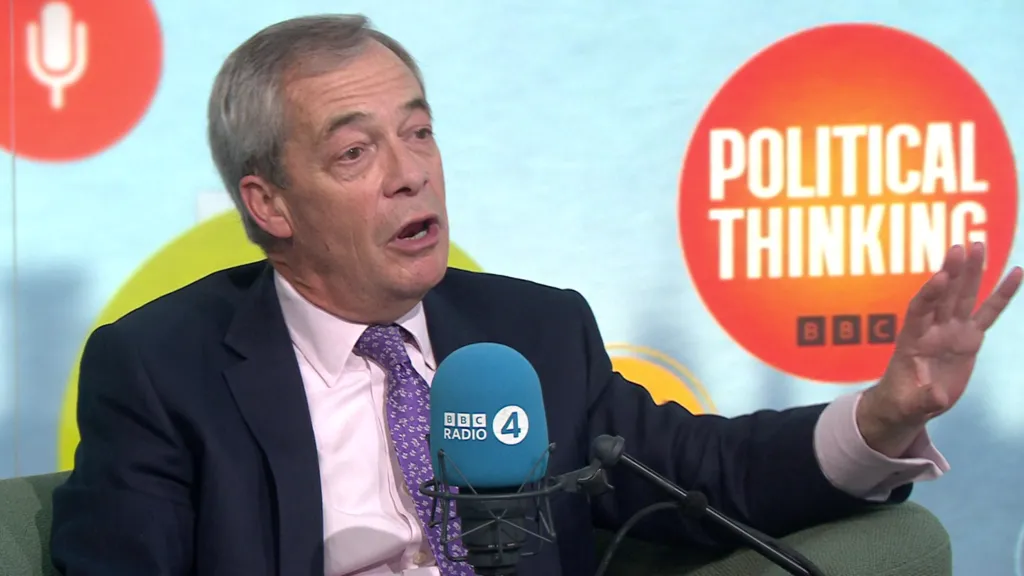
Farage Says Reform to Replace Traditional Tory Party
-
 News5 hours ago
Wrexham Pair Seek Win Against Former Team Ipswich
-
 News11 hours ago
Liberal Party Removes Australia’s First Female Leader
-
 News9 hours ago
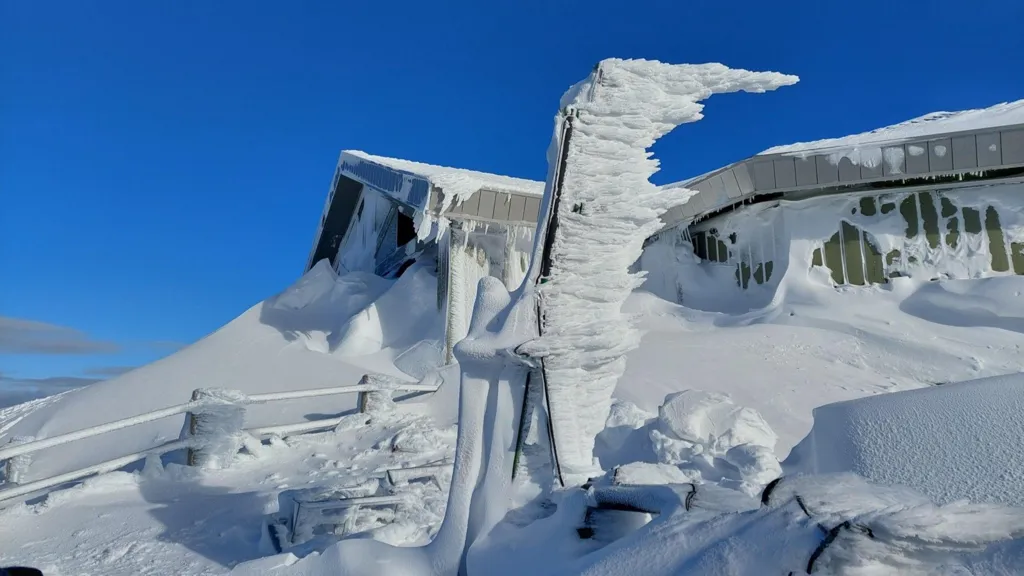
UK Braces for Cold Snap with Snow and Ice Alerts Expected
-
 News5 hours ago
Husband’s alleged £600k theft for sex and antiques blamed on drug side effects
-
 Business11 hours ago
BBC Reporter Exposed to Cyber Attack Due to Vulnerabilities in AI Coding Tool
-
 News8 hours ago
Canadian Town Unites in Mourning After Mass Shooting Leaves Community Reeling